

Ever found yourself standing in your garden, wondering how many cucumbers you should plant? It’s a common dilemma for many gardeners. Are you planting too few or perhaps too many? The struggle is real, but fret not, we’ve got you covered.
Picture this: you eagerly wait for your cucumber plants to flourish, only to realize you’ve planted an overwhelming abundance. Or worse, you end up with just a handful, barely enough for a salad. Finding the right balance is key to a successful cucumber harvest.
Benefits of Growing Cucumbers
When it comes to growing cucumbers, there are several fantastic benefits that may just convince you to plant a few extra vines this season.
- Freshness: There’s nothing quite like the taste of a freshly picked cucumber straight from your garden. The crispness and flavor are incomparable to store-bought ones.
- Variety: With cucumbers, you have a vast array of types to choose from, including slicing cucumbers, pickling cucumbers, and specialty varieties like lemon cucumbers.
- Health Benefits: Cucumbers are not only low in calories but also a good source of vitamins and minerals such as vitamin K, potassium, and magnesium.
- Versatility: From salads to pickles, cucumber water to snacks, there are endless ways to incorporate cucumbers into your meals.
- Gardening Experience: Growing cucumbers can be a fulfilling and rewarding experience. Watching them thrive under your care is a joy in itself.
Factors to Consider Before Planting
When deciding on the number of cucumber plants to grow in your garden, it’s essential to consider various factors to ensure a successful harvest. Here are some key considerations to keep in mind:
- Space: Determine the available space in your garden and choose cucumber varieties that suit your planting area.
- Climate: Check if your region provides the right conditions for cucumbers to thrive, as they generally require warm temperatures and ample sunlight.
- Watering: Cucumbers need consistent watering, so make sure you can provide adequate hydration to your plants throughout the growing season.
- Soil Quality: Ensure that your soil is well-draining, rich in nutrients, and has a pH level between 6.0 and 7.0 for optimal cucumber growth.
- Support Structures: Consider if you’ll need trellises or stakes to support the plants as they grow, especially for vining cucumber varieties.
- Pests and Diseases: Be aware of common cucumber pests and diseases in your area and plan preventive measures to protect your plants.
- Harvesting: Think about how many cucumbers your household consumes and how often you plan to harvest to determine the right amount to plant.
| Key Points to Consider | Details |
|---|---|
| Space | Check garden area |
| Climate | Warm temperatures & sunlight |
| Watering | Consistent hydration |
| Soil Quality | Well-draining, rich nutrients, pH 6.0-7.0 |
| Support Structures | Trellises or stakes |
| Pests and Diseases | Plan preventive measures |
| Harvesting | Household consumption & harvesting frequency |
Determining the Ideal Number of Cucumber Plants
When deciding how many cucumber plants to grow in your garden, consider the following factors to ensure a bountiful harvest that meets your needs:
- Household Consumption: Think about how many cucumbers your household typically consumes. Estimate the amount needed for salads, snacks, and pickling.
- Space Available: Assess the space in your garden to determine how many cucumber plants can comfortably fit without overcrowding.
- Harvesting Frequency: If you enjoy fresh cucumbers regularly, planting more plants can provide a continuous supply throughout the growing season.
- Family Preferences: Consider the varieties of cucumbers your family prefers, as this can influence the number of plants to grow.
- Support Structures: Keep in mind the type of support structures you’ll use, such as trellises or cages, which can impact plant spacing.
- Succession Planting: For a longer harvest period, you might want to stagger plantings at different intervals.
By carefully considering these factors, you can determine the ideal number of cucumber plants to plant in your garden for a successful and satisfying cucumber harvest.
| Household Consumption | Space Available | Harvesting Frequency | Family Preferences | Support Structures | Succession Planting |
|---|---|---|---|---|---|
| 10 cucumbers/week | 20 sq. ft. | Every 3 days | Preference for pickling | Trellises | Stagger plantings every 2 weeks |
Recommended Products

【Multi-Function】 Tall Tomato Cage-Each tomato cage can be adjusted from 16inches to 47 inches in height,suit for different growth stages of plants, offering versatile supports for a wide variety of tomato plants, ensuring they grow tall and strong.

【Upgraded Stability Design】Our cucumber trellis for garden used equal tees and equal cross connectors. This new connector design brings great convenience for installation and disassembly, and also greatly improves stability and firmness.

Assembles in Minutes, No Tools or Frustration - Say goodbye to complicated setups. Our A-frame trellis includes easy-connect joints and step-by-step instructions for fast, hassle-free assembly for plant trellis
How to Space Out Your Cucumber Plants
Creating the right spacing for your cucumber plants ensures healthy growth and abundant harvests. Consider the following guidelines for optimal spacing:
- Row Spacing: Plant cucumber rows about 5-6 feet apart to allow for proper airflow and easy access for maintenance.
- Plant Spacing: Space cucumber plants about 12-24 inches apart within rows, based on the variety you choose.
- Support Structures: Utilize trellises or cages for vertical growth, saving space and reducing the risk of disease.
- Succession Planting: Stagger plantings every 2-3 weeks for a continuous supply throughout the growing season.
- Mulching: Apply mulch around plants to retain moisture, suppress weeds, and maintain consistent soil temperature.
By spacing out your cucumber plants effectively, you maximize sunlight exposure, airflow, and access for proper care, resulting in a bountiful harvest.
Recommended Products

PRODUCT SIZE - Trellis netting 5Ft *15 Ft, 3.5 inch square mesh, easily cut to desired size to use. Important note: The trellis netting comes in a vacuum sealed bag.
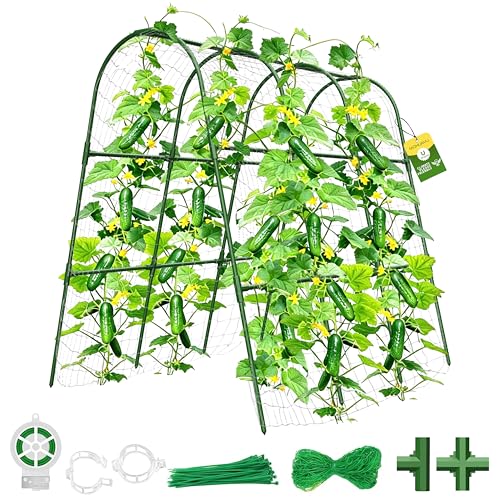
【U-Shape Stability Structure 】 U-frame trellis is more stable than A-frame trellis. Allowing you to plant a row on both sides. The arch design maximizes the garden space.

Trellis Netting Polyester Nylon: Our trellis netting is made of durable polyester nylon materials,strong and durable, not easy to break, reusable,can support extremely heavy crop loads, protect plants from damage, able to grow vertically
Tips for Maximizing Cucumber Yield
When it comes to maximizing your cucumber yield, there are several key strategies to keep in mind. By following these tips, you can ensure a bountiful harvest of fresh cucumbers:
- Choose the Right Variety: Opt for cucumber varieties that are known for high yield, such as “Marketmore” or “Straight Eight”.
- Plant Cucumbers in Warm Soil: Cucumbers thrive in warm soil, so wait until all danger of frost has passed before planting them in your garden.
- Provide Ample Sunlight: Cucumbers love sunlight, so make sure to plant them in a spot that receives at least 6-8 hours of direct sunlight daily.
- Regular Watering: Cucumbers are made up of over 95% water, so it’s crucial to keep the soil consistently moist but not waterlogged.
- Feed Your Plants: Use a balanced fertilizer to provide essential nutrients to your cucumber plants throughout the growing season.
| Optimal Spacing Guidelines |
|---|
| Row Spacing: 5-6 feet for airflow and maintenance access |
| Plant Spacing: 12-24 inches based on variety |
| Succession Planting: Every 2-3 weeks for continuous harvest |
| Mulch Application: For moisture retention and weed suppression |
Keep these tips in mind to enjoy a productive cucumber harvest this growing season.
Conclusion
You now have valuable insights on maximizing your cucumber yield. By selecting high-yield varieties, planting in warm soil, providing sufficient sunlight, regular watering, and using balanced fertilizer, you’re on the right track. Remember the importance of optimal spacing, succession planting, and mulching for a successful harvest. Happy planting!
Frequently Asked Questions
1. What are some high-yield cucumber varieties mentioned in the article?
The article recommends “Marketmore” and “Straight Eight” as high-yield cucumber varieties.
2. How can I maximize cucumber yield through planting conditions?
To maximize yield, plant cucumbers in warm soil with ample sunlight, ensure regular watering, and use balanced fertilizer.
3. What spacing guidelines are important for successful cucumber planting?
Optimal spacing guidelines include proper row spacing, plant spacing, succession planting every 2-3 weeks, and mulch application for moisture retention and weed suppression.
