

Ever wondered how that crisp, refreshing cucumber on your plate came to be? Have you ever pondered the journey from tiny seed to flourishing vine? Let’s take a dive into the fascinating world of cucumber growth together.
Picture this: You’re at the grocery store, selecting the perfect cucumber for your salad. But have you ever thought about the process behind its growth? Understanding how cucumbers grow not only satisfies your curiosity but also gives you a newfound appreciation for nature’s wonders.
In this article, we’ll unravel the mystery of cucumber growth, from planting the seed to harvesting the fruit. Get ready to discover the secrets hidden beneath the soil and gain insights that will make you see cucumbers in a whole new light.
Seed Germination and Sprouting
When you plant a cucumber seed, the magic of growth begins. Here’s what happens:
- The seed absorbs water and swells up.
- Roots emerge first, anchoring the seed in the soil.
- A tiny sprout pushes through, seeking sunlight.
- The seed leaves fall off, and the true leaves appear.
In this phase, the seed is no longer just a seed—it’s the start of a cucumber plant.
Vine Development and Climbing
Imagine a cucumber plant sprawling across your garden. As it grows, it sends out tendrils searching for support. These curly cues are its way of climbing and reaching up towards the sun. You might wonder how this process occurs and what you can do to help your cucumber vines thrive. Let’s explore.
- Tendril Power: Cucumber plants are vining plants, meaning they climb to maximize sun exposure and space. Their tendrils are key for climbing. They wrap around structures like trellises or fences, providing support for the growing plant.
- Training Techniques: If you’re growing cucumbers, consider training the vines to climb. Encourage them to grow upwards by gently guiding the tendrils towards the support structure. This not only prevents them from sprawling but also helps keep the fruit off the ground, reducing the risk of rot.
- Support Systems: Providing a sturdy support system for your cucumber vines is essential. Opt for options like trellises, stakes, or cages to keep the plants off the ground. This also allows for better air circulation, reducing the chances of diseases like powdery mildew.
- Vertical Gardening: Embracing vertical gardening techniques can maximize space efficiency. Growing cucumbers vertically not only saves space but also makes harvesting easier. Plus, it adds a beautiful visual element to your garden.
- Regular Checks: Keep an eye on your cucumber vines as they grow. Ensure the tendrils have something to latch onto by periodically redirecting them towards the support structure. Regular pruning also helps maintain a tidy and organized growing space.
With these insights into vine development and climbing, you’re well on your way to supporting your cucumber plants as they reach new heights.
Recommended Products

Support for Tall Plant: This trellis kit provides 7.87” support for your tomatoes, peppers and more
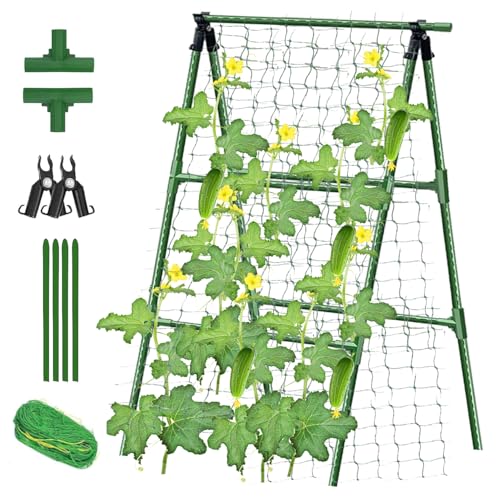
【Groumh A-FRAME DESIGN】NOTE: THE TRELLIS IS FOR SMALL PLANT NOT FOR BIG!! sturdy 48x15in A-frame cucumber trellis can grow various plants from both sides of the trellis. These shapes promote airflow for the climber, and the plant will have plenty of sunlight to maximize photosynthesis. Let you get a better harvest.

【Pack of 20】: The tomato hooks can be used alone or with truss brackets, place the tomato hook at the suitable place on the vegetable, vertical drop the rope, the vine will grow around the rope.
Flowering and Pollination
When a cucumber plant begins to flower, it’s a sign that the fruiting process is about to start. The flowers are typically yellow and have both male and female parts. It’s essential for successful cucumber growth that these flowers are properly pollinated.
Cucumbers rely on insects, mainly bees, for pollination. As bees move from one flower to another, they transfer pollen, allowing the female flowers to produce fruit. Without adequate pollination, you may notice misshapen or underdeveloped cucumbers.
To encourage pollination, consider planting flowers that attract pollinators near your cucumber plants. Additionally, avoid pesticides that could harm the bees and other beneficial insects crucial for the pollination process.
Remember, healthy pollination is key to a bountiful cucumber harvest.
Fruit Formation and Maturation
When a cucumber plant is successfully pollinated, the ovary of the flower develops into the cucumber fruit. The ovary swells and elongates, transforming into the cylindrical or elongated shape characteristic of cucumbers.
The growth rate of cucumbers can vary based on factors such as temperature, water availability, and sunlight. Generally, cucumbers grow rapidly, with some varieties reaching full size in as little as 3 to 4 days.
During the growing process, careful monitoring of the cucumbers is crucial. Check the fruits regularly to ensure they are developing properly and are free from any signs of disease or pests.
To promote healthy fruit development, maintain consistency in watering practices and provide support for the growing vines if needed. Proper spacing between plants can also help ensure good air circulation and sunlight exposure for optimal growth.
Remember that cucumbers do not ripen after harvesting, so it’s important to harvest them at the right time. Depending on the variety, cucumbers are typically ready for harvest when they reach a desired length and have a firm texture.
Harvesting Cucumbers
When it comes to harvesting cucumbers, timing is crucial. Here’s what you need to know:
- Size Matters: Harvesting cucumbers at the right size ensures they are firm and flavorful.
- Color Check: Look for a vibrant green color when picking cucumbers.
- Frequent Inspections: Check your plants regularly for ripe cucumbers to avoid overripe ones that can affect overall plant health.
- Tools of the Trade: Keep a pair of sharp garden scissors handy for easy and clean harvesting.
- Gentle Handling: Be gentle when picking cucumbers to prevent damage to the plant and fruit.
Recommended Products

The blades are made of Japanese high-quality stainless steel and rounded outside edges to protect and reduce product or stem damage.

Efforts-Saving Design -- The energy-saving damping spring design brings comfortable spring force to your cutting action, reduces the burden on your hands, and can adapt to long-term work. These snips great for those with arthritis, carpal tunnel, hand or wrist issues. The point is extra long and sharp so you can reach in tights spots to cut your succulents of plants.

✅ 【Razor-Sharp Japanese Carbon Steel】 Heat-treated, precision-ground blades glide through stems and branches with clean, effortless cuts — the kind that heal faster and keep your plants healthier.
Conclusion
That’s it! Remember, timing is key when harvesting cucumbers. Make sure to pick them at the right size for the best taste and texture. Keep an eye out for that vibrant green color and check them regularly to avoid any issues. And don’t forget to use sharp garden scissors for a gentle harvest. Happy growing!
Frequently Asked Questions
When is the best time to harvest cucumbers?
Cucumbers should be harvested when they reach about 6-8 inches in size, typically 50-70 days after planting. Make sure they are firm, vibrant green, and not overripe for the best flavor.
How can I tell if a cucumber is ready to be harvested?
A ripe cucumber will have a vibrant green color, be firm to the touch, and easily snap off the vine with a gentle twist. Avoid cucumbers that are yellow or have soft spots.
What is the best way to harvest cucumbers without damaging the plant?
It is recommended to use sharp garden scissors to cut the cucumber from the vine gently. This helps prevent damage to both the plant and the fruit, ensuring a healthy harvest.
