

Ever wondered how big cucumber plants can actually get in your garden? Picture this: you start with a few tiny seeds, and before you know it, they’ve taken over your backyard! How tall can they grow, and how much space do they really need to thrive?
In this article, you’ll discover the fascinating journey of cucumber plants as they reach for the sky. From their humble beginnings to their towering presence in your garden, you’ll learn all about the potential size of these green wonders.
The Growth Stages of Cucumber Plants
So, how do cucumber plants actually grow? It all starts with planting the seeds in well-drained soil under direct sunlight. Once these seeds germinate, they will develop into seedlings within one to two weeks.
As your cucumber plants continue to grow, they will enter the vining stage. This is where the plants start producing long, tendrils that grab onto support structures. During this time, regular watering and fertilizing are essential for healthy growth.
Next up is the flowering stage. Here, your cucumber plants will start to produce yellow flowers. Bees and other pollinators are crucial for the fertilization process at this stage. Once pollinated, these flowers turn into young fruits.
Finally, your cucumber plants will reach the fruiting stage. This is when those young fruits start to develop into the crisp, green cucumbers you love to harvest. Keep an eye out for any signs of disease and ensure proper pollination for a bountiful harvest.
Factors Affecting the Size of Cucumber Plants
Growing cucumber plants can be a rewarding experience, and the size of your plants can depend on various factors. Here are some key aspects that can influence the growth and overall size of your cucumber plants:
- Variety Selection
Choosing the right cucumber variety for your region and growing conditions is crucial. Some varieties are naturally smaller, while others are known for producing larger fruits. - Sunlight Exposure
Cucumber plants thrive in full sunlight. Ensure your plants receive at least 6-8 hours of direct sunlight daily for optimal growth and fruit development. - Soil Quality
Well-draining, nutrient-rich soil is essential for healthy cucumber plants. Consider amending your soil with compost to provide essential nutrients for robust growth. - Watering Routine
Maintaining consistent moisture levels is key to preventing issues like bitter fruit and stunted growth. Water your cucumber plants deeply, ensuring the soil is evenly moist but not waterlogged. - Support Structures
Providing adequate support for your cucumber vines can encourage vertical growth and prevent fruits from sitting on damp soil, reducing the risk of rot. - Pruning Practices
Regularly prune your cucumber plants to remove excess foliage and promote airflow. This can lead to larger fruits and reduce the risk of disease. - Pest Management
Implementing pest control measures can protect your cucumber plants from common pests that may hinder growth and fruit development. - Pollination
Ensuring proper pollination through natural means or manual intervention can significantly impact fruit size and quality.
Following these tips can help you maximize the growth potential of your cucumber plants and enjoy a bountiful harvest.
Understanding the Ideal Conditions for Cucumber Growth
To ensure optimal growth of your cucumber plants, it’s essential to provide them with the right conditions. Here’s what you need to know:
- Sunlight: Cucumber plants thrive in full sunlight. Aim for at least 6-8 hours of direct sunlight daily.
- Soil Quality: Well-draining soil rich in organic matter is ideal for cucumber growth. Maintain a pH level between 6.0-6.8 for best results.
- Watering: Keep the soil consistently moist but not waterlogged. Regular watering is crucial, especially during hot periods.
- Support Structures: Consider using trellises or stakes to support the vines and prevent fruit from touching the ground.
- Pruning: Remove any dead or damaged leaves to promote airflow and prevent diseases.
- Pest Management: Monitor for common pests like aphids and cucumber beetles. Employ natural deterrents or pest control methods as needed.
- Pollination: Bees are crucial for pollinating cucumber flowers. Consider planting pollinator-friendly flowers nearby.
By creating the ideal environment for your cucumber plants, you’ll set them up for healthy growth and a bountiful harvest.
Pruning Techniques to Control Cucumber Growth
Pruning cucumber plants is essential to manage their size and ensure optimal health and productivity. By removing excessive foliage and redirecting growth energy, you can encourage stronger vines and better fruit development.
Key Tips for Pruning Cucumber Plants:
- Remove the suckers that develop in the leaf axils to prevent overcrowding and promote air circulation.
- Prune lateral branches to focus plant energy on fruit production.
- Trim any dead or diseased parts to maintain plant vitality.
- Regularly check your plants for signs of overgrowth and prune accordingly.
Pruning Frequency:
- Start pruning when plants have at least 5-6 leaves and continue throughout the growing season.
- Monitor plant growth weekly, adjusting pruning as needed to control size.
Benefits of Pruning:
- Enhanced airflow reduces the risk of diseases like powdery mildew.
- Improved light exposure to lower leaves helps with photosynthesis and fruit development.
- Manageable plant size makes harvesting easier and more efficient.
- Pruning is an ongoing process that contributes to the overall health and productivity of your cucumber plants.
Recommended Products

DUAL CUTTING POWER: VERSATILE PRUNING COMBO --- With both Pruning Shears and Pruning Snip, this combo delivers unmatched versatility. Whether you're delicately trimming flowers and shrubs, tackling thicker tree branches, or tending to your vegetable and fruit garden, our combo pack excels in all areas. They're also perfect for landscaping projects and maintaining the health and appearance of indoor plants. With this pack, you have a versatile tool that simplifies your gardening tasks.

AMBIDEXTROUS DESIGN: Pruner shape is designed for both right and left-handed use while pruning indoor & outdoor plants such as shrubs, ornamental trees, vines, & flowers like roses; SoftGrip handle reduces hand fatigue & enhances comfort and control

· ULTRA-SHARP SK5 STAINLESS STEEL - Engineered with premium SK5 stainless steel, these heavy duty pruning shears deliver razor-sharp precision and maximum hardness. The rust-resistant blades are designed to stay sharp longer, effortlessly resisting corrosion and sap buildup for smooth, friction-free garden shears performance year after year.
Maximizing Space for Cucumber Plants
To maximize space for cucumber plants, consider vertical gardening options such as trellises or cages. These structures support the plants as they grow upward, optimizing space usage in your garden.
Interplanting cucumber plants with complementary crops like radishes or herbs can make the most of your garden space. This not only maximizes yield but may also help with pest control and nutrient absorption.
When pruning cucumber plants, focus on removing overcrowded growth to allow for better air circulation and light exposure. This not only prevents diseases but also enhances plant productivity.
Consider growing bush cucumber varieties if space is a constraint. These compact plants are well-suited for container gardening or smaller garden plots.
Incorporating succession planting can help make the most of limited space by planting new cucumber seeds or seedlings as soon as the previous plants are harvested. This ensures a continuous harvest throughout the growing season.
To further optimize space, experiment with square foot gardening or raised beds, which provide a structured approach to maximizing space while simplifying plant care and maintenance.
| Cucumber Planting Tips | Maximizing Space Strategies |
| Vertical gardening with trellises or cages | |
| Interplanting with complementary crops | |
| Pruning for optimal air circulation | |
| Consider bush cucumber varieties | |
| Utilize succession planting | |
| Try square foot gardening or raised beds |
Recommended Products

【Extra-Large Height & Space for Climbing Plants】Standing at 65 inches tall—3 inches higher than standard versions—this trellis provides generous vertical space for vigorous climbers. The 51×17.7-inch frame with dense netting ensures even plant distribution and maximum sunlight exposure, effectively improving fruit yield and quality.
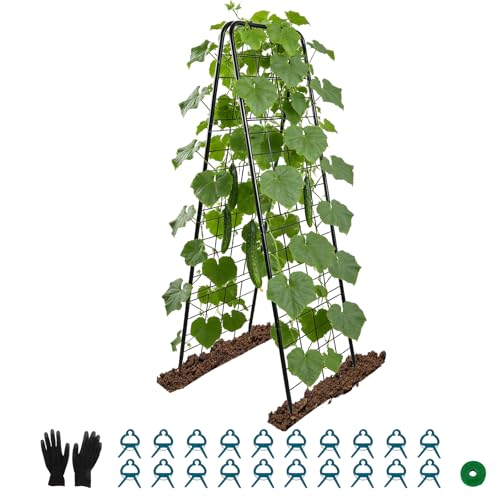
Sturdy A Frame Design for Heavy Crops: Built with a 0.52" thickened steel frame, this PERSZEN A-frame trellis delivers exceptional strength for heavy climbing vegetables. Ideal as a heavy duty cucumber trellis for raised garden beds, it prevents sagging and collapse under mature, fruit laden plants—so you can grow with confidence

Vegetable Trellis that Assembles in Minutes, No Tools or Frustration – Say goodbye to complicated setups. Our U-shape trellis includes easy-connect joints and step-by-step instructions for fast, hassle-free assembly
Conclusion
You’ve learned about various techniques to make the most of your space for cucumber plants, like vertical gardening and interplanting. Pruning for better airflow and light exposure can boost plant productivity. Consider using bush cucumber varieties for smaller areas. Succession planting and square foot gardening can help you optimize space and enjoy a continuous harvest. Experiment with different methods to find what works best for your garden. Happy growing!
Frequently Asked Questions
How can I maximize space for cucumber plants in my garden?
To maximize space for cucumber plants, consider using vertical gardening with trellises or cages, interplanting with complementary crops, and opting for bush cucumber varieties. Pruning can improve air circulation and light exposure for better productivity. Succession planting, square foot gardening, and raised beds can also help optimize space and ensure a continuous harvest.
Why is pruning important for cucumber plants?
Pruning is crucial for cucumber plants as it enhances air circulation around the plants, reduces the risk of diseases, and allows better light penetration. This leads to improved plant health, increased productivity, and better quality fruits.
What are some strategies for continuous harvest of cucumbers?
To ensure a continuous harvest of cucumbers throughout the growing season, consider succession planting, where new plants are staggered in planting times. Square foot gardening and raised beds help optimize space, while choosing varieties with varying maturation times can extend the harvest period.
