

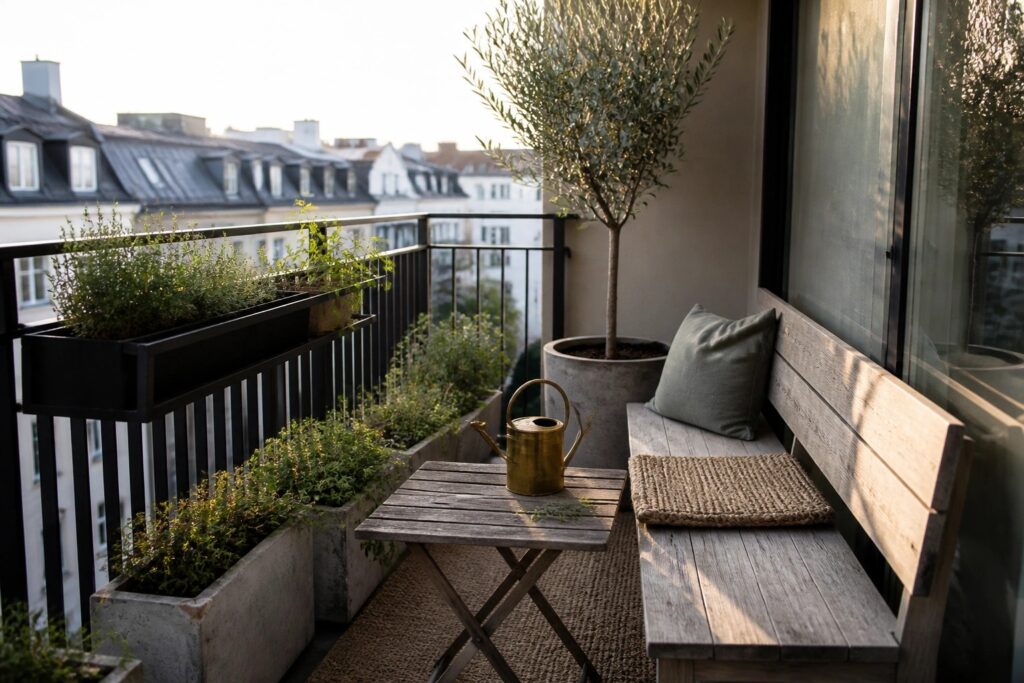
Living in an apartment often means your only outdoor access is a small balcony or terrace, and making it feel like an actual extension of your home takes more than just setting out a few plants.
I have noticed that the setups which work best are the ones where you can still walk through the space without bumping into things every time.
Usability comes first.
Over time those choices add up to spaces that actually get used instead of sitting empty after the first month.
A few practical adjustments can turn even the tightest spot into something that feels worth stepping out to every day.
Place a Bench to Make the Most of a Narrow Balcony
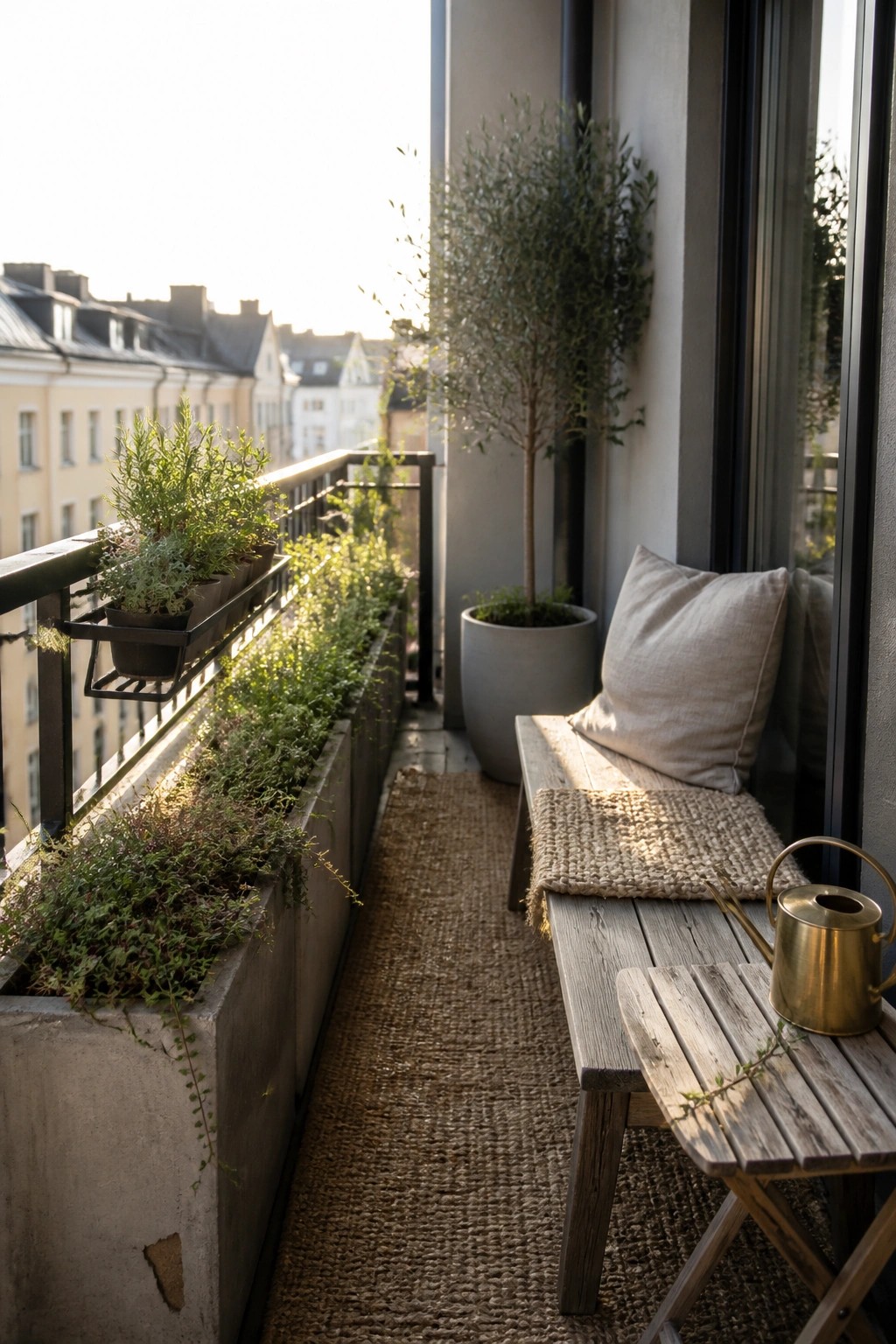
A bench works well on small balconies because it gives you a place to sit without taking up much floor space. It also creates a clear spot for relaxing while leaving room for plants along the edges.
This setup suits apartments with long, tight outdoor areas. Keep the bench simple and add planters on the railing or floor beside it so the greenery frames the seat without crowding it. Just watch that the bench does not block the door or main walkway.
Railing Planters Keep Small Balconies Green
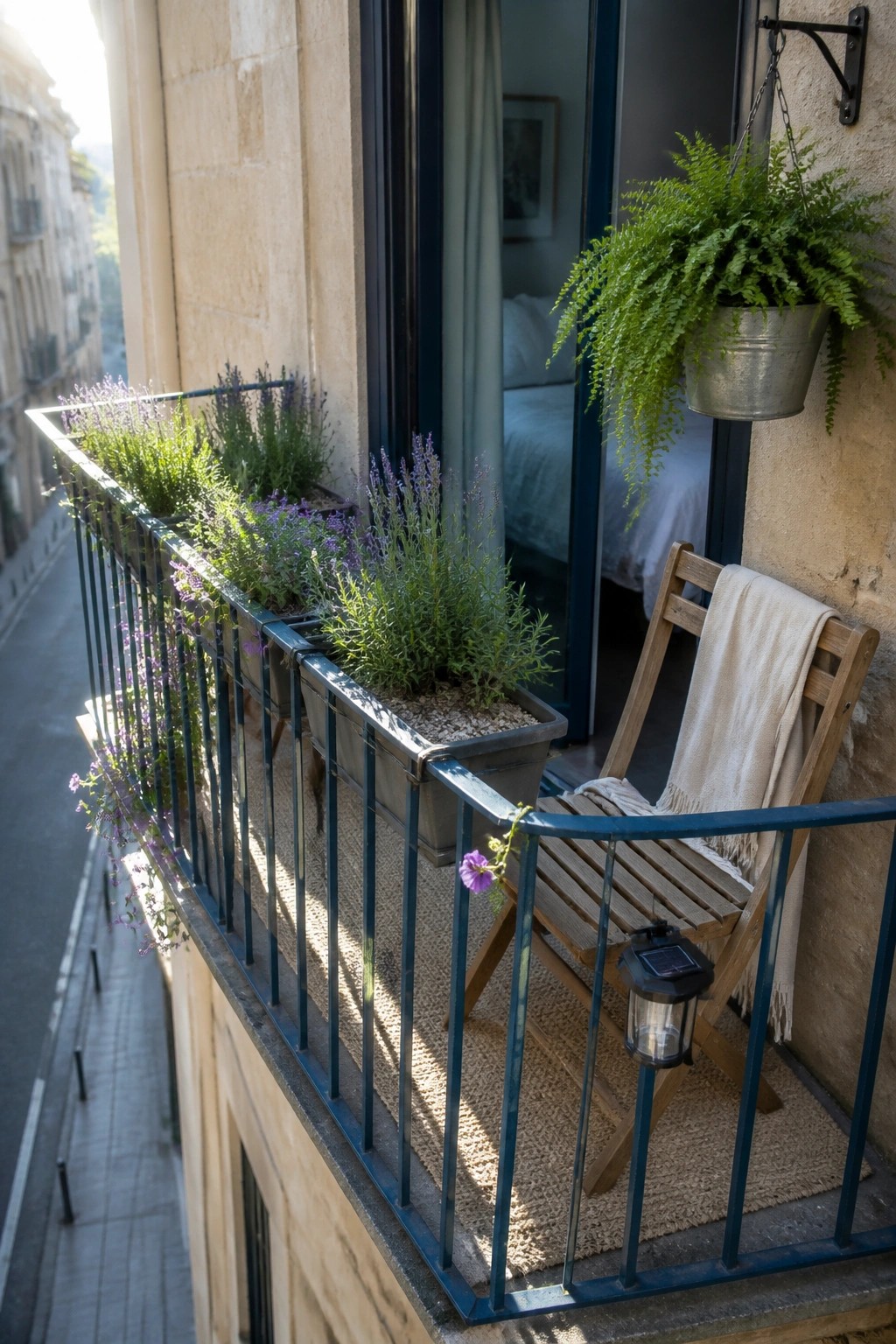
A row of planters fixed along the railing gives you room to grow without losing floor space for a chair or two. This setup works especially well on city balconies where every inch counts and you still want some color and texture around the edges.
It suits apartments with metal railings that can support the weight, and it keeps the middle of the space open for seating. Just check that the boxes are secured properly and choose plants that handle wind and sun exposure on your side of the building.
Wall-Mounted Planters Keep Floor Space Open
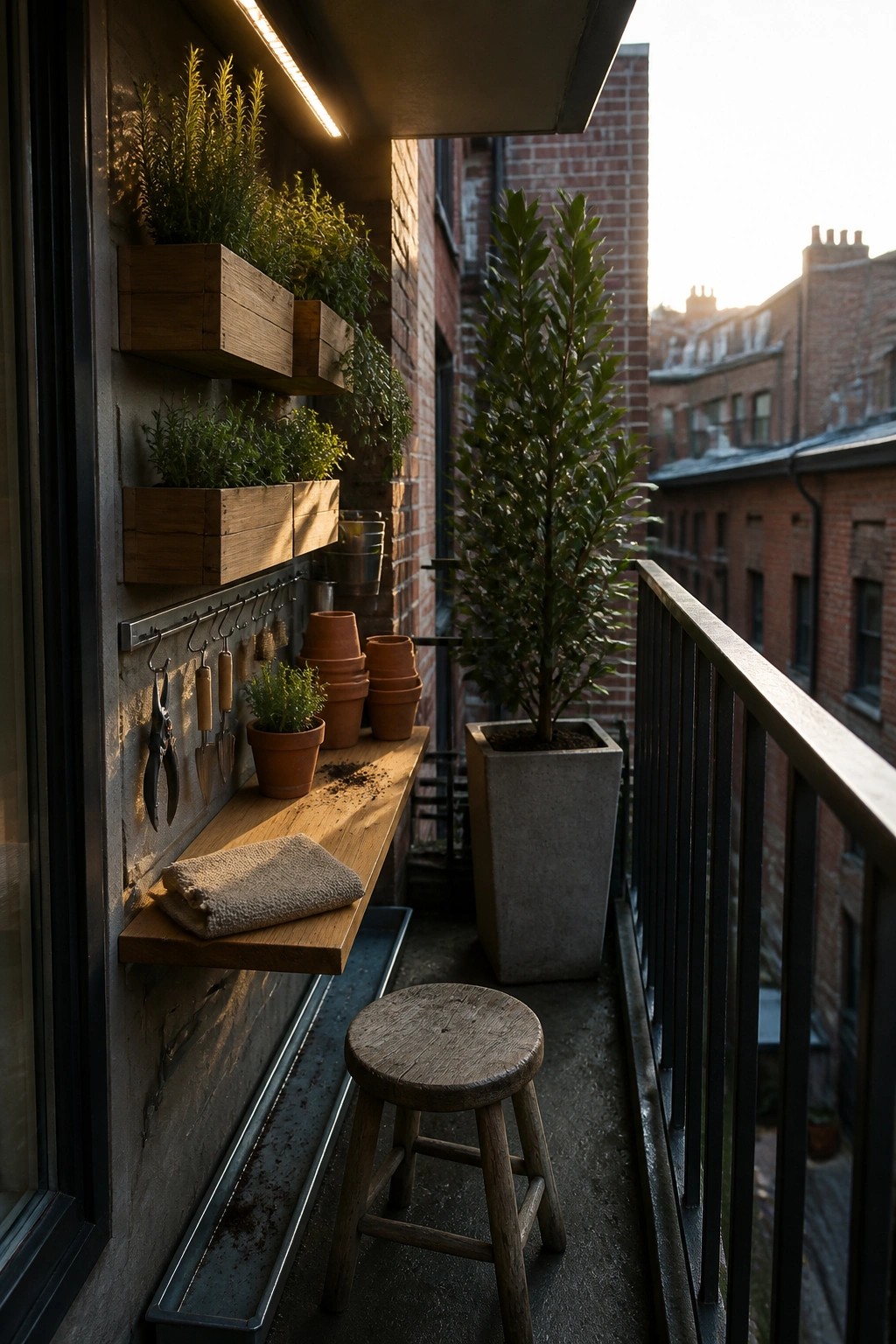
Mounting planters on the wall instead of lining them up on the floor makes a small balcony feel much bigger. It also keeps the main walking area clear so the space stays usable rather than turning into a storage zone.
This setup works best on narrow apartment balconies where floor room is limited. A simple shelf underneath can hold tools and supplies, but check that the wall can support the weight and that the planters have good drainage.
Built-In Bench Seating Adds Function To Small Balconies
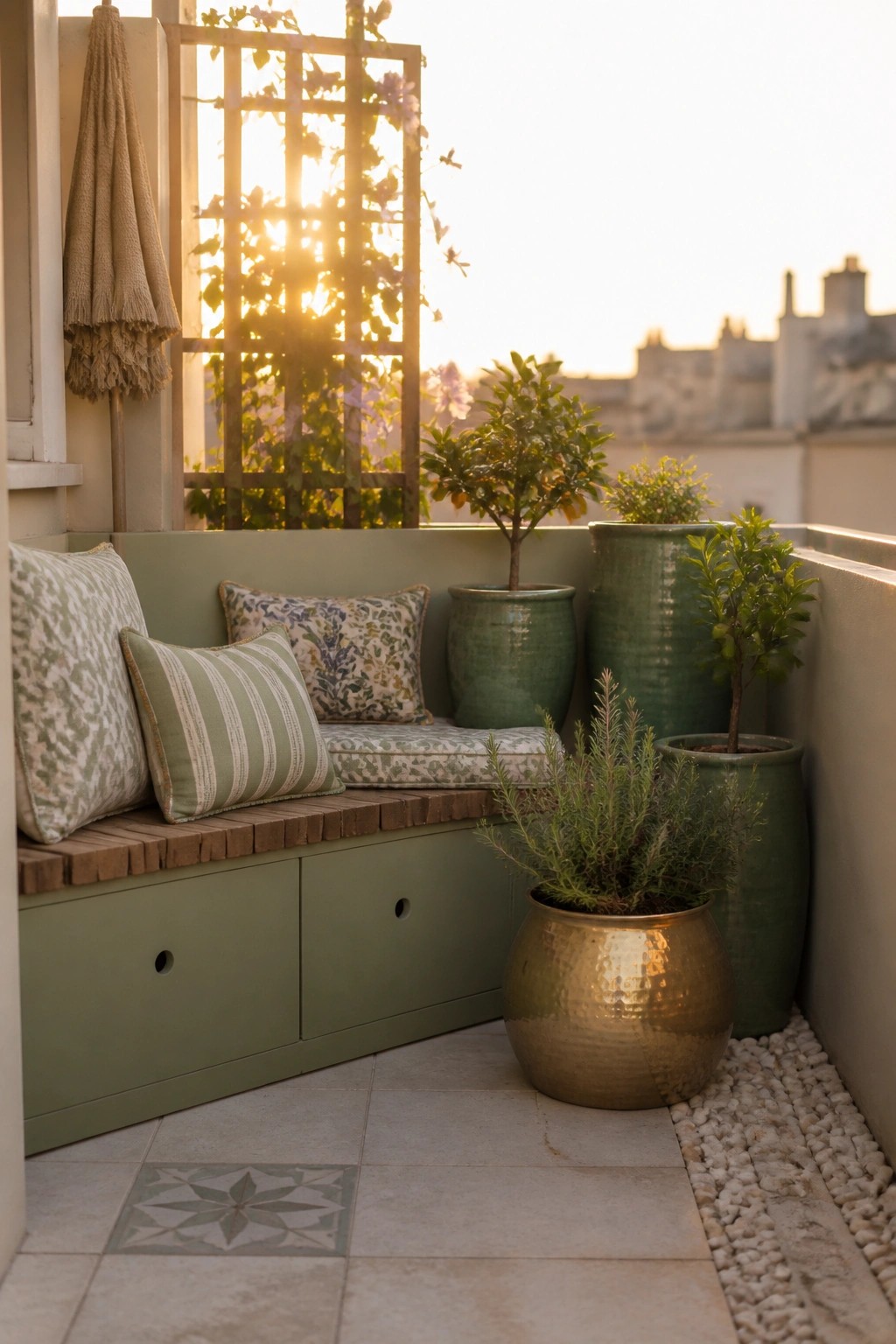
A built-in bench turns a narrow balcony into a place where you can actually sit and relax. The storage underneath keeps cushions and small tools out of sight, so the space stays open instead of cluttered with extra furniture.
This approach works best on balconies or terraces that already have a solid wall or railing to build against. Keep the bench color close to the surrounding walls and add just a few large pots in front so the plants stay the main focus without crowding the floor.
Hang Plants to Bring Greenery Into Small Spaces
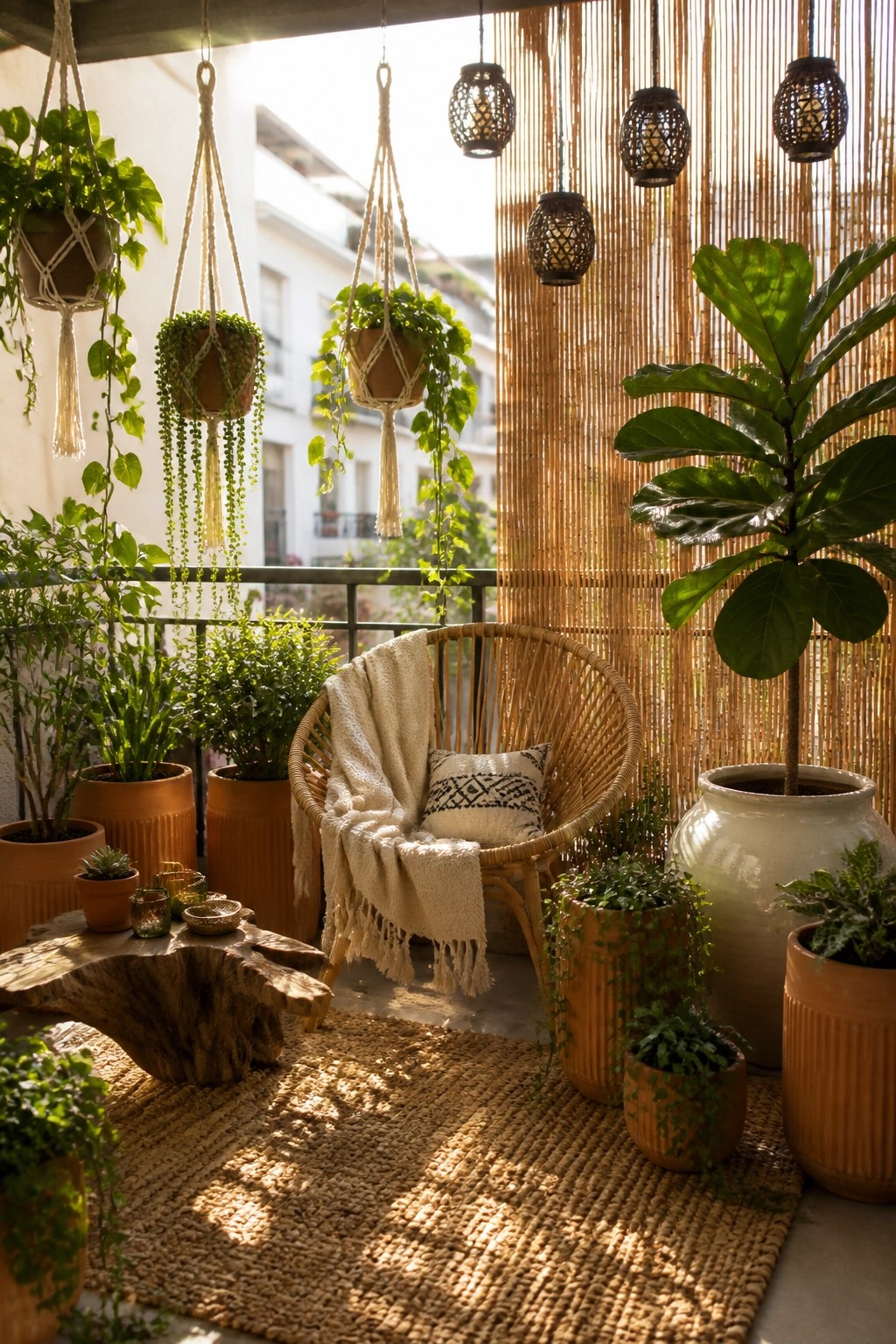
Hanging plants work well on tiny balconies because they use the space above without crowding the floor. A few macrame hangers mixed with pots on the ground can turn a narrow area into something that feels full and alive.
This approach suits apartments with limited square footage. Start with two or three strong hangers and add pots at different levels so the plants do not block movement or light. Keep the number of pieces modest so the space stays easy to walk through.
Layer Plants With Dark Rectangular Planters
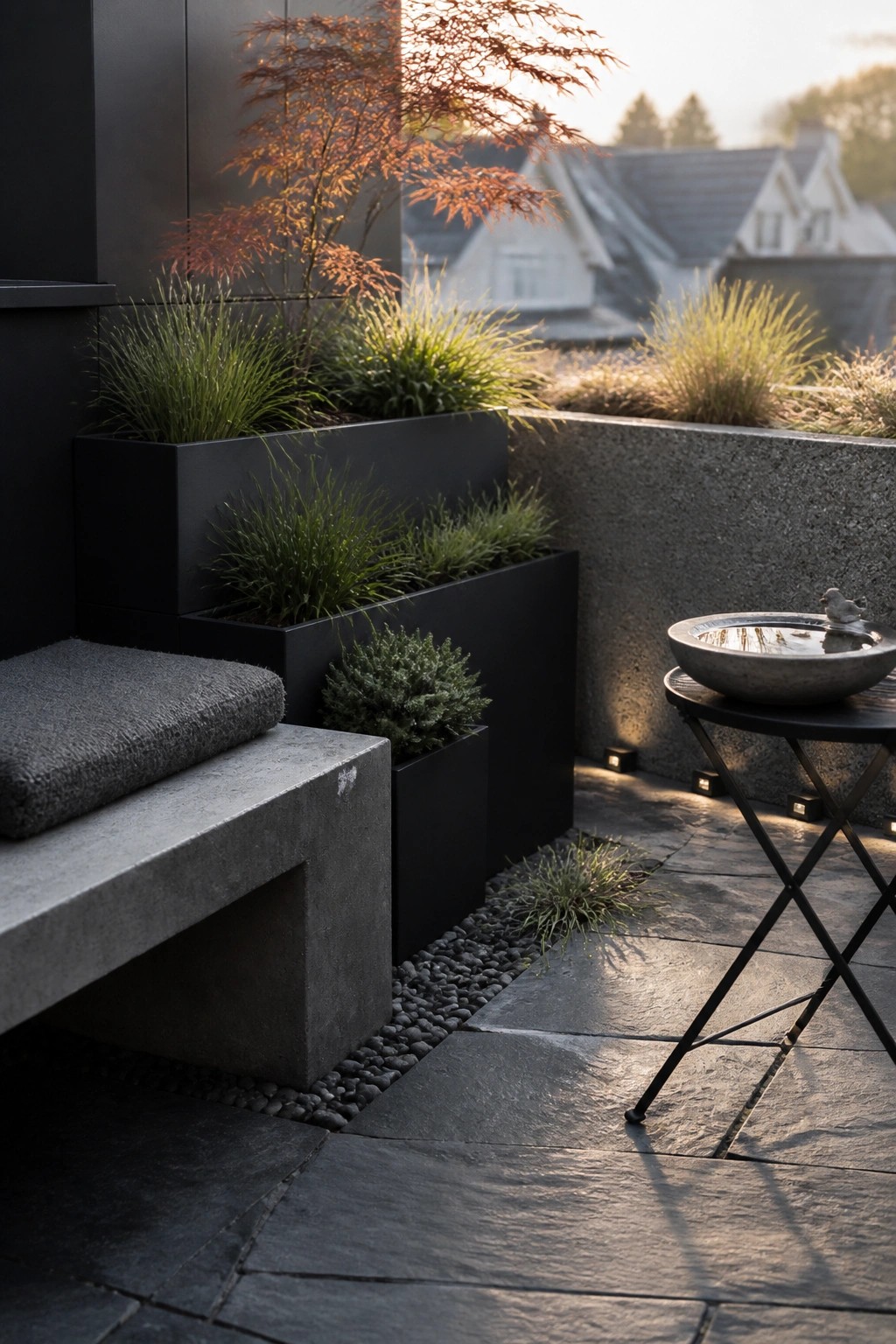
Black rectangular planters work well when you need more growing space on a small patio or balcony. They stack or sit at different levels without spreading out too far, and the dark color keeps the look simple while letting the plants stand out. Many people like this setup because it adds height and variety without cluttering the floor.
This approach suits apartments with limited outdoor room and paved surfaces. Place the tallest planters toward the back or side, then add shorter ones in front so everything stays easy to water and reach. Keep the plant choices mostly grasses and low shrubs if you want low maintenance.
Cluster Large Pots for a Full Garden Feel
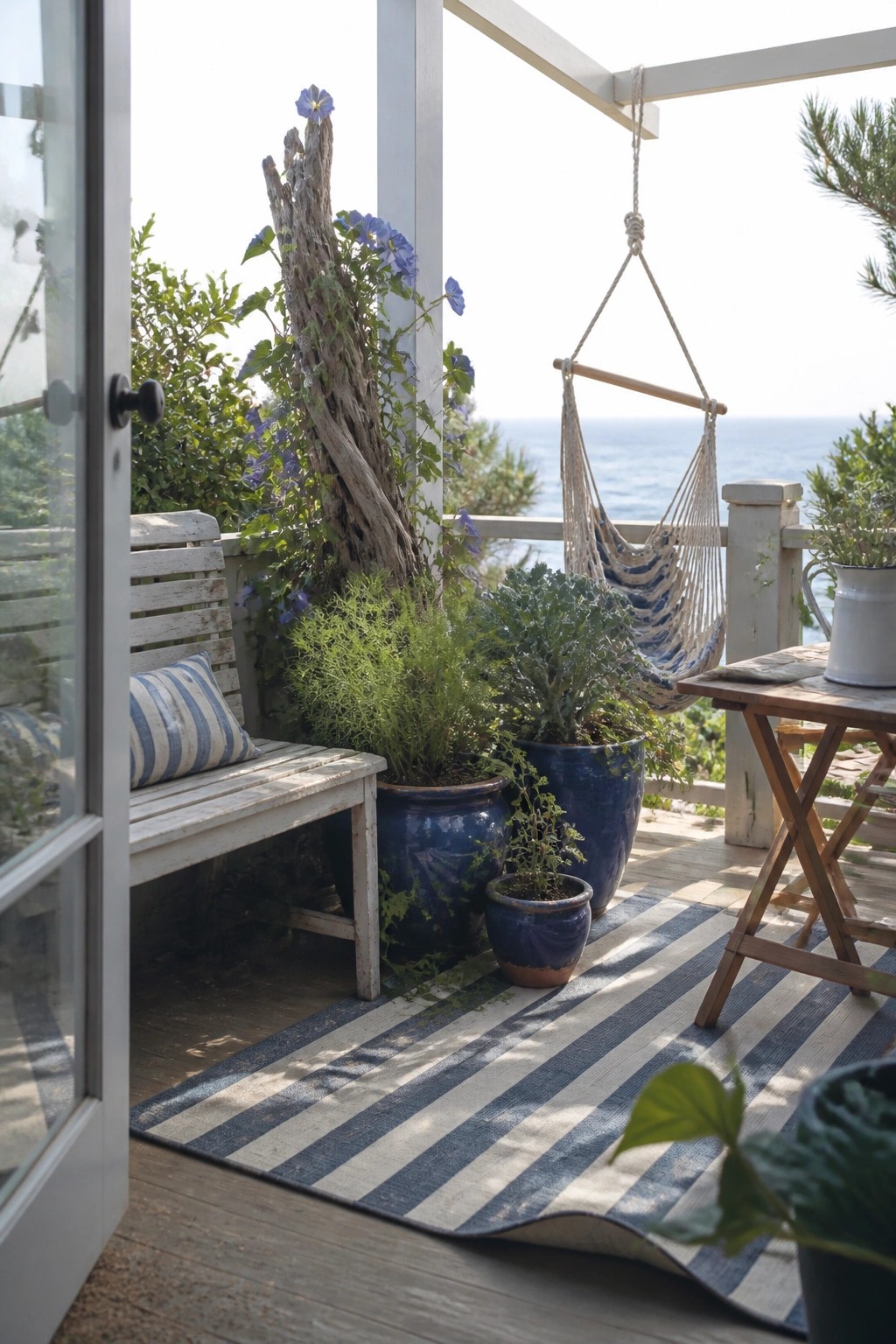
Many small porches and balconies stay bare because there is no soil to work with. Placing several large pots together in one spot gives the same effect as a garden bed while keeping everything movable and contained.
This works best on decks or terraces that get at least a few hours of sun. Use sturdy containers in similar colors or materials so the group feels intentional rather than scattered, and choose plants that match the light conditions in your space.
Shelving Makes Room For More Plants
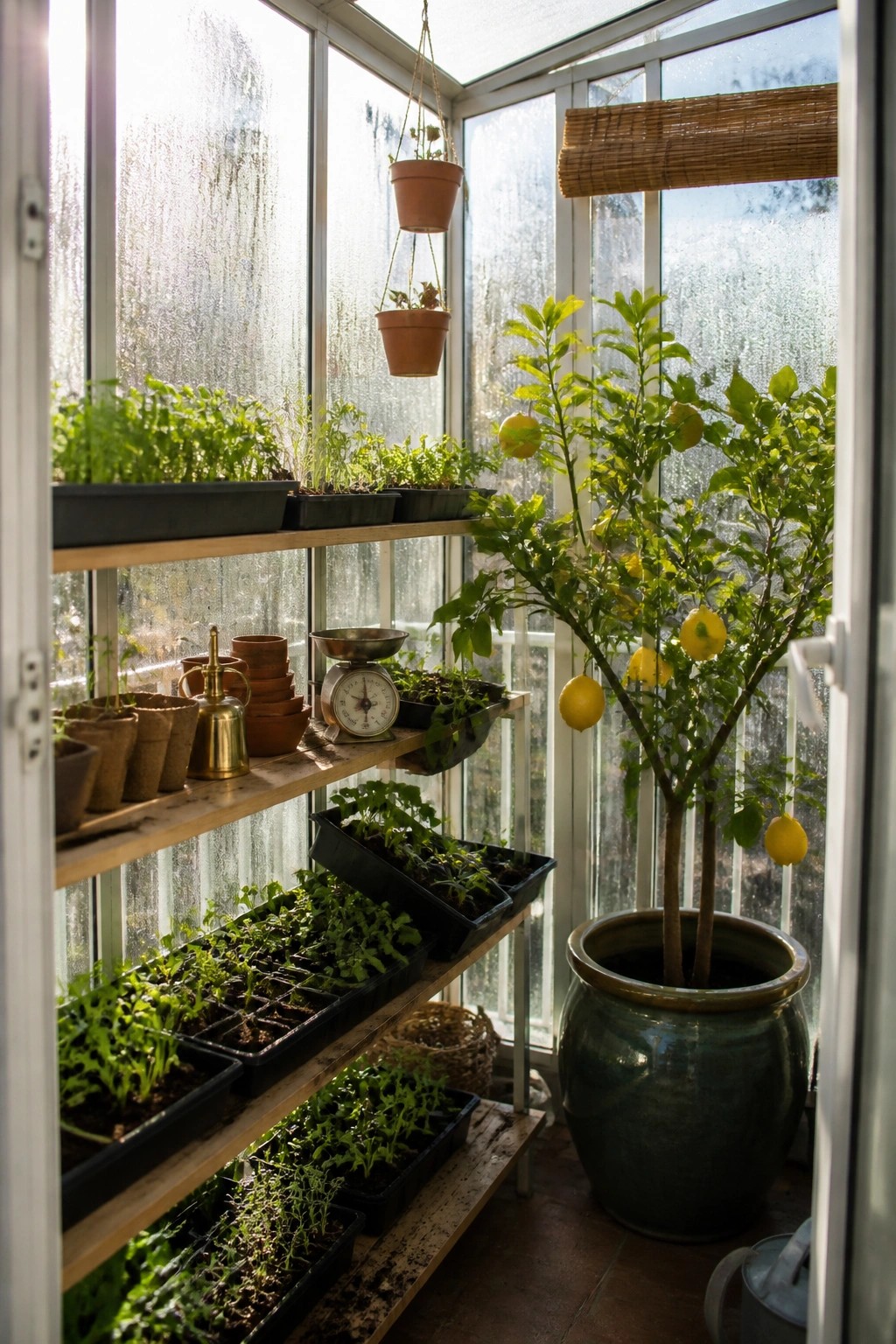
Many apartments lack floor space for a full garden, but adding a few sturdy shelves along a bright window changes that quickly. You can fit trays of seedlings on one level and larger pots on another without crowding the room.
This approach suits sunrooms or enclosed balconies where light is strong but square footage is tight. Keep the shelves narrow enough to leave walking room and choose wood or metal that handles moisture well.
Wall-Mounted Planters Open Up Tiny Balconies
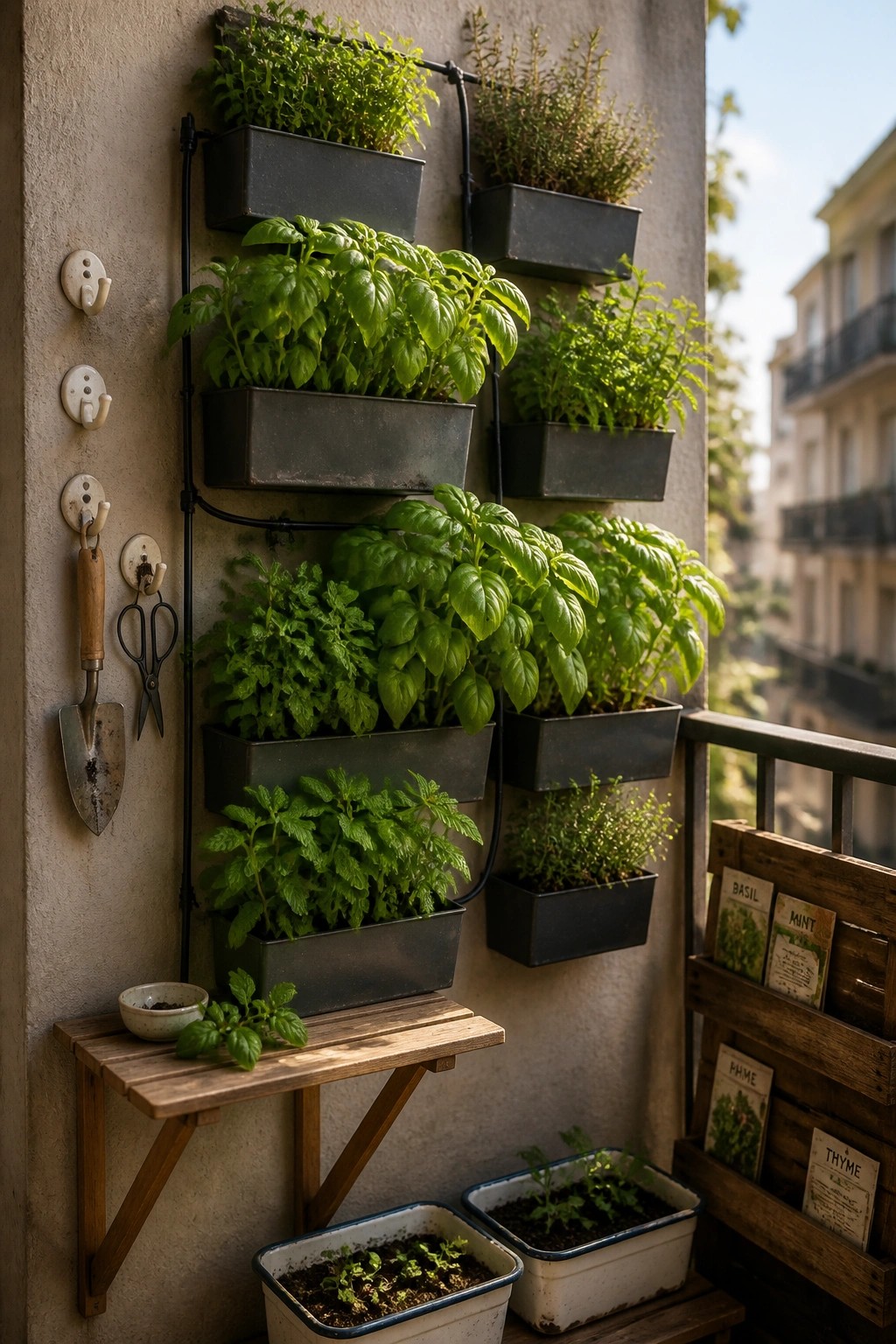
Many apartment balconies feel cramped once you add even a couple of pots on the floor. Mounting planters in rows along the wall solves that problem by moving the garden upward and leaving the walking area clear.
This approach suits any small outdoor space with a sturdy wall. Use lightweight containers, check that the brackets can handle the weight when the soil is wet, and group plants with similar water needs so care stays simple.
Ladder Shelves Help Fit More Plants
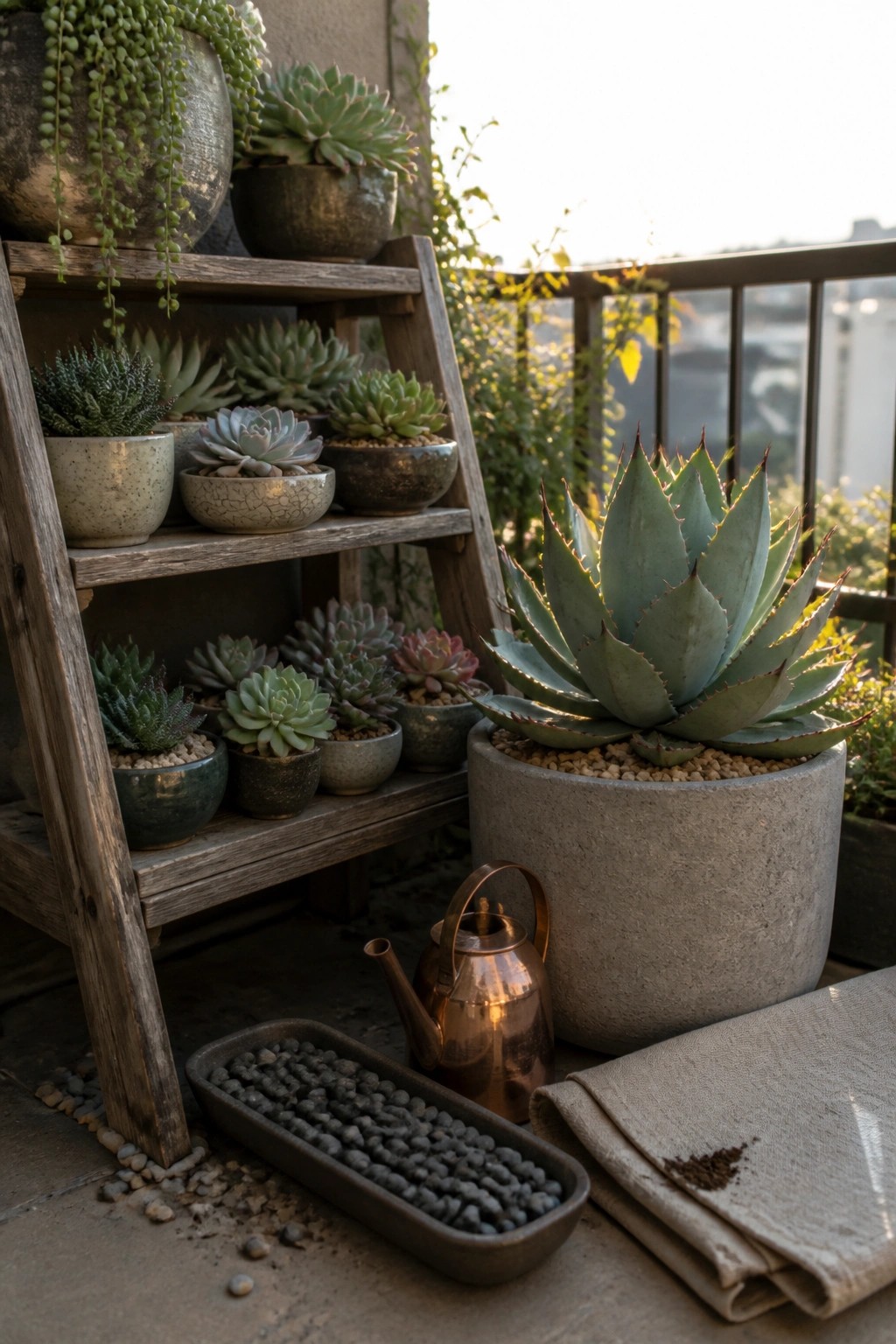
A ladder shelf gives you several levels of display space without spreading out across the whole floor. That makes it useful on balconies where every inch counts and you still want a full collection of plants.
Place it against a railing or wall and keep the pots fairly light so the whole setup stays stable. It works best in spaces that get steady sun and where you can reach every shelf easily for watering.
Add A Sink To Your Outdoor Potting Bench
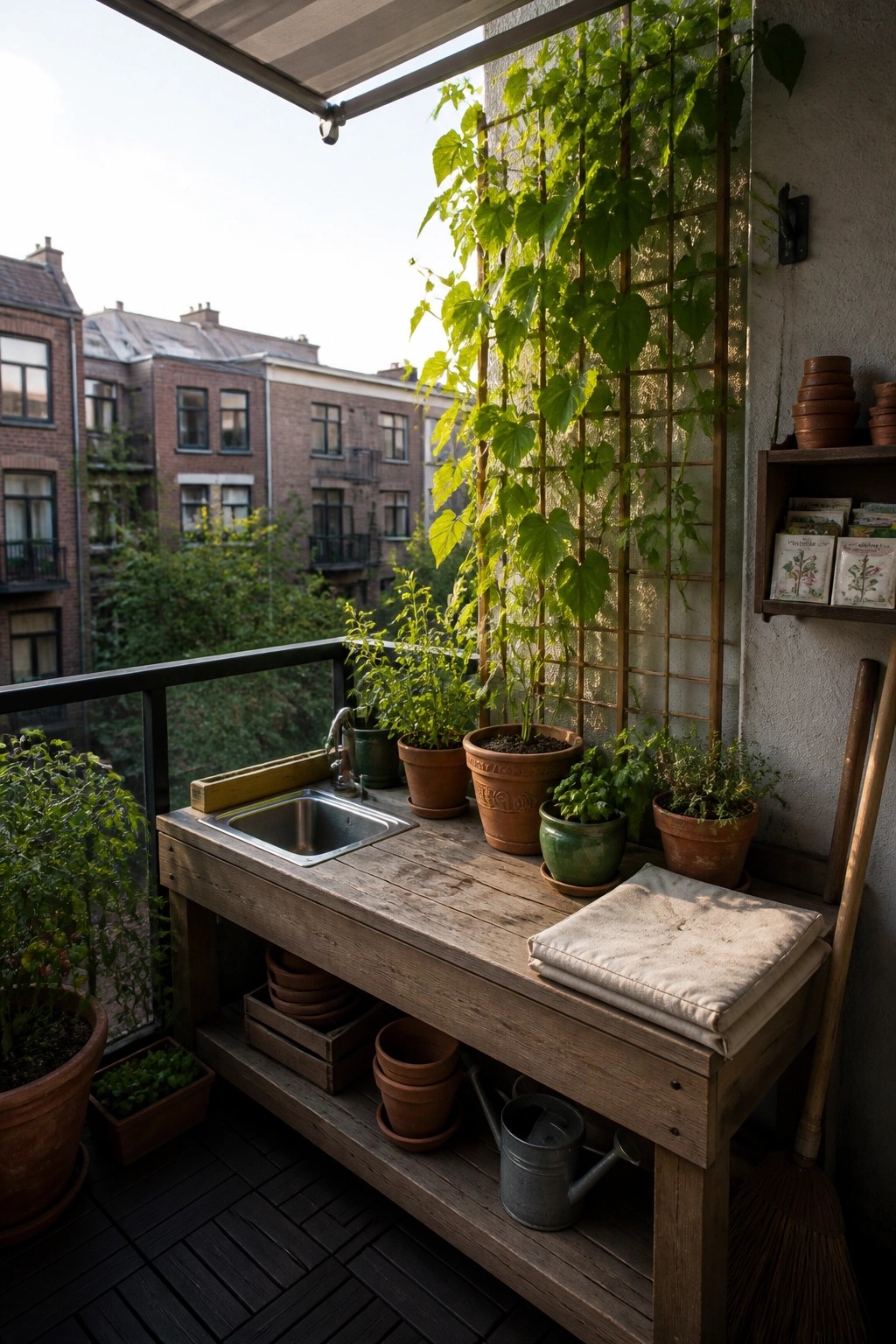
A small sink changes how you garden on a balcony. It lets you rinse tools, soak pots, and water plants without running back inside, which makes the whole routine simpler in a tight space.
This setup works best on balconies or patios where you already keep a lot of containers. Keep the bench sturdy, add open shelves below for extra pots and soil, and place it near a wall so climbing plants can grow up behind it without taking up floor room.
Add a Small Fountain for Calm
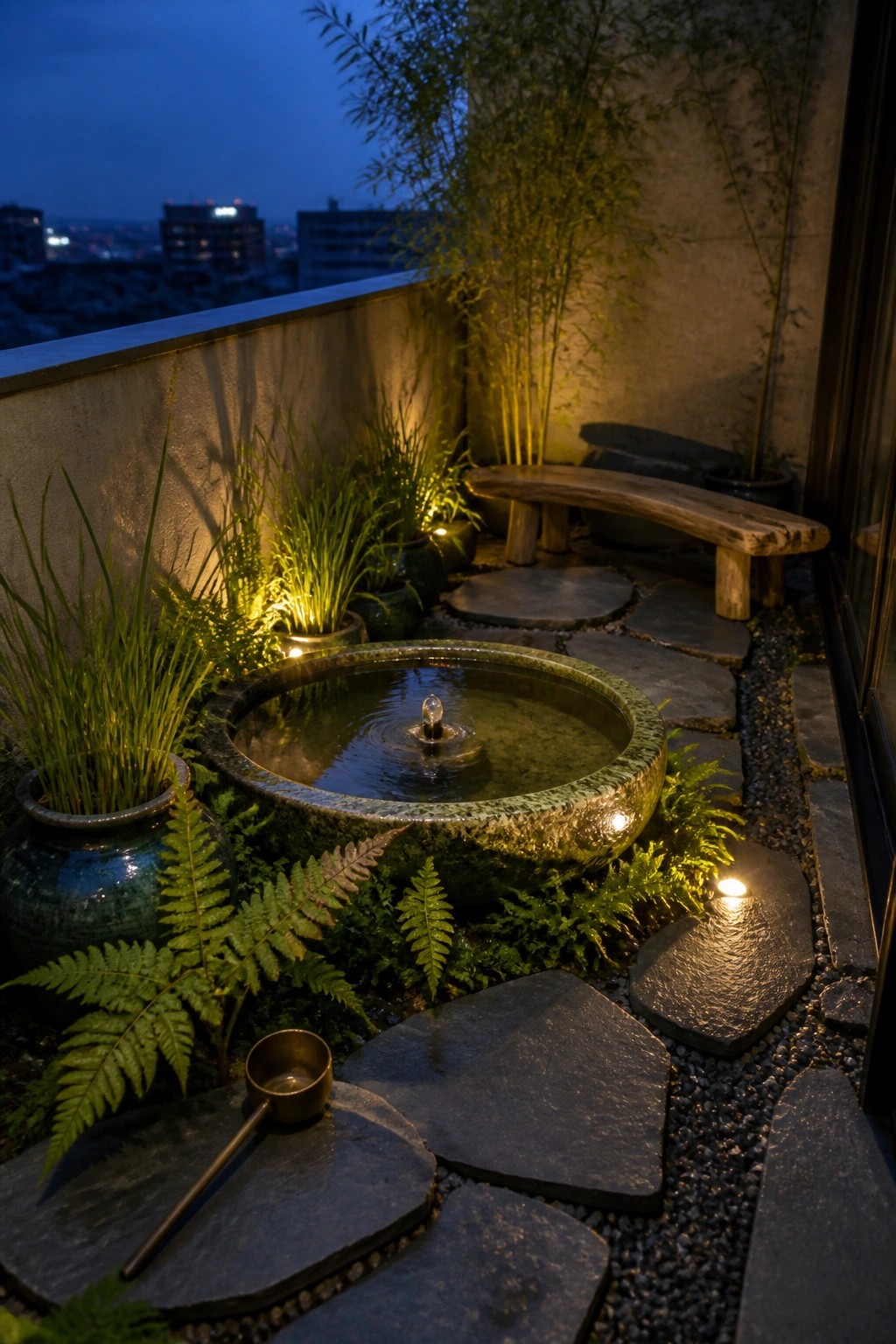
A small water feature gives a tiny balcony garden a quiet center without taking up much room. The gentle sound and reflective surface make the space feel more settled, even when you are working with just a few square meters.
This approach suits apartment balconies that already have some hard surface to work with. Set the basin on a low platform, then layer pots of ferns and grasses around the edges and run a few stepping stones out from it to a simple seat. Keep the scale modest so the fountain stays the main point rather than crowding the floor.
Use a Wall Trellis for Climbing Plants
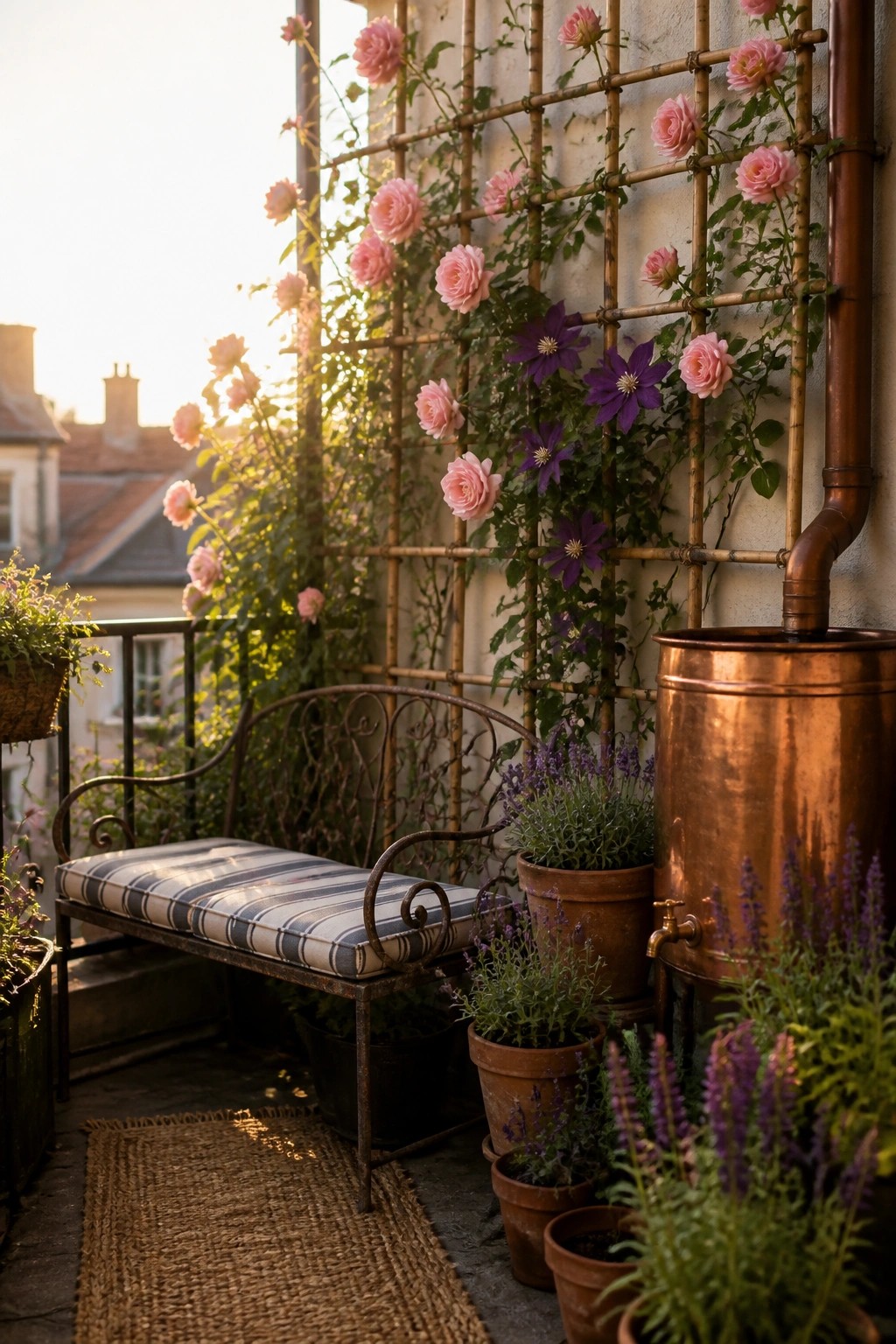
A trellis turns a plain wall into growing space without crowding the floor. In tiny balconies this matters because it adds height and greenery while leaving room to move around or sit.
Mount one on a sturdy surface and let roses or clematis fill it in over time. It works best in apartments with at least a bit of sun and a wall that can take a few screws. Check the weight as the vines mature so nothing pulls loose.
Growing Fruit Trees In Containers
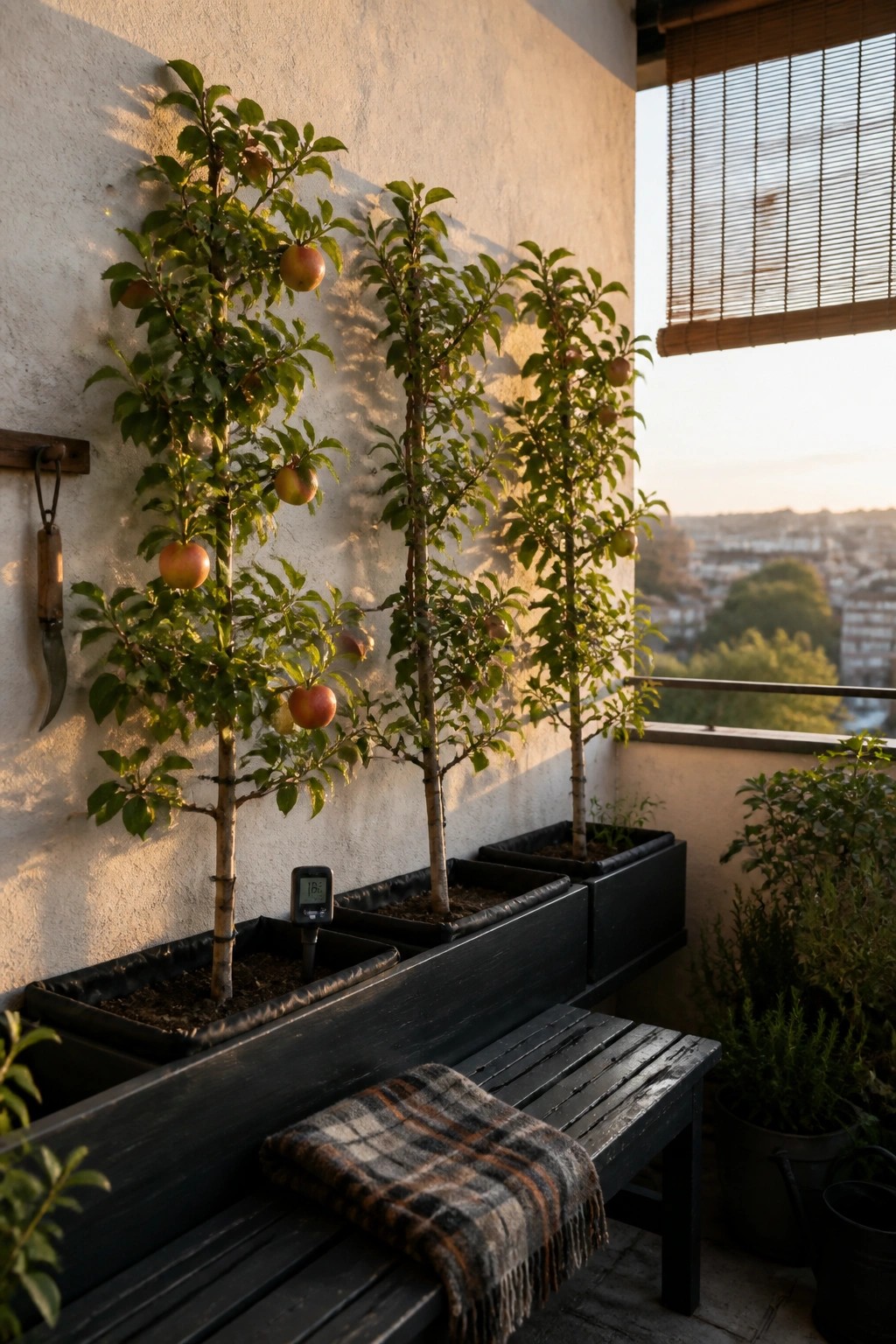
Many people with small balconies skip fruit because they assume trees need a yard. Container grown varieties change that. You can fit several productive trees along a wall or railing and still have room for seating.
These trees work best in deep sturdy planters that handle wind and watering needs. Pick dwarf or patio varieties and group them where they get sun. The black troughs in the photo show how simple it can look while still giving you fresh apples.
Vertical Planters For Tiny Balconies
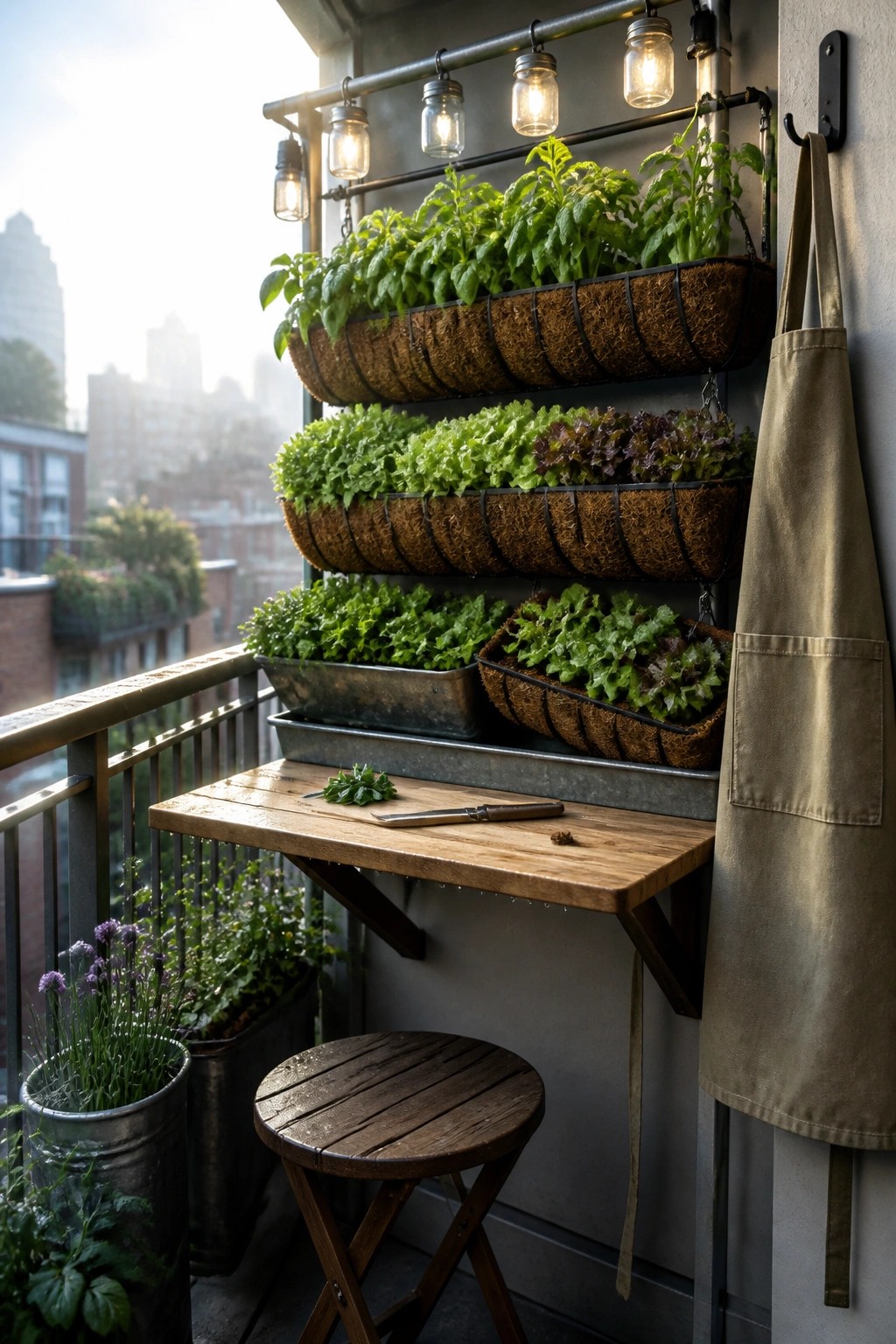
Many apartment balconies stay small, so mounting planters on the wall makes sense. It frees up floor space while still giving room for herbs, lettuce, and other greens that need decent light.
A fold-down table below the planters gives a spot for trimming and repotting without taking up permanent room. This setup works best on balconies with a solid wall and easy access to water, though you should check the weight limit before hanging anything heavy.
Raked Gravel Brings Calm to Tiny Balconies
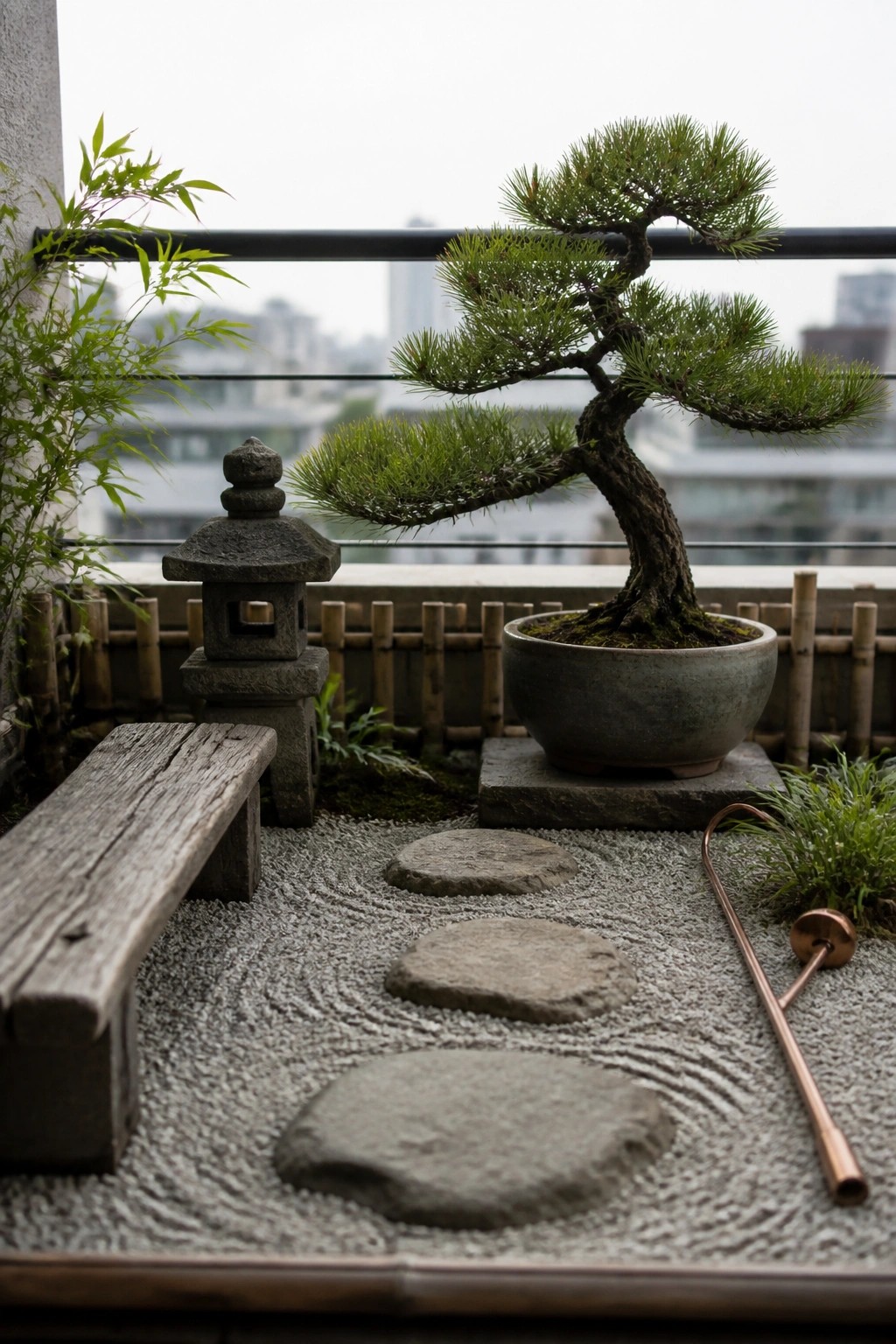
Raked gravel works well in small outdoor spaces because it gives structure without crowding the area with too many plants. The simple patterns keep things orderly and make even a narrow balcony feel more intentional and restful.
This approach suits apartments where floor space is limited. Keep the gravel area compact, add a few flat stones for a path, and place one larger plant like a bonsai to anchor the spot. Avoid overcomplicating the design so the space stays easy to maintain.
Layer Plants At Different Heights On Your Balcony
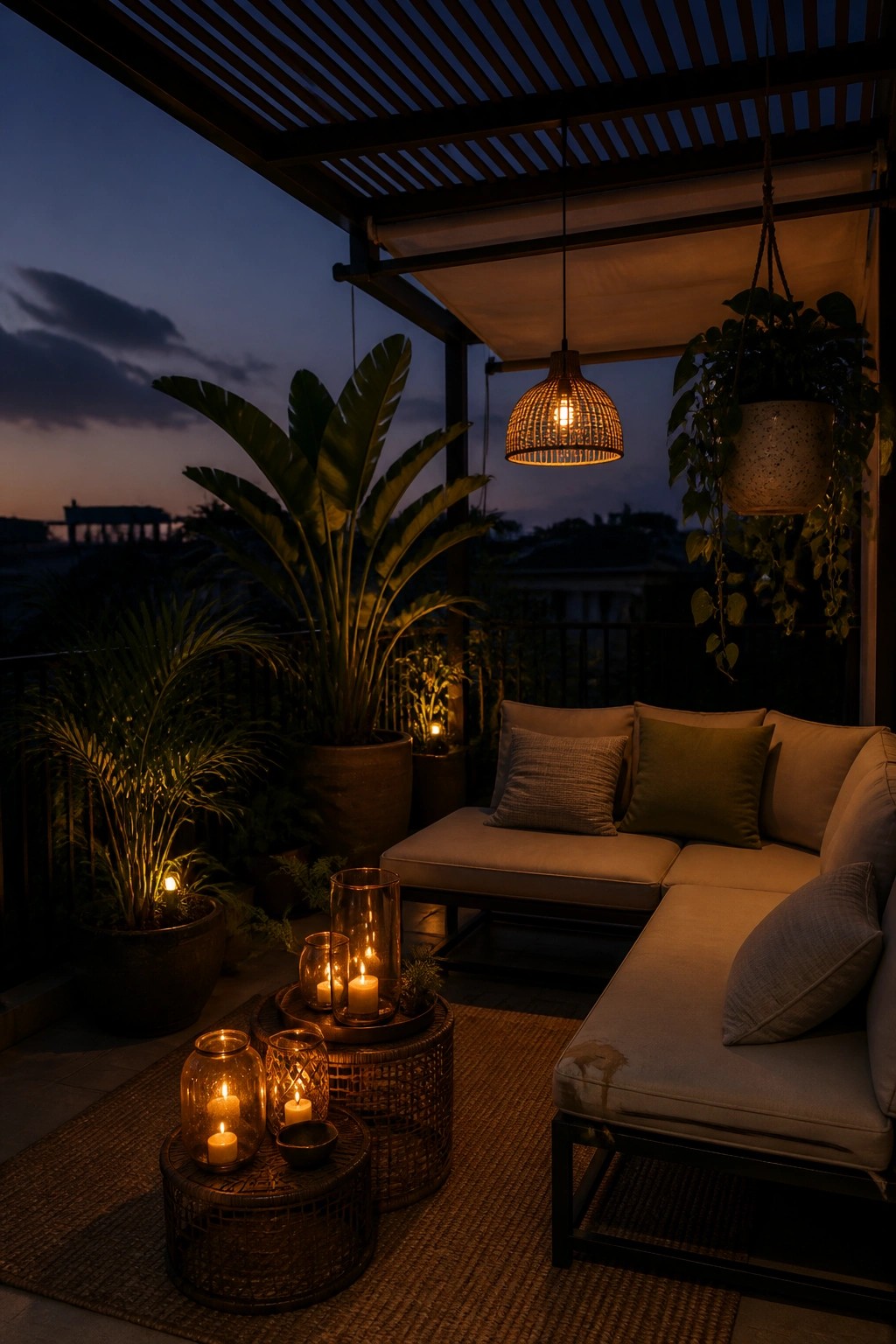
Tall plants do a lot of work in a small outdoor space. They fill empty corners, add privacy, and make the area feel more like a real room instead of a leftover strip of concrete. Grouping them at different heights keeps things from looking flat.
Place one or two large pots in the back corners first. Then add a few medium sizes around the seating and hang one or two planters from above. This mix works especially well on apartment balconies where floor space is tight and you still want it to feel green.
Wall Mounted Planters Keep Tiny Balconies Open
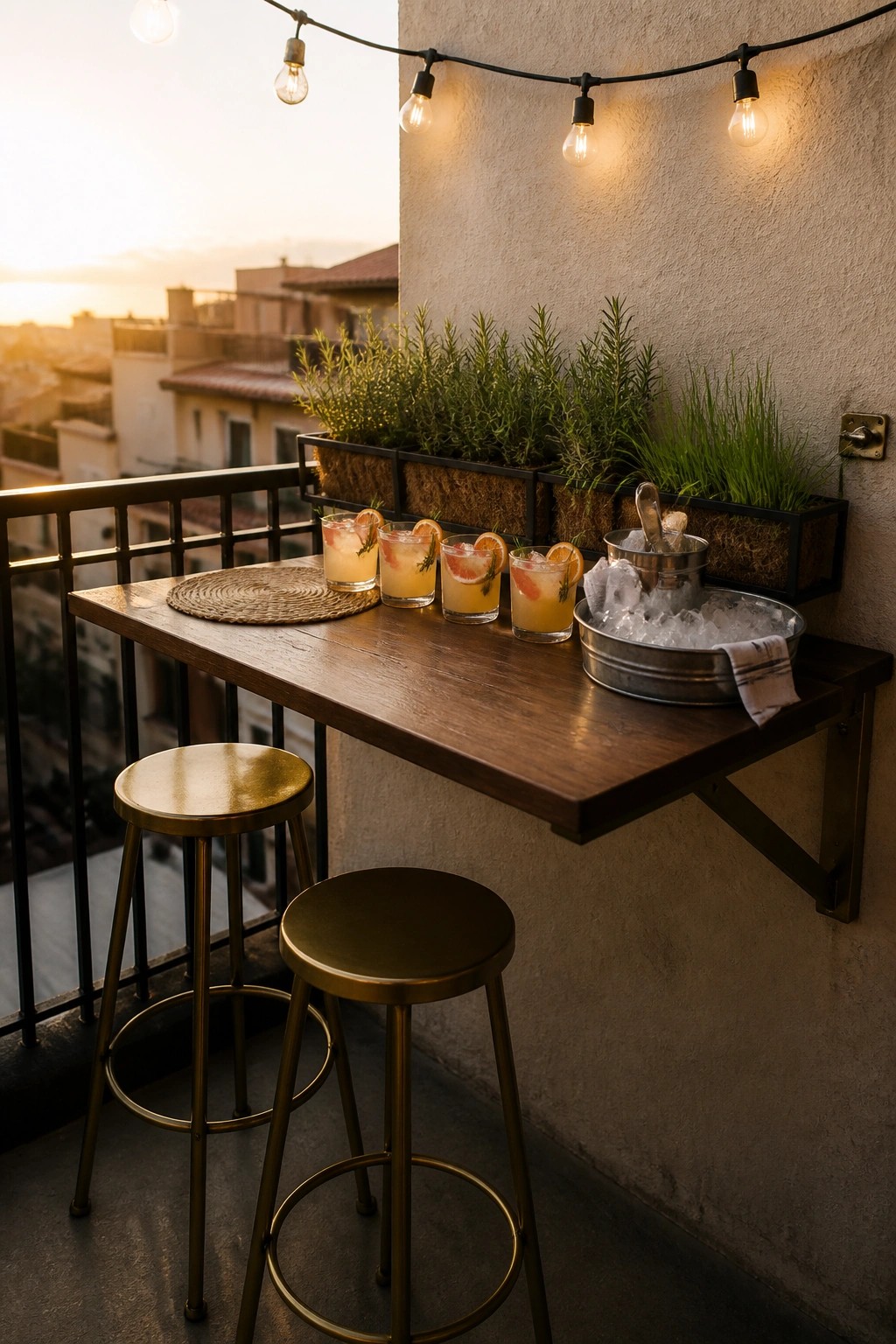
Wall mounted planters give you room to grow without losing floor space for seating. On a small balcony this keeps the area usable instead of turning it into a crowded plant corner.
They work best on a solid back wall where you can line up several boxes at once. Herbs stay compact and easy to reach, and the setup leaves room for a table and stools below.
Frequently Asked Questions
Q: My tiny balcony gets mostly shade. What plants still look elegant there?
A: Go for ferns or ivy. They fill out nicely without needing direct sun and give that lush vibe. Trim them every few weeks to keep the shape clean.
Q: How do I stop soil from washing out during heavy rain on my railing planters?
A: Add a thin layer of moss on top of the soil. It holds things in place and looks natural with the plants.
Q: My space has strong afternoon winds. Which setup holds up without constant fixes?
A: Use heavier ceramic pots and cluster them in a corner. This keeps things stable while creating a cozy grouped look.
