


I’ve found that small gardens tend to work better when the layout guides how you actually walk through them each day.
Planting choices and simple edging can shift whether a space feels open or boxed in once everything grows in.
Some weekend additions change everything.
I usually try out pathway ideas first because they seem to affect daily use more than most other details.
Watching how these projects settle over a season has helped me sort out which ones are worth repeating in my own yard.
Raised Beds Make Herb Gardening Simple

A raised bed gives herbs their own tidy spot without needing a big yard or fancy setup. The wood frame keeps soil contained, helps drainage, and makes weeding and picking much easier on the back.
Build one from basic lumber and place it against a wall or along a path where it gets sun. Add small labels so you can find what you need quickly when cooking, and water regularly with a can kept nearby.
Mount a Wooden Rack on Your Fence for Extra Plants

A fence-mounted rack gives you growing space without eating into ground room. It works well in small yards where every inch counts and lets you group plants at different heights so they all get decent light.
This setup suits homes with a solid fence and a sunny side to work with. You can add hooks along the bottom for tools so everything stays in one spot. Just choose wood that can handle weather and check that the brackets are strong enough to hold the weight once the pots are full.
Stepping Stone Paths

Stepping stones set into gravel give a garden an easy walking route without covering the whole area in hard paving. The round shapes sit low and let rain drain away, which keeps the path practical even after wet weather.
This works best in narrow side gardens or along the edge of a bed where you need access but do not want a wide walkway. Space the stones so they feel comfortable underfoot and let the plants on either side grow in close.
Label Your Pots with Simple Markers

Plant markers turn a group of containers into something more organized and easy to manage. They help you remember what is growing where, especially when pots sit close together on a small balcony or patio.
Make the markers from scrap wood or leftover tiles, then tuck one in front of each pot. This approach suits renters and anyone working with limited space, and it keeps the whole setup looking neat without much extra work.
Brick Edging For Tidy Flower Beds

Brick edging gives a garden path a finished look without much fuss. It keeps the beds from spilling onto the walkway and makes the whole space feel more organized even when the plants are still filling in. The low profile works well with stepping stones and helps direct water away from the path edges.
This approach suits small front or side gardens where you want structure but do not have room for tall fences or heavy walls. Lay the bricks on a simple sand base so they sit level and stay put. It is an easy weekend job that holds up for years with almost no upkeep.
Add a Small Stone Pond

A small pond edged with stones gives any garden a quiet focal point without taking up much room. The natural rock border helps the water blend right into the surrounding plants and keeps the whole thing looking simple and settled.
This works best in a corner bed or along a path where you can dig a shallow basin and stack stones around the edge. Use a basic liner and a small pump if you want a bit of moving water, then tuck grasses or irises around the rim to soften the look.
Raised Beds Help Mix Vegetables and Flowers Easily

A raised planter box keeps the soil contained and makes it simple to grow a mix of crops in one place. People often like this setup because it reduces weeding and gives better control over what goes into the ground.
Place it near a seating area so you can keep an eye on the plants while enjoying the space. This works well in small yards or patios where you want both produce and color without needing a large plot.
Trough Planters For Low Maintenance Gardens

A trough planter gives you a quick way to add a small garden without digging up any ground. The long shape holds several plants at once and keeps them neatly contained so the whole thing stays tidy with almost no work.
This setup works best on patios, balconies, or along the edge of a deck where space is limited. Fill the trough with a shallow layer of gravel, add a few hardy succulents, and move it around until it fits the spot you have.
Stack Stones For Easy Raised Bed Borders

Stacked stone edging turns a plain patch of ground into a neat little garden without needing fancy tools or a big budget. The layers hold the soil in place, keep weeds from creeping in, and give each planting its own clear spot so the whole bed looks tidy even when things are still growing in.
This approach works best in a small yard or a corner near a fence where you want something more lasting than wood or plastic. Start with the bottom ring on level ground, add a second layer slightly inside it, and keep going until you reach the height you like. Fill each ring with soil and tuck in herbs or flowers, and the job is mostly done in a day or two.
Add a Simple Arch to Define Your Garden Path

An arch gives a narrow garden path a clear starting point and adds height without crowding the ground. Climbing roses and clematis quickly cover the frame, turning a basic walkway into something more finished.
This idea suits small side gardens or tight spaces along a house wall. Use a sturdy metal or wood arch, plant two or three climbers at the base, and keep the surrounding beds low so the path stays easy to walk.
Add A Stone Retaining Wall

A low stone retaining wall gives a small garden some needed height without taking up much space. The stacked stones create a clean edge while leaving room for plants to spill over the top, which softens the look and adds layers in a simple way.
This works well along a path or at the edge of a bed where the ground slopes a little. Keep the wall under two feet so it stays easy to build in a weekend, and choose plants that trail or mound to cover the stone over time.
Build Mosaic Stepping Stones For Your Garden Path

Mosaic stepping stones add color and pattern to a garden without needing much room. They turn a simple route into something cheerful and handmade, which works especially well in small spaces where the ground can feel plain.
Set the stones in a row using broken tiles or old plates pressed into concrete rounds. They suit narrow side paths or routes leading to a shed, and they stay put once the grout cures.
Vertical Herb Wall for Small Balconies

A vertical wall planter lets you grow a full set of kitchen herbs without using up floor space. On a small balcony this setup keeps everything within reach and turns an empty wall into a working garden. The pockets hold enough soil for steady growth and the labels make it easy to grab what you need while cooking.
This works best on apartment balconies or narrow patios where ground beds are not an option. Mount the panel on a sturdy wall that gets several hours of sun and water regularly since the pockets dry out faster than pots. Keep an eye on weight once the soil is wet so the brackets stay secure.
Make a Small Alpine Rock Garden

A rock garden with alpine plants works well when you want something low maintenance in a limited space. The stones and gravel help with drainage and keep the look neat without much weeding.
This setup suits balconies, small terraces, or narrow beds along a wall. Use local rocks if you can, mix in gritty soil, and choose hardy plants like saxifraga that handle dry conditions once established.
Define Your Beds With A Metal Planter Box

A metal planter box gives a small garden bed clear shape and keeps everything from spilling onto the path. It works especially well along a house wall where space is tight and you want the planting to feel intentional rather than scattered.
This setup suits narrow side yards or front borders that need a tidy edge without much digging. Set the box on gravel, add a simple brick line if you want extra definition, and fill it with a mix of taller and lower plants. The metal holds up in weather and needs almost no maintenance once it is in place.
Build a Basic Compost Bin

A wooden compost bin gives you an easy way to handle garden waste and kitchen scraps without taking up much space. It keeps everything in one spot so the pile stays tidy and breaks down faster.
You can build one from leftover planks or pallets and place it near a hedge or fence where it stays out of the way. Adding a simple sign helps everyone remember to balance greens and browns as they add material.
Using Old Wooden Crates As Planters
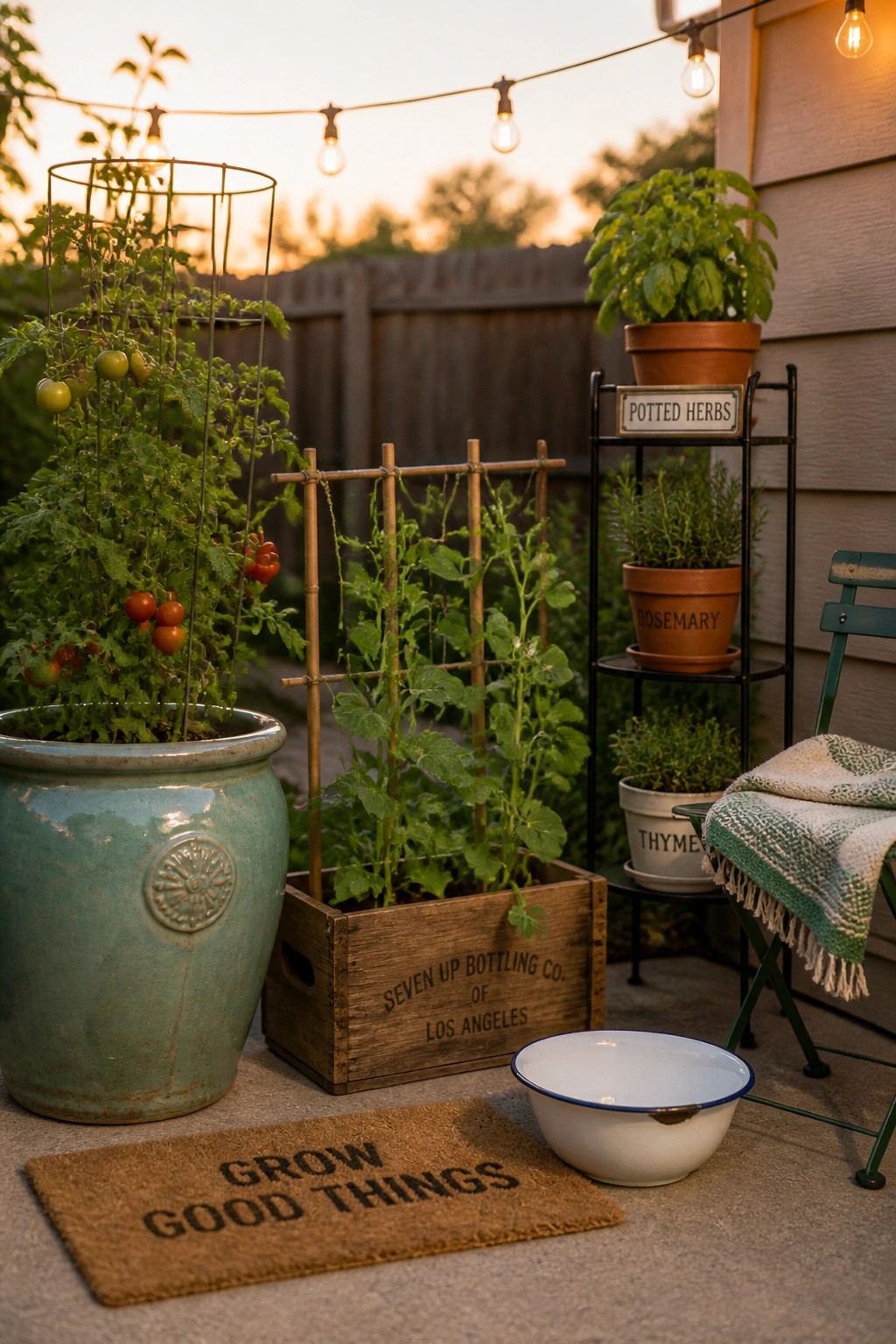
Wooden crates make simple and sturdy planters for vegetables and herbs. They hold soil well, add some height, and give plants room to spread without needing a full garden bed. Many people like them because they are easy to move around and can be found at low cost.
Place the crate on a patio or deck where it gets good sun, then add a basic wood or wire support for taller plants like tomatoes. This setup works best in small yards or rented spaces where permanent beds are not an option. Keep an eye on drainage so the wood lasts longer through the seasons.
Frequently Asked Questions
Q: What if my space gets strong afternoon sun? A: Choose heat tolerant plants like succulents or herbs for those spots. Position taller projects to cast a bit of shade on smaller ones nearby. Water early so the soil stays moist through the heat.
Q: Can I build the wooden projects with scrap lumber I already have? A: Sort your scraps by length first and adjust the measurements to fit what you own. Sand rough edges before assembly so nothing splinters later. Seal the wood once you finish to protect it from weather.
Q: How do I stop weeds from taking over after I finish a project? A: Lay cardboard or newspaper under any new soil or mulch layers. Pull small weeds by hand every few days while they are tiny. This keeps the area neat without extra chemicals.
Q: My balcony has weight limits. Which projects stay light? A: Skip anything with lots of soil or heavy stones. Use fabric planters or small wall pockets instead and fill them with lightweight potting mix. Hang them from the railing so the floor stays clear.
