


I often think about how small outdoor areas can quickly feel cramped if the containers do not leave enough room for a chair or two.
Many of the setups I see online look appealing at first but fail to account for daily use like walking through or watering without spills.
A few simple changes in placement have made a bigger difference for me than the actual choice of plants.
Budget versions let me experiment without worry.
I would start with lightweight options that I can move around as the light shifts throughout the day.
Hang Herb Pots From An Old Ladder

A ladder gives you extra growing room without crowding the floor of a small balcony. Lean it against the railing and hang pots from the rungs with simple wire. It keeps the plants at a good height for watering and picking while leaving space for a chair or table.
This setup works on any sunny balcony or deck where floor space is tight. Use a sturdy ladder and check that the rungs can handle the weight of the pots once they are watered.
Repurposed Metal Trays For Succulent Displays

Metal trays make a practical choice for container gardening because they are easy to find at low cost and hold up well outside. Placing them on a simple base of cinder blocks topped with scrap wood creates a raised spot that keeps plants off the ground and improves drainage.
This approach suits small yards or narrow side areas where digging beds is not an option. Line up a few trays with succulents or herbs, and the whole thing stays movable if you want to change the layout later.
Repurposed Barrels For Container Gardens

Wooden barrels work well for container gardening because they give you deep soil space without taking up much floor room. They hold up outdoors and let you grow bigger plants or even climbers on a small balcony or deck.
Place two or three barrels along one side and add a simple wood trellis behind them for vertical growth. This approach suits apartments or tight outdoor areas where raised beds would not fit and keeps the whole setup low cost if you source barrels secondhand.
Mount Containers on Walls to Free Up Space

Wall-mounted containers work well in small outdoor areas because they turn unused vertical surfaces into growing spots without taking over the floor. Metal troughs like the ones shown here sit right against a brick wall and hold plenty of plants while keeping the ground clear for walking or seating.
This approach suits narrow courtyards, patios, or side yards where every square foot counts. Use sturdy brackets, make sure the wall can handle the weight when wet, and choose lightweight soil mixes to avoid strain on the mounts.
Stack Crates For More Growing Room

Crate stacking gives you extra planting space without taking up much floor area. The black crates in this setup hold several pots at different heights, which helps smaller plants get light and keeps the whole area feeling organized instead of crowded.
This works well on a patio or along a fence where ground space is limited. Use sturdy crates, line them if needed, and place the larger pots on the bottom layers so everything stays stable. Just check the weight once the soil and plants are added.
Hang Baskets From Your Railing

Many small balconies run out of floor space quickly once you add seating. Hanging a few baskets from the railing keeps plants off the ground and still leaves room to sit.
Rope or twine works fine for this if it is thick enough to hold the weight. Woven baskets like the ones in the photo give a simple look, and you can add a couple of small pots on a side table for more variety without crowding the area. It fits apartments or any narrow outdoor spot where you want plants but need to keep things practical.
Mount a Metal Trough Under the Window

A long metal trough mounted below a window gives you planting space without using up ground room. It works well on small lots or along the side of a house where beds would feel cramped.
This approach suits older homes or cottages and keeps plants close to a water source. Fill the trough with compact flowers or herbs, and use a simple stepladder nearby to hold a few extra pots if you need more room.
Grow Dwarf Citrus Trees In Large Pots

Many people with tiny outdoor spaces use oversized containers to grow lemon or orange trees. The big pots give the roots room to spread and turn a plain balcony into a spot that actually feels like a garden.
This approach works best on sunny terraces or rooftops where you can shift the pots with the light. Pick dwarf varieties, use sturdy containers with drainage holes, and group a couple of herb planters nearby so everything stays easy to water and prune.
Stack Buckets For A Vertical Garden
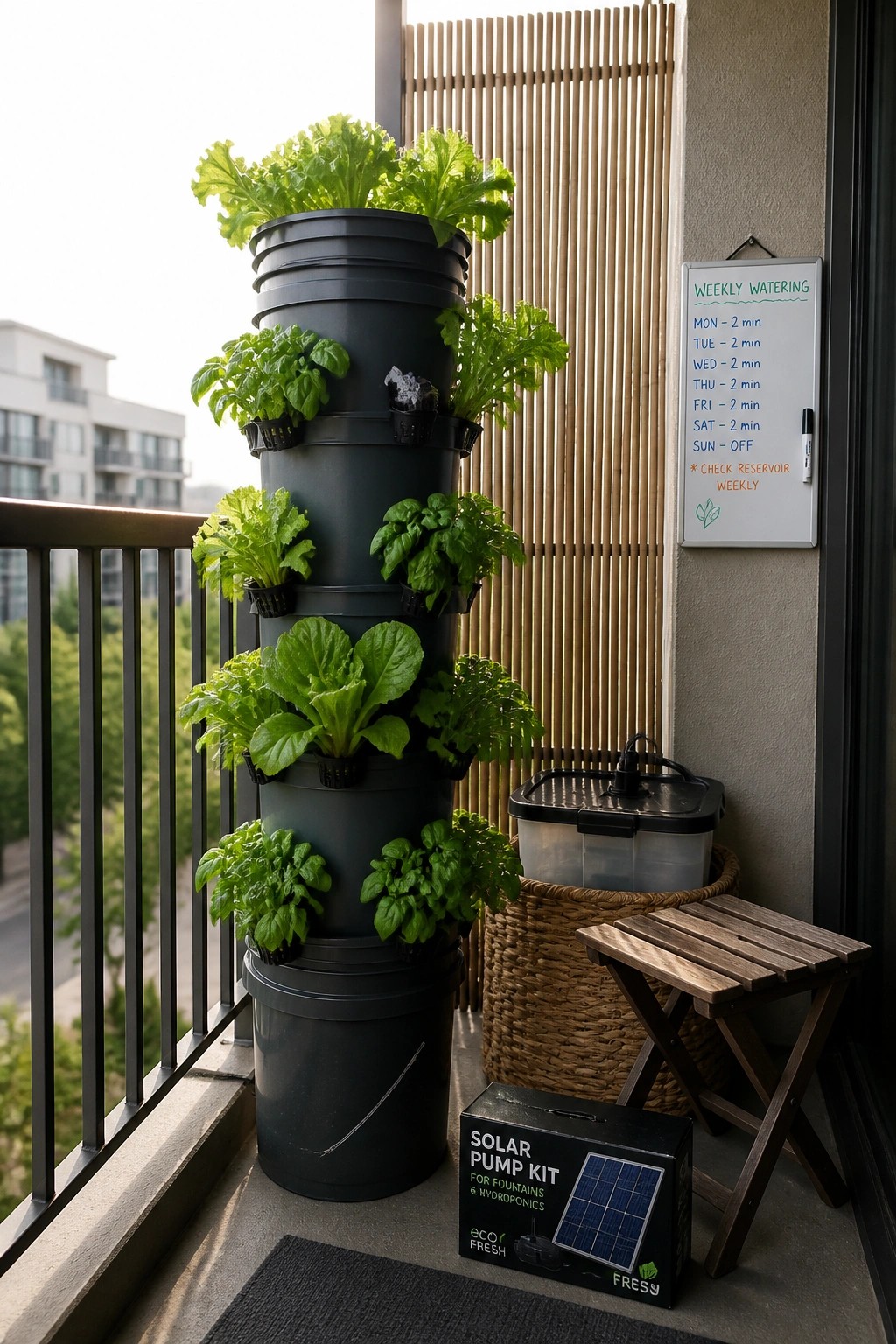
Stacking buckets into a tall tower gives you room to grow plenty of plants without taking over the floor. It works especially well on balconies where space is tight and you still want fresh greens close at hand.
This approach suits small patios or apartment outdoor areas that get decent sun. Drill side holes in each bucket for extra planting spots and set up a simple drip system so water reaches the lower levels. Keep an eye on the top plants since they tend to dry out first.
Repurpose Everyday Containers for Small Gardens

Many gardeners use old crates and metal cans when they want to grow food without buying new pots. Mounting wooden boxes on a wall creates vertical rows for lettuce and greens, while paint cans hold tomato plants that need staking.
This works best in gravel yards or along fences where ground space is limited. Drill drainage holes in anything you repurpose, and place the containers near a path so harvesting stays easy.
Repurpose Wooden Crates As Wall Planters

Mounting wooden crates on a wall or fence gives you a simple way to grow more plants without using up floor space. The crates hold soil well and let you stack rows at different heights so everything stays within easy reach. It works especially well in tight yards or along a side path where a regular bed would not fit.
This approach suits small homes with limited ground for gardening and needs only basic screws or brackets to hold the crates in place. Keep the lower rows at a comfortable height and leave a little space in front for seating or a path so the area stays usable.
Mount Pots Along Walls To Add Vertical Gardens

One simple way to fit more plants into a small yard is to mount pots directly on a wall or fence. This keeps the ground open for walking or seating while still giving you a full row of greenery at eye level.
It works especially well in narrow side yards or along a pool edge where floor space is limited. Terracotta pots are inexpensive and hold up outside, and trailing plants help soften the hard surface without much extra care.
Hang Mason Jars For Vertical Growing Space

Hanging jars from the ceiling rafters is a simple way to add more plants without taking up floor room. It works especially well on a covered porch where you still want some growing space but need to keep things open below.
Old mason jars work fine if you drill a few drainage holes in the bottom first. This setup suits small porches or balconies best since it stays out of the way and uses what you already have on hand.
Use Wall Planters To Grow More In Tight Spaces

Wall pockets let you add plants without crowding the floor. On a small balcony this keeps walking room open while still giving you layers of green at different heights.
They work best on any railing or solid wall that gets decent light. Just make sure the pockets are sturdy and water can drain without dripping on neighbors below.
Repurpose A Pallet For A Vertical Garden Wall

A vertical pallet garden works well when ground space is tight. Mounting an old pallet on the wall lets you stack several pots in one spot instead of spreading them out along the ground. This keeps pathways clear while still giving you room for herbs, flowers, and small vegetables.
The setup works best along narrow side yards or alley spaces where a full bed would not fit. Secure the pallet firmly, line the back, and slip pots into the openings. It is a simple way to add more plants without buying new furniture or taking over the walkway.
Frequently Asked Questions
Q: What household items work best as containers if store pots cost too much? A: Old buckets, crates, or even sturdy plastic bins from the garage do the job fine. Drill or poke drainage holes in the bottom first. Line them with newspaper if the material might leak.
Q: How do I stop container plants from drying out too fast on a hot balcony? A: Water in the morning and check the soil with your finger each day. Grouping pots together helps them shade each other and hold moisture longer. Mulch the top with shredded leaves or grass clippings to cut evaporation.
Q: Can I start seeds directly in these DIY setups? A: Yes, but use a light seed-starting mix on top of regular soil for better results. Keep the surface damp until sprouts appear. Thin them early so each plant has room to grow strong.
