


Side yards often get passed over because their narrow shape makes standard garden plans feel cramped right from the start.
I usually begin by mapping out a clear path and deciding where edging will run so the space does not end up looking cluttered.
Vertical planting tends to work better here than spreading things across the ground.
A few of these ideas are ones I would try in my own yard this season.
Small changes in how plants are grouped can make the whole strip feel wider without adding actual width.
Lay Out A Paver Path In Gravel

A narrow side yard often needs a clear walking route that stays dry and easy to maintain. Large pavers set into gravel create a simple path that handles foot traffic without taking up too much width or looking too formal.
This layout works best along long, tight spaces where you still want planting on both sides. Keep the pavers large and evenly spaced so the gravel can fill the gaps and let water drain through. It suits most homes with side access and pairs well with low edging plants that stay out of the way.
Stepping Stones Work Well in a Narrow Side Yard
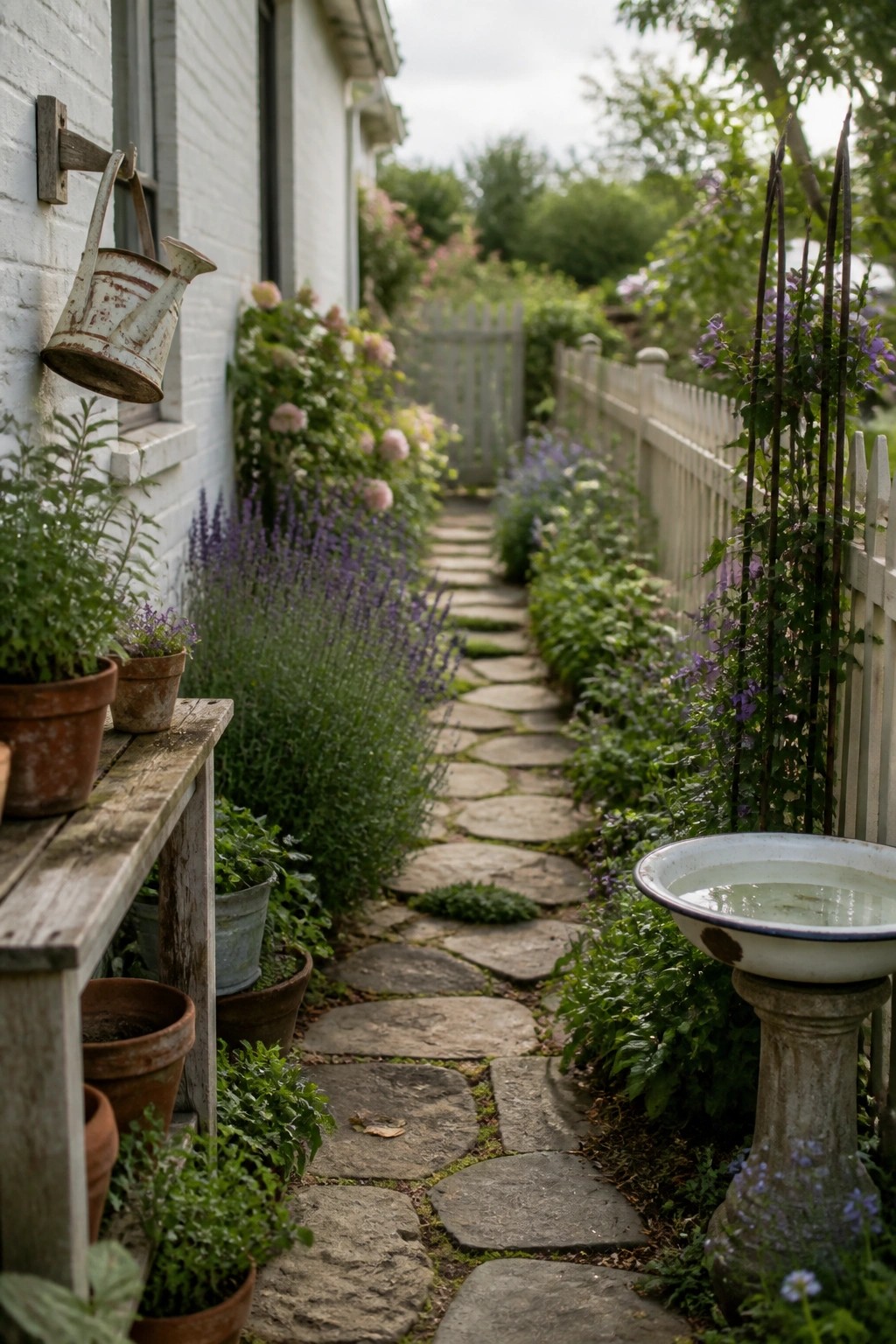
A path made of irregular stepping stones gives you a simple way to move through a slim side yard. It breaks up the space without needing a wide walkway, and it lets plants grow right up to the edges on both sides.
This setup suits older homes where the side yard is mostly a leftover strip. Keep the stones slightly uneven so the walk feels natural, and leave room for pots or low plants along the house so the path stays clear.
Foldable Seating Fits Narrow Side Yards

A narrow side yard often gets ignored because it feels too tight for real use. Adding a small folding table with a pair of lightweight chairs lets you create a simple spot to sit without taking over the walkway or needing built-in structures.
This works best on homes where the side path is mostly hardscape and you want to keep the space open for walking. Choose pieces that fold flat so they can be stored when the yard needs to stay clear, and keep plants in pots along the edge to add some greenery without permanent planting beds.
Stepping Stones Work Well For Narrow Side Yards

A stepping stone path lets you turn a slim side yard into something you can actually walk through. The stones give a clear route while the gravel fills in around them, so the whole thing stays simple and does not need much width.
This idea suits homes where the side space is tight but still gets some light. Keep the stones fairly large and space them for comfortable steps, and add just a few low plants along the edges so the path remains the main feature.
Mount a Pallet Planter on the Wall

A vertical pallet planter gives you extra growing room without eating into the narrow path below. It works especially well on a blank side wall where ground space is limited and you still want fresh herbs close at hand.
This idea suits homes with long, tight passages between buildings. Secure the pallet firmly, add a liner, and keep the plants trimmed so they do not spill out into the walkway.
Add Built-In Seating To Narrow Side Yards

A built-in bench turns a slim side yard into a usable spot without eating up the little width you have. It keeps everything low and tucked against the wall so the path stays clear for walking through.
This works well on houses with a long blank wall along one side. Pair the bench with a raised planter on the opposite edge to soften the space and keep plants from spilling into the walkway.
Stone Paths Make Narrow Side Yards Usable

A stone path gives structure to a slim side yard that might otherwise feel like wasted space. It turns the area into something you can actually walk through instead of just looking at from a window. The path also helps keep things from getting too overgrown or muddy.
This idea works well on long, tight lots next to brick homes or fences. Use flat stones set in gravel and place a few large pots along the edges to soften the look without blocking the way. Just make sure the path stays at least two feet wide so it does not feel cramped.
Line a Narrow Side Yard With a Water Channel

A slim water channel works well in a tight side yard because it turns the length of the space into the main feature instead of fighting for width. The steady line of water reflects light and keeps the eye moving forward, which makes the area feel longer and more intentional without adding clutter.
This approach suits homes with long blank walls or fenced passages where planting beds alone would feel cramped. Keep the edges simple with matching tile or stone, and use a few larger pots along one side so the water stays the main line. Check local water rules and consider a recirculating pump to keep maintenance low.
Use Tiered Planters to Add Depth

Tiered planters give a narrow side yard more planting space without widening the path. The stepped shape lets you layer taller plants at the back and lower ones in front, so the whole strip feels fuller while staying easy to walk past.
This approach works best on homes where the side yard runs long and thin. Keep the materials simple and sturdy, and leave enough room on one side for foot traffic. The vertical wall behind can add even more greenery if the tiers alone feel too flat.
Create A Garden Path With An Overhead Arch

A narrow side yard often gets ignored, but adding a simple path with an arch overhead turns it into a real garden feature. The arch gives height and structure without taking up much ground space, and plants growing over it make the whole area feel more finished.
This idea works best along the side of a house where you already have a fence or wall on one side. Keep the path narrow but steady, and let climbing plants cover the arch so it feels natural over time. Just watch that the plants do not crowd the walkway itself.
Raise Planters On Timber Beams

Lifting planters off the ground helps when the side yard is only a few feet wide. Metal troughs set on heavy timber beams create planting space while leaving the path clear underneath.
This approach suits homes with a long blank wall and little room for regular beds. The wood also gives the metal some warmth so the whole strip does not feel too industrial.
Run a Mosaic Path Down a Narrow Side Yard

A mosaic path gives a slim side yard clear direction and turns a plain strip of ground into something useful. The blue tiles add color that stands out against the plants without crowding the space.
Lay the path where foot traffic naturally occurs and keep the plantings simple on either side. Large pots and low ground cover work best here, especially in yards that sit between a house wall and a fence. This approach suits older homes with leftover side passages that often get ignored.
Line a Narrow Side Yard With a Daybed

A daybed works well in a slim side yard because it runs along the length of the space without taking up much width. It turns an awkward strip of decking into a place to sit or read, especially when the bed is kept low and simple.
This setup suits homes where the side yard is mostly a walkway. Keep the surrounding planters narrow so the path stays clear, and add just enough lighting overhead to use the spot in the evening.
Stepping Stones In Gravel Work Well In Narrow Yards

A path made from rectangular stepping stones set into gravel gives a narrow side yard a clear route without crowding the space. The gravel fills the gaps and keeps the whole area looking simple and open, which helps when the yard is only a few feet wide.
This setup works best along the side of a house where you need regular access but do not want a full paved walkway. It pairs easily with low-water plants in pots or beds along the edges, and the stones stay level even if the ground shifts a bit over time.
Line A Narrow Side Yard With A Stone Path

A stone path gives structure to a slim side yard without crowding the space. It turns a leftover strip into something you can actually walk through, and the planting on either side keeps the eye moving forward.
This works best along the side of an older house where the gap between the wall and a hedge or fence is tight. Keep the path three feet wide at most, and let the flowers spill a little so the edges feel soft rather than rigid.
Add a Narrow Table for Outdoor Meals

A slim table pushed against the house wall turns a tight side yard into a usable spot for meals without blocking the path. The setup works because it takes up almost no width yet still gives you a place to sit and eat outside.
This approach fits homes with long narrow passages where a full patio is not possible. Keep the table shallow and pair it with simple metal chairs that can tuck in close when not in use.
Frequently Asked Questions
Q: How do I stop weeds from taking over the narrow strip along my fence? A: Lay down a thick layer of mulch after planting. It blocks light to weed seeds and keeps moisture in the soil so your chosen plants can fill in faster.
Q: Will these ideas still work if the side yard slopes a bit? A: Terracing with low retaining boards levels out the worst dips. Then you can plant across the flat sections without losing soil every time it rains.
Q: What plants handle foot traffic if the yard doubles as a walkway? A: Low ground covers like creeping thyme stand up to occasional steps. Tuck them between pavers so the path stays clear while the greenery softens the edges.
Q: How do I water without soaking the house foundation? A: Aim soaker hoses right at the plant bases and run them on a timer. This gets moisture to the roots instead of letting it splash back toward the wall.
