


Small outdoor areas can quickly feel like they have no room left once you start adding plants without thinking through the flow first.
I have walked onto plenty of patios where the greenery looked nice from the door but left almost no space to actually sit down.
That never works for long.
A few of the space saving methods here are ones I would try out on my own balcony because they focus on keeping things practical.
It is those usable changes that end up making the biggest difference in how often I spend time out there.
Use Vertical Shelving to Fit More Plants

A small balcony often feels limited once you add a chair and table, but vertical shelving changes that quickly. Stacking plants on open shelves lets you grow more without taking over the floor space you need for sitting.
This approach works best on balconies with at least one solid wall. Keep the shelves narrow so they do not block light or movement, and use the railing for a long planter to add another layer of growing room.
Run a Bench Along the Wall
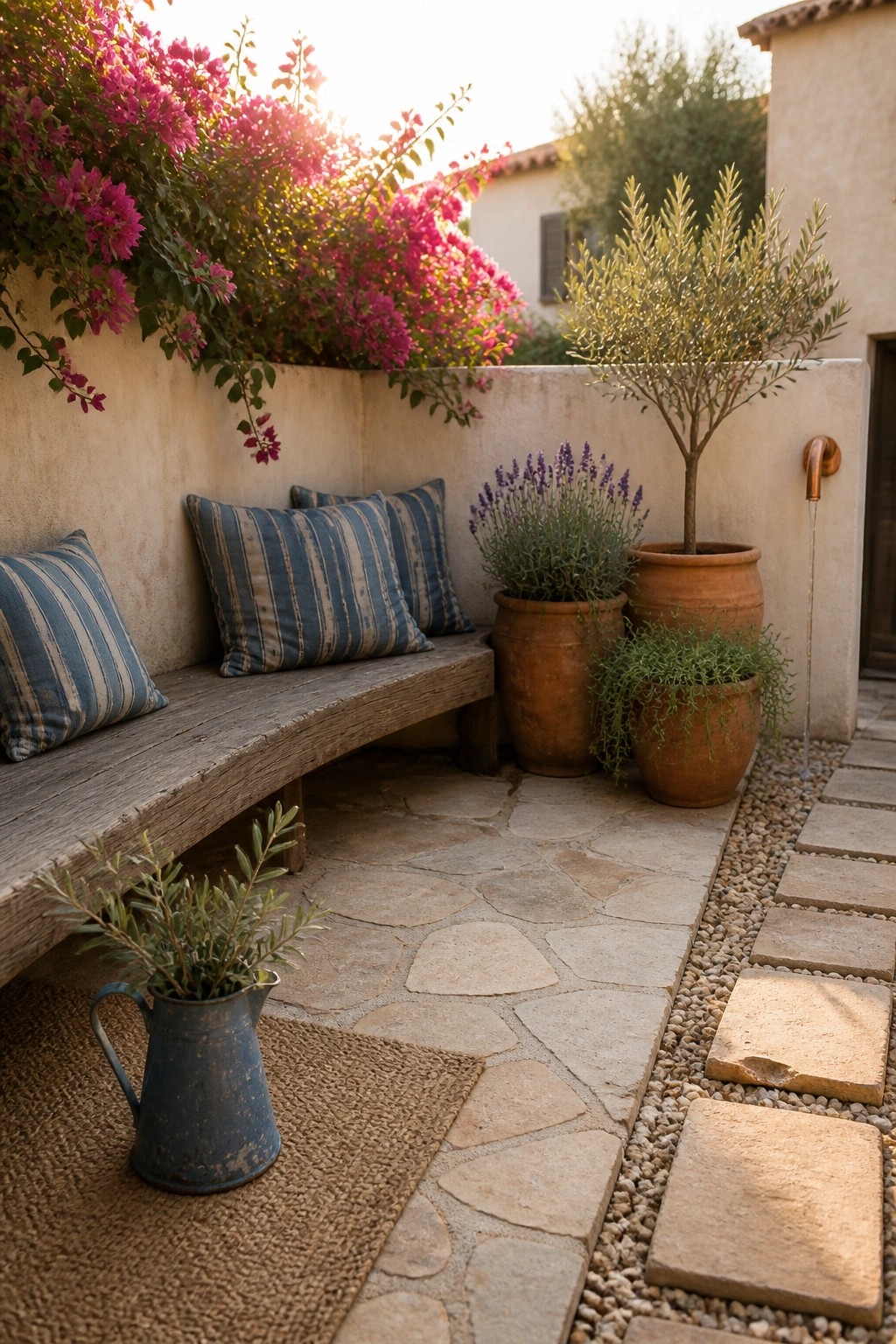
A bench built against the wall turns a narrow strip of space into something useful. It gives you seating without eating into the middle of the patio, and it leaves room right beside it for pots and plants.
This works best in small courtyards or side yards where every foot counts. Keep the bench low and simple so the pots can sit at different heights along the edge. A few large containers are usually enough to make the spot feel like a garden.
Mount Vertical Planters on a Balcony Wall

Small balconies often run out of floor space fast once you add a chair or two. A wall of wooden planters stacked in rows lets you grow plenty of plants without losing room to walk or sit.
This setup works best on narrow urban balconies or apartment terraces where every inch counts. Secure the boxes to a solid backing, mix in trailing plants for coverage, and leave a bit of open rail space so the area still feels open rather than closed in.
Wheeled Planters Make Small Gardens Easier to Manage

Planters on wheels give you a simple way to move plants around without much effort. This setup works well on rooftops, balconies, or small patios where you might need to chase the sun or clear space for seating at different times.
They suit city homes or any outdoor area that lacks room for fixed beds. Just roll them into place when you want more growing room and move them aside when you need the floor open.
Vertical Pallet Gardens For Narrow Yards

Many small gardens run out of ground space fast, so mounting a pallet on a wall gives you extra room to grow without crowding the path. It turns an empty vertical surface into rows of planting pockets that stay easy to reach.
This approach fits best along side yards or tight passages where a regular bed would block the walkway. Use a sturdy pallet, line the back, and fill the gaps with soil before adding plants that do well in shallow pockets.
Wall Mounted Herb Gardens Save Floor Space

Many small outdoor spots run out of ground room quickly. Mounting simple metal planters on the wall lets you grow basil, chives, oregano, and mint without taking up any usable floor area below.
This approach works best along narrow side yards or against a fence where you still want fresh herbs close to a prep surface. Make sure the wall can handle the weight and that the plants receive enough light each day.
Wrap Your Bench Around The Planting Beds

One easy way to fit more plants into a small balcony or patio is to shape the seating around the garden beds instead of the other way around. A curved bench that follows the planting line adds layers of greenery without eating up floor space for chairs or tables.
This setup works best when the bench is built in and the plants sit at the back edge or in pockets along the sides. Concrete holds up well outside and gives you a solid base, while cushions keep it comfortable. Just leave enough room so the plants can fill in without blocking the seat.
Use A Raised Planter To Define Space In A Small Garden

A raised wooden planter gives a small gravel area clear structure and lets you grow a tree or shrubs without digging into the ground. It turns an open patch into a focused garden spot while keeping the rest of the space easy to walk on and maintain.
This setup suits tiny courtyards or narrow side yards where you want height and interest but have limited room. Choose a box that matches the scale of the space and add a simple water element nearby if you want the sound of moving water without extra clutter.
Raised Beds Along Narrow Paths

A long raised bed gives you room to layer plants in a space that would otherwise stay empty. The metal edging keeps everything tidy while letting you pack in shrubs, flowers, and even a small tree without the bed taking over the walkway.
This setup works best on side yards or tight front paths where width is limited. Keep the bed about two feet wide so you can reach both sides for watering and trimming, and choose plants that stay in scale with the space.
Hang Planters From The Ceiling

One simple way to fit more plants into a small greenhouse is to hang them overhead. Glass orbs on chains let you use the empty space above the shelves without taking up any floor room.
This approach works best in structures with decent ceiling height and good natural light. Keep the hanging weight light and check that nothing blocks airflow or gets in the way when you need to water or move trays around.
Train Fruit Trees Flat Against Walls

Training fruit trees to grow flat against a wall turns a narrow side passage into a productive growing area. The branches stay close to the surface so the trees take up almost no floor space while still producing apples. This setup works especially well when ground room is limited and you need every inch to count.
It suits older homes with brick walls or any tight walkway between buildings. Start with young trees and prune them yearly to keep the shape. You can add a few pots or crates along the base for herbs or extra vegetables without crowding the path.
Living Walls Add Planting Space Without Taking Up Floor Room

Many small balconies end up with little room left once you add seating. A vertical garden mounted on the wall lets you grow plenty of plants without crowding the floor area.
This setup works well for apartments or any outdoor spot with limited square footage. Pick a sturdy mounting system and plants that match the light conditions so the wall stays low maintenance over time.
Shelves Help Pack More Herbs Onto A Small Balcony

Mounting a few simple wooden shelves on an outside wall gives you room for a whole collection of herbs without taking up floor space. This setup keeps plants off the ground, makes watering easier, and turns a narrow balcony into a working garden.
It works best on balconies or small patios where floor room is limited. Keep the shelves shallow so they do not block walking paths, and choose pots that fit the depth of each shelf. Lighter herbs like basil and mint do well here since they stay compact and can be reached easily.
Lay Stepping Stones Over Gravel

A gravel path with stepping stones works well in small gardens because it defines a clear route without eating up much space. The stones keep your feet dry and make the area feel more finished while the gravel fills in the gaps cheaply and drains easily.
This setup suits narrow side yards or tight back gardens where a solid walkway would feel too heavy. Keep the stones spaced for a natural stride and let low plants spill over the edges a bit so the path blends into the beds.
Build Raised Beds Into Your Outdoor Living Space

Raised beds work well on terraces and balconies because they keep plants organized and off the floor while still leaving room to walk and sit. They also make it easier to grow vegetables and herbs in a small space without scattering pots everywhere.
This setup suits rooftops or patios where you want both a place to eat and a place to garden. Keep the beds narrow enough that they do not block movement, and choose wood that matches your seating or railing so the whole area feels connected.
Add A Bench With Built-In Planters

One simple way to fit more plants into a tight garden spot is to choose seating that already includes growing space. A curved bench with a built-in planter box behind the seat gives you room for herbs or flowers without adding extra pots on the ground.
This works best in corners or along a fence where floor space is limited. Keep a couple of movable pots nearby for flexibility, but let the bench carry most of the planting so the area stays open enough to walk through.
Raised Planters That Shape Narrow Yards

Narrow side yards often end up as wasted strips because there is not enough room for traditional beds. Raised concrete planters fix that by giving plants height and keeping the ground clear for walking. The tall bamboo in these boxes adds privacy without spreading out sideways.
This approach works best on townhouse lots or alley spaces where you need to keep a path open. Build the planters at different heights so one section can serve as a simple bench. Gravel and wood boards underneath keep the ground practical and help with drainage in wet weather.
Rolling Carts Help Stack More Plants In Small Spaces

A rolling cart with stacked wooden crates lets you grow quite a few plants without taking over the whole floor. The wheels make it easy to move the whole setup when you need more sun or want to clear space for seating.
This works best on balconies or small patios where floor room is tight. Just make sure the cart can handle the weight once the crates are filled with soil and water.
Frequently Asked Questions
Q: How do I stop my small pots from drying out in the heat?
A: Water them in the early morning so the soil stays moist longer. Add a layer of mulch on top to hold in moisture. Check the pots daily since small spaces heat up fast.
Q: My space has mostly shade. Which plants from the list will still grow well?
A: Leafy greens like lettuce and spinach handle low light better than most. Try herbs such as mint or parsley too. Move pots around to catch any indirect sun that comes through.
Q: Is it okay to stack containers right on top of each other?
A: Stacking works if you leave enough room for air to flow between them. Use sturdy shelves or crates to create levels without blocking light.
