


I have found that small vegetable patches succeed or fail mostly based on how well the containers line up with the actual sun patterns and foot traffic in a yard.
Many setups look promising on paper but end up cramped once the plants fill out and need regular access for watering and harvesting.
Small spots work best when the plants are grouped by what they need most.
I usually test just two or three new container ideas each season rather than overhauling the whole area at once.
Over time the layout starts to feel settled when the edging and spacing leave enough room for both the vegetables and a clear path around them.
Railing Planters Free Up Floor Space

A long planter attached to the railing lets you grow trailing vegetables without crowding the deck boards. It works well for tomatoes and similar crops that spill over the edge and still get plenty of sun.
This approach fits small balconies or apartments where every inch of floor matters. Secure the planter firmly and check drainage so the soil does not stay soggy after watering.
Use Wall Planters To Add Growing Space
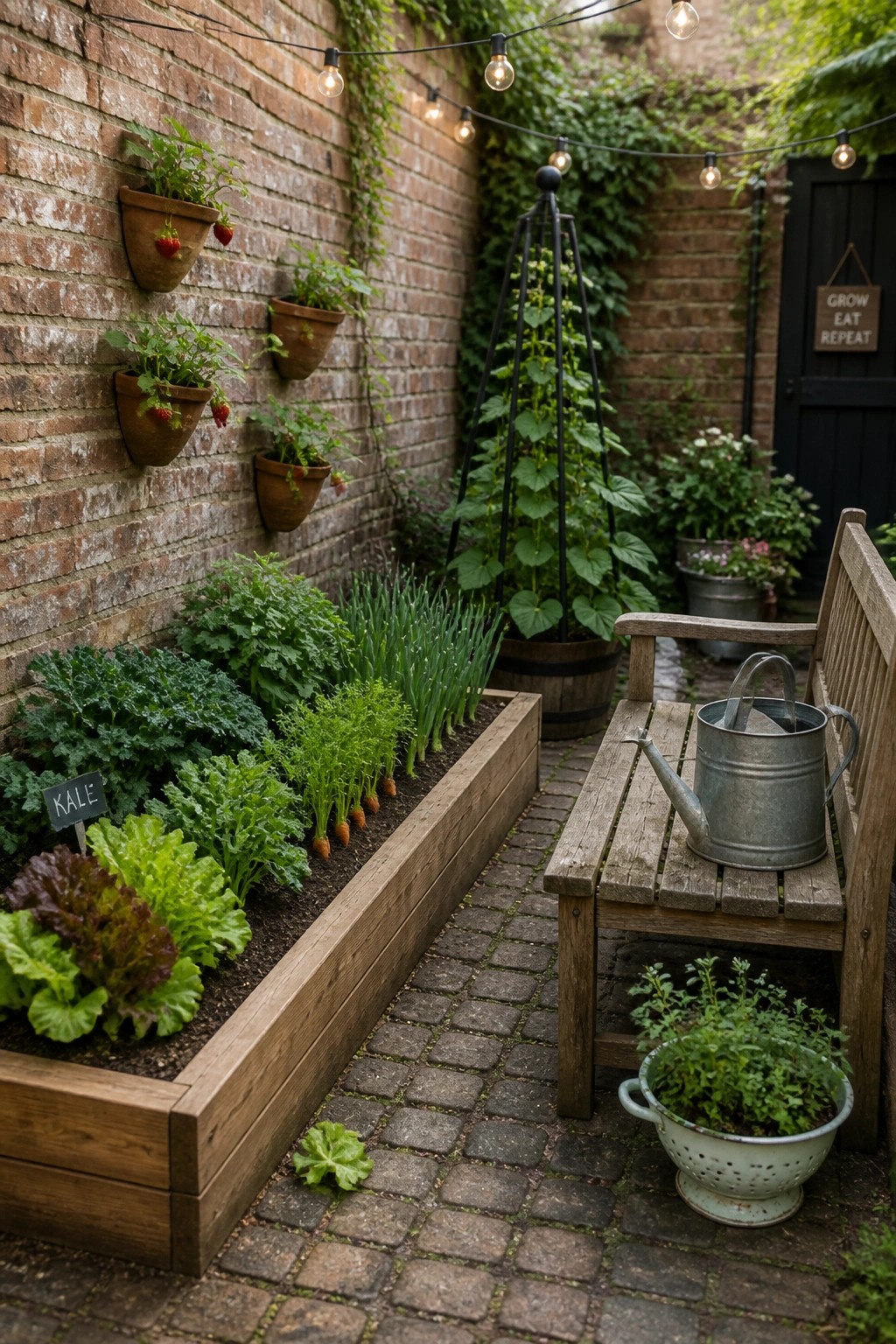
Many people run out of ground room quickly when growing vegetables in small yards. Mounting pots on a wall lets you add more plants without widening the beds or crowding walkways.
This works best along a sunny fence or house wall where you can secure the pots at different heights. Start with herbs or compact crops like strawberries, and check the brackets every season since soil and water add weight over time.
Container Gardening on a Deck

Large containers make it easy to grow vegetables even when you have no yard at all. They sit right on the deck boards, hold plenty of soil, and let you move things around as the sun shifts.
Set them where they get at least six hours of light and add simple stakes for tomatoes or beans. This works especially well on rooftops or balconies, though you should check that the deck can handle the weight once the containers are filled and watered.
Tiered Shelving For Balcony Vegetables

A wooden ladder shelf lets you fit several pots in one small spot without spreading everything across the floor. It works especially well on porches or balconies where space is tight but you still want a decent number of plants.
Set the ladder against a railing or wall that gets steady sun. Keep the pots lightweight and choose compact vegetables so the whole thing stays stable and easy to move if needed.
Raised Beds From Pallets

A simple pallet turned into a raised bed gives you an easy way to grow vegetables without needing much ground space. The wood keeps the soil contained and at a comfortable height, and the open structure lets you move the whole thing if needed. It works especially well on patios or small paved areas where digging is not an option.
Place the pallet bed in a sunny spot and line it with landscape fabric before adding soil. You can divide the sections with thin wood or pipe to keep different crops organized. This setup suits renters or anyone starting out, since the materials are cheap and the bed can be taken apart later if plans change.
Vertical Pallets Free Up Ground Space

Mounting old pallets on a wall turns a narrow strip into a productive vegetable garden. The stacked rows hold plenty of soil and let plants grow outward instead of spreading across the ground. This setup works especially well when space is tight or the soil below is poor.
Start with a sturdy wall or fence that can take the weight, then line each level so the soil stays in place. It suits small backyards, side yards, or even a sunny corner near a shed. Just check that the structure is secure before loading it with plants.
Rail Planters For Balcony Vegetables
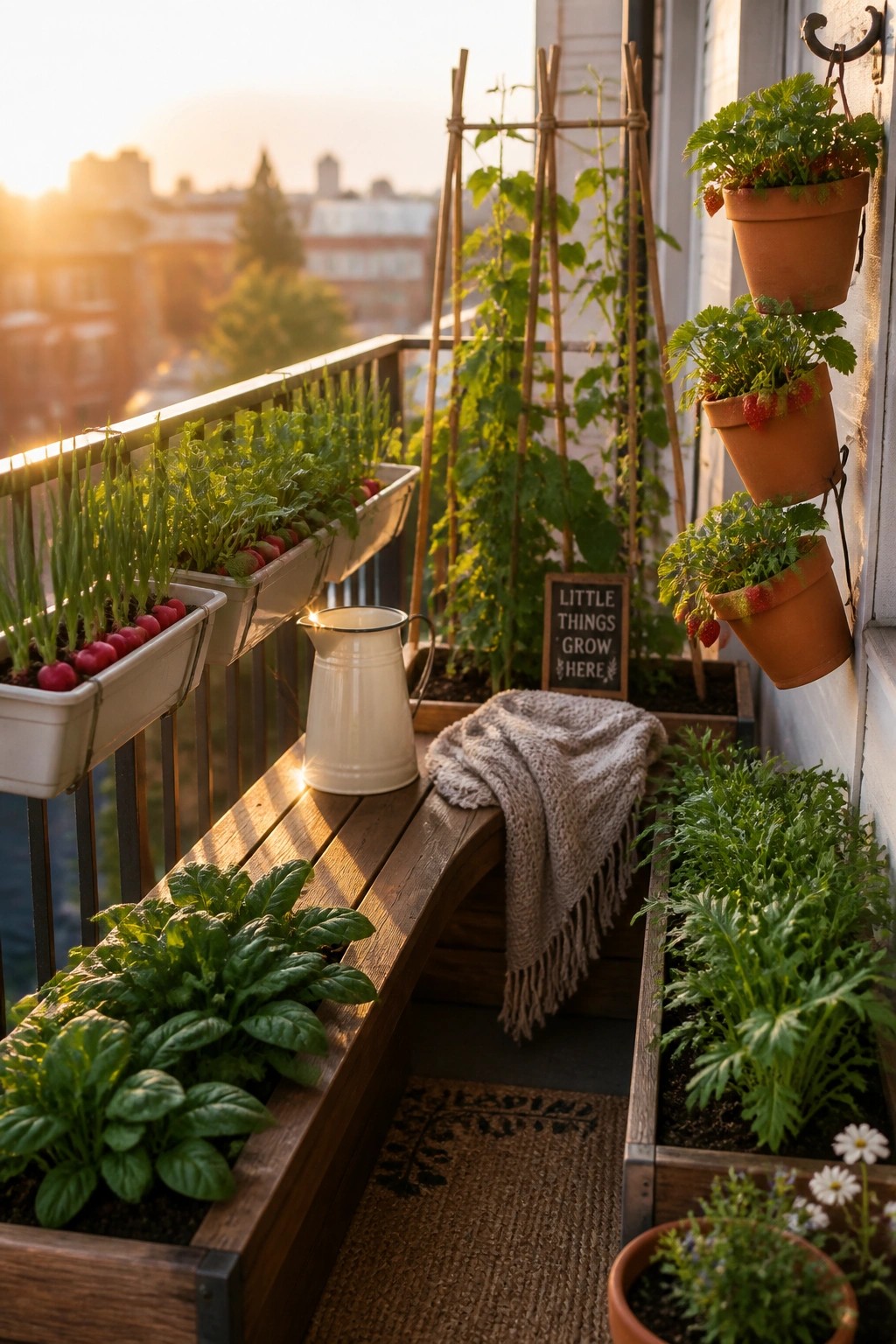
Mounting planters straight onto the railing frees up floor space and lets you grow more in a small area. It also puts the plants at a comfortable height for watering and harvesting without bending over much.
This setup works best on sturdy railings that can handle the weight of soil and plants. Secure the containers well, especially if the balcony gets wind, and choose lightweight pots so the whole thing stays balanced.
Try A Tiered Rolling Planter
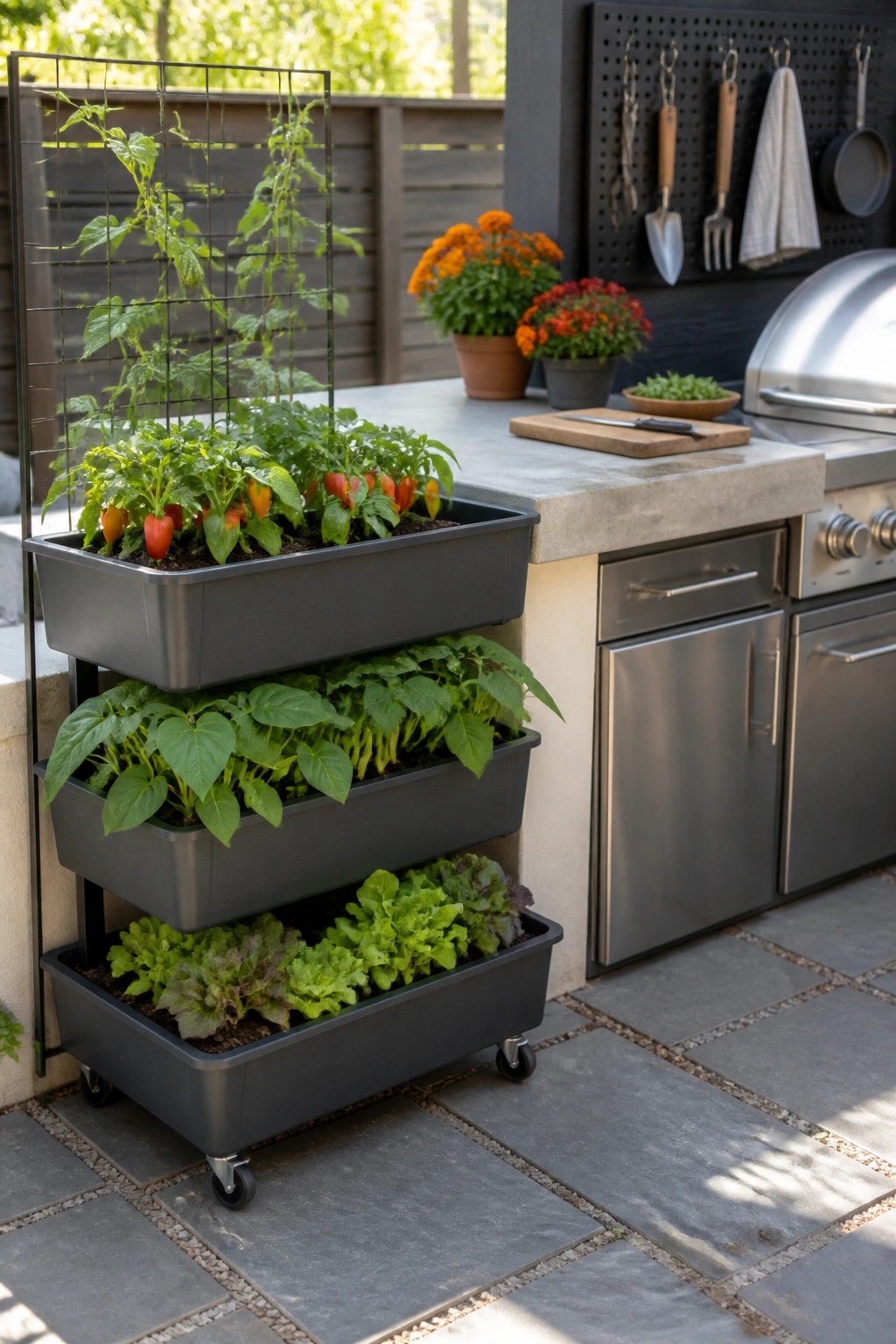
One simple way to grow more vegetables in a small space is to use a tiered planter on wheels. The stacked levels give you room for different crops without spreading out across the ground, and the trellis on top supports tomatoes or peppers that need to climb.
This setup works best on a patio or deck where you can roll it into the sun or move it out of the way when needed. Just check that the bottom level drains well and choose plants that fit the height of each tier so nothing gets crowded.
Barrels Work Great As Vegetable Planters

Wooden barrels give you a simple way to grow vegetables without needing much ground space. They hold a good amount of soil, drain well, and can sit right on a patio or paved area where in-ground beds are not an option.
Set two or three barrels together in a sunny spot and plant compact crops like zucchini or bush beans. Start seedlings indoors first so you can move them straight into the barrels once the weather warms. Keep the soil evenly moist and add a trellis or old ladder behind them if you want to grow anything that climbs.
Combine Raised Planters With a Vertical Trellis

Raised planters paired with a simple bamboo trellis work well when space is tight. The setup lets you grow leafy crops at ground level while training vines upward, which keeps the area from feeling crowded. Many people like this because it turns a narrow side yard or walkway into a productive spot without needing a full garden plot.
This approach suits small urban homes or townhouses where the outdoor area is mostly a path. Place the planters along one side and attach the trellis to a wall or fence behind them. Just watch the watering since containers dry out faster than in-ground beds.
Grow Vegetables In Pots On Your Steps

Putting vegetable plants in pots right on the front steps is one of the easiest ways to start growing food when space is tight. The plants stay close to the door, so watering and picking happen without extra trips, and the setup works even on a small porch or landing.
This approach suits beginners because each pot can hold a different crop, and you can move things around if the light changes. Just make sure the pots have good drainage and pick spots that get enough sun during the day.
Mini Greenhouse Cabinet For Balcony Gardens

A small covered cabinet makes it easier to start vegetables when space is tight. It protects young plants from sudden weather changes while still letting in light, which helps beginners get better results without needing a full garden.
Set the cabinet on a balcony or patio that gets morning sun and keep trays inside until the seedlings are strong enough to move out. The lower shelves can hold extra pots and supplies so everything stays in one spot.
Add Wall Pockets To Grow More In Less Space

Wall pockets turn a plain vertical surface into a working garden. They free up floor space while still giving leafy greens and root vegetables room to develop, which helps in spots where raised beds or large containers simply will not fit.
Hang a few rows on any sunny exterior wall and tuck in seedlings of quick crops like radishes or lettuce. The approach works especially well on patios, balconies, or narrow side yards where ground area is tight. Just check that the pockets drain well and the wall can handle the extra weight once the soil is watered.
Mount Planters Along the Railing

One simple way to grow more vegetables in a small space is to hang planters directly on a railing. This keeps the floor clear while still giving plants room to spread out and get good light.
Metal troughs or boxes that hook over the rail work well for leafy greens. They drain easily and can be moved or swapped out as seasons change. Just check that your railing is sturdy enough to hold the weight once the soil and plants are added.
Narrow Raised Beds For Vegetables
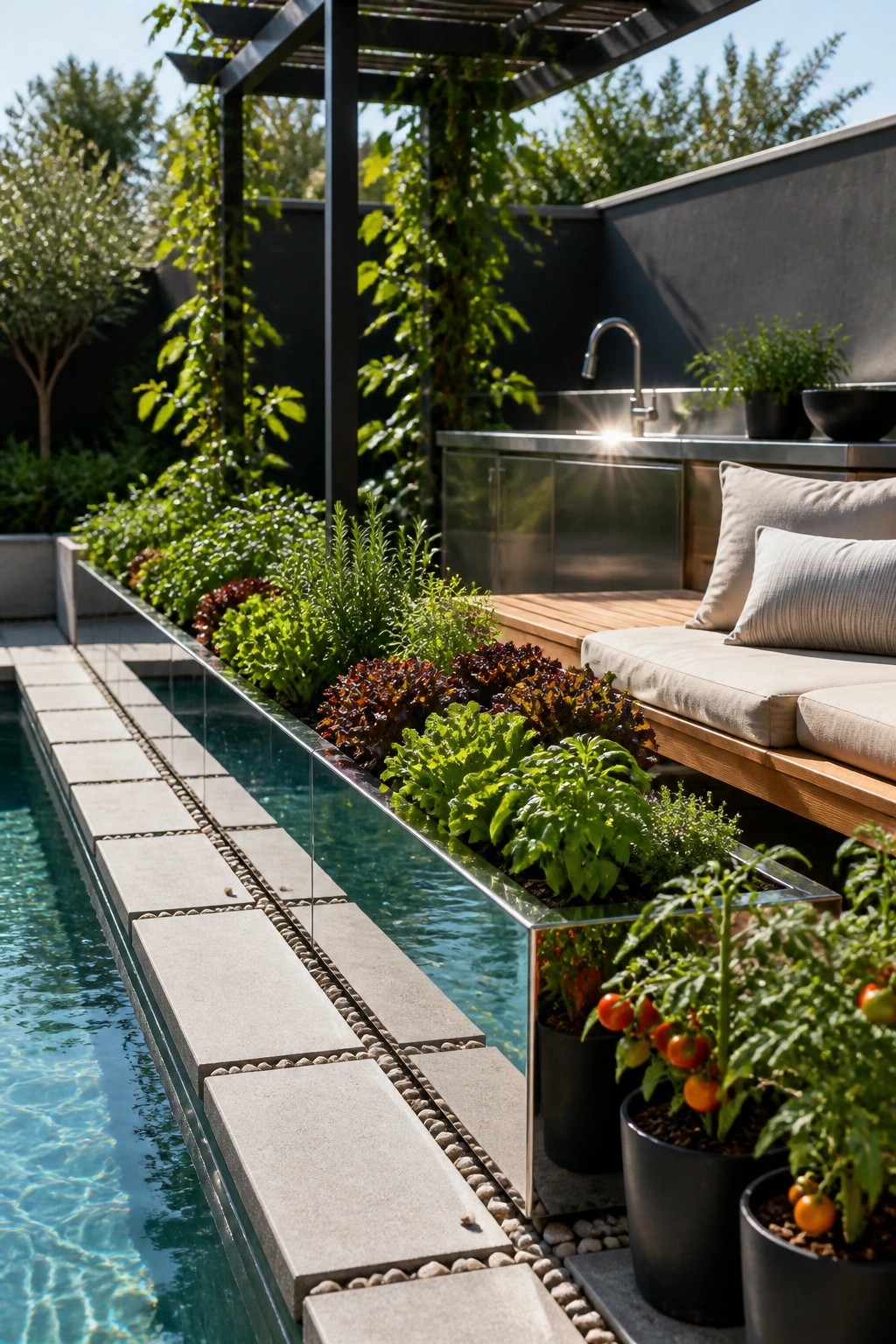
Narrow raised beds work well when you want to grow vegetables but only have a slim strip of space. They keep the plants organized, make watering and harvesting easier, and can run right along a pool edge or seating area without crowding the rest of the yard.
This setup suits small modern outdoor spaces where you still want fresh greens and tomatoes close at hand. Use a mix of quick-growing lettuces in the bed and tuck a few pots of larger plants nearby so nothing feels cramped.
Stacked Crates Let You Grow More in Small Spaces

Many people with limited outdoor room turn to stacked wooden crates because they create several growing levels without spreading out across the floor. The open sides and simple stacking let you fit quite a few plants into a narrow spot while still keeping everything easy to reach.
This approach suits balconies, small decks, or any tight corner where a regular garden bed would not fit. Choose sturdy crates, line them to hold soil, and group plants by height so the ones that need more sun sit on top.
Grow Vegetables in a Galvanized Trough

A long metal trough works well when space is tight. It holds a lot of soil in one spot and keeps leafy greens together without needing a full raised bed.
Set the trough along a path or right against the house where it gets steady sun. Many people like how easy it is to reach for watering and picking, and the metal lasts for years with little upkeep.
Grow Vegetables in Hanging Baskets

Hanging baskets let you grow vegetables like tomatoes without taking up floor space on a small balcony. They work especially well when ground room is tight and you need to keep plants off the deck or railing area.
This approach suits apartments and homes with only a narrow outdoor spot. Secure the baskets well so they can handle the weight as the plants grow, and choose spots that get steady sun.
Try A Bench With Integrated Planters

A bench that holds planters right inside it gives you a place to sit and a spot to grow vegetables at the same time. This setup works well in tight patios or balconies where every surface needs to earn its keep. The concrete form keeps things sturdy and low maintenance.
You can plant quick crops like lettuce and herbs along the top edge while still having room to rest. It suits small urban yards or rooftops that already have hard floors and need simple additions rather than full garden beds. Just make sure the bench gets enough sun for what you want to grow.
Grow Climbing Vegetables on a Wall Trellis

A wall trellis lets you add more vegetable plants without needing extra ground. It turns a plain fence or house wall into growing space that stays neat and easy to reach.
This setup works best in narrow side yards or small patios where floor space is limited. Choose a strong wood or metal trellis and plant beans, peas, or cucumbers at the base so the vines can climb naturally.
Grow Vegetables in Long Planters on a Balcony

Many people find that long rectangular planters work well for growing vegetables when space is tight. Placing them along the edge of a balcony keeps the growing area organized and leaves room for a small table or stools nearby.
This approach suits apartment balconies or narrow terraces best. Use lightweight but sturdy planters filled with good soil, and add a simple support for climbing plants if you want to make the most of vertical space without crowding the floor.
Frequently Asked Questions
Q: How much sun do I really need for small space veggies?
A: Leafy greens like kale do well with just four hours of direct light. Try moving pots around to catch the best spots on your patio.
Q: My pots dry out fast in the heat. What helps without extra work?
A: Water deeply in the morning so roots stay moist longer. A thin layer of grass clippings on top slows evaporation and feeds the soil as it breaks down.
Q: Can I start everything from seed or should I buy plants?
A: Buy starter plants for tomatoes and peppers to skip the tricky early weeks. Direct sow beans and radishes instead since they pop up quick in tight spots.
