

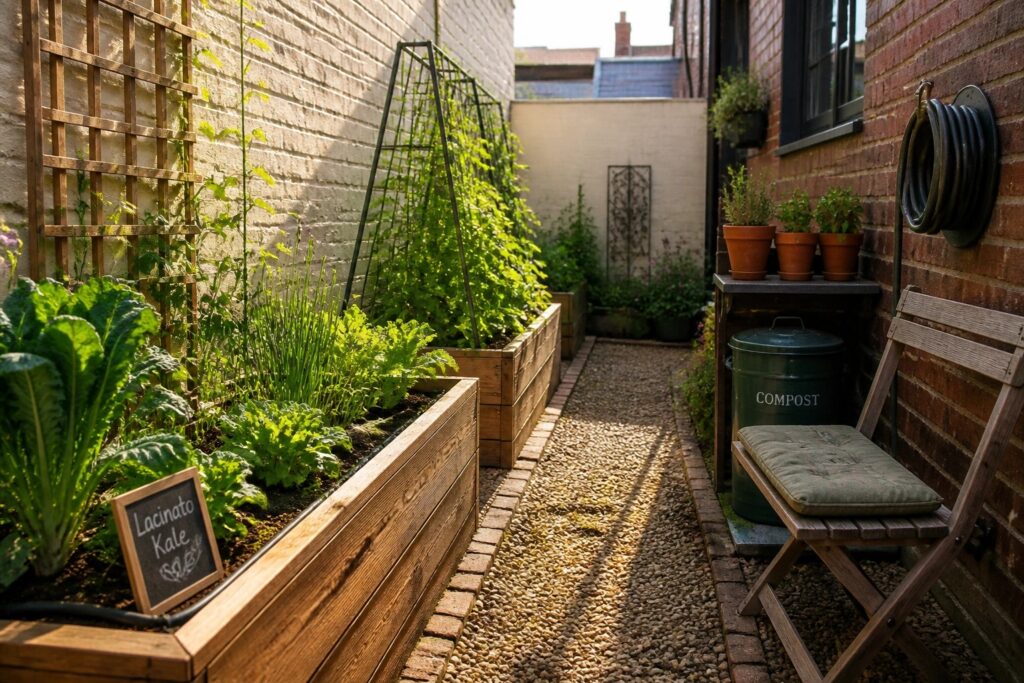
I often notice that the way raised beds fit together in a small space determines whether the garden stays productive or turns into a hassle to maintain.
When I tried arranging beds too close together last year I realized access paths need to be wider than they first appear on a sketch.
Paths matter most.
The better ideas usually include simple edging or corner designs that keep soil contained while still letting water drain properly.
Testing a few of these layouts in my own yard has shown me which ones hold up once the season gets busy.
Linear Raised Beds Along A Narrow Path
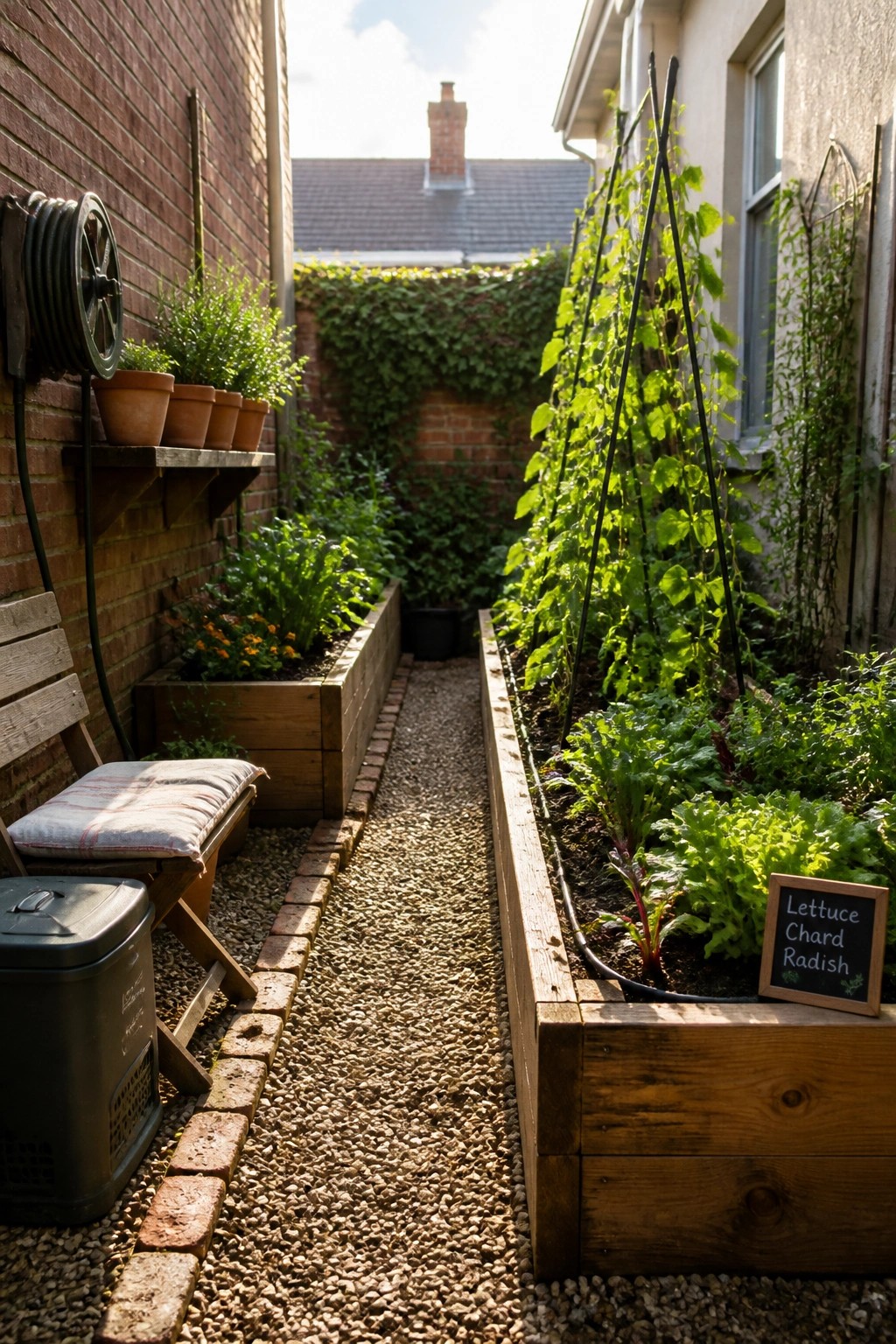
This layout works well when space is tight but you still want a productive garden. The long beds run parallel to each other with a simple gravel path down the middle. It keeps everything reachable from the sides without wasting room on wide walkways or fancy shapes.
It suits side yards, alley spaces, or narrow lots next to a house or fence. Use the same bed width on both sides so the path stays consistent, and add basic trellises along the back edge if you want to grow vertically. Just make sure the path stays wide enough to walk through with a watering can or wheelbarrow.
Raised Beds In A Narrow Strip

Many small yards have a long fence or wall that gets little use. Placing raised beds along that edge turns wasted space into a productive garden while leaving room to walk and work.
Concrete beds work well here because they hold the soil neatly and stand up to weather. Add a simple path of stepping stones right next to them so you can reach every plant without stepping on the beds or compacting the soil. This layout keeps everything within easy reach and still leaves the rest of the yard open.
Circular Raised Beds Work Well In Small Yards

A round layout with brick borders lets you pack several planting zones into one compact area. The sections radiate out from the center so you can reach everything without stepping on the soil, and the shape fits neatly into corners where square beds would leave wasted space.
This setup suits small backyards or side yards where you need more growing room but do not have a long straight wall to work with. Keep the dividing paths at least a foot wide so you can move around easily, and use the center for something low like a basket or a small tree rather than crowding it with tall plants.
Raised Beds Along The Railing

Mounting long raised beds directly on a balcony railing frees up floor space in small outdoor areas. The beds stay at a good height for tending plants while leaving room for a seat or a small table.
This setup works best on sturdy railings in apartments or townhomes. Check weight limits first and use lighter soil mixes so the structure stays secure over time.
Raised Beds That Include Built-In Seating

One practical way to stretch a small garden is to build the raised beds so they form a bench right where you need to sit. This keeps the layout tight and gives you a place to rest without adding separate furniture that eats up floor space.
It fits best in corners or along a fence line where the beds can wrap around the seat. Keep the bench at a comfortable height and use the same wood for everything so the whole setup feels like one piece.
Gravel Paths With Stepping Stones
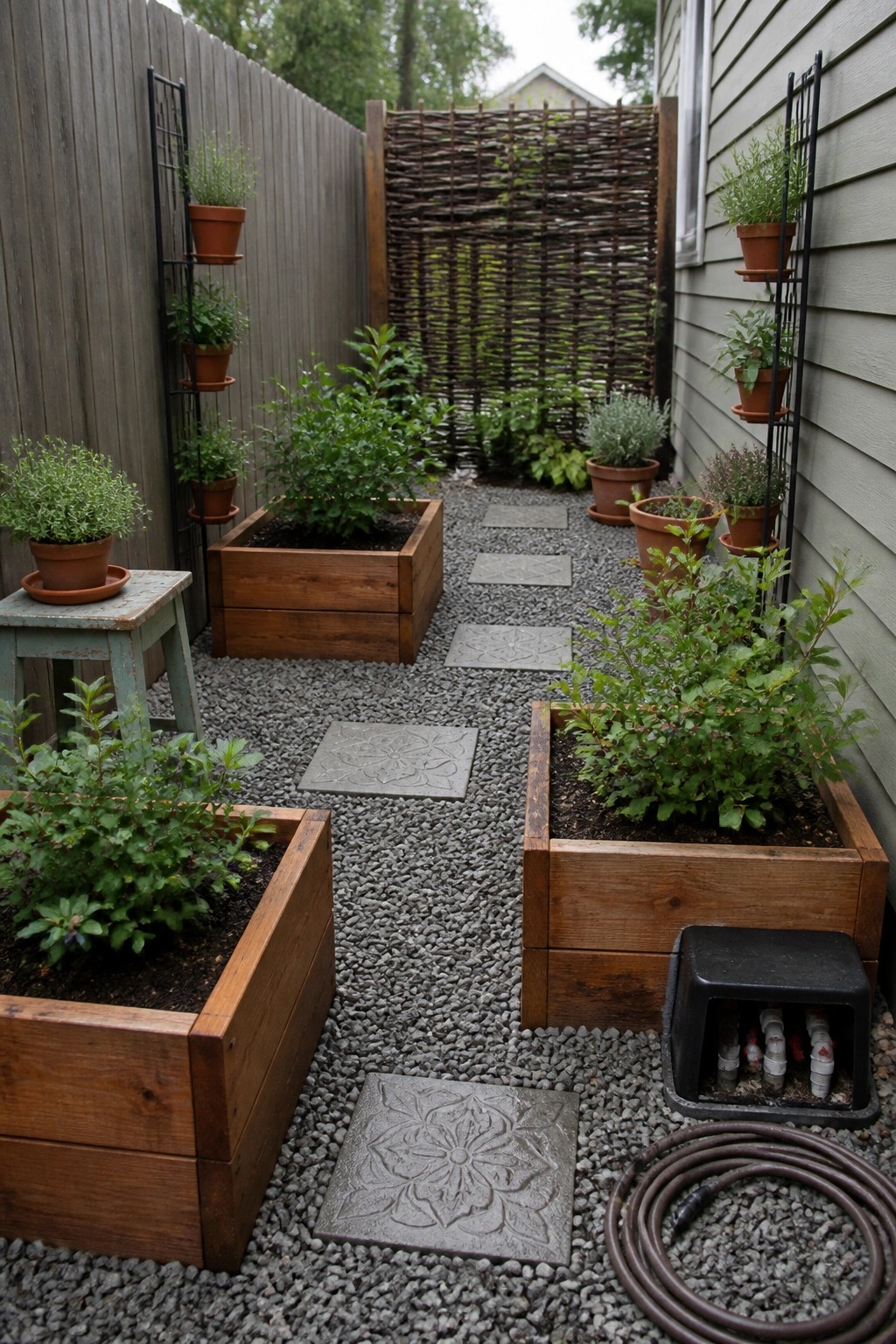
Raised beds work best when you can reach every plant without stepping on the soil. A simple gravel path with a few stepping stones down the middle gives you solid footing and keeps the whole area looking neat even in a narrow yard.
This setup fits side yards or small back lots where space is tight. Keep the beds at a comfortable width so you can work from both sides, and choose stepping stones that sit just above the gravel so water drains well and weeds stay down.
Raised Beds Along Retaining Walls
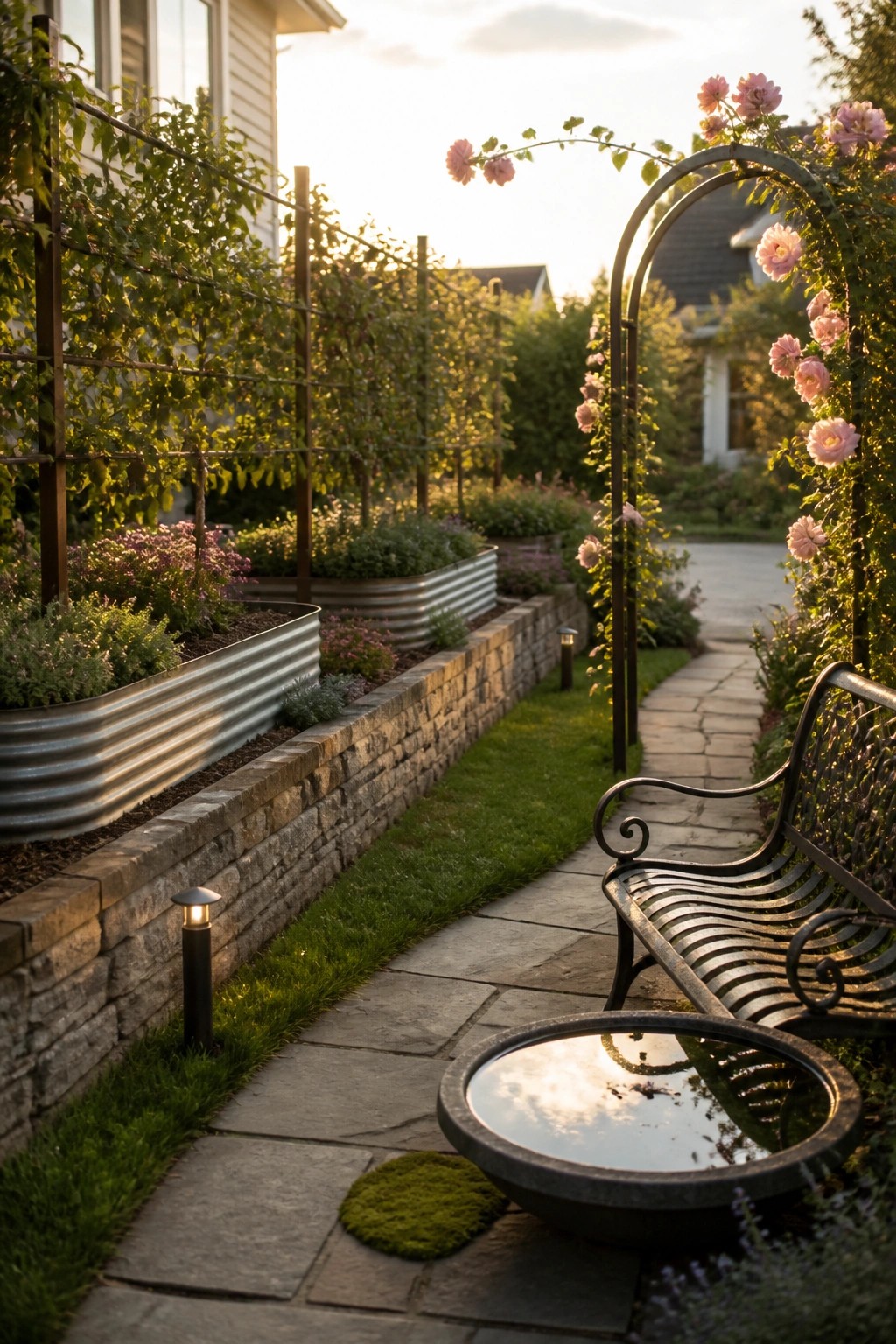
One simple way to add growing space in a small yard is to run raised beds right along a retaining wall. This keeps the beds contained, improves drainage, and leaves the rest of the yard open for walking or seating.
The metal beds sit directly on the low stone wall and follow the line of the path, which makes watering and harvesting easier in tight spots. This layout works well beside driveways, along fences, or in narrow side yards where flat ground is limited.
Raised Beds Along a Deck
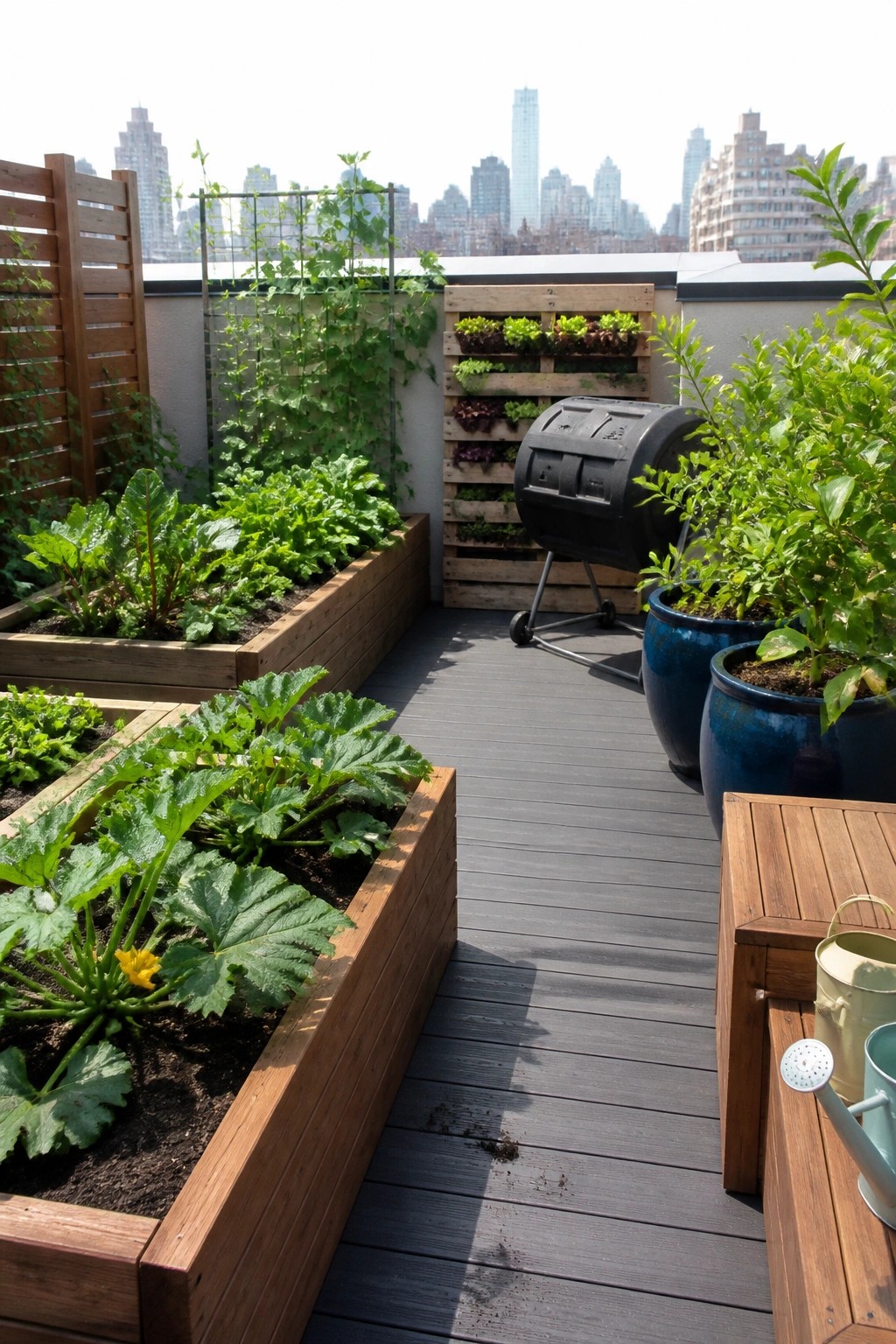
One simple way to garden in a small space is to run raised beds in a line along the edge of a deck. This layout keeps the center open for walking while still giving you good growing room without crowding the area.
It suits rooftops, balconies, or narrow patios where you need to keep things practical. Make the beds a width you can reach across, and use wood that holds up to weather so the whole setup stays useful for years.
Raised Stone Beds Organize Small Garden Spaces

Raised stone beds give a small garden clear structure without taking up much room. They keep different plants separated and make everyday care like weeding or harvesting much simpler.
These beds work especially well in corners or along walls where space is limited. Build them low enough to reach across easily and use the same stone throughout so the whole layout feels connected.
Geometric Raised Beds For Small Yards
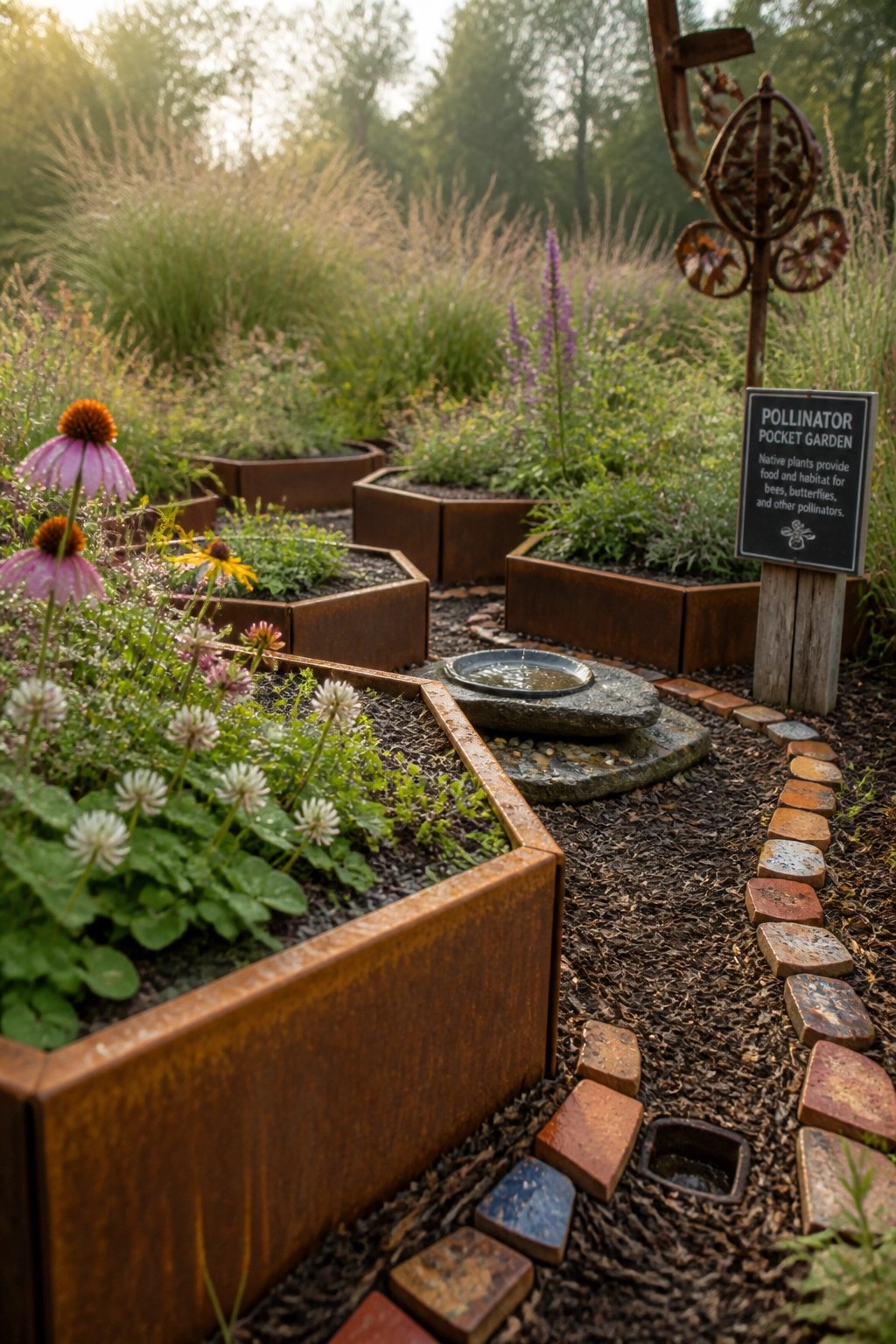
Grouping raised beds in angular shapes like hexagons lets you pack more planting space into a tight area. The beds sit close but still leave room for narrow paths so you can reach every plant without stepping on soil.
This layout suits side yards or small back corners where straight rows would feel cramped. Stick with metal or wood beds that are all the same height, and keep the paths wide enough for a wheelbarrow or just your feet on a wet day.
Label Raised Beds For Easier Small Space Gardening

Raised beds already help in small gardens by keeping soil contained and plants within reach. Adding simple labels takes that a step further and cuts down on confusion when you are growing a mix of flowers and vegetables side by side.
Old terracotta pots or wooden stakes work fine for labels. This approach suits narrow yards or corner plots where every inch counts. Just keep the beds narrow enough that you can reach across without compacting the soil.
Linear Raised Beds With A Water Channel

A long narrow raised bed works well when space is tight because it gives you planting room without eating up the whole yard. The concrete edges keep everything neat and the built-in water line adds movement without needing extra features scattered around.
This layout suits small courtyards or side yards next to the house. Keep the bed straight and fairly deep so the water stays contained and the plants have room to root. Use simple gravel around it so the whole area stays low maintenance.
Tiered Raised Beds Work Well In Tight Spots

Tiered raised beds let you grow more in a narrow space without crowding everything into one flat layer. By stacking the beds at different heights you create extra planting room while keeping the whole setup easy to reach and maintain.
This layout works best along side yards or small paved areas where a single wide bed would not fit. Metal beds hold up well in these spots and the levels keep plants from shading each other too much.
Line A Narrow Path With Raised Beds

Raised beds running the length of a slim garden path let you grow plenty without crowding the walkway. The beds sit right against the fence line and leave just enough room for stepping stones down the middle. This setup turns a tight side yard into usable growing space that still feels open enough to walk through.
It works especially well between two fences or along the side of a house where width is limited. Keep the beds about two feet wide so you can reach everything from the path. Gravel or pavers underfoot help with drainage and keep mud off your shoes.
Raised Beds With Mixed Edging
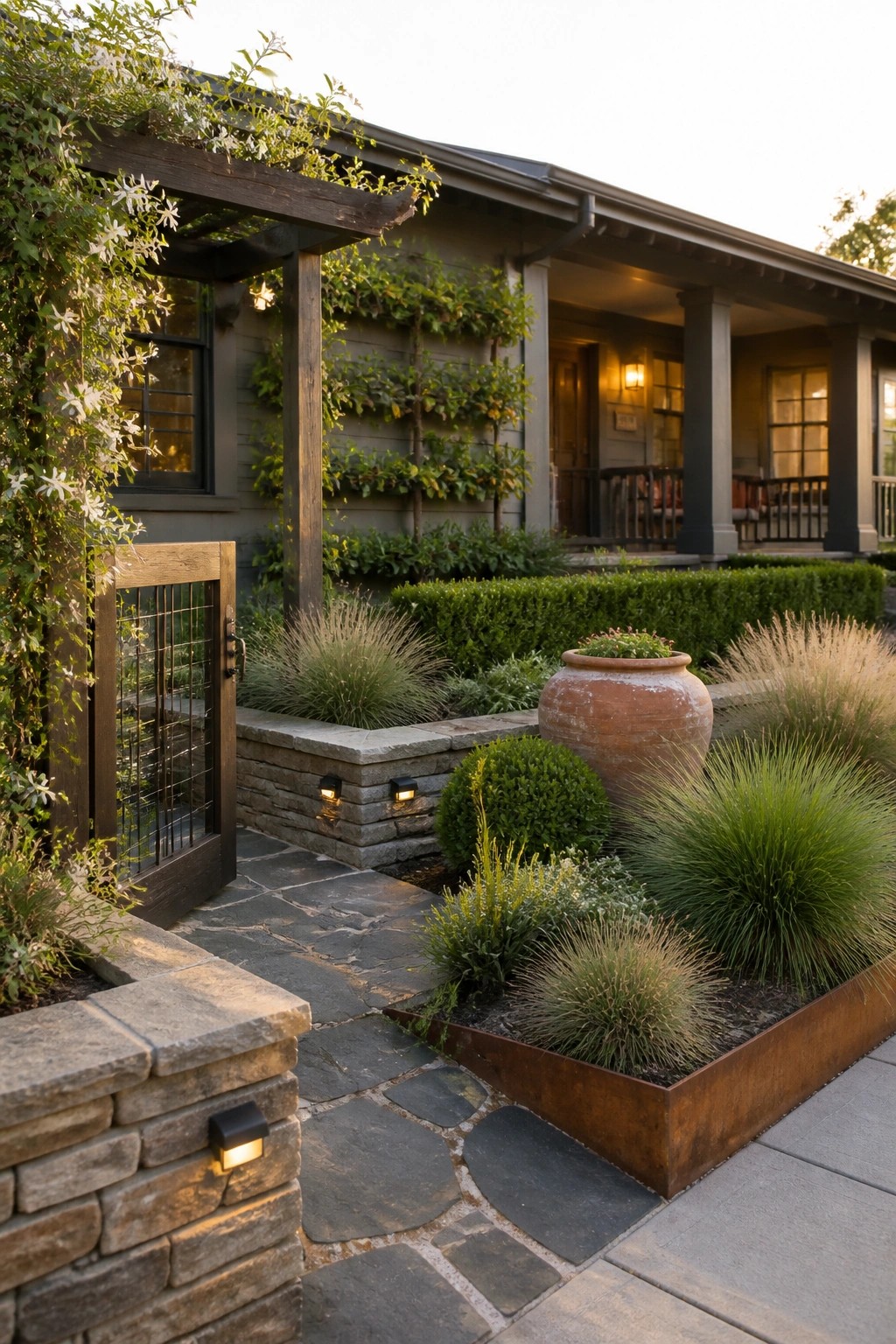
Raised beds work especially well when they follow the path into the house. Placing them close to the walkway keeps the plants within easy reach for watering and picking, and it turns a narrow side area into usable growing space.
Try combining materials like metal and stone for the sides so the beds feel more built in than added on. This setup fits homes with limited front or side space where a full garden would not fit. Keep the beds low enough that they do not crowd doors or windows.
Vertical Raised Beds For Small Balconies

Mounting raised beds on the wall is one of the easiest ways to grow food or flowers when floor space is tight. It keeps the main area open for a bench or a few chairs while still giving you a good amount of planting room at different heights.
This setup works best on balconies or small patios where every inch counts. Use simple wooden boxes or pallet sections, stagger the heights, and stick to lighter soil mixes so the structure stays manageable over time.
Raised Beds Built With Retaining Walls

Sloped yards often make planting difficult because soil washes away and beds end up uneven. Stacked stone walls solve this by turning the slope into solid, functional raised beds that hold soil in place and create level growing areas without needing a full regrade.
This layout works well in smaller gardens because the walls double as both edging and structure, and the steps between levels keep the space easy to walk through. It suits homes with gentle hills or uneven ground where traditional flat beds would not fit.
Raised Beds With Built-In Steps

Building steps right into the side of a raised bed gives you a simple way to reach plants at different heights without crowding the space. The tiers create easy access for watering and harvesting while the flat sections double as seating when you need a spot to rest. It keeps the whole setup compact and avoids the need for separate paths or ladders in tight areas.
This layout works best along a fence or wall where the bed can step down toward the main walkway. Use pressure-treated wood or cedar for the tiers so they hold up to weather and foot traffic. Keep the planting areas narrow enough to reach across and avoid overcrowding the steps with pots.
Timber Edged Raised Beds

Thick wooden timbers make a solid choice for raised beds in smaller gardens. They hold the soil in place without needing extra framing and give the bed a sturdy, finished edge that lasts for years.
This setup works well along paths or property lines where space is tight. Keep the timbers low enough to reach across for weeding and choose a slight curve if the bed needs to follow the shape of your yard.
Raised Beds with Edge Lighting

Raised beds work especially well in narrow outdoor spaces when you add a simple lighting strip along the inner edge. It defines the planting area clearly and makes the whole spot feel more usable after dark without needing extra fixtures everywhere. The wood frames also double as seating in a pinch.
This layout suits townhomes or small backyards where you want both growing space and a place to gather. Keep the beds at a consistent height and width so the path between them stays open and easy to walk. Avoid cramming too many different plants along the front edge or the clean lines start to disappear.
Gabion Raised Beds For Small Garden Layouts

Gabion walls made from wire cages and local stone give raised beds a solid edge that holds up over time. They keep soil in place without needing wide borders, which helps when space is tight. The look stays simple and the structure lasts through seasons.
These beds work best along paths or around a central feature like a large pot. They suit homes with gravel or brick paving and give a tidy shape that still feels natural. Just make sure the cages sit level on a firm base so they stay straight as the garden fills in.
Separate Raised Beds With Stone Paths

Stone paths between raised beds make a small garden much easier to work in. They keep the soil from getting packed down and let you reach every plant without awkward stretching or stepping over edges.
This setup works best in compact yards where you want several beds close together. Use simple pebbles or gravel to form the paths, and vary the bed materials like brick, wood, or blocks so each section feels distinct while still allowing good airflow and access all around.
Vertical Raised Beds On Balcony Walls
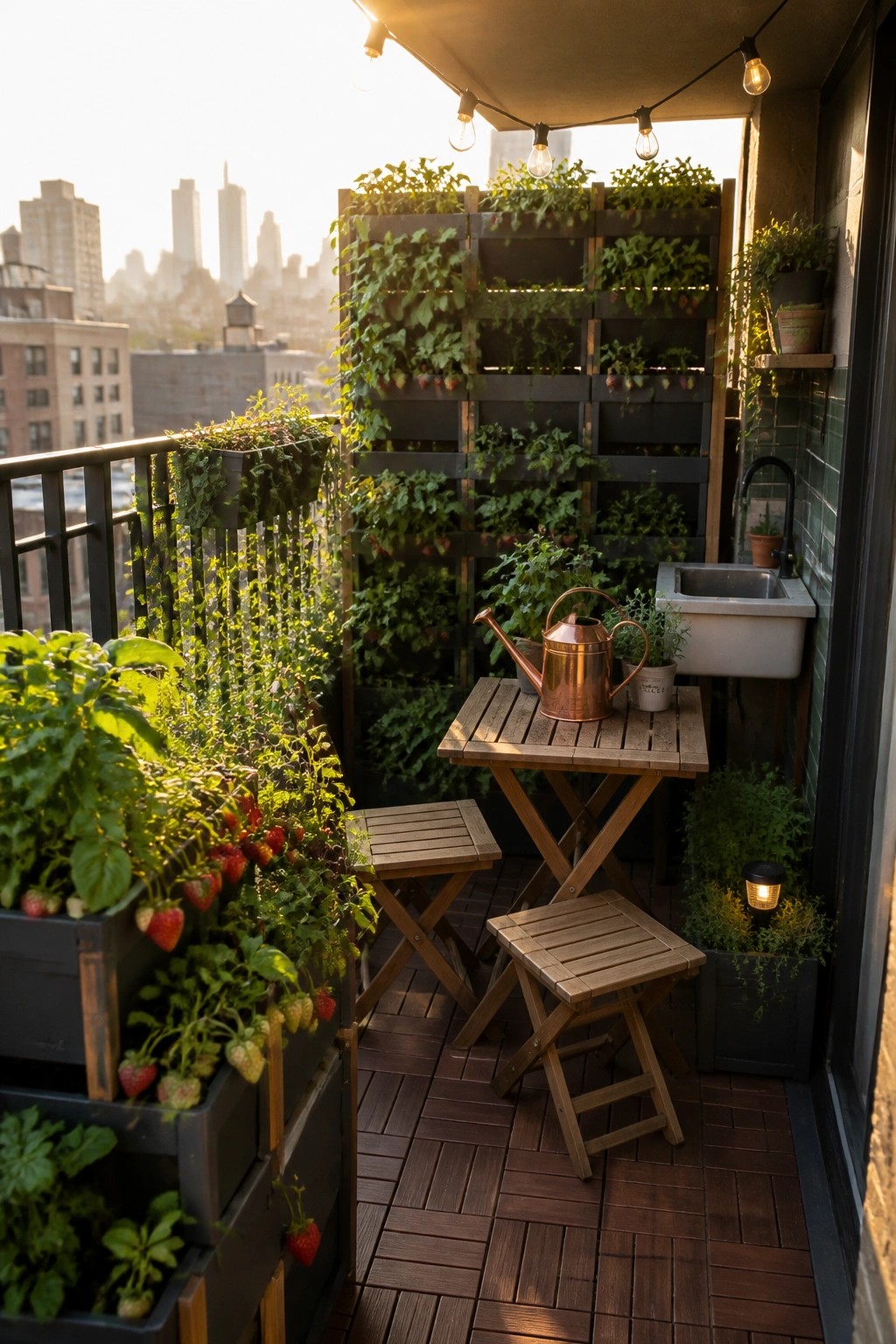
One simple way to grow more in a small balcony is to move the raised beds onto the wall. A grid of stacked boxes takes almost no floor space yet still gives you room for herbs, strawberries, and greens right where you can reach them.
This setup works best on urban balconies or narrow patios where floor room is tight. Keep the lower levels for heavier crops and use the upper ones for lighter plants. Just check that your wall can support the weight and that the beds get decent sun during the day.
Raised Beds With A Path In Between

One practical way to garden in a small yard is to place raised beds along both sides of a straight central path. This layout keeps the soil contained, makes watering and harvesting easier, and turns a narrow strip of ground into a usable growing area without crowding the plants.
It suits homes with limited backyard space or side yards along a fence. Keep the path at least two feet wide so you can move through it with tools or a bucket, and use sturdy edging like stone or brick to hold the beds in place over time.
Frequently Asked Questions
Q: Do the beds need paths all around them or can they share edges in a small yard?
A: Leave at least a foot between beds so you can reach the middle without stepping on soil. This keeps the beds from compacting and makes watering simpler too. Plants near the edges will thank you for the extra room.
Q: My patio slopes a bit. Will that cause problems with the raised beds?
A: Level the ground first before setting down the frames. Otherwise water will pool on one side and your plants might suffer from uneven moisture. A simple board and some shims can fix it fast.
Q: Can I build these beds from scrap wood I have lying around?
A: Check that the wood has not been treated with chemicals first. Untreated cedar or pine lasts several seasons in most climates.
