

Ever wondered if your cucumber plants need a helping hand to stand tall and proud? Picture this: your garden filled with lush green vines, heavy with plump cucumbers, but struggling to stay upright. Sound familiar? Don’t fret, because in this article, we’ve got your back – or should I say, your plants’ back!
Importance of Providing Support for Cucumber Plants
Growing cucumber plants can be a rewarding experience. However, as your cucumbers start to fruit, the weight can cause the vines to bend or break. Providing support for your cucumber plants is essential for several reasons:
- Prevents Breakage: Supporting cucumber plants ensures that the vines can handle the weight of the fruit without snapping.
- Promotes Air Circulation: When supported, the plants have better air circulation, reducing the risk of diseases like powdery mildew.
- Enhances Fruit Quality: Supported vines allow the cucumbers to grow straight, resulting in aesthetically pleasing and easier-to-harvest produce.
Supporting your cucumber plants can be achieved through various methods, such as:
- Trellising: Using a trellis allows the vines to climb and grow vertically, keeping them off the ground.
- Cage Support: Cages provide a structure for the plants to lean on as they mature.
- Staking: Staking involves tying the vines to a vertical stake to keep them upright.
Consider the size of your cucumber variety and the space available when choosing a support method. Ensuring that your cucumber plants are well-supported will lead to healthier plants and a bountiful harvest.
Different Methods of Supporting Cucumber Plants
Supporting your cucumber plants is essential to help them thrive and produce a bountiful harvest. Here are various methods you can use to ensure your cucumber plants grow strong and healthy:
- Trellising:
- Secure vertical trellises in the ground or containers to provide support for the vines to climb.
- This method helps maximize space and keeps cucumbers off the ground, reducing the risk of diseases.
- Cage Support:
- Use cages made of wire or stakes in the ground to support the growing cucumber plant.
- Easy to set up and ideal for varieties that produce smaller cucumbers.
- Staking:
- Insert stakes near cucumber plants and tie the main stems gently for support.
- Great for bush varieties that don’t climb like vine varieties.
Selecting the right support method ultimately depends on the cucumber variety you are growing and the available space in your garden. Experiment with different methods to find what works best for your plants and enjoy a successful cucumber harvest.
Recommended Products

【Package included】:Crafted from robust hollow steel, this garden stakes features a fade-resistant green plastic coating, offering reliable protection against wind, rain, and rust. This Trellis for Climbing Plants Outdoor comes complete with everything you need to get started: 17pcs metal stakes, 8pcs T shape connect pipe, 2 A-shaped connectors, and a 0.9x1.8meter bird net.

PLANT-SAFE NYLON MATERIAL - Made from premium corrosion-resistant nylon fibers, this garden trellis netting is gentle on delicate stems and vines. Free from harsh chemicals and pungent odors, the soft mesh texture protects your plants while being safe for your garden ecosystem. Suitable for organic gardening.

PRODUCT SIZE - Trellis netting 5Ft *15 Ft, 3.5 inch square mesh, easily cut to desired size to use. Important note: The trellis netting comes in a vacuum sealed bag.
Materials for Building Cucumber Plant Supports
When it comes to supporting your cucumber plants, having the right materials is crucial. Here are some common options you can consider using:
- Trellises: Opt for wooden or metal trellises for a sturdy support structure.
- Wire Cages: Durable wire cages are perfect for smaller cucumber varieties.
- Stakes: Use bamboo or metal stakes for providing individual support to your plants.
Keep in mind the size of your cucumber plants and the space you have available when selecting your support materials.
Recommended Products

【Grow Strong, Fast and Smart】 The eSuperegrow Smart Hydroponic Gardening System utilizes professional design for strong growth and superior harvest. Double-layer structure with a built-in water pump design for increased water circulation and more oxygen to improve plant growth. Includes customized high-efficiency grow light with 60-degree lens for more concentrated and efficient light—the plants grow faster and better.

HEAVY-DUTY 16MM FRAME – STRONGER THAN STANDARD TRELLIS: Built with upgraded 16mm thick plastic-coated steel tubing, this garden trellis is significantly sturdier than common 11mm frames. Provides superior stability and can support heavier climbing plants without bending or collapsing.

[Package Contents] You will receive 3 three-layers plant support cages, 3 grow bags and 1 use manual. The tomato cages are composed of 27 straight poles, 27 connecting rods and 18 connecting joints. These three complete sets will help you to train and support the upward growth of the plants.
How to Properly Install Support for Cucumber Plants
When it comes to supporting your cucumber plants, there are a few key steps to ensure they grow healthy and strong:
- Choose the Right Support: First, consider the size and variety of your cucumber plants to determine the most suitable support structure.
- Install Early: It’s important to set up the support system early to prevent damage to the plants as they grow.
- Secure Firmly: Make sure the support is stable and secure to withstand the weight of the plants and cucumbers.
By following these steps, you’ll be on your way to successfully supporting your cucumber plants throughout their growth cycle.
Recommended Products
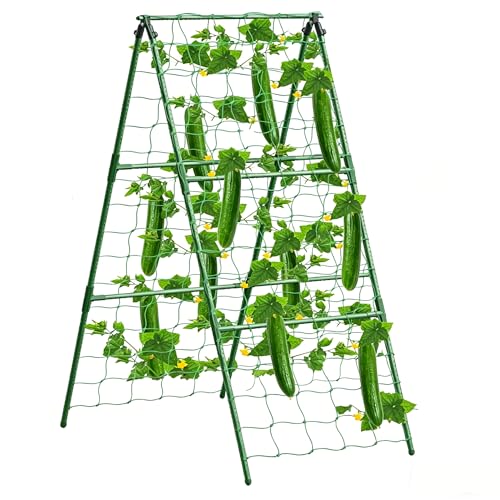
【Package included】:This Trellis for Climbing Plants Outdoor comes complete with everything you need to get started: 17pcs metal stakes, 8pcs T shape connect pipe, 2 A-shaped connectors, and a 0.9x1.8meter plant net.

Sturdy and Easy to Use: Crafted from premium, durable materials, our 2-pack of 48-inch moss poles empowers your climbing plants with reliable support while ensuring hassle-free installation

【Waterproof and Durable】: Our obelisk trellis is made of metal tubes and PE plastic coating, which prevents the tower from rusting, waterproof and able to withstand all kinds of weather conditions, ensuring a long service life.
Tips for Maintaining Healthy and Supported Cucumber Plants
When it comes to maintaining healthy and supported cucumber plants, there are a few key tips to keep in mind that can make a significant difference in the success of your garden. Here are some practical suggestions for ensuring your cucumber plants thrive:
- Regularly check the supports: Ensure that your supports are in good condition and adjust them as needed throughout the growth cycle. Weak or unstable supports can lead to damage to your plants.
- Prune regularly: Pruning your cucumber plants can help promote air circulation and reduce the risk of disease. It also encourages the growth of healthy fruits.
- Monitor moisture levels: Cucumber plants require consistent moisture to thrive. Be mindful of watering them regularly, especially during hot and dry periods.
- Mulch around the plants: Mulching can help regulate soil temperature, retain moisture, and suppress weeds. Organic mulches like straw or compost are great options.
- Harvest cucumbers promptly: Regularly harvesting cucumbers when they reach the appropriate size encourages the plant to produce more fruit. Leaving overripe cucumbers on the plant can signal to the plant to stop producing.
- Inspect for pests and diseases: Keep an eye out for common pests like aphids and cucumber beetles, as well as signs of diseases such as powdery mildew. Address any issues promptly to prevent them from spreading.
- Rotate your crops: Avoid planting cucumbers in the same spot year after year. Crop rotation helps prevent the buildup of pests and diseases in the soil.
By following these tips, you can ensure that your cucumber plants not only have the support they need but also thrive and provide you with a bountiful harvest.
Conclusion
Ensuring your cucumber plants have the right support is key to a bountiful harvest. By following the tips provided, you can maintain healthy plants that thrive throughout the growing season. Regularly checking supports, pruning for airflow, monitoring moisture levels, and staying vigilant against pests and diseases are all essential practices. Remember to harvest promptly and rotate crops to prevent issues. With proper care, your cucumber plants will flourish and reward you with delicious cucumbers for your enjoyment. Happy gardening!
Frequently Asked Questions
How can I ensure my cucumber plants stay healthy and well-supported?
To ensure healthy cucumber plants, regularly check and adjust supports, prune for air circulation, monitor moisture levels, mulch for soil health, harvest promptly, inspect for pests and diseases, and rotate crops.
Why is it important to check and adjust supports for cucumber plants?
Checking and adjusting supports for cucumber plants is crucial to prevent bending or breaking due to the weight of growing cucumbers, ensuring a healthy and successful harvest.
How does pruning help with air circulation and disease prevention?
Pruning helps improve air circulation around cucumber plants, reducing moisture buildup and depriving fungal diseases of favorable conditions to thrive.
Why is monitoring moisture levels essential for cucumber plant care?
Monitoring moisture levels ensures cucumber plants receive adequate water, preventing issues like wilting or water stress that can impact plant health and productivity.
How does mulching contribute to the overall health of cucumber plants?
Mulching helps retain soil moisture, suppresses weed growth, moderates soil temperature, and adds organic matter as it decomposes, promoting healthy root development and overall plant vigor.
Why is harvesting cucumbers promptly important for plant health?
Prompt harvesting of cucumbers encourages continuous production, prevents overripening, and diverts plant resources to producing more fruits, ensuring plants remain healthy and productive.
Why is inspecting for pests and diseases a crucial step in caring for cucumber plants?
Inspecting for pests and diseases allows for early detection and treatment, preventing potential damage to the plants and ensuring a healthy growing environment for optimal harvest.
How does rotating crops help prevent issues with cucumber plants?
Rotating crops helps prevent the buildup of pests and diseases specific to cucumbers, maintains soil fertility, and reduces the risk of nutrient depletion, ensuring long-term plant health.
