

Ever wondered if you can plant onions and carrots side by side in your garden? Picture this: the vibrant hues of freshly harvested carrots and the pungent aroma of onions, all grown together effortlessly. Imagine the convenience of having two kitchen staples just a reach away from each other. In this article, discover the secrets of companion planting onions and carrots together for a bountiful harvest and a more efficient garden layout.
Benefits of Companion Planting
- Enhanced Growth: Onions and carrots planted together can benefit from each other’s strengths.
- Natural Pest Control: Onions can help repel pests that target carrots, while carrots deter pests harmful to onions.
- Space Optimization: By sharing a space, both vegetables can thrive while maximizing the use of your garden bed.
- Weed Suppression: The dense foliage of onions and carrots can reduce weed growth, keeping your garden tidy.
- Soil Health: Different root depths of the two vegetables can improve soil aeration and nutrient utilization.
| Onions and Carrots Together | Benefits |
| Enhanced Growth | Improved nutrient uptake |
| Natural Pest Control | Repel pests effectively |
| Space Optimization | Maximize garden bed usage |
| Weed Suppression | Reduce unwanted weed growth |
| Soil Health | Enhance soil aeration and nutrient levels |
Understanding the Compatibility between Onions and Carrots
When planting onions and carrots together, it’s crucial to understand their compatibility to ensure a successful garden. Here’s what you need to know:
- Complementary Growth: Onions and carrots have complementary growth habits, with carrots developing underground and onions growing above. This allows them to maximize space efficiently in the garden bed.
- Pest Control: Planting onions and carrots together can act as a natural pest control method. Onions deter carrot flies, while carrots repel onion flies, creating a protective barrier for both crops.
- Weed Suppression: The pairing of onions and carrots can help in suppressing weed growth. The dense foliage of onions and the ground coverage provided by carrot leaves reduce the space for weeds to thrive.
- Soil Health: Onions and carrots have different root depths, benefitting the soil by aerating and improving its structure. Carrots’ long taproots break up compacted soil, while onions’ fibrous roots add organic matter when they decompose.
- Disease Resistance: By planting onions and carrots together, you can increase disease resistance. Onions contain compounds that are antifungal and antibacterial, helping protect both crops from certain diseases.
How to Plan Your Garden for Onions and Carrots
When planning your garden for onions and carrots, consider the following tips:
- Companion Planting: Plant them in alternating rows to maximize space and benefits.
- Spacing: Allow enough room between rows for healthy growth – 4-6 inches for onions and 3-4 inches for carrots.
- Sunlight: Choose a sunny spot as both vegetables thrive in full sunlight.
- Soil Quality: Ensure well-draining soil amended with compost for nutrient-rich conditions.
- Watering: Keep the soil consistently moist but not waterlogged to support optimal growth.
- Harvest Timing: Plan your planting schedule such that you can harvest both vegetables at their peak freshness.
- Succession Planting: To enjoy a continuous harvest, stagger your planting times every few weeks.
Remember, a well-organized and thoughtful garden plan sets the foundation for a fruitful harvest.
Recommended Products

EASY TO USE & UNDERSTAND - Simplify your garden with our easy-to-use wheel-based vegetable garden planner! Determine seeds needed, planting depth, optimal spacing, and much more for 21 popular vegetables. The garden planner works in all regions of the USA and Canada. Simply adjust the frost line with the frost dates of your area to get started.

Embrace the versatility of the Varomorus manual seeder, a true garden essential suitable for a wide array of vegetables. Whether you're dealing with oats, cucumbers, tomatoes, beets, onions, radishes, carrots, greens, or lettuce, this tool is ready to meet all your planting needs. Perfect for use in both greenhouses and open ground, it ensures remarkable results with minimal effort.
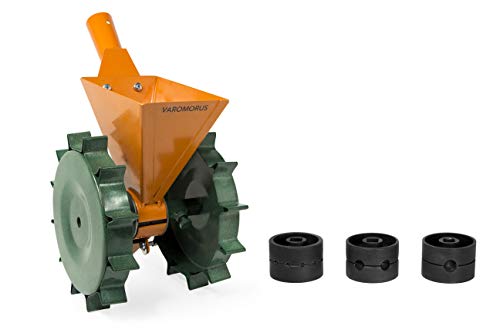
Easy assembling - it can be transformed to 1 and 2 row seeder in a minutes. Seeder has adjustable row distance.
Caring for Onions and Carrots Together
When Caring for Onions and Carrots Together, remember these key tips:
- Weeding is crucial: Remove weeds regularly to prevent them from competing with your vegetables for nutrients and sunlight.
- Watering: Onions need consistent moisture, while carrots prefer well-drained soil. Find a balance by watering deeply but infrequently.
- Thinning: Both onions and carrots need space to grow. Thin them out according to the recommended spacing for each plant.
- Pest control: Keep an eye out for pests like onion thrips and carrot rust fly. Consider companion planting with pest-repellent herbs such as marigolds.
| Watering Tips | |
|---|---|
| Onions | Consistent moisture |
| Carrots | Well-drained soil |
| Frequency | Water deeply, less often |
| Spacing Guidelines | |
|---|---|
| Onions | 4-5 inches apart |
| Carrots | 2-3 inches apart |
Remember, a little extra care and attention can lead to a bountiful harvest of onions and carrots from your garden.
Harvesting and Storage Tips
When it’s time to harvest your onions and carrots, here are some tips to ensure you get the most out of your hard work:
Onions:
- Harvest when the tops have fallen over and started to dry.
- Gently loosen the soil around the bulbs before pulling them out.
- Cure them in a warm, dry place with good air circulation for a few weeks.
Carrots:
- Check if the carrots are the right size before harvesting; gently pull one to test.
- Harvest in the morning for the best flavor.
- Cut off the tops and store them in the refrigerator.
- Store onions in a cool, dry place with good ventilation; hanging them in mesh bags works well.
- Carrots can be stored in the refrigerator, either wrapped in a paper towel or in a container with some water.
Conclusion
You now have the know-how to successfully harvest and store your onions and carrots. Remember to wait for the onion tops to fall over before pulling them out and curing them in a warm, dry spot. When it comes to carrots, check their size before harvesting, do it in the morning, and store them in the fridge after trimming the tops. For optimal storage, keep your onions in a cool, well-ventilated place, ideally in mesh bags, and your carrots in the fridge, either wrapped in a paper towel or in a container with water. Happy planting and enjoy your fresh produce!
Frequently Asked Questions
When is the best time to harvest onions?
Harvest onions when the tops have fallen over, indicating maturity. Loosen the soil before gently pulling them out to avoid damage.
How should onions be stored after harvesting?
Cure onions in a warm, dry place for a few weeks to enhance their storage life. Store in a cool, dry place with good ventilation, ideally in mesh bags.
How do you know when carrots are ready to harvest?
Check the size of the carrots; they are ready for harvesting when they reach the desired size. Pull them out gently from the soil.
What is the recommended storage method for carrots?
Harvest carrots in the morning for the best flavor. Cut off the tops and store them in the refrigerator. Wrap them in a paper towel or keep them in a container with water to maintain freshness.
