

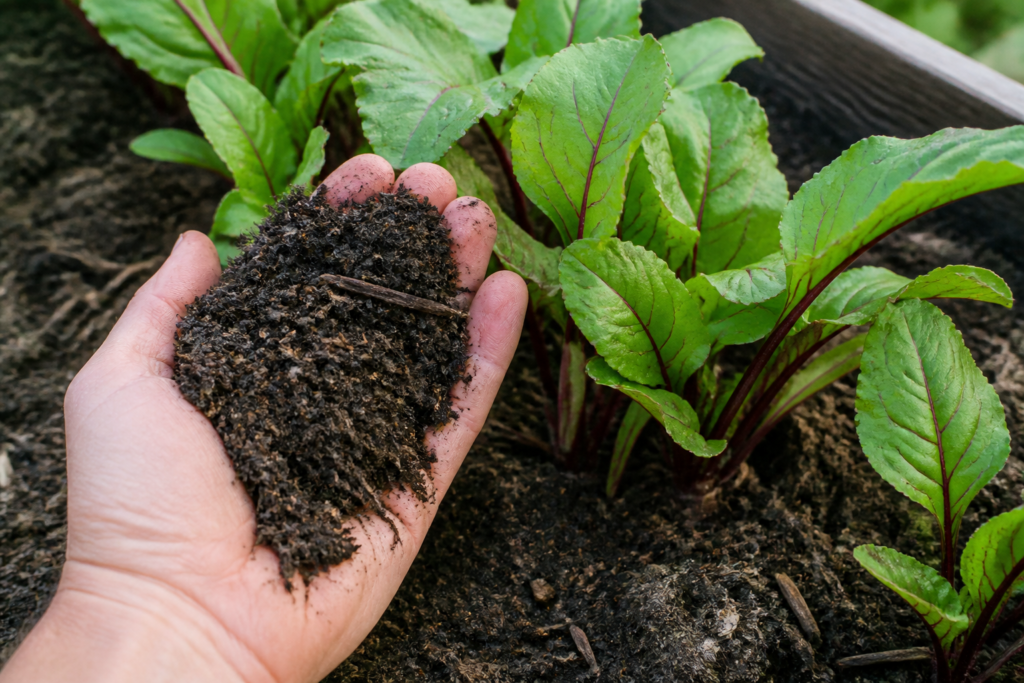
Beets do not need exotic soil, but they do need a root zone that is loose enough to expand, drains after rain, and holds moisture between waterings. Soil is one of the few parts of beet growing you can improve before seed goes in the ground, so it is worth doing deliberately. The goal is not to make every bed identical. It is to recognize whether your soil is heavy, sandy, shallow, compacted, or already well structured, then make the smallest useful improvement.
This guide focuses on root quality. For the full crop sequence, use the Complete Guide to Growing Beets, and for choosing the right season, see When to Plant Beets.
What beet-friendly soil looks like
A suitable bed is deep enough for the variety, loose below the surface, fertile without being overloaded with nitrogen, and able to drain excess water. When you squeeze a handful of properly moist soil, it should form briefly and then crumble apart when pressed. It should not be a sticky slab, loose dust that cannot hold moisture, or a thin layer of good soil over a hard base.
Before sowing, use a trowel to inspect the top 8 to 10 inches. Look for stones, old construction debris, thick roots, and a dense layer where the tool suddenly stops. Remove what you can and improve the bed over time rather than expecting one load of compost to repair a severely compacted site immediately.
Start with a soil test when information is missing
A soil test is the best way to decide whether pH or nutrient changes are warranted. Beets can grow across a moderate soil-pH range, but a test tells you whether an amendment is actually needed in your bed. Do not add lime automatically because a general beet guide mentioned pH; unnecessary liming can create other nutrient problems. Likewise, do not add micronutrients such as boron unless a test or local recommendation shows a reason. Small roots can be caused by spacing, heat, or compaction—not only fertility.
Build structure with finished organic matter
Finished compost can help sandy soil hold water and nutrients and can improve the tilth of many heavier soils. Spread a modest layer and mix it into the upper root zone before sowing. Compost should be mature and crumbly, not hot, sour-smelling, or full of recognizable unfinished material. Fresh manure is not a good last-minute beet amendment; it can create uneven nutrient pockets and encourage leafy growth ahead of roots.
Organic matter works slowly and cumulatively. If a bed is very heavy, add compost over several seasons, use mulch between crops, and avoid walking on the planting area. If a bed is very sandy, compost plus mulch is often more useful than repeatedly adding quick-release fertilizer.
Match preparation to the soil you have
| Soil situation | Useful preparation | Avoid |
|---|---|---|
| Heavy clay | Work only when crumbly; add finished compost; use a raised bed if drainage is slow. | Tilling or digging when wet, which makes hard clods. |
| Very sandy soil | Add compost and mulch; water deeply but monitor more often. | Assuming one heavy watering will last through heat or wind. |
| Rocky or shallow ground | Remove stones; use a deeper raised bed or choose smaller round varieties. | Forcing long-rooted varieties into a thin root zone. |
| Compacted lawn edge | Loosen before planting and keep foot traffic off the bed. | Relying on a shallow surface layer of compost alone. |
Prepare the bed in a practical sequence
- Remove weeds, large stones, old roots, and obvious debris.
- Loosen the soil to roughly 8 to 10 inches where the soil condition allows.
- Blend in finished compost if structure or organic matter needs improvement.
- Level the surface and break only the large clods that would disrupt a shallow seed furrow.
- Water once if the bed is dusty, then sow into a moist but not saturated surface.
This preparation is most effective before planting. Once beets are growing, avoid deep cultivation around the row because cutting roots or changing the soil profile repeatedly will not make roots straighter.
Drainage and moisture are one system
Beets need steady moisture, but they do not benefit from sitting in waterlogged soil. In a heavy bed, check whether puddles remain after rain and whether the soil smells sour or stays glossy wet below the surface. Improve drainage by adding organic matter, avoiding compaction, and using a raised planting area where appropriate. In sandy soil, check deeper than the surface before watering; the top can look dry while the root zone still has moisture, or it can drain almost completely after a hot day.
A 1- to 2-inch mulch layer after seedlings are established can reduce surface evaporation and temperature swings. Keep mulch away from the small crowns and do not use it to hide a bed that needs better drainage.
Fertility: enough, balanced, and based on evidence
Beets use nutrients to build leaves and roots, but more fertilizer is not a universal improvement. A soil test should guide any substantial amendment. If a test or local recommendation calls for fertilizer, incorporate it before planting or side-dress carefully away from the stems. Repeated high-nitrogen applications can produce impressive foliage while roots stay small, especially when spacing or soil texture is also poor.
Watch the whole plant. Pale, slow plants can reflect low fertility, but they can also be cold, wet, crowded, or weedy. Dark green, lush leaves with small roots are a reason to review nitrogen inputs, not a diagnosis by themselves. Use the root-development troubleshooting guide to work through competing causes.
Raised beds and containers
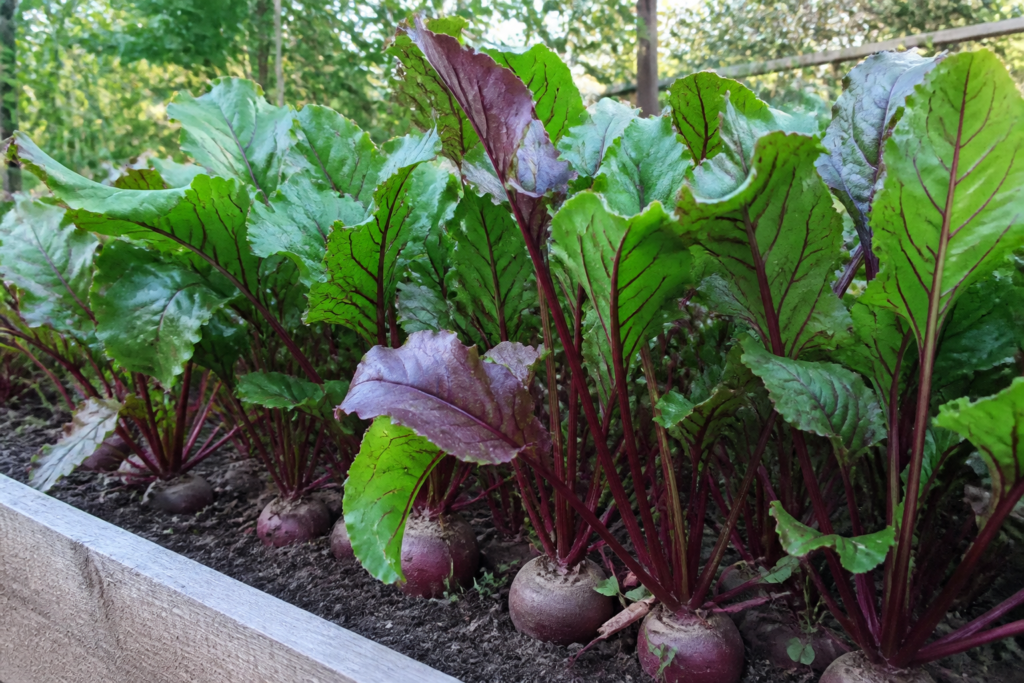
Raised beds are helpful when native soil is shallow, rocky, compacted, or poorly drained. Fill them with a loose, stable blend rather than straight compost, which settles and can hold too much water. A deep container can also grow beets well if it drains freely and uses quality potting mix. Aim for at least about 10 inches of depth. Containers need more frequent moisture checks because their root zone is limited and warms faster.

Soil mistakes that show up later
- Working wet clay: leads to hard clods that persist around developing roots.
- Adding fresh manure before planting: can make fertility and texture uneven.
- Ignoring a hard layer: a fine surface cannot compensate for compacted soil below it.
- Overcorrecting pH or micronutrients: can create new nutrient imbalances without solving the original problem.
- Walking on the bed: compacts the same root zone you prepared.
Make soil improvement a rotation, not a one-day project
Where the native soil is difficult, use the interval between crops to improve it. Grow a different vegetable in the bed, add finished compost before the next beet sowing, keep paths separate from planting areas, and avoid leaving bare soil to crust in heavy rain. A raised bed can give you a reliable root zone sooner, but it still needs a balanced mineral soil-and-organic-matter mix rather than repeated layers of compost alone.
Beets and chard are closely related, so rotate them away from a bed that had suspected root disease or recurring leaf spots. Rotation does not solve every soil problem, but it reduces the pressure of repeating the same crop in the same conditions.
Check the seed zone separately from the deeper root zone
Beet seed is sown shallowly, so the top half-inch needs to stay evenly moist during emergence. Once plants are established, roots explore deeper soil. A bed can be loose below but crust on top after rain, or it can have a soft surface over a dense layer underneath. Check both levels before deciding how to improve the bed.
Before you amend, ask three questions
- Is the main limitation physical—stones, a hardpan, compaction, or poor drainage?
- Is the main limitation chemical—pH or nutrients confirmed by a test?
- Is the issue really seasonal—heat, irregular water, or late thinning rather than soil alone?
Protect the prepared bed
Once the bed is ready, keep feet, wheelbarrows, and heavy hoses off it. Use a permanent path beside the planting area and water gently during emergence so the seed surface does not wash into a crust. These small handling choices preserve the pore space and drainage you worked to create, which matters as much as the amendment you chose.
For a new bed, prepare soil a few days before sowing when possible, then recheck moisture and surface condition on planting day. This gives organic matter and loosened soil time to settle naturally without inviting a hard, dry crust.
Frequently Asked Questions
Can beets grow in clay soil?
Yes, if the soil is improved and handled when it is not wet. Compost, careful bed preparation, and raised beds where drainage is poor can make clay more suitable.
Should I add lime automatically?
No. Use a soil test to decide whether pH adjustment is needed. Adding lime without a test can push soil away from the range other vegetables need.
How deep should beet soil be?
A loose root zone of roughly 8 to 10 inches is a useful goal for many garden varieties. Containers should generally be at least about 10 inches deep.
