


Large beet leaves with small or absent roots are frustrating because the bed can look healthy from above. The symptom does not point to one automatic fix. Beets make leaves before roots size up, and cool weather can slow root enlargement. But persistent leafiness with undersized roots often comes from crowding, insufficient light, a hard root zone, uneven moisture, excess nitrogen, or a planting window that became too hot.
The useful response is to diagnose in order. Start with the easiest things to observe, then change one factor rather than feeding, watering, and replanting all at once. For the overall crop sequence, see the Complete Guide to Growing Beets.
First, decide whether roots are truly behind
Check the variety’s maturity range and gently brush away soil at the shoulder of two or three representative plants. A beet can have a full crown of leaves before the root has reached harvest size, especially in a cool spell. If plants are still within their normal maturity window and leaves look healthy, give them time and keep care steady. If the crop is well past the expected range and roots are still thin, begin the diagnostic checks below.
Compare several plants rather than one. A problem across the whole bed suggests light, soil, nutrition, or weather. A problem in one patch points more often to a compacted zone, uneven watering, shade, or a local drainage issue.
Check spacing before adding anything
Beets need room in every direction. Seed clusters can create several seedlings in one spot, and the foliage can hide how crowded the root zone has become. For medium roots, a final spacing of about 3 to 4 inches is a reliable starting point. Plants intended as baby beets can be closer, while larger roots need more room. Rows are often 12 to 18 inches apart in a conventional garden.
If plants touch shoulder to shoulder, harvest or thin the smallest ones now. Do not expect a crowded row to correct itself later. The beet thinning guide explains how to make a two-pass thinning decision without disturbing the keeper plants.
Review light, temperature, and planting date
Full sun gives the most dependable root crop. Beets can grow in partial sun, but dense shade shifts the balance toward leaves and slows root sizing. Check the bed at several times of day; a site that receives morning sun only may be much less productive after nearby trees leaf out or a taller summer crop begins shading the row.
Temperature also changes the result. Beets are cool-season crops and generally grow best in moderate conditions. Sustained heat can make germination poor, increase water stress, and produce tougher roots. A late spring sowing that entered hot weather may make leaves without developing the root quality you expected. For a better next attempt, use the seasonal timing guide to choose a cooler window.
Inspect soil below the surface
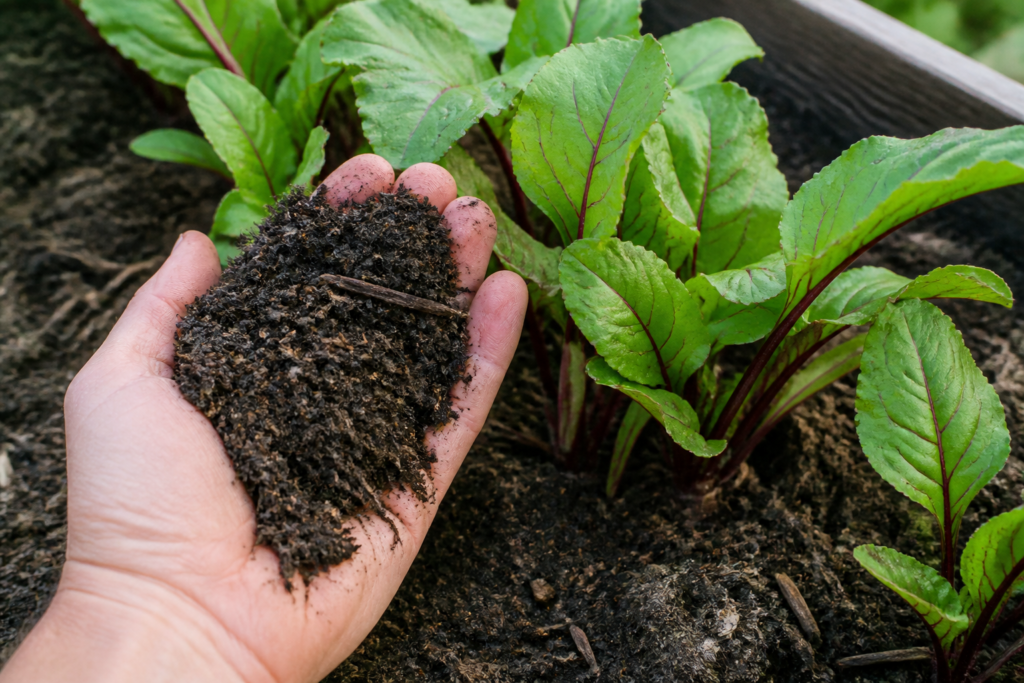
Beet roots need a loose, deep, well-drained zone. Push a trowel or fork beside a plant, not through it, and see whether the soil breaks into crumbs or hard plates. Stones, construction fill, a compacted path edge, and a shallow hardpan can all limit root expansion. Surface compost helps, but it cannot immediately solve a solid layer below the seedbed.
Heavy clay can grow good beets when it is amended and handled at the right moisture level. The key is not to work clay wet, which creates hard clods later. Sandy soil usually needs help holding moisture and nutrients. The Beet Soil Guide covers practical adjustments for both situations.
Look at water patterns, not only today’s soil surface
Roots enlarge most reliably when the bed does not swing from very dry to saturated. Sandy beds can dry fast, while clay may be wet below a dry crust. Check several inches down before watering. Water deeply enough to reach the active root zone, then let the surface dry slightly rather than giving frequent tiny sprinklings. Mulch around established plants can reduce evaporation and soften temperature swings.
Cracked roots often point to a dry-to-wet cycle. Small roots with tough texture can also follow prolonged heat and water stress. More water is not always the answer if drainage is poor; roots need oxygen as well as moisture.
Review fertility carefully
Beets need fertile soil, but leaf growth alone is not proof that they need more fertilizer. Repeated high-nitrogen feeding can favor tops at the expense of root sizing. A soil test is the best way to decide whether nutrients or pH need adjustment. If you have already added compost and a balanced fertilizer, pause before adding another dose. Check spacing, light, timing, and soil texture first.
Boron is sometimes mentioned in beet advice because it is an essential micronutrient, but it is easy to overapply. Do not add boron products simply because roots are small; use a soil test or local extension recommendation to confirm a need.
| Pattern | First checks | Practical response |
|---|---|---|
| Leaves lush everywhere, roots small | Spacing, nitrogen inputs, shade | Thin, stop extra nitrogen, and plan a sunnier row next season if needed. |
| Only one bed section struggles | Hard soil, drainage, nearby roots | Loosen and amend that zone after the crop; do not force it while roots are growing. |
| Plants stalled after hot weather | Planting date, water stress, root size | Harvest usable roots and schedule the next crop for a cooler window. |
| Roots soft or decaying | Drainage and root disease symptoms | Remove badly affected plants and rotate the crop next season. |

What to do now and what to change next time
For the current crop, correct only what is still correctable: thin crowded plants, remove competing weeds, keep moisture more even, and harvest a few roots to assess progress. Do not repeatedly disturb the soil around every plant; roots rarely improve after being loosened and replanted. If the crop is near the end of its season, use the leaves and small roots that are still good, then prepare the bed for a better sowing.
For the next crop, choose a loose bed, sow in a cool window, thin on time, and record the variety and planting date. A short note about heat, watering, and root size will help you see whether the problem follows a site or a season. When roots do reach size, use the harvest guide to pick them at their best quality.
Use a one-change recovery plan
When roots are undersized, it is tempting to add fertilizer, water more, loosen every plant, and sow again. That makes it harder to learn what worked. Start with the issue you can verify: thin a crowded row, remove weeds, adjust an obvious watering swing, or stop additional nitrogen where foliage is already lush. Give the plants a little time, then reassess root size on a few samples.
Do not dig around every beet to check progress. Each inspection disturbs soil and roots. Choose one representative plant at the edge of the row, brush soil aside gently, and replace it afterward. If roots are healthy but simply small, selective harvest can create more space for the rest.
Separate current-crop fixes from next-season fixes
| Problem | Useful now | Better next season |
|---|---|---|
| Crowding | Thin or harvest the smallest plants. | Sow more evenly and schedule an earlier first thinning. |
| Compaction | Avoid further disturbance; harvest what is usable. | Loosen and amend before sowing in a different or improved bed. |
| Too much shade | Harvest smaller roots sooner. | Choose a sunnier location or avoid nearby tall crops. |
| Heat stress | Keep moisture even and use roots while tender. | Move the sowing window to spring or fall. |
Keep expectations tied to variety and season
A beet root does not enlarge at the same rate every week. Cool weather, short days, and variety differences can delay sizing without indicating failure. Compare the crop to its packet maturity range, then sample one root rather than reacting only to foliage. If the root is sound but small, harvest it as a baby beet and use the observation to refine the next planting window.
If you change the current crop’s care, give the change time to work. Beets do not respond overnight, and rapidly alternating between wet and dry soil or fertilizer applications can add stress. A calm, measured adjustment followed by a root check is more informative than repeated intervention.
Frequently Asked Questions
Will more fertilizer make beet roots bigger?
Not automatically. If the soil already has adequate fertility, more nitrogen can favor leaves. Check spacing, soil texture, light, watering, and a soil test before adding fertilizer.
How long do beets take to size up?
Many varieties are ready in roughly 50 to 80 days, but cool weather, variety, soil, and desired root size change that timeline. Check the root shoulder rather than relying only on the calendar.
Can I still eat beets with small roots?
Yes, provided they are sound and not diseased. Small roots can be harvested as baby beets, and tender greens can be used separately.
