Close Menu
    Veggie Knowledge
    • Home
    • Grow Vegetables
      • Carrots
      • Cucumbers
      • Broccoli
      • Green Beans
      • Beets
    • Gardening Advice
    • Tools
    • Free eBook
    • About
      • Contact
      • Privacy Policy
    Veggie Knowledge
    Home»Carrots»How to Harvest and Store Carrots for Freshness in NC: A Complete Guide
    Carrots

    How to Harvest and Store Carrots for Freshness in NC: A Complete Guide

    Lucy StoneBy Lucy StoneJune 5, 20245 Mins Read
    Share Facebook Pinterest
    Share
    Facebook Pinterest

    Ever wondered how to grow delicious, homegrown carrots right in your own North Carolina backyard? Picture this: You step outside, pluck vibrant carrots from the ground, and savor the fresh, sweet taste in your favorite dishes. Exciting, isn’t it?

    Contents show
    1 Selecting the Right Carrot Variety
    2 Preparing the Soil for Planting
    3 Planting Carrot Seeds or Seedlings
    4 Watering and Feeding Carrot Plants
    5 Harvesting and Storing Carrots
    6 Conclusion
    7 Frequently Asked Questions
    7.1 When is the best time to harvest carrots?
    7.2 How should carrots be harvested?
    7.3 How should harvested carrots be stored?

    Selecting the Right Carrot Variety

    When selecting the right carrot variety for your North Carolina garden, there are a few key considerations to keep in mind:

    • Soil Type: Choose a variety that thrives in the soil conditions of your garden.
    • Growing Season: Pick a variety with a growing season suitable for North Carolina’s climate.
    • Size and Shape: Consider the size and shape of carrots you prefer.

    Some popular carrot varieties that are well-suited for North Carolina include:

    Carrot VarietySoil TypeGrowing Season
    Scarlet NantesWell-drainedLate winter to early spring
    DanversSandy-loamMid-summer to fall
    Little FingerLoamyLate summer to early fall

    Preparing the Soil for Planting

    Once you’ve selected the carrot variety that suits your preferences and North Carolina’s climate, preparing the soil is crucial for a successful harvest.

    • Start by choosing a sunny location with well-draining soil.
    • Loosen the soil to at least 12 inches deep using a garden fork.
    • Remove any rocks, weeds, or debris that may hinder carrot growth.
    • Test the soil pH to ensure it’s between 6.0 and 6.8, ideal for carrot cultivation.
    • Incorporate compost to enhance soil fertility and provide essential nutrients for carrot growth.
    • Avoid adding fresh manure, as it can lead to forked or split carrots.

    Soil Preparation Tips:

    • Sandy Soil: Add organic matter like compost to improve water retention and nutrients.
    • Clay Soil: Mix in sand to enhance drainage and prevent soil compaction.
    pH LevelIdeal Range
    Too acidicBelow 6.0
    Optimal6.0-6.8
    Too alkalineAbove 6.8

    Planting Carrot Seeds or Seedlings

    When planting carrot seeds, you’ll want to follow these steps:

    • Sow the seeds: Scatter the seeds in well-prepared soil, covering them lightly with a thin layer of friable soil.
    • Spacing: Ensure proper spacing between the seeds to allow room for growth and avoid overcrowding.
    • Watering: Keep the soil consistently moist but not waterlogged to aid germination.
    MUST READ:  How to Care for Carrot Plants: Growing Tips for a Successful Harvest

    For planting seedlings, consider the following:

    • Prepare the soil: Dig a hole slightly larger than the seedling’s root ball to accommodate its size.
    • Planting depth: Place the seedling in the hole at the same depth as it was in the container.
    • Backfill: Gently fill the hole with soil, patting it down lightly around the base of the plant.

    Remember, creating the right environment from the start is crucial for successful growth and development.

    Recommended Products

    Miracle-Gro Indoor Potting Mix for Seed Starting, 8 qt. (2-Pack) | For Starting Vegetable, Flower, and Herb Seeds Indoors, Excellent for Cuttings
    Miracle-Gro Indoor Potting Mix for Seed Starting, 8 qt. (2-Pack) | For Starting Vegetable, Flower, and Herb Seeds Indoors, Excellent for Cuttings

    Miracle-Gro Indoor Potting Mix for Seed Starting grows stronger roots for seeding success (vs unfed when used as directed)

    VIEW LATEST PRICE

    As an affiliate, we earn on qualifying purchases.

    Back to The Roots Organic Seed Starting, Compressed Block expands to 12 Quarts, Made for Herbs, Veggies, Flowers
    Back to The Roots Organic Seed Starting, Compressed Block expands to 12 Quarts, Made for Herbs, Veggies, Flowers

    Includes Back to the Roots Compressed Seed Starting Potting Mix that expands to 12qt of soil. A balanced pH, which means it’s truly all-purpose. Use alone or as an amendment for anything in a pot or in the ground — vegetables, flowers, herbs, and even starting seeds.

    VIEW LATEST PRICE

    As an affiliate, we earn on qualifying purchases.

    Back to the Roots 3-in-1 Seed Starting Mix 6 Quarts, 100% Organic & USA Made for Herbs, Veggies, Flowers, w/Nutrient Rich Plant Food, Worm-Castings, & Moisture Controlling Yucca Brown
    Back to the Roots 3-in-1 Seed Starting Mix 6 Quarts, 100% Organic & USA Made for Herbs, Veggies, Flowers, w/Nutrient Rich Plant Food, Worm-Castings, & Moisture Controlling Yucca Brown

    NUTRIENT-RICH, NATURAL, AND ORGANIC SOIL: Grow a bountiful garden in your home with the Back to the Roots All-Purpose Natural and Organic Peat-Free 3-in-1 Seed Starting Mix, packed with the nutrients needed for your plants, flowers, and vegetables to thrive

    VIEW LATEST PRICE

    As an affiliate, we earn on qualifying purchases.

    Watering and Feeding Carrot Plants

    When it comes to watering your carrot plants:

    • Water consistently but avoid overwatering as it can lead to rot.
    • Check the soil moisture regularly to ensure it’s moist but not waterlogged.
    • Focus on the root zone when watering to encourage healthy root development.
    • Consider watering deeply once a week rather than a little bit every day.

    For feeding your carrot plants:

    • Use a fertilizer with lower nitrogen and higher phosphorus and potassium levels.
    • Avoid excessive nitrogen that can result in lush foliage but stunted carrots.
    • Apply fertilizer sparingly to avoid disrupting root growth.

    Remember, consistency is key when it comes to watering and feeding your carrot plants for a successful harvest.

    MUST READ:  Maximize Space with Vertical Carrot Planting: Harvesting Tips & Enjoyment Ideas

    Recommended Products

    Farmer’s Secret Fruit & Bloom Booster Fertilizer - Super Concentrated - Boosts Flowering and Yield on All Varieties of Fruits, Vegetables and Flowers - Formulated for Late Summer & Early Fall (8oz)
    Farmer’s Secret Fruit & Bloom Booster Fertilizer - Super Concentrated - Boosts Flowering and Yield on All Varieties of Fruits, Vegetables and Flowers - Formulated for Late Summer & Early Fall (8oz)

    Produce abundant and vibrant fruit and blooms! This product works by strengthening your plant's roots to increase nutrient uptake… enabling it to bloom and produce like you've never seen!

    VIEW LATEST PRICE

    As an affiliate, we earn on qualifying purchases.

    TRIPLE SUPER PHOSPHATE FERTILIZER 0-46-0 | phosphorus fertilizer for gardens, lawns, indoor and outdoor plants | ROCK PHOSPHATE PLANT FOOD FERTILIZER FOR ORCHIDS, WISTERIA, CACTUS AND ALL OTHER PLANTS
    TRIPLE SUPER PHOSPHATE FERTILIZER 0-46-0 | phosphorus fertilizer for gardens, lawns, indoor and outdoor plants | ROCK PHOSPHATE PLANT FOOD FERTILIZER FOR ORCHIDS, WISTERIA, CACTUS AND ALL OTHER PLANTS

    PHOSPHORUS FERTILIZER SAFE FOR ALL PLANTS 0-46-0

    VIEW LATEST PRICE

    As an affiliate, we earn on qualifying purchases.

    Triple Super Phosphate 0-46-0 Fertilizer, high Phosphorus Fertilizer Stronger Roots & Flower Formation, Ideal Super Phosphate for Plants - Flowers, Fruits, Vegetables & Turf, 5 lb
    Triple Super Phosphate 0-46-0 Fertilizer, high Phosphorus Fertilizer Stronger Roots & Flower Formation, Ideal Super Phosphate for Plants - Flowers, Fruits, Vegetables & Turf, 5 lb

    HIGH PHOSPHORUS FERTILIZER: Unlike other phosphorus fertilizers, our triple super phosphate has a 0-46-0 ratio of phosphorus for plants, helping plants fight phosphorus deficiency & grow healthier.

    VIEW LATEST PRICE

    As an affiliate, we earn on qualifying purchases.

    Harvesting and Storing Carrots

    When it comes to harvesting carrots, timing is crucial. You’ll want to wait until your carrots have reached their full size, usually around 60–75 days after planting. How do you know when they’re ready? Check the shoulder of the carrot; if it’s about half an inch in diameter, they are good to go.

    Here are some tips for harvesting your carrots:

    • Gently loosen the soil around the carrot before pulling it out.
    • Grab the green top and pull steadily. If it doesn’t come out easily, wiggle the carrot a bit to release it from the soil.
    • Be careful not to damage the carrots during the harvesting process.

    Once you’ve harvested your carrots, it’s time to move on to storing them properly. Here’s how to do it:

    • Remove the tops: Cut the greens off the carrots to prevent them from drawing out moisture.
    • Clean gently: Wash off any dirt without scrubbing too hard; you want to avoid damaging the skin.
    • Choose cool storage: Store your carrots in a cool, humid place like the fridge or a root cellar to keep them fresh for longer.

    By following these harvesting and storing tips, you can enjoy the fruits (or veggies!) of your labor long after your carrots have been pulled from the ground.

    MUST READ:  How to Grow and Harvest Perfect Carrots: A Complete Guide

    Recommended Products

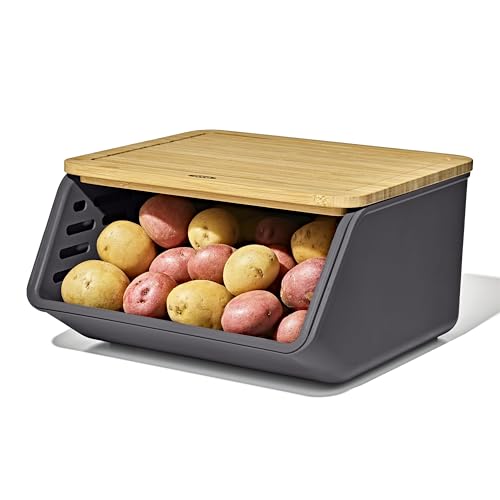
    OXO Good Grips Produce Saver - Root Vegetable Bin, 5lb Capacity | Ventilated Stackable Pantry Organizer, Cool & Dark Environment, Ideal for Potatoes, Onions & Root Vegetables
    OXO Good Grips Produce Saver - Root Vegetable Bin, 5lb Capacity | Ventilated Stackable Pantry Organizer, Cool & Dark Environment, Ideal for Potatoes, Onions & Root Vegetables

    Longer-lasting freshness: Opaque bin and FSC-certified bamboo lid help maintain a cool, dark environment ideal for potatoes, onions and other root vegetables

    VIEW LATEST PRICE

    As an affiliate, we earn on qualifying purchases.

    Joie Carrot Snack and Dip Divided Container, Two Compartment Storage Box Keeps Foods Separate, Ideal for Veggies and Dips, Great for Lunchboxes and Road Trips, BPA-Free
    Joie Carrot Snack and Dip Divided Container, Two Compartment Storage Box Keeps Foods Separate, Ideal for Veggies and Dips, Great for Lunchboxes and Road Trips, BPA-Free

    CONTAINS: (1) carrot snack and dip container

    VIEW LATEST PRICE

    As an affiliate, we earn on qualifying purchases.

    Stitokg Upgraded Celery Keeper for Refrigerator – 3cm Deeper, BPA-Free Vegetable Storage Container with Reinforced Locking Lid, Durable PP Bin for Fresh Celery, Carrots & Cucumbers
    Stitokg Upgraded Celery Keeper for Refrigerator – 3cm Deeper, BPA-Free Vegetable Storage Container with Reinforced Locking Lid, Durable PP Bin for Fresh Celery, Carrots & Cucumbers

    Deeper Capacity:Upgraded version features an additional 3cm of depth, providing more room for longer celery stalks or similar long vegetables. The extra space helps reduce crowding, allowing vegetables to stay neatly arranged and crisp

    VIEW LATEST PRICE

    As an affiliate, we earn on qualifying purchases.

    Conclusion

    You’re now equipped with the knowledge needed to harvest and store your carrots successfully. Remember, timing is key when it comes to harvesting – wait until they’ve reached their full size for the best results. Be gentle when pulling them from the soil to avoid any damage. After harvesting, ensure you remove the tops, clean them gently, and store them in a cool, humid place to maintain their freshness. By following these simple steps, you can enjoy the fruits of your labor long after the carrots have been pulled from the ground. Happy gardening!

    Frequently Asked Questions

    When is the best time to harvest carrots?

    Carrots should be harvested when they have reached full size, usually around 60–75 days after planting.

    How should carrots be harvested?

    To harvest carrots, gently loosen the soil around them, pull them out carefully to avoid damage, and collect them for storage.

    How should harvested carrots be stored?

    After harvesting, remove the carrot tops, gently clean the soil off to prevent skin damage, and store them in a cool, humid place like the fridge or a root cellar.

    Share. Facebook Twitter Pinterest LinkedIn Tumblr WhatsApp Email
    Previous ArticleHow to Optimize Carrot Row Spacing for Maximum Growth
    Next Article Discover Exciting Beet Seasonings: Elevate Your Flavors Now
    lucy stone
    Lucy Stone

      Hi, I'm Lucy! As a passionate gardener and writer for Veggie Knowledge, I've dedicated my life to exploring the secrets of successful vegetable growing. My love for gardening blossomed in my grandmother's backyard, where I learned how much joy a single plant can bring. I aim to share that joy through practical tips and insightful advice, helping you cultivate your own thriving garden

      Related Posts

      Carrot Spacing Guide: How to Thin and Space Carrots

      August 28, 2026

      Growing Carrots in Containers, Raised Beds, or In-Ground

      August 28, 2026

      Companion Plants for Carrots: Practical Pairings and Spacing

      August 28, 2026

      When and How to Harvest Carrots

      August 28, 2026
      Leave A Reply Cancel Reply

      Affiliate Disclosure

      As an Amazon Associate, I earn from qualifying purchases.

      Recommended Reading

      22 Creative Flower Bed Makeovers Using Natural Wood Edging

      Flower Bed Makeover

      19 Polished Flower Bed Makeover Ideas Without Changing the Existing Footprint

      Flower Bed Makeover

      20 Unique Flower Bed Layout Ideas for Better Plant Spacing

      Flower Bed Makeover

      18 Low-Maintenance Flower Bed Ideas for Easier Weeding and Watering

      Flower Bed Makeover

      23 Charming Cottage Flower Bed Ideas With Layered Planting

      Flower Bed Makeover

      21 Practical Flower Bed Preparation Ideas for New Planting Beds

      Flower Bed Makeover

      23 Easy DIY Flower Bed Ideas for One-Weekend Projects

      Flower Bed Makeover

      22 Modern Flower Bed Designs With Clean Lines and Structured Edges

      Flower Bed Makeover
      Veggie Knowledge
      • Grow
        • Carrots
        • Cucumbers
        • Broccoli
        • Green Beans
        • Beets
      • Veggie Knowledge
        • Editorial Policy
        • Corrections Policy
        • About
        • Contact
        • Advertising Disclosure
        • Privacy
        • Terms
        • AI & Technology Policy
      • Learn
        • Beginner Vegetable Gardening
        • Garden Planning
        • Soil
        • Watering
        • Raised Beds
        • Troubleshooting
      • Tools
        • Raised Bed Soil Calculator
        • Vegetable Plant Spacing Calculator
      © 2026 Veggie Knowledge

      Type above and press Enter to search. Press Esc to cancel.