

Have you ever wondered how to grow juicy, flavorful tomatoes right in your backyard, even if space is limited? Picture this: You step outside, pluck a ripe tomato off the vine, and savor its freshness in your favorite summer salad. Sounds enticing, doesn’t it?
In this article, we’ll show you the simple yet effective way to grow tomatoes in big pots, no matter how small your gardening area may be. Imagine having a bountiful harvest of homegrown tomatoes without needing a large garden or extensive planting beds. It’s all about maximizing space and reaping the rewards of your own mini tomato garden.
Key Takeaways
- Pot Size and Root Growth: Larger pots allow for ample root development in tomato plants, promoting robust growth and maximizing fruit production.
- Tomato Varieties and Pot Size: Tailor pot sizes based on the type of tomato variety being grown to meet their specific space requirements for optimal health and yield potential.
- Pot Material Considerations: Different pot materials have pros and cons; choose wisely based on factors like insulation, drainage, durability, and watering needs.
- Recommended Pot Sizes: Follow standard recommendations for pot sizes based on whether you’re growing determinate or indeterminate tomatoes, cherry tomatoes, or heirloom varieties.
- Tips for Potting and Repotting: Know when to repot your tomatoes by checking root growth, select well-draining soil rich in organic matter, and use balanced fertilizers to support healthy plant development.
Factors Determining Pot Size for Tomatoes
When deciding on the size of the pot to grow your tomatoes, several key factors come into play. Understanding these elements will help you optimize the growth of your tomato plants and ensure a successful harvest.
Importance of Root Growth
The root system of tomato plants plays a crucial role in their overall health and productivity. A larger pot size allows for ample root development, enabling the plant to uptake nutrients efficiently and establish a strong foundation for growth. Inadequate space can restrict root expansion, leading to stunted growth and reduced fruit production.
To promote robust root growth, choose pots that are at least 18 inches (45 cm) in diameter for indeterminate tomato varieties, which continue growing throughout the season. For determinate varieties that have a more compact growth habit, a slightly smaller pot around 12-14 inches (30-35 cm) in diameter may suffice.
Tomato Varieties and Pot Size
Different tomato varieties have varying space requirements based on their growth habits and root systems. Indeterminate tomatoes, known for their vine-like growth pattern, benefit from larger containers to accommodate their extensive roots and vertical development. Opt for pots with a minimum depth of 24 inches (60 cm) for indeterminate varieties to support their upward growth.
On the other hand, determinate tomatoes, which have a bushier form with limited height potential, can thrive in smaller pots compared to their indeterminate counterparts. A container with a depth of 12-18 inches (30-45 cm) is suitable for determinate tomato plants as they focus more on fruit production than continual vine extension.
By considering both the type of tomato variety you’re growing and its specific needs regarding space and root development, you can select an appropriate pot size that fosters optimal plant health and maximizes yield potential.
Choosing the Right Pot Material
When selecting a material for your tomato pots, it’s essential to consider the pros and cons of different options to ensure optimal growth conditions for your plants.
Pros and Cons of Different Materials
- Plastic Pots:
- Pros: Lightweight, affordable, and retain moisture well.
- Cons: Prone to cracking under extreme temperatures, may not be as durable as other materials.
- Terracotta Pots:
- Pros: Provide good insulation for roots, aesthetically pleasing.
- Cons: They can be heavy to move around, require more frequent watering due to breathability.
- Fabric Grow Bags:
- Pros: Excellent drainage and aeration, promote healthier root systems.
- Cons: Need more frequent watering in hot climates, may degrade over time.
- Metal Containers:
- Pros: Durable and long-lasting if properly coated or lined.
- Cons: Heat up quickly in direct sunlight, which can affect root temperature.
- Plastic pots retain moisture well but may require careful monitoring to prevent waterlogging.
- Terracotta pots allow excess moisture to evaporate easily but need more frequent watering due to their porous nature.
- Fabric grow bags offer excellent drainage but necessitate regular watering as they dry out faster than traditional pots.
- Metal containers can heat up quickly under the sun, affecting soil moisture levels; consider shading them during peak sunlight hours.
Recommended Pot Sizes for Tomato Plants
When it comes to choosing the right pot size for your tomato plants, there are specific recommendations based on the varieties you’re growing. Here’s what you need to know:
Recommended Products

EASY MOBILITY:This tomato planter comes with 5 sturdy wheels (four with brakes), making it easy to move around. Tomatoes love sunlight but should avoid excessive exposure. The optimal growing temperature is between 64-95°F. By moving the planter, you can easily adjust the sunlight exposure duration and intensity based on the weather and daily temperature, ensuring your plants grow healthy and produce more fruits.
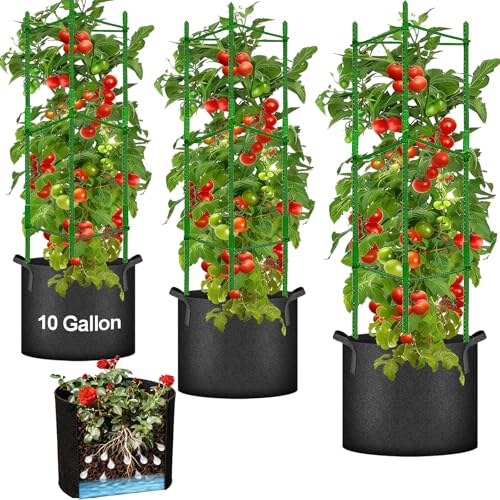
【Package Specification】 : Moirsunt's tomato planter set has 3 three-layers plant support cages, 3 grow bags and 1 use manual. The tomato cages are composed of 27 steel core Stakes, 27 connecting arms and 18 connecting pipes. These three complete sets will help you to train and support the upward growth of the plants and easy movement for different places.

Self-Watering Reservoir Design: Our tomato planter box (also a practical tomato pot) has a built-in bottom reservoir, ensuring tomato plant support and other plants get consistent water supply for healthy growth. This innovative tomato planter prevents wilting from under/over-watering. With a side water inlet, just fill the reservoir with proper water to reduce watering frequency and save time.
Standard Recommendations
- Small Pots: For determinate tomato varieties focused on fruit production, opt for pots that are at least 12-16 inches in diameter and depth. These plants have a more compact growth habit and don’t require as much space for their root systems.
- Medium Pots: Indeterminate tomato plants, which have a vine-like growth pattern and produce fruit continuously throughout the season, thrive in pots ranging from 18-24 inches in diameter and depth. The larger size accommodates their extensive root structure and supports their upward growth.
- Large Containers: If you’re growing multiple tomato plants or particularly large indeterminate varieties, consider using containers that are 24 inches or more in diameter and depth to provide ample room for robust root development and unrestricted growth.
- Cherry Tomatoes: Compact cherry tomato plants do well in smaller pots compared to larger slicer varieties. Aim for containers around 10-14 inches in diameter for cherry tomatoes, ensuring they have sufficient space to flourish while maintaining their manageable size.
- Heirloom Tomatoes: Heirloom tomatoes with their unique shapes and sizes may benefit from slightly larger pots due to their diverse growth patterns. Consider using containers between 16-20 inches in diameter to accommodate the varying needs of different heirloom cultivars.
By tailoring your pot sizes based on the specific characteristics of each tomato variety, you can create an optimal environment that promotes healthy plant development and maximizes your harvest yields.
Tips for Potting and Repotting Tomatoes
When to Repot
It’s crucial to know when to repot your tomato plants. You should consider repotting them when you notice the roots starting to outgrow their current container. Check if the roots are circling at the bottom or poking through the drainage holes. This indicates that your tomatoes need more space for healthy growth.
How to Choose Soil and Fertilizers
Selecting the right soil and fertilizers is essential for robust tomato plants. Opt for well-draining soil rich in organic matter, such as compost or peat moss, to provide nutrients and adequate aeration. Consider using a balanced fertilizer with equal parts nitrogen, phosphorus, and potassium for optimal growth.
Remember, repotting tomatoes at the right time and choosing suitable soil and fertilizers are key steps in ensuring your plants thrive and yield delicious tomatoes.
Recommended Products

【Package Included】 The package include 60Pcs 3.1" Biodegradable Peat Pots and 60Pcs Plant Labels.

[Heavy-Duty Grow Bags]: These heavy-duty grow bags are made from upgraded 300G BPA-free nonwoven fabric, offering superior strength, tear resistance, and long-term reuse

Conclusion
Now that you understand the importance of choosing the right pot size for your tomato plants, you’re ready to kickstart your gardening journey. By selecting the appropriate pot based on your tomato variety and considering factors like root growth, material, and drainage, you can set yourself up for a successful harvest. Remember to tailor the pot size to each specific type of tomato plant to promote healthy development and maximize yields. With these insights in mind, you’ll be well-equipped to nurture thriving tomato plants in your limited backyard space using big pots. Happy gardening!
Frequently Asked Questions
What are the key factors to consider when choosing pot sizes for growing tomatoes?
The key factors include the tomato variety (determinate or indeterminate), root growth space needed, and plant size requirements. Larger pots are recommended for indeterminate varieties due to their vine-like growth, while determinate varieties thrive in smaller pots focused on fruit production.
What materials are suitable for tomato pots, and how do they impact plant growth?
Materials like plastic, terracotta, fabric grow bags, and metal containers each have unique characteristics affecting insulation, drainage, aeration, durability, and watering frequency. Choose based on your specific needs – plastic for durability and affordability, terracotta for breathability but heavier weight, fabric grow bags for air pruning roots, or metal containers for longevity.
How should I choose the right pot size based on tomato variety?
For determinate varieties focused on fruit production: small pots (12-16 inches). For indeterminate varieties with vine-like growth: medium pots (18-24 inches). Large containers (24 inches or more) suit multiple plants or large indeterminate varieties. Cherry tomatoes thrive in 10-14 inch pots while heirloom tomatoes may benefit from 16-20 inch containers.
What tips can you provide for potting and repotting tomatoes effectively?
Monitor root growth indicators such as roots peeking out of drainage holes to know when to repot. Use well-draining soil rich in organic matter and balanced fertilizers during repotting to support robust plant growth. Ensure proper watering practices to maintain optimal conditions for healthy development and bountiful harvests.
