

Have you ever wondered if you can plant lettuce, spinach, and kale together? If you’re looking to maximize your garden space and grow a variety of greens, this question is more common than you might think. Many gardeners face the challenge of fitting multiple crops into a limited area while still aiming for a bountiful harvest.
Key Takeaways
- Companion Planting Benefits: Planting lettuce, spinach, and kale together enhances garden health and maximizes space efficiency through pest control, nutrient sharing, and microclimate creation.
- Ideal Growing Conditions: All three greens thrive in similar cool weather (45°F to 75°F) with well-drained, nutrient-rich soil; adequate sunlight and consistent watering are essential for optimal growth.
- Optimal Spacing Requirements: Maintain proper spacing—6-12 inches for lettuce, 2-4 inches for spinach, and 12-18 inches for kale—to ensure healthy growth and reduce disease risk.
- Potential Challenges: Be mindful of pests, light competition, and varying moisture needs. Regular monitoring and adjustments can mitigate common issues when planting these greens together.
- Nutritional Benefits: Lettuce, spinach, and kale are nutrient-dense, offering vitamins and minerals essential for a healthy diet, making their combined planting not only space-efficient but also beneficial for health.
Understanding Companion Planting
Companion planting encourages the growth of certain plants alongside one another. It’s a strategy that not only enhances overall garden health but also maximizes space efficiency.
Benefits of Companion Planting
- Pest Control: Spinach, lettuce, and kale naturally repel certain pests, reducing the need for chemical pesticides. For example, kale can deter aphids, while lettuce attracts beneficial insects that prey on pests.
- Nutrient Sharing: Different plants often have varying needs. Lettuce builds soil health and can enrich the soil for neighboring spinach and kale, which appreciate well-nourished ground.
- Microclimate Creation: Taller plants provide shade to smaller ones. Kale grows taller, shielding lettuce and spinach from harsh sunlight, which can benefit their growth.
- Space Optimization: These greens can thrive together in tight spaces. You can plant them in alternating rows or clusters to maximize your harvest without overcrowding.
- Lettuce and Spinach: Both enjoy similar moisture and sunlight levels. Planting them together can lead to a productive, visually appealing plot.
- Kale and Lettuce: Their growth patterns complement each other. While kale grows upright, it gives lettuce ample room to spread out beneath.
- Spinach and Kale: Spinach germinates quickly and serves as a ground cover that retains soil moisture, benefiting kale as it matures.
- All Three Together: Create a dynamic greens garden by interspersing all three. This diversity can lead to robust growth and reduces the chances of disease spreading among similar plants.
By following these guidelines, you can create a thriving garden where lettuce, spinach, and kale flourish together.
The Basics of Lettuce, Spinach, and Kale
Lettuce, spinach, and kale are popular leafy greens that thrive in similar conditions. They belong to the same family, making them compatible companions in the garden.
Recommended Products

Complete Lettuce Garden Starter Kit Indoor – 5 heirloom salad and green seed packets, 8 biodegradable soil disks, 8 plant markers, and 8 starter pots. Romaine, Spinach, Arugula, Kale and Buttercrunch lettuce heirloom seeds are the star of the set!
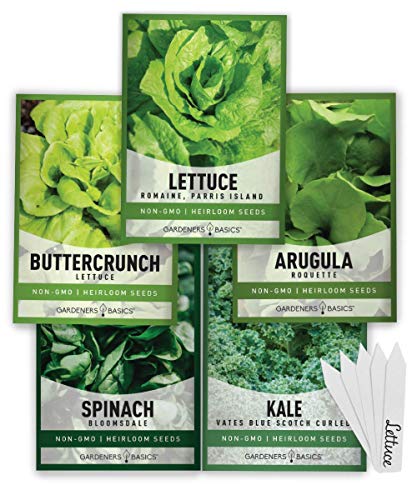
Five leafy greens varieties: Plant Parris Island romaine lettuce seeds, Buttercrunch lettuce seeds, Roquette arugula seeds, Vates Blue Scotch Curled kale seeds, and Bloomsdale spinach seeds. Includes 4,500+ seeds in five separate labeled packets.

10-Variety Lettuce Seed Collection – Enjoy a continuous harvest of fresh, flavorful greens! This lettuce seed collection includes Bloomsdale Spinach, Lacinato Kale, Arugula, Black Seeded Simpson, Red Romaine, Iceberg, Buttercrunch, Grand Rapids TBR, Parris Island Cos, and Lolla Rossa Lettuce.
Growing Conditions
Lettuce, spinach, and kale flourish in cool weather, typically between 45°F and 75°F. They prefer well-drained soil rich in organic matter.
- Lettuce thrives in full sun or partial shade. Aim for six hours of sunlight daily for optimal growth.
- Spinach enjoys cooler temperatures and benefits from partial shade, especially during warmer months.
- Kale can tolerate frost, making it suitable for late fall or early spring planting.
Water the plants consistently; they need about 1 inch of water weekly. Using mulch helps retain moisture and regulates soil temperature.
Nutritional Benefits
Lettuce, spinach, and kale offer impressive health benefits, enhancing your diet with vital nutrients.
- Lettuce is low in calories and provides hydration due to its high water content. It’s a source of vitamins A and K.
- Spinach is packed with iron, magnesium, and vitamins A, C, and K. It’s beneficial for eye health and bone density.
- Kale is a nutrient powerhouse, rich in vitamins K, A, and C. It’s an excellent source of antioxidants.
Planting these greens together not only maximizes your garden space but also ensures a diverse, nutrient-dense harvest.
Planting Lettuce, Spinach, and Kale Together
You can successfully plant lettuce, spinach, and kale together to maximize garden space and optimize growth. These greens thrive in similar conditions, making them good companions for your vegetable garden.
Recommended Products

Beautiful - Bloomsdale Spinach (Spinacia oleracea), Arugula (Eruca sativa), Lacinato Kale (Brassica oleracea var. palmifolia), Bronze Arrow Lettuce (Lactuca sativa), Black Knight Tat Soi (Brassica rapa var. narinosa), Buttercrunch Lettuce (Lactuca sativa), White Stem Pak Choi (Brassica rapa subsp. chinensis), Greenwave Mustard Greens (Brassica var. Greenwave), Corn Salad Lamb’s Lettuce (Valerianella locusta), and Fordhook Swiss Chard (Beta vulgaris var. cicla).

Salad greens and cooking greens: Grow three leaf lettuces plus spinach, kale, arugula, collards and Swiss chard. Choose different greens for fresh salads and cooked garden meals.

Ideal Spacing Requirements
When planting these greens, keep their spacing in mind for optimal growth.
- Lettuce: Space lettuce plants 6 to 12 inches apart. This distance allows for airflow and reduces the risk of disease.
- Spinach: Place spinach seeds 2 to 4 inches apart in rows, with 12 to 18 inches between rows. This spacing ensures adequate light and moisture, promoting healthy leaves.
- Kale: Give kale plants around 12 to 18 inches of space between each plant. This distance accommodates their larger size, allowing them to flourish without competition.
Mixing these greens offers visual variety, enhances growth rates, and can even improve taste. You can plant them in staggered rows to create a more natural look while maximizing space.
Potential Challenges
While planting lettuce, spinach, and kale together has benefits, some challenges may arise.
- Pest Encouragement: If planted closely, certain pests may target the greens. Regularly monitor for aphids and caterpillars. Use companion-friendly plants like marigolds nearby to deter pests.
- Light Competition: Kale can tower over lettuce and spinach, potentially shading them. To mitigate this, plant kale on the north side of your garden bed, allowing other greens to receive adequate sunlight.
- Soil Moisture: These greens have varying moisture needs. Check soil moisture levels frequently, especially in warmer months. Consider using mulch to retain moisture for all plants.
By being mindful of spacing and challenges, you can create a thriving garden filled with healthy and flavorful greens.
Tips for Successful Growth
Planting lettuce, spinach, and kale together leads to a vibrant garden. Follow these tips to ensure successful growth of these leafy greens.
Soil Preparation and Fertility
Prepare soil by testing its pH. Aim for a range of 6.0 to 7.0, which is ideal for these greens. Enrich the soil with organic matter, like compost or well-rotted manure. This improves drainage and boosts fertility. Mix in a balanced fertilizer, high in nitrogen, to support leafy growth. Before planting, till the soil to a depth of 12 inches. This promotes healthy root development.
Pest Management Strategies
Implement pest management strategies for a thriving garden. Start with companion planting; marigolds and nasturtiums deter pests like aphids and caterpillars. Monitor plants regularly for signs of damage. Handpick any visible pests, like slugs or snails. Introduce beneficial insects, such as ladybugs, to naturally control pest populations. Use row covers to protect seedlings from insects while allowing light and moisture in. If needed, apply insecticidal soap or neem oil for tougher infestations. Always read labels for safe use.
By focusing on soil health and managing pests effectively, you create a conducive environment for growing lettuce, spinach, and kale together.
Conclusion
Growing lettuce, spinach, and kale together can be a rewarding experience that maximizes your garden space while providing a nutritious bounty. By understanding their unique needs and how they complement one another, you can create a thriving environment.
With a little attention to soil health and pest management, you’ll enjoy a vibrant mix of greens that not only taste great but also enhance your meals. So go ahead and plant these leafy companions together. You’ll be amazed at how well they thrive side by side, making your garden both beautiful and productive. Happy gardening!
Frequently Asked Questions
Can lettuce, spinach, and kale be planted together?
Yes, lettuce, spinach, and kale can thrive together through companion planting. They share similar moisture and sunlight needs, making them ideal partners in a garden.
What are the benefits of companion planting these greens?
Companion planting enhances garden health by promoting natural pest control, nutrient sharing, and effective space optimization. It can also create favorable microclimates for growth.
What are the optimal growing conditions for these greens?
These leafy greens prefer cool weather (45°F to 75°F), well-drained organic-rich soil, and specific sunlight requirements: lettuce needs full sun or partial shade, spinach thrives in cooler temperatures and partial shade, while kale tolerates frost.
How should I space lettuce, spinach, and kale when planting?
Lettuce should be spaced 6 to 12 inches apart, spinach seeds 2 to 4 inches apart in rows with 12 to 18 inches between rows, and kale plants 12 to 18 inches apart to optimize growth.
What are some tips for successful growth of these greens?
Focus on soil health by testing pH (6.0 to 7.0) and enriching with organic matter. Implement pest management strategies like planting marigolds or nasturtiums and regularly monitor for pests.
What pests should I be aware of when growing these greens?
While growing lettuce, spinach, and kale, watch out for common pests like aphids, leaf miners, and slugs. Regular monitoring and using beneficial insects like ladybugs can help manage these pests.
How can I improve soil fertility for growing these greens?
Enhance soil fertility by adding organic matter and using balanced nitrogen-rich fertilizers. Proper soil preparation is key to creating a thriving habitat for your leafy greens.
