

Green beans are not climbing plants. They are, however, vining plants. Vining plants grow close to the ground and produce long, thin leaves and stems. Some species of green beans are more prone to climbing than others, but all green beans will benefit from some form of support, such as a fence or trellis.
Yes, green beans are climbing plants. They are often grown on trellises or fences, and can reach up to six feet in height.
Recommended Products

【Package included】:Crafted from robust hollow steel, this garden stakes features a fade-resistant green plastic coating, offering reliable protection against wind, rain, and rust. This Trellis for Climbing Plants Outdoor comes complete with everything you need to get started: 17pcs metal stakes, 8pcs T shape connect pipe, 2 A-shaped connectors, and a 0.9x1.8meter bird net.

【Material】:Crafted from robust hollow steel, this garden stakes features a fade-resistant green plastic coating, offering reliable protection against wind, rain, and rust. This Trellis for Climbing Plants Outdoor comes complete with everything you need to get started These gardening supplies are perfect for your gardening life!

High Quality: Trellis netting for climbing plants is made from sturdy 27 strands of high-quality nylon thread ( not 18 strands). Sturdy and durable, tear-resistant. Strong reaking strength supports heavy crop loads.
Do green bean plants need to climb?
Bush beans grow in a more compact manner, only reaching about two feet in height. They do not require any extra support from a structure, such as a trellis. Pole beans, on the other hand, grow as climbing vines. They may reach up to 10 to 15 feet tall and will require a trellis or staking for support.
Pole beans require a support to climb on, such as a trellis or pole, in order to grow successfully. Bush beans, on the other hand, do not need this support and can grow without it. Both types of beans are from the wax bean family and are easy to grow. The main difference between bush beans and pole beans is the support that they need.
Recommended Products

Heavy Duty Metal Trellis, Stability for All Climbing Plants: Crafted with 0.6mm thick stainless steel and a 0.63-inch reinforced center pole, this garden trellis for climbing plants outdoor is built to last. It stands firm through wind and rain, providing season-long support for pole beans, snap peas, tomatoes, cucumbers, and flowering vines like bougainvillea and morning glory.

Garden Trellis Size for Raised Beds: This 48" L x 48" H cucumber trellis for raised bed adjusts from 16" to 26" wide, fitting many 4 ft raised garden beds. Use it as a trellis for raised garden bed layouts to save ground space while guiding vines upward.

A Frame Trellis for Raised Beds: This cucumber trellis for raised garden bed uses a detachable A frame design to support vertical plant growth while saving garden space. The adjustable structure helps climbing vegetables get more sunlight and keeps vines organized in raised beds, backyards, patios, and outdoor gardens.
Are green beans a vine or bush
Pole beans are a type of green bean that grow on climbing vines. They are also known as runner beans. Common pole bean varieties include Kentucky Blue, Blue Lake Pole, Scarlet Runner, and heirloom Kentucky Wonder Pole. Pole beans have a tender, delicate flavor and are a good source of vitamins A and C.
Climbers are a type of plant that typically have long stems and can grow quite tall. They often require some form of support to grow on, such as a trellis or fence. Many climbers are also known for their beautiful flowers, such as the jasmine plant.
How do you train green beans to climb?
The double row is the classic structure for planting beans or peas. Canes are placed on each side of the row, about 1 foot (30cm) apart, and tied together at the top with string. This method is often used with an extra cane along the top for added support.
If you are growing beans and the temperature gets too high, it can stunt the growth of the plants or cause the bean pods to be too small. Therefore, it is important to monitor the temperature and make sure the plants are getting enough sun, but not too much.
Recommended Products

【Rust-Resistant Material】: Cucumber trellis is constructed with high-quality galvanized steel inner pipes and an exterior plastic coating, forming a dual-layer rust-proof barrier to ensure long-lasting durability

🌑[Plant Growth Support]:Garden plant trellis are committed to helping your indoor for potted plants and adds to the natural beauty. As plants grow, the houseplant trellis takes the form of a ladder to help your plant climbing and growing.
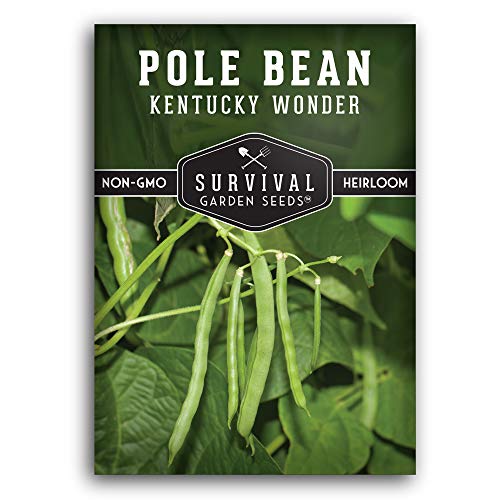
CLIMBING POLE BEANS SEEDS - Kentucky Wonder pole bean (Phaseolus vulgaris) seeds produce vigorous vines that climb trellises, fences, and poles, maximizing vertical space and increasing production in compact garden areas
What do green beans like to climb?
If you are growing pole beans, make sure to provide a trellis or some sort of structure for them to climb. It is very easy to make your own trellis with just a few bamboo stakes and some string or twine. Simply tie the bamboo stakes together at the top to form a teepee shape and then plant the seeds or seedlings around the base of the stakes. In no time, the entire trellis will be covered in beans!
To harvest green beans, wait until the bean pods are four to six inches long and slightly firm. You can tell if the beans are ready to harvest if they protrude through the skin. To harvest, simply cut the beanpod off of the plant.
What is the difference between string beans and green beans
Green beans and string beans are not necessarily the same thing, as string beans may have a fibrous string running down the length of the pod, which would need to be removed. However, for the most part, the term “string bean” is outdated.
I don’t know where they are but as you see they don’t start to preusse produce Until they get up a head of steam I belive this is better for the environment
What Not to plant After green beans?
Nitrogen is an important nutrient for plants, promoting leaf development and growth. Therefore, crops that are heavy in nitrogen, like lettuce and cabbage, should be planted in the same bed after beans. On the other hand, crops in the Gourd or Nightshade family, such as tomatoes and cucumbers, should not be planted after beans, because the nitrogen in the soil will produce leafy plants with less fruit.
One of the most common ways to support beans is with an a-frame supported at the ridge by a horizontal bar. This simple setup is easy to construct and can be very effective in supporting beans. The a-frame should be tall enough so that the beans can reach the horizontal bar, and the bar should be long enough so that the beans can stretch out and support themselves.
Are garden beans climbers
Beans are an important part of many diets, providing protein and essential nutrients. There are a variety of beans, including black beans, navy beans, kidney beans, and pinto beans. Beans can be cooked in a variety of ways and used in a variety of dishes. Green beans, also known as string beans, are a type of bean that is often consumed as a vegetable. Green beans are all climbers to some extent but they are generally classed as being pole beans, which grow five or six feet, or bush beans which only grow a foot or two.
Cucumber (Cucumis sativus) is a widely cultivated creeping vine plant in the Cucurbitaceae family. The plant bears usually cylindrical fruits, which are used as culinary vegetables. The cucumber is a good source of vitamins and minerals, including vitamin C, vitamin K, and potassium. It is also a good source of dietary fiber.
What are 10 examples of climbers?
Climbers are plants that have a stool,vine or other support to climb upon. They are found in all sorts of habitats, from deserts to rainforests. Many climbers are folivorous, meaning they eat leaves, although some are carnivorous and eat insects. Some climbers, such as sweet gourd and bitter gourd, are grown for their fruits, while others, such as Passionflower and Glory lily, are grown for their beautiful flowers.
Beans need full sun to grow, but in extremely hot, dry, or windy weather, you may need to provide some temporary shade. Most beans are climbers, so you need to provide support for them as they grow up to about 2m high.
Do Climbing beans need sun
Beans need a fair amount of sun to grow well, so if you’re growing them in a small space, try to place them where they’ll get plenty of light. They’ll need at least half a day of sun, and more is even better.
Bamboo canes provide an excellent support for climbing beans. They are strong and durable, yet lightweight and easy to handle. Most importantly, they are very affordable. You can usually find bamboo canes for a fraction of the price of traditional wooden supports.
When choosing bamboo canes for your bean supports, make sure to select canes that are thick and long. These will provide the best support for your beans. You may also want to consider using several smaller canes per support, rather than one large cane. This will give the support more stability.
Once your bean crop is finished, simply slide the old vines off the bamboo canes. They will come off easily, without damaging the canes. You can then store the canes away until next season.
Do green beans grow back every year
Green bean plants typically do not come back every year once they die back in the fall. Though it’s possible for them to live for more than one year in an ideal climate, most people grow them as annuals, and replant them yearly. If you live in an area with a climate that is conducive to green beans, you may be able to get away with growing them as perennials. However, for most people, it is best to simply replant green beans each year.
The trellis needs to be 5 to 6 feet (15-2 m) high for staking beans. When using a trellis as pole bean supports, plant the pole beans at the base of your trellis about 3 inches (8 cm) apart.
How often should I water climbing beans
Watering and mulching are important for runner beans. They are thirsty plants and crop best when watered regularly, especially once they start to flower and form pods. You will typically need to apply 5–9 litres (1–2 gallons) of water per square metre/yard every three to four days.
As most gardeners know, green beans are a warm weather crop that should be planted after the soil has warmed and the danger of frost is gone. Generally, they should be planted about an inch deep, although in arid climates they may need to be planted as deep as two inches.
How tall do green beans grow
Aside from their delicious flavor, green beans are a highly versatile vegetable, able to adapt to a wide range of growing conditions. Whether you want to grow them on a trellis for easy picking, or allow them to sprawl on the ground in a bush form, green beans are a great option for almost any garden space.
Bush green beans are a great choice for beginner gardeners because they are easy to grow and produce a bountiful harvest. To extend the harvest season, succession plant fresh seeds every two to three weeks. With a little care and attention, you can enjoy fresh bush green beans all season long!
Conclusion
No, green beans are not climbing plants.
Green beans are climbing plants, and they are a great addition to any garden. They are easy to grow and care for, and they produce a lot of beans. They are also a healthy vegetable, and they are a good source of vitamins and minerals.
