

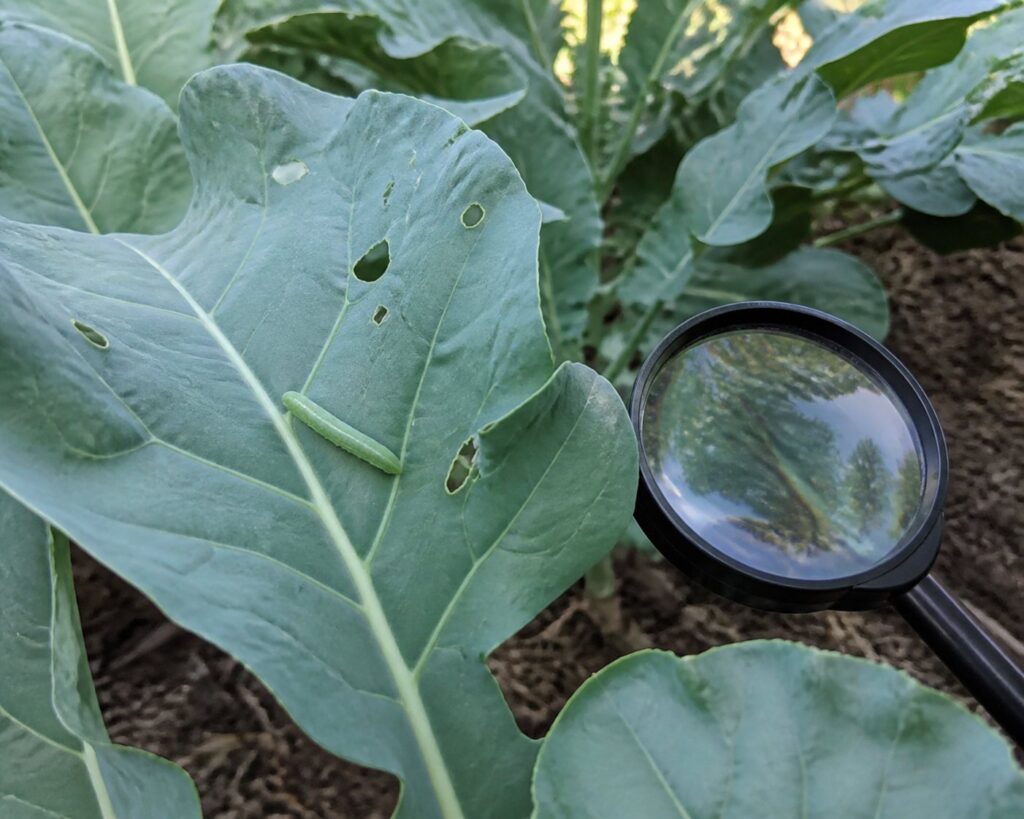
Broccoli pests are easiest to manage when you identify the damage early. A few chewed leaves do not always threaten a harvest, but repeated feeding can weaken young plants and reduce the leaf area needed to size a head. Walk the bed twice a week, inspect leaf undersides, and choose the least disruptive response that fits the problem.
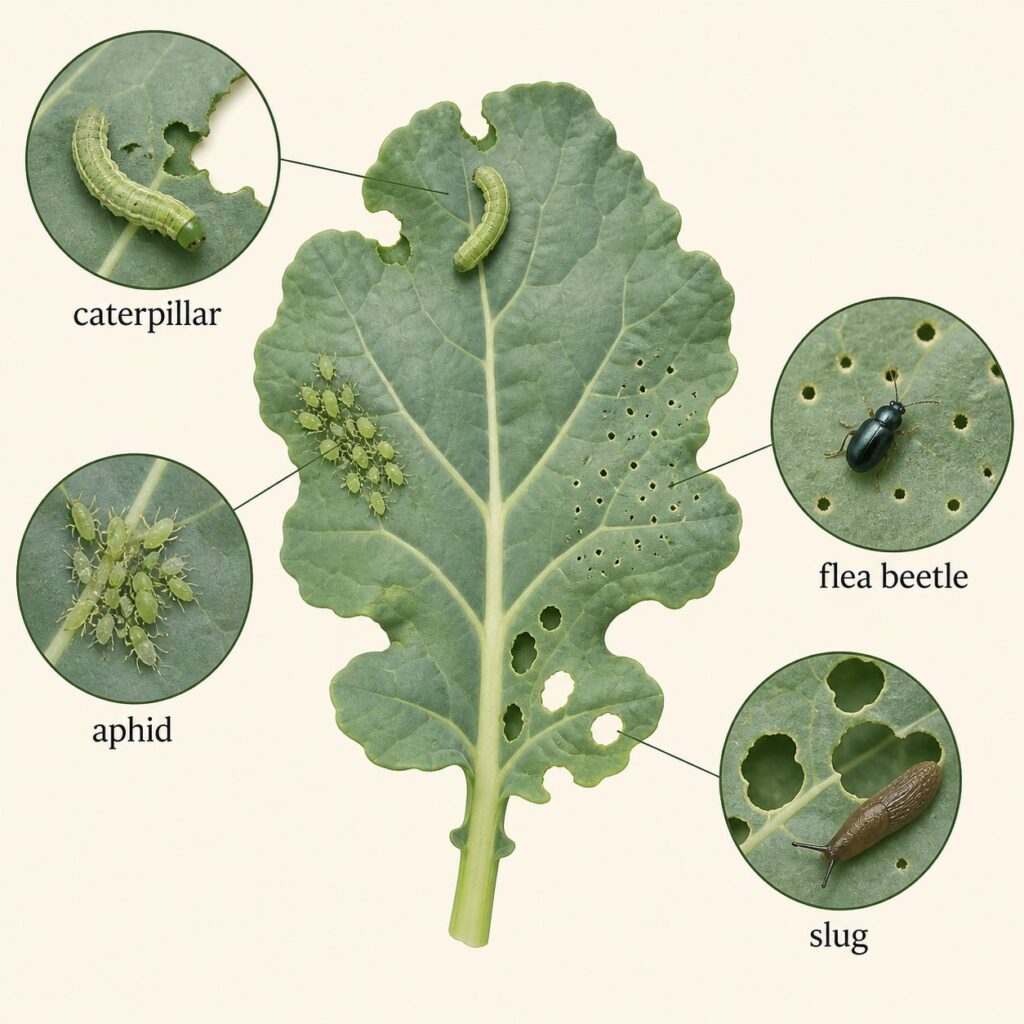
| Pest | Typical signs | First-line management |
|---|---|---|
| Cabbage worm | Irregular holes and dark droppings | Hand-pick; use row cover or an approved caterpillar control. |
| Aphid | Clusters on new growth and sticky residue | Rinse with water and encourage natural predators. |
| Flea beetle | Many tiny holes in young leaves | Protect seedlings with mesh and remove weeds. |
| Slug | Ragged holes near soil level and slime trails | Reduce hiding places and hand-pick at dusk. |
Start with prevention
Cover freshly transplanted broccoli with insect mesh supported above the leaves. Seal edges against the soil and remove the cover when flowering crops need pollinator access; broccoli is usually harvested before open flowers matter. Rotate brassicas, clear old crop debris, and keep weeds down so pests have fewer places to shelter.
Healthy plants tolerate minor feeding better than drought-stressed plants. Water the root zone deeply, mulch after the soil warms, and avoid damaging roots while cultivating. If a crop is already heat-stressed, correct moisture and timing as well as addressing insects. The planting guide can help avoid the hottest part of the season.
Inspect before treating
Turn leaves over and look for eggs, small larvae, shed skins, and ants tending aphids. Caterpillar droppings can sit in the crown where they are easy to miss. A strong spray can dislodge beneficial insects along with pests, so begin with hand-picking or a firm water rinse when practical. Follow every product label, harvest interval, and local regulation if a treatment is necessary.
When a plant should be removed
Remove a plant when it is severely stunted, collapsing at the soil line, or covered with a spreading disease that does not match simple chewing damage. Bag affected material rather than composting it unless your compost system is designed for the pathogen. Do not move insects to clean beds on gloves or tools.
Pest damage is not the only reason for a poor crown. If foliage looks healthy but the head is absent, compare the plant’s age, spacing, light, and nutrition with the head-formation guide. If buds open early, read the bolting guide.
Weekly scouting checklist
- Check the newest leaves and the underside of older leaves.
- Look inside the crown for caterpillars and droppings.
- Inspect soil-level stems for slug damage.
- Record the pest, location, and severity before acting.
- Recheck treated plants according to the product label.
Scout before you treat
Inspect the newest leaves and their undersides twice each week. Cabbage-worm feeding leaves irregular holes and dark droppings; flea beetles create many pinholes; aphids cluster on soft growth; slugs often start near the soil. A quick photograph and note of where damage appears will help you distinguish an active pest from old injury. Check inside the crown, where caterpillars can hide.
Insect mesh is most effective immediately after transplanting, before eggs are laid. Seal edges against the soil and keep the fabric above leaves. Hand-pick caterpillars and rinse aphids when practical. Use a labeled product only when damage is increasing and lower-impact steps are insufficient, following crop, rate, protective-equipment, and harvest-interval directions.
Stressed plants are more likely to produce small heads or bolt. Compare care with the head guide and the bolting guide. Find the whole crop plan on the Broccoli hub.
Keep scouting notes
Record the pest, first date seen, number of affected leaves, and what response worked. Notes reveal whether a barrier should go on earlier or whether a recurring weed is sheltering pests. Do not treat a whole bed for one old hole; check whether new damage is increasing first. Use the head guide when damage is severe and the Broccoli hub for the crop plan.
Protect beneficial insects
Scout before treating: ground beetles, lacewings, hoverfly larvae, and small wasps can reduce pests. Keep flowers nearby and avoid broad-spectrum sprays. Use mesh early, hand-pick when practical, and follow every product label if a targeted treatment becomes necessary. Record what worked and revisit the Broccoli hub for head and bolting guidance.
Protect the whole garden
Broccoli hosts beneficial predators as well as pests. Ground beetles, lacewings, hoverfly larvae, and small wasps can help reduce caterpillars and aphids. Keep flowers nearby, inspect before removing every insect, and use mesh early when pressure is predictable. Hand-pick or rinse light infestations. Use a labeled product only when damage is increasing and lower-impact steps are insufficient.
After harvest, clear heavily infested residue and clean tools. Rotate brassicas where practical, then use the Broccoli hub’s head and bolting guides to understand how stress affects yield.
Match the response to the pest and crop stage
Start by inspecting both leaf surfaces, the growing point, and the head itself. Caterpillars leave holes and pellets of frass; aphids cluster in folds; slugs leave irregular holes and are often easiest to find at dusk. Identifying the pest before treating prevents unnecessary sprays and protects beneficial insects.
Physical controls come first for small outbreaks: hand-pick caterpillars, rinse limited aphid colonies with water, and clear debris that shelters slugs. Row cover can exclude flying pests when installed early, but it must be secured and opened for inspections. When a product is warranted, choose one labeled for the pest and edible crop, follow its label, and observe its pre-harvest interval.
| Observation | Next step |
|---|---|
| Few holes, no pest found | Keep scouting; established plants tolerate modest leaf loss. |
| Active feeding on young plants | Hand-remove and recheck every few days. |
| Pests near forming heads | Inspect more often so the harvest remains usable. |
Wash harvested heads carefully. Rotate brassicas and remove residue after harvest to reduce repeat pressure.
Make scouting part of harvest
Use harvest as the time to look for new feeding, eggs, or clustered insects. Check plants at least weekly, and more often when seedlings are small or heads are forming. Look beneath leaves and into the folds around the head instead of judging only the top surface. A short note about what you found and where it was concentrated prevents treating the whole crop for a localized issue.
Encourage a diverse garden rather than trying to eliminate every insect. Flowering plants nearby can support beneficial insects, while crop residue and weeds immediately around brassicas may shelter pests. Keep the bed clean enough for airflow and inspection, but do not assume a perfectly bare garden is the only healthy one. When removing an infested plant, take it out of the growing area rather than leaving it beside the bed.
Before applying any control
Confirm the crop, pest, and life stage on the product label. Consider the location of pollinators and the interval before harvest. Treat only the affected area where practical, then inspect again. Repeatedly applying a product without confirming live pests can add cost and risk without improving the crop.
Practical decision guide
Broccoli pests are best managed by regular scouting and proportionate action. Look under leaves and inside the crown, identify the pest before treating, and begin with physical removal or exclusion where practical. Caterpillars such as cabbage worms, aphids, flea beetles, and slugs do not require the same response, and repeated broad-spectrum spraying can harm beneficial insects.
- Inspect weekly, especially leaf undersides and new growth.
- Use floating row cover early when it can exclude moths without overheating plants.
- Hand-pick visible caterpillars in small plantings.
- Use an approved, crop-appropriate control only after identification and label review.
- Remove heavily infested crop debris and rotate brassicas next season.
Seasonal checks and common mistakes
Weather changes the plan. Check soil moisture below the surface after hot or windy periods, avoid working saturated soil, and adjust care to the plant stage rather than following a rigid calendar. Young plants need establishment care; developing heads need protection from stress; mature heads need frequent inspection. Common mistakes include treating a symptom before identifying it, overfeeding leafy plants, delaying harvest while waiting for size, and assuming a rule from another climate will fit every garden.
Before changing the plan
| What you see | First check | Useful response |
|---|---|---|
| Slow growth | Temperature, water, roots, and weeds | Correct the clear limitation before adding fertilizer. |
| Uneven plants | Spacing, shade, and drainage across the bed | Compare several plants and revise the site next season. |
| Quality declining | Weather and maturity stage | Harvest usable produce and adjust the next sowing window. |
Keep a short record of variety, planting date, major weather, and harvest quality. It is the most reliable way to refine a local broccoli plan without relying on false precision.
Identify before treating
Leaf holes, frass, curled leaves, and clusters of soft-bodied insects are different clues. Caterpillars chew irregular holes and may leave droppings; aphids cluster on tender growth and can distort leaves; flea beetles leave many tiny holes, especially on seedlings; slugs leave ragged feeding and are most active in damp conditions. Inspect at different times of day and under leaves before deciding that one control will solve the problem.
Integrated management checklist
- Keep weeds and crop debris from sheltering pests.
- Use row cover early where it is appropriate and remove it before it creates excess heat.
- Encourage a diverse garden with flowering habitat nearby, without claiming it guarantees pest control.
- Use crop rotation to reduce repeated brassica pest and disease pressure.
- Follow any product label exactly and avoid treating when pollinators are active.
Frequently asked questions
Should I spray every week as a precaution?
Routine spraying can harm beneficial insects and is rarely necessary. Scout first, then use targeted management if the damage is increasing.
Can damaged leaves still feed the plant?
Yes, unless a leaf is mostly destroyed or diseased. Leave healthy green tissue in place and protect new growth.
Find the complete crop plan on the Broccoli hub.
