

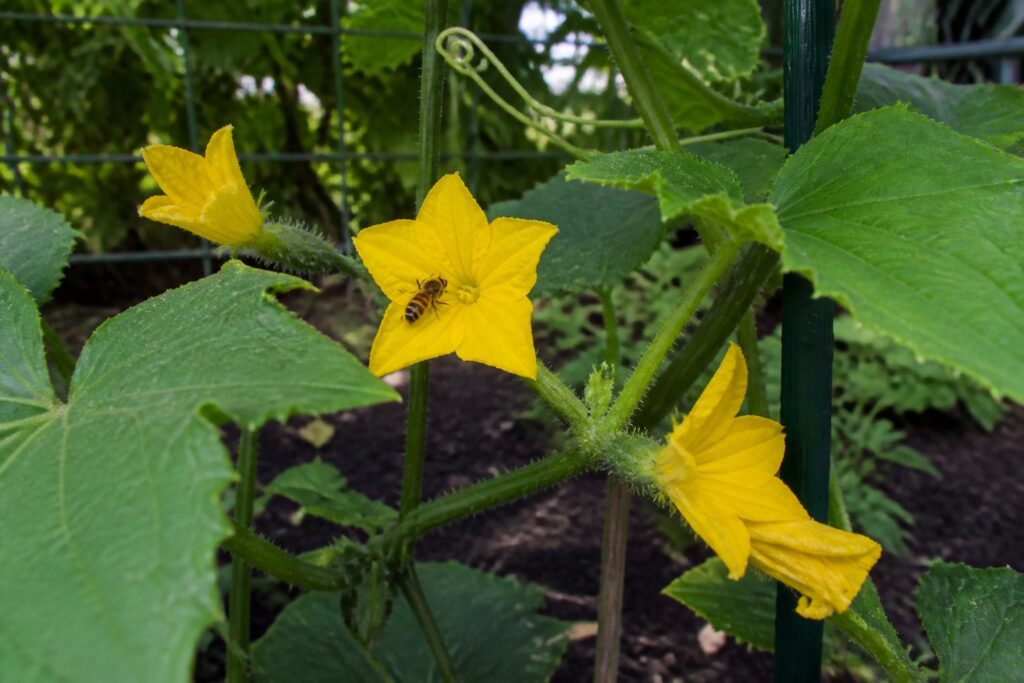
Seeing yellow cucumber flowers fall without a swelling fruit is frustrating, but it is not always a pollination failure. Cucumber plants commonly produce male flowers before female flowers, and a female flower may abort when the plant is young, stressed, too hot, too cold, or short of pollinator visits. The small swelling behind a female flower is the clue: if it never forms, the flower was male; if it forms and then shrivels, investigate pollination and growing conditions.
This guide explains what to look for without promising a single cure. For support, spacing, and watering, begin with the complete cucumber guide and the trellis guide.
Learn the difference between flower types
| Flower | What it looks like | What happens next |
|---|---|---|
| Male | Flower on a slender stem without a swelling behind it. | Produces pollen, then naturally drops. |
| Female | Flower with a tiny cucumber-shaped swelling behind the petals. | Can enlarge after successful pollination. |
| Aborted female | Swelling forms but yellows, shrivels, or stops. | May reflect pollination, stress, or plant imbalance. |
Early male flowers are normal. A healthy plant often changes its flower balance as it gains size. Count flowers over several days rather than drawing a conclusion from one morning. Take a close look before touching or hand-pollinating.
How pollination works
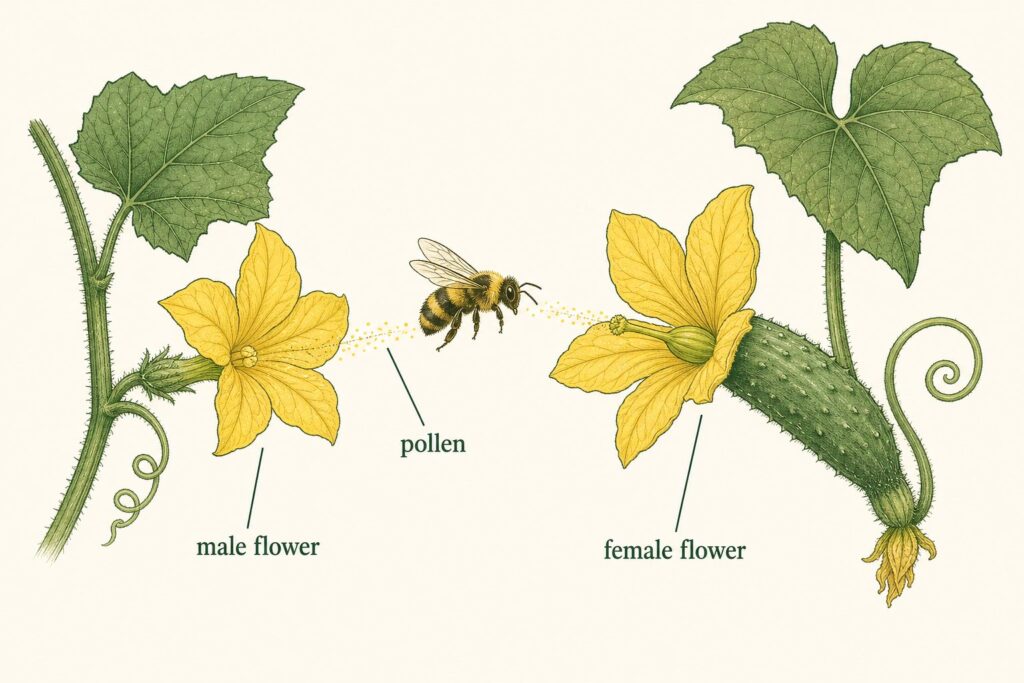
On varieties that require pollination, pollen must move from a male flower to a female flower. Bees and other insects commonly do the work. Weather changes that activity: cool rain, strong wind, intense heat, and pesticide exposure can all reduce visits. Dense foliage or a protected tunnel can make flowers harder to find, while a variety with a mostly female flowering habit may need a compatible pollen source unless it is parthenocarpic.
Grow a range of flowers nearby, avoid spraying open blooms, and keep the garden’s watering routine steady. These steps support pollinators but do not guarantee fruit set. Do not confuse attracting insects with proving that every flower was pollinated.
Check plant stress first
Water swings
A cucumber with a large canopy can lose moisture quickly. Severe wilting followed by heavy watering can cause flower drop and poor fruit development. Check soil below the surface, mulch after establishment, and water deeply enough to keep the root zone reasonably even.
Temperature extremes
Cold nights can stall a young plant; intense heat can disrupt flowering and reduce insect activity. Temporary shade in a heat wave and protection from cold snaps may help, but ventilation remains important.
Root disturbance
Digging near the crown, transplanting a root-bound start, or letting a container dry completely can interrupt flowering. Support and mulch reduce accidental stress.
Nutrition imbalance
Excess nitrogen can produce a large vine with fewer useful female flowers, while poor soil can limit growth. Use a soil test or labeled fertilizer rather than adding a strong dose as a guess.
When hand-pollination makes sense
Hand-pollination is a backup for a known pollination gap, not a first response to every dropped flower. It is most useful when female flowers are present, outdoor insect visits are scarce, and the flowers are open and fresh. Use a small clean brush or transfer pollen from a male flower to the center of a female flower in the morning. Mark the flower if you want to see whether it enlarges over the next few days.
Some greenhouse or parthenocarpic varieties do not need this step and may produce misshapen fruit if pollinated. Check the seed packet before intervening. If there are no female flowers yet, hand-pollination cannot create them; focus on plant health and patience.
Flowering patterns that are normal
- Male flowers appear before female flowers on many varieties.
- A plant may produce a flush of flowers and set only some fruit.
- One aborted female flower does not predict the rest of the season.
- Fruit set may slow during a heat wave and resume when conditions moderate.
- Variety, day length, and plant age influence flower balance.
A diagnostic checklist
- Look for the small swelling behind flowers.
- Observe flowers at different times of day for insect visits.
- Check soil moisture below the surface.
- Inspect leaves for pests, disease, or severe heat stress.
- Confirm the variety’s pollination instructions.
- Improve one clear condition before adding more interventions.
Support pollinators responsibly
Planting nectar-rich flowers, keeping a shallow water source clean, and avoiding broad-spectrum sprays on open blooms can make the garden more welcoming. Choose locally suitable plants and protect yourself from stings. Pollinators are part of the garden ecosystem, but their presence is not a promise of a perfect harvest. Fruit production still depends on the variety, weather, plant health, and timing.
Common mistakes
- Removing every male flower because it does not become a cucumber.
- Hand-pollinating a parthenocarpic variety without checking instructions.
- Watering only after leaves wilt severely.
- Adding high-nitrogen fertilizer to force flowering.
- Keeping a tunnel closed when flowers need insect access.
- Judging the season from a single dropped blossom.
Read the flowers before you intervene
Male cucumber flowers generally appear on slender stems and make pollen. Female flowers have a tiny cucumber-shaped ovary behind the petals. A few male flowers before the first female flowers can be normal, particularly on young plants. Once female flowers open, fruit set depends on pollen reaching their stigma while the flower is receptive. Rain, cool weather, insect scarcity, and dense foliage can all reduce that transfer.
| What you see | What it suggests | Useful next step |
|---|---|---|
| Many male flowers, no female flowers yet | Plant is still young or weather is unsettled | Wait, keep growth steady, and check the variety. |
| Female flowers yellow and drop with tiny fruit | Pollination was incomplete or the plant is stressed | Inspect insects, moisture, and temperature swings. |
| Fruit starts, then shrivels | Weak set, heat stress, or root stress | Stabilize watering and hand-pollinate a fresh flower. |
| Flowers hidden under dense leaves | Pollinators cannot reach easily | Guide vines and remove only damaged or obstructing growth. |
Hand-pollination, step by step
- Choose a freshly opened male flower and a female flower that is open the same morning.
- Use a small, clean artist’s brush or remove the male flower’s petals to expose its anther.
- Touch pollen onto the center of the female flower without bruising the stigma.
- Mark the pollinated flower with a soft twist of string and watch for the ovary to enlarge.
Hand-pollination is a diagnostic tool, not a substitute for a healthy garden. Grow nectar-producing flowers nearby, avoid broad-spectrum insecticides when flowers are open, and water at the soil line. Some greenhouse or parthenocarpic varieties set fruit with little pollination, while many outdoor slicing types benefit from regular insect visits. Check the seed packet before judging the plant.
Support also matters: a well-trained vine keeps flowers visible and airflow moving. See the trellis guide, the complete guide, and the Cucumbers hub.
Improve the pollination window
Flower timing is also affected by daily temperature. Open flowers that face a cool, wet morning may receive less insect traffic than flowers opening during a mild, dry spell. Avoid disturbing vines during the warm part of the day, when bees are most active, and leave a shallow water source nearby if your garden is extremely dry. Keep any water dish clean and add stones so insects can drink without falling in. If you grow under a mesh cover, open it during flowering or hand-pollinate the flowers that cannot be reached.
When checking fruit set, look at several flowers over several days rather than one blossom. A successful female flower usually begins to swell behind the petals within a few days. Remove flowers that are clearly rotting, but do not tug at a healthy developing ovary. For a broader crop check, compare light, moisture, and root-zone conditions with the complete cucumber guide before adding any treatment.
When to ask for local help
If flowers repeatedly fail across several plants despite warm weather, regular moisture, good light, and visible pollinator activity, note the variety and growing conditions before seeking advice. Local extension offices can help distinguish a pollination issue from viral disease, nutrient imbalance, or insect damage. Take clear photos of flowers, leaves, and a developing fruit, and include the planting date and recent weather. That record makes a diagnosis more useful than a guess based on one missing cucumber.
Frequently asked questions
Why are there only male flowers?
Young plants often produce male flowers first. If the pattern continues, review variety information, temperature, moisture, and plant stress.
Why do baby cucumbers turn yellow?
A female flower may not have been pollinated, or the plant may be stressed. Check moisture, heat, insects, and variety requirements before assuming one cause.
Will more fertilizer make cucumbers fruit?
Not necessarily. Excess nitrogen can favor foliage. Correct the growing conditions and use soil-test or label guidance.
For bitterness and moisture stress, read Why Cucumbers Taste Bitter. Return to the Growing Cucumbers hub.
Additional questions
How long should I wait before hand-pollinating?
Give a newly flowering plant a few mornings to attract insects and establish a pattern. Hand-pollinate when several female flowers are opening but fruit set remains consistently poor.
Can fertilizer fix missing fruit?
Not by itself. Excess nitrogen can encourage leaves at the expense of balanced flowering. Check variety, light, temperature, water, and pollinator access first.
