

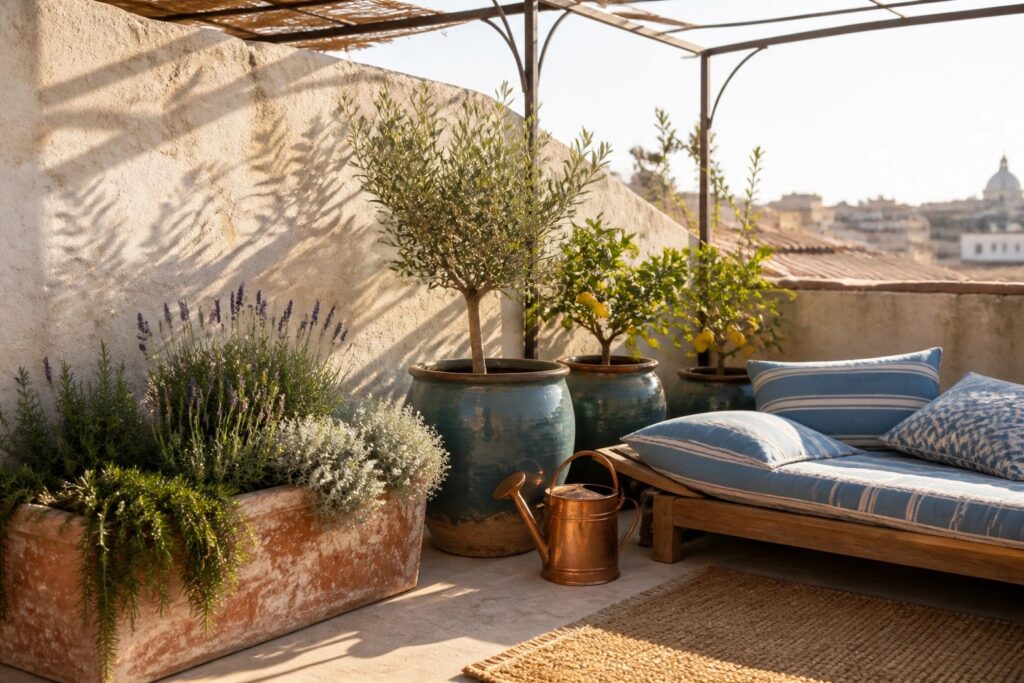
Container gardens placed in full sun can quickly turn into a challenge if the plants are not matched to the conditions they will face all summer.
I have watched setups on south-facing balconies dry out fast when the wrong varieties were chosen.
Usable spaces need plants that cooperate.
Focusing on sun-tolerant options helps the containers maintain their shape and color without extra fuss during the hottest months.
These are the kinds of choices I usually test first when updating my own outdoor areas for the season ahead.
Growing Small Trees In Large Pots
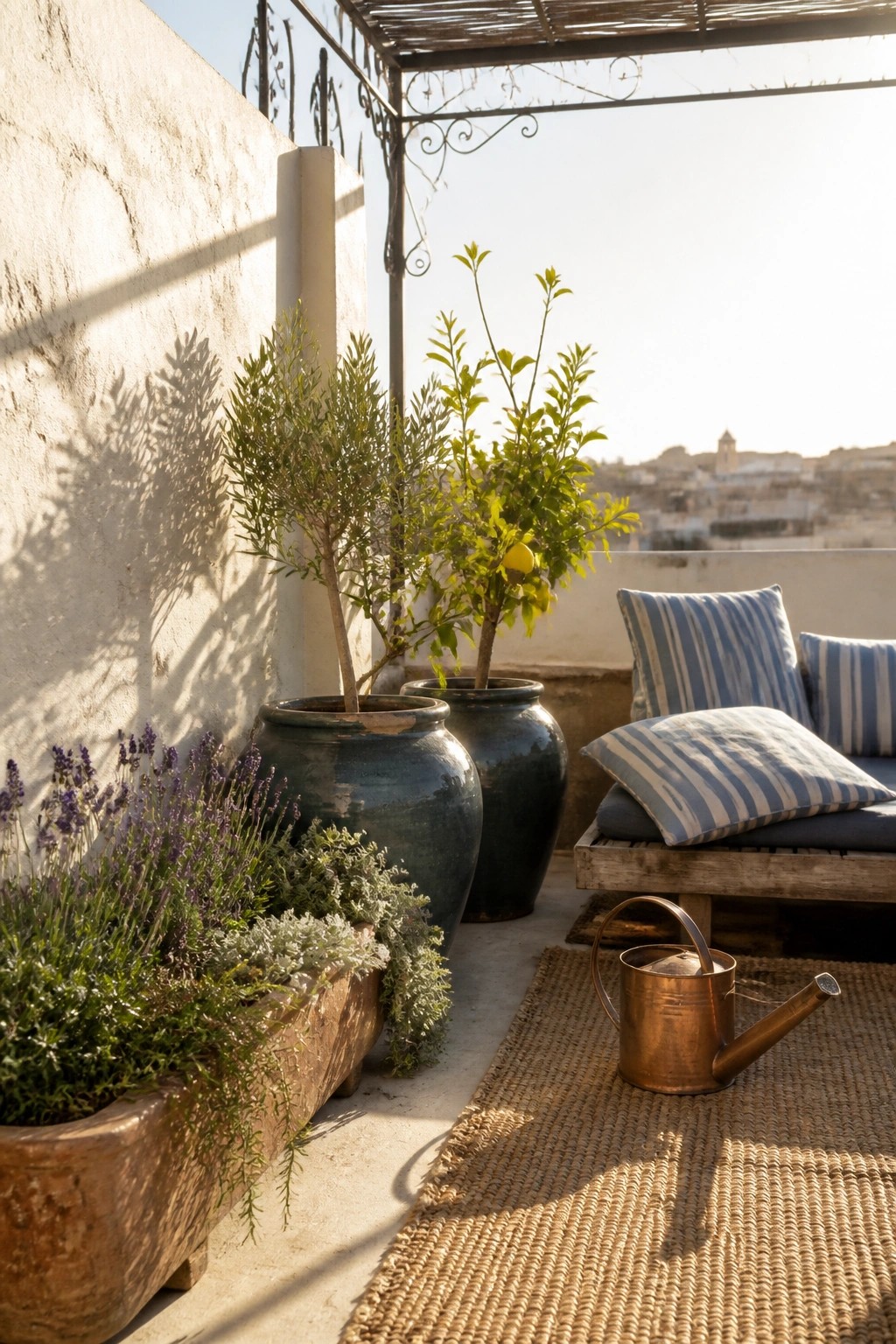
Large pots give small trees enough root room to handle full sun without drying out too fast. The deep containers also keep the plants stable on a windy terrace while the soil stays cooler at the roots during hot afternoons.
Place them along a wall or railing where they get at least six hours of direct sun, and choose trees like citrus or olive that naturally stay compact. A long lower planter in front adds a layer of flowers or herbs without blocking the view of the bigger specimens.
Concrete Planters Hold Up Well In Full Sun

Large concrete planters give balcony gardens a solid base that stands up to heat and wind. They keep soil cooler than thin pots and let you grow bigger plants without constant watering checks. The mix of sizes also helps create layers so everything gets good light.
Place them along the rail or in corners where they get the most sun. Choose flowers and greenery that like full exposure, and leave a little space between pots for air flow. This setup works best on decks or balconies that face south or west.
Group Pots of Different Heights on Your Deck

Mixing taller and shorter containers works well when you want a full look without crowding a small deck. The varying heights let sun loving plants like bougainvillea and petunias catch light at every level while still leaving room to walk or sit.
This approach suits decks and balconies that get strong summer sun. Start with a few larger pots at the back and fill in with lower ones in front. Woven baskets and simple clay pots both hold up fine as long as they drain well and you water regularly during heat waves.
Raised Concrete Beds For Full Sun Succulents

A long concrete planter makes a simple and sturdy home for a mix of sun loving succulents. The solid material holds up well in heat and keeps the soil from drying out too fast, while the height makes the plants easy to see and care for. This setup works especially well when you want a garden that stays neat without constant watering or trimming.
Place the bed along a fence or wall where it gets full sun all day. Fill it with a variety of agaves, echeverias, and low trailing plants so the textures play off each other. It suits patios and side yards that get strong afternoon light and need a planting that can handle the heat without extra fuss.
Terracotta And Wood Planters For Sunny Balconies

Terracotta pots and simple wooden planters work well together in full sun because they hold up to heat and let excess moisture drain away. The combination gives plants room to grow without crowding, and the natural materials keep the setup from feeling too formal.
This approach suits small balconies or patios where space is limited but sun exposure is high. Place taller pots at the back and lower ones in front so everything gets light, and choose heat-tolerant plants that match the conditions.
Group Pots on a Stone Surface
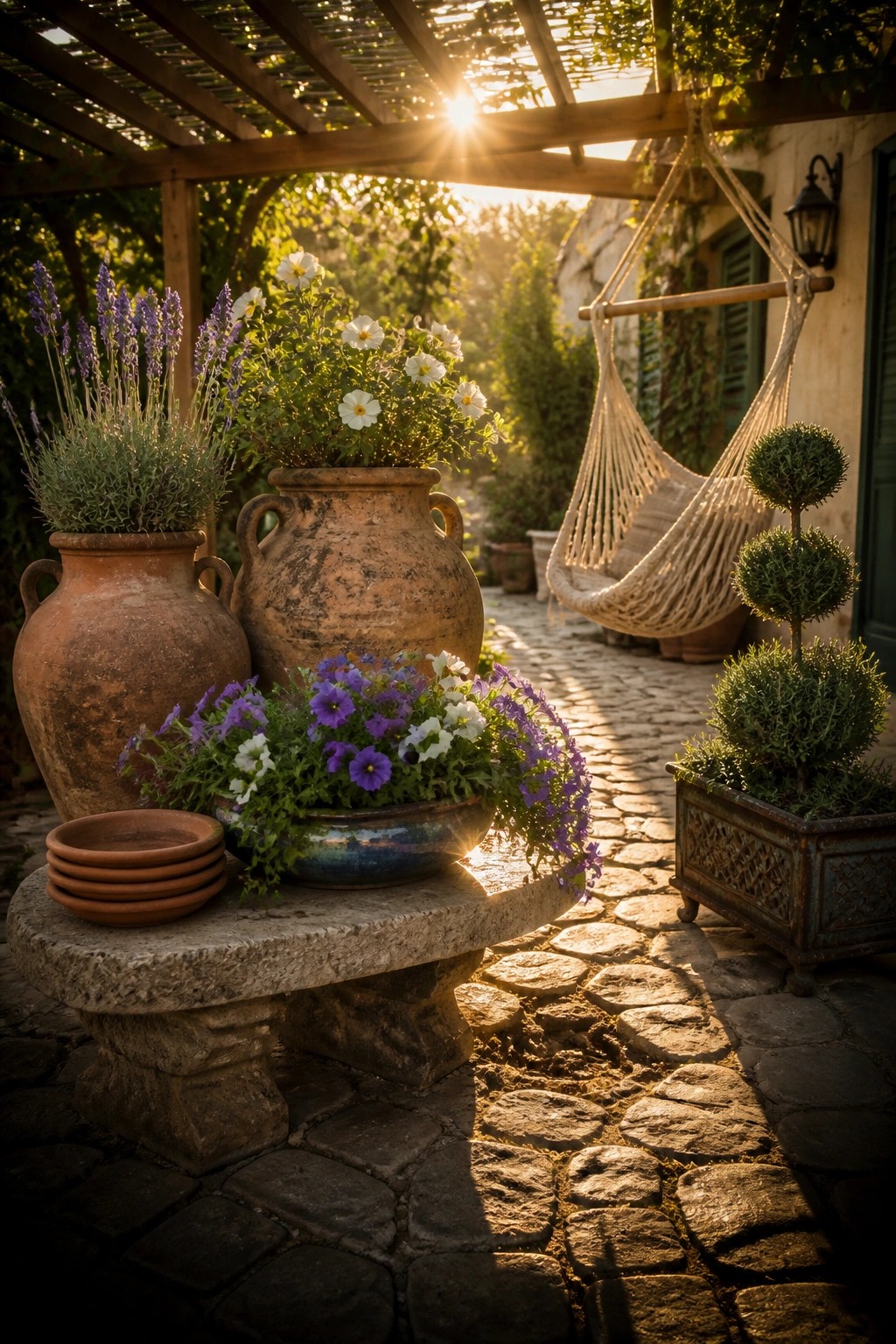
Many people set their containers on a low stone table or bench when they want the plants to stand out in full sun. The raised surface keeps the pots from sitting in wet soil and makes watering and deadheading easier throughout the summer.
This setup works best along a path or near a seating area where you already have hardscape in place. Choose a few large pots in similar tones and fill them with plants that all like the same amount of light so the whole group stays healthy without constant moving around.
Large Metal Containers Along The Deck

Many decks get strong sun all day, so using big metal containers makes sense for keeping flowers happy without digging into the surface. The tall sides hold enough soil and the metal warms up in the heat, which suits plants that like those conditions.
This setup works well on rooftops or upper patios where space is open and wind can be an issue. Group the containers along one side to leave room for chairs and walking, and pick flowers that stay upright in full sun.
Combining Trellises With Trough Planters
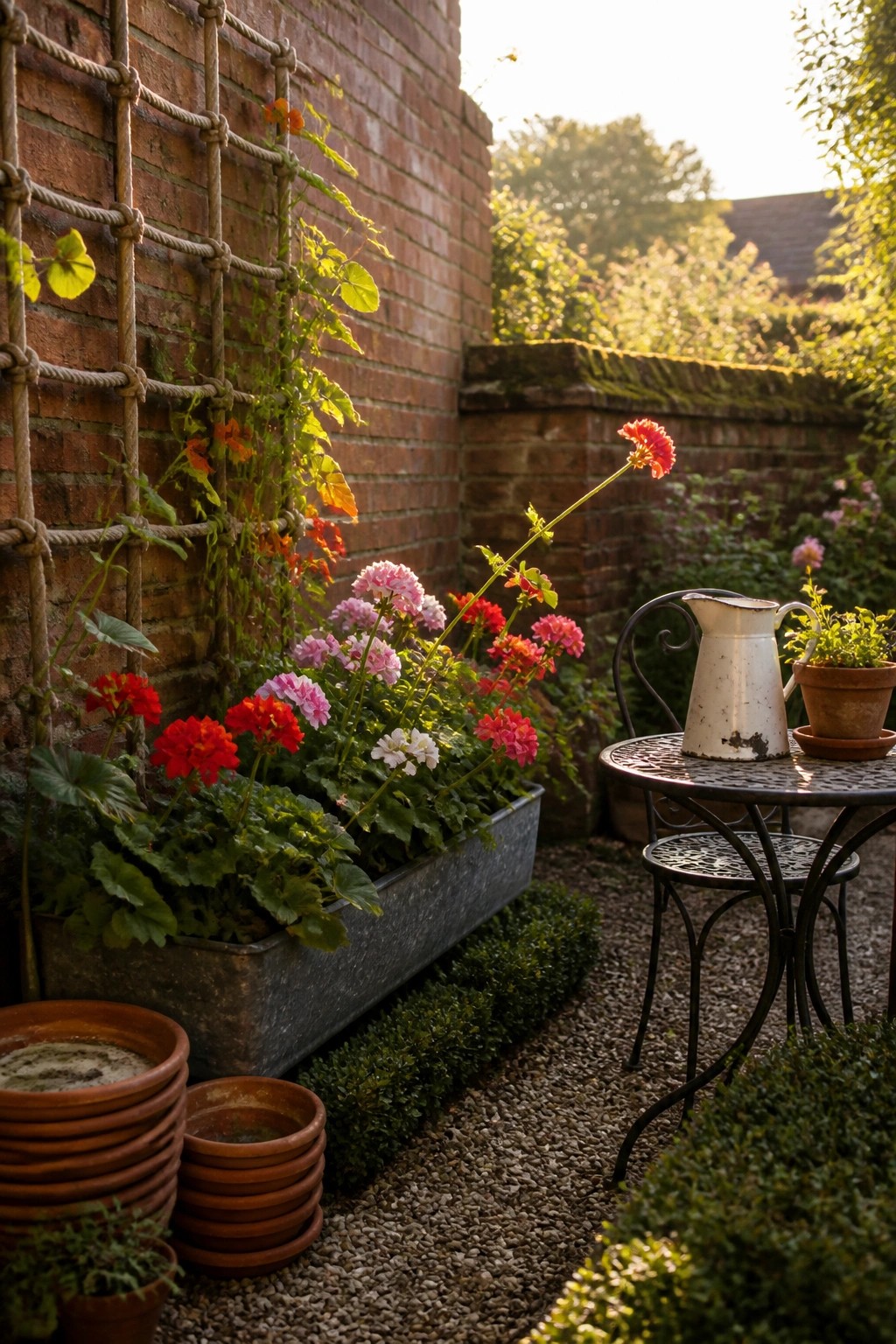
Many gardeners like to add a simple trellis behind a long trough planter so they can grow both upright climbers and lower blooming plants in the same spot. This setup makes good use of a sunny wall without needing a lot of ground space.
It works well along a side path or against a house wall where the sun hits most of the day. Secure the trellis firmly and choose a deep planter so the roots have room to spread.
Using Old Farm Vessels as Planters
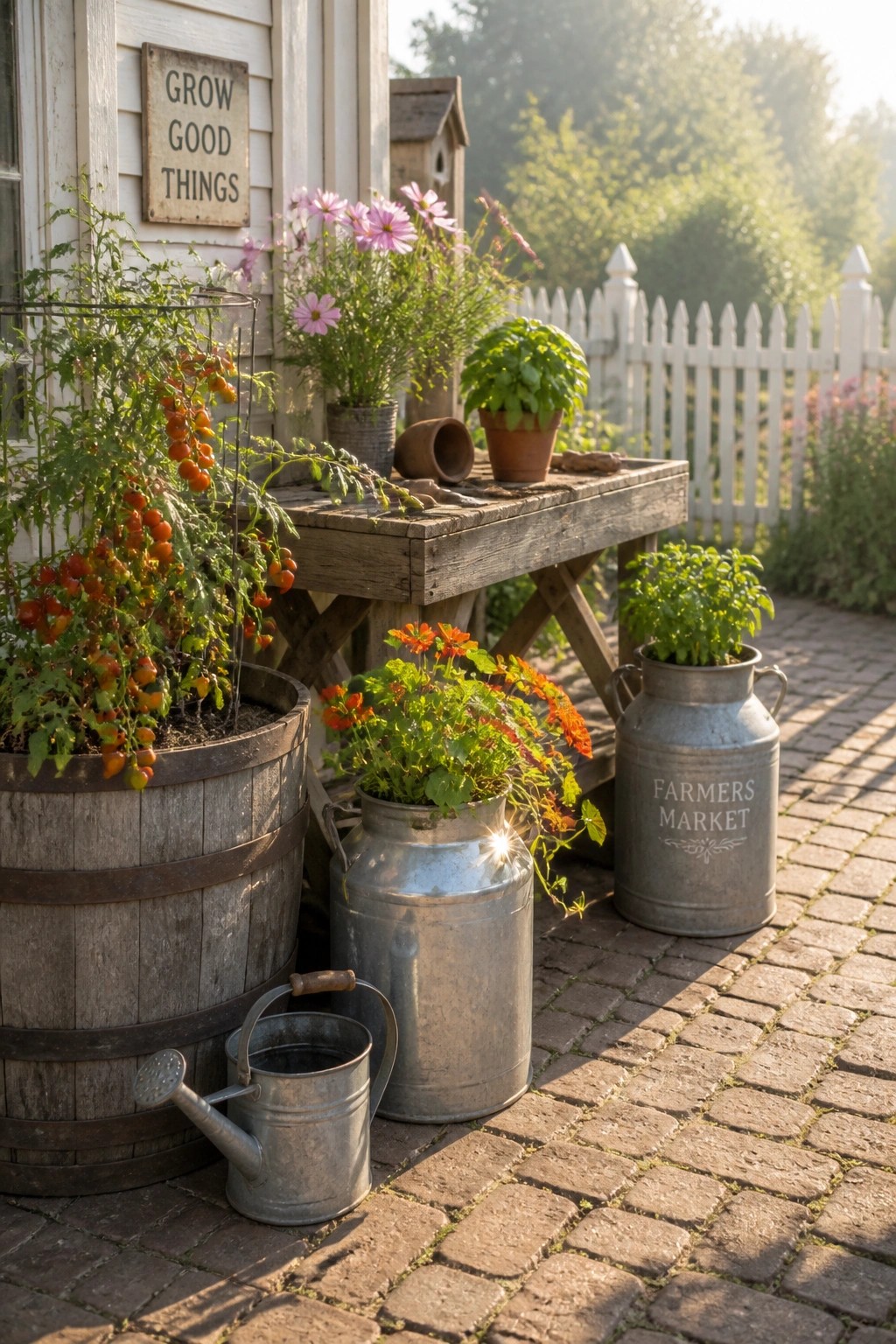
Old milk cans and wooden barrels make solid choices for full sun container gardens. They hold up well in heat, give roots room to grow, and add a simple rustic look without much extra work. The metal ones especially reflect some light, which can help keep soil from drying out too fast on bright days.
Place them along a path or near a seating area where they get steady sun. Mix in trailing plants with upright ones so the display stays full through summer. Just watch the drainage holes and water regularly since metal heats up faster than plastic or ceramic.
Group Containers On A Bench
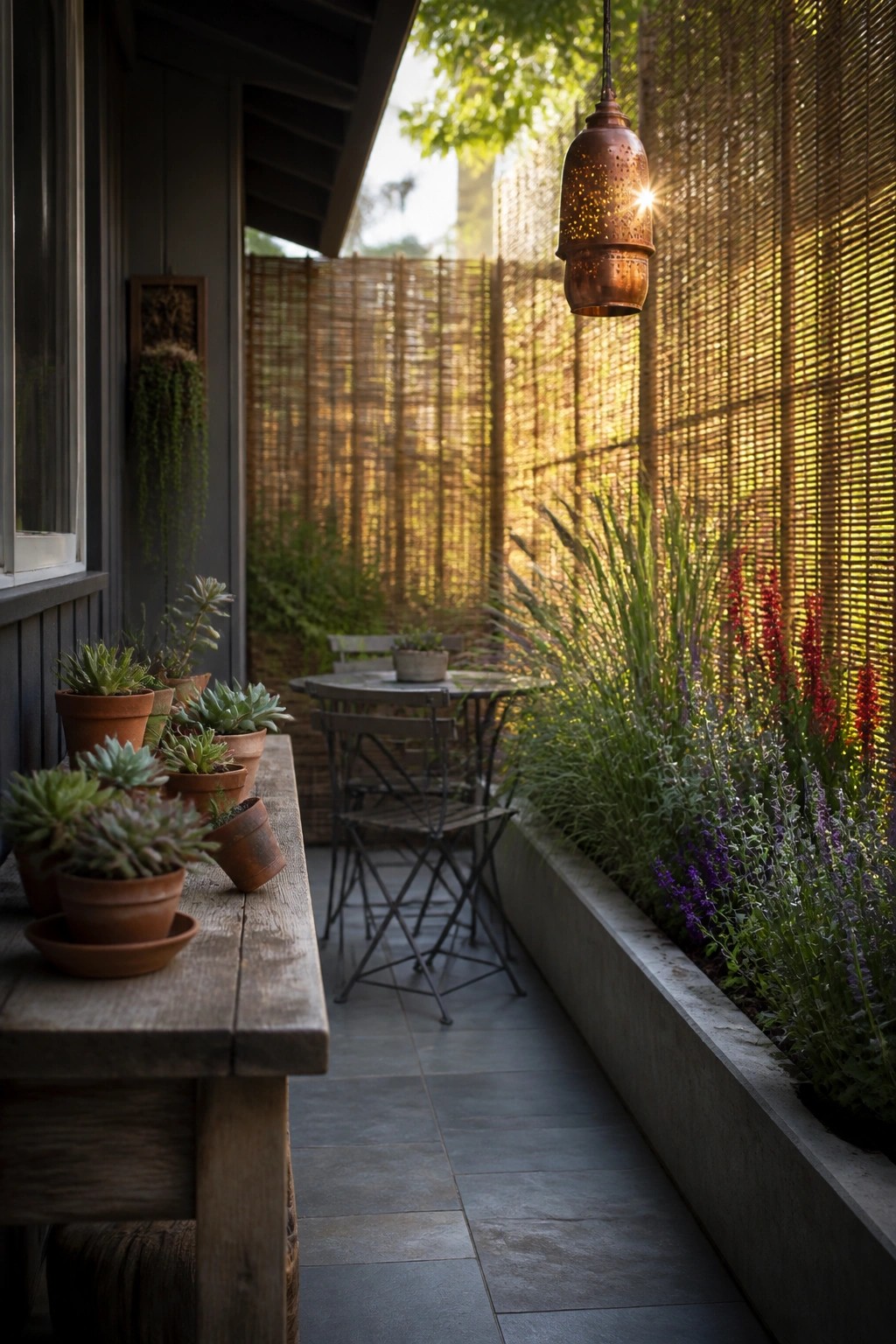
Many people like setting several pots together on one bench because it keeps the plants easy to reach and simple to move if the light changes. It also turns an empty bench into a useful spot for extra growing space without needing more beds.
This setup works best on a sunny patio or deck where you want a lot of plants but have limited floor room. Use a sturdy bench that can handle the weight, and stick to plants that all need full sun so they stay happy side by side.
Large Containers Frame Sunny Steps
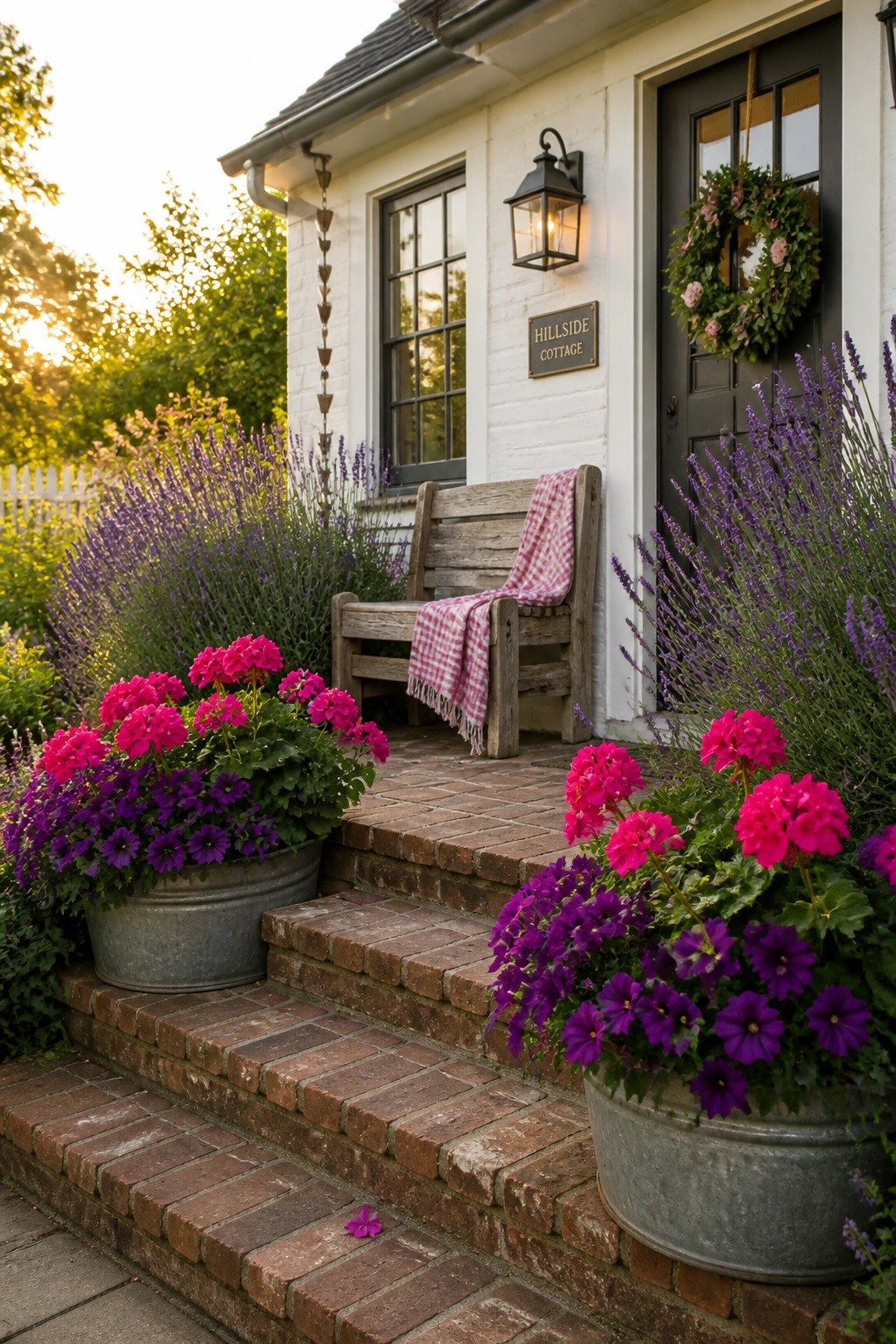
Large metal tubs filled with bright flowers make an easy way to add color right along brick steps. The plants stay contained so there is no need to dig beds, and they catch the sun all day long.
This setup works best on south or west facing entries where heat builds up. Choose tough annuals that handle full sun and water them regularly so the display holds through the hottest weeks.
Large Containers on a Wooden Deck
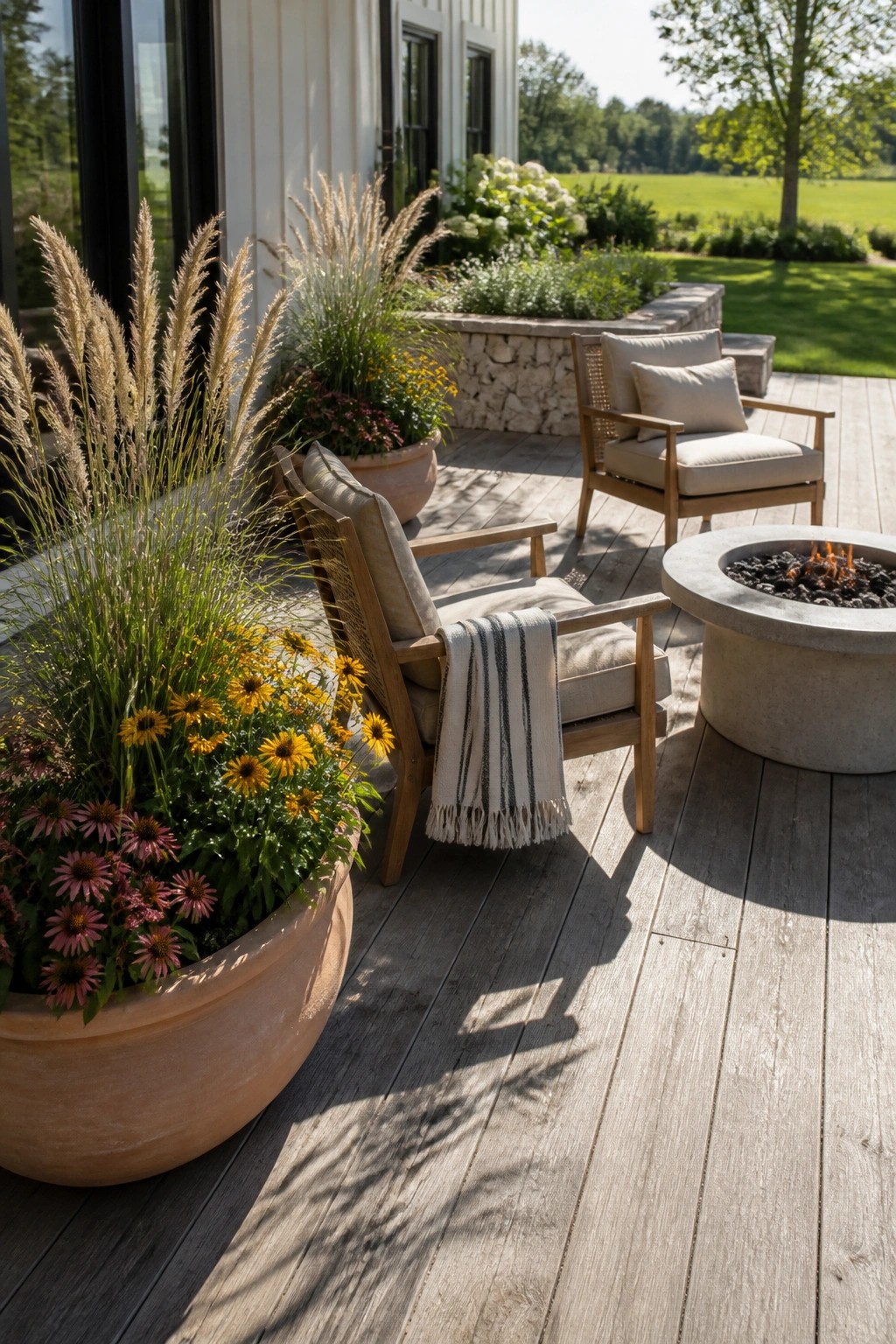
Large containers work well when you want flowers and texture right next to seating without digging beds. They let you move things around as the season changes and give you height and color where the deck would otherwise feel flat.
Place a few oversized pots near chairs or a fire pit and fill them with plants that handle full sun all day. This setup suits homes with decks or patios that get steady light and need something simple to soften the wood and furniture.
Hang Baskets to Add Height to Container Gardens

Hanging baskets give you a simple way to bring more color into a sunny balcony without taking up floor space. They work especially well when paired with larger pots below, since the upper layer catches the light and the lower pots stay a bit more protected. This setup keeps the area from feeling flat while still leaving room to move around.
It suits small outdoor spots that get full sun most of the day. Use sturdy chains and heat-tolerant trailing plants, and check the weight once the baskets are watered. The mix shown here, with hanging blooms above a citrus tree and smaller pots, shows how easy it is to build layers in a tight space.
Group Containers Along Sunny Walkways
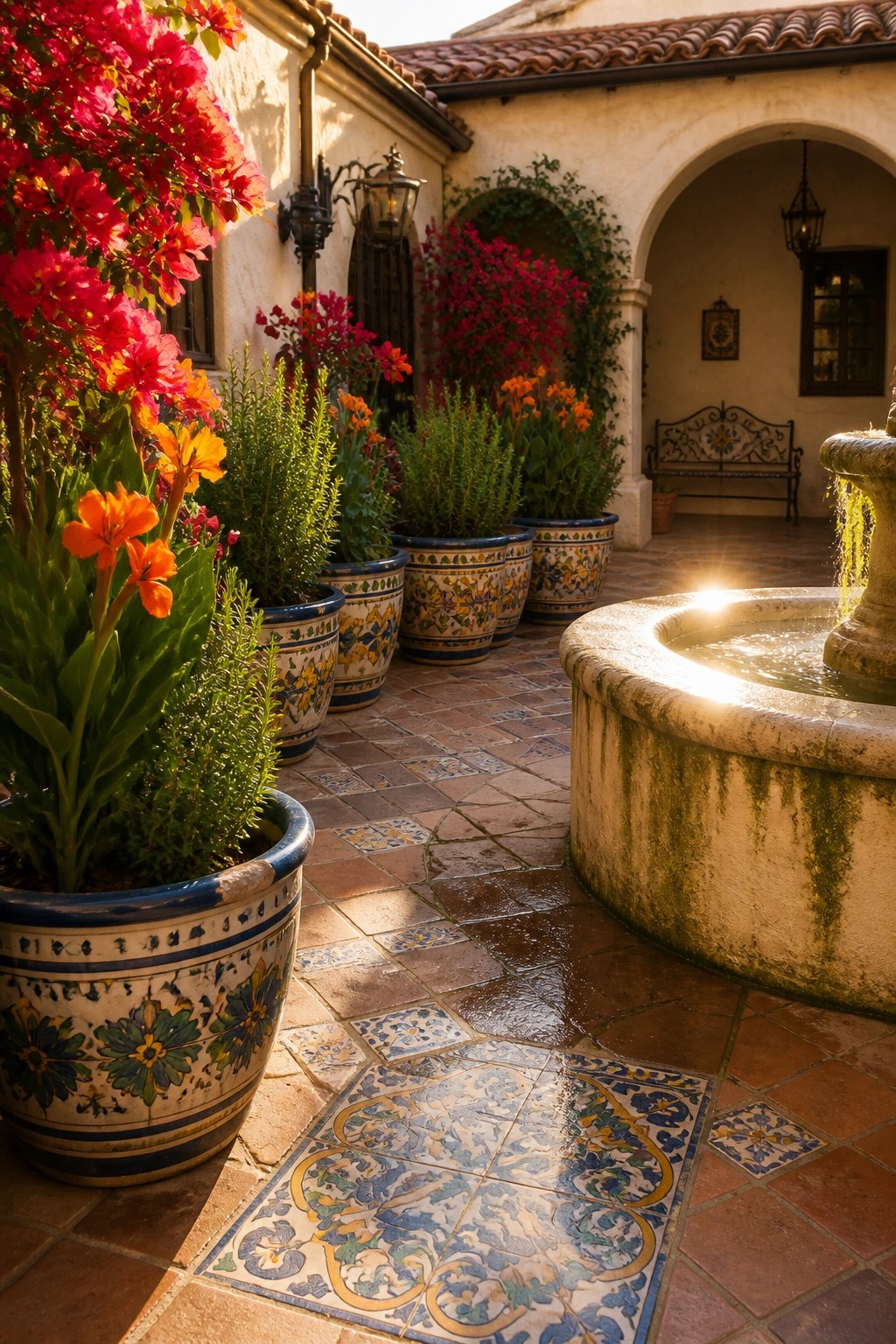
Large decorative pots make it easy to add color along paths that get strong sun all day. The mix of heights and bright blooms creates a border that feels full without digging permanent beds.
This setup works best on paved surfaces with good drainage, like tiled courtyards or stone paths. Place the tallest pots toward the back and let smaller ones spill forward so everything gets even light.
Large Containers Around An Outdoor Table

Many people use a few oversized pots to bring height and greenery right up to an outdoor dining table. The big containers make the space feel more settled without needing to dig beds into the patio.
This setup works best on sunny terraces or stone patios where the pots can stay in full sun all day. Choose tough plants like olive trees or rosemary that handle heat, and keep the pots simple so they do not compete with the table and chairs.
Large Containers Bring Color to Sunny Patios

Big pots let you add height and bold flowers without digging up a patio or deck. They work especially well in full sun where the heat can stress smaller plants, and the dark finish on these pots helps keep roots a bit cooler while the size gives the plants room to grow strong through summer.
This setup suits homes with mostly paved outdoor space or renters who want something they can move later. Stick with heat-tolerant plants like hibiscus in the biggest pots, and group two or three together so the arrangement feels full rather than scattered.
Mixing Containers Along A Gravel Path

A gravel path lined with different containers makes it easy to grow sun-loving plants without committing to permanent beds. Large metal tubs hold bigger plants while smaller clay pots tuck into corners, and the mix keeps the whole area from looking too uniform.
This setup works well in side yards or along fences where you want a defined walkway but still need room for seasonal changes. Just make sure the containers have good drainage and pick plants that can handle the heat all summer.
Frequently Asked Questions
Q: How much water do these full sun containers actually need each day?
A: Check the soil with your finger each morning. If it feels dry an inch down give them a thorough soaking. Morning watering helps avoid leaf burn from the sun.
Q: What size pots work best for these summer gardens?
A: Go for at least twelve inches across. Smaller ones dry out way too fast in full sun. Bigger pots also give roots room to spread and stay cooler.
Q: Can I reuse the same soil next year?
A: Refresh it with new compost and a bit of fertilizer. Old soil often lacks nutrients after a full summer of heavy feeding. This keeps your next round of plants thriving without starting from scratch.
