

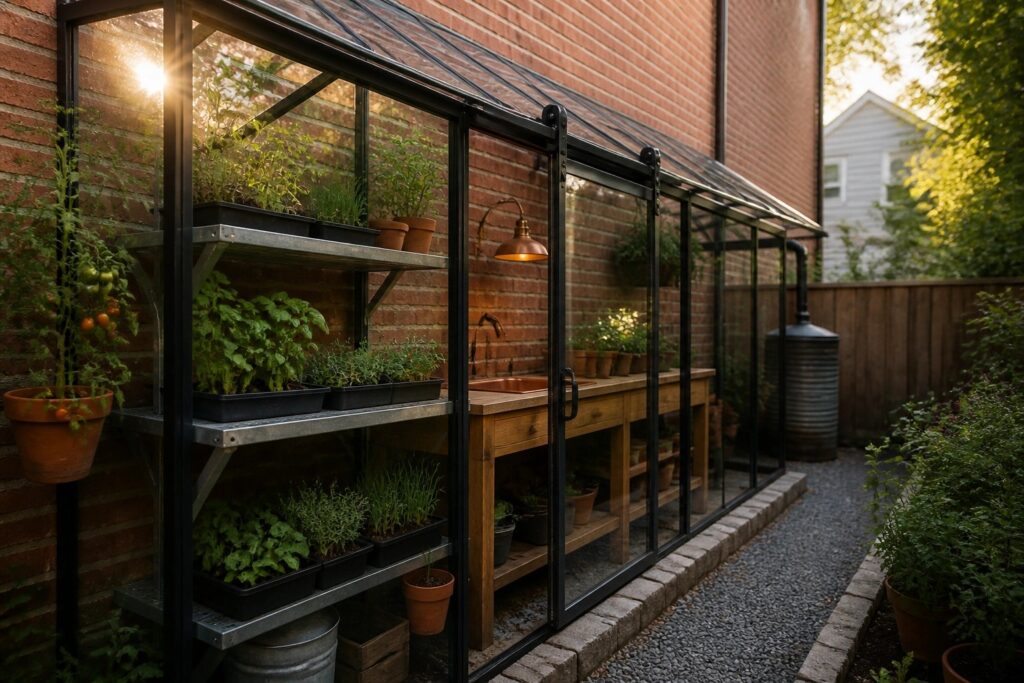
Narrow backyards often end up underused because standard greenhouse designs take up too much room.
When I tried adding a small lean to version against my own fence it changed how the whole space felt without taking over.
The angle and height choices can make a difference in how much heat builds up and how easy it is to reach the plants inside.
Some designs work better if you leave a bit of room along the sides for maintenance access.
Measure twice before building.
Lean a Greenhouse Against an Existing Wall
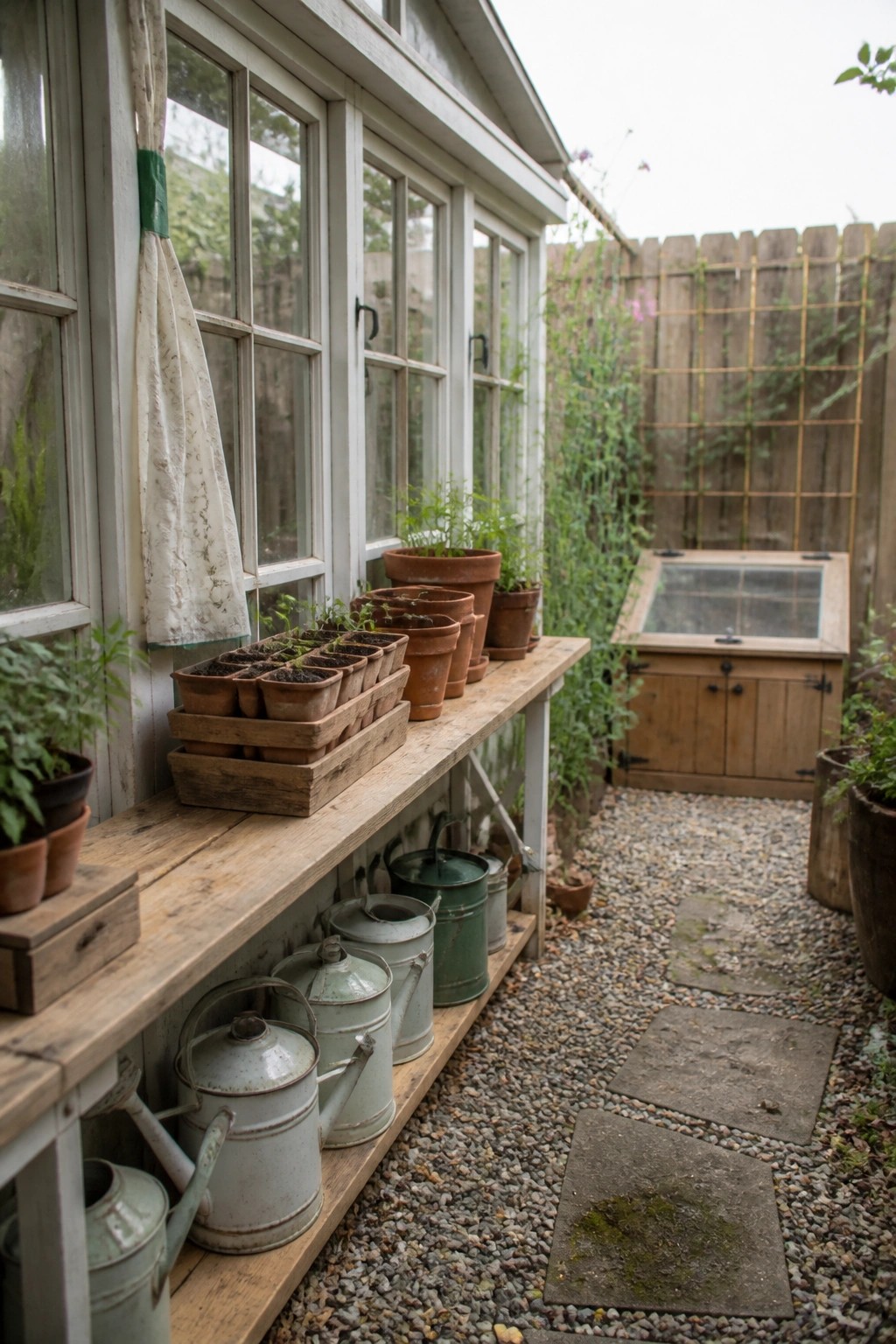
A lean-to greenhouse makes good use of narrow side yards by borrowing support and warmth from the house wall itself. This setup keeps the structure simple and lets you run a long bench right along the length of the building without taking up much extra ground space.
Place the greenhouse where it gets decent light and keep the bench low enough for easy reach from both sides. It works well on homes with a blank side wall and a gravel or paved strip already in place, though you will want to check drainage and make sure the roof ties in cleanly with the existing house.
Lean-To Greenhouses That Use an Existing Wall
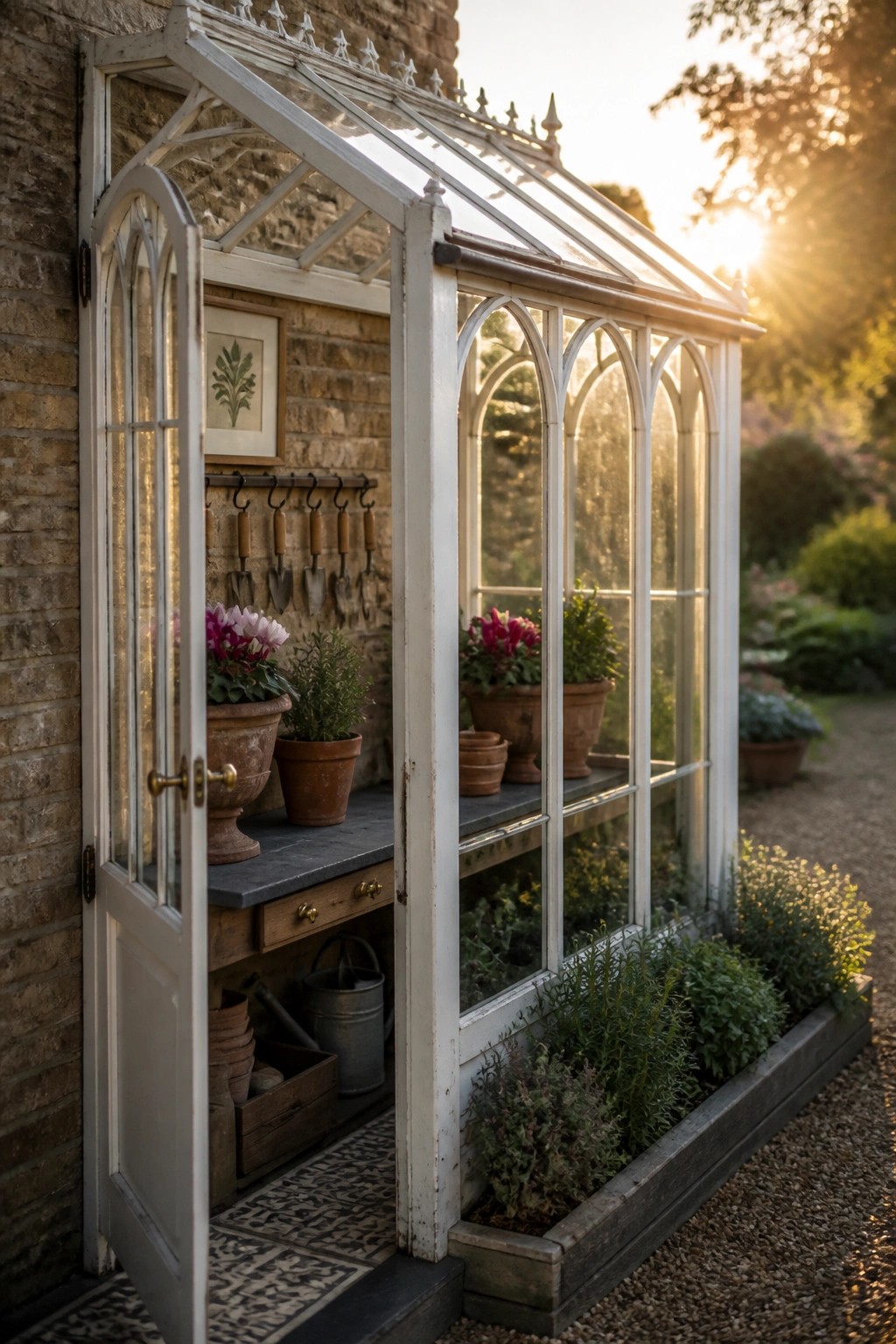
A lean-to greenhouse built right against a house wall saves a lot of space in narrow yards. It borrows the wall for support, so you do not need a full frame on every side, and the structure stays compact while still giving plants a protected spot to grow.
This works best on homes with a long side strip or a small backyard border. Place it where the wall gets decent sun, keep the door style simple so it opens wide for easy access, and use the inside ledge for pots and tools without crowding the path.
Lean-To Greenhouse Against An Existing Wall
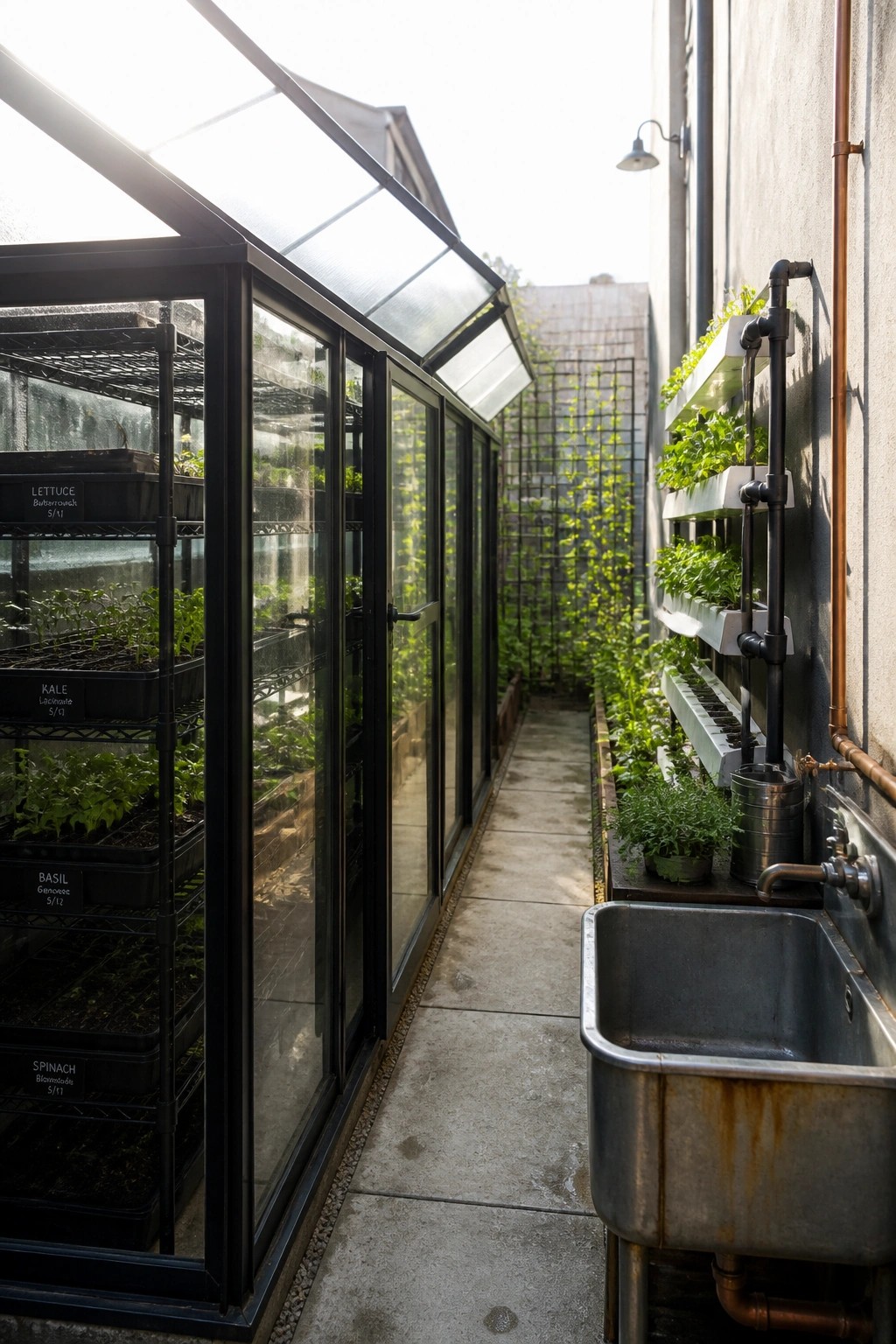
One idea that works well in narrow backyards is to lean a greenhouse directly against a side wall. This setup uses the house for support and keeps the whole structure from taking up extra width in the yard. It also creates a protected spot that stays warmer with less effort.
Add a utility sink and some vertical planters along the open wall to make watering and harvesting easier. The approach suits homes with long, tight lots where a freestanding greenhouse would feel cramped. Just check that the roof slopes away from the house so rain drains properly.
Lean To Greenhouse Built Against The House
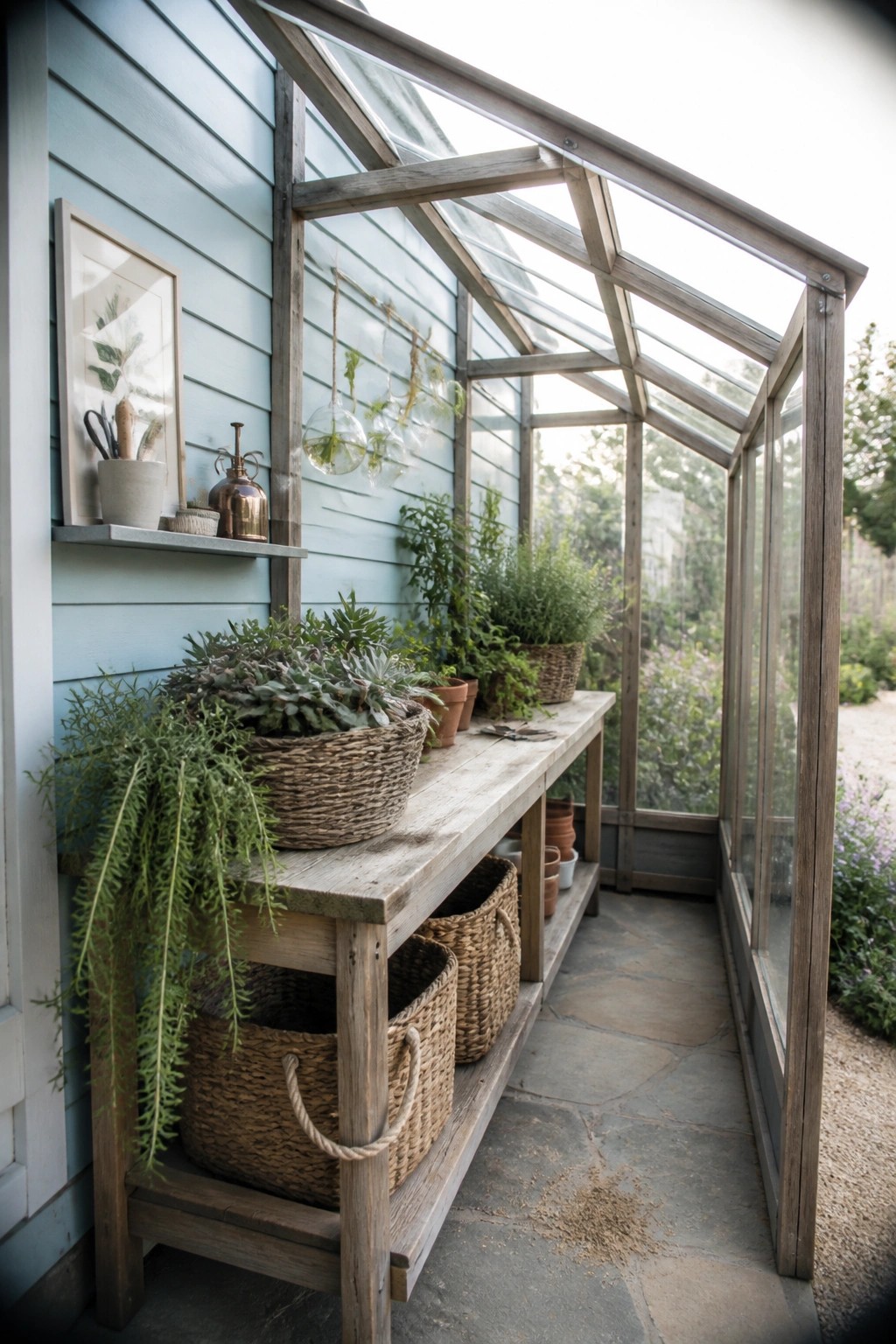
Attaching a lean-to greenhouse right to the side of your house is one of the easiest ways to add growing space without eating up much ground. The existing wall gives it support, so you skip the need for a full frame on every side. This keeps the whole thing narrow and practical for tight backyards.
It works best along a long, clear stretch of exterior wall. A simple bench inside gives you room for pots and supplies while still leaving walking space. Make sure the slope faces the right direction for sun and that the attachment points stay sealed against weather.
Lean-To Greenhouses For Narrow Yards
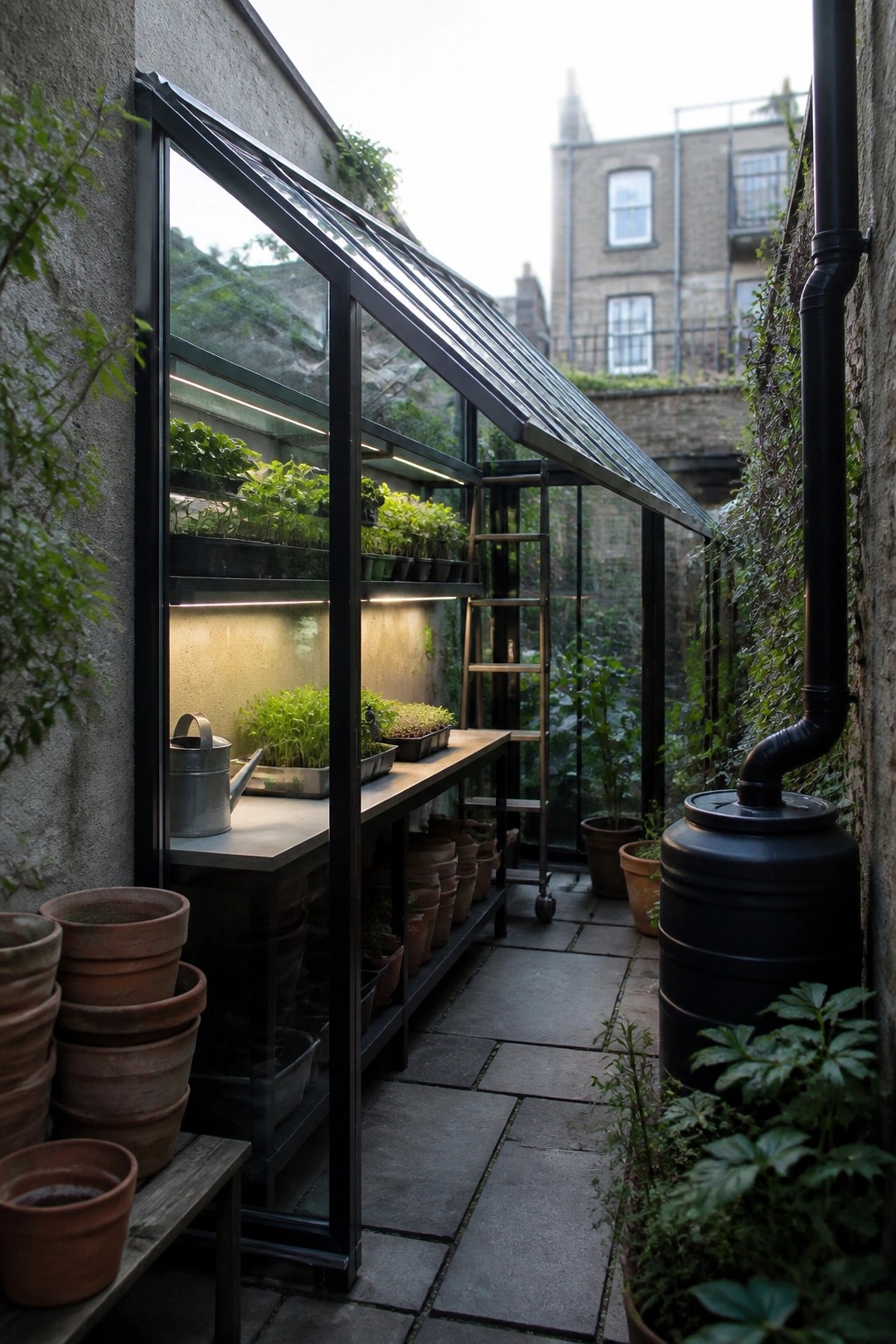
A lean-to greenhouse built against an existing wall makes good use of tight backyard space. It gives plants shelter and light without needing a full standalone structure that would eat up width in a narrow area.
This setup works well on homes with side passages or small rear yards where a freestanding greenhouse would feel cramped. Shelving along the back wall helps keep everything organized and reachable.
Lean-To Greenhouse Built Against the House Wall
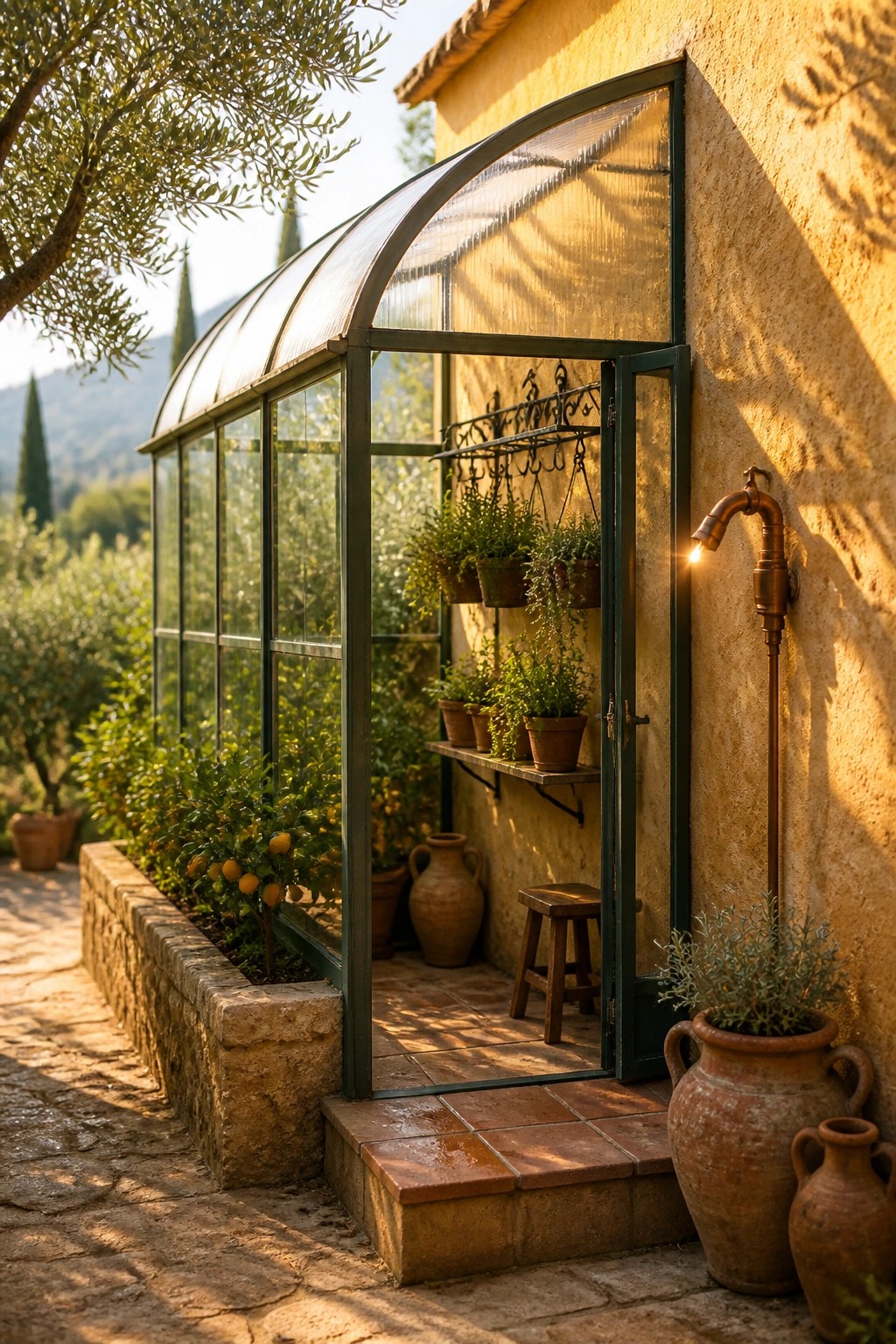
A lean-to greenhouse attached to an exterior wall saves space in narrow yards because it borrows the house for one side instead of standing alone. The glass roof and sides still bring in plenty of light, and the open door makes it easy to step in and out while working.
This setup works best on homes with a long blank wall and a paved or graveled strip beside it. Keep the interior shelves shallow so the path stays clear, and use the area just outside for a few large pots that do not need constant watering.
Lean-To Greenhouse Against a Side Wall
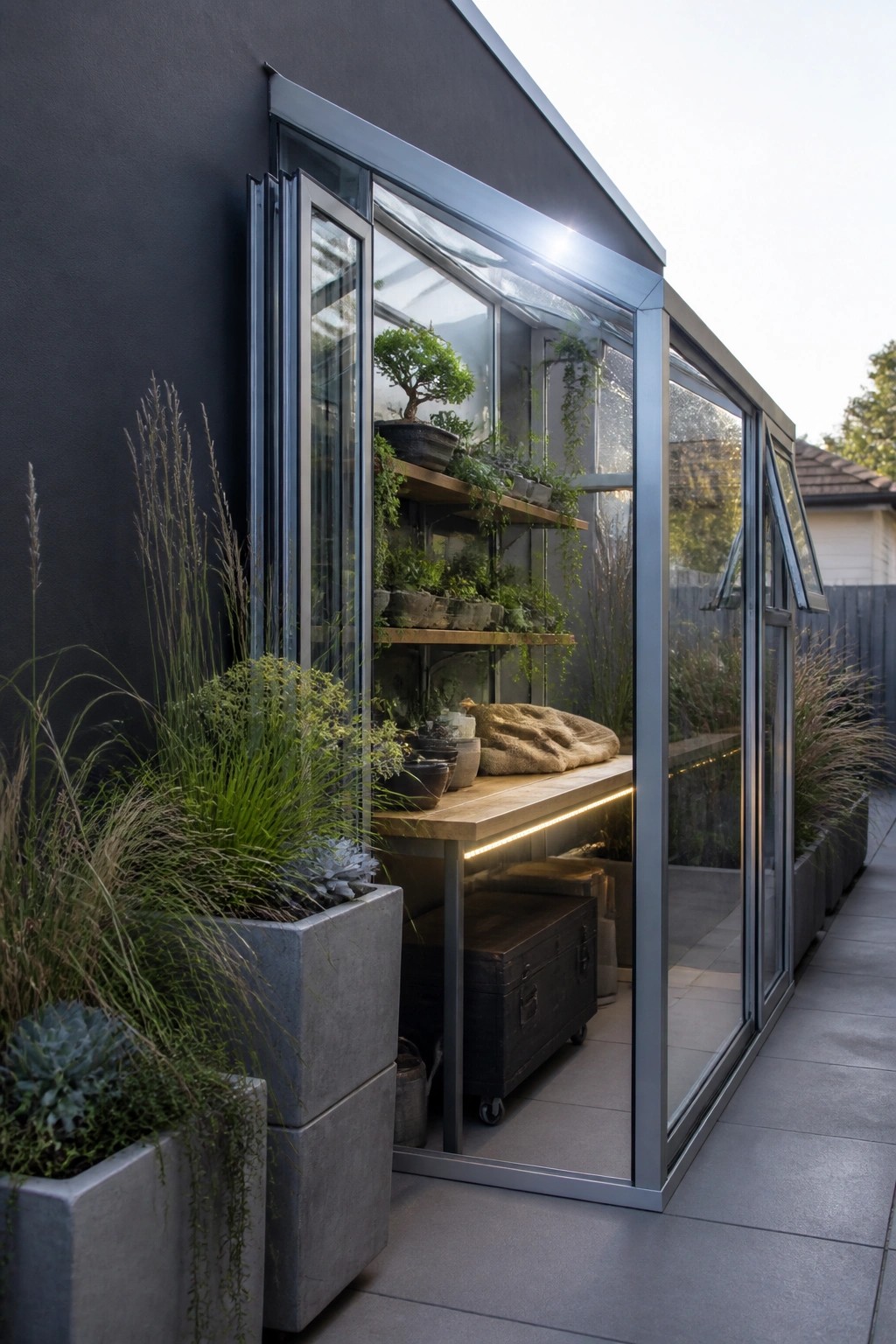
One simple way to add growing space in a narrow yard is to build a lean-to greenhouse straight against an existing exterior wall. The house provides the back support, so the structure only needs to extend a short distance outward. This keeps the footprint small while still giving plants plenty of light through the glass.
You can run shelves along the back wall for pots and set a basic bench in front for potting work. The design suits homes with a long blank wall and works best when the foundation stays level and the glazing is sealed well against the weather.
Lean-To Greenhouse Along a Narrow Path
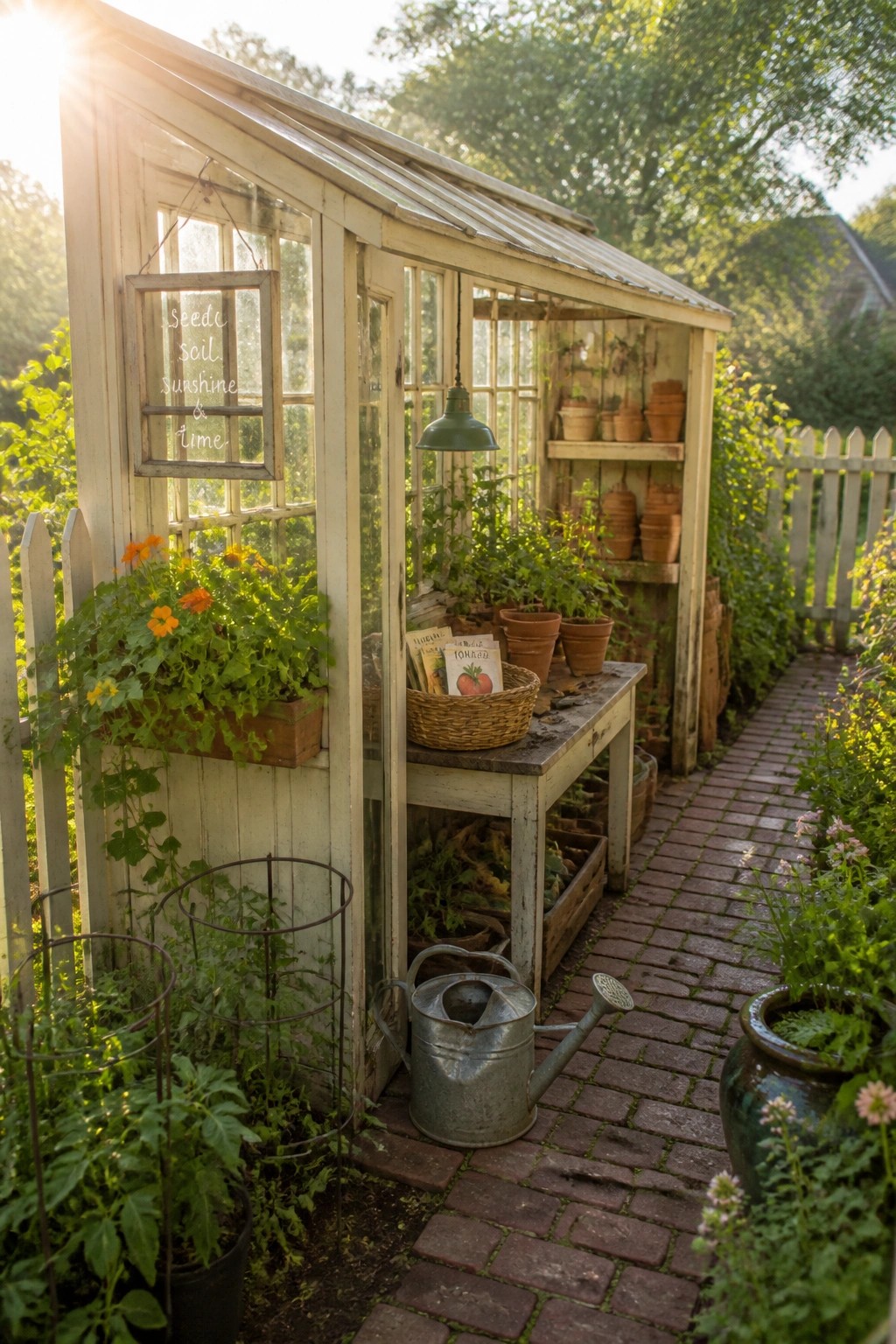
A lean-to greenhouse fits narrow yards because it uses an existing fence or wall as one side. This setup adds growing room without eating into the rest of the yard.
Set it beside a simple path so you can reach the plants easily. Shelves inside keep pots and supplies off the ground and make the most of the limited width.
Vertical Towers Add Growing Space In Narrow Lean-Tos
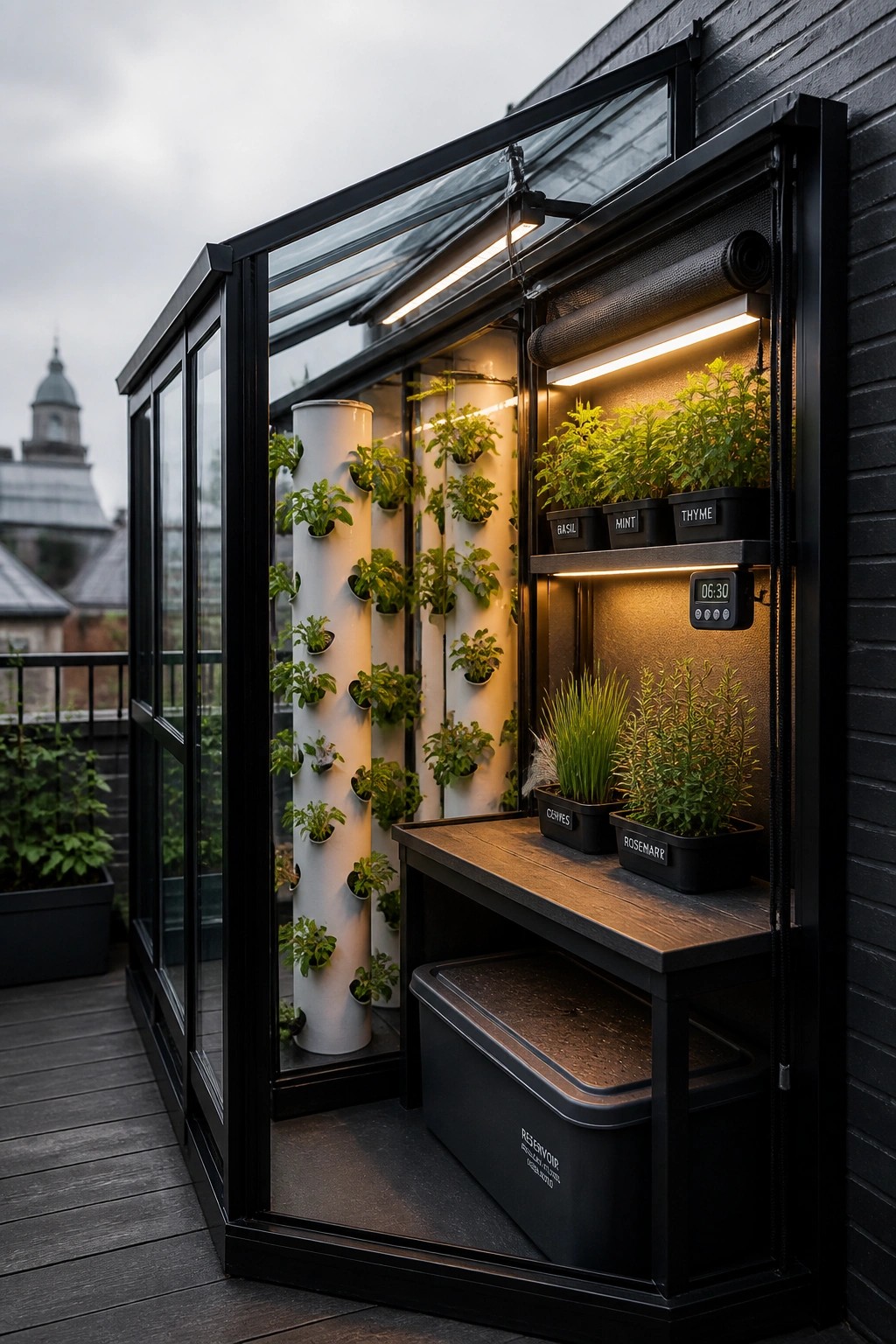
Many lean-to greenhouses sit against a wall or fence, which leaves only a thin strip of floor space. Vertical growing tubes make good use of that wall by stacking plants upward instead of spreading them out.
These tubes work best when you combine them with a simple shelf or two and some basic grow lights. They suit small urban yards or balconies where every inch counts, though you will need to check watering access and make sure the frame can handle the extra weight.
Use a Long Raised Bed in a Lean-To Greenhouse
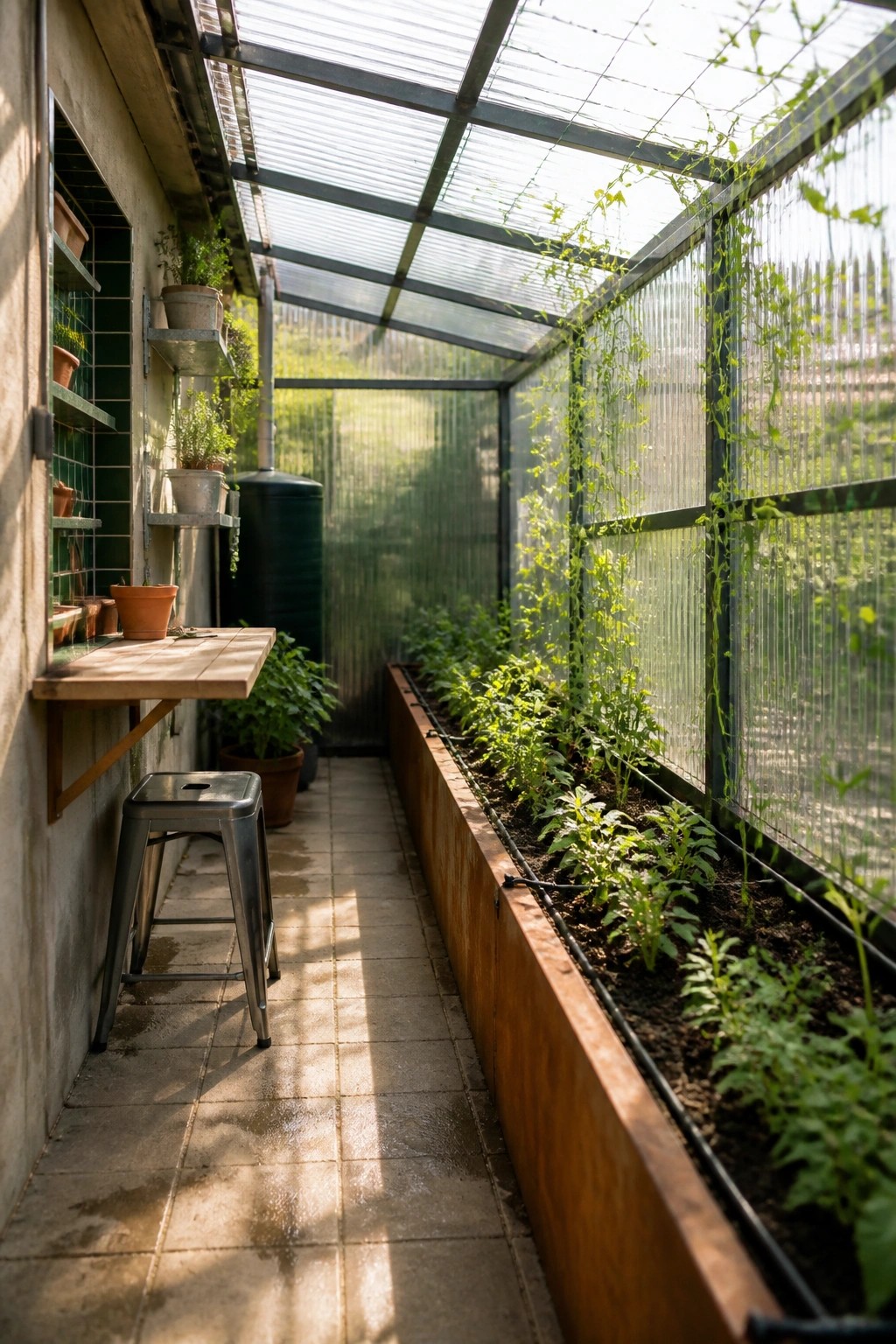
A lean-to greenhouse works well in narrow yards because it uses an existing wall as one side. Running a single long raised bed down the length gives you a solid amount of growing space without widening the whole structure.
This layout suits homes with tight side yards or along a fence. Leave a clear path on the open side so you can reach the plants, and keep the bed narrow enough that everything stays within arm’s reach.
Lean To Greenhouses Work Well Against A House Wall

Many narrow backyards have just enough room along one side of the house for a greenhouse if it leans against the existing wall. This approach uses the house for support and keeps the footprint small while still giving you a full growing space inside.
Add a simple ladder or a few shelves along the back wall to store tools and pots without crowding the floor. It works best on older homes with a clear side passage and gives you easy access from both the yard and the house.
Lean-To Potting Shed With Vertical Storage
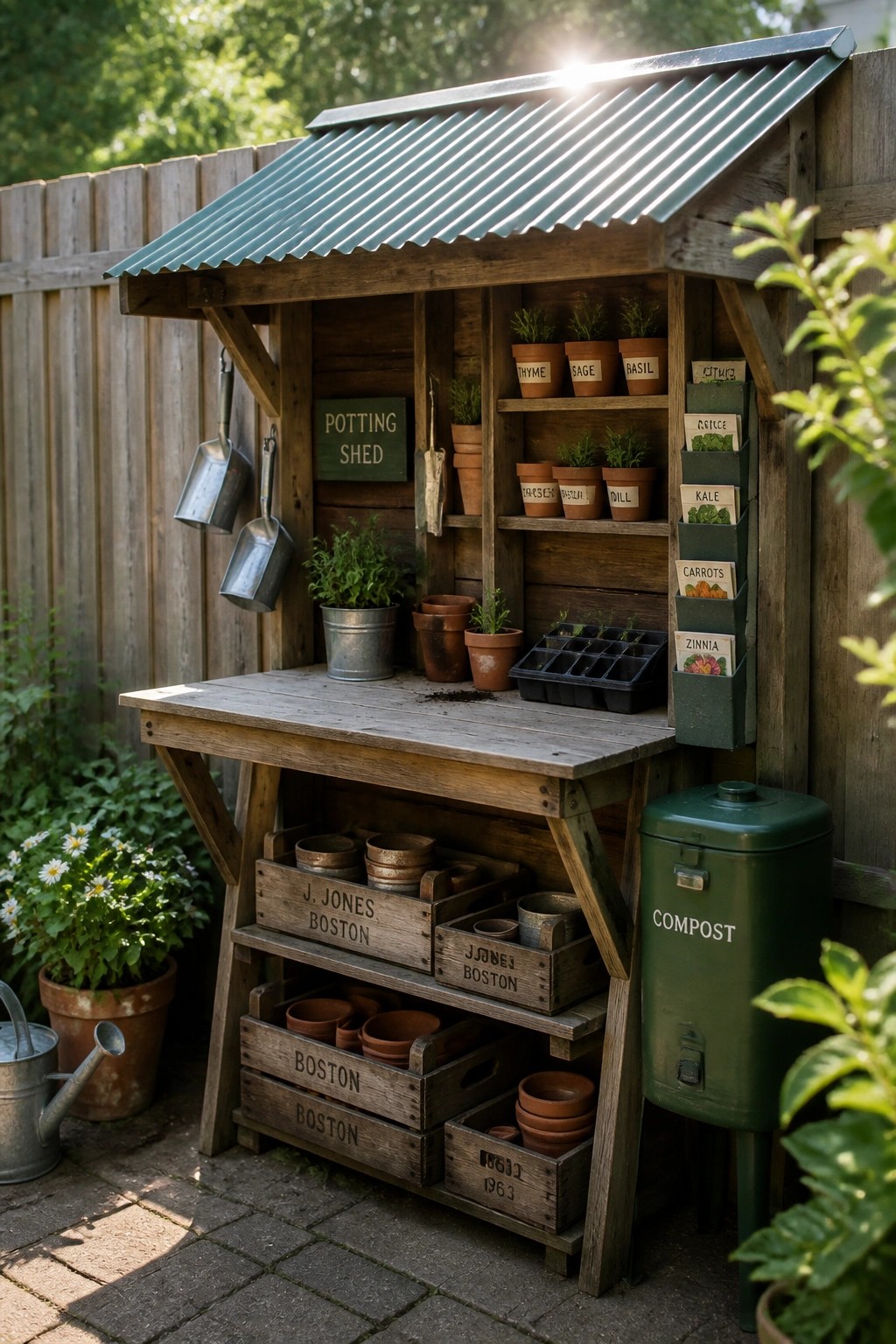
A lean-to potting shed gives you a real workspace in a narrow yard without eating into the open space. It sits right against the fence, uses the existing wall for support, and still leaves room to move around the rest of the garden.
The key is the side pockets that hold seed packets and the open shelves above the bench. You can reach what you need while you work and keep the bench clear for potting. This kind of setup suits small backyards where a full greenhouse would feel too big.
Lean To Greenhouse Built Against The House

A lean-to greenhouse works well in narrow yards because it uses the house wall as one full side. This cuts down on materials and keeps the whole structure from sticking out too far into the garden.
It suits homes with a long blank wall where you can add a sink, shelves, and plenty of pots inside. Just check that the area gets decent light and that water can drain away from the base without pooling.
Hang Pots on the Wall Beside the Greenhouse

Mounting pots directly on the fence or wall next to a lean-to greenhouse frees up floor space while still giving you room to grow herbs and smaller plants. This approach keeps everything within reach and works especially well in narrow yards where every inch counts.
It suits homes with a solid fence or wall that can handle the weight. Space the pots at different heights so you can tend them easily, and check that the spot gets enough light for what you want to grow. A simple water collection barrel underneath can also help with watering.
Frequently Asked Questions
Q: How do I stop the greenhouse from getting too hot against my house wall?
A: Add a roll-up shade cloth on the front side to block direct sun during peak hours. Open the vents or door early each morning so air flows through. This keeps plants from wilting without extra fans.
Q: Can I grow tomatoes in one of these narrow lean-tos?
A: Dwarf varieties fit fine along the back wall on a simple shelf. Train them upward on strings to save floor space. Water them at the base so leaves stay dry and disease stays low.
Q: What if the ground slopes away from the house?
A: Level the base with gravel and short posts before you frame it up. This keeps the floor steady and prevents water from pooling inside. Skip the job if the slope is steep until you fix the grade.
Q: How often should I check for leaks where it joins the house?
A: Look over the sealant every few months, especially after heavy rain. Caulk any gaps right away with outdoor silicone. Catching them early stops moisture from creeping into your siding.
