


Over the years I have noticed that greenhouses feel settled when the wood and stone are placed so the plants can grow against them without looking added on later.
It helps to think about how the light shifts across the benches and paths once everything starts filling in.
Layout matters more than most people expect.
I tend to check how the edges will meet the surrounding garden before deciding on any of the frame details.
A couple of material combinations I tested in my own yard looked stronger after the first full season than they did on the first day.
Using Wood and Stone for Greenhouse Structures

A greenhouse built with a stone base and wooden frame tends to feel more settled in the garden. The materials hold up to weather and moisture while letting the structure blend with nearby beds and paths instead of standing apart.
This style works well in established gardens that already use similar stonework or timber. Keep the lower walls solid for stability and add a simple wooden bench inside for potting and storage so the space stays practical year after year.
Open Doors Turn The Greenhouse Into An Outdoor Room

Leaving the doors wide open lets the greenhouse work as an extension of the patio. The wood frame and stone floor already feel at home with the garden, so the open doorway simply removes the barrier between inside and out. People end up using the space for meals without thinking about it as a separate room.
This setup works best on a level stone or gravel surface right outside the greenhouse. Keep the path clear and add a simple table and chairs that can stay put through the seasons. Just watch that the doors swing fully open and do not block the walkway when guests are coming and going.
Stone Borders Along Greenhouse Paths

Stone edges give greenhouse beds a solid, lasting shape that holds soil in place and keeps the layout easy to walk through. The low walls also add texture that pairs naturally with wood framing and lots of greenery without needing extra decoration.
This setup works well in any greenhouse that has enough width for a central path. Keep the stone simple and match the height to the beds so plants can spill over the edges a little. It suits older structures or new builds where you want the planting areas to feel like part of the building rather than temporary boxes.
A Wall Mounted Planting Calendar

One idea worth copying in a rustic greenhouse is hanging a simple chalkboard calendar on the wall. It turns a blank vertical surface into a practical spot for tracking what to sow and when without adding clutter or extra furniture.
This works best in smaller greenhouses where every bit of wall space counts. Put it near the main work area so you can glance at it while handling seedlings or tools. Wood and stone already give the space its character, so the calendar just adds function without changing the overall feel.
Open The Greenhouse To The Terrace

Many people like placing a greenhouse right beside an outdoor seating area so the two spaces connect easily. The open doors turn the greenhouse into an extension of the terrace instead of a separate structure.
This setup works best on rooftops or upper patios where you want both growing space and room to sit. Stone walls and a simple wood frame help tie the greenhouse into the terrace without extra decoration. Make sure the doors face the seating so the path between plants and chairs stays clear.
Wooden Shelves on Stone Walls

Mounting wooden shelves straight onto stone walls gives a greenhouse extra growing space without crowding the floor. The wood softens the hard stone and lets you stack plants at different heights so everything gets light. It keeps the space feeling open even when the shelves fill up.
This works well in long narrow greenhouses where you need room to walk through. It suits homes that already lean on natural materials and makes it easy to add more plants later without buying extra furniture.
Set Up a Casual Table in Your Greenhouse

Many greenhouses work better when they include a simple spot to sit. A round wooden table fits easily among the plants and gives the space a purpose beyond just growing things. Stone ledges hold extra pots without crowding the floor, and the mix of wood and stone keeps everything feeling grounded.
This idea suits homes that already have a greenhouse attached to the house or a large sunroom. Keep the furniture basic so the plants remain the main feature. Avoid heavy pieces that block light or make the space feel cramped.
Keep A Simple Table And Chairs By The Greenhouse

A small seating spot right by the greenhouse door makes the space more usable day to day. It gives you somewhere to set down tools, have a drink, or just sit for a minute without walking back to the house.
This works best on a stone or gravel surface with lightweight folding furniture that can be moved when needed. It suits smaller gardens or homes where the greenhouse already takes up most of the yard.
Stone Oven In A Greenhouse

A stone oven inside a greenhouse gives you a dedicated spot for cooking while staying connected to the garden. The mix of stone and wood keeps the space feeling natural and grounded instead of like a separate outdoor kitchen tacked on later.
This setup works best on properties where the greenhouse already sits near the house or garden path. Keep the chimney clear and make sure the glass allows enough airflow so heat and smoke do not build up inside.
Wooden Potting Benches for Greenhouse Work

A wooden potting bench gives you a sturdy surface that can handle soil, water, and heavy pots without any fuss. It turns the greenhouse into a place where you can actually get work done instead of just moving things around on the floor.
Place the bench near a wall so you can hang tools above it and tuck crates or bins underneath for storage. This setup works in both small backyard greenhouses and larger ones, as long as the wood is sealed against moisture.
Building Seating Into Stone Walls For A Greenhouse Porch

A built-in bench along a stone wall gives the space a settled, comfortable feel without crowding the room. The wood ceiling and simple cushions keep everything light while the surrounding plants make it feel connected to the garden outside. This setup works especially well when you want a place to sit that already feels part of the structure.
It suits homes where the greenhouse opens onto a patio or garden and you need extra seating that does not take up floor space. Keep the cushions in neutral tones so the stone and wood stay the main focus, and add just a few potted plants nearby rather than filling every corner.
Stone Bases For A Grounded Greenhouse Look
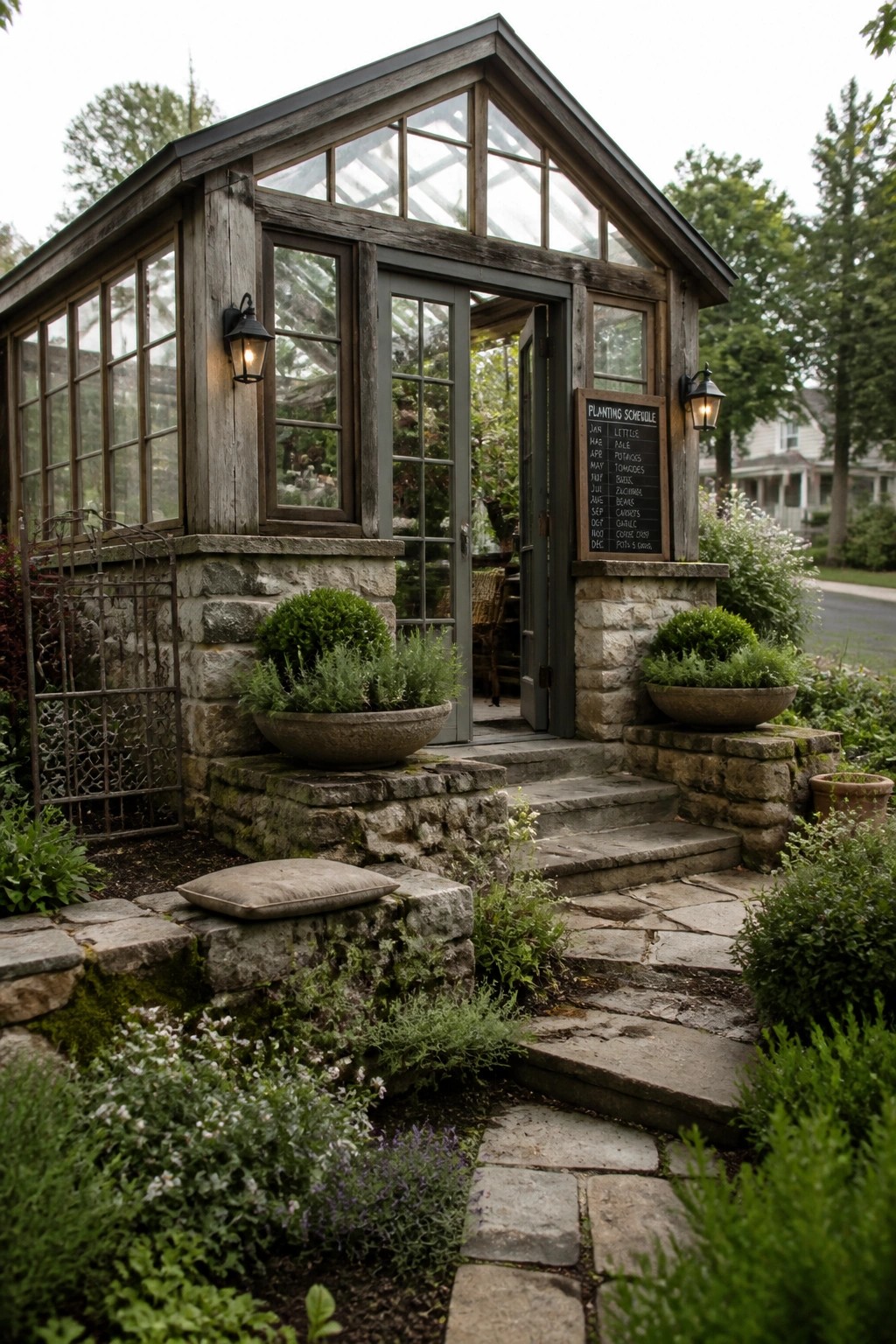
A stone base gives a wooden greenhouse more weight and helps it settle into the garden instead of sitting on top of it. The mix of rough stone and weathered wood creates a simple, lasting structure that feels like it belongs with the surrounding paths and beds.
This approach works well on sloped sites or in older gardens where you want the greenhouse to look built rather than added on. Keep the stonework low and use the same local material for steps or retaining walls so the whole area reads as one piece.
Wooden Benches With Open Storage Below

A wooden workbench like this one gives you a solid surface for potting and arranging plants without taking up too much floor space. The open shelves underneath make it easy to reach pots and trays when you need them, and the whole piece fits right in with the stone walls and wood framing already in the greenhouse.
This kind of bench works best in smaller or mid-sized greenhouses where you want to keep supplies close but still have room to move around. Use reclaimed or weathered wood so it matches the rustic setting, and leave the lower area open rather than adding doors or drawers.
Extend the Greenhouse Into Poolside Living

Large opening doors on a rustic greenhouse let the inside flow straight out to a pool deck. Wood beams and stone walls carry through both sides, so the space feels like one continuous area instead of two separate rooms. This setup works especially well when you want the greenhouse to serve as more than just a plant space.
Try it on homes that already have a pool or terrace nearby. Keep the doors simple and wide so they disappear when open, and stick with the same wood tones and stone outside to tie everything together. Avoid overcrowding the threshold with furniture so the connection stays clear.
Long Wooden Tables For Greenhouse Dining

A long wooden table gives a greenhouse a clear purpose as a place to gather and eat. It turns the space from a plant room into something you actually use every day. The wood pairs naturally with stone floors and beams, and the table stays simple enough that the greenery around it still feels like the main feature.
This works best in greenhouses attached to homes where meals can spill outside when the weather is good. Keep the table sturdy and unfinished so it ages with the space. Avoid crowding it with too many chairs or decor that blocks the view through the glass.
Frequently Asked Questions
Q: How do I keep costs down when sourcing wood and stone for one of these greenhouses? A: Start with reclaimed lumber from old barns or fences in your area. Local stone yards or even roadside piles from roadwork often sell scraps by the truckload for less than new materials. Mixing in a few new cedar posts gives you strength without blowing the budget.
Q: Will the wood last long in the damp air of a greenhouse? A: Choose cedar or redwood to begin with since they resist moisture naturally. Give everything a coat of linseed oil before assembly and check the joints once a year for any soft spots. Good airflow from roof vents helps more than any fancy treatment.
Q: What plants actually do well with all that wood and stone around them? A: Herbs like rosemary and thyme love the warmth that radiates off stone walls. Let climbing beans or peas scramble up the wooden posts for shade and extra greenery. Start small so you can adjust spacing once you see how the light moves through the structure.
