


Over time I have learned that a greenhouse only produces well when the daily routines stay simple enough to keep up with.
Planning the beds around sunlight patterns and easy access paths has made a noticeable difference in how much I actually harvest each year.
Ventilation setups can either help or hinder everything else.
I tend to test one or two new methods at a time instead of trying them all at once.
That way I can see what really fits the way my garden grows from one season to the next.
Raised Beds With A Central Path
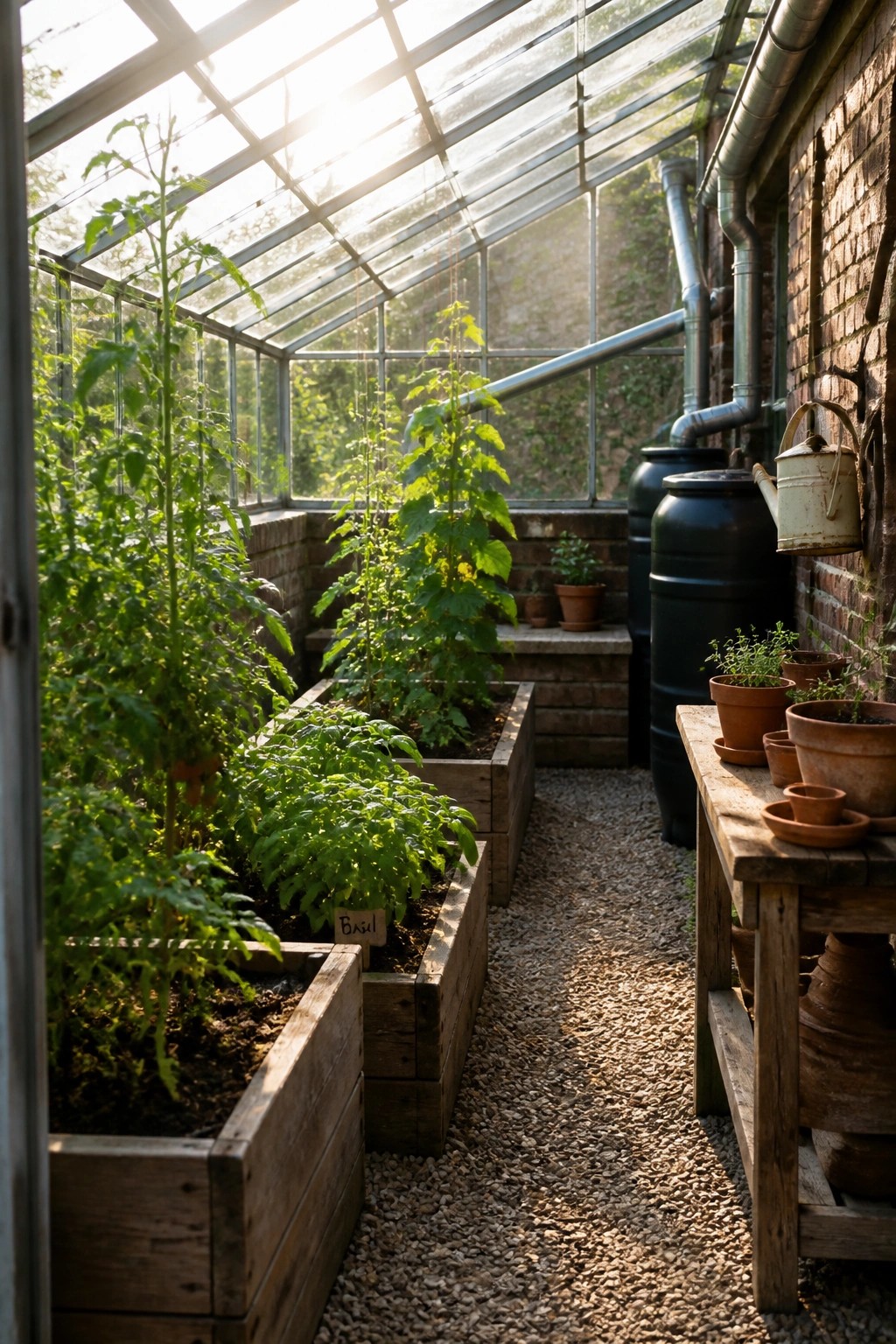
Raised beds inside a greenhouse make it easier to manage soil and reach plants without compacting the ground. The wooden boxes keep everything contained while the open path down the middle gives you room to move tools and wheelbarrows through without hassle.
This layout suits smaller or medium greenhouses where you need to maximize growing space but still want to walk comfortably. Keep the path wide enough for daily tasks and use gravel or similar material so water drains away instead of turning the floor to mud.
Use a Succession Sowing Chart

A simple chart makes it easier to keep the greenhouse producing without gaps. Writing down each planting date helps you know when the next round of seeds should go in so harvests stay steady through the season.
This approach works best in smaller greenhouses where every bit of space counts. Place the chart near the main growing area so it stays in view during daily tasks. Just update it as you go and stick to crops that turn over quickly.
Add Vertical Planters To Your Greenhouse

Vertical planters let you grow more vegetables without needing a bigger structure. The tubes in this setup hold tomatoes and herbs right next to the main shelves, so everything stays within reach and uses the full height of the space.
This works best in smaller greenhouses where floor space is limited. Place the vertical tubes near a sink area so watering stays simple, and keep lower shelves free for trays of seedlings that need frequent checking.
Grow Vegetables in Barrels on Benches

Wooden barrels placed on low benches give vegetables more root room while keeping everything at a comfortable working height. This setup turns the narrow side aisles of a greenhouse into productive rows without crowding the central path. The barrels also drain well and stay cooler than plastic pots in warm months.
This approach works best in smaller greenhouses where floor space is limited. Line both sides of the main walkway with the barrels, leave enough room between benches for easy movement, and rotate quick crops like lettuce or carrots in the front rows. Keep an eye on wood rot over time and lift the barrels slightly off the bench surface if moisture starts to collect.
Add a Living Wall to Maximize Space

A living wall works well in a greenhouse because it turns an unused vertical surface into growing area without taking up floor space. You can fit more plants in the same footprint, which helps when you want bigger harvests from a smaller structure.
Place the wall along one long side where it gets good light and pair it with simple benches for seedlings and tools. This setup suits anyone with a compact greenhouse who wants to grow more greens or herbs without expanding the building itself. Keep the irrigation lines accessible so maintenance stays easy.
Track Humidity Levels In Your Greenhouse
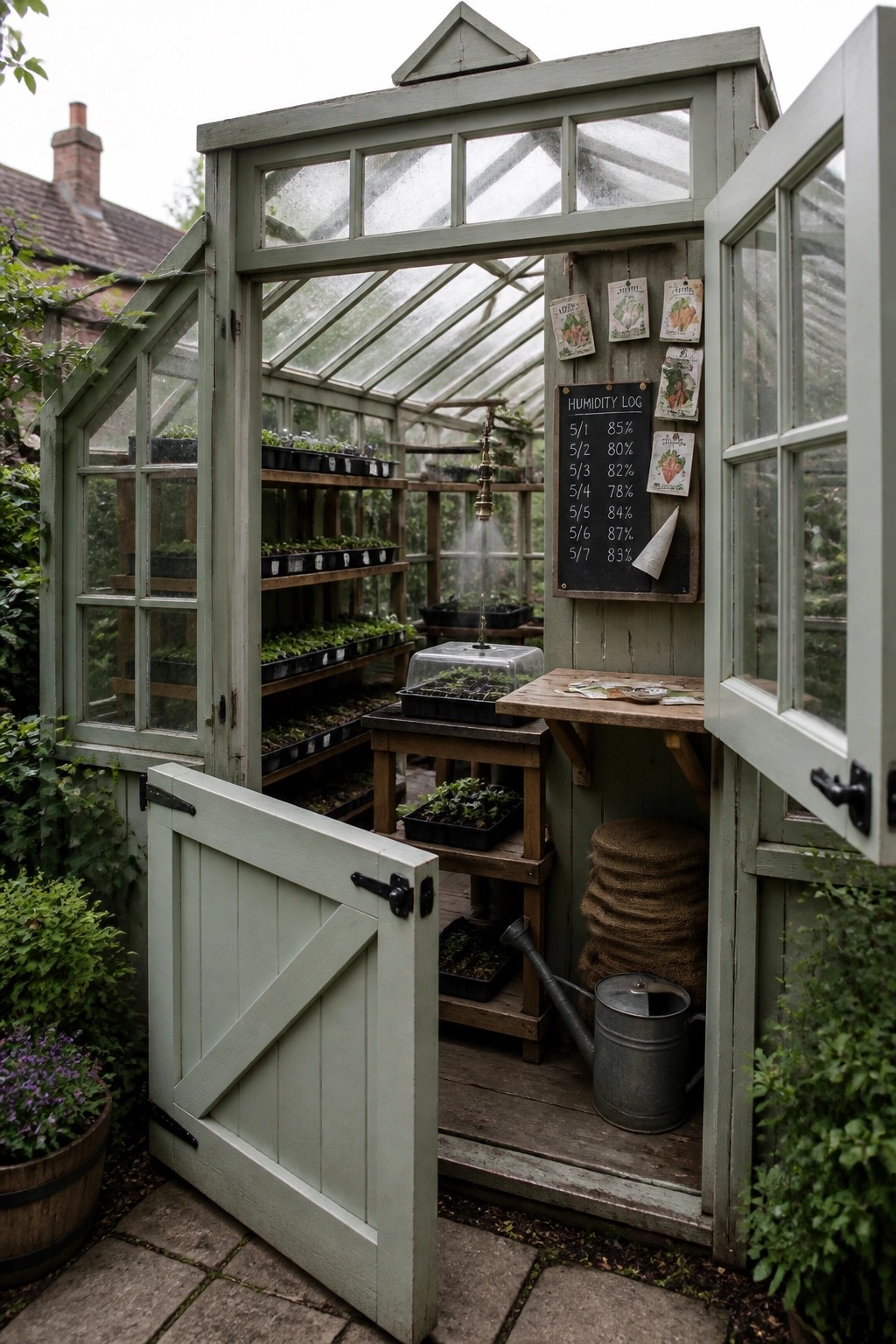
Keeping a simple humidity log on the wall turns a greenhouse into a more reliable growing space. It lets you spot patterns quickly and adjust ventilation or watering before problems show up in the plants. Many gardeners find this low-tech habit makes a noticeable difference when starting vegetables from seed.
The log works best in smaller greenhouses where conditions can shift fast. Check levels at the same time each day and note any changes in weather or door position. A basic chalkboard or notebook hung near the entrance keeps everything visible without adding clutter.
Rolling Benches For Easy Greenhouse Access

Rolling benches let you move plants around without much effort. In a greenhouse you often need to shift trays as seedlings grow or as light changes through the day, and wheels make that quick and simple.
This works best in smaller spaces where fixed tables would crowd the floor. Keep the benches narrow enough to roll down the center aisle and leave room to work on both sides.
Line Your Greenhouse With Long Raised Beds

Long raised beds made from simple wood work well inside a greenhouse because they keep the soil contained and make it easier to reach plants without stepping on the ground. The beds also warm up faster than ground soil, which helps vegetables grow quicker in cooler months.
This setup suits smaller or medium greenhouses attached to a home, especially where you want a steady supply of leafy greens and tomatoes. Just leave a clear path down the middle so you can move around freely and reach both sides without crowding the plants.
Hang a Sowing Calendar in the Greenhouse

A sowing calendar keeps everything on track when space is limited and timing matters. It shows at a glance what to start and when, so you avoid gaps in production and make better use of every bed or pot.
Mount one near the door or on a post where you pass it daily. Update it each season and pair it with simple plant labels so you always know what is growing where. This works well in small or medium greenhouses where every week of growth counts.
Add a Sink Inside the Greenhouse

Many people find a sink makes greenhouse work much smoother. You can rinse vegetables right after picking them and clean tools without walking back to the house every time.
This idea works best in greenhouses that get regular use. Plan the plumbing early and use a sturdy surface that can handle water and soil.
Post A Crop Rotation Plan In Your Greenhouse

Many people overlook how useful it can be to keep a simple rotation chart right inside the greenhouse. It helps you remember what you planted where last season so you do not repeat the same crops in the same beds year after year.
Print or write out a four-year schedule and hang it near your seedling benches. This works especially well in smaller greenhouses where soil health matters and space is limited.
Line the Greenhouse With Wooden Benches

Wooden benches running along both sides of a greenhouse give you far more room for seedlings than pots on the floor alone. The setup keeps plants at a workable height and leaves a clear path down the middle so you can move through the space without crowding anything.
This arrangement suits most home greenhouses because it is simple to build and easy to adjust later. Use a wood that handles moisture well and keep the benches a comfortable height for watering and checking plants daily.
Vertical Planters Help You Grow More in Small Areas

Many balconies and small patios have limited floor space, so vertical planters offer a simple way to increase the number of plants you can keep. These stacked systems let herbs and leafy greens grow upward instead of spreading out, which keeps the area usable while still producing a steady harvest.
They work best in spots that get several hours of sun each day and suit apartments or homes where ground beds are not an option. Place the unit near a wall or railing for support, and check that you can reach the upper pockets for watering and picking without much trouble.
Center a Wood Stove to Warm the Whole Greenhouse

Many greenhouses stay productive longer when a single wood stove sits right in the middle. Heat moves outward evenly, so plants on every side get the same steady warmth instead of hot spots near one wall and cold corners elsewhere.
This layout works well in smaller or medium domes where you can run a simple circle of raised beds around the stove. Keep a clear stone path for easy access and check local codes for proper venting before you install anything.
Label Your Greenhouse Seedlings From the Start

Keeping track of what you plant and when makes a big difference in a greenhouse. Simple labels on each tray let you know exactly what is growing without guessing later when plants start to look similar.
Wooden benches hold the trays at a good height for watering and checking progress. This works especially well in smaller greenhouses where you need to move seedlings around as they grow.
Add Vertical Planters Along the Walls

Vertical planters make good use of wall space that often goes to waste in a greenhouse. Instead of crowding the floor with more containers, you can stack or mount growing areas upward and fit in extra crops like lettuce or herbs without losing walking room.
This setup works especially well in smaller or narrow greenhouses where floor space is limited. You can start with simple wood frames or repurposed pallets, just like the stacked rows shown here, and keep the lower areas open for larger pots or benches.
Add Vertical Shelves With Lights To Grow More

Vertical shelves change how much you can grow inside a greenhouse without needing extra floor space. The built-in lights keep plants productive through shorter days, which helps with steady harvests of leafy greens and other quick crops.
This approach works best in smaller or shared greenhouses where every inch counts. Place the shelves along one wall and keep a simple bench nearby for potting and tool access so daily care stays easy.
Organize Varieties With Labeled Storage

Many people who grow several kinds of vegetables in one greenhouse find it helpful to keep a clear list of what is planted where. A tall metal cabinet gives you a place to write the names right on the surface while also storing tools or extra supplies inside.
This works best in spaces where you start different tomatoes or other crops each year. Pick something sturdy that handles moisture and set it near your main potting area so the labels stay easy to check.
Frequently Asked Questions
Q: How do I know when to vent my greenhouse on hot days?
A: Feel the air temperature inside during midday. Open vents or doors if it climbs too high to protect your plants. This keeps growth steady without stress.
Q: Should I start seeds inside the greenhouse or buy transplants?
A: Starting seeds gives you more control over varieties. Plant them in trays a few weeks ahead of your usual timing. Move them to beds once they have true leaves.
Q: What works best for feeding my greenhouse crops regularly?
A: Mix compost into the soil at the start. Then add a balanced liquid feed every two weeks during growth. Your plants will show stronger stems and more fruit this way.
Q: My greenhouse seems too small for all these ideas at once.
A: Pick three or four that fit your setup best. Try one new idea each season to build up gradually.
