

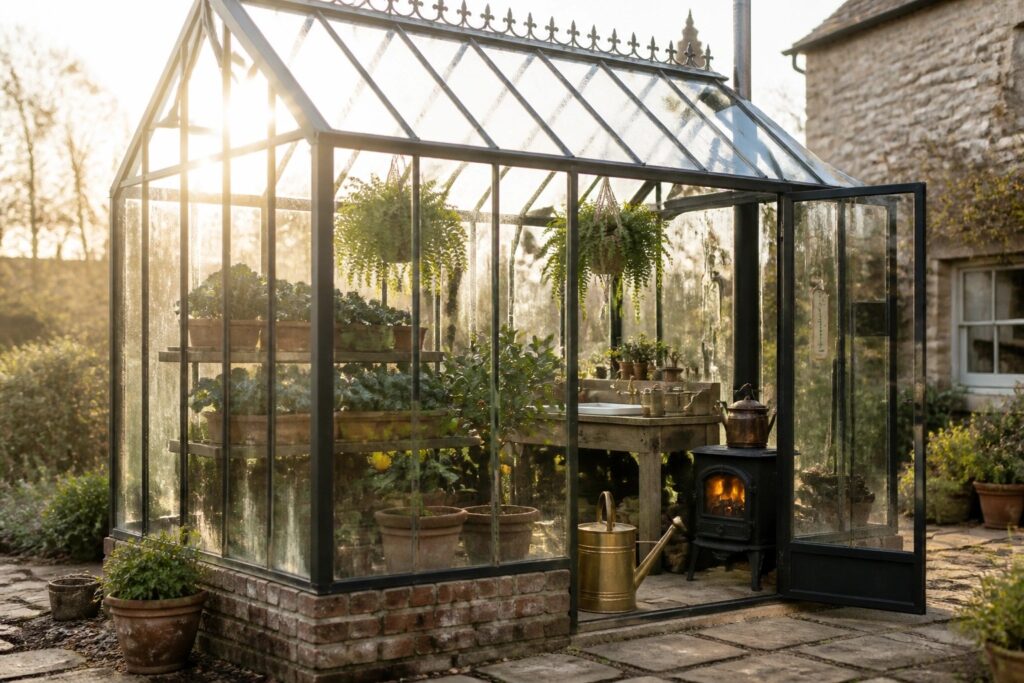
I tend to notice right away whether a greenhouse has enough headroom and easy access to the beds when I step inside one.
Planning the layout around daily tasks like watering and harvesting keeps the space from becoming frustrating after the first season.
Air circulation changes everything.
It prevents mold from building up on the leaves during the damp months and also helps the structure hold up better against heavy snow loads on the roof.
Testing a few different vent placements taught me to check how the wind moves around my yard before fixing anything in place permanently.
Add A Wood Stove For Winter Growing

A small wood stove makes a greenhouse usable even when the weather turns cold. It keeps the air warm enough for plants that would otherwise struggle, and the fire adds a simple, steady source of heat without relying on electricity.
Set the stove in a corner with plenty of clearance and good airflow. This approach suits greenhouses that already have some indoor space and a steady supply of wood nearby. Just watch the temperature and vent as needed so the heat stays even.
Concrete Beds Built Into The Greenhouse Floor
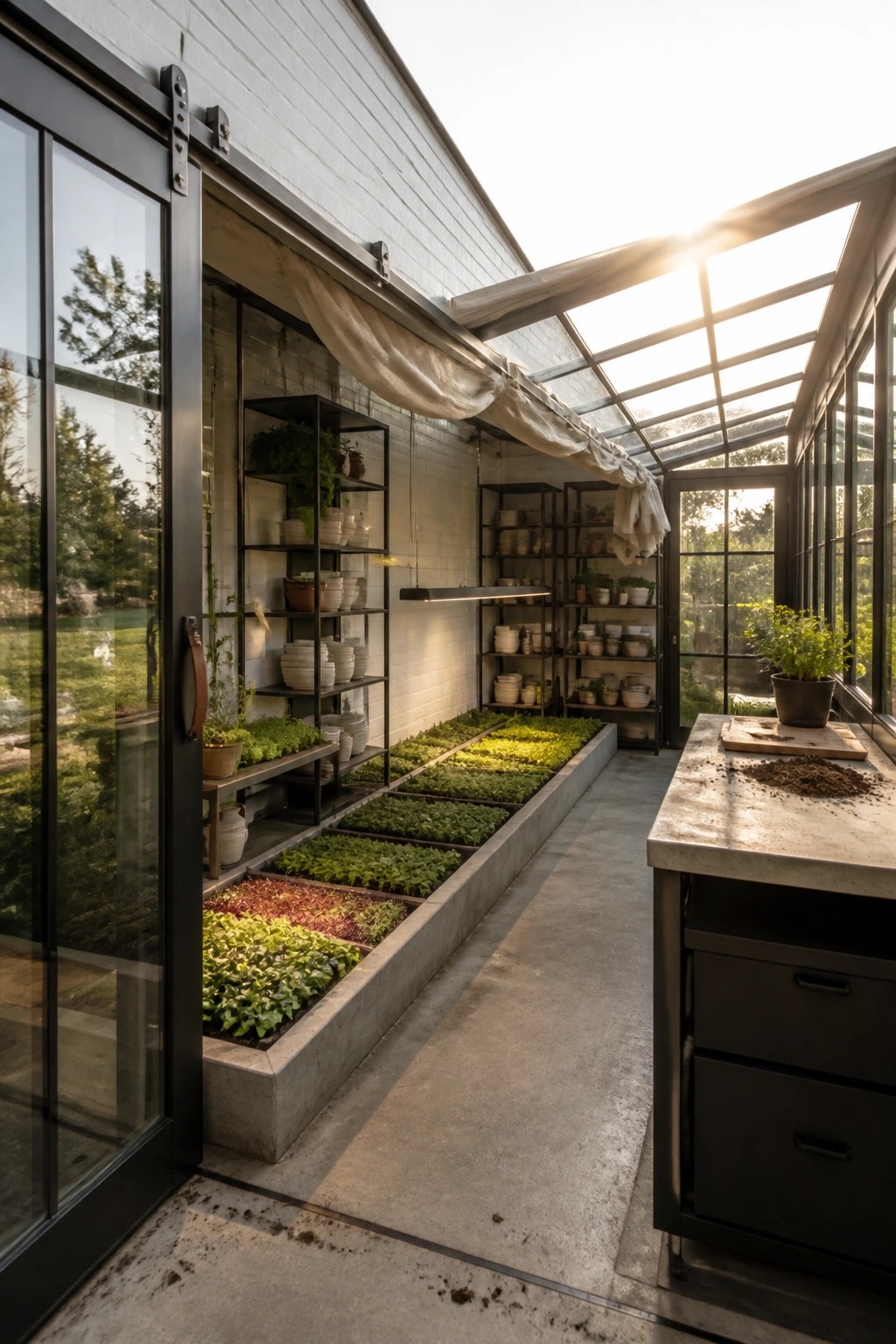
Many greenhouses feel more useful once you add permanent beds like these long concrete troughs. They hold a good amount of soil, stay level, and let you plant in tidy rows without moving pots around all winter. The setup works especially well when you want steady harvests of greens and herbs without a lot of extra fuss.
These beds suit attached greenhouses or sunroom spaces where you can run them along one wall. Keep the width narrow enough to reach across, and plan for drainage from the start so the soil does not stay soggy.
Add A Bench For Everyday Use
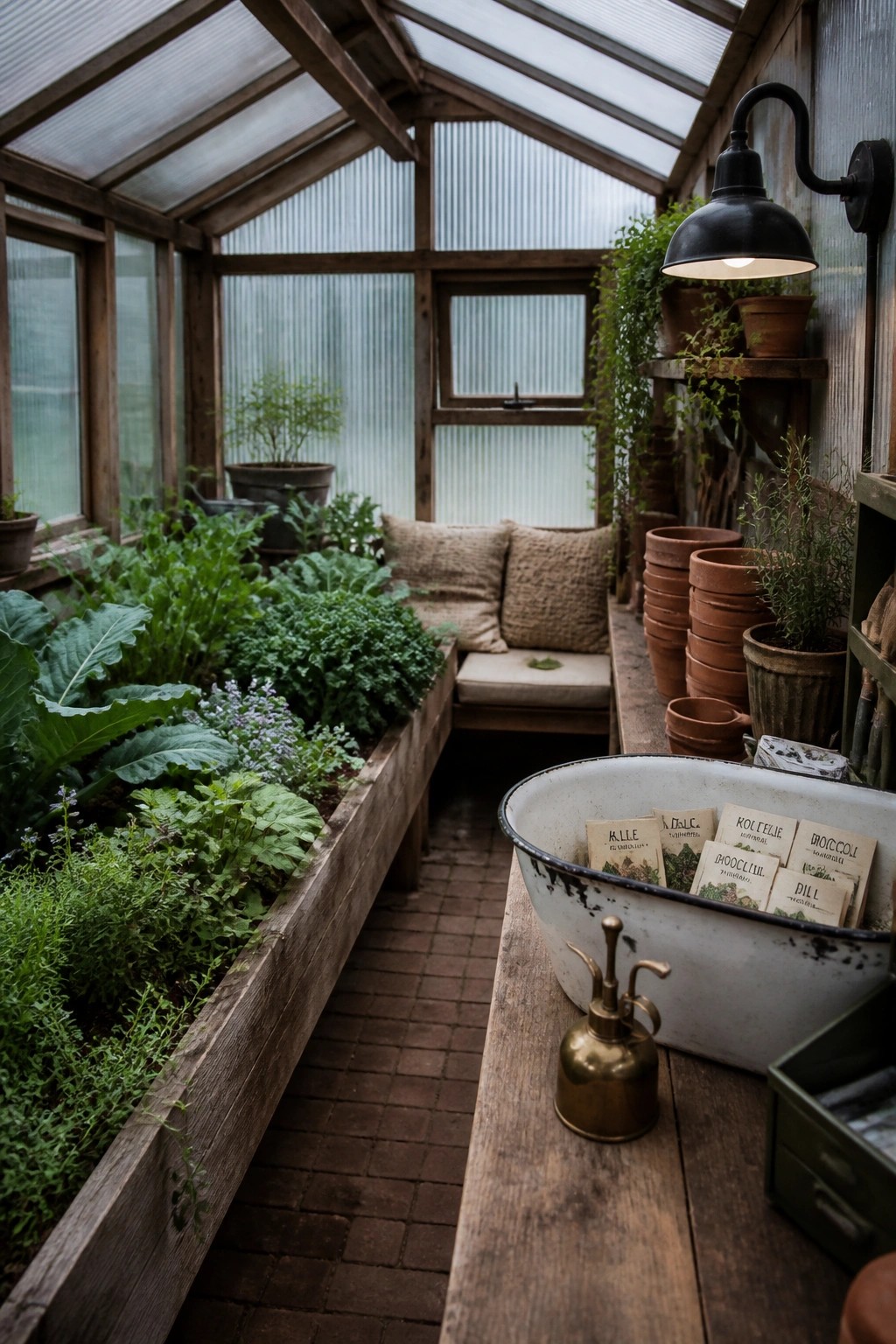
A greenhouse feels more welcoming when you can actually sit inside it instead of just working and leaving. A simple bench along one wall gives you a spot to rest, check on seedlings, or just enjoy the warmth without needing extra furniture.
This setup works best in narrow layouts where a bench can tuck under a window or against a side wall. Keep cushions in a waterproof bin nearby so they stay dry, and make sure the bench depth leaves enough room to walk past your beds without crowding the plants.
Use a Portable Heater for Reliable Warmth
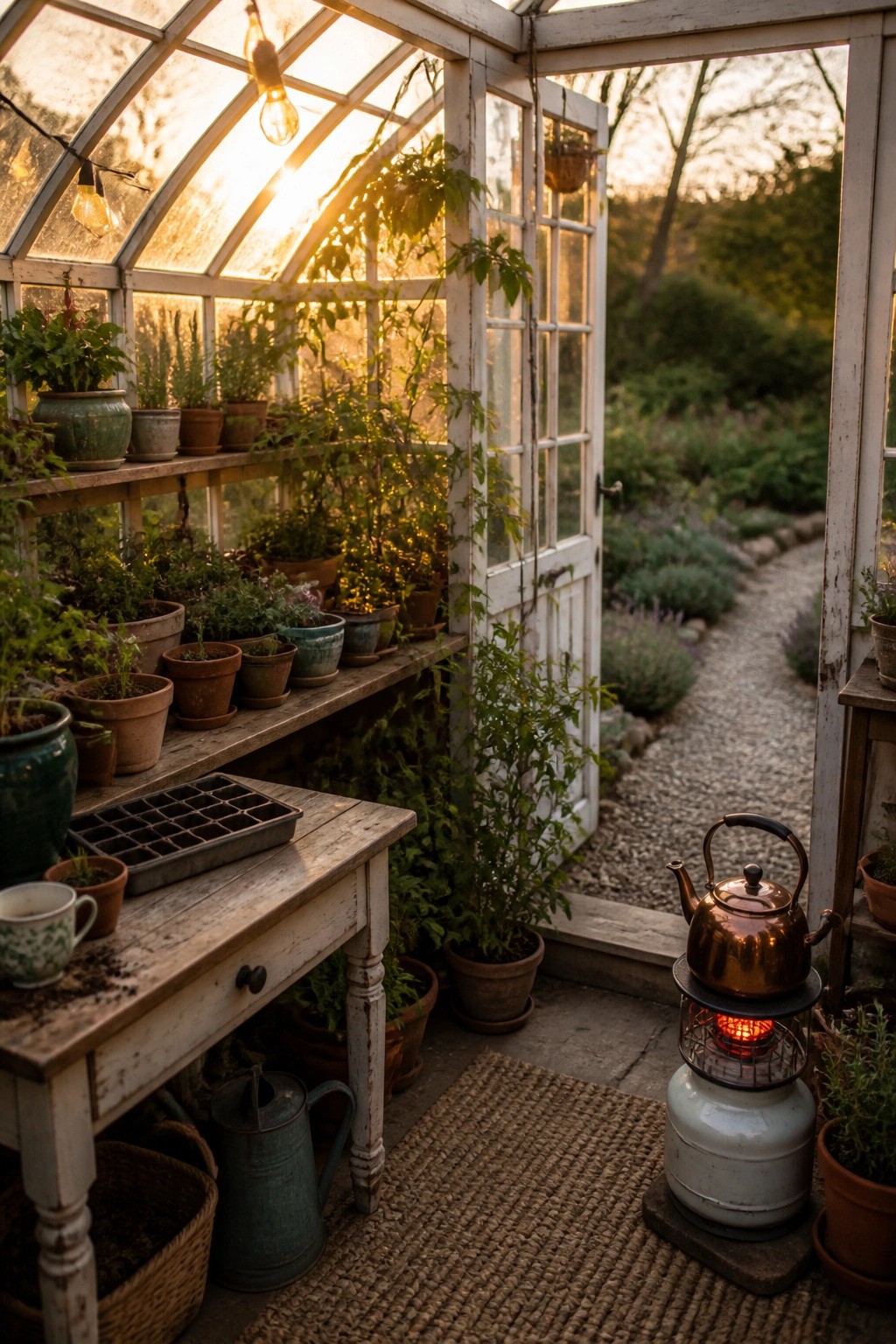
A small heater changes how useful a greenhouse stays once cold weather hits. It keeps the air from dropping too low at night and gives you a spot where you can still pot plants or check on seedlings without freezing.
Place the heater on a flat, nonflammable surface and keep it a safe distance from the shelves. Many people run one near the door or main work table so the warmth spreads without overheating the whole space. Just check the fuel level regularly and make sure there is some ventilation.
Add a Small Stove for Winter Crops

A clay stove tucked into the greenhouse gives enough steady heat to keep cool season crops going when the weather turns cold. It turns the space into a productive spot instead of just a place to store dormant plants.
This setup works best in smaller or mid sized greenhouses where you want to focus on hardy greens like chard and broccoli. Keep the stove on a safe base, leave room for airflow, and check the temperature regularly so the plants stay comfortable without extra energy use.
Keep Tools Organized With a Pegboard Wall
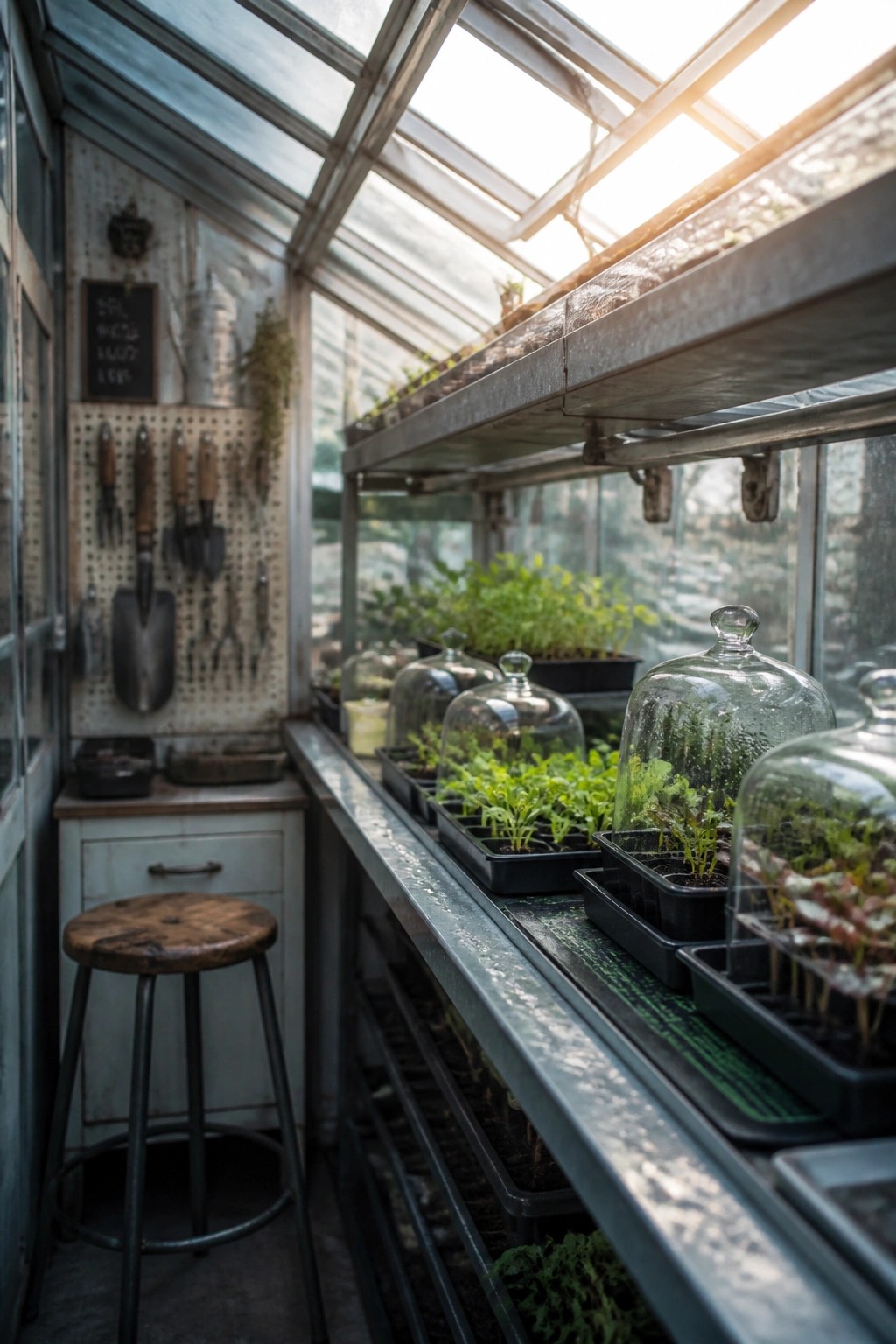
A pegboard wall gives you a simple way to store hand tools right where you need them. In a greenhouse used for winter growing, this keeps everything visible and easy to grab without digging through drawers or bins.
Mount the board near your main work surface and hang the tools you reach for most often. This setup works in both small backyard greenhouses and larger spaces, as long as the wall stays clear of moisture-prone areas.
Vertical Trellis Walls For Greenhouse Growing

A vertical trellis mounted right on the wall turns unused vertical space into productive growing area. In a winter greenhouse this setup keeps plants off the floor, improves air flow around them, and lets you fit more crops into a small footprint without crowding the benches.
The idea works best on a solid interior wall such as stone or brick where you can attach a simple grid or wire system. Use it for vining crops or smaller pots that can hook onto the grid, and keep the lower section clear for easy watering and harvesting. It suits anyone who already has a greenhouse and wants to increase output without adding more raised beds.
Include A Kitchen Counter
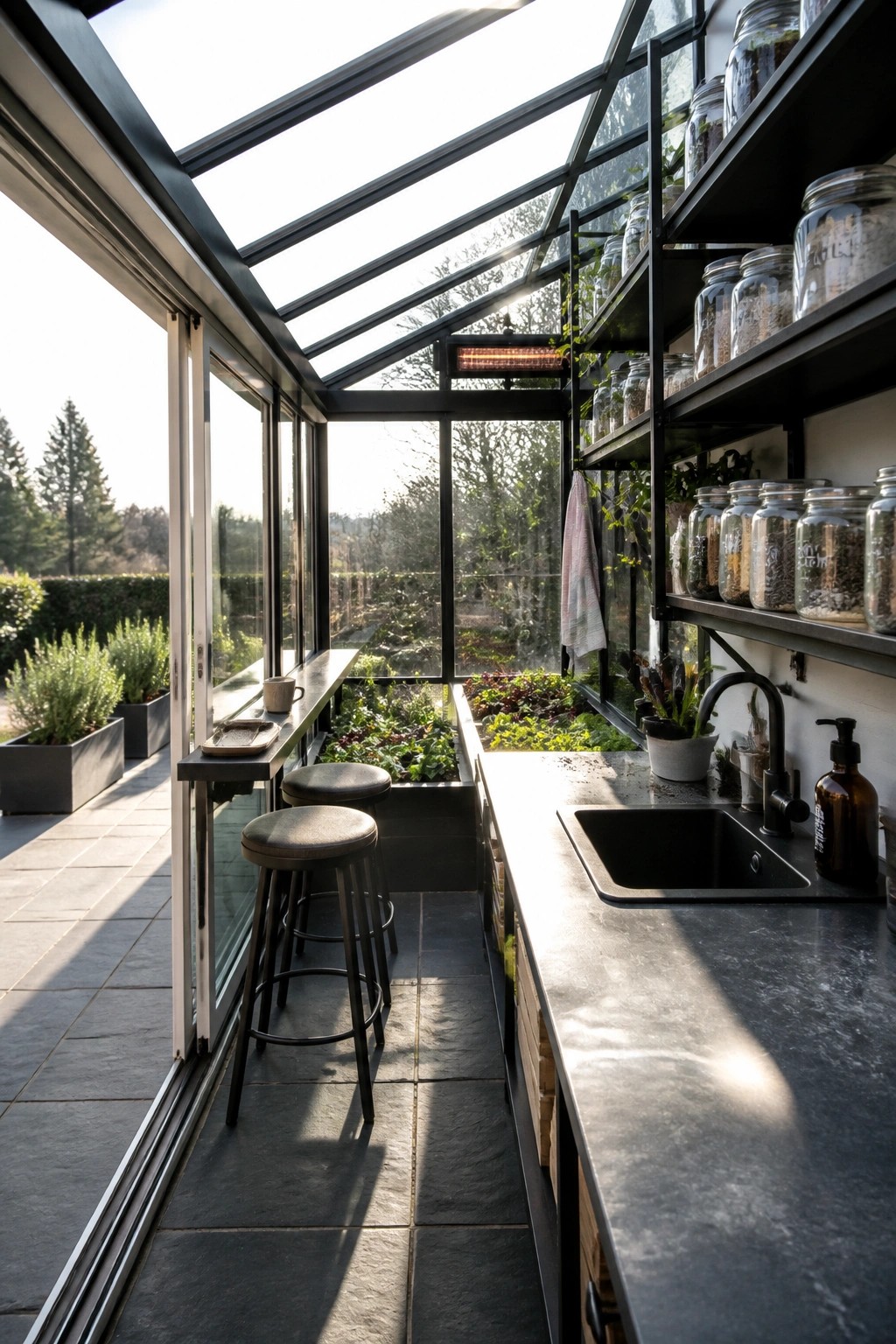
A sink and counter inside the greenhouse makes daily tasks much easier. You can rinse vegetables, wash pots, or prep soil without running back and forth to the house. The long work surface also gives you a place to set trays and tools while you tend the beds right beside it.
This setup works best in a narrow greenhouse where the counter runs along one wall and the planting beds sit in the middle. It suits anyone who wants the space to feel useful year round rather than just a place to grow plants. Keep the counter simple and durable so it holds up to dirt and water.
Built-In Bench Seating With Storage
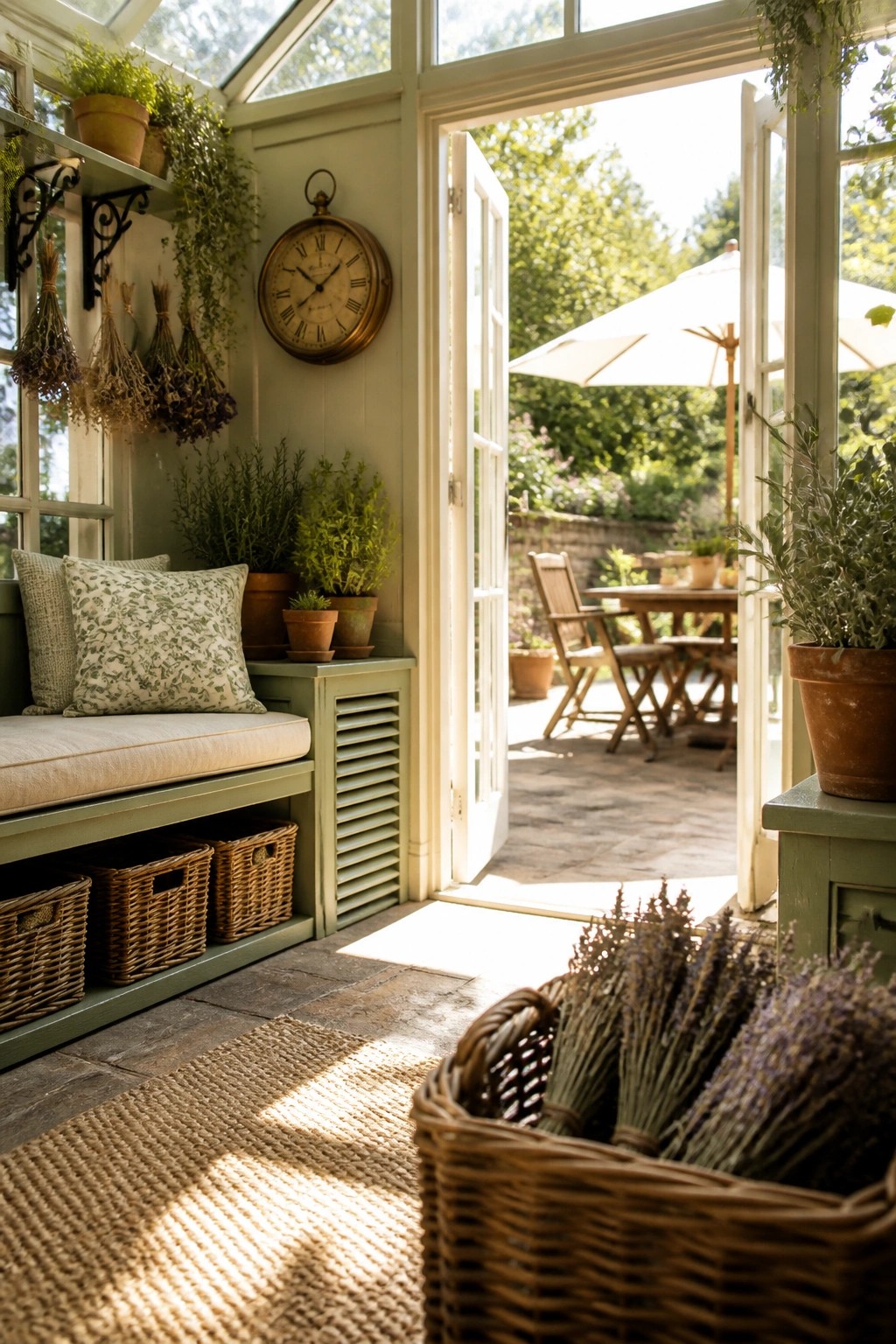
A bench built along the wall turns a greenhouse into a space you can actually spend time in. The storage underneath keeps baskets for tools and supplies out of the way while still close at hand.
This works best in smaller structures where floor space matters. Keep a few potted herbs above the bench and use the baskets below for things you reach for often.
Hanging Planters Overhead
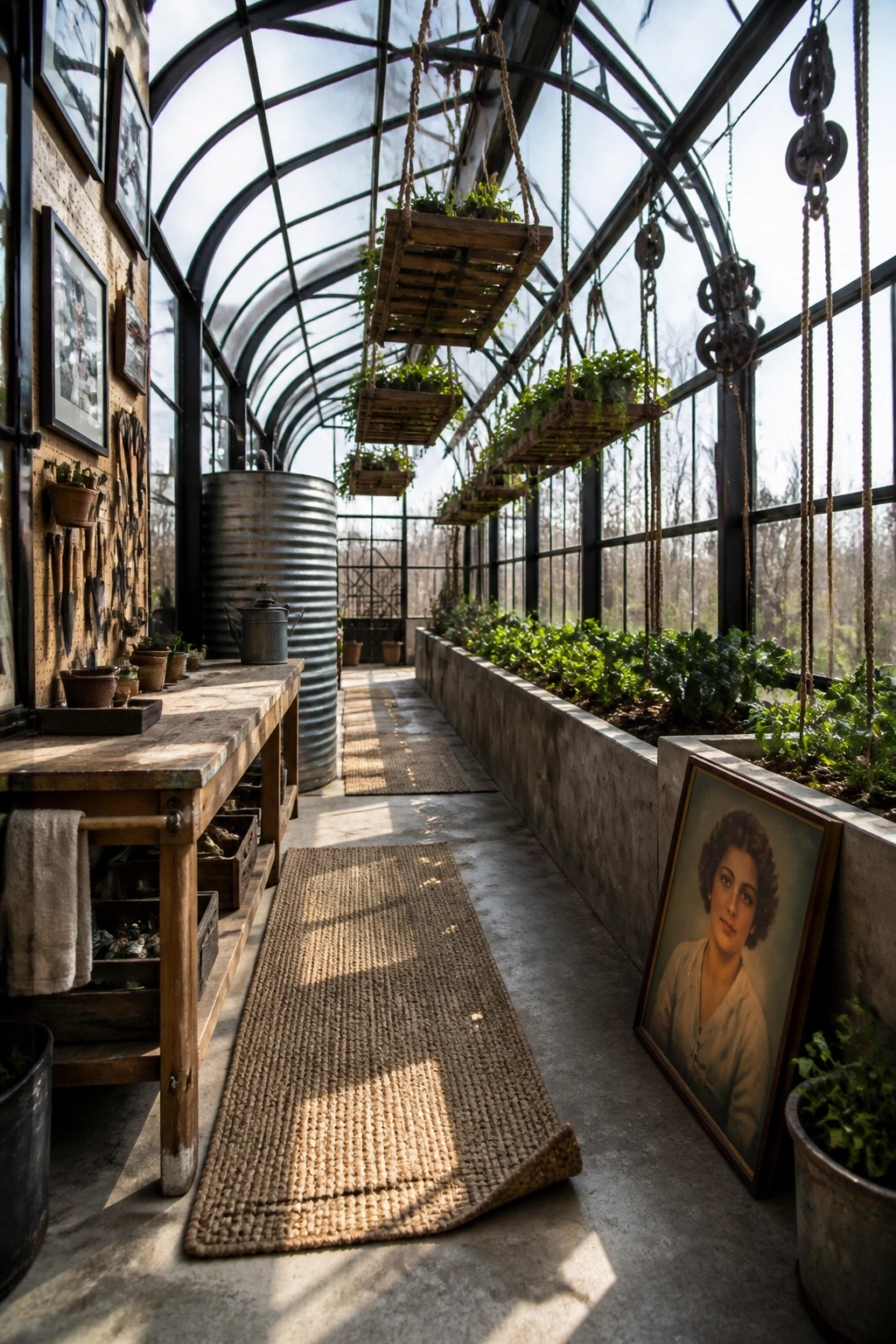
Hanging planters work well in a greenhouse because they free up floor space while still letting you grow plenty of plants. The wooden boxes in this setup hang at different heights, which keeps the walkway open and makes it easier to reach everything without crowding the benches or beds.
This approach suits smaller greenhouses or anyone who wants a simple way to increase capacity during winter. Use sturdy rope or chains and check the weight limits on your structure before hanging anything heavy.
Add a Fireplace to Your Greenhouse

A fireplace brings real warmth into a greenhouse during the colder months. It turns the space into somewhere you can actually sit and spend time even when temperatures drop outside. The brick surround also adds a solid, grounded feel that pairs well with all the glass and plants.
This works best in a larger greenhouse that already has good ventilation. Keep the firebox modest so it does not overpower the growing area, and make sure there is enough clearance from nearby pots and benches. Many people find it helps extend the season for both plants and people without needing heavy heating systems.
Shelves With Lighting For Indoor Herbs
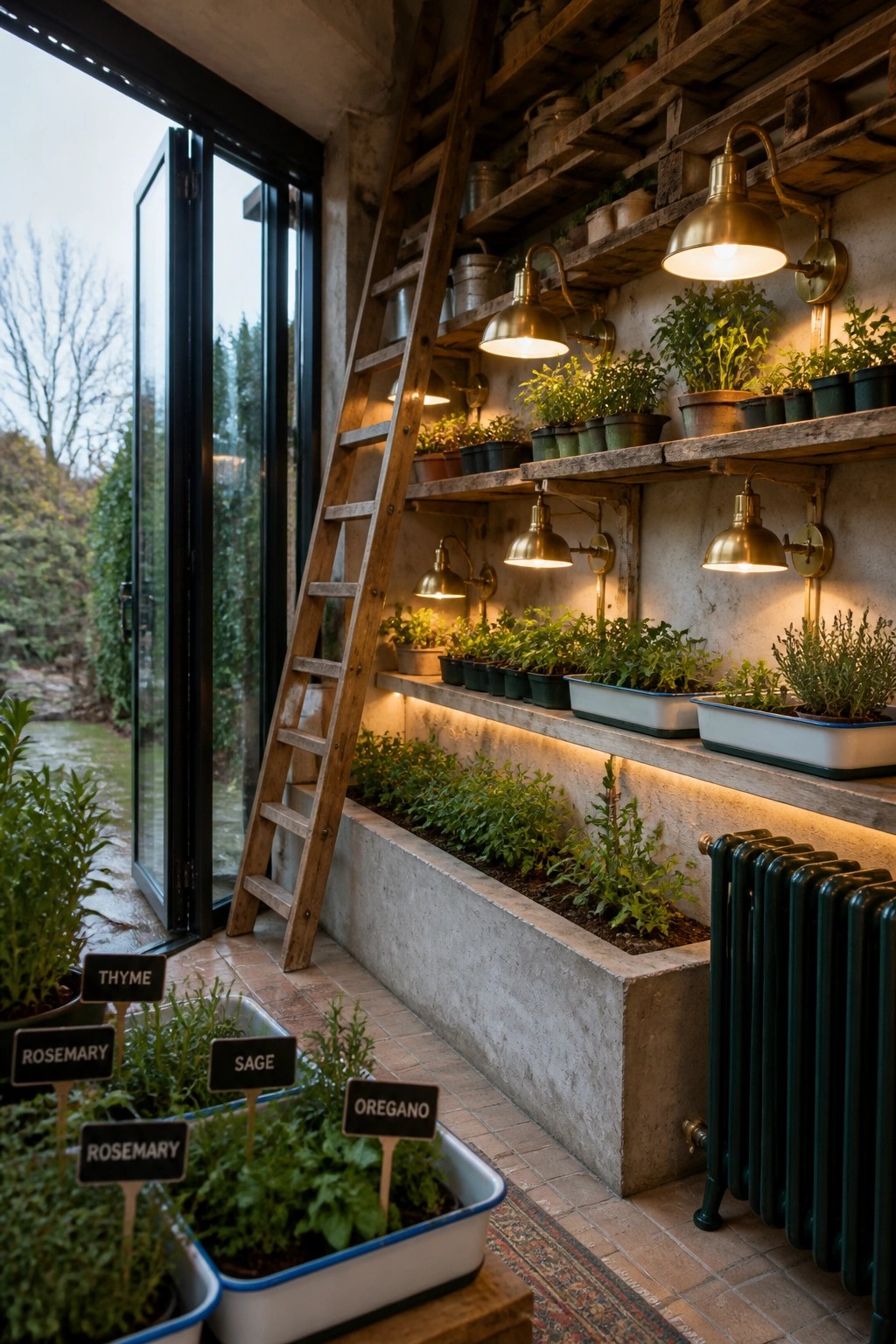
Wall shelves fitted with small lamps make it easy to grow herbs indoors through the winter. The lights give the plants the extra hours they need when daylight is short, and the shelves keep everything off the floor so the space stays usable.
This works best in a sunroom, enclosed porch, or any room with a large window. Mount the shelves at comfortable heights, use bulbs that do not run too hot, and group the pots by what needs the most light. It suits smaller homes that cannot fit a full greenhouse.
Espalier Fruit Trees Along the Walls
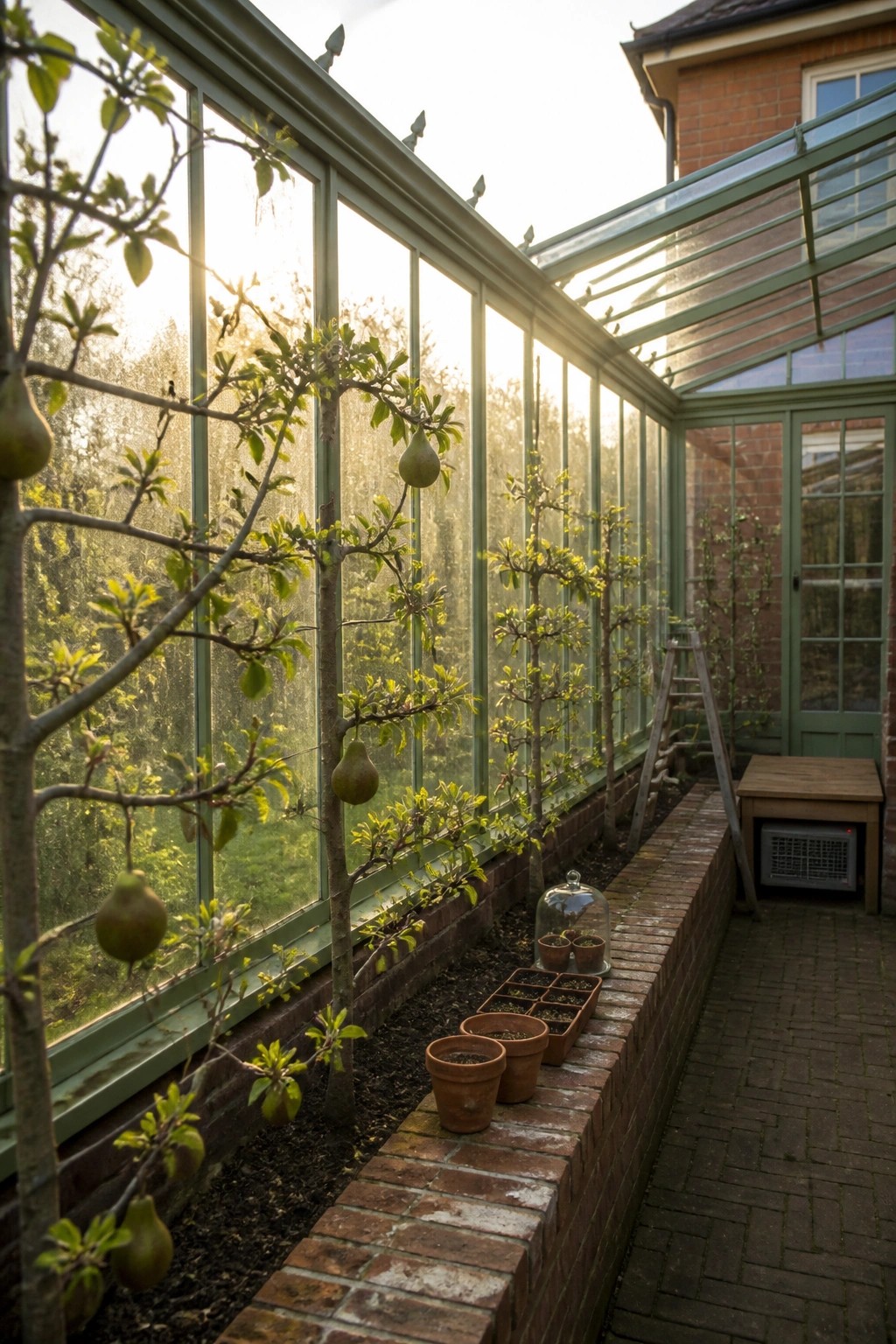
Training fruit trees flat against the greenhouse walls turns unused vertical space into productive growing area. The branches get steady light from the glass while the soil bed below stays easy to reach for watering and pruning.
This approach suits attached greenhouses on brick bases where horizontal wires can be fixed to the frame. Young trees settle in faster when you tie them in stages rather than forcing a full shape right away.
Set Up a Bench for Starting Seeds
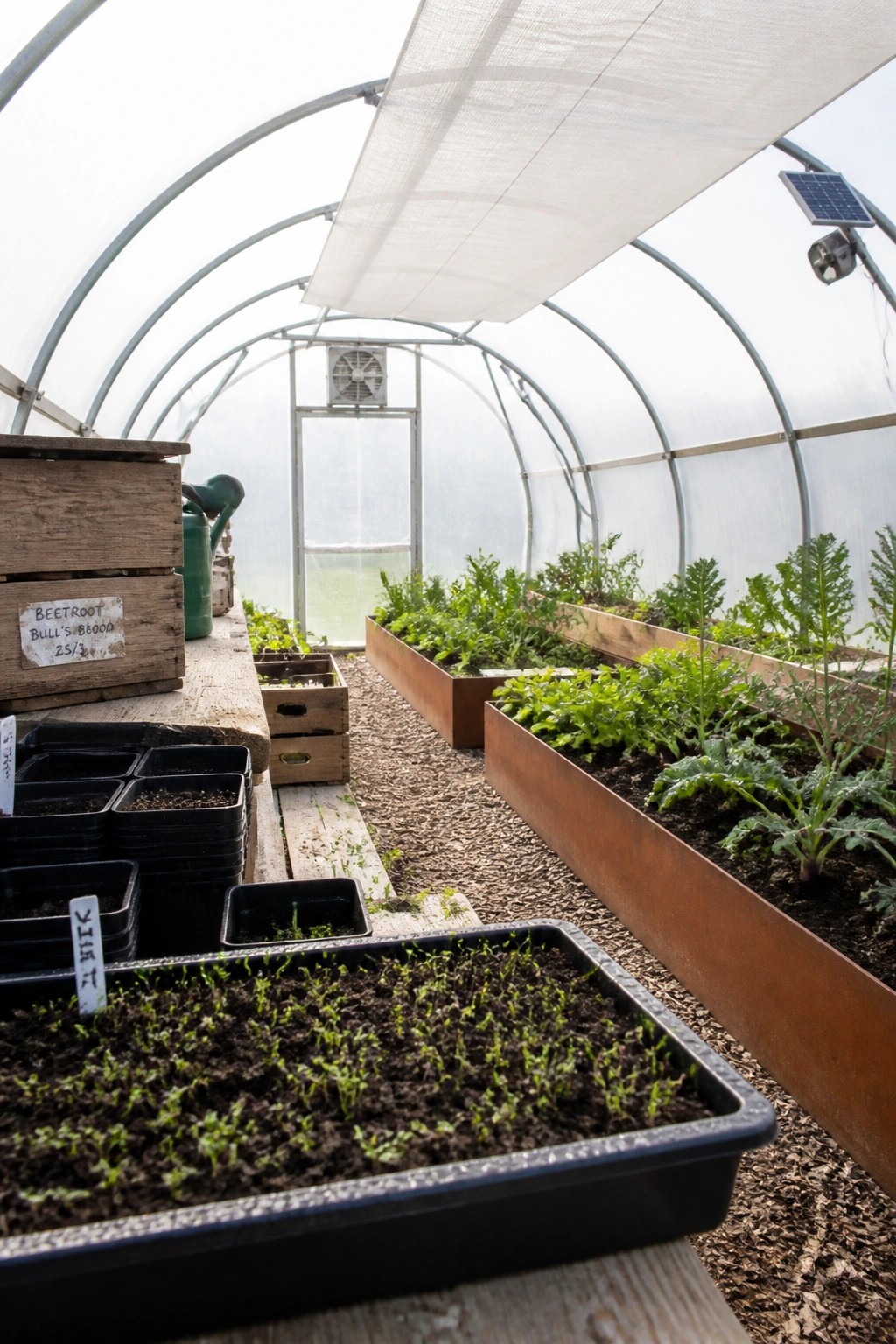
A simple bench along one side of the greenhouse gives you a place to start seeds without crowding the main beds. It keeps trays at a workable height and makes it easy to check on young plants each day.
This setup works best in smaller greenhouses where floor space is tight. Use stackable trays and keep a few wooden crates nearby for extra supplies so you can move things around as the season changes.
Keep a Wheelbarrow in the Greenhouse
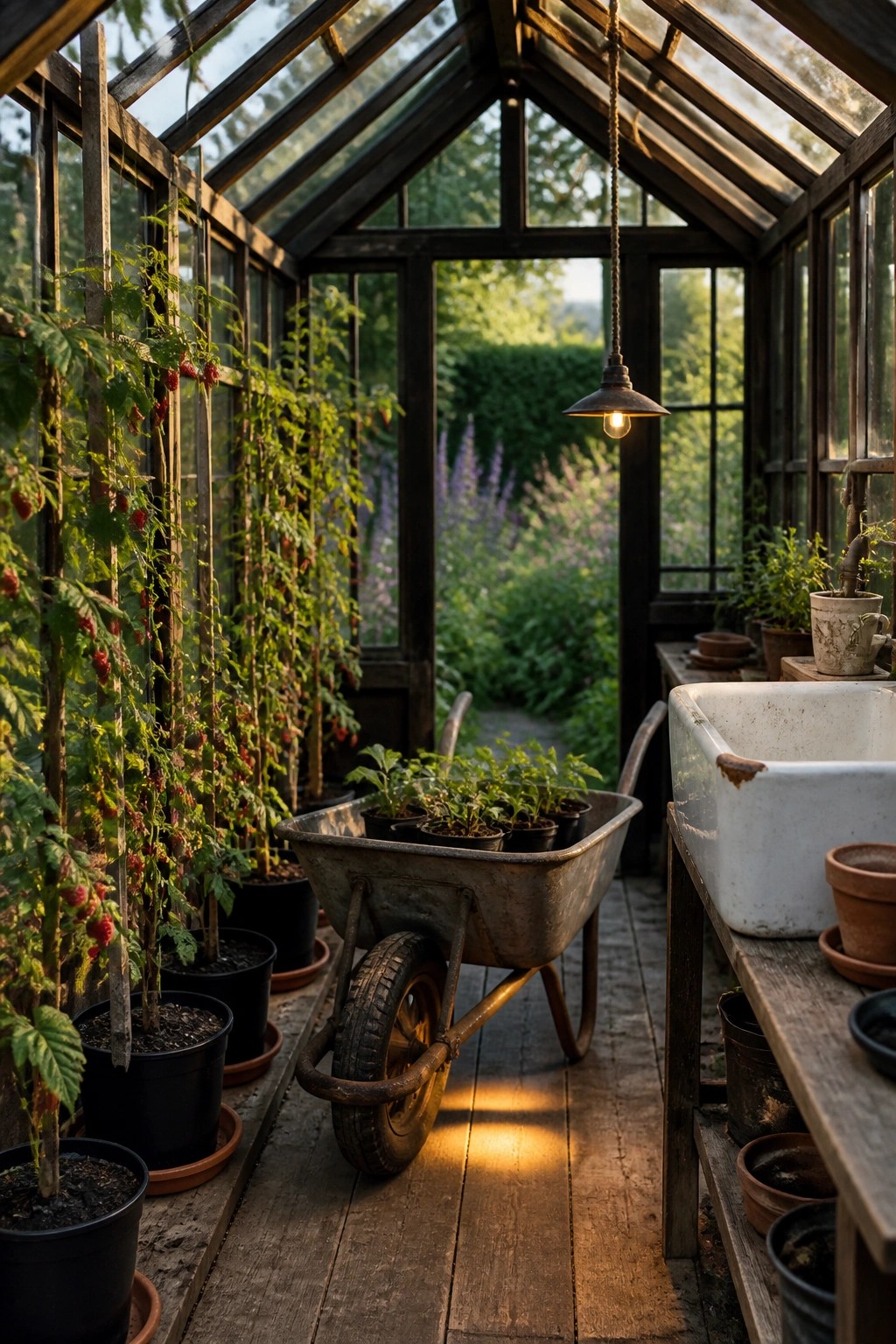
A wheelbarrow can make daily work simpler when you are moving plants around inside. It saves trips back and forth and lets you shift several pots or trays at once without straining your back.
This works best in greenhouses where plants need frequent rearranging for light or space. Place it near the main walkway so it stays out of the way when not in use but is easy to grab.
Add a Wooden Counter for Daily Greenhouse Tasks

A simple wooden counter turns a greenhouse into a space you actually use instead of just visiting. It gives you room to pot plants, start seeds, or set down tools without working on the floor or a wobbly table.
This idea works best in attached greenhouses where you want to spend more time during cold months. Keep the counter at a comfortable height and add a stool or two so the space feels practical rather than purely decorative.
Frequently Asked Questions
Q: How do I keep the greenhouse warm overnight without heaters? A: Fill a few black barrels with water and let them soak up sun during the day. They release heat slowly once the sun goes down. This trick works especially well in smaller setups.
Q: Are there plants that do fine without much extra light in winter? A: Leafy greens like lettuce and arugula manage with the shorter days. They grow at a slower pace but stay productive. Focus on those instead of fruiting plants.
Q: How can I deal with extra moisture inside during cold months? A: Open the door for a few minutes on warmer afternoons. This simple step circulates air and cuts down on dampness. Watch for condensation on the walls as your cue.
