


I’ve learned over the years that a basic hoop house can stretch the harvest window in a backyard garden without requiring a full greenhouse build.
The real test comes down to how the frame sits with existing beds and pathways so daily access stays easy.
Some frames hold up better once weather hits.
When I tried one a few seasons back the biggest lesson was making sure the covering could be vented quickly on mild days or the plants suffered.
A couple of the simpler layouts look like they could slip right into my current setup with only minor tweaks to the supports.
Hoop Houses Protect Plants Through Cooler Months

A hoop house gives your garden a simple way to stretch the growing season without building anything permanent. The curved frame and plastic cover hold in warmth and block frost, so plants like tomatoes and greens can keep going well into fall or even winter.
This setup works best over existing raised beds in a small yard. Add a door or vents you can open on mild days, and check the temperature inside so nothing overheats during sunny spells.
Hoop House Tunnels Extend the Season

A hoop house tunnel gives you a simple way to protect plants from early frosts and stretch the growing season by weeks. Many people like this approach because it uses basic hoops and plastic sheeting without needing a big structure or a lot of money.
Set the tunnel over a raised bed or in-ground row and anchor it well so wind does not lift it. This setup suits smaller yards and works best for greens, herbs, and root crops that tolerate cooler temperatures.
Organize Seed Starts with a Weekly Planting Schedule
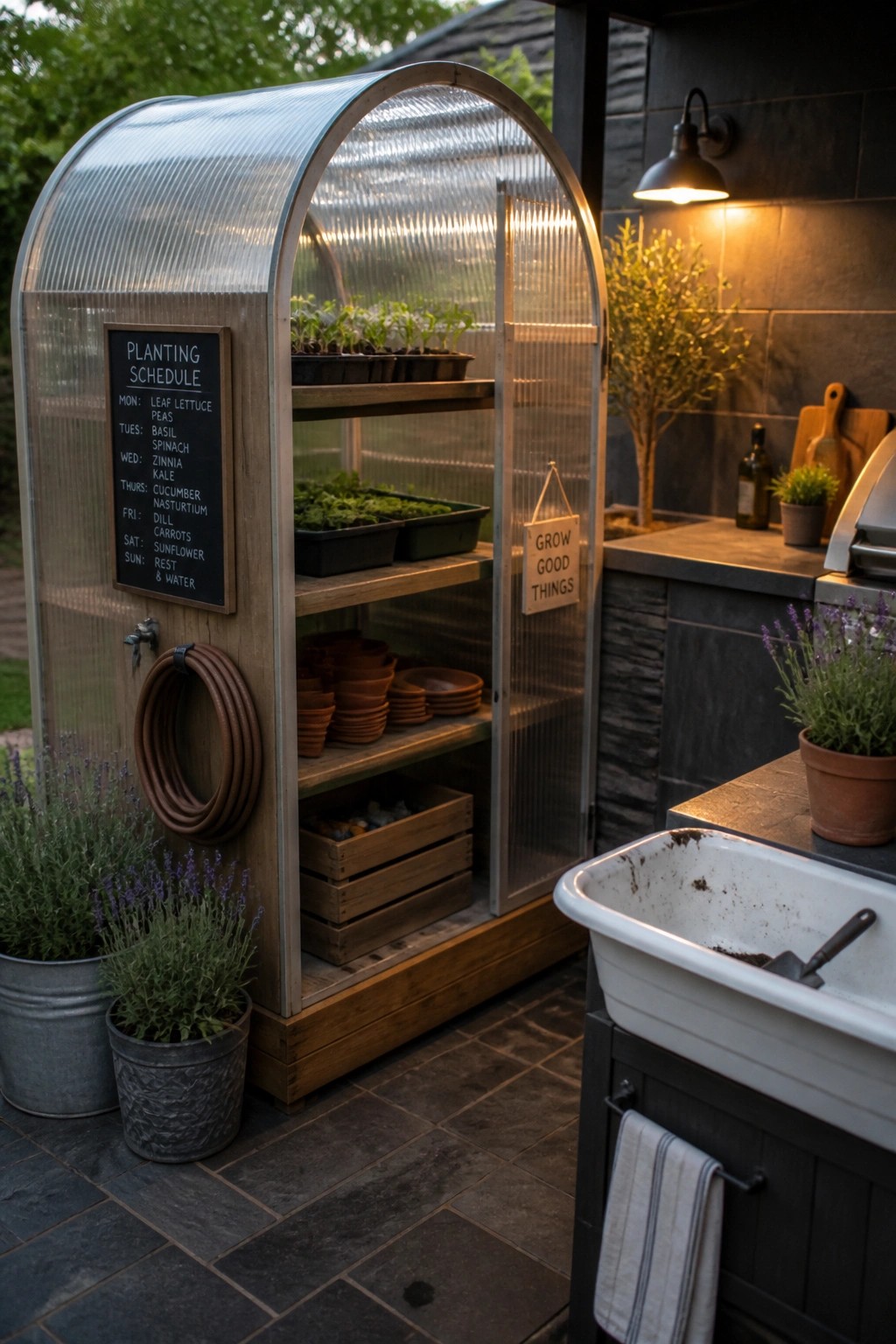
A simple chalkboard schedule mounted on the hoop house helps keep seed starting on track without needing extra notebooks or apps. It shows exactly what to plant each day and makes the whole process feel more manageable when you are juggling vegetables and flowers at once.
This setup works best on compact hoop houses where you want quick access to trays and supplies. Place the board near the door so you can check it while watering. It suits home gardeners who start seeds in batches and prefer to see the plan at a glance rather than sorting through loose notes.
Extend Your Growing Season With A Hoop House

A hoop house gives you a simple way to protect plants and stretch the season without much cost. The curved frame and plastic cover trap warmth and shield crops from wind and early frost.
Set it up over your main beds in a sunny part of the yard and keep a path beside it for easy watering and harvesting. It suits most home gardens and works especially well if you want to grow greens or root crops later into fall.
Adding A Simple Bench Inside The Greenhouse
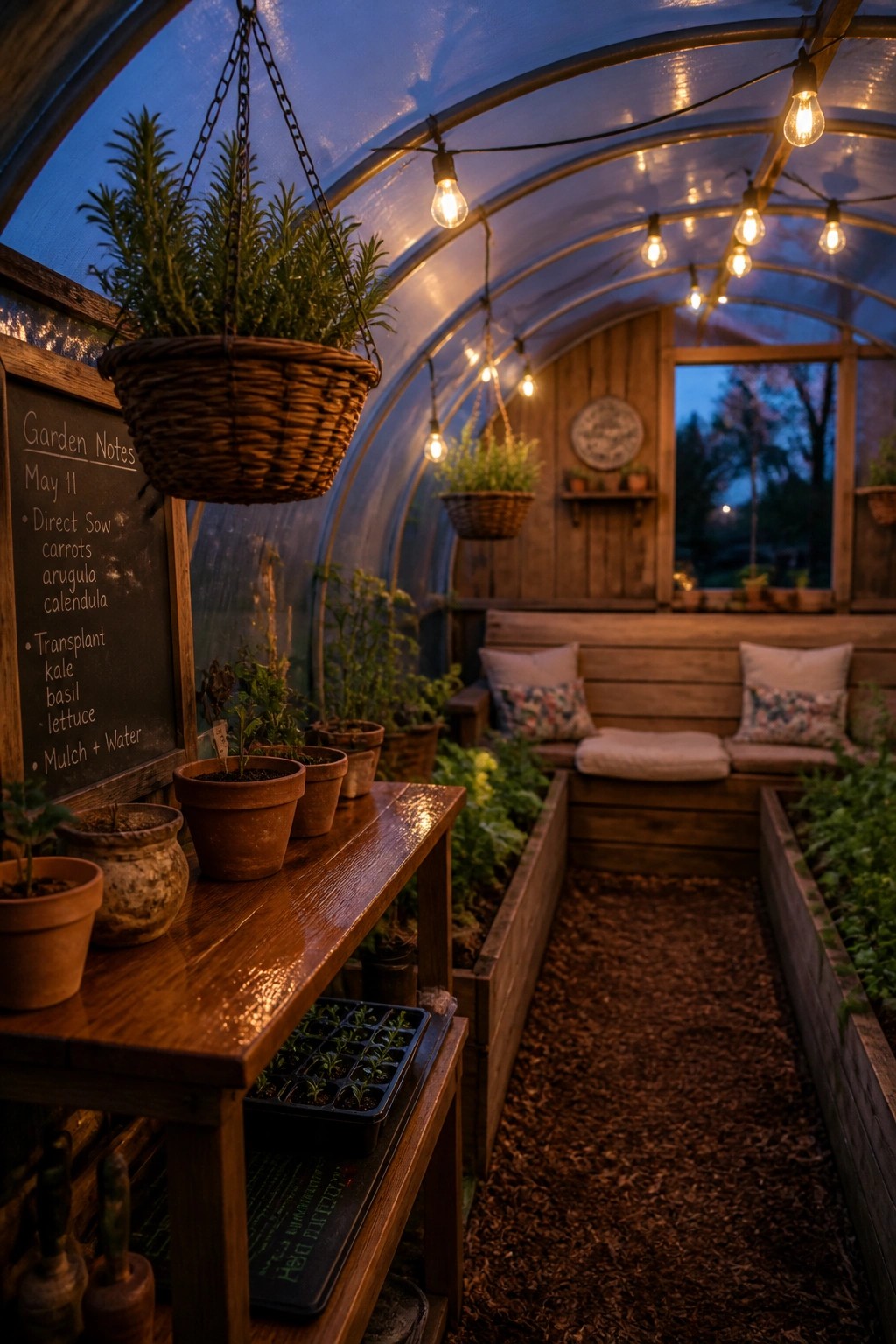
Many hoop houses stay strictly practical, but adding a bench changes how the space feels day to day. It gives you a place to sit while you check seedlings, take notes, or just warm up on cooler mornings.
A basic wooden bench works best when it runs along one wall and stays narrow enough to leave room for beds and work surfaces. Keep cushions simple and easy to move so the bench can double as extra table space when needed.
Attach a Salvaged Door for Easy Entry

A simple door makes a hoop house far more practical day to day. You can walk in without fighting with plastic flaps, and the door can stay open on milder days to bring in fresh air while still keeping the structure protected.
This works best in small backyard gardens where you want steady access for watering and harvesting. Just make sure the door is hung straight and the frame is solid so it closes tightly when the weather turns cold.
Terrace A Slope With Stone Walls

Stone retaining walls turn a steep hillside into a series of flat beds that can each hold a hoop house. The levels keep the structures stable and make it easier to walk between them without fighting the grade.
This setup works best on properties that already have a noticeable drop. Build the walls first to create the terraces, then set the hoop houses on top. Make sure each wall has good drainage so the soil stays firm under the frames.
Set Up A Simple Hoop House On Your Deck
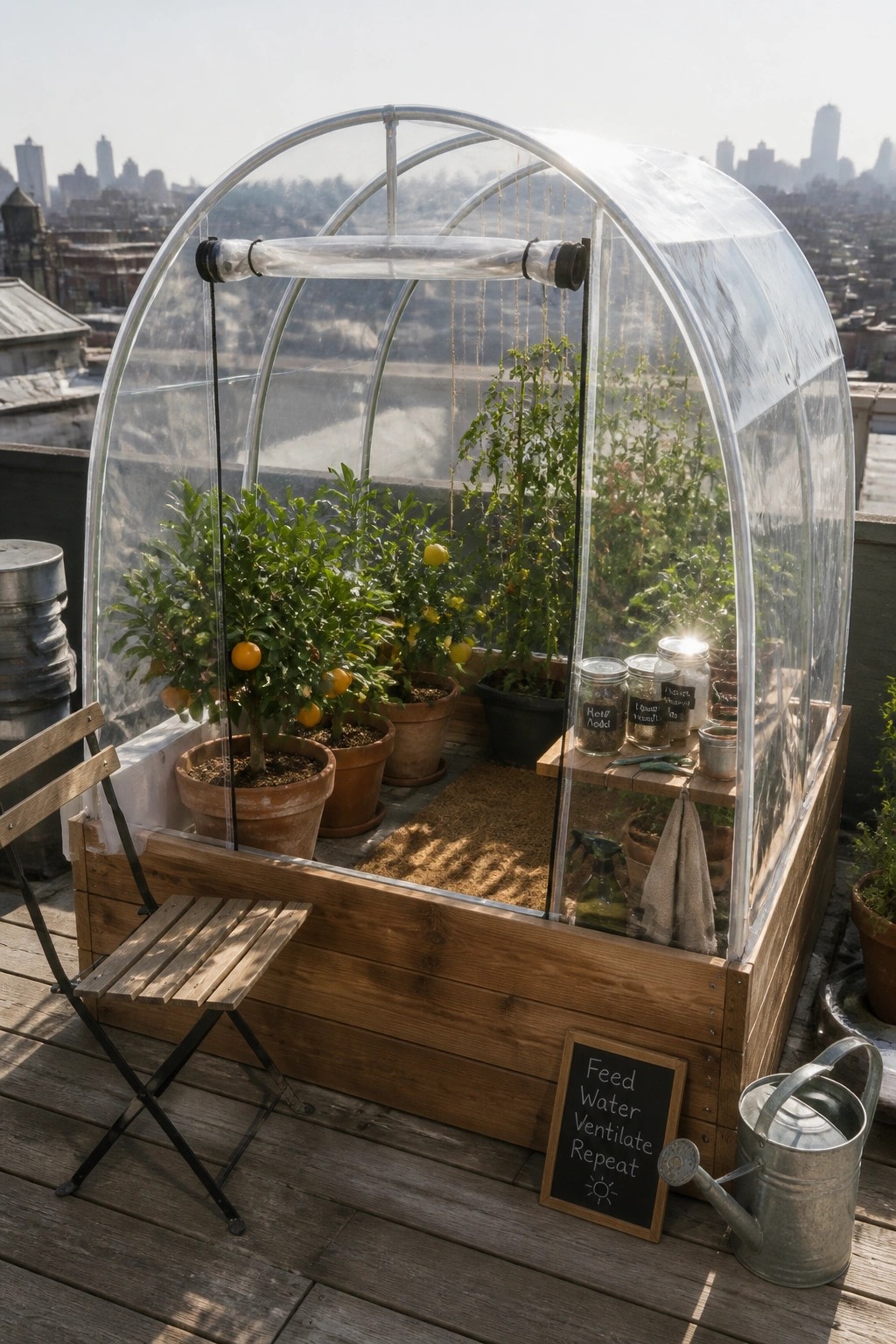
A hoop house gives you an easy way to stretch the growing season without building a full greenhouse. The curved frame and clear cover hold in warmth around the plants, which helps when nights start to cool off.
This works best on a flat rooftop or sturdy deck that gets steady sun. Anchor the base well so wind does not shift it, and leave room to reach inside for watering and harvesting.
Use A Hoop House To Keep Growing Longer

A hoop house gives you a simple way to stretch the season without a full greenhouse. The arched frame covered in plastic holds in warmth and blocks wind, so cool season crops stay productive well into colder months.
Set one up over raised beds in a level, sunny area of the yard. It suits most home gardens and works especially well near the coast where temperatures can shift quickly. Vent the sides on mild days to avoid overheating the plants inside.
Put a Hoop House Over Raised Beds
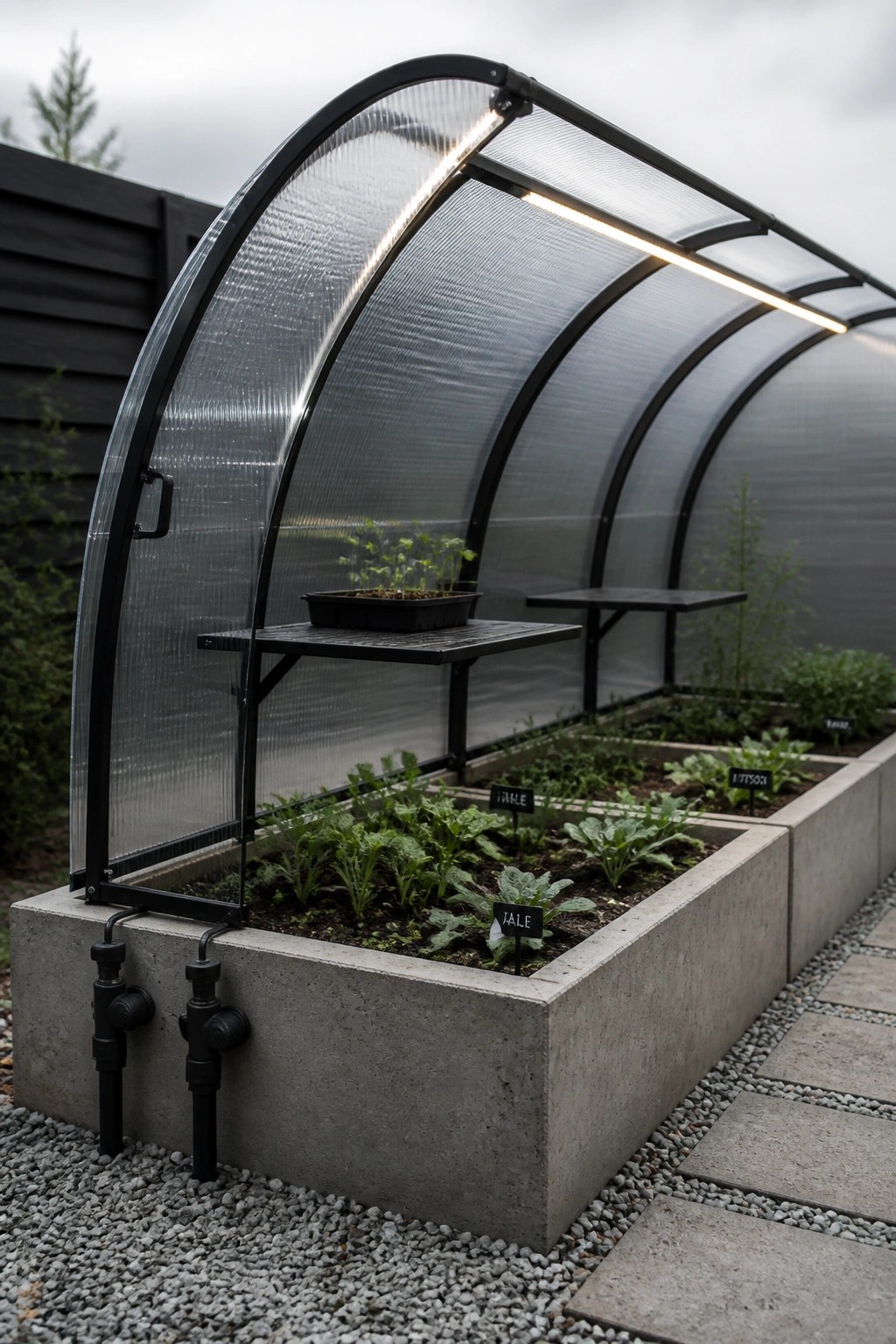
A hoop house built over concrete raised beds gives you a simple way to keep growing through cooler months. The solid base holds the soil well and the curved frame covers everything without much fuss. You can add a few shelves inside for starting seedlings while the main beds stay planted with crops like kale and lettuce.
This setup works best in a small backyard or side yard where you want something more permanent than a temporary tunnel. Make sure the beds have good drainage and room for air flow so plants do not overheat on sunny days. Keep the sides accessible for watering and harvesting.
Add A Utility Sink By The Greenhouse Door

A sink placed right at the entrance makes daily greenhouse work much simpler. You can rinse pots, wash off tools, or fill a watering can without leaving the area, which keeps the workflow smooth during busy seasons.
This setup suits smaller hoop houses attached to a shed or utility space. Just make sure the counter height feels comfortable for standing work and that the surrounding wall has room for basic tool storage.
Post A Planting Dates Board
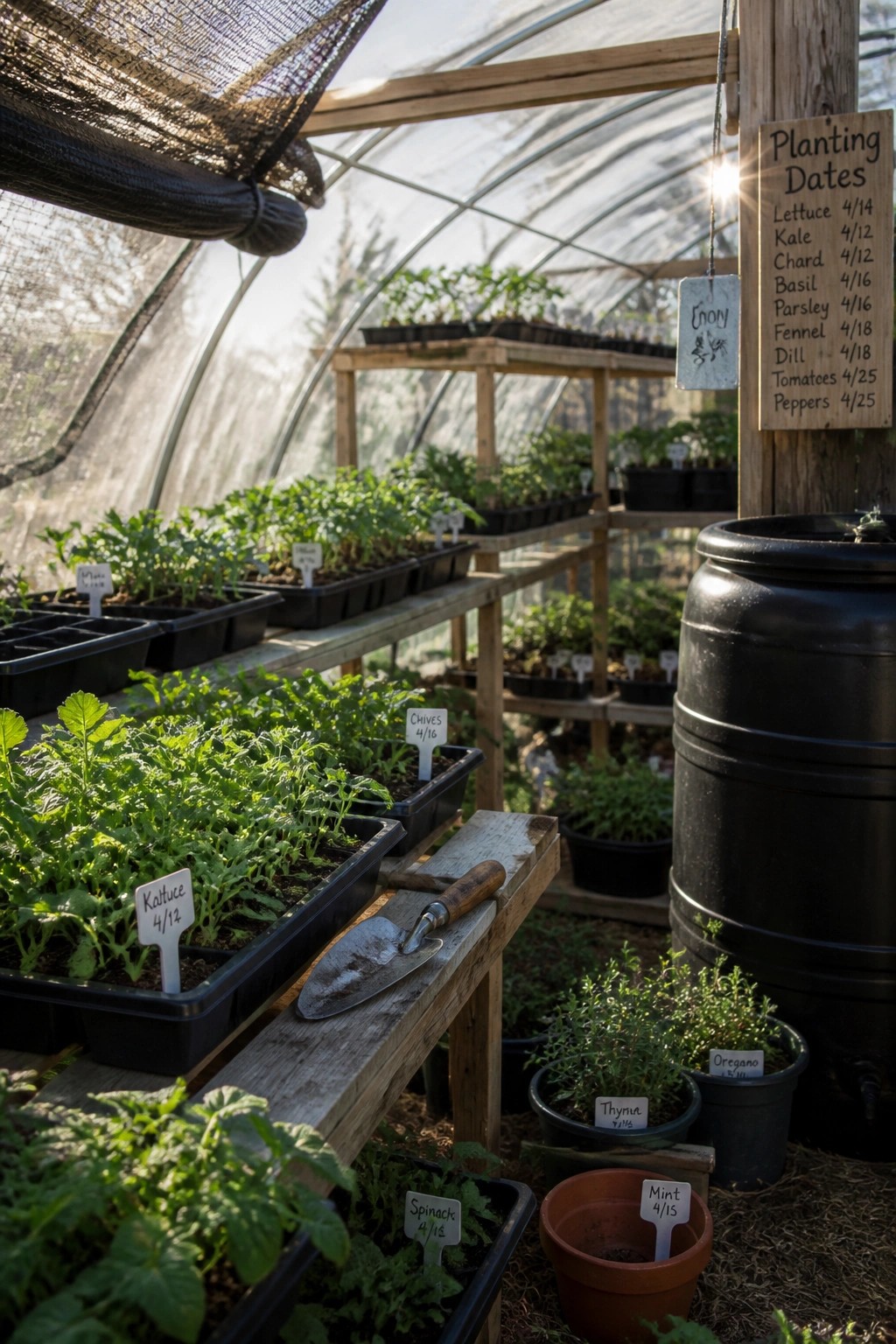
Many hoop house growers keep a simple board with planting dates right inside the structure. It helps track what went in when without digging through notes or trying to remember from one week to the next.
This works best when the board sits near the main work area or on a post by the door. Write the dates for each crop as you start the trays, then check the list whenever you move seedlings or plan the next round. It suits both small backyard setups and larger seasonal gardens.
Put A Bench Inside Your Hoop House

One simple way to get more from a hoop house is to add a bench inside. It gives you a sheltered place to sit among the plants, and it still leaves room for growing on the sides and overhead.
This idea works especially well in smaller gardens where space is tight. Just choose cushions that can handle some moisture, and make sure there is still good airflow for the plants.
Attach Trellises Straight To Raised Beds
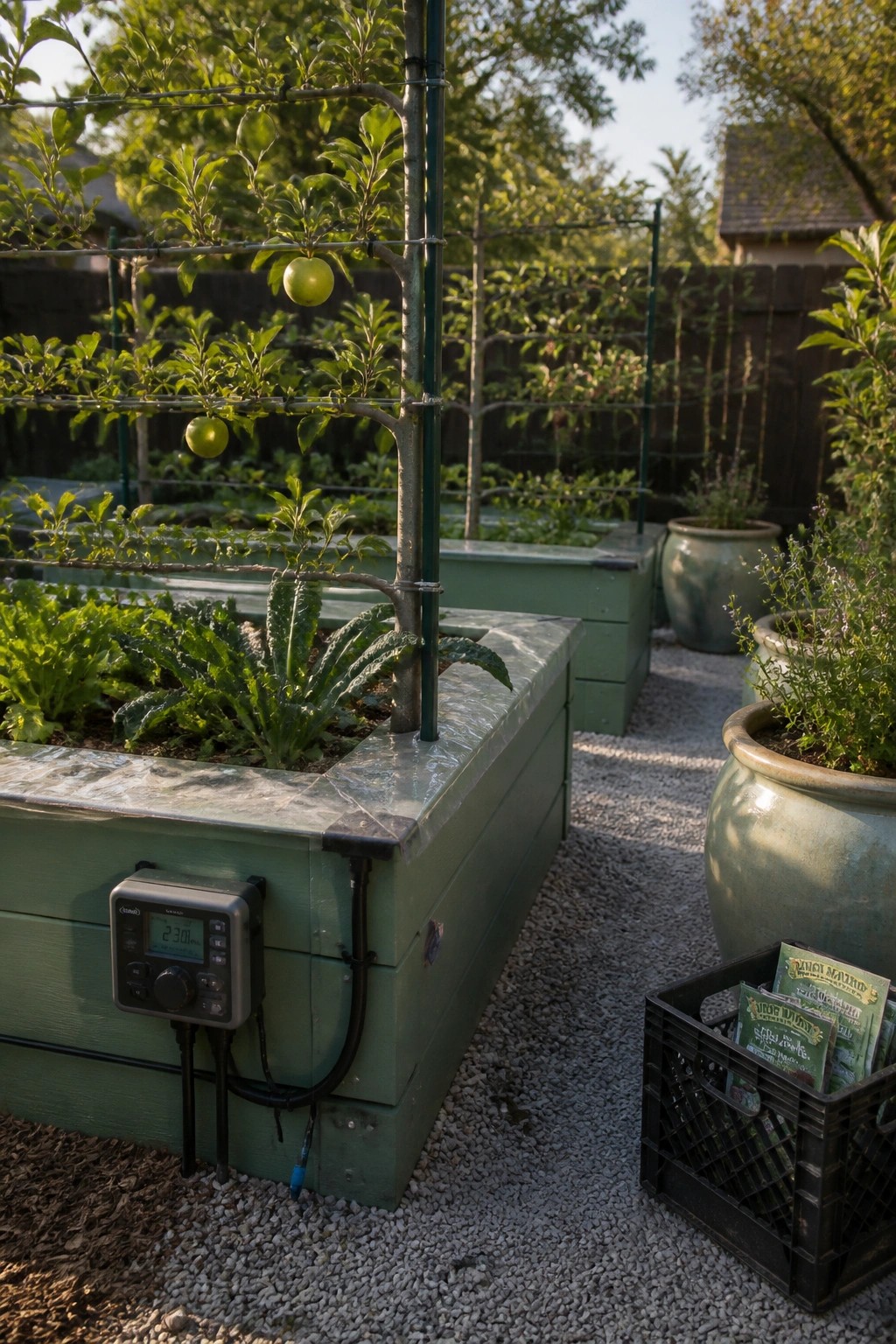
Many gardeners add simple wire supports right into their raised beds so climbing plants have room to grow upward instead of sprawling. This keeps the bed tidy, improves airflow around the leaves, and lets you fit more productive plants in a small space.
The setup works especially well in modest backyards where ground space is limited. Use sturdy posts at the corners or center and run horizontal wires or mesh between them. Just check that the bed frame can handle the extra weight once the plants are loaded with fruit.
Organize Beds With Simple Stone Paths

Clear paths between raised beds make it easier to move through a hoop house without compacting soil or reaching awkwardly over plants. The layout keeps daily tasks simple and helps you use every bit of growing space through the colder months.
This approach works in most backyard hoop houses where you want steady access for watering and harvesting. Flat stones or pavers hold up well and can be adjusted as your planting plan changes from season to season.
Simple Hoop Tunnels for Winter Crops

Hoop tunnels like these give you an easy way to keep growing cool season vegetables even when the weather turns cold. The curved frames and lightweight covers hold in some warmth and shield plants from frost and wind without a lot of extra work.
They work well in smaller yards where a full greenhouse would take up too much space. Place them over beds that already have greens or root crops started, and make sure the ends can be opened on milder days so the plants do not overheat.
Frequently Asked Questions
Q: How do I keep the plastic cover tight when winds pick up? A: Drive the hoops at least a foot into the ground and bury the plastic edges along the sides. Add a few sandbags or clips every few feet to hold things down without much fuss. Check after storms and tighten as needed.
Q: Can I vent the hoop house on warm days without losing too much heat overnight? A: Roll up one end or prop open a side panel once the sun hits it hard. Close everything back up by late afternoon to trap warmth for the evening. A simple stick or two works fine for propping.
Q: What if heavy snow loads hit my area during the off season? A: Round the hoops enough so snow slides right off on its own. Brush away any thick buildup before it sits too long and bends the frame. People in cold spots still get months of extra growing this way.
