


I have found that a greenhouse only stays useful when the light actually reaches the plants at different times of day.
Many setups look fine on a plan but end up shaded once the surrounding trees or fences are taken into account.
That part usually shows up after the first season.
I like to try small changes to roof angles or shelf heights first so I can see what actually helps before making bigger adjustments.
These tweaks tend to keep the space working without turning into extra maintenance every week.
Add a Wooden Potting Bench

A wooden potting bench gives you a steady place to work with soil and plants without crowding the growing beds. It turns the greenhouse into a space where daily tasks feel more manageable.
This works well in most glass greenhouses because the bench can sit along a wall or under the glass roof where light is strongest. Keep extra pots on the lower shelves and tools on top so you can move through watering and repotting without extra trips outside.
Hang Baskets From The Roof

Many greenhouses fill up quickly when plants sit only on benches or the floor. Hanging baskets use the space overhead so light still reaches everything below and the center path stays open.
This setup works best in glass structures where the roof can support the weight. Choose lighter baskets and plants that tolerate brighter light at the top.
Built-In Ledges Along the Glass

A long built-in ledge running right against the windows gives plants steady access to light without crowding the floor. This layout works especially well in glass structures because it keeps everything low and open so sunlight can reach the plants from multiple angles throughout the day.
You can build the ledge from wood that fits the rest of your greenhouse and use it for both growing and a place to sit while you work. It suits attached sunrooms or freestanding greenhouses and helps keep the space practical instead of just decorative.
Add A Greenhouse To Your Rooftop Patio

A glass greenhouse on a rooftop gives you extra room to grow plants without taking over the whole terrace. The clear walls let in steady light all day while the structure still leaves space for seating and paths around it.
This works best on flat roofs where you already have good sun exposure. Keep the greenhouse size modest so the patio stays open for chairs and tables, and check that the roof can support the added weight and wind load.
Line Your Greenhouse with Wooden Benches

Wooden benches give you a practical surface for trays and pots while keeping the floor clear. They hold plants at a good height so light reaches the lower shelves and air can move underneath the wood.
You can store extra pots and supplies right below the bench, which helps in smaller spaces. This layout works well if you start seedlings often and need easy access to everything along the sides.
Add a Simple Sink Counter in Your Greenhouse

Large glass walls already do most of the work when it comes to light, but a long work counter with a sink makes the space far more usable. You can rinse pots, mix soil, and tend to plants without leaving the bright area or dragging things back and forth.
This setup works well in any glass greenhouse that gets steady sun. Keep the counter simple and sturdy so it does not block light or feel crowded, and place it along the glass so you still get the full benefit of the view and brightness while you work.
Raised Planters Along The Glass
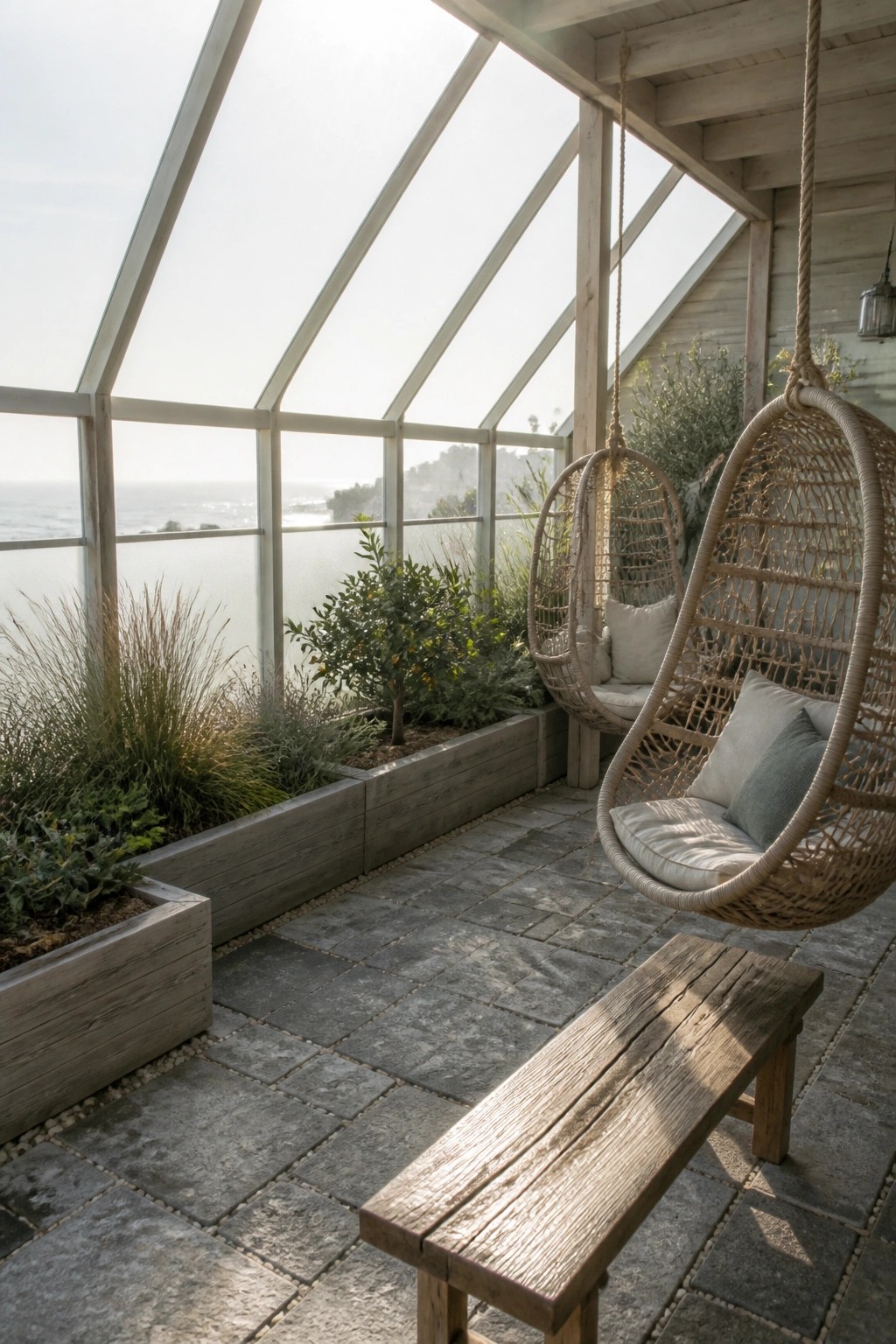
Placing raised wooden planters right against the glass walls gives plants steady access to light from multiple angles. This setup keeps the growing area contained while leaving the floor open for seating or movement through the space.
It works best in greenhouse additions or sunrooms where you want both healthy plants and a place to sit. Keep the beds narrow enough that nothing blocks light from reaching the back rows.
A Curved Wood Bench For Greenhouse Work

A long workbench gives you a steady place to pot plants, set out seedlings, and keep supplies within reach. In a glass greenhouse the wood adds a simple work zone that feels practical rather than decorative.
This shape works best when the bench follows the wall line instead of cutting straight across the space. It suits anyone who spends time starting seeds or repotting and needs room to spread out without crowding the plants.
Glass Greenhouses With Dark Frames

Dark frames on a glass greenhouse let the light do most of the work. The thin metal lines do not block much sun, so plants inside still get strong exposure from all sides and overhead. Many people like this look because it feels simple and does not fight with the garden around it.
This approach works best on a level spot with good southern or eastern light. Keep the base low and the doors easy to open so air moves through on warm days. Avoid crowding the glass with heavy trim or extra roof overhangs that could cut down the brightness.
Tiered Shelving For Narrow Greenhouse Spaces

Many home greenhouses end up cramped because the floor space is limited. Tiered metal shelves running along one wall give you room for far more plants without crowding the walkway or cutting off light from the glass.
This layout suits attached greenhouses or small backyard structures where you grow herbs and seedlings. Open shelves keep air moving and light reaching the lower levels, and you can move trays around as plants grow. Just keep the weight in mind if the frame is older.
Open Glass Doors to Let in More Sunlight

Many greenhouses get more use when the doors can stay open during the day. Wide glass doors let sunlight reach the back corners and help move air through the space without needing extra vents.
This works well in smaller setups where plants sit close to the entrance. Just keep the path outside clear so nothing blocks the light coming in.
Open Shelves Along the Walls

Open wooden shelves work well in a greenhouse because they let light reach every plant without blocking the windows. They also keep pots organized so you can water and check on things without moving half the collection around.
This setup suits a smaller greenhouse where floor space stays open for bigger plants or a work table. Just make sure the shelves sit at a comfortable height and leave enough room between levels for taller pots.
Add a Potting Bench with Open Storage
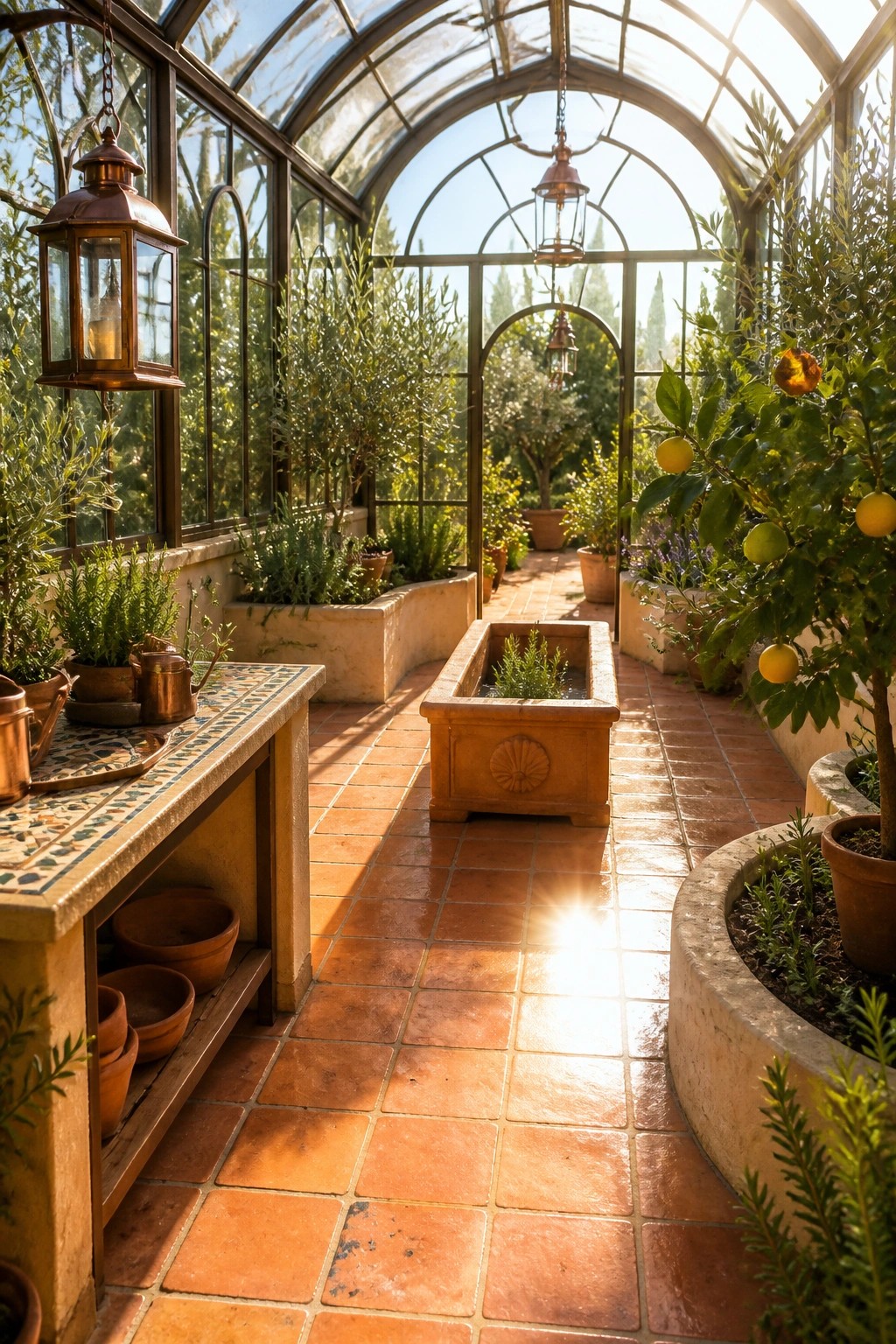
A long work table gives you a place to handle daily tasks without taking up space meant for plants. The lower shelves keep pots and tools within reach while leaving the floor clear for easy movement.
This kind of bench works best in greenhouses that get steady sun, since the open design helps air flow underneath. It suits both modest backyard structures and larger ones where people spend time repotting or organizing supplies.
Classic Glass Greenhouses That Maximize Sunlight
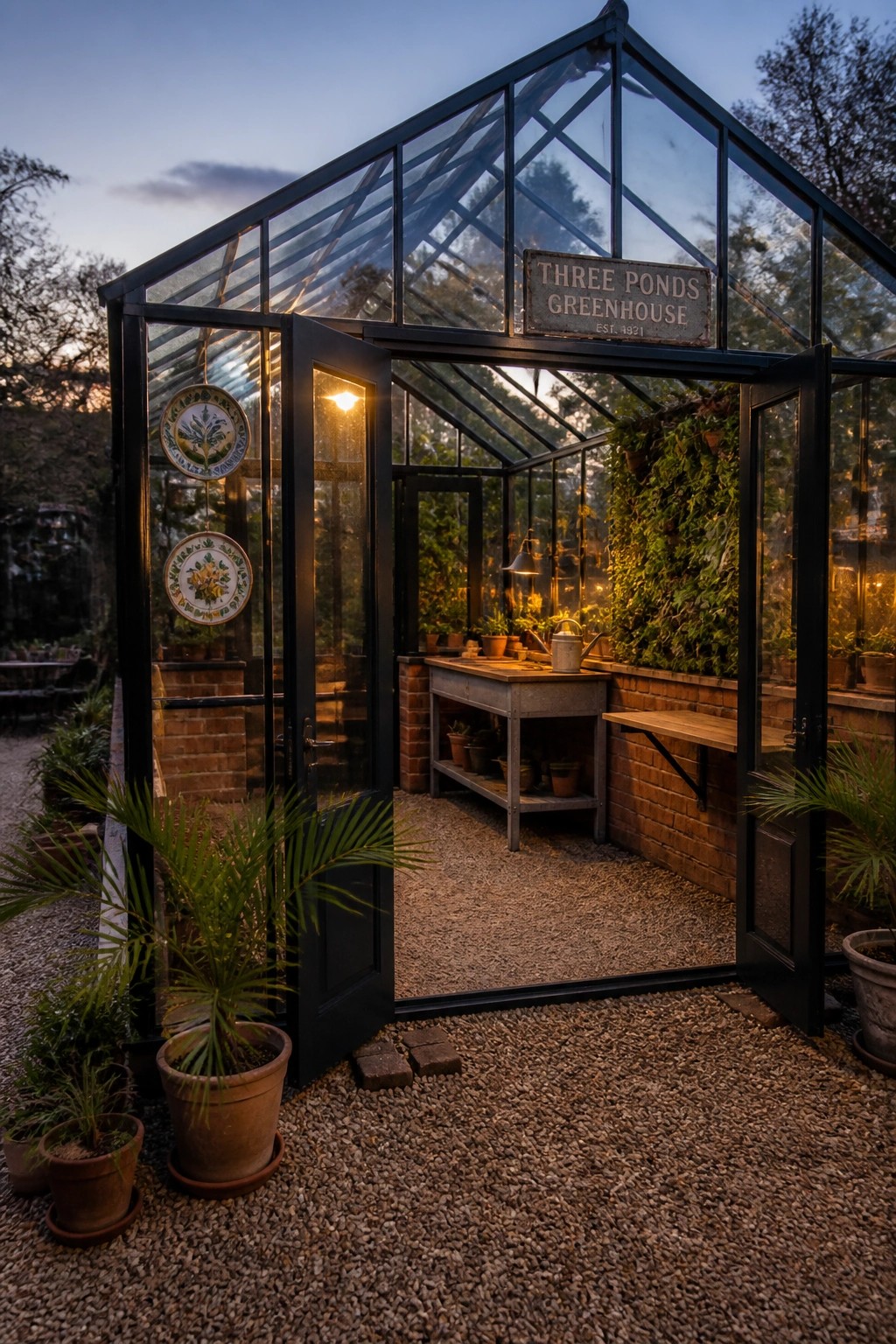
A glass greenhouse gives plants steady access to light throughout the day. The large panes let sunlight reach every corner without much obstruction, which helps growth even when the weather turns gray. Many gardeners like this approach because it turns a simple structure into a reliable growing space.
Place the greenhouse where it gets southern exposure if possible, and keep the doors open on mild days for extra light and airflow. This setup works well in most backyards, though you will want to check the foundation and ventilation so the interior does not overheat in summer.
Create an Organized Seed Library Inside the Greenhouse

A seed library tucked right into the greenhouse keeps everything you need close at hand. Instead of running back to the house or shed every time you want to start something new, you can sort through packets, check dates, and plan rotations without leaving the growing space. The setup works especially well when it includes a sturdy box or drawer plus a few hooks or pegboards for tools.
This kind of storage suits both small backyard greenhouses and larger ones. Keep the library near a workbench so you can label new starts and note what you planted. Just make sure the spot stays dry and out of direct sun so the seeds stay viable longer.
Wooden Shelves Against The Glass
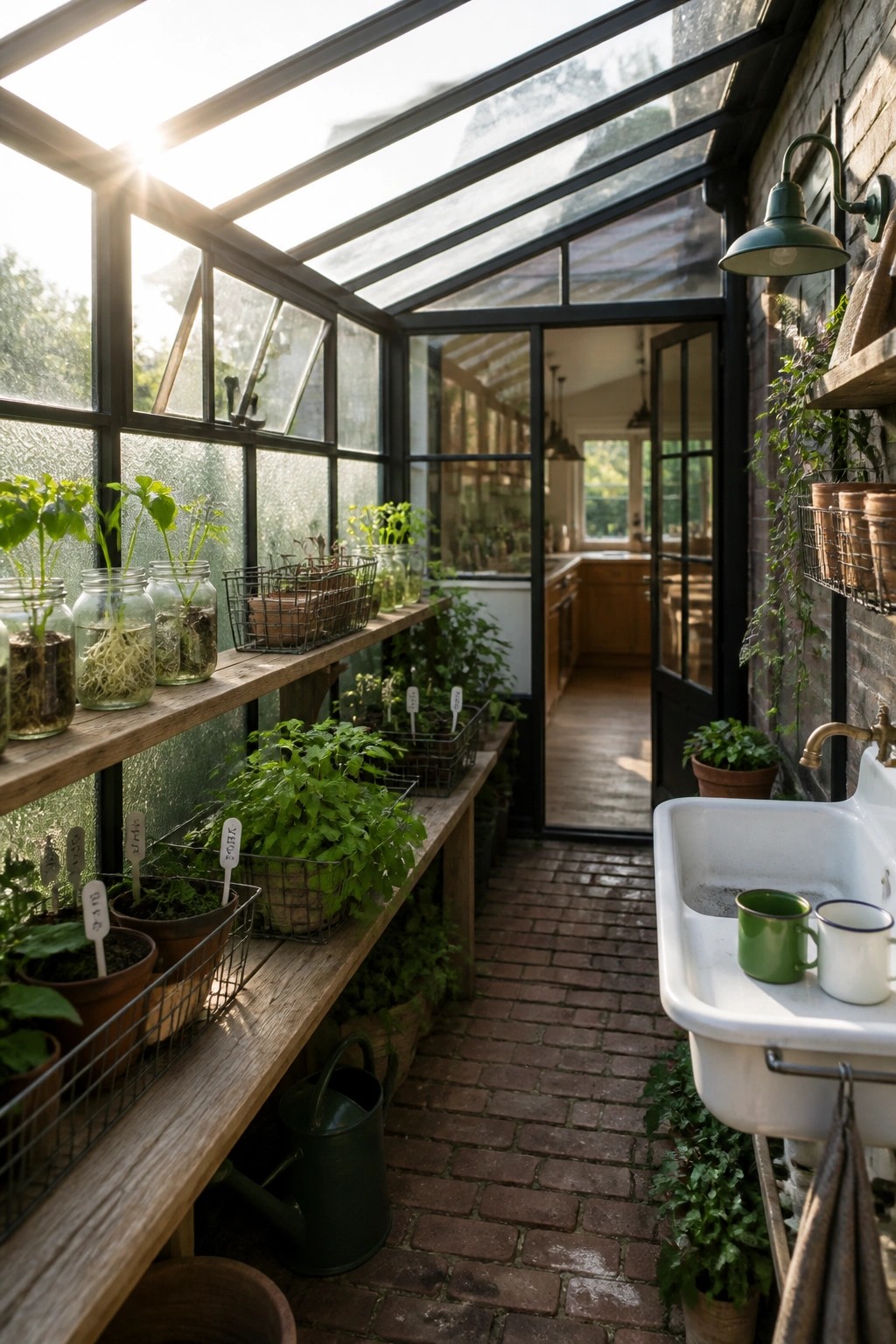
Wooden shelves work well in a glass greenhouse because they let plants sit close to the light without taking up floor space. The open design keeps air moving around the pots and makes it easy to reach everything during daily care.
This setup suits small or narrow greenhouses where you need room to walk but still want to grow a lot of plants. Use sturdy brackets and leave a little gap between the shelf and the glass so condensation does not collect on the wood.
Add a Loft Level for Extra Growing Space
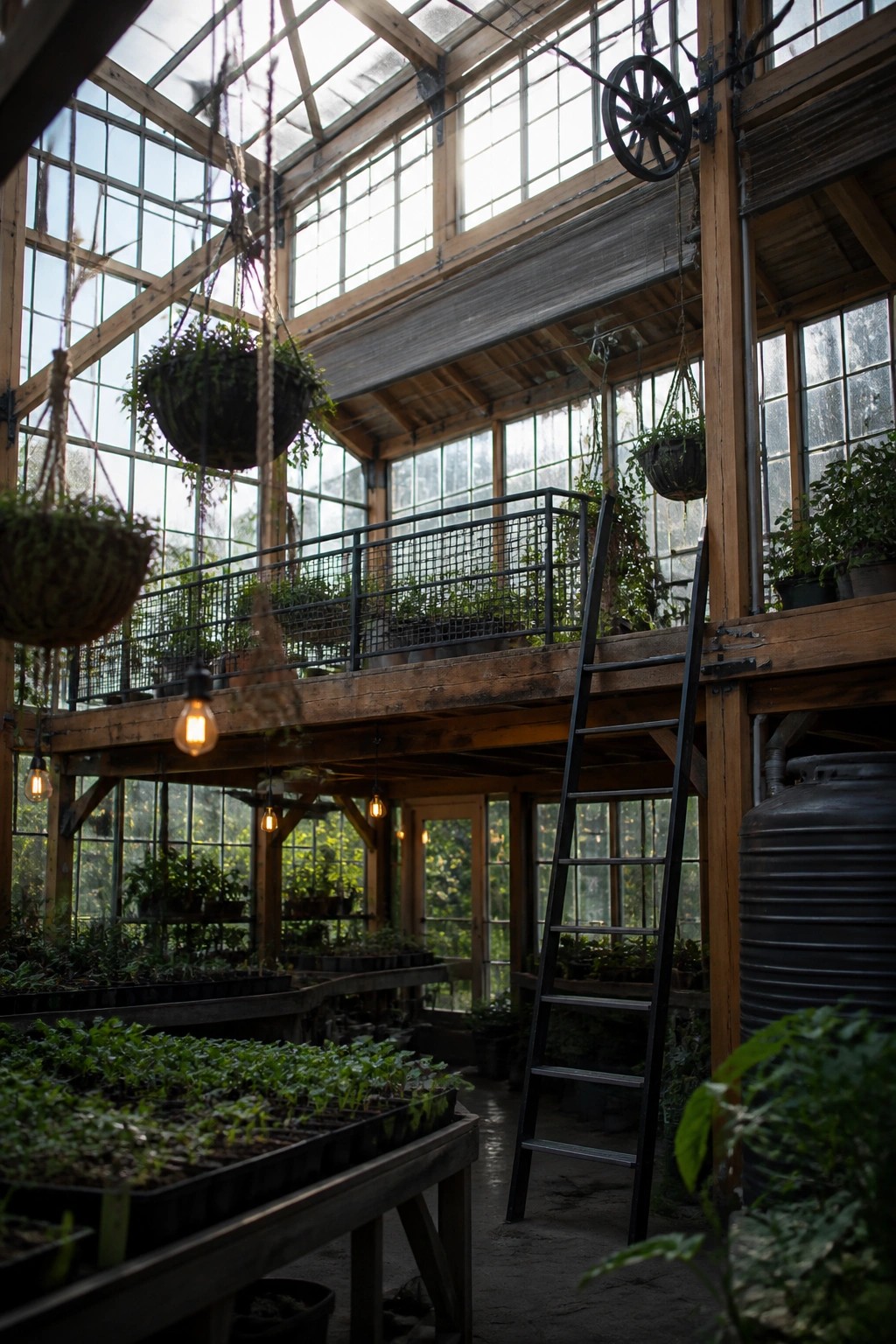
A raised platform inside a greenhouse lets you fit more plants without crowding the floor. The open sides keep light moving freely to the lower beds, and the extra height works well with the tall glass roof.
This setup suits larger home greenhouses where you have room to add a simple wooden structure and a ladder. Keep the railing open and use the beams for hanging plants so the whole space stays bright and easy to work in.
Set Up a Dining Area Inside the Greenhouse

Placing a dining table inside a glass greenhouse gives you a bright spot for meals while the plants around it get steady light all day. The glass lets sunlight pour in from every angle, so the space feels open and the plants stay healthy without extra grow lights.
This works best in a greenhouse that has enough floor space to keep plants from getting crowded. Leave clear paths around the table so air can move freely and nothing blocks the lower light for smaller pots.
Stone Benches Line Both Sides For Easy Access

Many greenhouses work better when plants sit on solid benches instead of the floor. Low stone walls topped with trays give seedlings a stable spot while keeping the center path open for walking through.
This layout suits a long narrow structure because the benches run the full length and stay low enough for light to reach everything. It also leaves room at one end for a simple workbench where you can pot plants without crowding the growing area.
Glass Roof And Walls Keep Plants Thriving Indoors

A glass roof and large glass walls let sunlight pour in from every angle. This setup works especially well for people who want a greenhouse space that still feels like part of the house instead of a separate shed.
It suits homes with a deck or small yard where the structure can be attached. Just plan for good ventilation so the space does not overheat in summer, and choose glass that can handle temperature swings.
Add A Wooden Workbench For Everyday Greenhouse Work

A long wooden bench along the wall turns a bright greenhouse into a more useful space. It gives you a steady surface for potting, sorting seedlings, and keeping supplies close without crowding the growing beds.
This kind of bench works best in glass greenhouses that get steady light all day. Keep it narrow enough to leave a clear path and use the space underneath for extra pots or trays.
Letting In Maximum Light With Glass Panels

A greenhouse built mostly of glass lets sunlight reach plants from every direction without much blocking the way. This approach keeps the space bright all day and helps plants grow stronger even when the weather turns gray.
It suits any garden that needs extra growing room, especially if you start seedlings or keep tender plants through the seasons. Position the structure where it gets direct sun and keep the glass clean so light stays strong inside.
Tiered Stone Beds For Layered Planting

Tiered stone beds give a greenhouse a simple way to fit more plants without blocking light. The different heights let shorter plants sit lower while taller ones reach up, so everything gets sun from the glass walls and roof.
These beds work best along the edges of the space or in a gentle curve that leaves room for walking and seating. They suit both small backyard greenhouses and larger ones where you want to grow herbs, vegetables, and flowers in the same area.
Frequently Asked Questions
Q: Does the greenhouse need to face a certain direction for best light? A: Point the structure south if you can. This catches the most sun through the day. Morning light helps plants wake up strong too.
Q: What kind of shelves let the most light reach lower plants? A: Go with wire racks instead of solid boards. Light passes right through and hits everything below. You end up with fewer shaded spots that way.
Q: Will regular glass work or do I need special stuff? A: Standard glass does fine for most setups. Just wipe it down every few weeks to remove dirt and water spots. Clear panels keep rays strong without extra cost.
Q: How do I stop plants from burning in all that bright light? A: Add a light shade cloth on the hottest days. Move sensitive plants to the edges where rays hit softer.
