


I’ve spent enough time moving around my greenhouse to notice how a jumbled setup can make even basic watering and pruning feel like extra work.
When plant zones and work areas overlap without much thought, the space quickly starts to slow things down instead of supporting them.
Good planning changes that.
A few adjustments to separate seedling areas from potting stations and main growing beds can cut down on the back and forth that builds up over a season.
Testing one or two of these layout shifts in my own space has made the daily routine feel more straightforward without needing a full rebuild.
Central Path With Benches On Both Sides
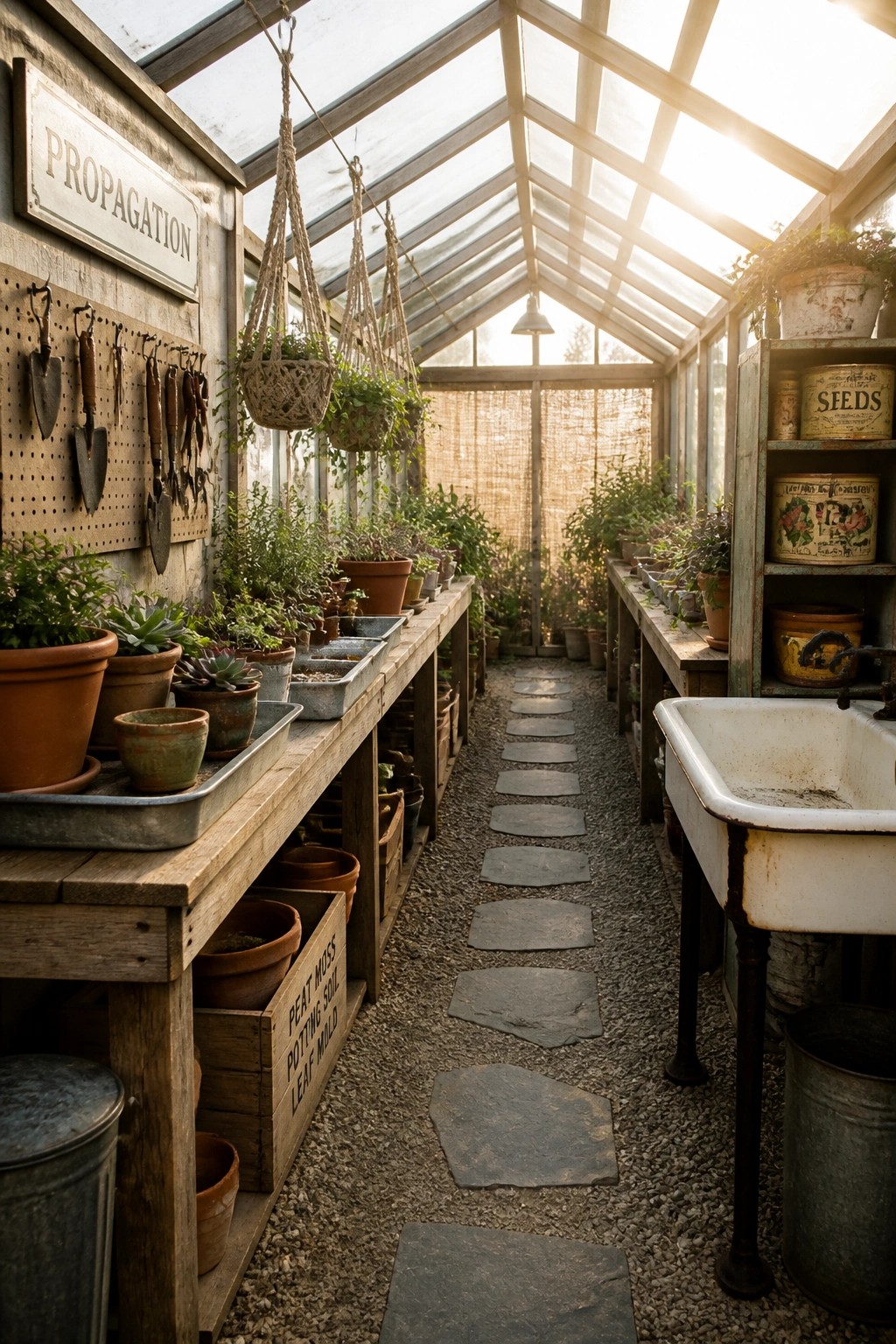
Placing long workbenches along both sides of a central path keeps a greenhouse practical for daily tasks. You can move through the space easily while reaching plants, soil, and tools without stepping around obstacles or crowding one area.
This layout works well in smaller or medium greenhouses where space needs to serve both growing and working needs. Use gravel or stepping stones for the path so water drains and the surface stays usable year round.
Rolling Tables Keep Greenhouse Tasks Moving

Rolling tables give you a simple way to adjust your greenhouse layout as plants grow and tasks change. Instead of fixed benches, these movable surfaces let you shift work areas around without much effort.
They suit greenhouses where you rotate crops or need space for different stages of growth. Keep a few labeled crates on the lower shelves so supplies stay organized while the tables roll between zones.
A Central Path Improves Greenhouse Workflow
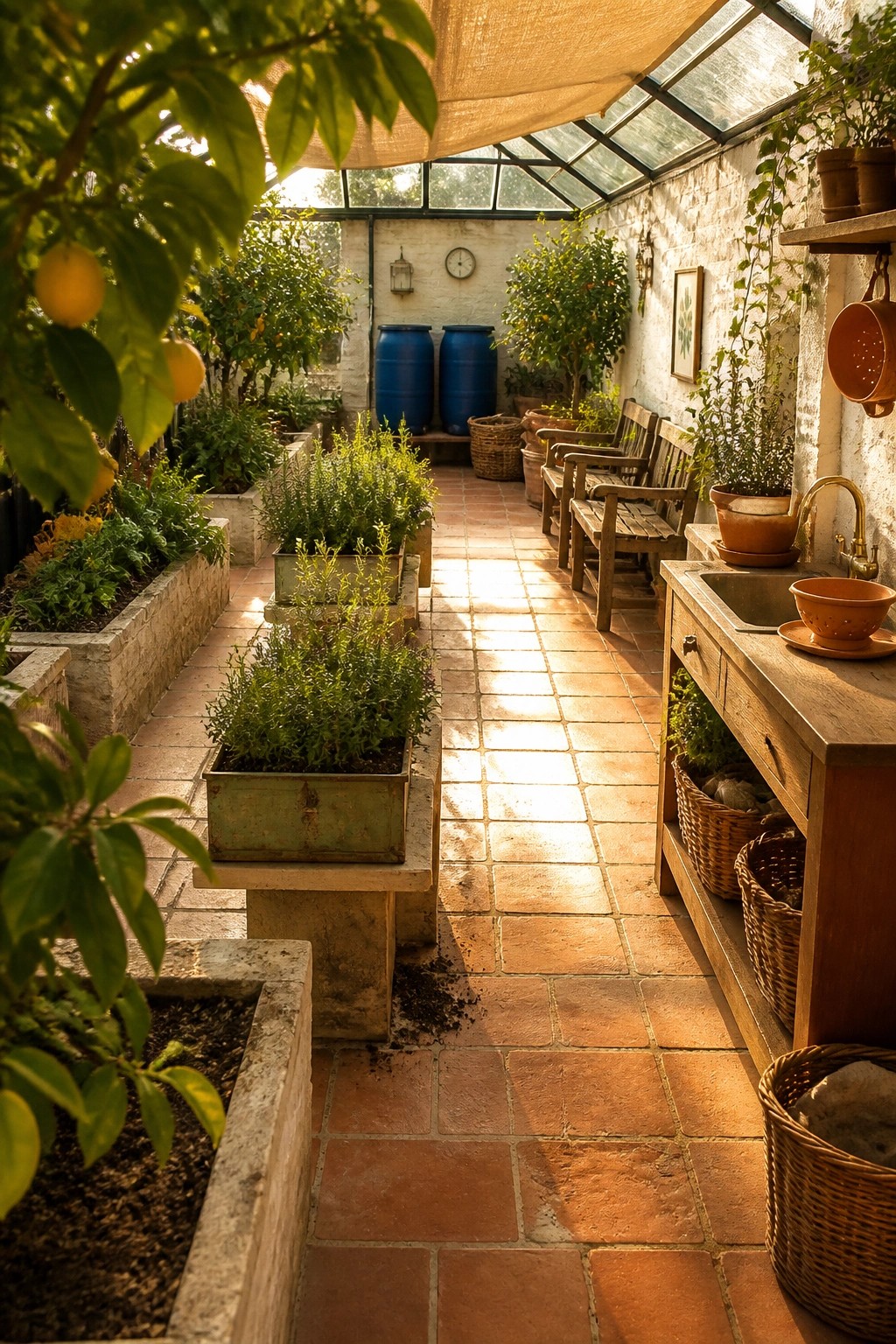
A straight central path makes daily tasks easier in a greenhouse. You can move supplies and wheelbarrows through without crowding the plants, and it naturally creates separate zones for growing and working.
Keep the path wide enough for comfortable movement and line your beds or benches along the sides. This layout suits both hobby setups and more productive spaces since it keeps everything reachable from one main walkway.
Rolling Carts Improve Greenhouse Workflow
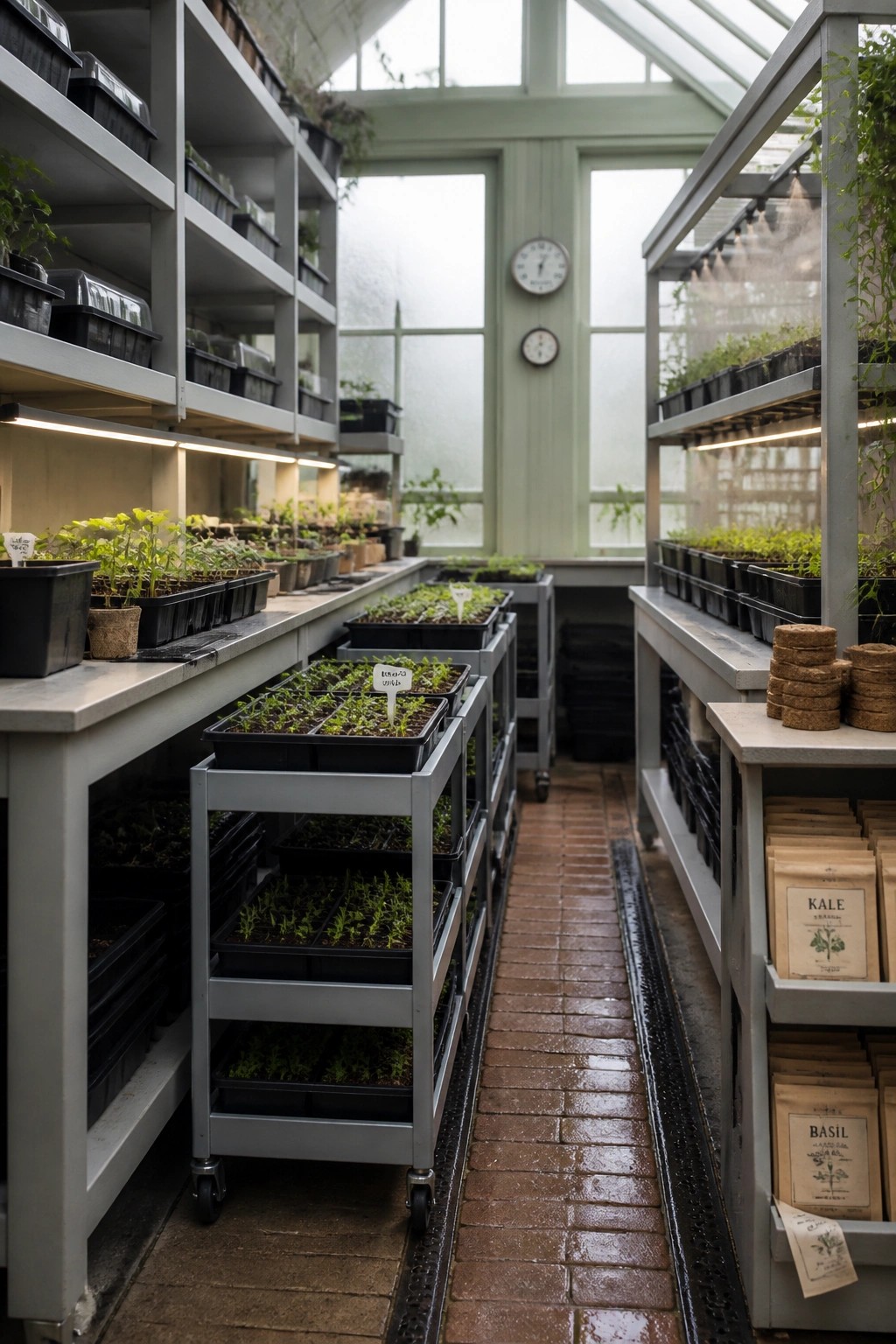
Rolling carts let you move trays of seedlings without rearranging everything else around them. The setup keeps the main path open and makes it easier to shift plants as they grow or need different light levels.
This approach suits smaller greenhouses where fixed benches can crowd the space. Position the carts near the main aisle so you can roll them out for watering or to adjust spacing without blocking access to other zones.
Central Greenhouse Workbench
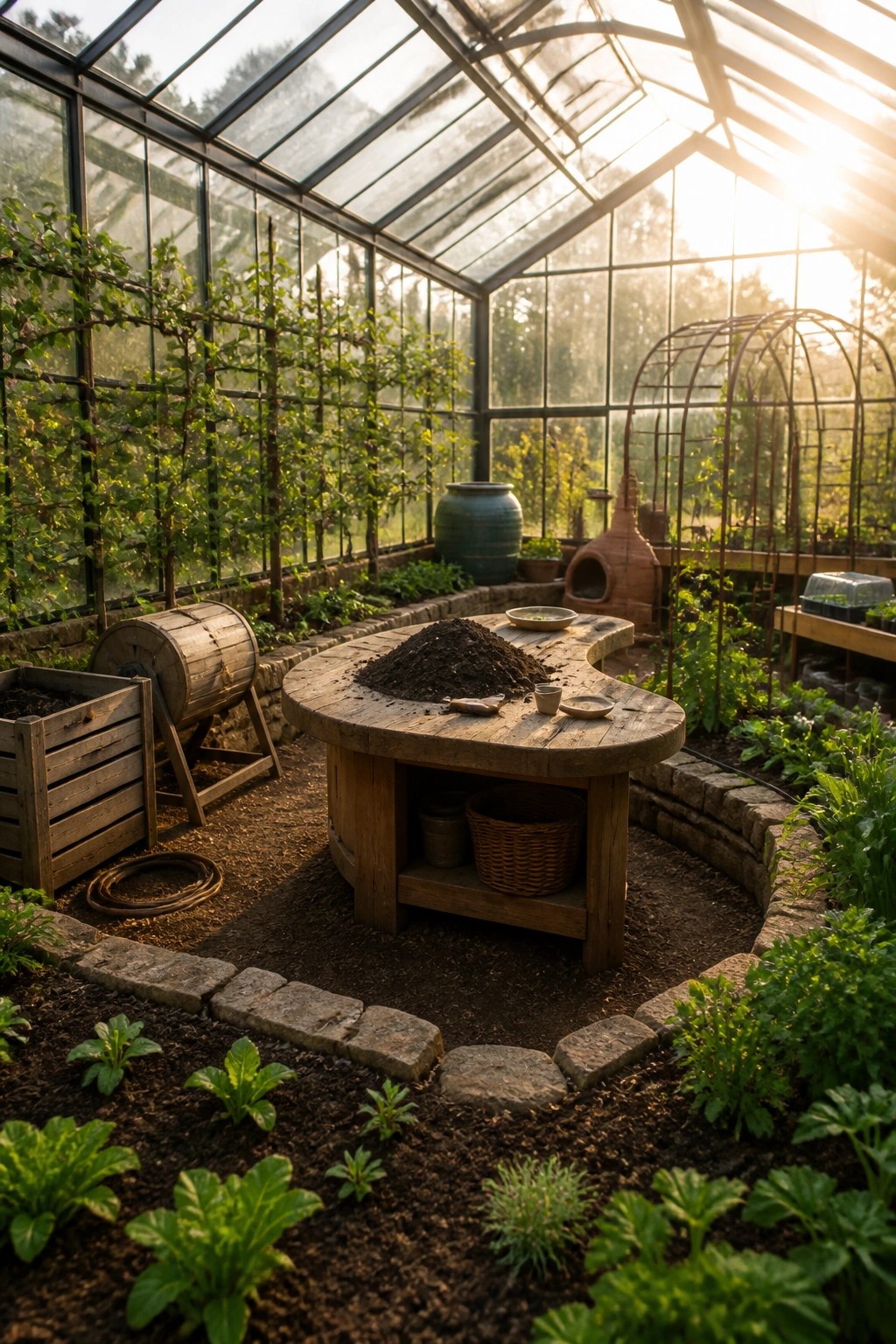
A round wooden work table placed right in the middle gives you one spot to handle potting, mixing soil, and quick tasks without walking around the whole space. It keeps tools and supplies close while the beds stay within easy reach on all sides.
This setup works well in medium to large greenhouses where you want a clear workflow between prep and planting. Tuck baskets or bins underneath the table for soil and small tools so the surface stays clear for daily use.
Central Aisle With Separate Plant Zones

A central aisle running the full length of the greenhouse makes it easier to keep different stages of plant work in their own areas. Seedlings stay on the shelves to one side while larger plants grow in the beds on the other, so you can move through without stepping over trays or reaching across soil.
This layout suits long narrow greenhouses where daily tasks need to stay organized. Keep propagation near the door or water source and put the utility area farther back so tools and pots do not get in the way of the growing beds. Just leave enough width in the path for a cart or wheelbarrow.
Rolling Trays Along A Central Path

A central aisle with rolling trays makes it simple to move plants through different stages without crowding the space. You can shift trays forward or back as seedlings grow, and the open floor keeps the workflow smooth from one end to the other.
This layout works well in narrow or long greenhouses where every inch counts. Keep storage drawers and a work surface on one side so tools and supplies stay within reach while the opposite wall holds vertical racks.
Label Greenhouse Zones For Better Workflow
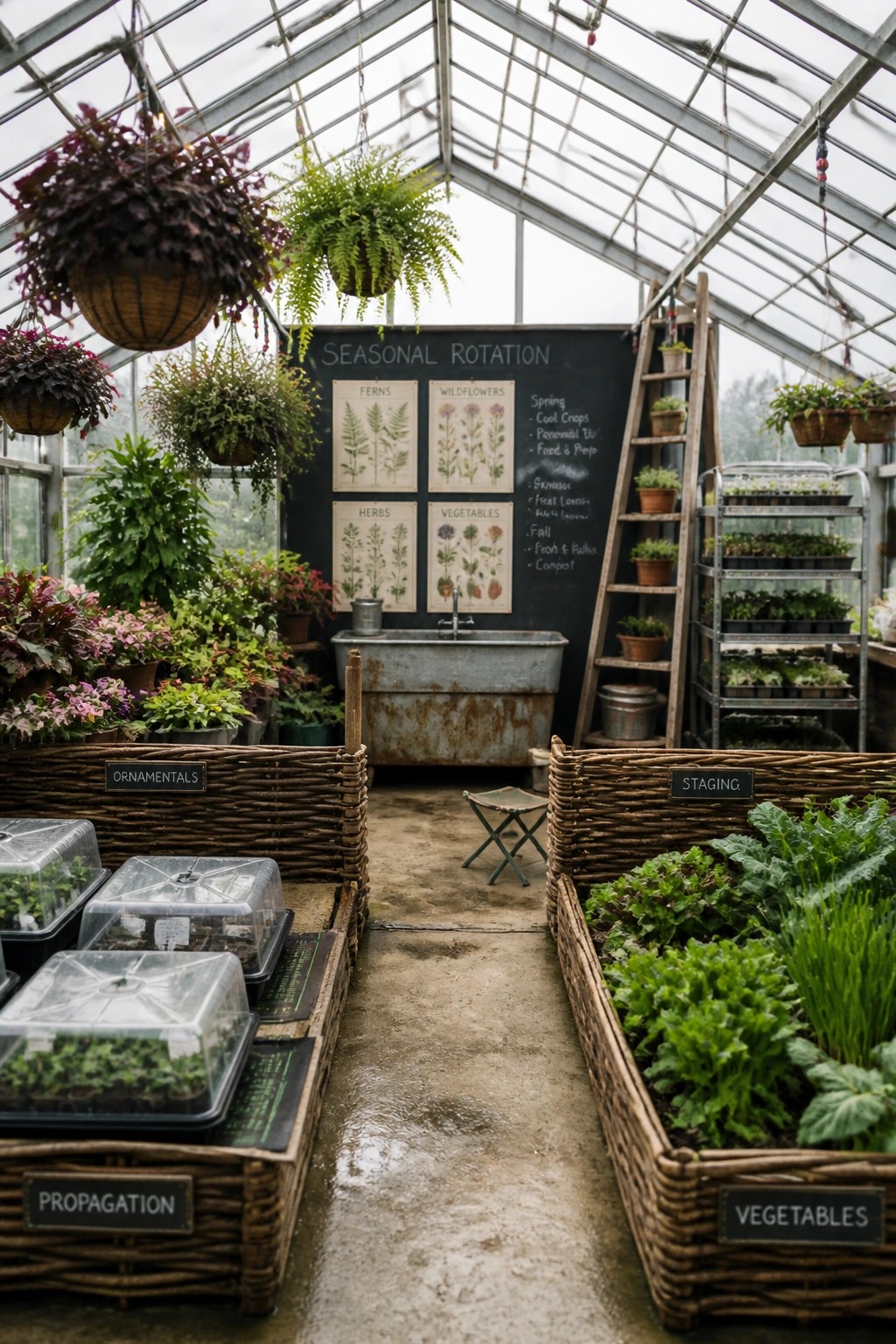
Dividing a greenhouse into clear zones makes daily work much easier. Labeled baskets or bins for propagation, vegetables, ornamentals, and staging keep plants separated by need and stage, so you spend less time hunting for things.
This approach suits both small home greenhouses and larger setups where space gets crowded. You can shift the zones as seasons change or as plants move from seedlings to mature growth, and the labels help anyone else who helps with care.
Central Path That Creates Clear Plant Zones

A straight central path is one of the simplest ways to keep a greenhouse organized. It lets you walk through without stepping on soil or knocking into pots, while the space on either side becomes natural zones for different plants or tasks.
This layout works best in rectangular greenhouses where you need regular access for watering and maintenance. Keep the path wide enough for a cart or wheelbarrow, then use shelves on one side and ground-level beds on the other so everything stays reachable.
Add a Conveyor System for Smoother Workflow

A conveyor belt running through the center of the greenhouse cuts down on the constant lifting and carrying that slows most growers down. Plants move from one station to the next without extra steps, which keeps the daily routine simpler and less tiring.
This layout suits larger spaces where you handle trays in volume. Leave the sides open for storage shelves and potting areas so the flow stays clear and nothing blocks the belt.
A Central Gravel Path For Easy Greenhouse Zones

A gravel path through the middle of a greenhouse keeps the space practical. It creates a clear walking area while letting you set up raised beds on either side, so you can reach plants without compacting the soil or tracking mud everywhere.
This layout works best in home greenhouses that need both growing space and room to move tools and supplies. Keep the beds narrow enough to reach from the path, and use the edges for work surfaces or storage so the whole area stays easy to navigate during daily tasks.
Create a Dedicated Grafting Station
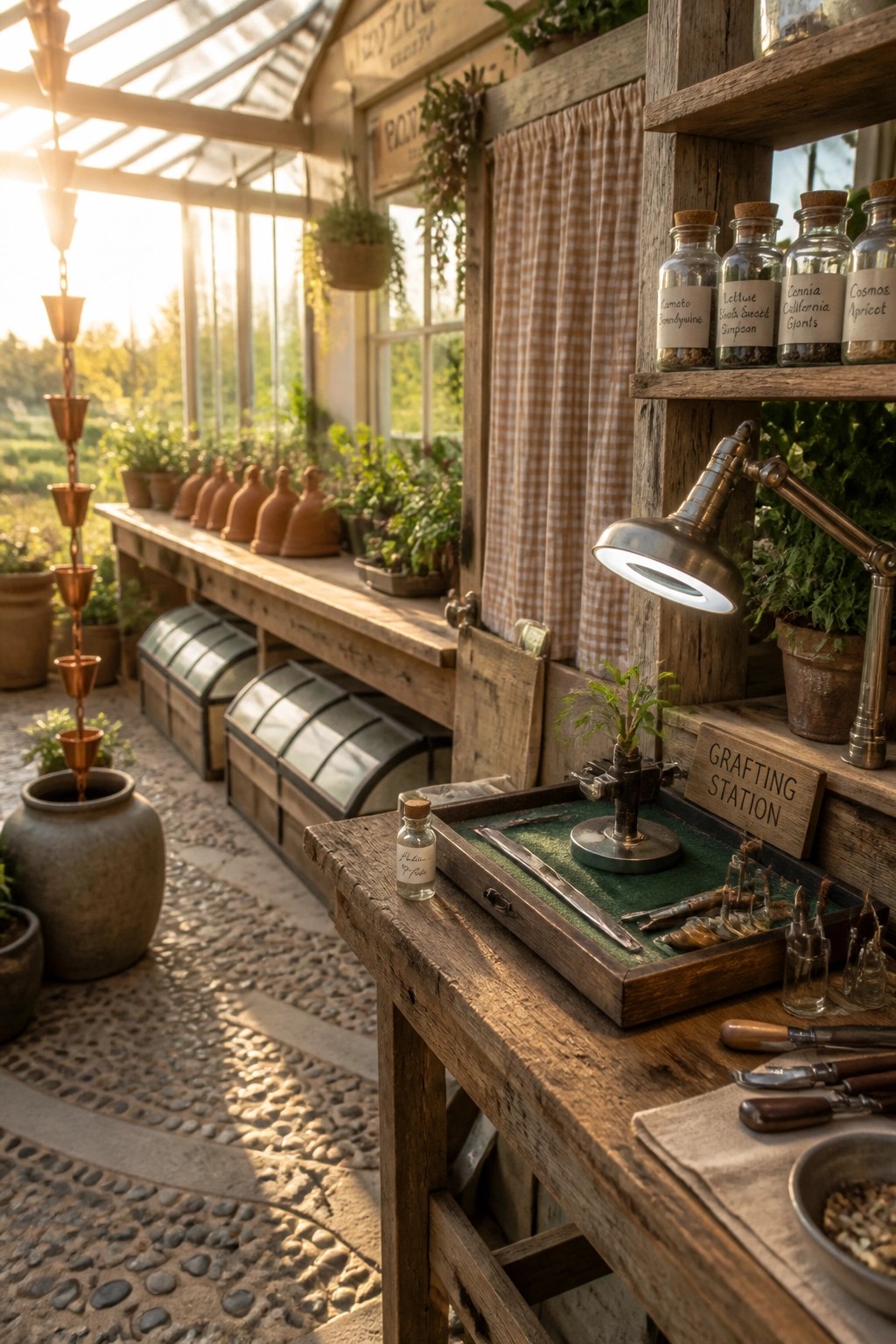
A grafting station gives you a fixed spot for the fiddly work that needs steady hands and the right tools close by. It turns one end of a bench into a clear work zone instead of letting supplies spread across the whole surface.
Keep a bright task light, a simple clamp, and a tray of knives and tape in that one area. This setup suits a medium-sized greenhouse where you grow from seed or do seasonal propagation, and it works best when the station stays separate from general potting so you do not have to clear space every time.
Zoned Benches Along A Central Path

A central aisle with benches on both sides keeps everything reachable without extra walking. Different plant stages stay separated, so seedlings, cuttings, and larger pots each have their own spot and do not get mixed up during daily work.
This layout works in both small hobby greenhouses and larger ones. Place the most used zones closest to the door and keep storage or less frequent tasks farther back. A simple floor drain down the middle also helps with cleanup.
Central Rolling Table for Smoother Harvesting
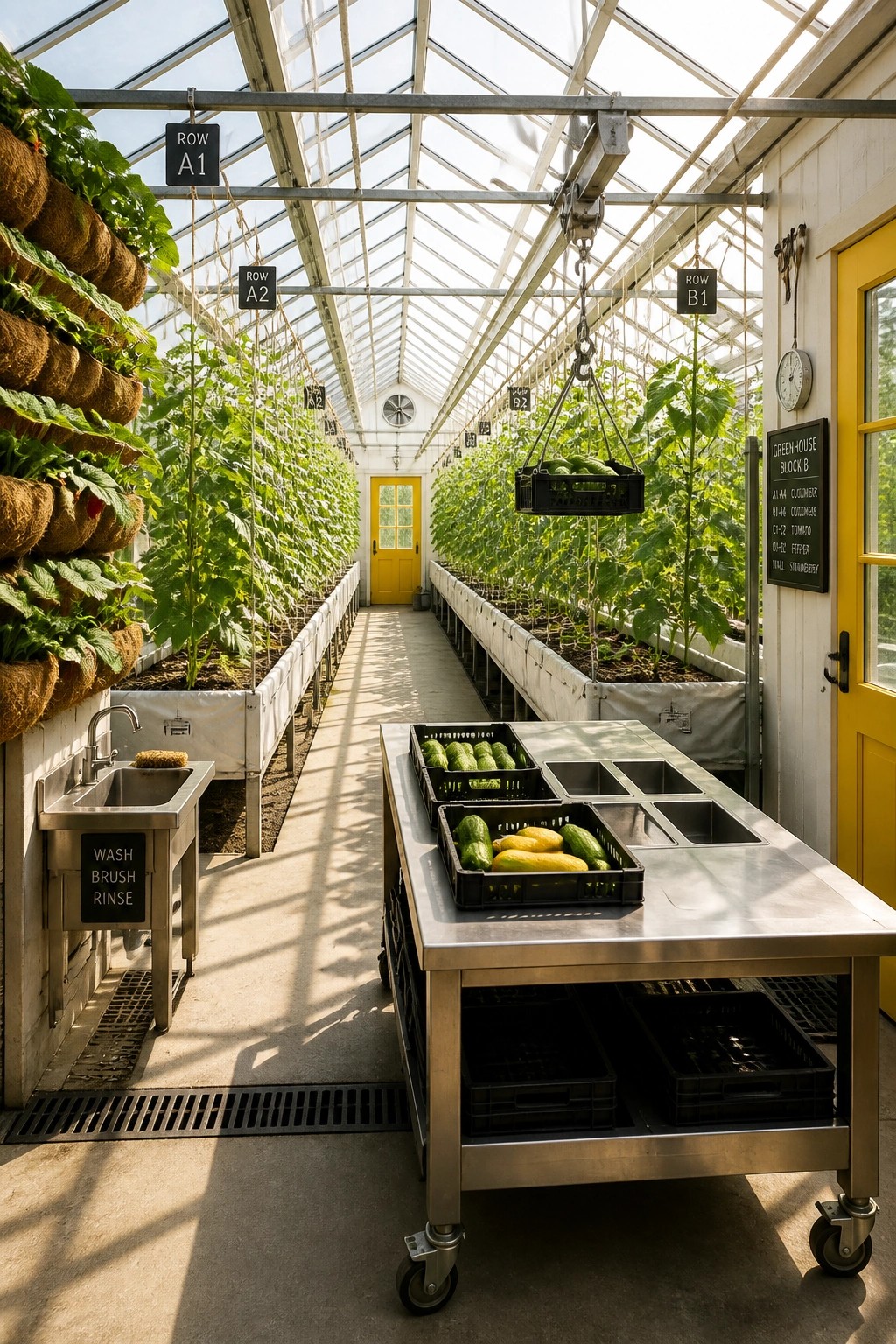
A rolling work table set in the center aisle gives you a steady spot to place crates while you pick. It cuts down on extra trips and keeps the harvested produce from sitting on the ground or blocking the path.
This setup works best in greenhouses with long rows on both sides. Position the table near the wash station so full crates can move straight to cleaning without extra handling.
Set Up Multiple Climate Zones in One Greenhouse
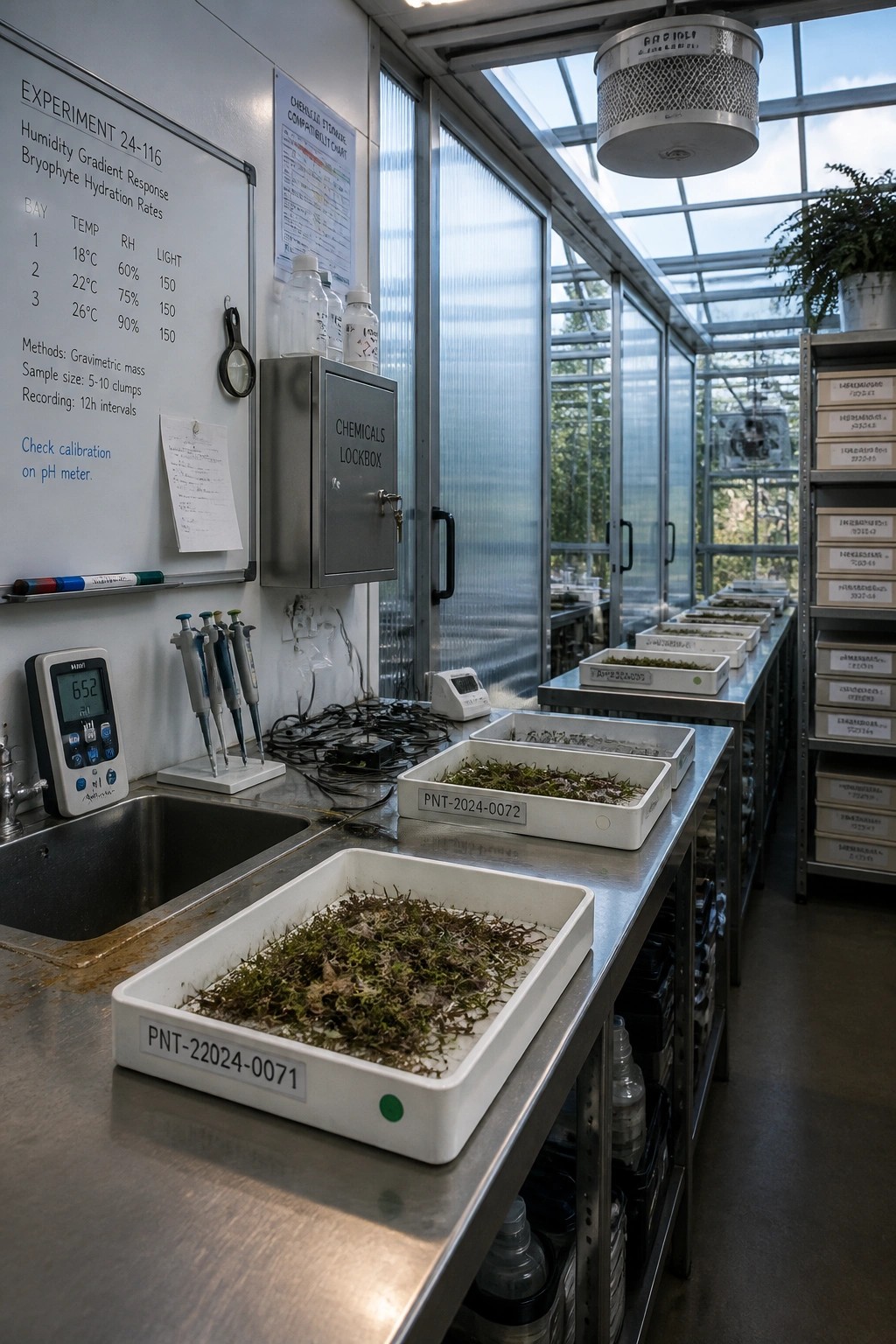
Dividing a greenhouse into separate climate zones makes it easier to run experiments or grow different plants side by side. Each zone can hold its own temperature and humidity settings, so you avoid moving plants around every time conditions change.
A whiteboard near the work tables helps track the settings for each bay. Label trays clearly and keep monitoring tools close by so daily checks stay simple. This works best in medium to large greenhouses where you have space for a few tables and want to test plant responses without extra buildings.
Central Work Table for Greenhouse Workflow

A central work table gives you one main spot to handle potting, sorting, and labeling without crowding the growing areas along the sides. It keeps everything within reach and makes daily tasks feel more organized, especially when you have multiple trays of seedlings at different stages.
This layout suits smaller greenhouses where space is limited. Keep basic tools and labels on the table itself so you can work through batches of plants without stopping to fetch supplies from the edges.
Frequently Asked Questions
Q: How do I stop tripping over tools when moving between plant zones? A: Keep a small rolling cart near your main work area instead of scattering items everywhere. Load it with just what you need for the next zone and roll it along as you go. This cuts down on backtracking and keeps the floor clear.
Q: What if tall plants block light from reaching shorter ones in the same section? A: Place taller plants along the north side of each zone so they do not shade everything else. Check the layout every few weeks and shift pots as growth changes. Simple swaps like this keep light even without major changes.
Q: Can I combine zones if I grow mostly the same types of plants? A: Yes. Merge similar plants into one larger area and focus your paths around that single block. You still gain better workflow since you handle everything in one spot instead of walking between separate areas.
Q: How do I water without soaking the paths between zones? A: Set a watering station at the edge of your main path and fill cans there before stepping into each zone. Carry only what you need for that section and pour carefully at plant bases.
