


I have spent years figuring out why some greenhouses stay workable while others collect mud and debris no matter how often you sweep.
A floor that handles water and soil without turning into a hazard changes how often you actually step inside to tend plants.
It really does change the daily routine.
I tend to check how a surface drains and cleans up before laying anything permanent across the whole space.
Over time those small decisions about paths have shaped whether the greenhouse feels like an extension of the garden or just another chore to manage.
Herringbone Brick With Built-In Drainage
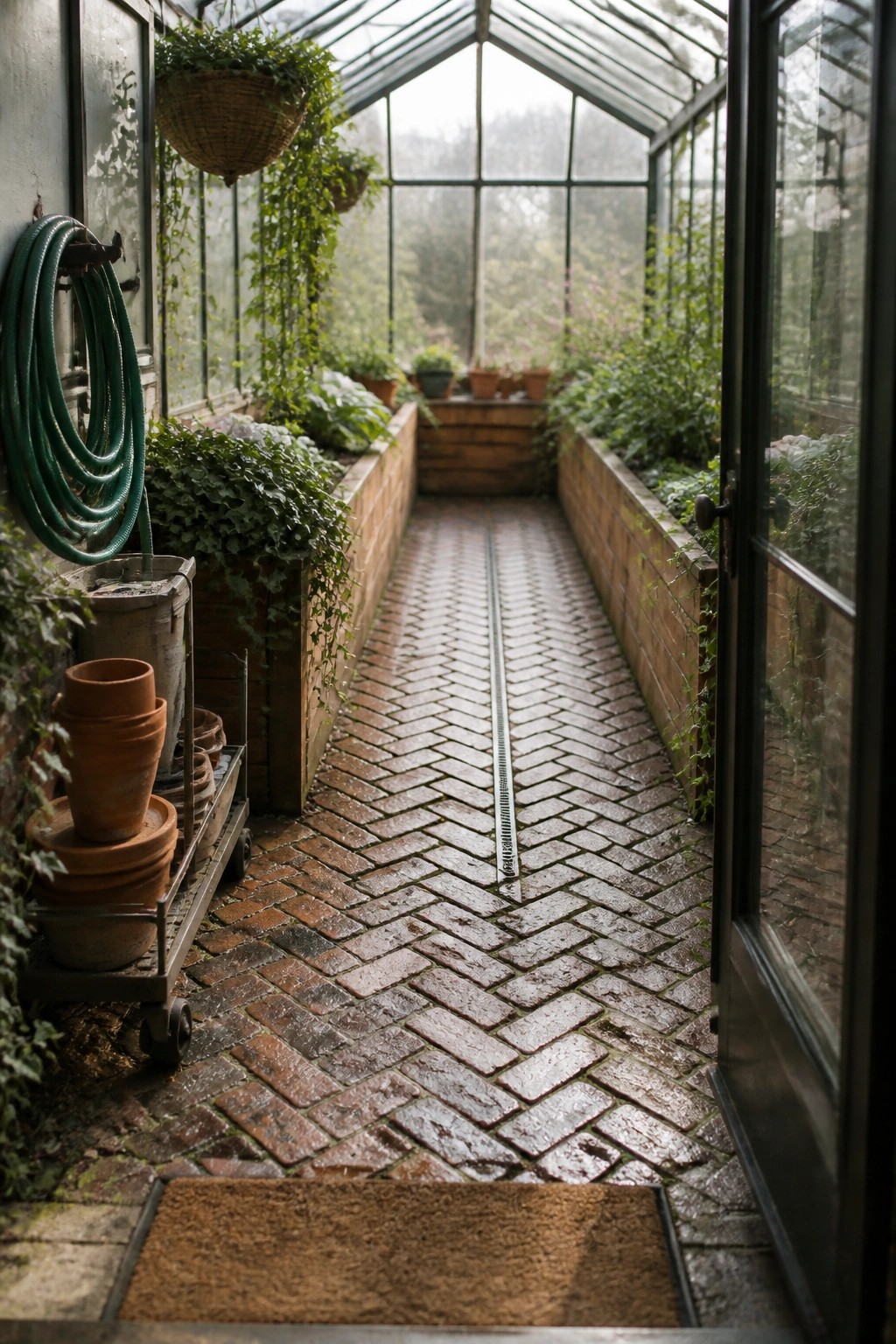
A herringbone brick floor holds up well in a greenhouse because it manages water without turning into a muddy mess. The pattern locks the bricks together so they stay in place even with constant foot traffic and watering, and the central drain keeps excess moisture moving out instead of pooling.
This approach suits any greenhouse where plants get watered regularly and you want a surface that can be swept or hosed down quickly. Lay the bricks on a solid base with a slight slope toward the drain, and choose a non-slip finish if the space stays damp most of the time.
Gravel Joints Between Large Pavers

Large square pavers with gravel filling the spaces between them create a path that stays cleaner and drains well. This setup works especially well in greenhouse areas where water, soil, and foot traffic are constant. The gravel helps prevent mud buildup while the solid pavers give a stable surface to walk on.
This approach suits attached greenhouses or garden rooms next to older homes. It keeps maintenance low because you can sweep debris off the pavers and the gravel handles excess water without pooling. Just make sure the base is solid so the pavers stay level over time.
Stepping Stones Set In Gravel

Many greenhouses use stepping stones set into gravel because the combination gives a stable walking surface without turning into mud. The stones stay put while the gravel handles drainage and keeps the area from feeling too packed down.
This layout suits greenhouses that see daily use since it stays cleaner underfoot and needs little more than occasional raking. It works in both small backyard structures and larger setups where you want a simple path that lasts.
Linear Drains Keep Greenhouse Floors Manageable
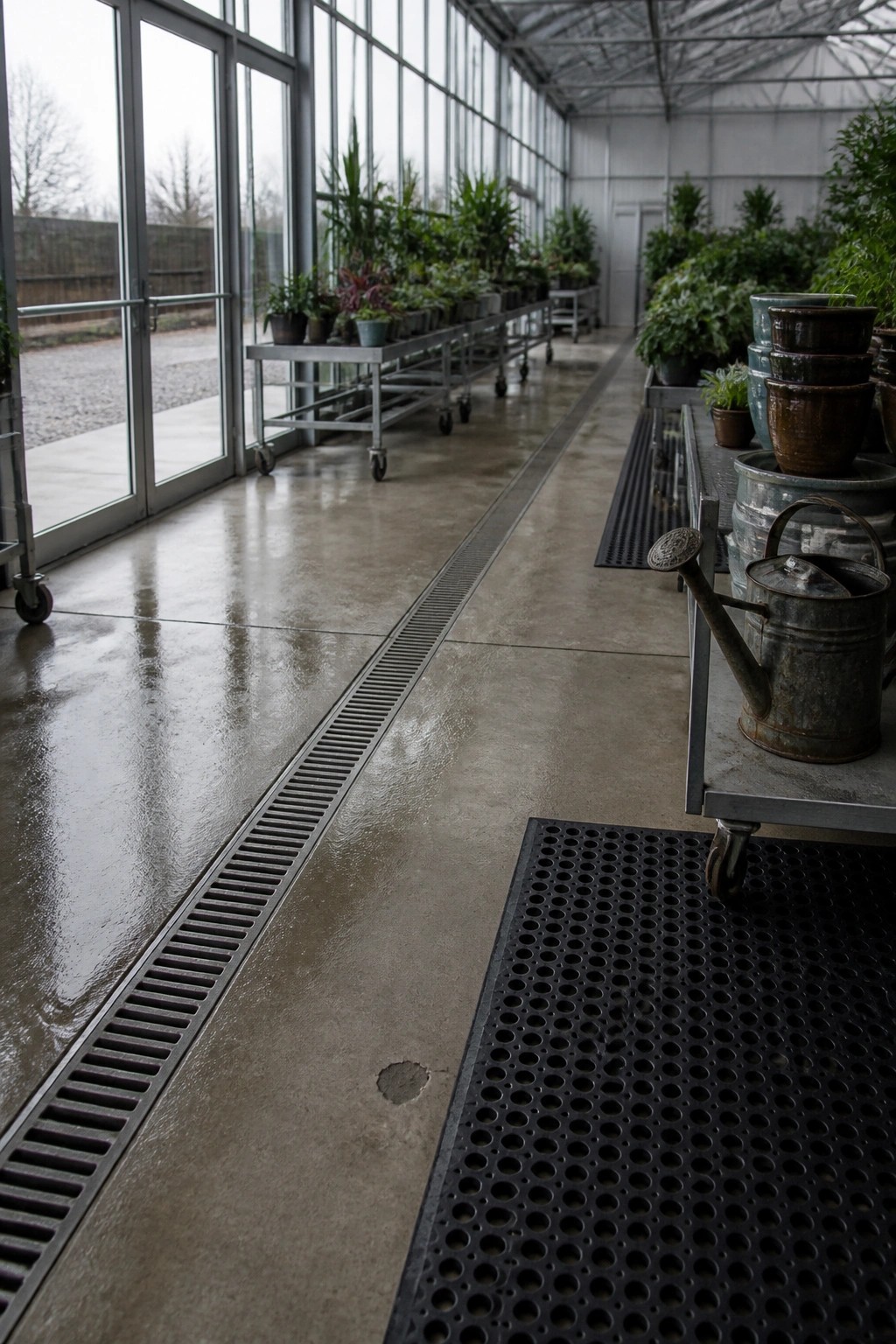
Greenhouse floors take a lot of water, and standing puddles make paths slippery and hard to keep clean. Linear drains set into the concrete let water run straight off instead of collecting across the whole surface.
They suit any greenhouse where you move carts or work on wet days. Run them along the main walkways so the rest of the floor stays drier and safer underfoot.
Stone Pavers For Greenhouse Paths

Stone pavers give a greenhouse floor a solid surface that stands up to daily use. They handle spills, soil, and constant foot traffic without showing wear the way wood or gravel often does.
This works best in greenhouses where you need a clear walkway between raised beds. Make sure the base has good drainage so water does not sit on the stones over time.
Textured Flooring With Built-In Drainage

Many greenhouses end up with wet, slippery paths because regular floors do not handle constant watering and spills. A textured, speckled surface like this one lets water run off easily and gives better grip underfoot, which keeps things safer and simpler to clean.
This kind of floor works best in working greenhouses where you move pots and hoses around often. The narrow drainage channels along the edges help direct water away without needing extra mats or frequent sweeping. It suits any greenhouse that gets heavy daily use rather than one kept mostly for display.
Terracotta Tiles For Greenhouse Paths

Terracotta tiles hold up well in a greenhouse because they stand up to water, soil, and regular foot traffic without showing wear quickly. The material feels natural among the plants and gives the space a settled look instead of something too stark or industrial.
This kind of flooring works best in attached greenhouses or conservatories where you need a solid surface that is simple to sweep or hose down. Keep the grout lines narrow so dirt does not collect, and choose a slightly textured finish if the path gets wet often.
Interlocking Tiles For Greenhouse Floors
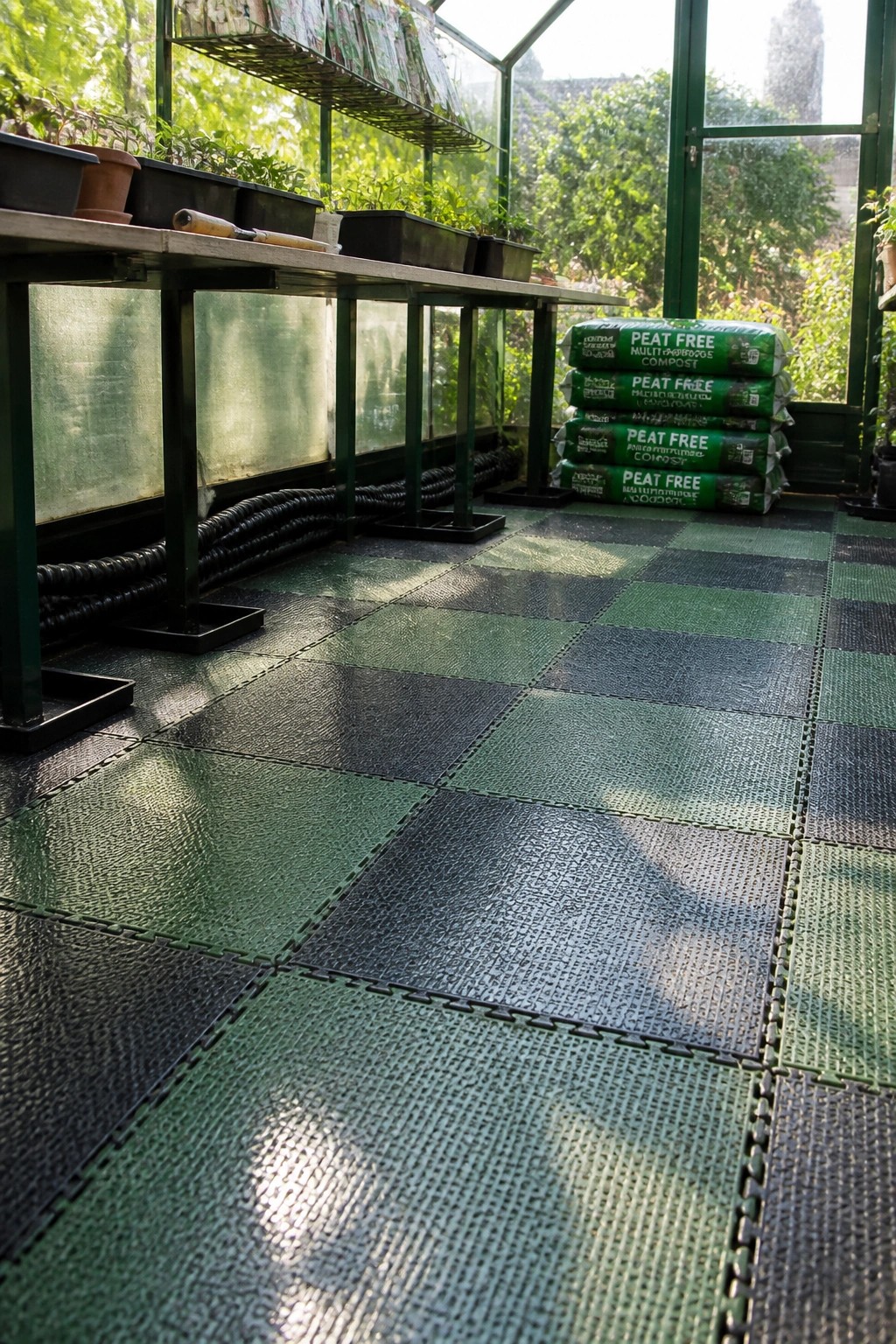
Many greenhouses get messy fast with soil, water, and constant foot traffic. Interlocking tiles give you a surface that drains well and can be hosed off without turning the whole floor to mud.
They work best in working greenhouses where you need something tougher than wood but easier than bare concrete. The tiles lock together over most existing floors and can be lifted later if you want to change the layout.
Slatted Wood Paths for Greenhouse Walkways
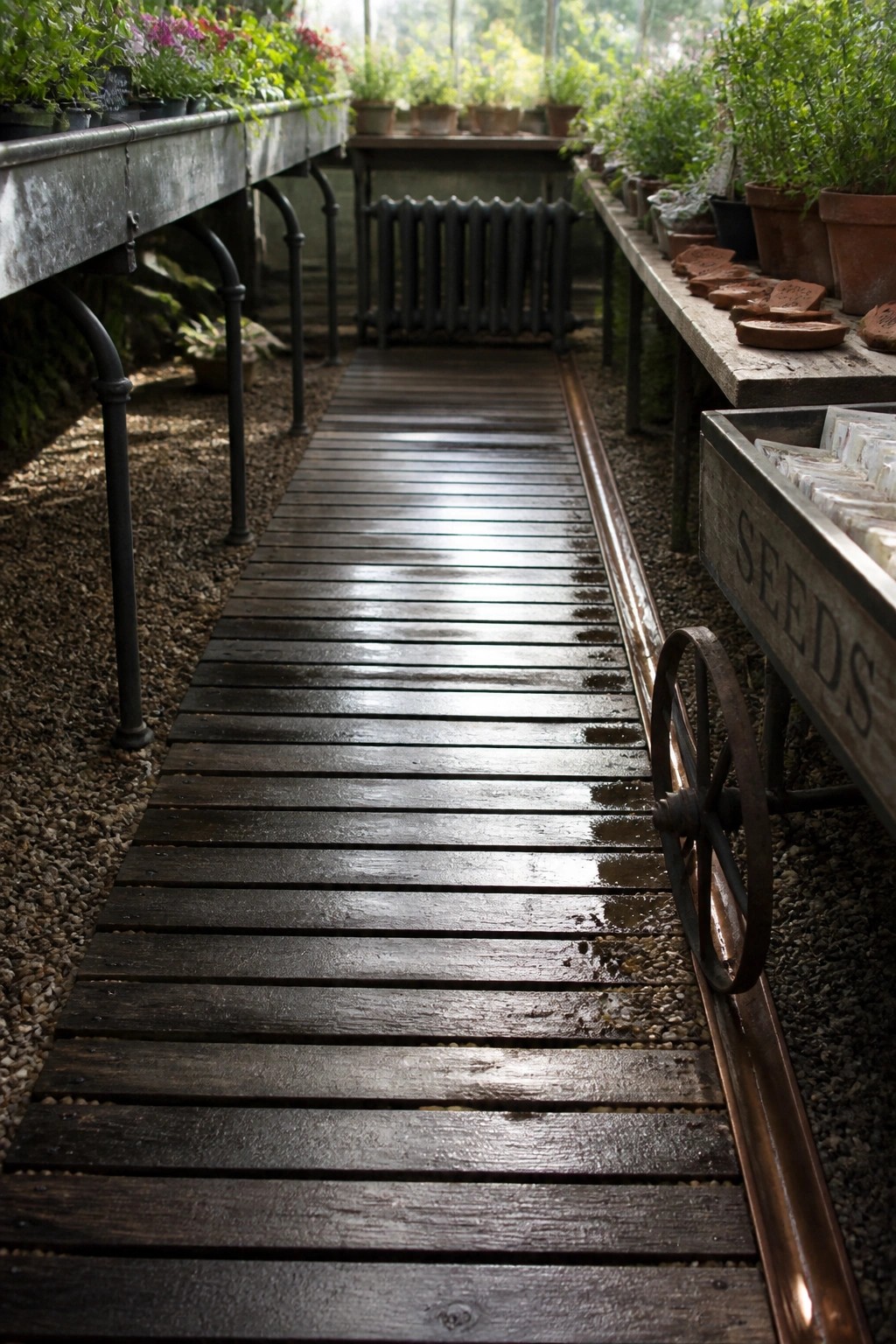
A slatted wood path works well in a greenhouse because water drains straight through instead of pooling on the surface. It keeps the walkway drier underfoot and makes it easier to sweep or hose off dirt and spilled soil without creating mud.
This kind of flooring suits any greenhouse where you walk between benches often. Just make sure the wood is treated for moisture and the slats sit slightly above the ground so air can move underneath.
Large Tiles With A Central Drain

Large tiles cut down on the number of seams where dirt and algae like to hide. In a greenhouse that gets watered daily, fewer lines mean less scrubbing and faster drying.
This approach works best in spaces that double as both growing area and walkway. Slope the floor slightly toward the drain so water moves off the surface instead of sitting in low spots.
Stepping Stones In Gravel
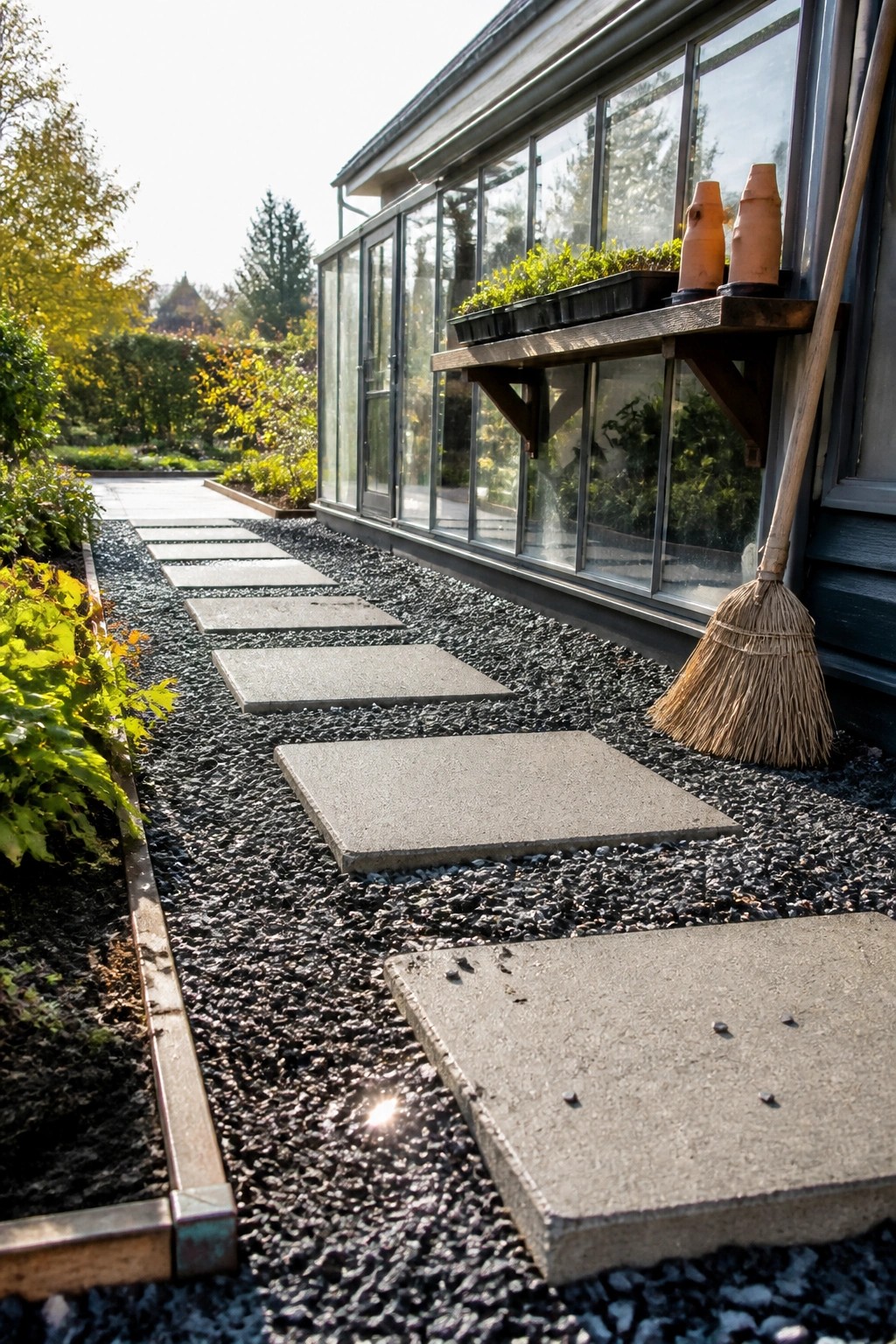
Gravel with concrete stepping stones makes a practical path choice next to a greenhouse. The stones stay level and easy to walk on while the gravel lets water drain and keeps mud from building up.
This setup works well along the side of a greenhouse or in any garden bed where you need steady access. It suits homes that want low upkeep without installing a full hard surface.
Gravel Flooring For Easier Greenhouse Upkeep

Gravel works well underfoot in a greenhouse because it drains quickly and does not hold onto spills or dropped soil the way solid floors often do. It also lets you sweep or rake debris aside without much effort, which keeps the main walking path clearer during busy growing seasons.
This approach suits working greenhouses where trays and pots move in and out often. Lay a solid base first, then add several inches of crushed stone or pea gravel so the surface stays fairly level and does not shift too much underfoot. Avoid very fine gravel if you move wheeled carts through the space regularly.
Metal Floor Tracks For Easier Greenhouse Upkeep

Metal channels set into the floor make a big difference in greenhouse spaces. They guide water along set paths during cleaning and keep debris from spreading across the whole surface.
This approach suits enclosed patios or rooftop greenhouses where potted plants line the edges. The tracks work best with terrazzo or concrete and need only basic leveling during installation.
Stone Borders To Keep Greenhouse Paths Clear

Stone edging along the beds makes a big difference in a greenhouse. It holds the soil in place so the central path stays cleaner and easier to walk on, even after watering or working in the beds. The low walls also give the whole space a more organized feel without adding much work.
This approach works well in any home greenhouse where you want simple maintenance. Just keep the borders low enough to step over and choose a material that matches the rest of your setup. It saves time sweeping or raking the path later on.
Brick Paths For Greenhouse Areas

A straight brick path gives a greenhouse garden a solid walking surface that stays cleaner than gravel or dirt. It handles foot traffic well and can be swept or rinsed off without much effort, which matters when you are moving plants or tools around.
This layout works best in structured gardens where hedges or beds already create clear lines. Keep the path wide enough for a wheelbarrow and use a simple running bond pattern so water drains instead of pooling. It suits homes with formal planting beds or attached greenhouses that see regular use.
Wood Plank Flooring

Wood planks work well in a greenhouse because they create a solid surface that is easier to sweep and keep clean than bare ground or gravel. The natural material also handles moisture better than some expect when it is properly sealed and installed with a slight gap for airflow underneath.
This choice suits smaller home greenhouses where you want a finished look without a lot of extra upkeep. Just check the wood every season for signs of wear and reapply a protective finish if needed. Avoid pressure-treated lumber near edible plants if you are concerned about chemicals leaching into the soil.
Terrazzo Flooring For Greenhouse Walkways

A terrazzo floor stands out in a greenhouse because it handles spills, dirt, and constant foot traffic without showing wear. The speckled surface makes cleaning simple and keeps paths looking neat even after watering plants or working at a sink.
This material works best in indoor growing spaces attached to a home or in conservatories where people move between seating and work areas often. It holds up well under humidity and pairs easily with wood benches or metal fixtures since it needs little upkeep over time.
Slate Tiles For Easier Greenhouse Maintenance

Large slate tiles give greenhouse floors a solid, practical surface that stands up to water and daily use. The dark color hides dirt well, and the smooth finish makes sweeping or rinsing paths quick and simple.
This works best in spaces where you move between raised beds often. Seal the tiles once installed so moisture does not soak in over time.
Tile Flooring With Drainage Grates
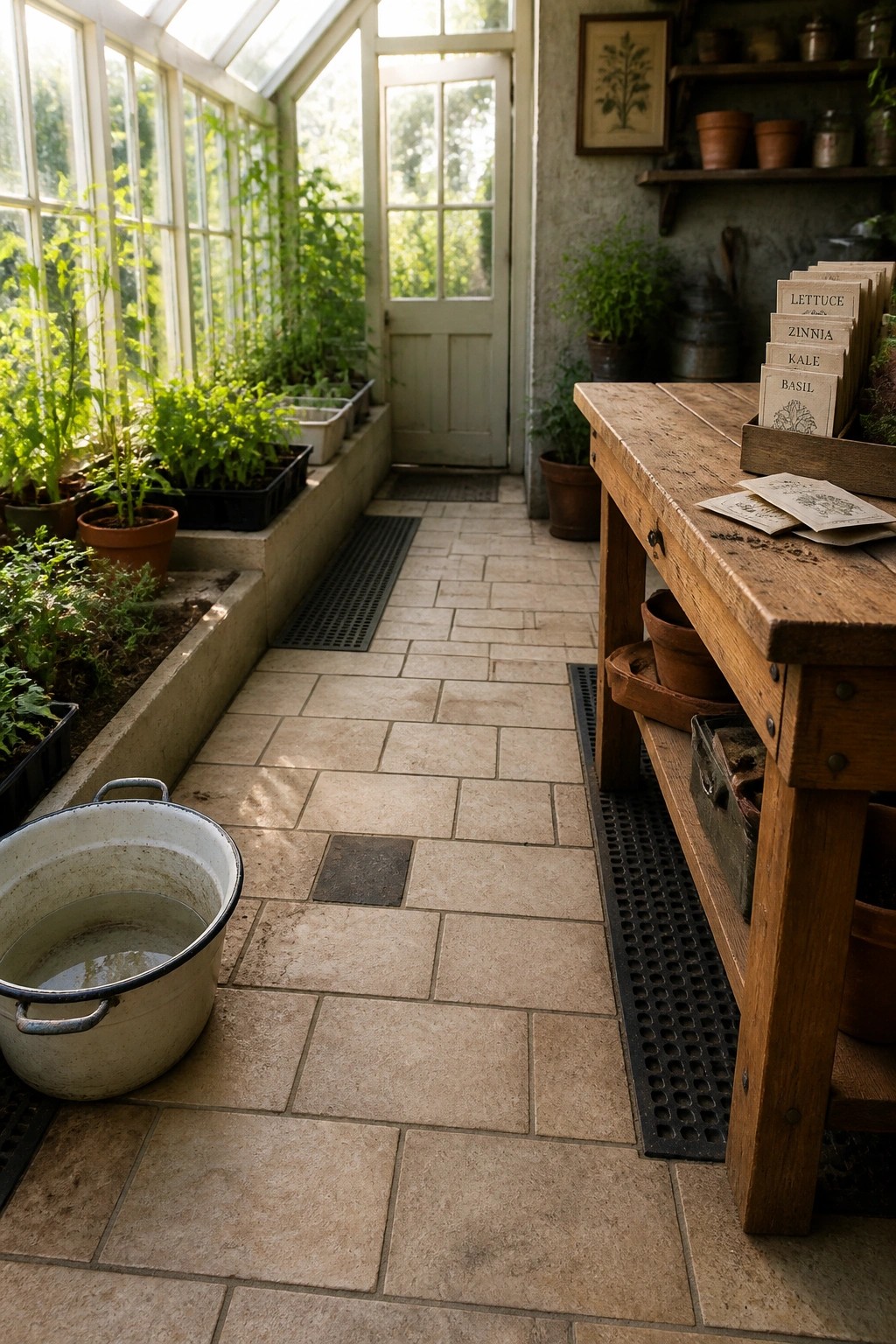
Many greenhouses get heavy use from watering and soil work, so a hard tile floor makes daily cleanup much simpler. The grates built into the path let water run off instead of pooling, which keeps the main walkway from staying wet or slippery.
This kind of floor suits any greenhouse where you move pots or hoses often. It works best when the tiles are slightly textured for grip and the grates sit level so wheelbarrows or carts roll smoothly over them.
Stone Tiles With Pebble Borders

Stone tiles laid in a grid with small pebbles filling the gaps work well in a greenhouse because they let water drain through instead of pooling on the surface. The pebbles also keep the tiles from shifting over time while still giving the floor a finished look.
This setup suits any greenhouse that gets regular watering or stays humid for long periods. It is simple to sweep or hose down, and the border of pebbles helps contain soil that gets tracked in from outside. Just make sure the base underneath is level and compacted so the tiles stay steady.
Brick Pavers for Greenhouse Walkways

Brick pavers give greenhouse paths a solid surface that holds up to daily watering and foot traffic. The material resists mud and stays mostly clean, which makes moving through the space easier when you are carrying trays or tools.
This choice works well in both small backyard greenhouses and larger setups where carts need to roll smoothly. Just make sure the base is level and add a slight slope so water does not pool on the path.
Grass Between Concrete Slabs

Concrete floors hold up well in greenhouses since they handle water and foot traffic without much trouble. Adding narrow strips of grass between the slabs keeps the surface practical while letting a bit of green show through in a controlled way.
This approach works best in long pathways where you want the floor to feel a little softer but still stay easy to sweep or hose down. Keep the gaps fairly tight so the grass stays neat and does not spread into the main walking area.
Frequently Asked Questions
Q: How do I stop gravel from scattering when I wheel a cart through the greenhouse? A: Add a low brick or timber border along both sides of the path. Rake the gravel back into place every couple of weeks and top it up once a year. That keeps the surface level and easy to sweep.
Q: My floor gets splashed constantly from watering. Which option drains fastest? A: Go with perforated rubber tiles or open-joint pavers set over a gravel base. Water passes straight through instead of sitting on top. You can just hose the whole thing off when it starts to look dull.
Q: Weeds keep showing up between my stepping stones. What is the simplest fix? A: Slide strips of landscape fabric under the stones when you lay them. Pull any sprouts that still appear before they set seed. One quick pass every month keeps the gaps clean.
