


I’ve found that backyard greenhouses tend to feel more like real retreats when the layout leaves room for a chair without squeezing past trays of plants all the time.
What stands out first is usually how the structure lines up with existing paths and whether you can reach it without crossing wet grass or garden beds.
Others just look nice from a distance.
A couple of the setups suggest simple additions like low shelving that doubles as a place to rest a coffee cup, which could change how often the space actually gets used.
Trying one of those adjustments on a smaller scale seems like a reasonable way to test what works in the yard you already have.
Add Seating to Make the Greenhouse Usable

Many greenhouses stay strictly for plants, but adding a small sofa or bench turns the space into somewhere you can actually spend time. The setup works because it gives you a spot to rest without leaving the garden, and the surrounding plants make it feel enclosed and calm.
This idea suits a greenhouse that gets steady use or sits near the house. Keep cushions simple and easy to move, and place the seat where it catches light but does not overheat. A rug on the floor helps keep the area from feeling too bare.
Build a Simple Potting Bench

A potting bench gives you a solid place to handle soil, trays, and seedlings without working on the floor. It turns the greenhouse into a space where you can actually sit and work comfortably for longer stretches.
Place a low stool underneath so it stays out of the way when you are moving around. This works especially well in smaller greenhouses where every inch counts and you want quick access to tools and supplies.
Add a Daybed for Everyday Comfort

A daybed turns a greenhouse from a place you visit into one you actually use. It creates a simple spot to sit, read, or rest without taking over the whole space, and it works especially well when the bed is tucked along a wall with plenty of plants nearby.
This setup suits smaller backyard greenhouses best. Choose durable fabrics that handle humidity and keep extra pillows minimal so the area stays practical rather than crowded.
Add a Table for Everyday Use

A small table and chairs turn a greenhouse into a space you can actually spend time in instead of just walking through to water plants. It gives the structure a purpose beyond growing, and it works especially well when the table stays simple and the chairs are comfortable enough for sitting a while.
This setup suits homes where the backyard is small or the weather is unpredictable, since the glass walls keep things protected while still feeling connected to the garden. Just make sure the furniture fits without crowding the plants, and choose pieces that can handle a little humidity.
Heat The Greenhouse With A Wood Stove
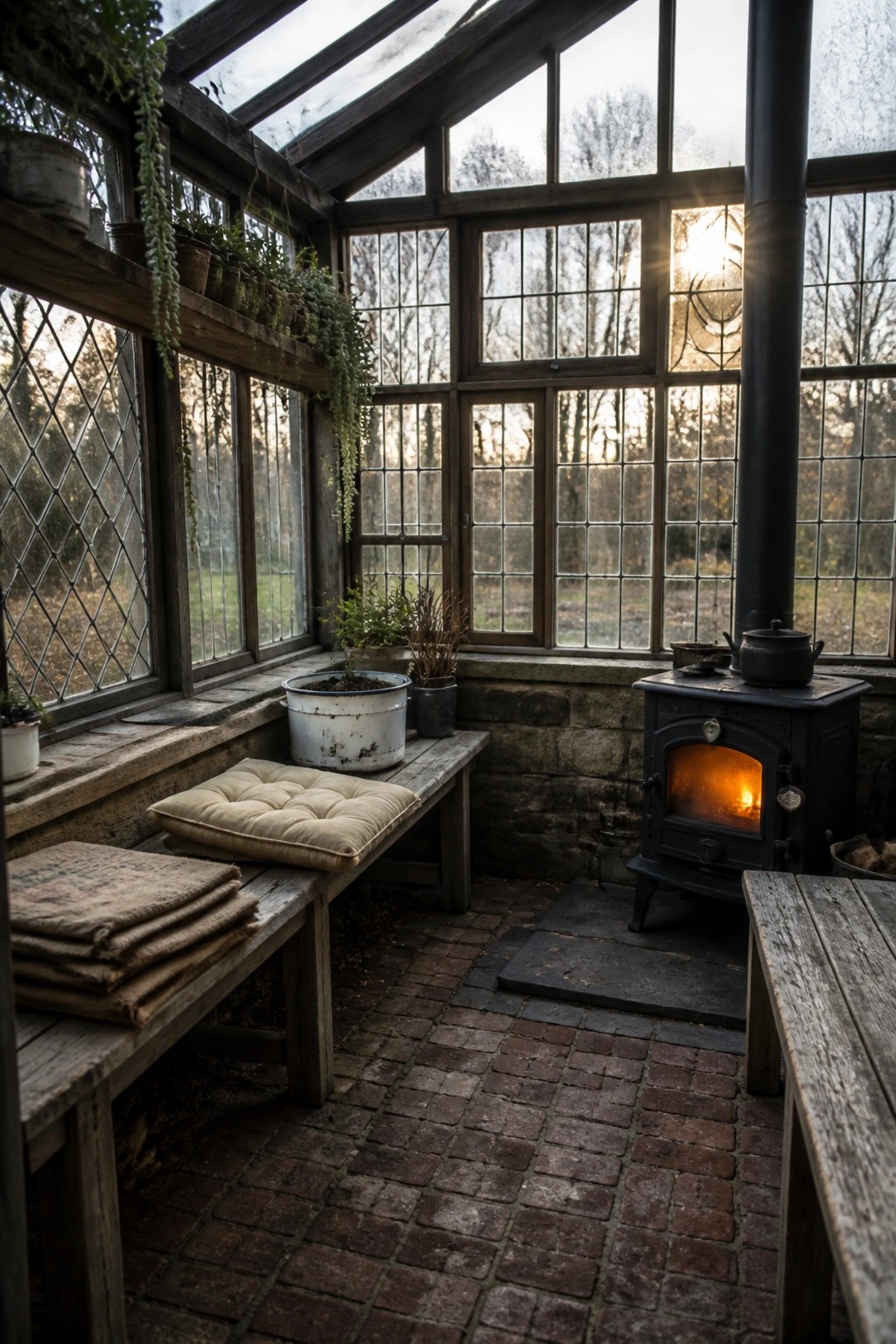
Many greenhouses sit empty once the weather turns cold because the temperature drops too fast for comfort. Adding a wood stove changes that by keeping the space warm enough for people to spend time inside without needing heavy coats or extra layers.
Set the stove on a stone or brick pad and keep a clear area around it for safety. This approach works best in structures that already have decent insulation and where burning wood fits the local rules and your daily routine.
Layer Rugs And Cushions For Easy Seating

Many greenhouses feel more welcoming once you add soft seating directly on the floor. Rugs and large cushions turn an empty space into a place where you can actually sit and spend time without bringing in bulky chairs.
This approach works best in structures that already have good light and some ventilation. Keep the fabrics simple and sturdy so they hold up around plants, and place them near a low table so the area stays practical for reading or having tea.
Add A Table And Chairs For Everyday Use
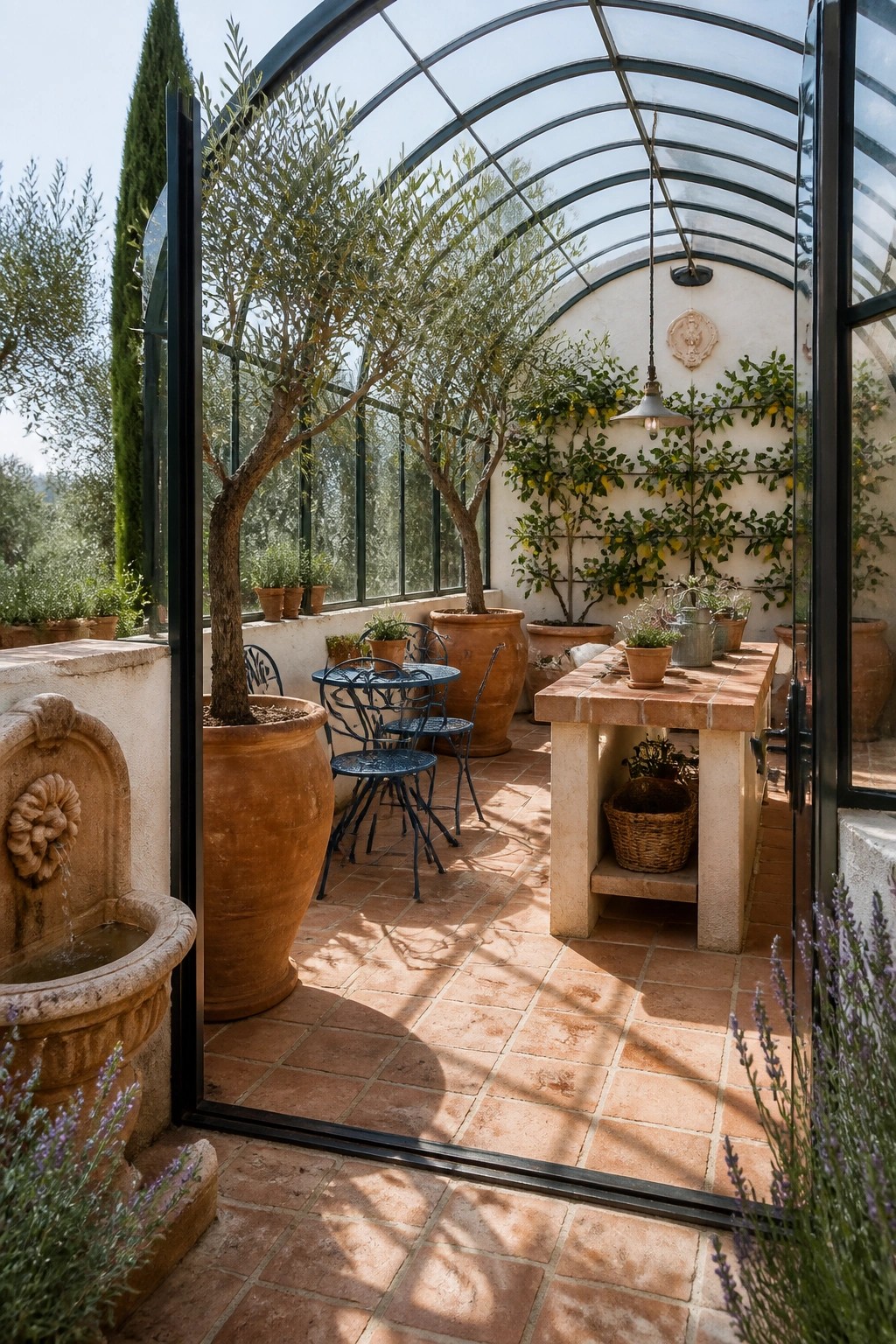
Many greenhouses sit empty most of the time because they are treated only as plant houses. Adding a simple table and a few chairs changes that quickly and gives the space a real purpose beyond growing.
This setup works best in a backyard greenhouse that is easy to reach from the house. Keep the furniture modest so it does not crowd the plants, and choose pieces that can handle some moisture and dirt.
Build A Window Seat In Your Greenhouse

A window seat turns the long stretch of glass into a useful spot for sitting. It gives you a place to rest without taking up floor space that could hold more plants or tools.
This setup works best in backyard greenhouses that get steady sun. Keep the bench low and built in so it feels like part of the structure, and choose cushions that can handle a bit of humidity.
Lay Rugs Across the Floor

Greenhouses often end up with hard floors that stay cool and uninviting. Rugs help soften the surface and make the space feel more like a place to linger rather than just work.
Outdoor rugs hold up fine in this setting and let you create simple paths or sitting spots without much effort. They suit any size greenhouse and can be swapped out easily when they get worn.
Add a Bench for Easy Seating

A bench turns a greenhouse into a place you can actually use instead of just a spot for plants. It gives you somewhere to sit without taking up much space or requiring extra furniture.
A plain wooden bench works well along the back wall and leaves room for shelves above it. This approach suits small yards where you want a quiet corner that still feels connected to the garden.
Open The Greenhouse Right Onto A Deck

Many greenhouses feel more useful when the doors open straight onto a deck. This layout turns the structure into a place you can actually spend time in, rather than just walking through to water plants. The wood deck and simple steps make the transition feel natural and keep everything at the same level.
This works best in smaller yards or spots near the water where you want shelter without losing the view. Keep the deck boards weathered to match the greenhouse frame and add just one or two chairs so the space stays uncluttered.
Add a Chair Inside the Greenhouse
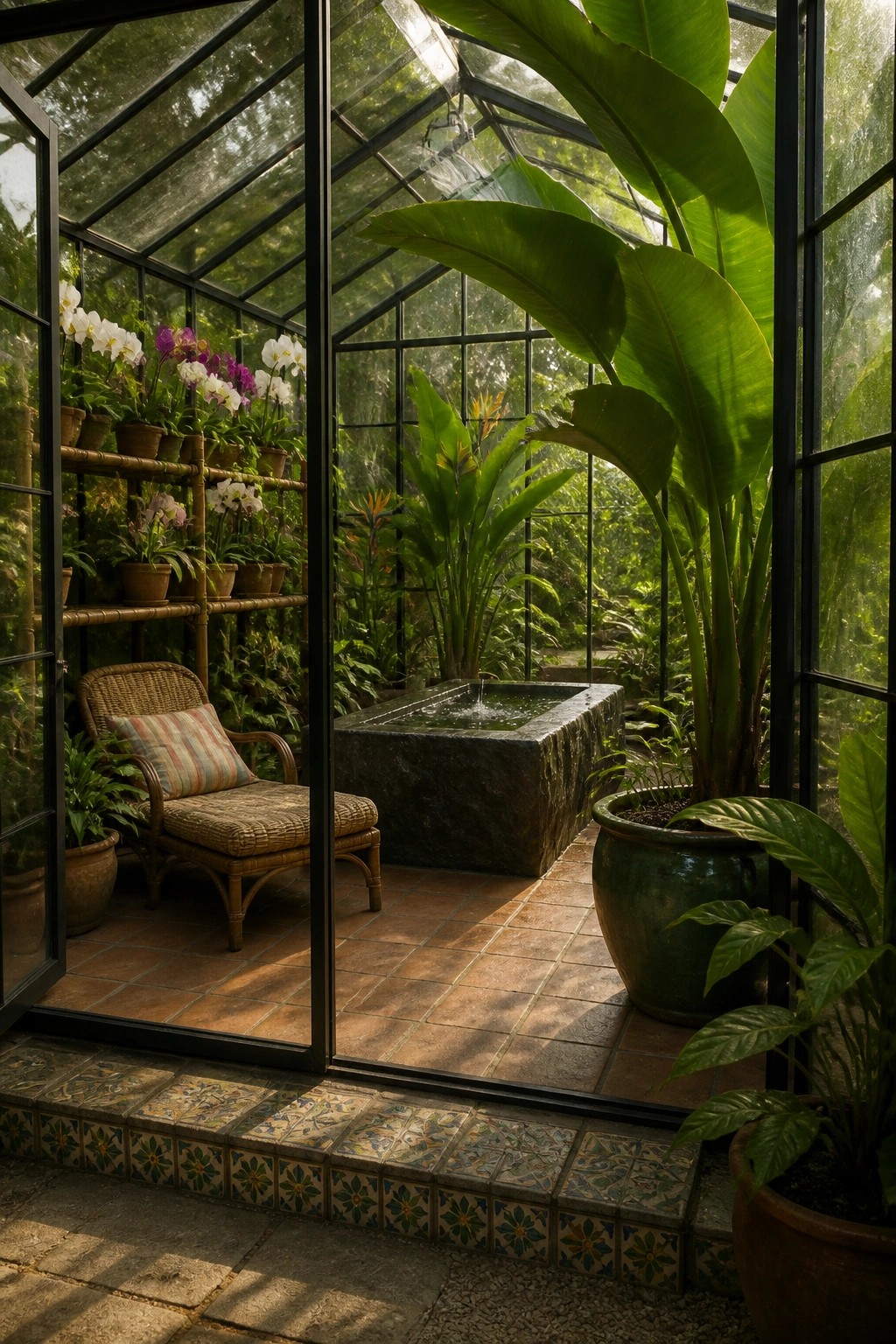
Many greenhouses stay strictly for plants, but slipping in one comfortable chair changes how the space gets used. It turns the structure into a spot where you can actually sit and spend time among the greenery instead of just tending to it.
This works best in a smaller backyard greenhouse where you want a quiet place to read or rest. Pick a chair that handles moisture well and keep the rest of the floor clear so the room still feels open for the plants.
Crate Storage Under The Workbench

Wooden crates make a simple and practical storage choice under a greenhouse workbench. They slide out easily, hold plenty of supplies, and keep everything within reach without taking up extra floor space.
This approach works best in smaller greenhouses where custom cabinets feel like too much. Label each crate for its contents and stack or arrange them to fit the bench height. It suits gardeners who want something sturdy and easy to change later.
Using Sliding Glass Doors to Extend an Indoor Lounge into the Garden

Large glass doors can turn a simple indoor seating spot into something that feels much more connected to the outdoors. In this setup the doors sit right beside the lounge area, so the pool and surrounding plants become part of the same space rather than a separate view. The result is a room that works as a quiet garden retreat without needing a full greenhouse structure.
This approach works best in homes where the main living areas already sit close to a pool or planted yard. Keep the doors clean and simple so the line between inside and out stays easy to cross. Just be sure the indoor plants can handle the extra light and any temperature swings that come with the open connection.
Add a Chair So the Greenhouse Gets Used

A greenhouse works better as a retreat when you can actually sit in it. Placing a comfortable chair near the doors lets you enjoy the plants and light without needing to stand or crouch among the pots.
This setup suits small backyard greenhouses best. Keep the chair simple, add a throw for cooler mornings, and open the doors on mild days so the space feels connected to the garden outside. Just check that cushions can handle occasional damp air.
Frequently Asked Questions
Q: How do I add a seating area without crowding out the plants?
A: Place a compact chair near the door where light still reaches the shelves. Keep the path clear so you can move around easily. This setup lets you relax while staying close to your greenery.
Q: What is the easiest way to control humidity inside?
A: Open the vents on warmer days to let fresh air flow through. Mist the plants lightly if things feel dry. A small fan helps circulate air without much effort.
Q: Can I use recycled materials for the frame?
A: Old windows work well for the walls if they fit your size needs. They bring character and save money.
