


I have watched a few pallet projects in my own yard fall apart after one hard winter because the joints were never braced properly against wind.
Reclaimed wood brings its own character to a greenhouse but it also means checking every board for rot before you start cutting and fitting pieces together.
I usually test a new structure by walking through the space with a wheelbarrow to see if there is actually room to work without bumping into shelves or plants.
When the frame sits level and the door swings open without catching it suddenly feels like a spot you might visit every morning instead of just another forgotten corner of the yard.
Start small.
Reclaimed Pallet Wood For Greenhouse Walls

Reclaimed pallet wood works well for greenhouse walls because it is sturdy, easy to find, and gives the structure a simple rustic look. The wood can be used for both the main siding and the sliding door, which helps the greenhouse blend into a garden setting without looking too new or polished.
This approach suits backyard spaces where you want something practical that still feels homemade. Check the wood for any leftover nails or chemicals before use, and add a coat of sealant if the greenhouse will face a lot of rain.
Make Greenhouse Doors From Reclaimed Pallets

Reclaimed pallets give you a ready made frame that is strong enough for greenhouse doors. The gaps between the boards also let in a bit of air when the doors stay slightly open during the day.
Hang them with heavy hinges on a simple post and add a basic latch. This works best on smaller backyard greenhouses where you want wide access without buying new lumber. Keep the wood sealed if you live in a wet climate.
Greenhouses Made From Reclaimed Pallets

Many gardeners turn to old shipping pallets when they want a greenhouse without spending much. The wood is easy to find, and the rough boards give the whole thing a simple, lived-in look that blends into the yard.
This style works best in smaller gardens or as a first build for someone new to growing from seed. Use the pallets for the frame and sides, then add clear panels on top so the heat stays in during cooler months. Just check that the wood has not been treated with anything harmful before you start.
Reclaimed Pallet Shelving For Greenhouse Plants

Many gardeners turn to old pallets when they need extra shelves inside a greenhouse. The wood is already cut to useful sizes and the gaps between slats let air move around the plants. It is a simple way to get sturdy storage without buying new lumber.
This approach works well in a narrow greenhouse where you want to keep a clear path down the middle. Place the shelves along one side and use a low cart or wheelbarrow for extra supplies. Just check that the pallets have not been treated with chemicals before you bring them inside.
Attach Pallet Pockets To The Greenhouse Wall

Vertical pallet pockets give you extra growing room without taking up floor space inside or around the greenhouse. The pockets hang right on the wall, so you can grow lettuce, herbs, or flowers at eye level while the rest of the structure stays simple and open.
This setup works best on small lots or narrow side yards where ground beds are limited. Secure the pockets well to the reclaimed boards and check that the wood can handle a bit of extra weight once the soil and plants are in place.
Reclaimed Pallet Siding For Greenhouses

Reclaimed pallets work well as lower siding on a greenhouse because they add texture and help the structure blend into the garden. The wood brings a simple, lived-in look that fits right in with surrounding plants and paths without feeling too finished.
This approach suits smaller backyard greenhouses best. Start with clean, dry pallets and attach them to the lower frame where you need extra protection or just want that rustic touch. Keep an eye on drainage so the wood does not sit in constant moisture.
Pallet Walls Add Rustic Structure To Greenhouses

Reclaimed pallets work well as vertical elements inside a greenhouse because they bring height and division without blocking too much light. In this setup the pallets form a simple screen that separates the seating area from the planting beds while still letting air move through the space.
They suit smaller greenhouses where you need to mark off zones for different plants or a place to sit. Just stand the pallets upright and secure them to posts or existing frames. Watch that the wood stays dry enough to avoid rot over time.
Build a Work Table With Pallets

Stacking pallets to make a work table is one of the easiest ways to add function to a pallet greenhouse. It gives you a solid raised surface for potting and sorting seeds without needing extra lumber or fancy hardware. The gaps between the slats also help with airflow and keep moisture from collecting underneath.
This setup works well in modest sized greenhouses where you want everything within reach. Place the table down the center so you can walk around it, and keep jars or small pots on top for daily use. Just check that the pallets are clean and dry before bringing them inside.
Greenhouses Made From Reclaimed Pallets

Building a greenhouse with old pallets gives the structure a simple, weathered look that blends into the garden instead of standing out. The wood already has that aged texture, so the whole thing feels like it belongs among the plants and beds rather than like a new addition.
This works especially well in smaller yards where you want the greenhouse to double as a garden feature. Just check that the pallets are clean and the wood is sealed against moisture before you start building.
Enclose A Garden Space With Pallet Walls

Reclaimed pallets make a simple way to build walls around a small garden area. They create boundaries that feel natural and let vines climb without much extra work.
This setup works best in a corner of the yard or along a fence line where you want to group pots and create a sheltered spot. Secure the pallets well and check that any old markings or treatments are safe for plants before you start.
Reclaimed Pallet Greenhouse With Storage Bench

A greenhouse built from reclaimed pallets gives you a solid growing space without spending much. The wood holds up well once sealed, and the simple frame lets you add shelves or a counter right where you need them for jars and tools.
This setup works best in a backyard garden with raised beds nearby. Keep the bench low so you can sit while you work, and leave room along the sides for ventilation. Watch how the wood weathers over a season or two before adding any finish.
Pallet Benches Inside The Greenhouse
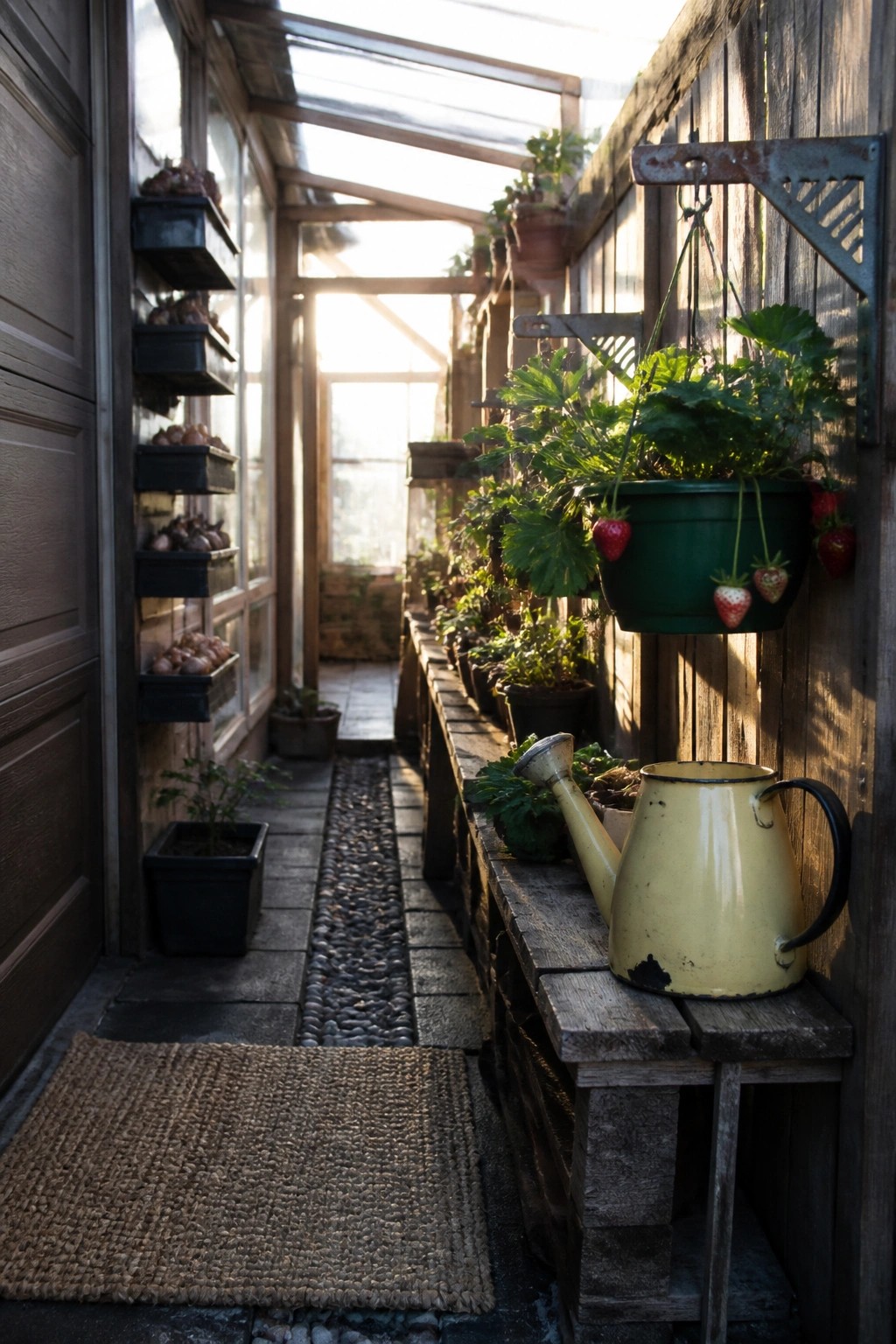
Reclaimed pallet wood works well for greenhouse benches because it is sturdy, easy to find, and already weathered in a way that fits the setting. The low bench along one wall gives a solid place to set pots and tools without taking up much room.
You can build a similar bench by stacking a few pallets and securing them together. It suits small or narrow greenhouses best, and it keeps everything within easy reach while you work.
Reclaimed Pallet Shutters For Greenhouse Control

Reclaimed pallet wood works well for greenhouse shutters because it is sturdy and already weathered. The sliding panels let you adjust light and airflow without adding modern hardware that would clash with the rustic look. Many people like this approach since it reuses material that might otherwise go to waste.
This idea suits a small backyard greenhouse where you want simple ventilation. Build the frames to match your window openings and mount them on basic tracks so they slide easily. Keep the wood untreated if you prefer the gray tone, but check that the pallets are safe for outdoor use.
Reclaimed Wood Shelves For Greenhouse Storage

Reclaimed wood works well for shelves in a greenhouse because it adds useful surface space without crowding the floor. The rough texture also blends in with the plants and gives the whole area a settled look that feels practical rather than polished.
This approach suits small greenhouses or attached garden rooms where wall space is available. Mount the shelves at different heights so you can reach pots easily, and check that the wood can handle some dampness over time.
Reclaimed Wood For Greenhouse Frames
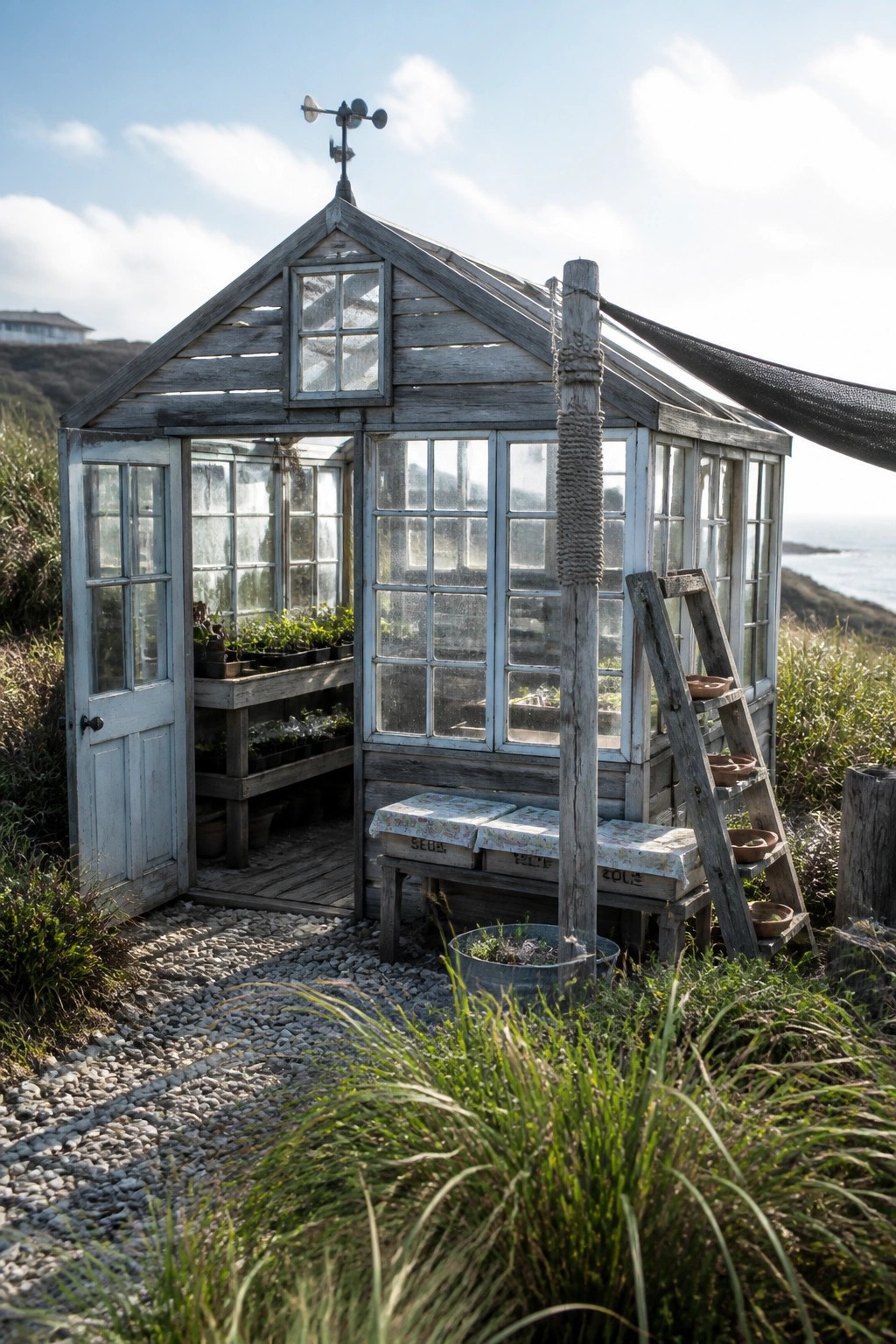
Reclaimed wood gives a greenhouse that settled, lived-in look right from the start. It weathers naturally and blends with the surrounding garden instead of standing out as something brand new. The rough texture and faded color help the structure feel like it belongs in the landscape.
Use old pallets or barn boards for the main frame and trim, then add simple details like a leaning ladder or a thick post for support. This approach works well in coastal or rural gardens where you want the greenhouse to look practical rather than polished. Just make sure the wood is treated for outdoor use so it lasts.
Reclaimed Wood Siding For Greenhouses

Reclaimed wood works well on greenhouse walls because it adds texture and age without making the structure feel too new or out of place in a garden. The wood tones help the building sit comfortably among plants and soil instead of standing out as a stark addition.
This approach suits small backyard setups where you want the greenhouse to feel like part of the landscape rather than a separate building. Source pallet boards or old fencing for the siding, and keep the glass sections large so light still reaches the plants inside.
Reclaimed Wood Benches For Greenhouse Work

Reclaimed wood works well for greenhouse benches because it handles moisture better than new lumber once it has aged, and it gives the space a settled, practical feel. A long bench like this one lets you spread out trays and pots without needing extra tables.
Build the bench low enough to work comfortably while standing, and leave open space underneath for bins and extra pots. This setup suits small backyard greenhouses or attached potting areas where you want simple surfaces that can take daily use.
Reclaimed Wood Shelves For Greenhouse Storage
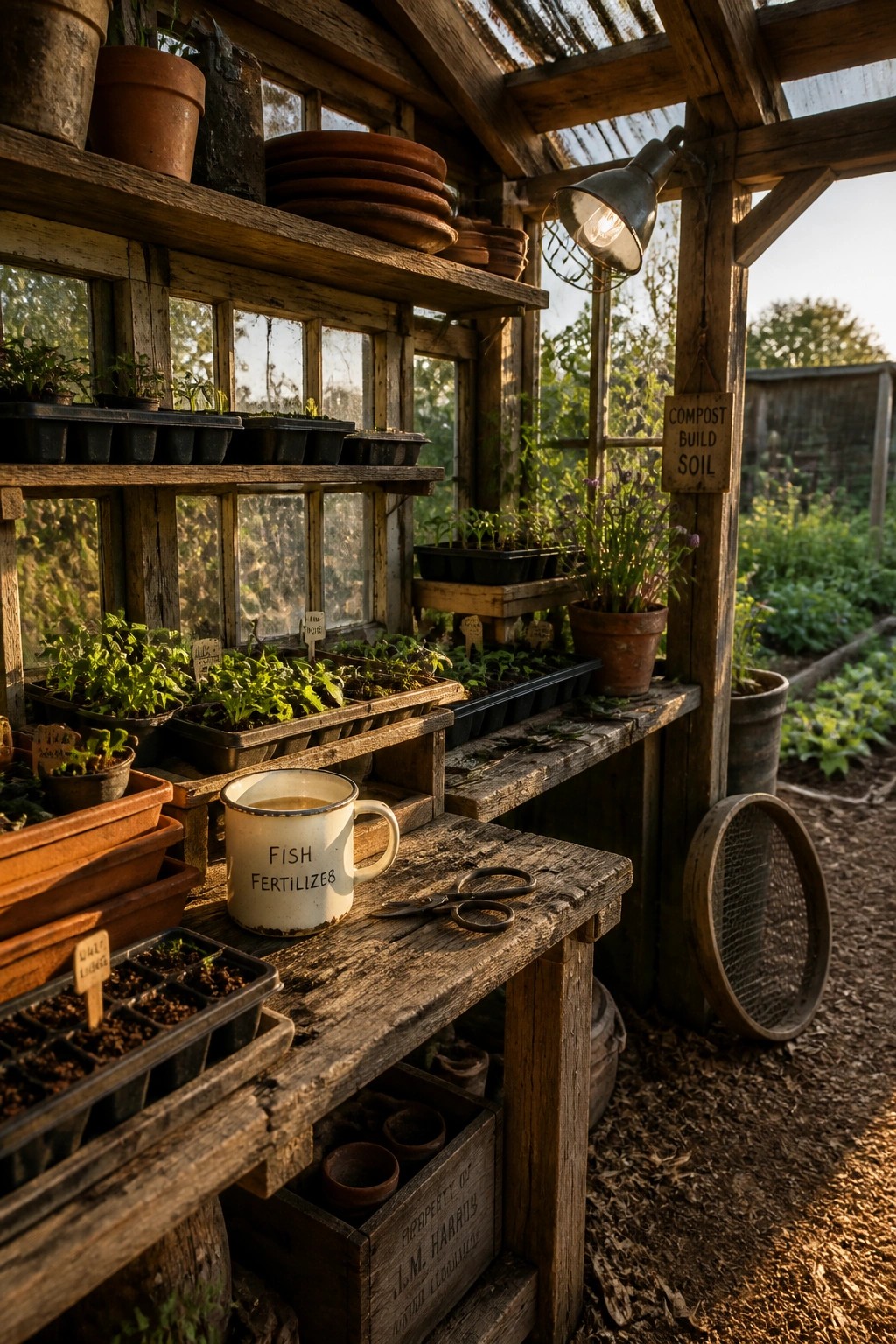
Reclaimed wood works well for greenhouse shelves because it is sturdy and already weathered. You can build simple benches and upper racks that hold plenty of trays without needing new lumber. The look blends right in with the plants and gives the space a practical feel.
This setup suits small or medium greenhouses where floor space is limited. Place lower benches at a comfortable working height and add narrower shelves above for seedlings. Check that the wood is sealed if it will face constant moisture.
Using Reclaimed Pallets For Greenhouse Walls

Reclaimed pallets give you an easy way to frame and side a greenhouse without buying new lumber. The wood already has a worn finish that blends into a garden right away, and the open slats let in light while still offering some structure.
You can source pallets from nearby stores or warehouses and fasten them directly to a simple frame. Just check that the wood is untreated before you start, and add a rain barrel like the one shown here to catch runoff from the roof. This method suits small backyard gardens where you want something sturdy but inexpensive.
Frequently Asked Questions
Q: How do I know if a pallet is safe to use around food plants? A: Check for the HT stamp on the side boards. This shows the wood was heat treated instead of treated with chemicals. Skip any pallets that carry an MB mark.
Q: My backyard gets strong winds. Will a pallet greenhouse hold up? A: Anchor the base with concrete blocks or bury the corner posts a foot deep. Add a few cross braces between the walls too. This setup keeps the frame steady through most storms.
Q: Can these greenhouses handle snow? A: Slope the roof slightly when you put it together so snow slides off. Heavy buildup can crush the pallets if you leave the top flat.
