


I’ve noticed that a greenhouse tends to shape the rest of the garden once it is placed because pathways and beds often form around it over time.
Victorian details add layers of structure that help define zones without extra walls or borders.
When I added a modest version in my yard I watched how the light moved through the glass and affected the plants nearby.
Placement decides whether the whole layout feels balanced.
Some of these older ideas work better if you scale them to fit the beds and routes already in use rather than forcing a full match.
Victorian Greenhouses Work Well as Garden Focal Points
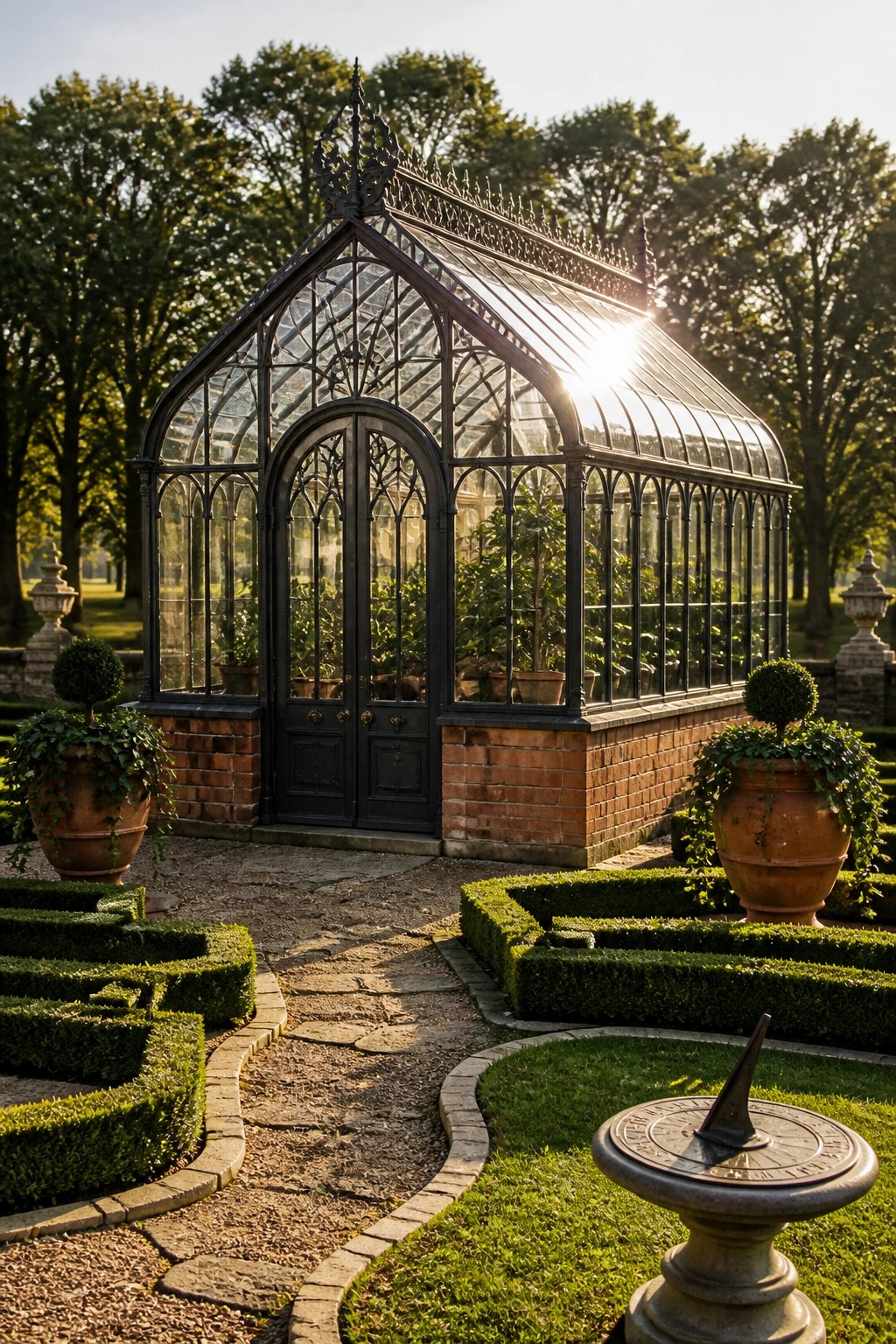
A Victorian greenhouse can anchor a garden when it sits at the center of a simple layout. The dark iron frame and glass stand out against green hedges and gravel paths, giving the whole space a clear sense of order.
This works best in medium to large gardens that can handle a formal style. Keep nearby planting low and structured so the greenhouse stays the main feature instead of competing with too many other elements.
Frame The Greenhouse With Stone Steps

Stone steps give a greenhouse real presence in the garden. They turn the building into a destination instead of something that just sits at the back of the yard, and the curve here keeps the approach feeling natural rather than stiff.
This works best on a gentle slope where you need a clear route anyway. Keep the borders wide enough to soften the stone but not so wide that the steps disappear under the plants.
Use a Pond to Reflect Your Greenhouse

Placing a Victorian greenhouse right beside a pond gives it extra presence without any extra structures. The water catches the shape and glass details, so the building feels more important in the garden even when viewed from a distance.
This approach works best on larger properties where the greenhouse can sit a few feet back from the edge. Keep the planting low along the bank and use a simple stone path so nothing blocks the reflection. The fish and moving water add life, but the main goal stays the clear mirrored view of the greenhouse itself.
Built-In Seating In A Greenhouse

A built-in bench turns a greenhouse into a place you can actually spend time in. It gives you a spot to sit without crowding the floor with chairs or tables, and it makes use of the wall space that often goes unused.
This idea works best in Victorian-style greenhouses that already have deep sills or solid framing along the base. Use a simple wood bench with a few cushions so it stays practical in a humid space, and keep the rest of the area open for plants and shelves.
Wooden Barrels as Greenhouse Planters

Wooden barrels make a simple and sturdy choice for growing vines inside a Victorian greenhouse. They hold up well to moisture, give the plants room to spread, and add a plain, working look that matches the old-fashioned setting.
Set the barrels on tiered wooden shelves along the windows so the vines get good light and can be reached easily for pruning. This works best in greenhouses attached to older homes where you want a practical growing space without extra ornament.
Anchor the Garden with a Victorian Greenhouse

A greenhouse placed right along the main path gives the garden a clear center without any extra effort. It draws the eye naturally and turns the structure into a working part of the layout rather than something hidden in a corner.
This approach works best in older gardens that already have gravel paths and established beds. Keep the doors open on mild days so the inside feels connected to the surrounding planting.
Frame Your Greenhouse With Classical Statues

Placing a pair of matching stone statues on either side of the greenhouse doors gives the whole structure more presence in the garden. It turns a simple glass building into something that feels intentional and established rather than just a practical addition.
This approach works best in traditional gardens where you already have some formal elements. Keep the surrounding planting low and let the statues sit on simple brick or stone bases so they stay visible year round.
Placing a Victorian Greenhouse as Your Garden Focal Point

A greenhouse gains real presence when you set it at the end of a short path with a few steps leading up. The structure then becomes the natural stopping point instead of just another garden building tucked to the side.
This approach suits older homes or established gardens that already have some structure to the beds and paths. Use a simple arch or climbers nearby to link the greenhouse visually to the rest of the planting without adding extra ornament.
Build a Path to Your Greenhouse

A simple brick path turns a greenhouse into a clear focal point instead of something that just sits at the back of the yard. It gives people a reason to walk toward the structure and helps tie the building into the rest of the garden.
This idea works best in gardens that already have some width and depth. Keep the path fairly narrow, use a warm brick tone, and let low plants spill over the edges a little. It suits older homes and cottage-style yards where you want the greenhouse to feel like part of the landscape rather than an add-on.
Add a Path Down the Middle

A central path turns a greenhouse into something you can actually walk through without tripping over pots or crushing plants. It gives the space structure and makes daily care much easier, especially when the plants start to fill out.
This layout works best in long, narrow greenhouses like the classic Victorian style. Keep the path made of stone or brick and line the sides with pots or low beds so everything stays reachable.
Adding A Practical Potting Bench

A potting bench gives you a dedicated spot to work without taking over the whole greenhouse floor. The open cubbies above the bench make it easy to see and grab seed packets while you are planting.
This kind of bench suits a smaller Victorian greenhouse where space is limited. Keep the top clear enough for trays and soil, and use the lower shelves for extra pots and tools so everything stays close at hand.
Making the Greenhouse the Garden Centerpiece

A Victorian greenhouse works best when it sits right in the middle of the layout instead of being tucked off to the side. The brick base and raised steps help it feel solid and permanent, so the whole garden seems to revolve around it. That placement turns the structure into something you notice from every path and seating spot.
This approach suits older homes with enough yard space to give the greenhouse room to breathe. Keep the surrounding paving simple and let the glass and trim do the work. Avoid crowding the base with too many pots or plants, or the clean lines start to disappear.
Creating A Focal Point With A Victorian Greenhouse

A greenhouse works especially well as the main feature when it sits at the end of a simple path. The structure gives the garden a clear destination and adds a bit of architecture without needing formal beds or clipped hedges.
This setup suits older homes with room for a winding path and some loose planting on either side. Keep the surrounding growth a little wild so the greenhouse remains the main point of interest rather than blending into a tidy border.
Brick Entries for a Classic Greenhouse Look

A brick base and arched doorway give a greenhouse real presence in the garden. The solid material anchors the glass structure and keeps the whole thing from feeling too delicate or temporary. It also matches the style of older homes and estates where greenhouses were built to last.
This approach works best on sloped sites where a few steps can lead up to the door. It suits larger gardens that need a focal point rather than a simple shed style greenhouse. Just make sure the brick matches the tone of any nearby walls or paths so the structure feels connected to the rest of the property.
Lead a Path Directly to the Greenhouse

A straight path gives the greenhouse a clear role in the garden. It turns the structure into the obvious destination instead of letting it sit off to the side among other plantings.
This layout suits larger gardens that need one strong focal point. Keep the beds along the path narrow and the plantings low so the line stays open and the greenhouse remains the main view.
Add a Simple Potting Table Near the Greenhouse

A potting table keeps tools, pots, and soil within reach so you spend less time walking back and forth to the shed. In a Victorian garden it also adds a lived-in look that matches the greenhouse without competing with it.
Place the table on gravel or brick near the main path so it stays handy but does not block the view of the greenhouse itself. It suits older homes best when the wood is allowed to weather and the surface is kept clear except for a few everyday items like a watering can.
Repeat Matching Pots Along the Path

One simple way to make a greenhouse feel more classic is to line both sides of the path with the same style of pot. The repetition gives the space a steady rhythm and keeps the eye moving forward without any extra decoration. It works especially well in longer structures where you want the whole length to feel intentional.
This approach suits older gardens or any Victorian-style setup where you already have a central walkway. Choose containers that are similar in shape and finish, then fill them with the same type of plant or a simple mix of herbs and low shrubs. Just watch that the pots do not crowd the walking space or block light from reaching the plants on the floor.
Central Work Tables in the Greenhouse

A solid central table gives you a practical spot to handle repotting and plant care without cluttering the floor. In a Victorian greenhouse it also creates a natural focal point that keeps the space organized.
Marble works well on top because it handles water and soil without damage. This setup suits homes where the greenhouse sees regular use, though the table needs enough clearance around it so you can move pots freely.
Bold Colors on Victorian Greenhouses

A deep paint color can turn a greenhouse into the main feature of a garden rather than something that blends into the background. The strong blue here gives the structure presence against all the greenery and flowers, and it makes the whole area feel more intentional.
This approach works well in gardens that already have a mix of formal and cottage planting. Keep the color rich but not too bright, and let the surrounding beds and paths lead the eye toward it. Just make sure the shade you pick holds up in changing light and pairs with nearby stone or wood.
String Lights for Evening Greenhouse Use

String lights make a big difference once the sun goes down. They turn a Victorian greenhouse into a usable space after dark instead of something that just sits empty at night. The warm glow highlights the glass and frame without needing anything fancy.
Place the lights along the roofline and rafters so they reflect off the glass. This works best in gardens where you already have a greenhouse as the main focal point. Keep the bulbs small and spaced evenly so the light stays soft rather than harsh.
Frequently Asked Questions
Q: How do I pick the best spot for a Victorian greenhouse in my yard? A: Start by watching how sunlight moves across your space during the day. A south facing area gives steady light for the plants but avoid spots hit hard by wind. Set it where you can see it easily from a window without crowding walkways.
Q: What kind of plants should I grow inside one of these ornate greenhouses? A: Try ferns and orchids since they handle the steady warmth and moisture well. Train a few climbing vines up the frame to match the classic style. Keep temperatures even so the blooms last through cooler months.
Q: Do these greenhouses need a lot of upkeep? A: Wipe the glass now and then to let in plenty of light. Check vents and water lines once a week. A quick tidy inside stops bugs before they spread.
Q: Can I build one myself or should I hire help? A: Simple kits let you put together a basic version over a weekend if you follow the steps. For fancy metal details call in a builder from the start. Begin with a smaller size if this is new to you.
