

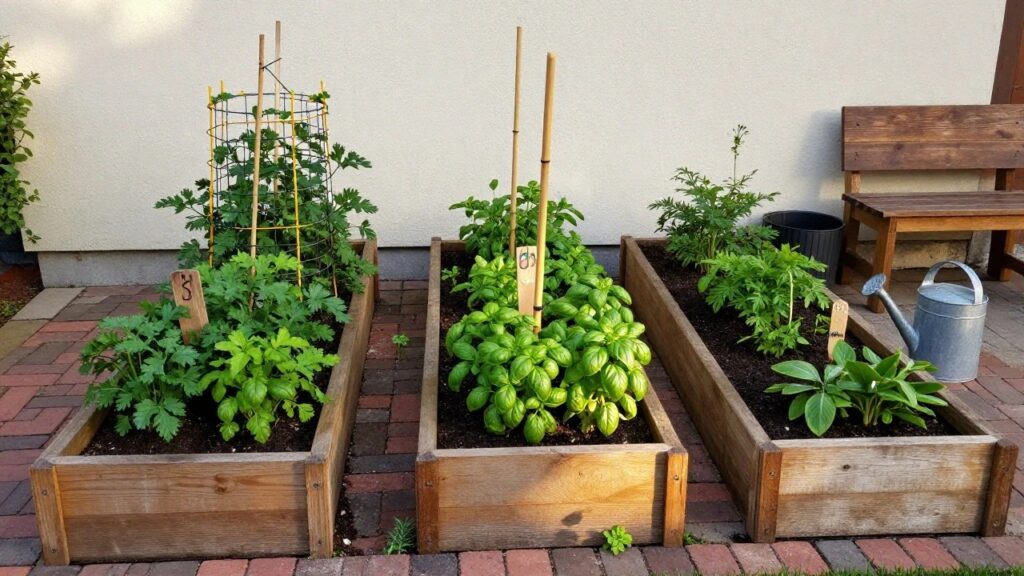
When I first dug into gardening, I realized a solid layout matters more than any plant choice because it shapes how the whole yard evolves year after year.
Paths and simple edging draw your eye right away and make the space feel intentional instead of scattered.
New gardeners often overlook how plants fill in over time, leading to crowded beds that frustrate everyone.
I started testing raised beds early on, and that one move saved me from so many headaches.
A few of these beginner ideas clicked for me like that, ones worth sketching out for your own setup before spring hits.
Raised Beds for Herb Gardening
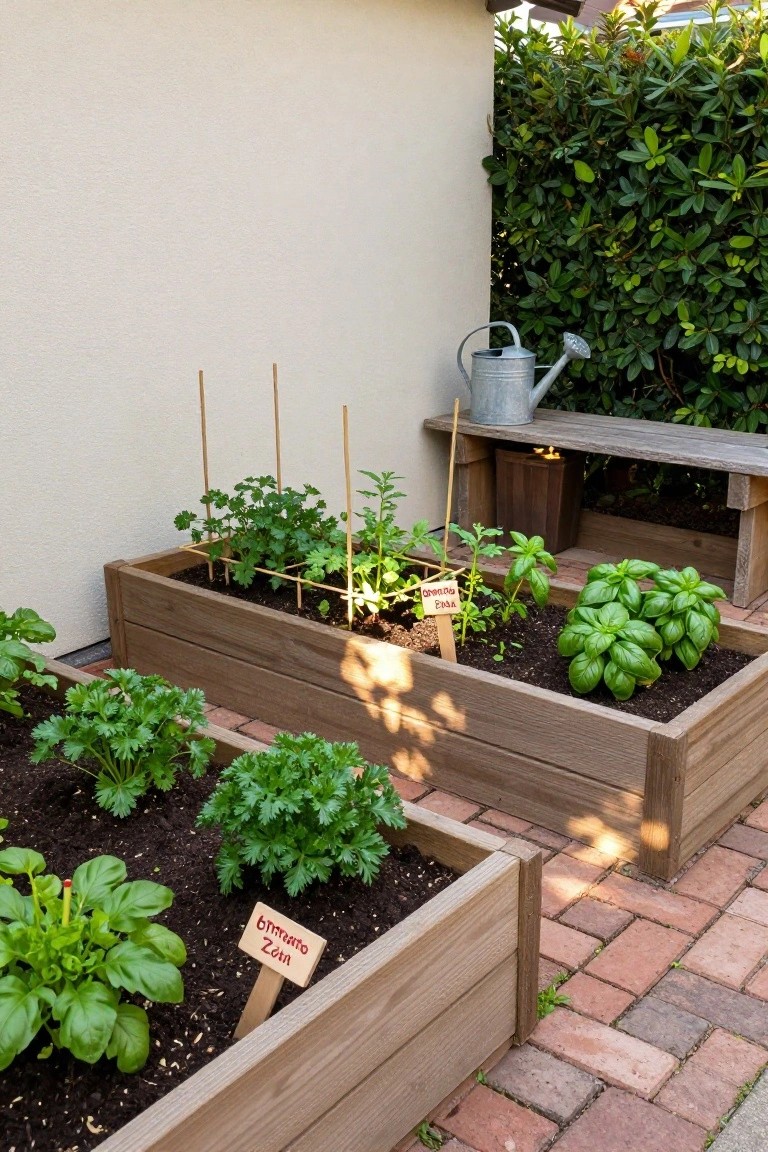
Raised garden beds turn herb growing into something any beginner can handle. You stack the soil up high in wooden frames, making it easy to reach without bending over much. Labels on sticks keep track of what’s basil or parsley, and the setup fits snug against a wall for a tidy look. Fresh herbs right outside the kitchen door. No big yard needed.
Set these up in full sun on a patio or driveway edge. Go for cedar or untreated pine to last a few seasons. They work great for townhouses or rentals where you can’t dig deep. Just keep soil moist and pinch back plants to keep them bushy.
Simple Stone Edging for Garden Beds
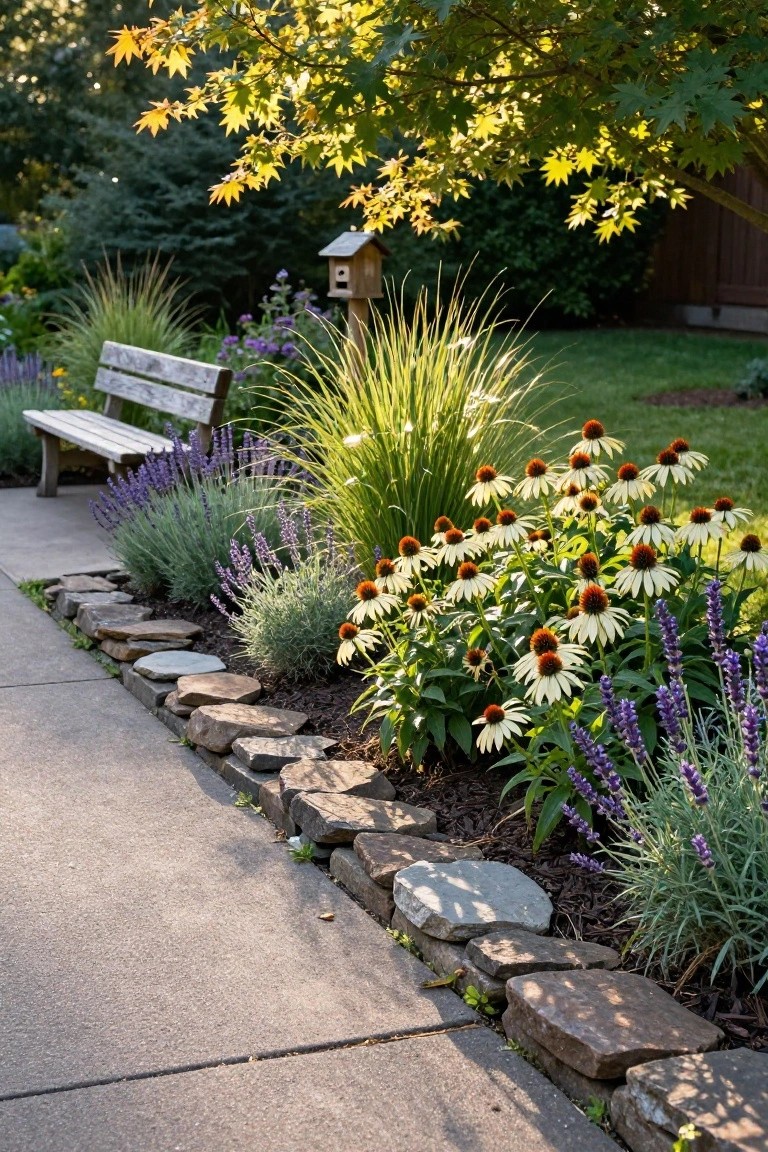
One easy way to make your garden look neat without much work is to line the beds with flat natural stones. They hold back mulch and soil, keep grass from creeping in, and give a clean edge that fits right into the yard. In this setup, the stones run along a concrete path, letting colorful flowers like coneflowers and lavender spill over just a bit without getting messy.
You can do this anywhere there’s a bed next to a walkway or lawn. Pick stones from a local quarry or landscaping yard, lay them flat on dug-out soil, and backfill with dirt to hold them steady. It works great for beginners since it’s forgiving… no perfect cuts needed. Just watch the leveling so water drains away from your path.
Balcony Gardening with a Simple Bench
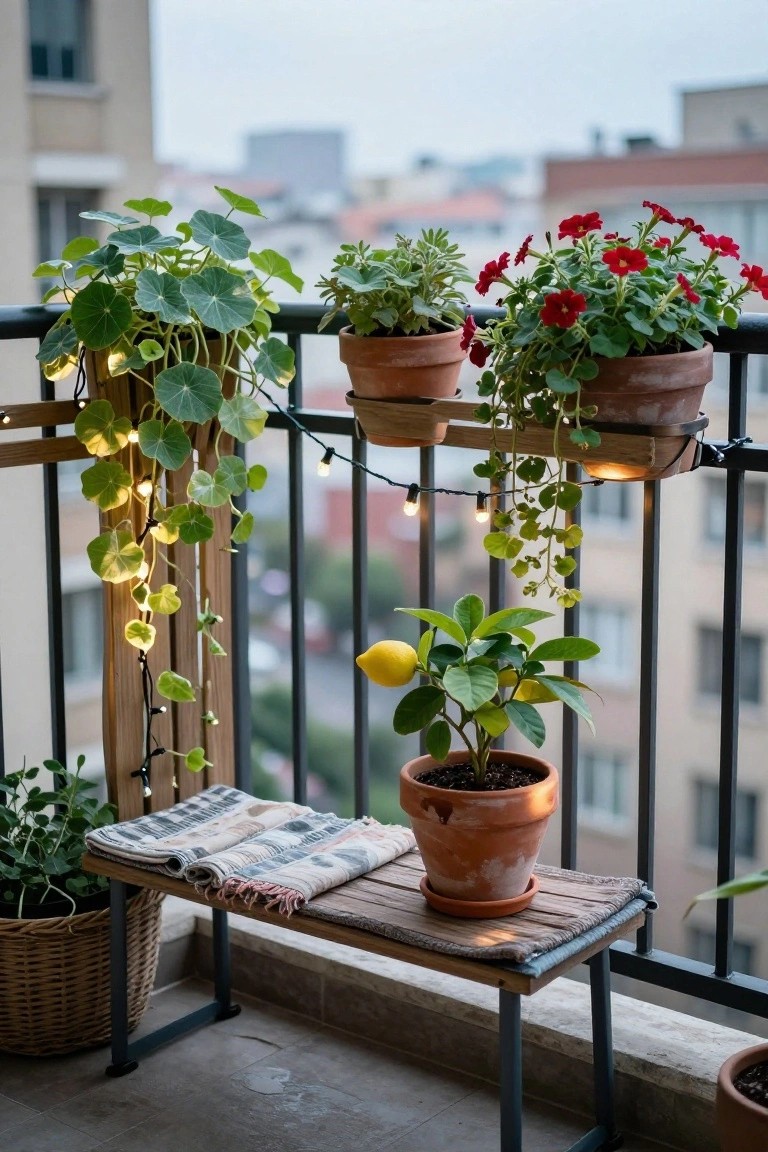
A plain wooden bench tucked on the balcony makes for an easy spot to sit and enjoy your plants. Here trailing vines climb a wooden frame while pots of geraniums, a lemon tree, and herbs fill the edges. It turns tight space into something green and restful. The string lights add a soft glow too.
This works best on apartment balconies or small terraces. Anchor the bench near the railing so plants wrap around it. Use affordable terracotta pots and choose easy growers like nasturtium that trail down. Hang lights for evenings… perfect for beginners who want low fuss. Just water regularly and trim as needed.
Patio Gardening with Terracotta Pots
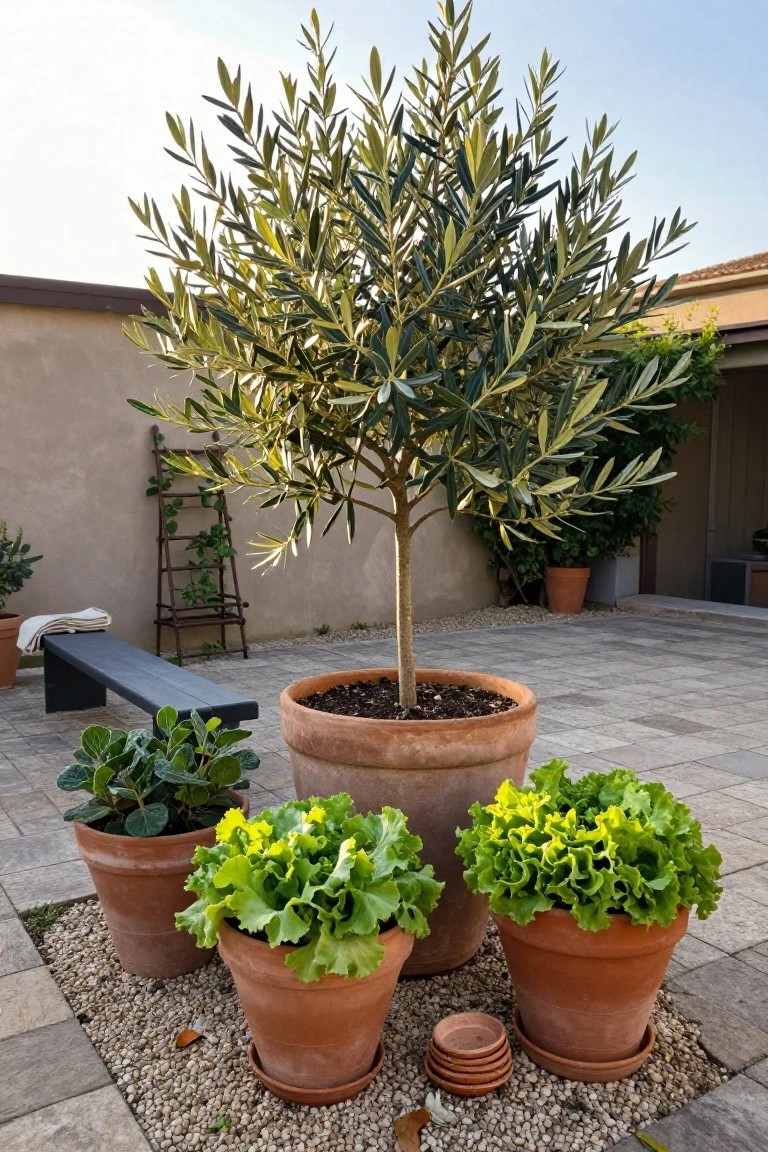
One straightforward way to start gardening is filling your patio with terracotta pots of different sizes. A big olive tree in the center pot gives height and structure right away. Smaller pots of lettuce and primroses fill in around the base. It looks natural and lived-in without much fuss.
This setup works great on sunny patios or balconies where space is tight. Pick pots with good drainage to avoid root rot. Group them near a bench for easy picking. It’s perfect for apartments or townhomes… low water needs once established.
Simple Stepping Stone Garden Path
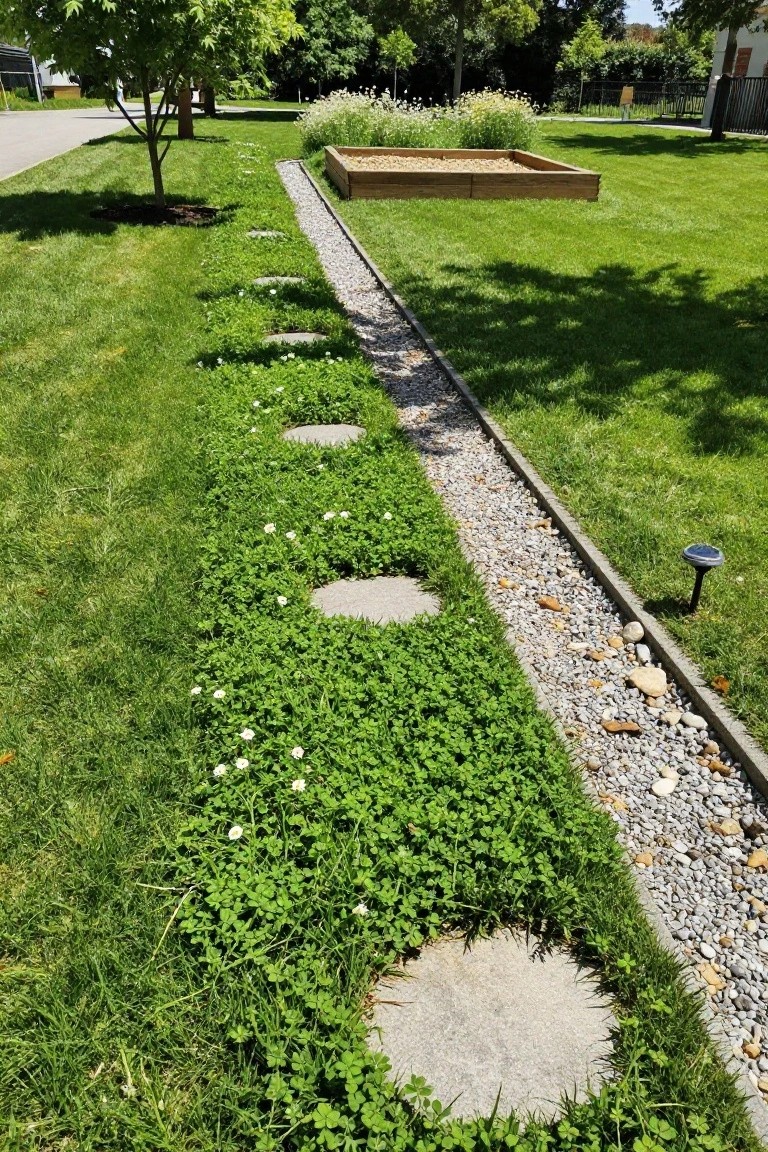
One easy way to add a path through your yard is with round stepping stones set right into the grass. They give you a spot to walk without covering up all the green, and that gravel strip along the edge keeps mud and grass from creeping over. Low plants like those white-flowered ground covers spill in nicely, making it feel natural and not too fussy.
This works great in side yards or leading to a play area or garden bed. Space the stones about two feet apart so adults can step comfortably, and beginners can handle digging the spots and adding gravel for drainage. It stays low-maintenance once planted, just needs occasional weeding.
Easy Wood-Edged Garden Paths
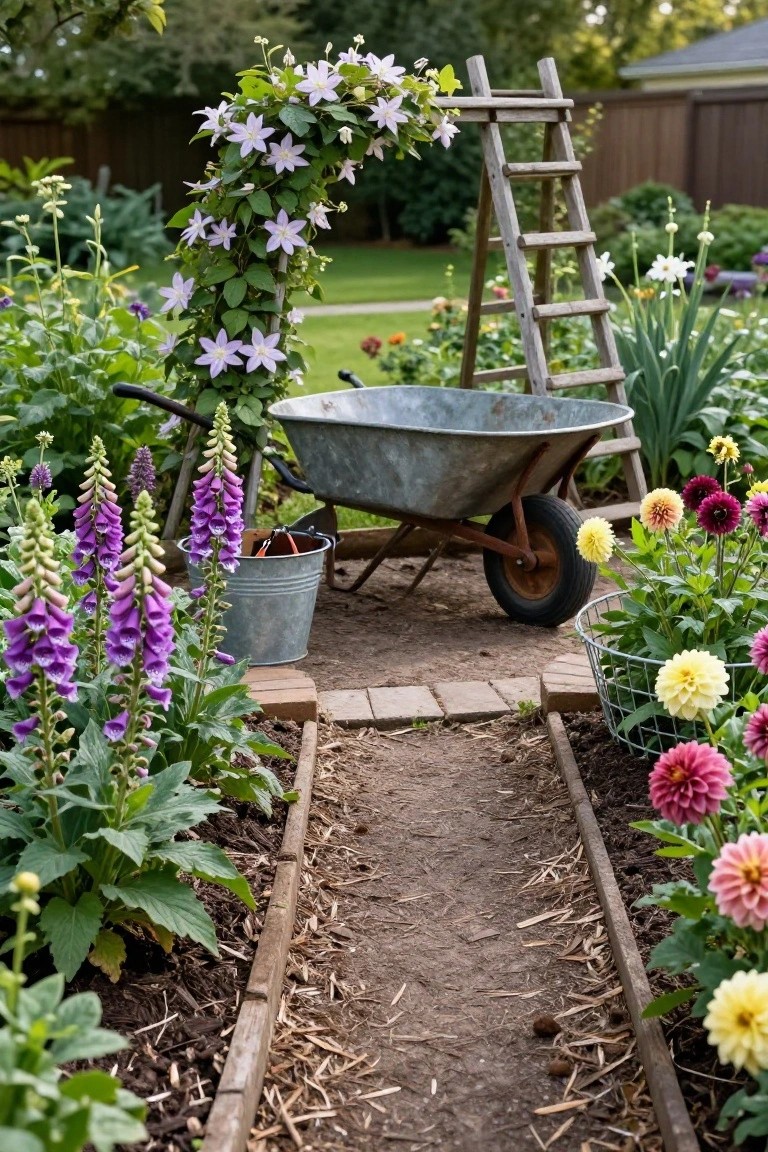
A straight path like this one, edged with simple wood borders and topped with mulch, makes any garden feel more put-together. It keeps soil in place and stops you from trampling plants as you walk through. The foxgloves and dahlias along the sides add color without much fuss.
These paths work best in small backyards or cottage-style setups where you want low upkeep. Just lay down landscape fabric first, add the edging, fill with mulch, and plant perennials nearby. Refresh the mulch once a year… keeps weeds down too.
Build a Winding Pebble Stream Path
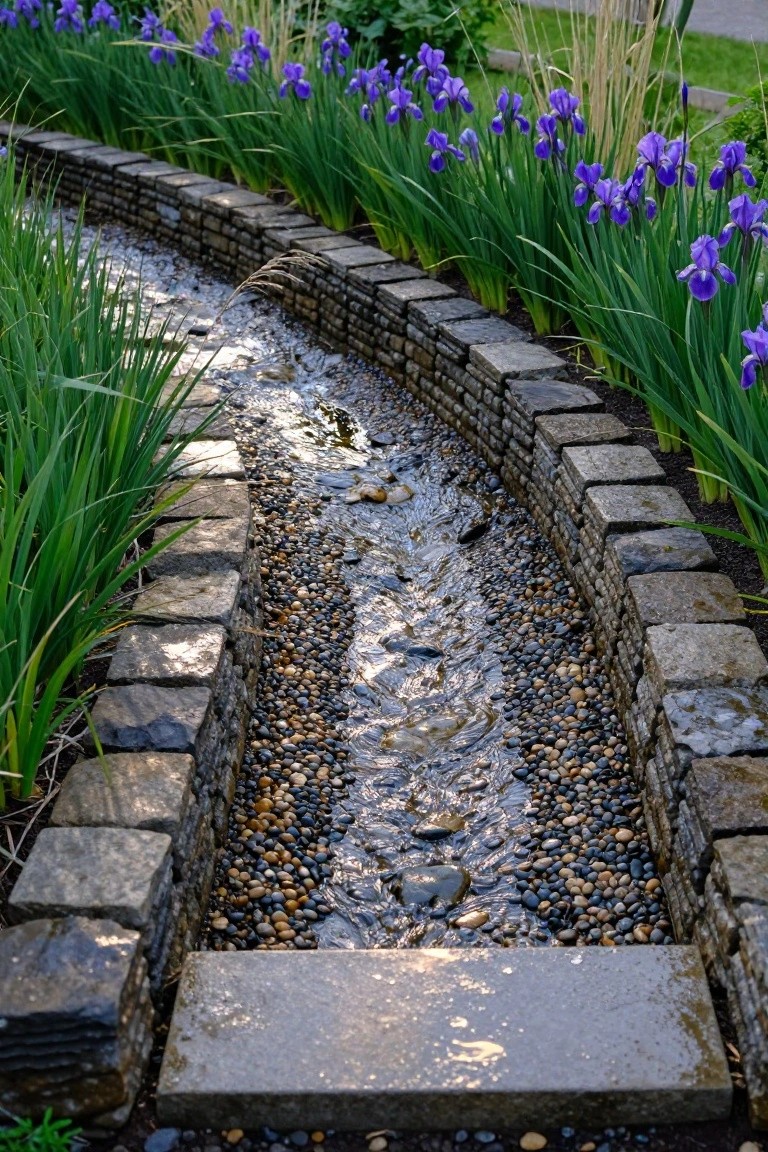
A simple way to add motion to your garden is this curved channel of smooth pebbles with a gentle flow of water down the middle. Stacked stone walls keep it contained, and borders of iris flowers and grasses frame it nicely. It mimics a natural creek bed. Looks alive without much upkeep.
Run it alongside a walkway or through a narrow bed to link yard spots. Grab a small recirculating pump for the water, lay down river rocks, and stack local stones for edges. Suits sloped spots or sunny borders best. Drought-tolerant plants like those irises hold up well. Just clear leaves now and then.
Container Gardening Around Your Patio Table
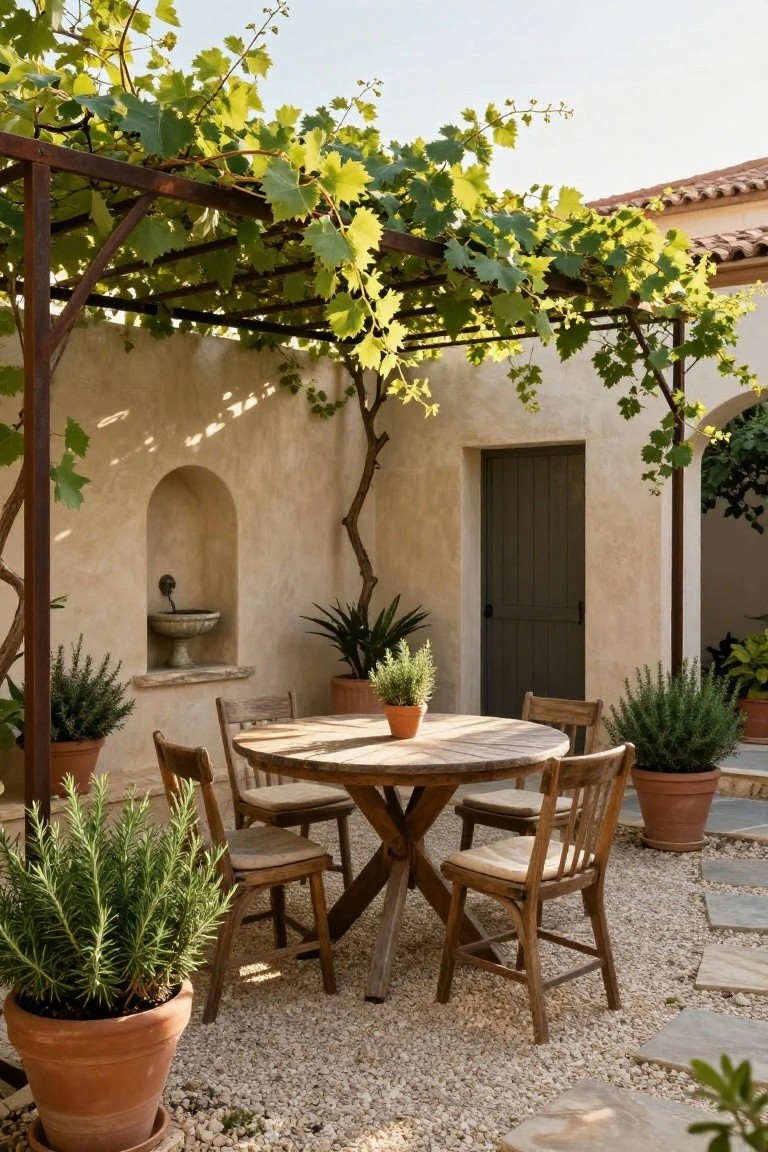
One easy way to start gardening as a beginner is to group large terracotta pots of rosemary and other herbs right around your outdoor table. It turns a plain gravel patio into something useful and pretty, with fresh picks just steps away from meals. The structured plants like those bushy rosemary give height and shape without much fuss.
Put the pots in odd numbers or clusters where you eat outside most, close to the house door for easy grabbing. This works great on small patios or courtyards with sunny spots. Skip fancy soil mixes at first, just good drainage and watering when dry. It’s forgiving if you forget a day.
Wall-Mounted Herb Planters
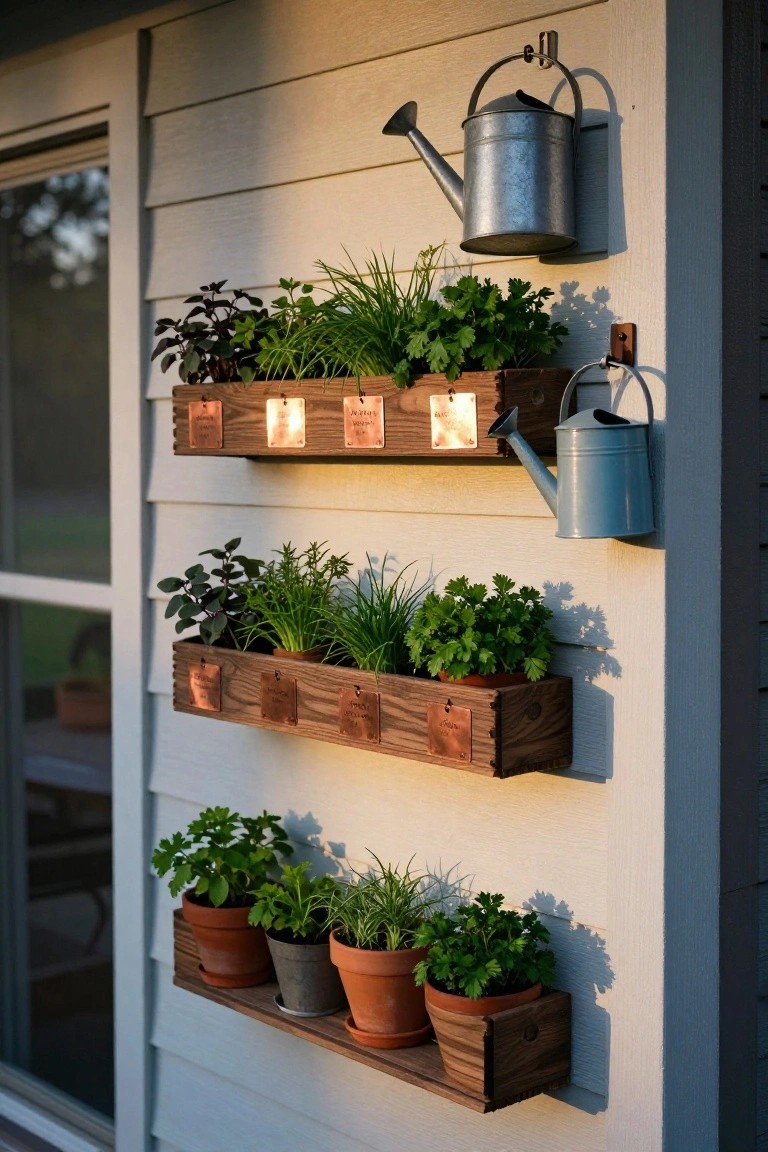
One simple way to grow fresh herbs without taking up yard space is to mount wooden planters right on your house exterior. These boxes hold basil, parsley, rosemary, and others, with copper labels naming each one. It keeps everything handy near the kitchen door and adds a bit of green to plain siding.
This setup works best on a sunny side wall or near an entry, where you can reach them easily for picking. Use rot-resistant wood and good drainage to keep plants healthy. Start with pots you already have on shelves below, then build up to boxes as you get comfortable.
Raised Brick Beds for Veggies
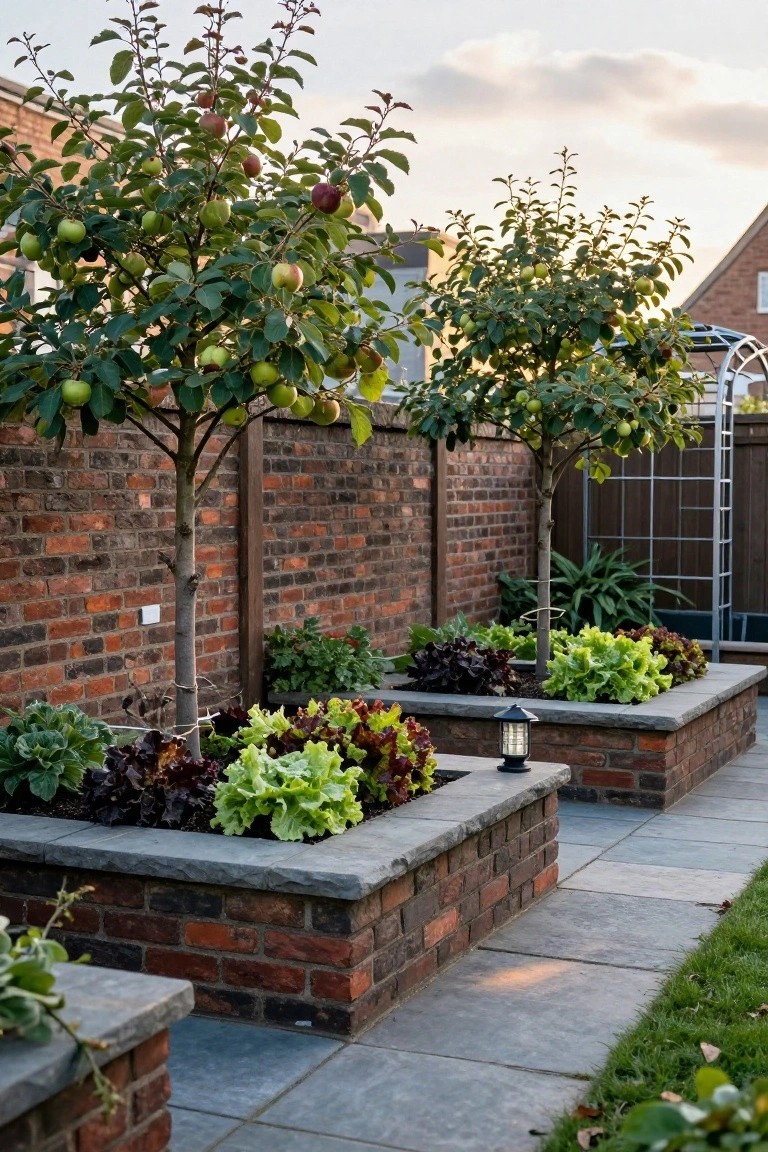
Raised beds like these, built from everyday brick, make starting a garden dead simple for beginners. You get neat edges that hold soil in place, better drainage, and plants at waist height so no more sore backs from weeding. Here they’re loaded with lettuces, kale, and chard in tidy rows, tucked against a wall with young apple trees overhead for some natural shade and fruit later on.
They fit right into any backyard corner or along a fence, especially if your house has brick already. Stack the bricks two or three courses high, cap with stone if you want, top with compost-rich soil, and plant away. Just make sure there’s a path around them for easy access.
Gravel Beds with Agave Plants
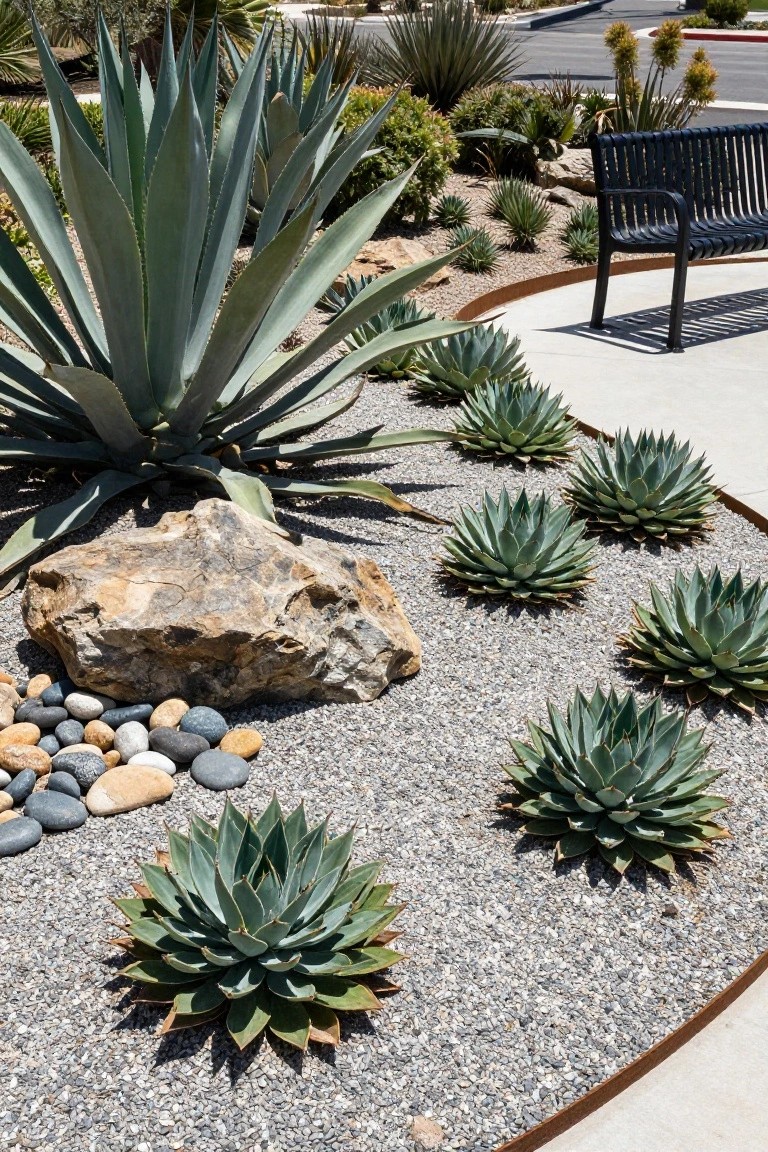
One straightforward gardening idea is filling beds with gravel and agave plants for a low-water look that still feels put together. Agaves give that strong shape, almost like living sculptures, and the gravel keeps weeds down while letting water drain fast. Add a big boulder or some smooth stones, and it looks finished without much fuss.
Set this up along a path or near seating where you want something simple to care for. Pick sunny spots with poor soil, since agaves handle drought fine. Just space plants so they have room to grow, top with two inches of gravel, and use metal edging to hold it neat. Beginners like it because there’s no mowing or constant watering.
Sidewalk Pollinator Garden Beds
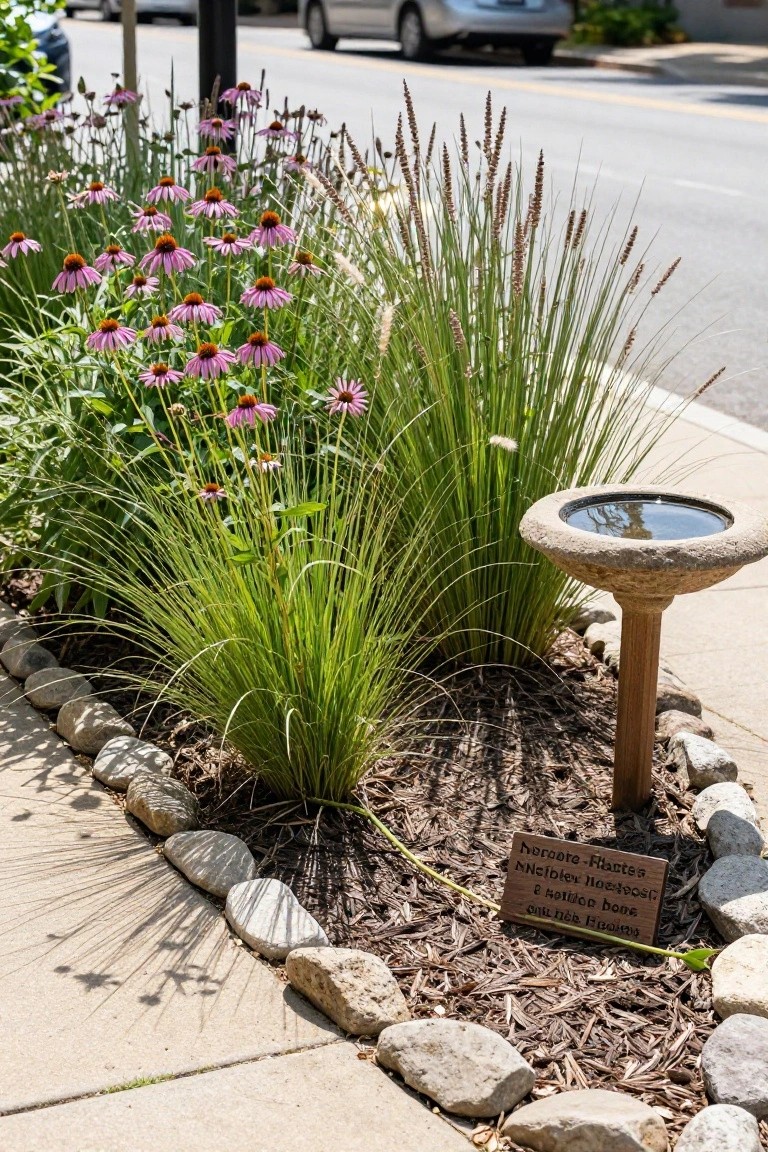
A narrow strip like this along the sidewalk makes a great spot for pollinators. It’s filled with tough native plants such as coneflowers and bunches of ornamental grasses that draw in bees and butterflies all summer. The simple rock edging and mulch keep weeds down, and that birdbath in the middle gives birds a drink too. No fuss, just steady color and life right by the street.
These beds work best in sunny spots with poor soil, like urban edges or small lots where you want impact without daily care. Pick natives for your area to cut watering, then layer tall grasses in back with flowers up front. Add a birdbath if space allows… it pulls in more wildlife. Skip fancy stuff; this stays pretty year after year.
Create a Simple Garden Bench Nook
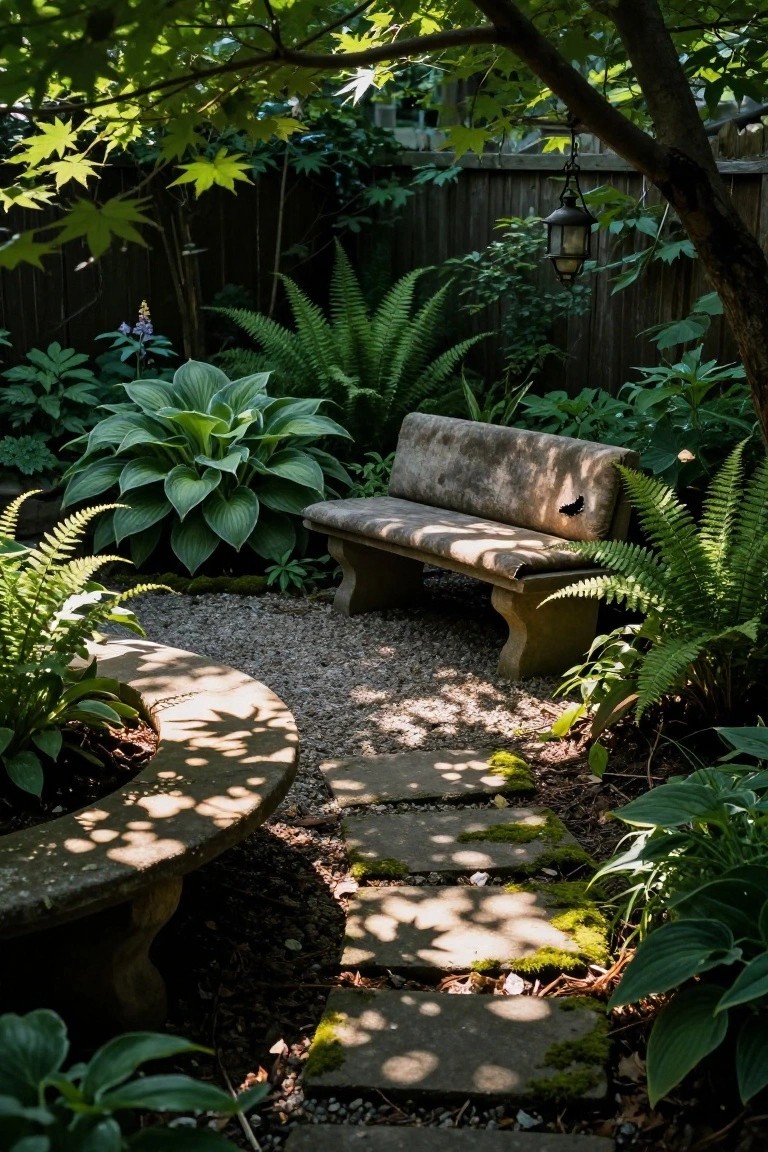
A stone bench tucked into a border of big leafy plants like hostas and ferns makes for an easy backyard retreat. The gravel area around it keeps things neat, and a few stepping stones lead right up without much fuss. It’s that quiet spot you end up using more than you think, especially on nice afternoons.
Start with a basic bench in a corner or along a fence. Pile in low-maintenance greens that grow thick, like ferns for the edges and hostas for bulk. Add gravel mulch to fill gaps and a short path of flat stones. Works great in small yards where you want shade and privacy without a big patio build. Just keep the plants trimmed back so the bench stays handy.
Balcony Raised Beds for Easy Veggies
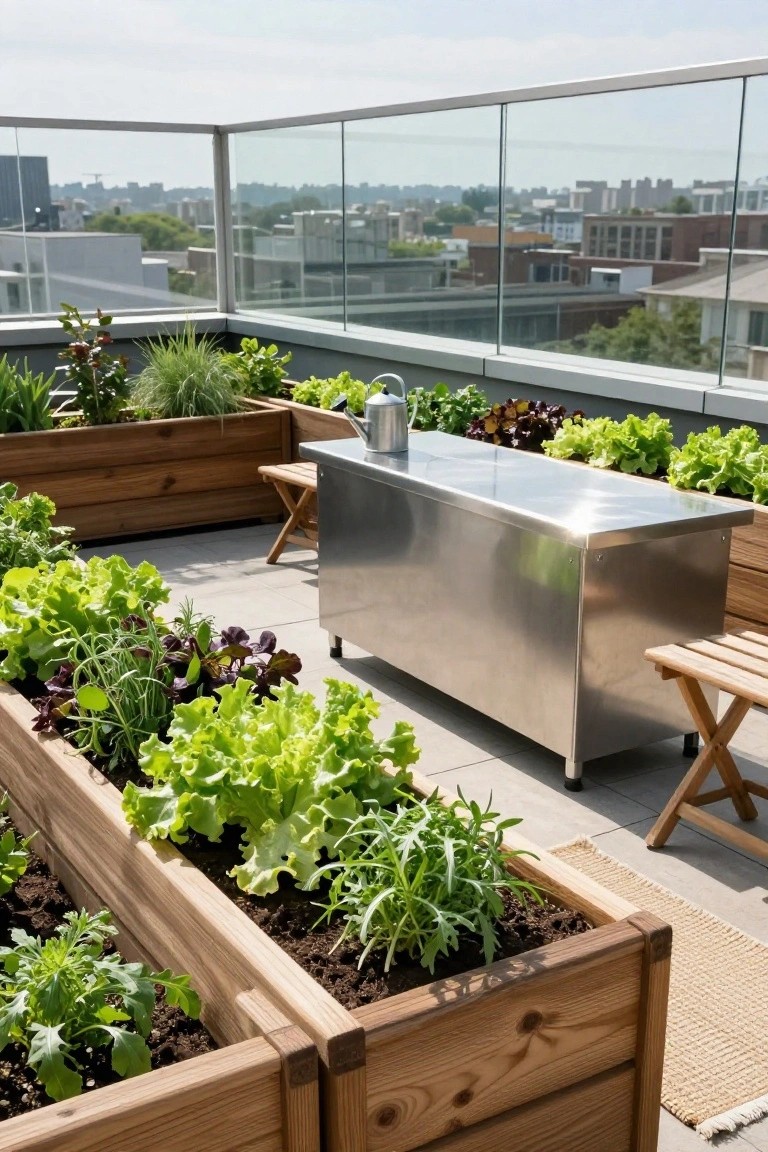
Raised wooden planters like these make balcony gardening straightforward for beginners. You just fill them with soil, plant seeds or starts, and water regularly. No need for a big yard. Here, lettuce, herbs, and greens thrive right on the rooftop, with a handy stainless steel table nearby for rinsing produce.
These work best in sunny spots on apartments or condos with limited outdoor space. Go for rot-resistant wood like cedar, keep beds about knee-high for easy reaching, and group them to create a little harvest zone. Watch the weight though, especially up high. Start small with a couple beds and build from there.
Vertical Strawberries on Garden Fences
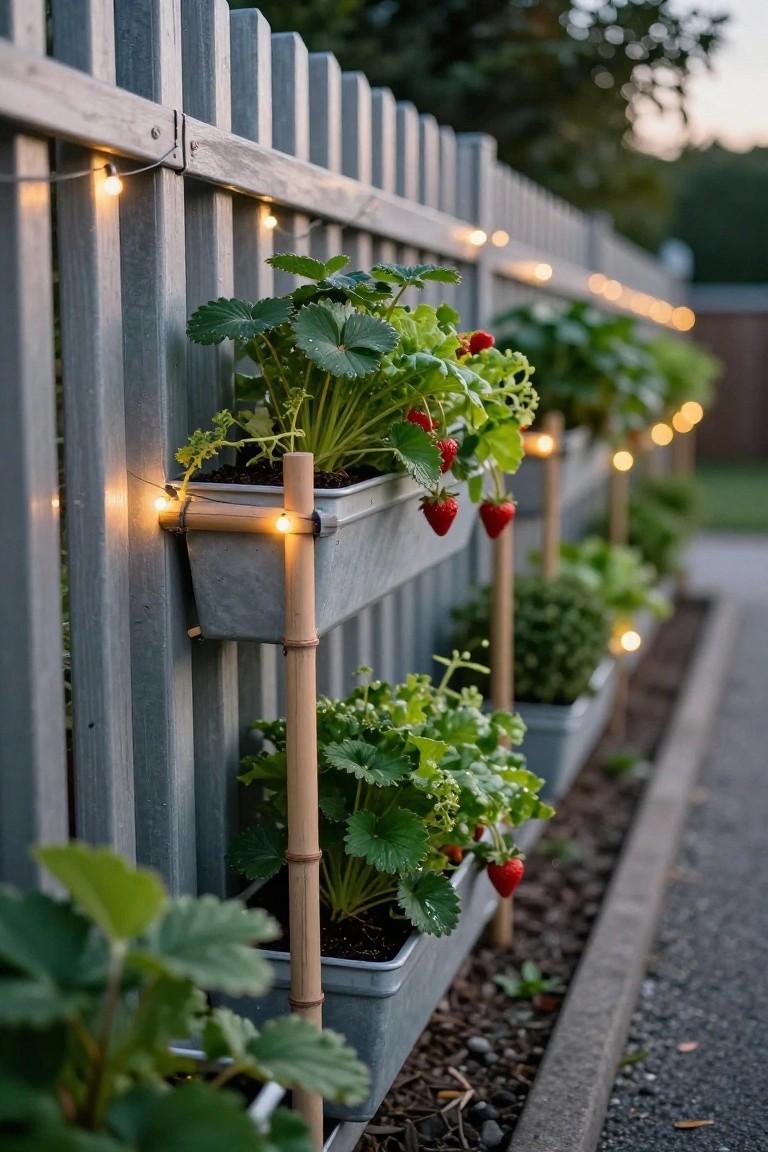
One easy way to grow your own strawberries without taking up ground space is to mount planters right on a fence. These metal troughs hang neatly between the pickets, with bamboo stakes for extra support, letting the plants trail down a bit. It’s practical for beginners since strawberries do well in small spots like this, and you get fresh berries close to the house.
This setup works best along a side path or backyard edge where you walk by often. Pick a sunny fence, use good drainage in the planters, and add string lights like these for nights. It suits renters or small yards too. Just check the fence can hold the weight when soil’s wet.
Greenhouse Potting Bench Basics
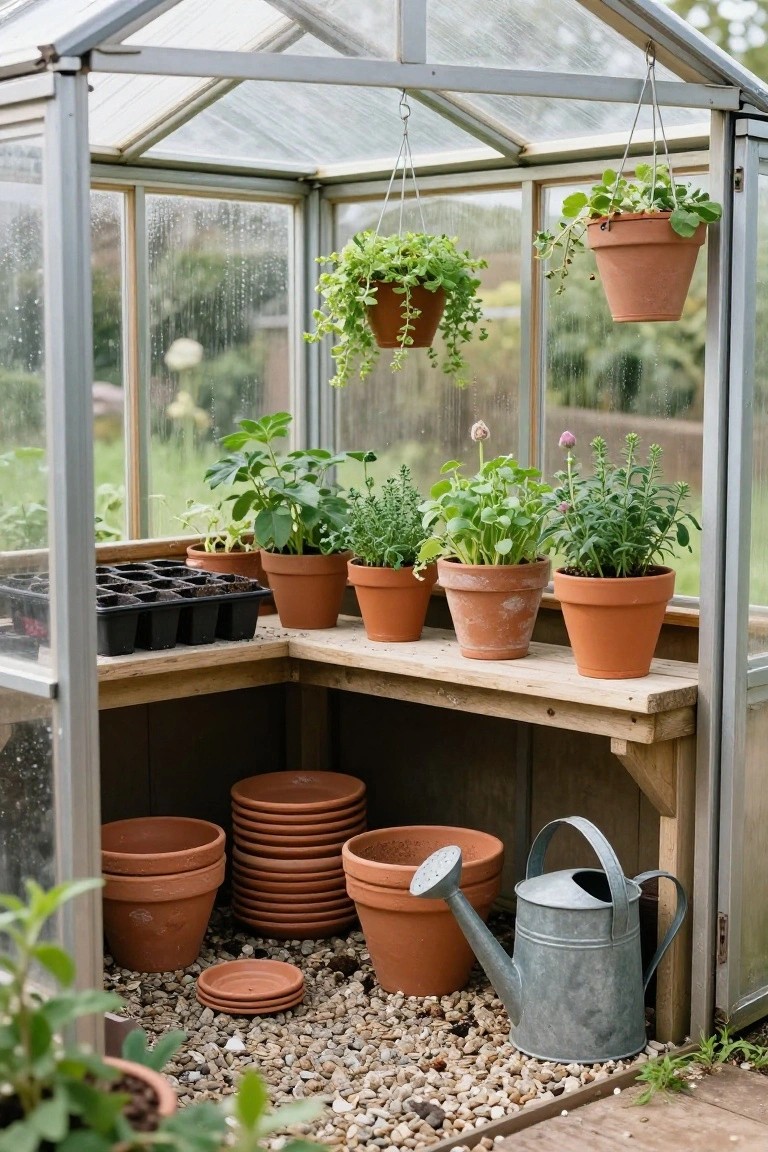
A basic wooden potting bench tucked in the corner of a greenhouse gives beginners a dedicated spot for starting seeds and repotting plants. It keeps everything handy without taking up much room. You see trays of seedlings, a few potted herbs, and that classic metal watering can right there ready to go.
Set one up against a wall or in a small shed if you don’t have a full greenhouse. Stack empty terracotta pots underneath for storage, and put your soil and tools on open shelves. It works great in tight spaces, keeps mess off the ground, and makes gardening feel less overwhelming. Just make sure the bench is sturdy enough for daily use.
Stepping Stones Over a Narrow Pool
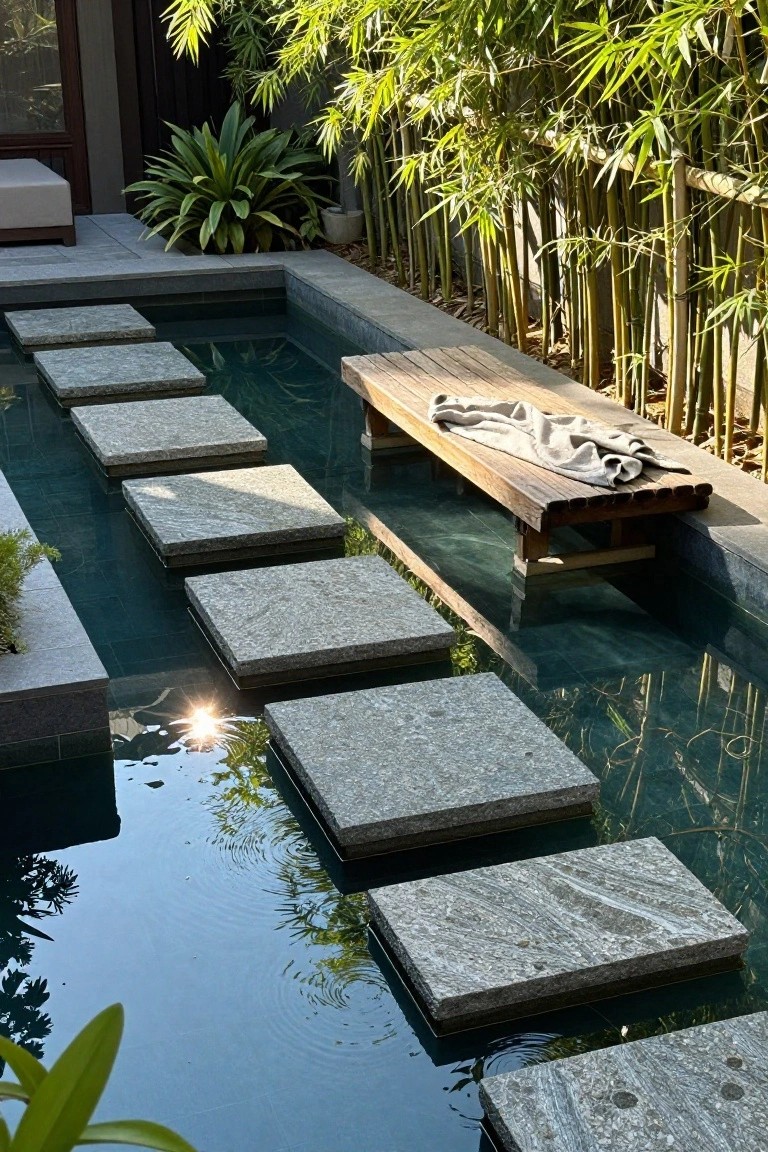
One easy way to add interest to a backyard path is laying flat stone slabs right across a shallow pool. You step from one to the next, with water rippling below. Here, gray granite pavers sit just above the surface, and a simple wood bench sits in the middle for a rest spot. The bamboo along the edge keeps it private and green. It turns a plain walkway into something thoughtful and slow-paced.
This works best in narrow spots between patio and lawn, or along a fence line. Pick stones wide enough for your feet, about 18 inches square. Keep the pool no deeper than a foot so it’s safe and easy to build. Skip it if you have kids running around… too much slip risk. But for a quiet corner, it’s a nice touch that doesn’t take much space.
Terraced Stone Walls with Grasses
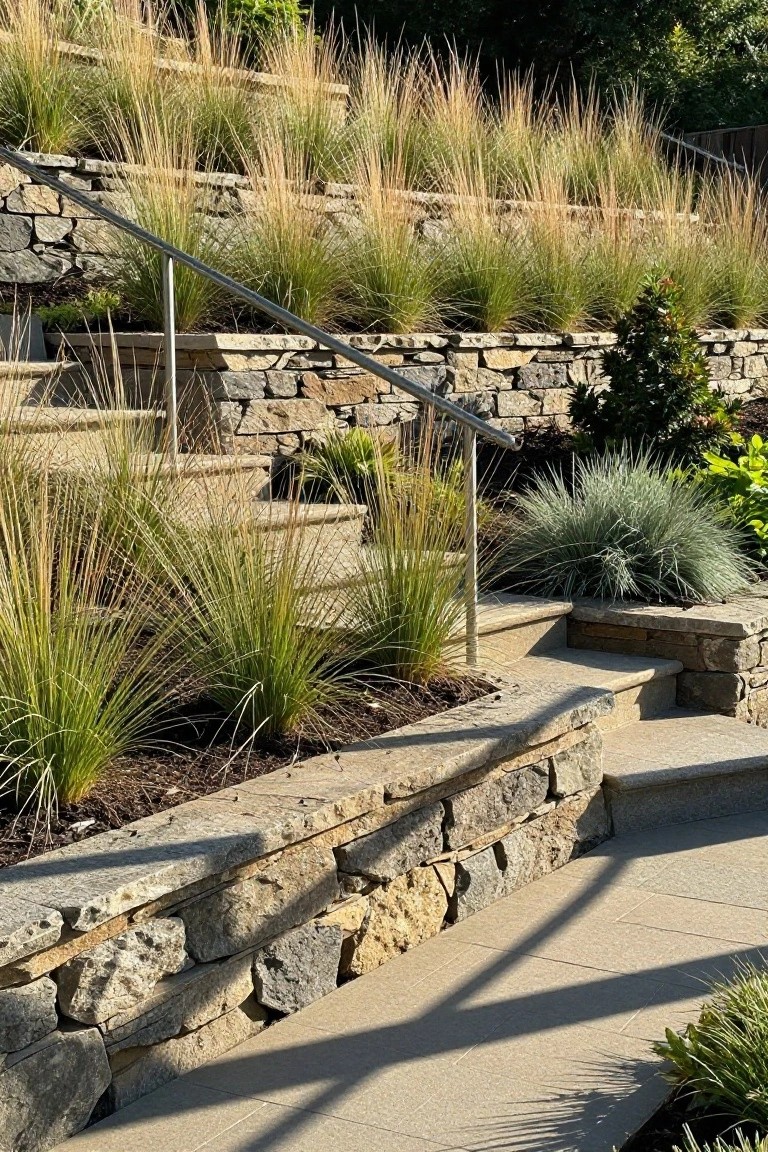
Slopes can be tricky in a yard. They erode easy and feel hard to use. One solid fix is terraced stone walls packed with grasses. You see it here with rough stone stacked into levels, steps cut right in, and clumps of tall fountain grass and shorter blue fescue spilling over. It holds soil back, looks natural, and needs little upkeep once planted.
This works best on any hillside yard, big or small. Start with basic retaining walls from local stone. Plant drought-tough grasses in the pockets and tops. Add steps for access. Skip fussy flowers. It fits beginner gardens and ties into paths or patios below.
Light Your Garden Path After Dark
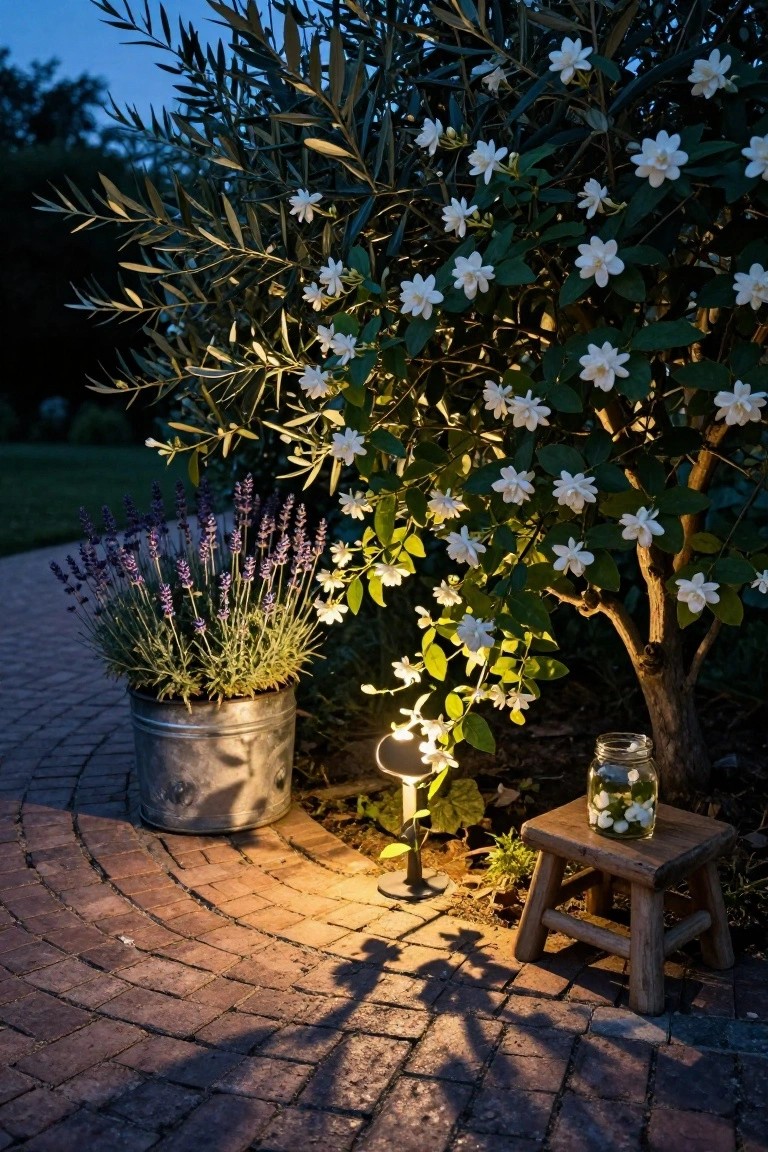
A simple ground light like the one tucked along this brick path turns a basic walkway into something special once the sun goes down. It casts a soft glow on white gardenia blooms and olive branches overhead, making the whole spot feel alive even in low light. For beginners, this is an easy way to get more use out of your garden without much fuss.
Pick a low-voltage stake light or solar option that points up toward plants or the path edge. It works best in small yards or near a back door where you want evening ambiance. Just keep it away from tripping spots, and pair it with white or light-colored flowers that pop under the beam.
Frequently Asked Questions
Q: What if I live in an apartment with just a balcony? Can I still use these ideas?
A: Grab the container gardening tips from the list and run with them. Tuck herbs or cherry tomatoes into pots that fit your railings. You’ll harvest fresh stuff in weeks without needing a yard.
Q: How do I start composting without it smelling up my place?
A: Layer kitchen scraps with dry leaves or cardboard in a small bin. Stir it weekly and keep it damp like a wrung-out sponge. Bury the bin under a deck if outdoors, or tuck it in a corner.
Q: Which of these 19 ideas should a total beginner try first?
A: Pick raised beds. They warm up soil fast and keep weeds at bay. Nail one together from scrap wood and fill it this weekend.
Q: How often should I really water my new plants?
A: Stick your finger an inch into the soil. Water only if it feels dry. Morning is best, so leaves dry out before night.
