

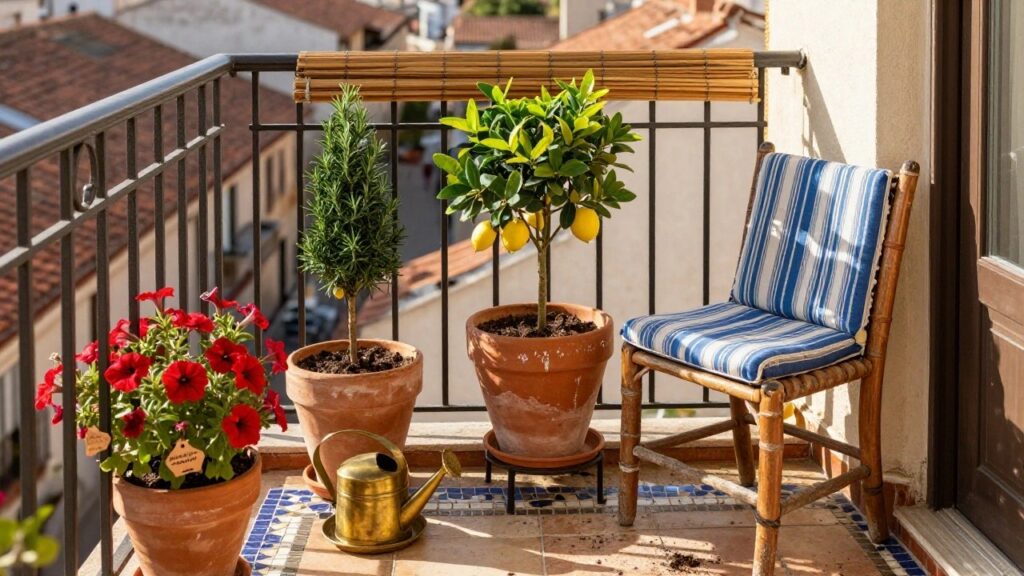
Living in an apartment with only a narrow balcony showed me how container gardening breathes life into spots that feel too cramped for anything else. You notice it right away when pots line the edges and add layers of green that make the space pull you outside instead of ignoring it. The setups that stick around are the ones built for real use, holding up to wind or quick watering while looking full without tipping over. I started testing simple clusters of herbs and flowers last summer, and they shifted my balcony from plain to somewhere I actually linger. A few tweaks to these ideas make all the difference in tight patios or decks.
Layer Pots on Stands for Compact Porches
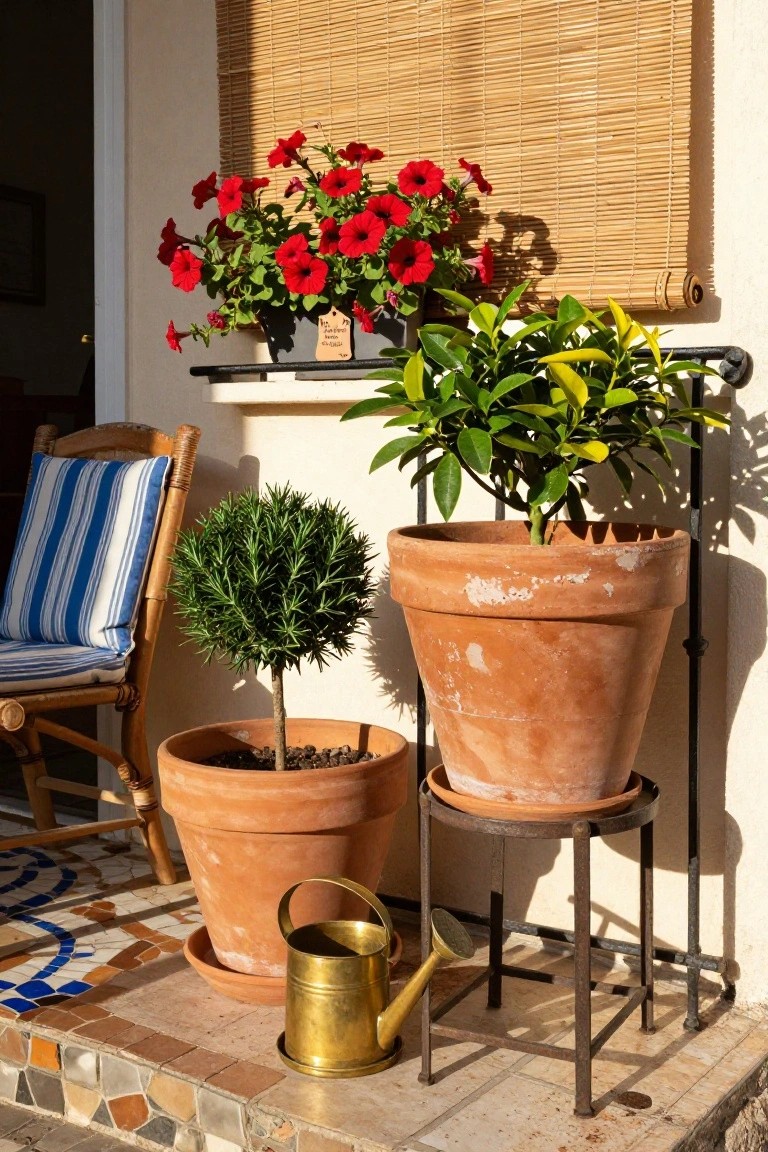
One simple way to pack more plants into a tight porch spot is to lift them up on stands and shelves. You see it here with those big terracotta pots holding a citrus tree and rosemary bush, raised off the floor so they don’t crowd the seating area. It keeps the ground clear for a chair or path, and the mix of heights makes the whole setup feel fuller without sprawling out.
This works best on small balconies or entry porches where floor space is limited. Start with sturdy metal stands in a few sizes, group pots by plant type for easy care, and add a watering can nearby. Just make sure the stands are stable on tile or uneven surfaces, and check drainage so water doesn’t pool underneath.
Balcony Shelves Loaded with Potted Plants

A simple wooden shelf unit packed with terracotta pots and glass jars of succulents turns a plain balcony edge into a lush green backdrop. Placed right beside the sofa, it brings plants close without crowding the seating area. This setup makes even a small rooftop feel fuller and more alive.
It’s perfect for compact city terraces or apartments where you can’t dig into the ground. Pick easy-care plants like echeverias or small herbs that thrive in pots. Anchor the shelf securely against the railing, and mix pot sizes for interest. Keep soil light to avoid tipping, and water sparingly since drainage matters up high.
Ladder Shelving for Small Gardens

One easy way to fit more plants into a tight spot is to lean an old wooden ladder against a fence or wall and use the rungs for pots. It turns unused vertical space into instant shelving. You see it here with galvanized buckets and terracotta pots holding ferns, geraniums, and foxgloves. The mix gives height without crowding the ground.
This works great on patios or along side yards where you want greenery but not a full bed. Pick a sturdy ladder, secure it so it won’t tip, and group plants by light needs. It’s forgiving for beginners since you can move pots around easily. Just watch for too much sun scorching leaves on top shelves.
Vertical Container Gardening on Balconies
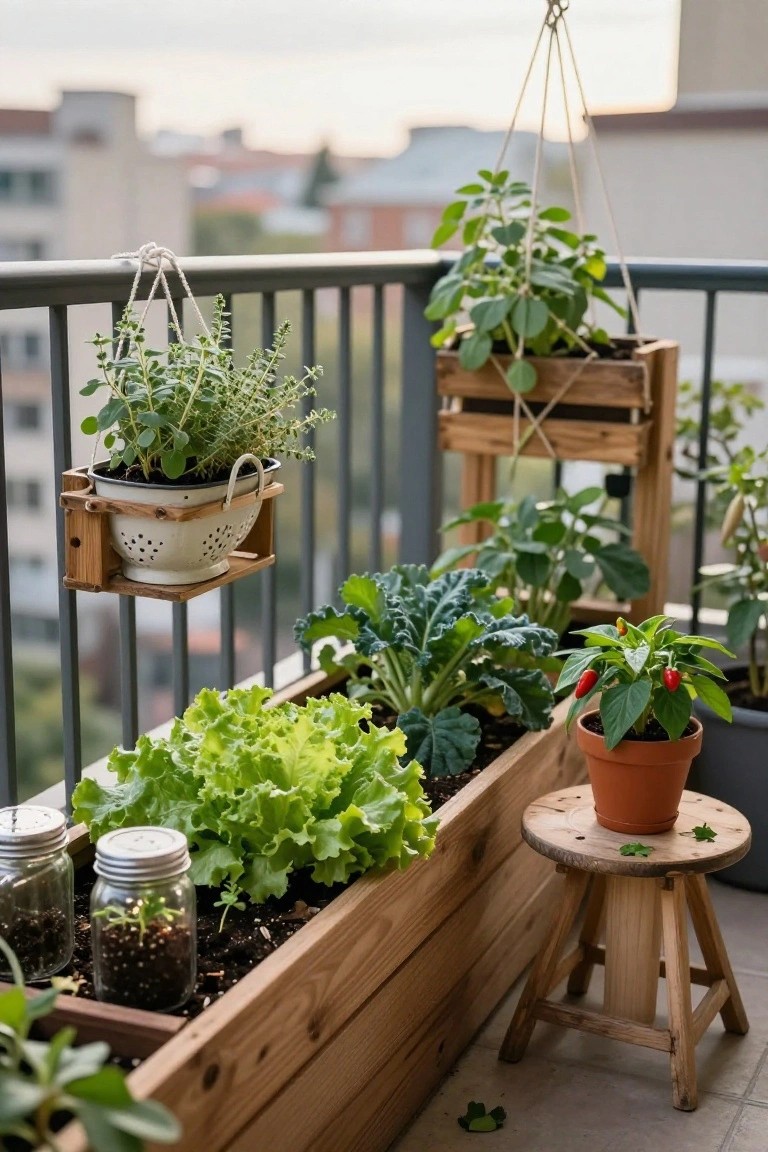
Balconies don’t have much floor space. That’s why this kind of setup works so well. Hanging pots clip right onto the railing for herbs and peppers. A simple wooden box sits low on the floor with lettuce and kale filling it out. It turns a tight spot into a real garden without crowding the area.
Try it if you rent an apartment or just want fresh greens close by. Start with rail brackets for old colanders or baskets. Use scrap wood for the box planter. Jars catch seeds on the go. It fits beginners fine, especially in cities. Keep soil light and drain holes open to avoid soggy roots.
Potted Japanese Maple for Compact Patios
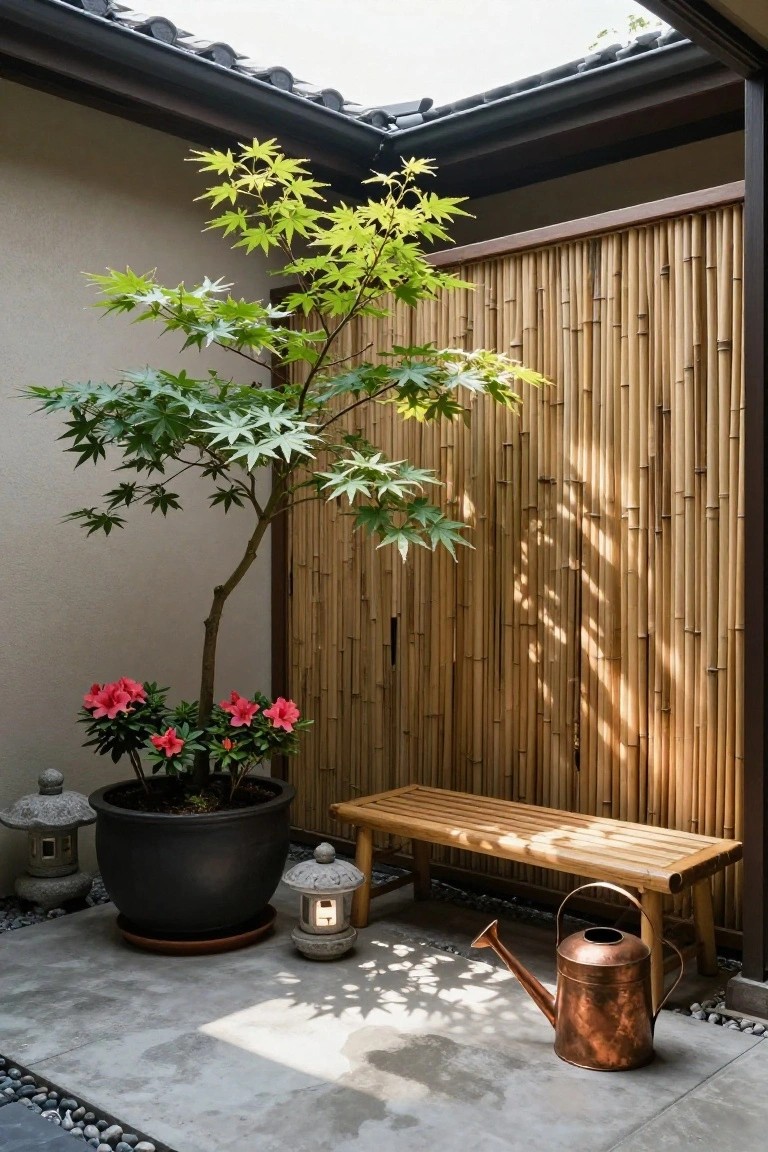
A Japanese maple in a big black pot makes a strong focal point in tight outdoor spots like this courtyard. The tree’s feathery leaves add height and movement without taking up much floor space. Paired with lower plants like azaleas in pots nearby, it fills the area nicely and keeps things looking full.
This setup works great for renters or small homes with patios or balconies. Pick a mature tree that fits your pot, use good soil, and place it where it gets some shade. Watch the roots though. They grow fast so repot every couple years. A simple gravel base and bench keep it low fuss.
Raised Planters for Patio Edges
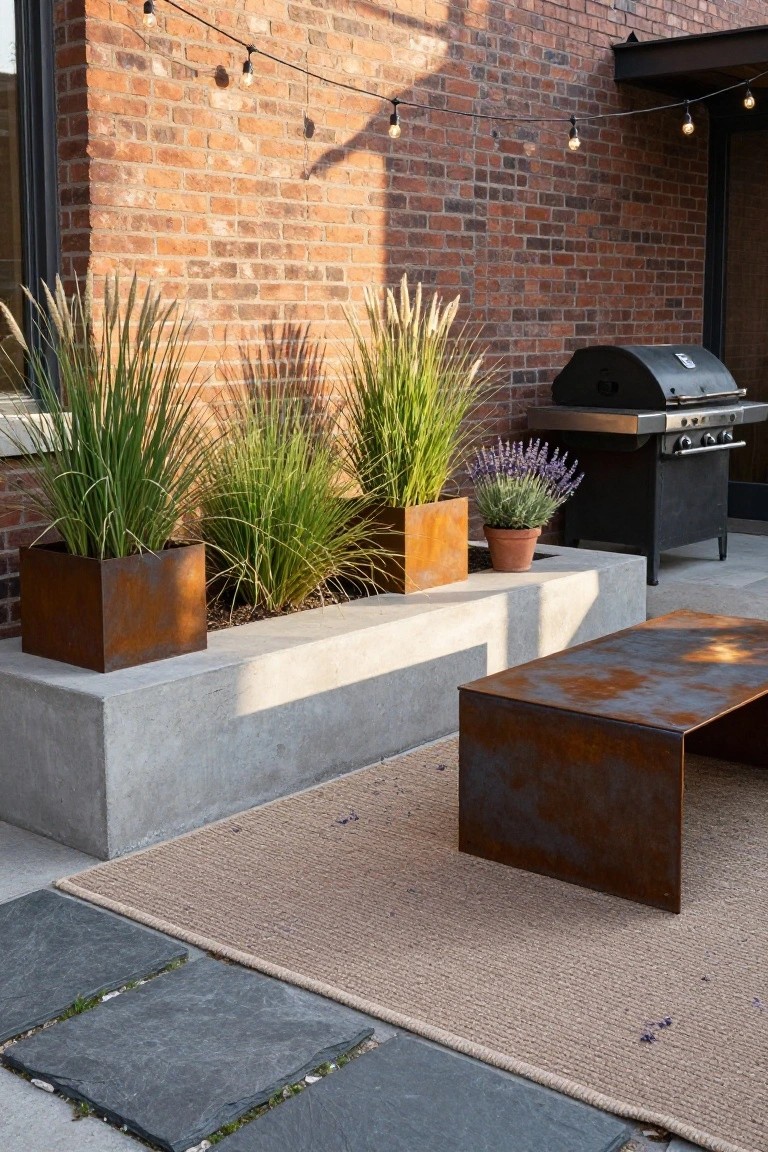
One simple way to add height and structure to a small patio is with raised planters built right along the wall. Here tall grasses like pampas fill corten steel boxes on a low concrete bench, giving a natural screen without taking up much floor space. They frame the grill area nicely and make the spot feel more finished.
These work great in compact urban patios or balconies where you want greenery but not a full garden bed. Plant upright varieties that don’t sprawl, and pair with a few low pots like lavender for variety. Keep the soil simple for beginners, and watch that the metal doesn’t heat up too much in full sun.
Window Box Planters for Tight Spots
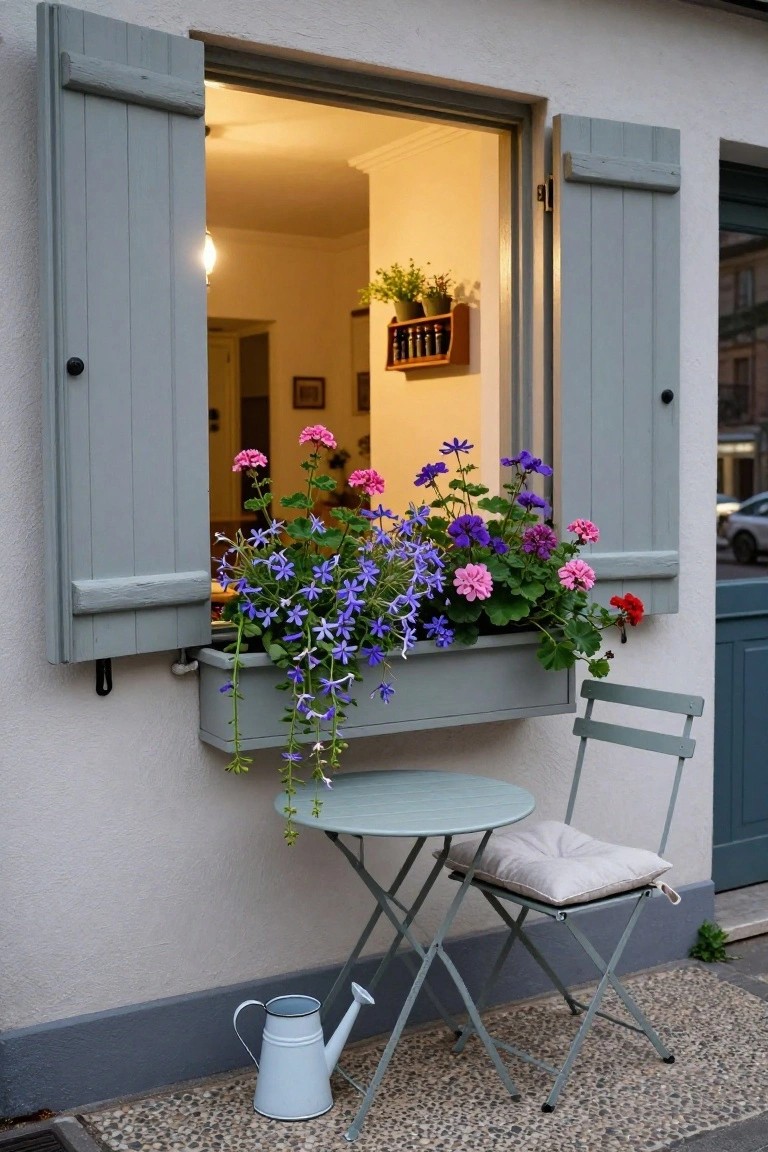
Window box planters like this one pack a lot of color into a small space right at eye level. They turn a plain exterior wall into something lively without taking up ground room. The mix of trailing blue flowers and upright pink blooms spills over nicely, making the whole setup feel full and welcoming. It’s a simple way to garden when you don’t have a yard.
These work best on narrow strips along a house or apartment building, where you can tuck a small table underneath for coffee. Pick easy bloomers like geraniums or lobelia that handle some shade. Just make sure the box is sturdy and drains well, or your plants might get too soggy after rain.
Benchside Succulent Display
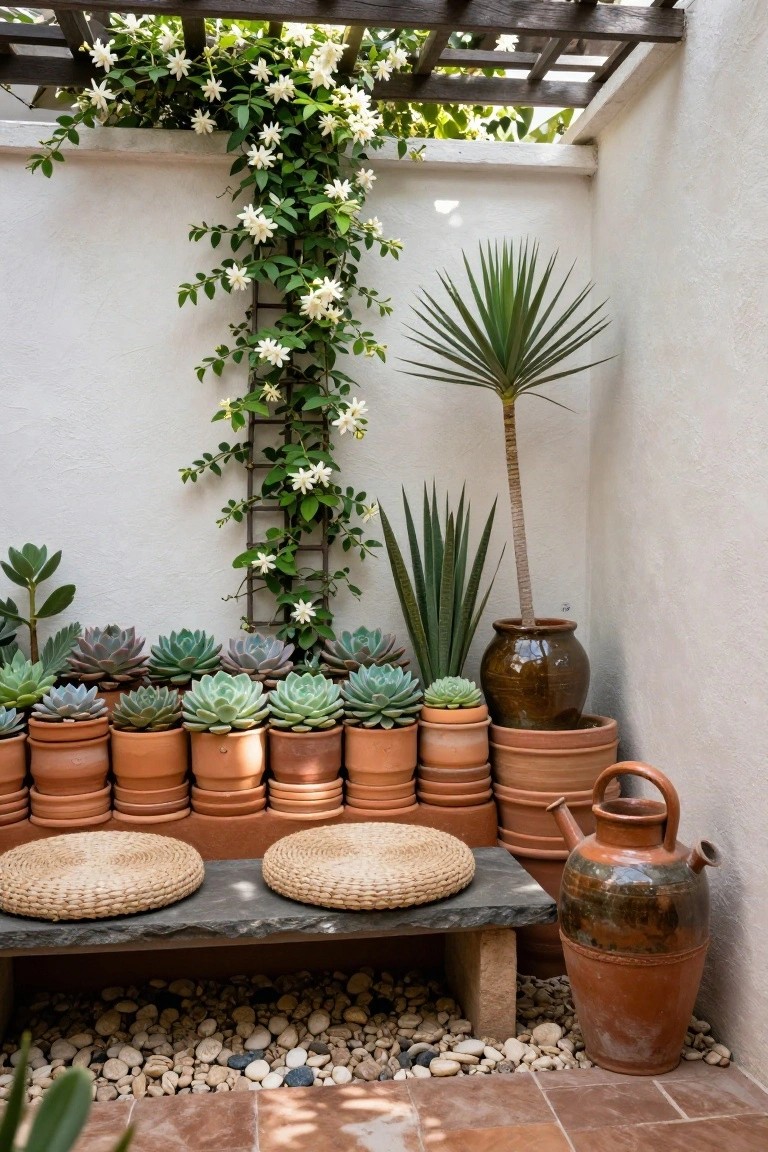
A simple row of potted succulents turns a basic stone bench into a green oasis. Those terracotta pots packed with rosettes like echeveria sit right along the front ledge, making the spot feel full and alive without taking extra room. It’s a smart way to garden in tight spots, and succulents stay happy with little fuss.
Set this up on a sunny patio corner or balcony where you want seating plus plants. Grab plain clay pots, fill them with easy growers, and line them up. Add cushions for comfort. Skip it in shady areas, though, since these plants need light.
Vertical Plant Shelves for Indoor Compact Spaces

A simple wooden shelf like this one packs a bunch of potted plants into a tight corner. It keeps the floor clear while bringing greenery right into the room. You get that fresh look without needing a big garden area. The mix of herbs and small greens on the shelves makes it feel alive and useful.
Put one near a window so the plants get enough light. Go for neutral pots that blend in, and group similar sizes on each level. This works great in apartments or small dining areas. Just check the weight now and then, especially if you’re adding more over time.
Raised Brick Bed for Container Clusters
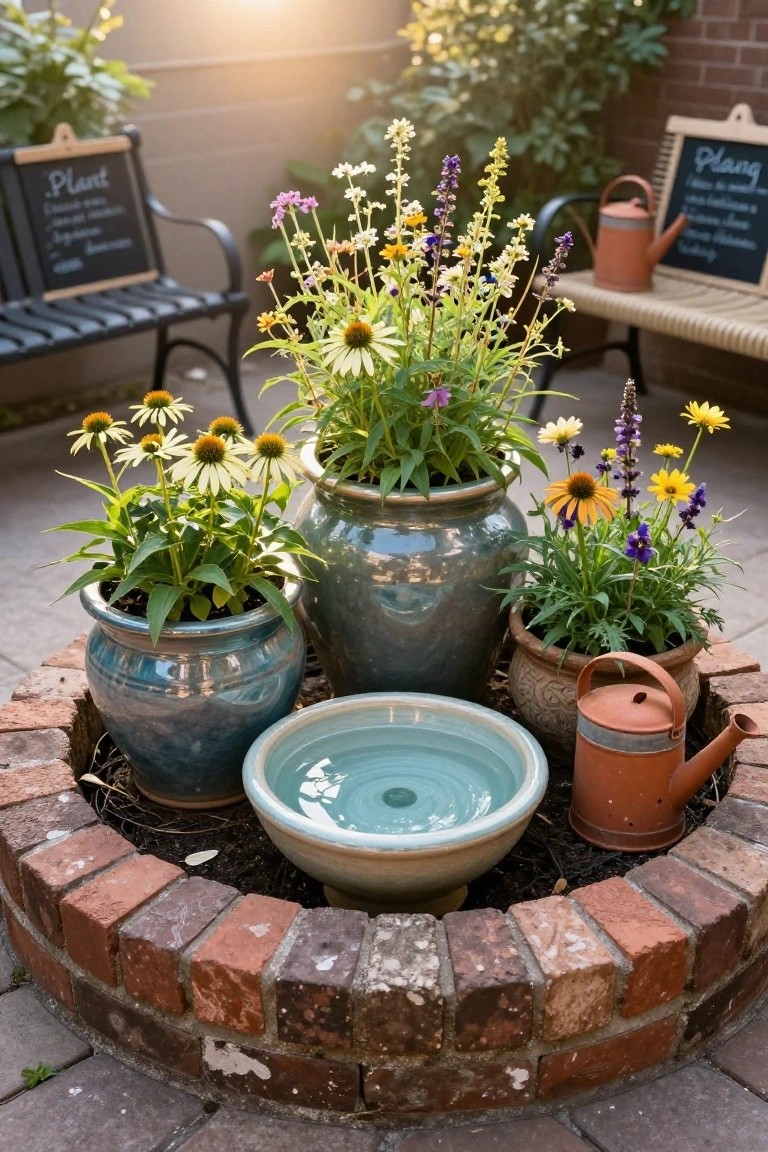
One simple way to make a small garden spot feel full and lively is to build a low raised bed from bricks and fill it with grouped pots. This setup pulls together different sized containers holding coneflowers, salvia, and other easy bloomers into one tidy circle. The brick edge keeps everything contained, and that central blue bowl with a bit of water adds a quiet focal point without taking up planting room.
It’s perfect for beginners with tight spaces like patios or courtyards, where you want color but not a full bed to dig. Stack bricks two or three high on level ground, drop in your pots, and tuck a shallow dish in the middle for birds or just looks. Mix heights and flower colors for interest, but skip overcrowding so air gets through. Works on any sunny side yard too.
Wheeled Planters for Balcony Veggies
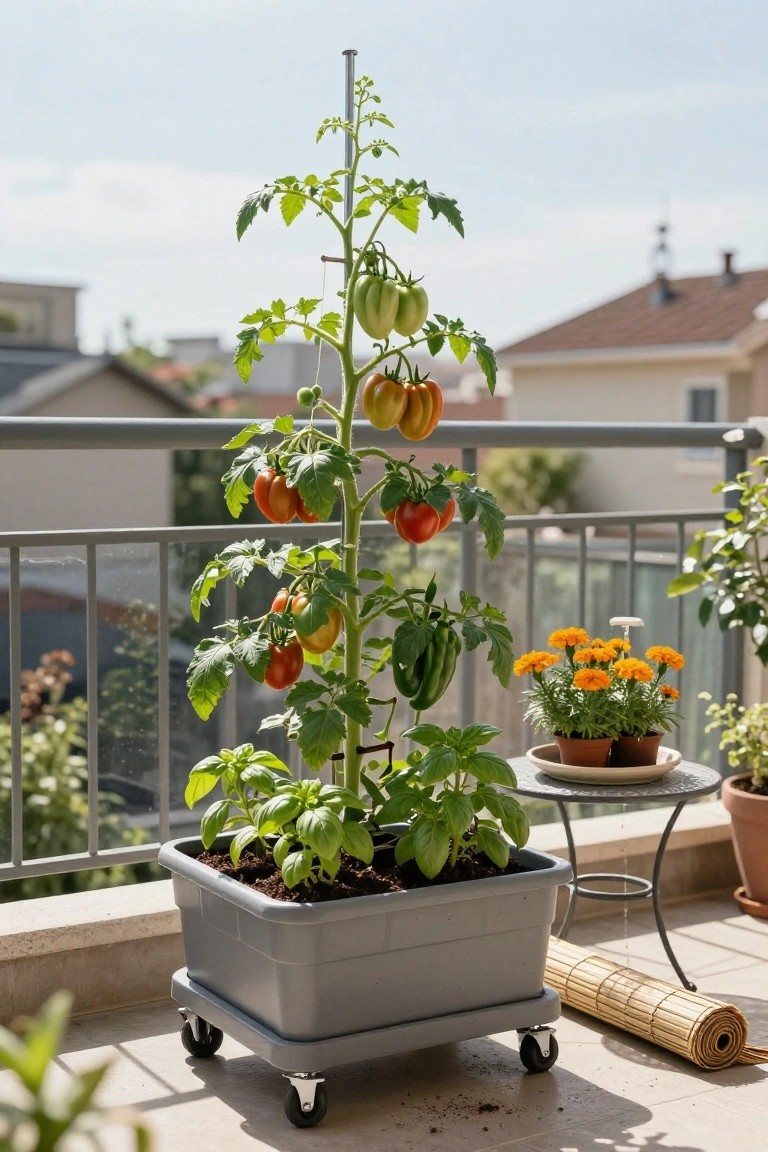
Growing tall plants like tomatoes on a small balcony gets a lot easier with a wheeled planter box. You can stake the main stem up high for support, tuck in basil at the base for natural pest control, and let peppers hang nearby. The wheels let you roll it around to chase the sun or make space when you need it. It’s a simple way to get fresh produce without taking over the whole area.
These work best in sunny spots on apartments or urban patios where ground space is tight. Pick a deep box with good drainage and sturdy casters that lock in place. Start with sturdy varieties for containers, water regularly, and feed them a bit of fertilizer. Just watch for wind tipping tall plants, so secure that stake well.
Hanging Planters for Balcony Veggies
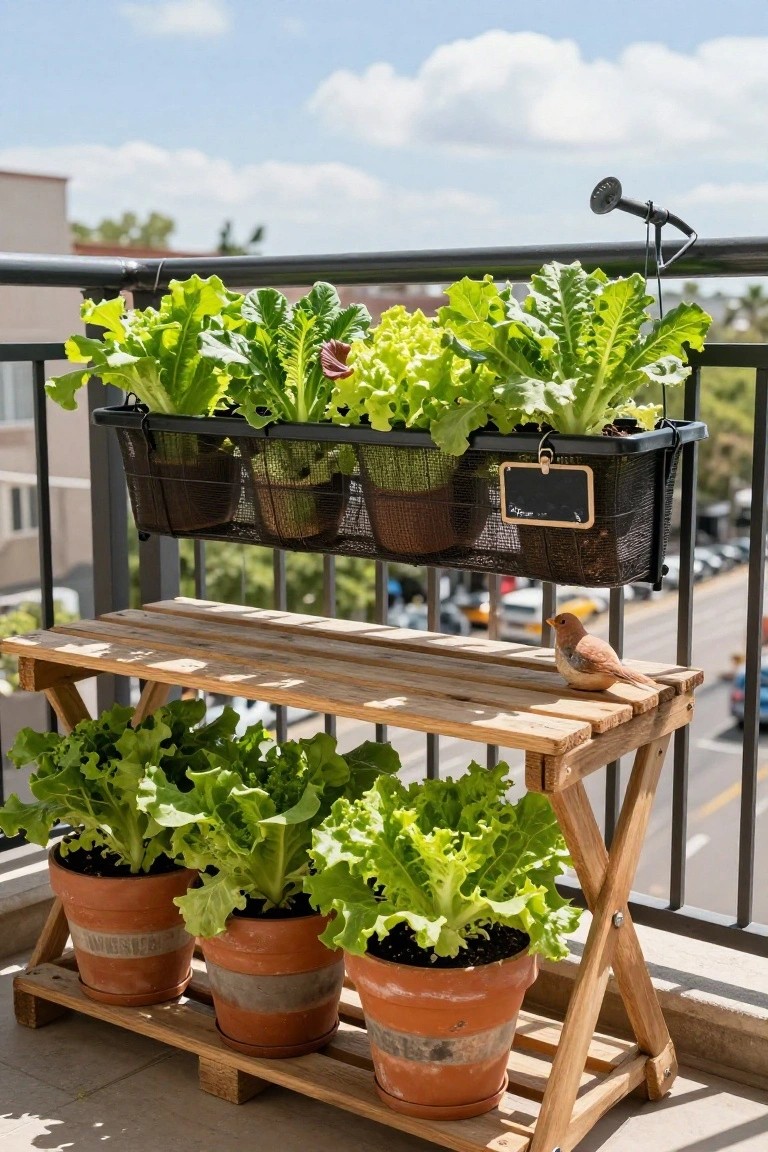
A simple hanging basket on the balcony railing packs in several pots of crisp lettuce. It uses that vertical space most folks overlook, so you get fresh greens right outside your door without crowding the floor. The black mesh design keeps things light and lets air circulate around the plants.
Set one up like this on any apartment balcony or small patio. Pair it with a basic wooden shelf underneath for extra pots in terracotta. Shallow-rooted stuff like lettuce thrives here… just water regularly and pick a sunny spot. Works great for beginners short on space.
Balcony Herb Container Garden
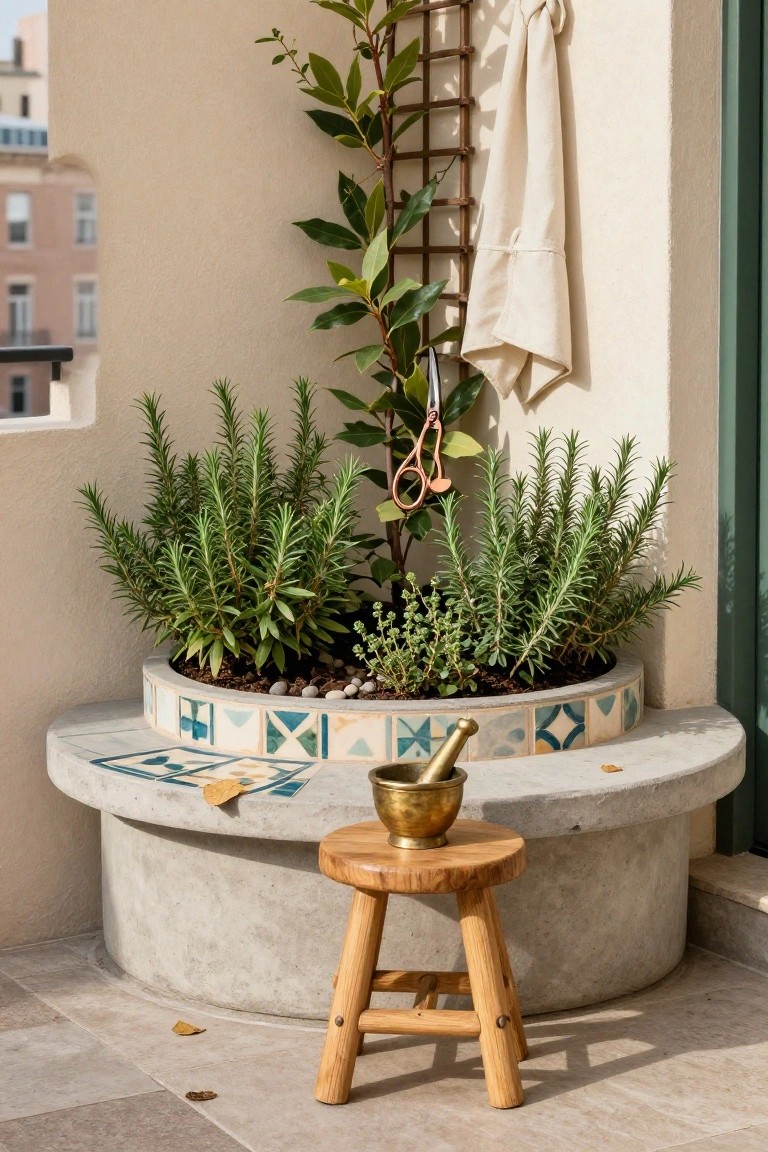
One straightforward way to start container gardening is filling a single large round planter with a mix of kitchen herbs. Here you see rosemary bushes, bay leaves, and a few other greens tucked into one spot on a balcony ledge. It keeps things simple for beginners. No need for a full garden bed. Just enough to harvest fresh sprigs whenever you cook.
Set this up on any compact balcony or terrace edge, especially where space is tight. Use a raised concrete base like this for easy reach, and add a little stool for sitting while you tend it. The brass mortar nearby hints at fresh pestos on the spot. Works best in sunny spots, but watch for overwatering in pots this size.
Vertical Container Gardening on Balconies
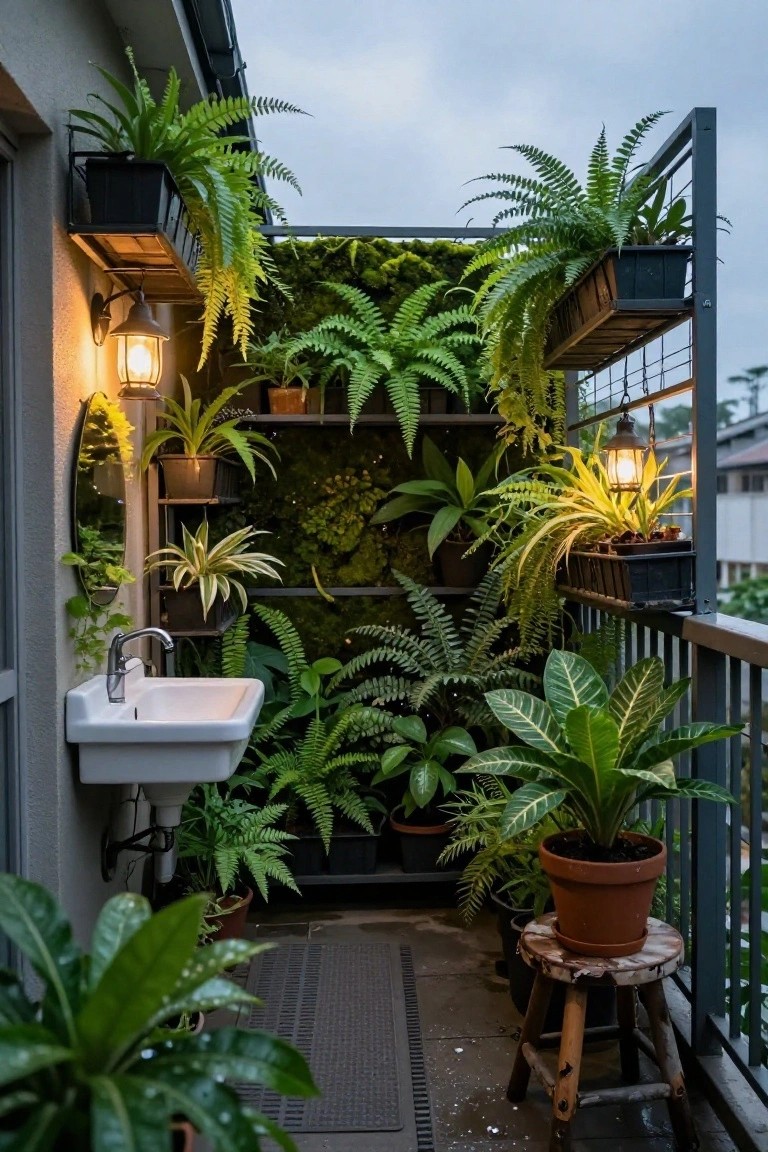
One simple way to pack a lot of green into a tight balcony space is stacking plants vertically. You see shelves and hanging pots loaded with ferns and trailing greens, plus railings edged with planters. It turns a plain outdoor spot into something that feels like a little jungle, without taking up floor room. The mix of heights keeps it from feeling crowded, and the plants soften the hard edges of the railing and walls.
This works great for renters or anyone with a narrow balcony. Start with tough plants like ferns or pothos that handle shade and some wind. Use metal shelves or wire racks for the wall, and clip-on pots for the railing so nothing falls. Hang a few lanterns for evening light, and you have a spot to relax that stays private. Just water regularly since containers dry out faster.
Built-In Planters for Rooftop Gardens
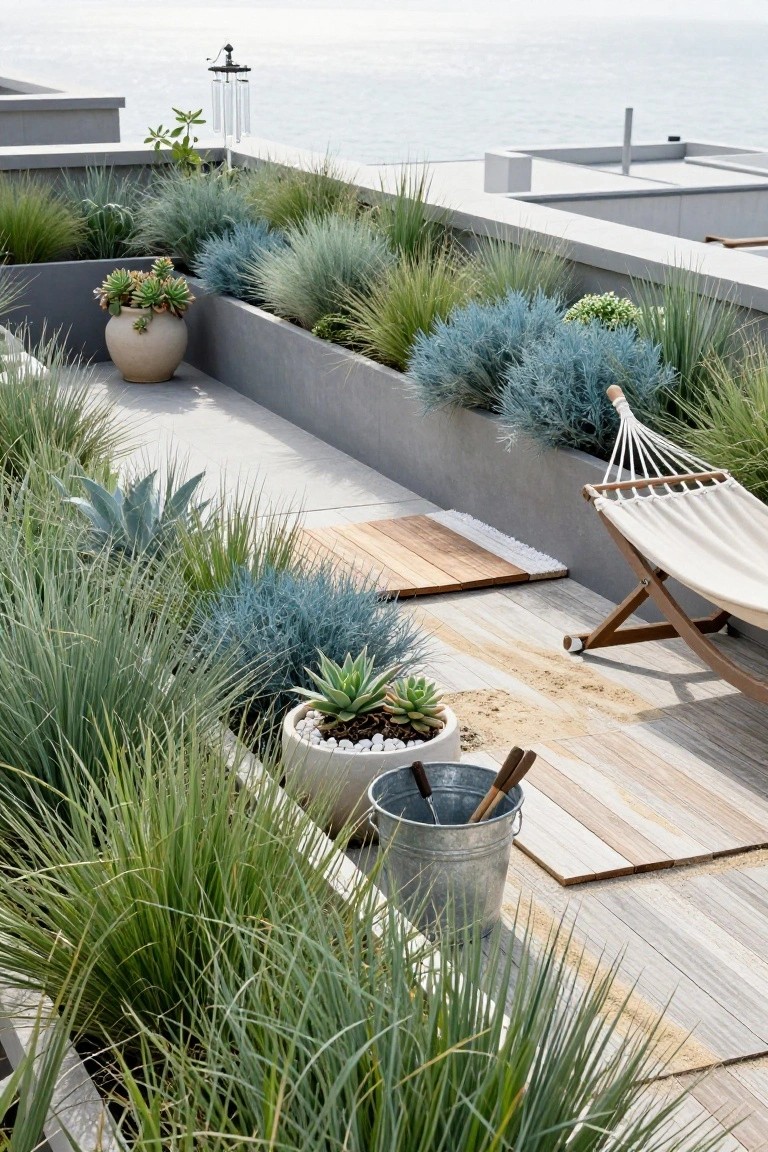
Rooftop spaces can feel barren, but built-in concrete planters along the edges make it easy to add greenery without taking up floor area. Here, troughs filled with tough plants like agaves, succulents, and wispy blue grasses create layers of texture that soften the hard surfaces. It’s a low-effort way to green up a compact spot and enjoy the view.
These work best on urban rooftops or balconies where weight and wind are concerns. Pick drought-tolerant varieties for beginners, since they handle neglect better. Tuck in wooden deck sections for seating, like a hammock spot. Just ensure good drainage to avoid water buildup.
Container Plants Around a Garden Bench
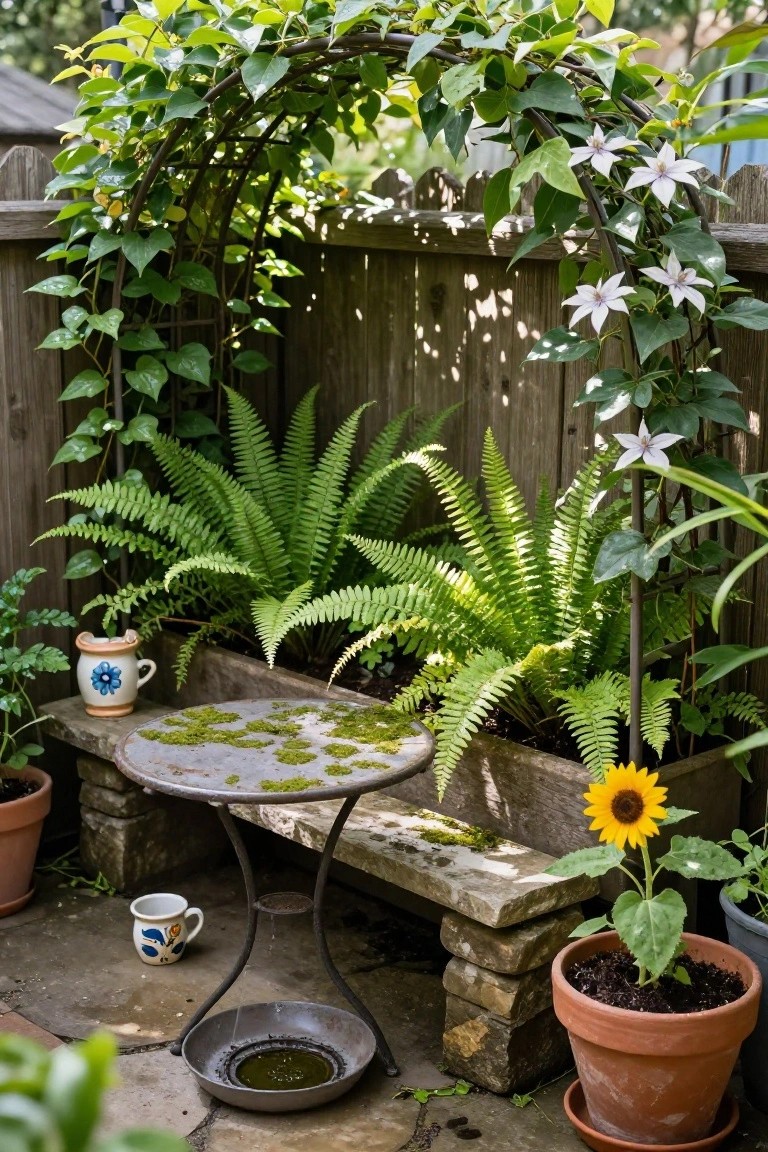
A plain stone bench with a small metal table turns any tight patio corner into a spot you actually want to sit in. Just surround it with pots of ferns and a wooden box sunflower, plus climbers up an iron arch. It fills the space with green without taking up room. Good for beginners since these plants mostly handle themselves.
Put this in a small backyard or side yard where you have a fence for the arch to lean on. Grab secondhand furniture like that weathered table, then cluster five or six pots close by. Watch the water in the table base. It draws birds… or bugs if you let it sit too long. Works best in partial shade.
Containers Around a Small Pond
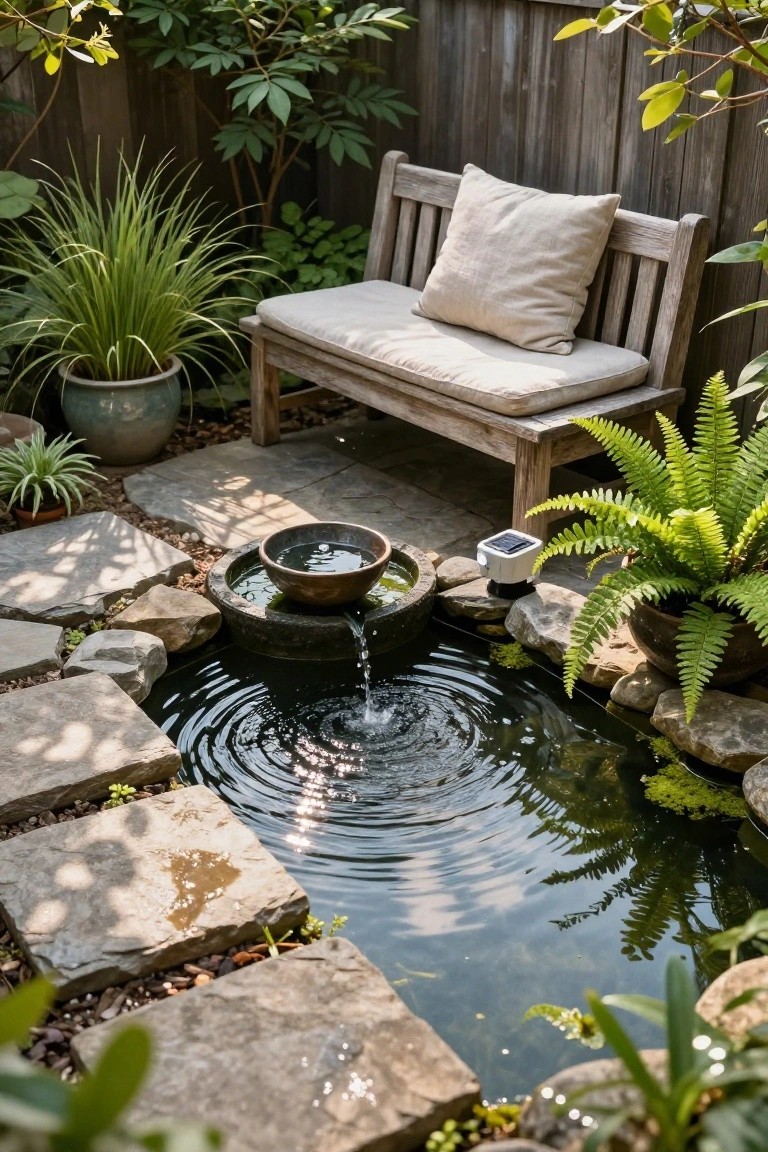
One easy way to make a tight backyard feel bigger and calmer is grouping pots right by a little water feature. Here, tall grass and fern containers sit close to the pond edge, with water rippling from a simple bronze bowl on top. The stone paths and bench nearby keep it practical, but the pots do most to fill the space with green without much work.
This works best in compact spots like side yards or patios where digging a full pond isn’t practical. Pick thrift-store pots in a few sizes, add easy growers like ferns or grasses, and drop in a solar fountain pump. You can shift things as plants grow… just watch for too much sun on the water plants.
Recycled Pallet Planters for Balconies

Old wooden pallets make sturdy raised planters that turn a plain balcony into a flower-packed spot. You see it here with tiers of blooms in every color spilling over the edges. It’s a cheap way to get that garden feel without much ground space. The rough wood ages nicely outdoors too.
Stack pallets into boxes or shelves, line them with landscape fabric so soil stays put, then plant easy annuals like cosmos or marigolds. Works best on sunny decks or apartment balconies. Just make sure good drainage or roots might rot. Renters can take it apart easy when moving.
Vertical Plant Grid for Narrow Spaces
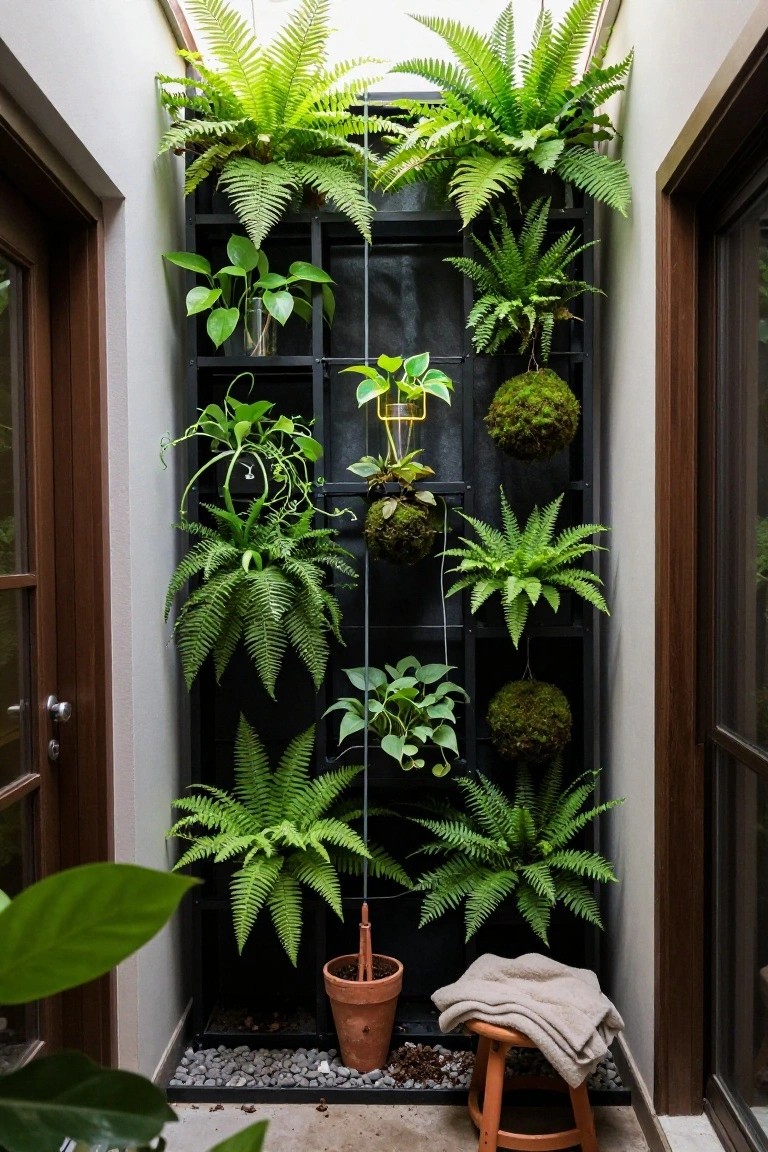
This black metal grid turns a skinny indoor spot into a full-on green wall. Pots with ferns tuck right into the squares, moss balls hang from hooks, and trailing vines spill over. It packs a lot of plants without grabbing any floor room, making even the tightest hallway feel alive and fresh.
Try it between rooms or along a balcony wall where space is short. Beginners stick to low-light lovers like pothos or Boston ferns, easy to source in small containers. Just secure the frame well and mist regularly… keeps things simple and thriving.
Frequently Asked Questions
Q: Can I really use stuff from around the house for pots?
A: Hunt down old buckets, crates, or even sturdy boots from the garage. Punch a few drainage holes in the bottom so water doesn’t pool. They hold up fine and kick off your garden without spending a dime.
Q: How do I water these without soaking my balcony floor?
A: Tilt the pot over a tray or empty planter to catch the runoff. Water slowly until it drips out the bottom, then empty the tray right away. This keeps everything neat in tight spots.
Q: What if my plants start drooping after a hot day?
A: Stick your finger an inch into the soil. If it’s dry, give them a good soak. They bounce back quick once hydrated.
Q: Do I need special soil or just dirt from the yard?
A: Skip the yard dirt, it packs down and drowns roots. Pick up potting mix from any garden store. And it feeds plants lightly too.
