


I started my first herb garden because fresh basil and thyme right outside the kitchen door beat store-bought every time.
A simple layout with raised beds and gravel paths made harvesting easy without trampling plants.
What draws the eye first is usually the clean edging around those beds.
It keeps everything contained as the plants fill out over the summer.
I’ve saved a couple ideas here for testing in my shady corner spot next spring.
Balcony Herb Garden Setup

A balcony like this shows how easy it is to grow your own herbs in a tight space. Terracotta pots line up on a wooden bench holding rosemary, oregano, and thyme. A hanging basket with lemons adds a fresh touch right overhead. It keeps everything handy for cooking, and the setup feels relaxed without taking much room.
This works best on sunny balconies in apartments or small homes. Pick pots that match your style, like these simple clay ones, and group herbs with similar sun needs together. Add a little table nearby for your morning coffee while you check on them. Just make sure good drainage to avoid soggy roots.
Raised Bed Herb Gardens with Edge Storage

A raised wooden bed like this makes herb gardening straightforward for beginners. You plant right in the soil mix, with parsley, chives, and other greens thriving close to hand. The wide edge doubles as a shelf for tools, seed jars, and even a watering can. No more hunting around the shed.
Put one near your patio or back door for fresh picks anytime. It suits small yards or sunny spots along a fence. Just line the bottom with gravel for drainage, and treat the wood to last longer.
Herbs on the Outdoor Kitchen Counter

Having fresh herbs right next to your cooktop changes cooking outdoors. Small terracotta pots with basil and other greens sit directly on the dark countertop by the gas burners. You snip what you need without stepping away. It’s simple and keeps things fresh for everyday meals.
This works best on a balcony or rooftop deck with kitchen space. Pick sturdy pots that won’t tip in wind. Group three or four herbs you use most. Sunny spots like this one suit it well. Just watch watering so they don’t dry out too fast.
Vertical Herb Rack on the Porch

A wooden ladder-style rack mounted right on the porch wall holds hanging pots and jars of herbs. Vines climb up beside it, filling the space with green without taking up the floor. It’s a smart way to grow a bunch of herbs close to your door. You can snip what you need while sitting in that nearby chair.
This works well for beginners since it’s cheap to put together with scrap wood or something similar. Pick easy herbs like mint, basil, and rosemary that handle porch sun. It fits small porches best, but watch for too much shade… herbs need light to thrive.
Build a Circular Herb Garden

A circle of potted basil plants set on gravel and edged with natural stones makes a tidy focal point in this small courtyard. It keeps everything contained and easy to reach. No big digging needed. Just group the pots tight for that full, lush look.
Try this in a sunny patio corner or against a wall where you want some green without the mess. Basil fills out fast, so start with six to eight pots around a central one. Gravel drains well and stones hold it together. Works best in mild spots… keeps weeds down too.
Linear Herb Planters Along the Fence

One straightforward way to start a kitchen herb garden is lining up long narrow planters right against your fence. This keeps things tidy and uses that often-wasted strip of space between the yard and boundary. In the photo, black metal troughs hold rosemary, lavender, and a few other greens, all looking healthy without crowding the patio area.
This works best in narrow side yards or along a back fence where ground space is limited. Beginners like it because the raised height makes picking easy on the back, and you can mix sun-lovers like rosemary with softer herbs. Go for sturdy metal or plastic planters with drainage holes. A gravel path nearby helps too, for simple access.
Herbs Shelved by the Wood Oven

One straightforward way to start a kitchen herb garden is to tuck potted herbs onto shelves right next to your cooking spot. In this setup, rosemary, basil, and other greens sit in terracotta pots on built-in ledges around a wood-fired oven. It keeps everything handy for snipping while you cook. Plus, the herbs soften those thick white walls and add life where it counts.
This works best in kitchens with nooks or simple shelving near the stove. Go for rustic spots like adobe or farmhouse styles, where the oven or range is a focal point. Stick to a few pots at first… don’t overcrowd. They’ll thrive with good light from a nearby window, and it’s dead simple for beginners.
Balcony Bench Herb Display

One easy way to start a fresh kitchen herb garden is lining up your pots on a simple wooden bench right on the balcony. It keeps the herbs handy for snipping, and that open drawer below holds potting soil or small tools without cluttering the space. White pots like these make the greens pop against the natural wood.
This works best on small balconies or patios where floor space is tight. Go for a low bench about waist height when seated, and choose herbs like dill, parsley, and basil that thrive in pots. Just make sure it’s sheltered from strong winds… and water regularly since balcony spots can dry out fast.
Outdoor Dining with a Central Herb Planter

One smart way to start a kitchen herb garden is to tuck your outdoor table right into a big round planter. Fill it with easy herbs like basil, sage, and rosemary, and you’ve got fresh picks steps from your seat. The stone planter here holds everything steady, with the marble table top sitting neat on top. A simple setup like this keeps things practical without taking up extra yard space.
This works best on a small patio or terrace where you want dining and growing in one spot. Go for a raised stone or concrete planter about three feet across to fit four chairs comfortably. Plant taller herbs toward the back, shorter ones near the edges, and add a trailing flower like white roses on an overhead arbor for shade. It’s forgiving for beginners, since the herbs get good sun and drainage right there.
Raised Herb Bed by the Kitchen Door

One straightforward way to start a kitchen herb garden is with a long raised bed tucked right up against your sliding doors. Here it’s concrete, filled with basil plants in different shades of green and purple, plus some taller grasses for shape. The position makes it dead simple to snip herbs while cooking. No trekking across the yard.
This works best on a patio or narrow side area next to the house. Concrete holds up well outdoors and gives a clean edge that fits modern homes. Just make sure it’s deep enough for roots, about 18 inches, and pick sunny spots for herbs like these. Keeps things practical without much fuss.
Raised Beds for Easy Herb Gardening

Raised beds take the hassle out of growing herbs, especially if you’re just starting. These wooden ones sit right at waist height in most spots, so no more sore backs from bending. Different sizes stacked like steps let you mix plants easily, like the lavender and chamomile bunches here. They keep soil neat and drain well too, which herbs love.
Set them on a patio or against a fence where sun hits most of the day. Go for cedar wood since it holds up outdoors without much fuss. Small backyards work great… just measure your space first to fit the tiers without crowding.
Poolside Herb Pots
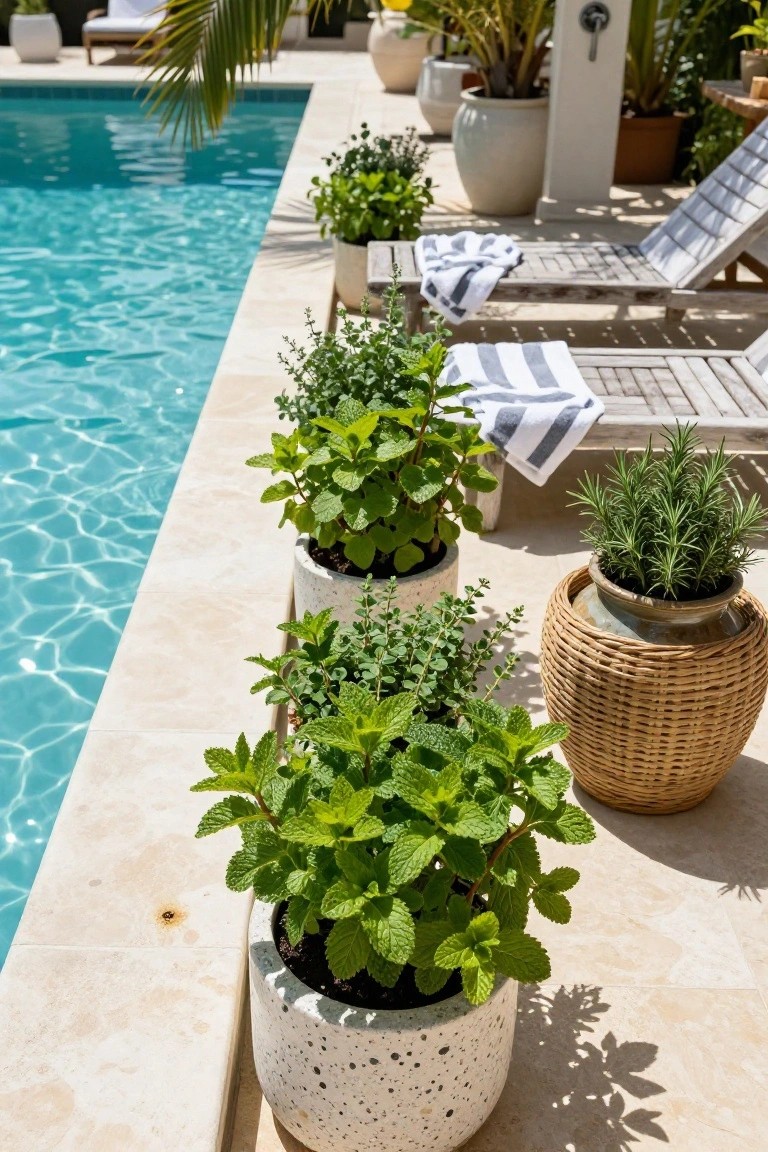
Putting herb pots right along the pool edge makes grabbing fresh leaves super easy while you relax outside. You see mint and rosemary thriving there in simple containers, close enough to snip for drinks or meals. It’s a smart beginner move because these spots get good sun and you can shift pots if needed.
Line them up like this on your deck or patio for that always-ready kitchen garden feel. Pick heat-loving herbs that handle poolside conditions, and go for durable pots that won’t tip. It suits sunny backyards best, just keep an eye on watering since the area dries out quick.
Wall Rack for Patio Herbs

A simple black metal rack mounted on a stone wall holds potted herbs right above the outdoor kitchen counter. It’s a practical spot for beginners to keep lavender and greens handy for cooking or just to enjoy the fresh look. The rack fits naturally with the rough stone and adds some life without much effort.
Try this on a covered terrace or porch where you do outdoor meals. It suits older stone houses or rustic setups best. Start with tough herbs like lavender that handle sun and dry spells. Skip it on fully exposed walls, or the pots might bake.
Raised Planters for Easy Patio Herbs

Raised wooden planters like these make herb gardening straightforward for beginners with limited space. Set up on slim metal legs, they lift everything off the ground so you avoid sore knees or muddy patios. Against a brick wall, they create a tidy green zone that’s practical and looks right at home outdoors.
This setup shines on small terraces or patios near the kitchen door. Fill the boxes with basics like basil, rosemary, and mint, then add a simple bench for picking time. Just ensure good drainage holes, and treat the wood yearly to keep it going. Works best in sunny spots… no big yard needed.
Outdoor Sink Herb Station

One simple way to start a fresh kitchen garden is to line up your herb pots right next to an outdoor sink. In this setup, terracotta pots with basil, parsley, chives, and rosemary sit on a metal tray along the counter edge. The black faucet and stainless sink make it practical for rinsing leaves or filling a watering can without trekking inside. It’s handy for beginners who want herbs at their fingertips during outdoor cooking.
This works best on a balcony or terrace where space is tight. Group four or five pots that you use most, like the ones shown here, and add a small citrus tree nearby for extra green. Keep the tray to catch soil and water drips. It suits any home with a patio kitchen and keeps things low fuss.
Tiered Wooden Shelves for Herb Starts

One straightforward way to get more growing space around a greenhouse is with simple wooden shelves like these. They’re built right onto the door frame, holding trays of young herbs in basic black pots. This setup keeps everything handy when you’re working inside, and the natural wood fits right in with the garden look without much fuss.
You can put these shelves on any sunny spot near a door or fence, as long as they get good light for the seedlings. They’re great for beginners since the pots are easy to swap out or move to bigger spots later. Just make sure the wood is treated to handle rain, and keep the bottom shelf higher off the ground to avoid puddles.
Stone-Edged Circular Herb Bed

A round bed like this makes herb gardening straightforward for beginners. Stones form a low wall that holds in soil and plants such as mint, rosemary, and maybe some thyme. Everything stays neat. Herbs won’t spread into the lawn. Plus it looks right at home in a backyard corner, with room to kneel and pick fresh leaves.
Put one near your kitchen door or patio edge for quick harvesting. Use flat fieldstones or whatever locals have, stacked without mortar for easy changes later. Fill with good soil and space plants so they get air. It works in small yards or even apartment patios. Just check drainage so roots don’t drown after rain.
Potting Bench Herb Station

A plain wooden bench turns into a handy herb station when you line it with white enamel pots full of rosemary, mint, and other easy greens. Up top on the windowsill, a few more pots catch the light through gingham curtains. It’s a fresh way to keep your kitchen herbs close without taking up counter space. That soft green wall color pulls it all together nice and calm.
Put a bench like this near any sunny window or door in a mudroom, laundry area, or even a corner of the kitchen. Beginners love it because you can grab what you need for cooking right there. Just make sure the pots drain well so roots stay happy. Keeps things tidy too.
Wooden Benches with Built-In Herb Planters

One straightforward way to grow herbs right where you use them is with these wooden raised benches that double as planters. You sit down, and there are your fresh greens, basil, and such within arm’s reach. It keeps things practical in a tight space like this terrace area, and the natural wood fits right in without much fuss.
Put something like this along a path or patio edge in a small yard or courtyard. It works best for beginners since everything stays contained and off the ground, easier to tend and harvest. Just make sure the wood is treated for outdoors, and pick herbs that like similar sun and water.
Cinder Block Herb Bench by the Grill

One easy way to start herb gardening is stacking concrete blocks into a low bench right next to your grill. Top it with a thick wood plank, and line up terracotta pots of basics like basil, oregano, and mint. It keeps fresh picks handy while you cook, and the blocks give a sturdy spot to sit or set tools.
This works best on a patio or deck where space is tight. Beginners can grab blocks from any hardware store, no fancy skills needed. Just make sure to level them flat, and choose herbs that like full sun. Skip it if your spot gets too shady… herbs won’t thrive.
Balcony Railing Herb Planters

One smart way to start a kitchen herb garden is with long planters mounted right on your balcony rail. These black boxes hold a mix of greens like basil and chives, labeled so you know what is what. They fit tight spaces without taking floor room, and the sun hits them just right for steady growth. Fresh picks end up on your table in minutes.
Put a small round table nearby, maybe with a colander for rinsing leaves. This works best on urban balconies or patios with some afternoon light. Go for easy herbs that don’t sprawl too much… and keep soil moist but not soggy.
Herb Garden Border by the Wall

One straightforward way to start a kitchen herb garden is to plant right along a low stone wall. It keeps everything at waist height so you can snip what you need without much stooping. Here the border is full of lush green herbs, tucked in with orange marigolds that add color and help keep bugs away.
This setup works well in a small side yard or near the back door where you pass by often. Choose a sunny wall with decent soil behind it, then fill in with easy herbs like parsley or chives. Keep a basket and gloves right there on the ledge for quick harvests. Simple for beginners, and it ties the garden to everyday cooking.
Balcony Herb Workbench with Sink

One practical way to start herb gardening is with a simple outdoor workbench like this one on a balcony. It has a wooden top and a built-in sink for rinsing soil off fresh basil or other herbs you grow right nearby. The herbs sit in pots and planters around the bench, so everything stays handy. This keeps mess outside and makes tending the garden feel straightforward.
Put this setup on a sunny balcony or rooftop terrace where you have room for a couple stools. It suits apartments or small homes without yard space. Use weatherproof materials and make sure the sink drains well to avoid water buildup. Beginners can start small, adding more plants as they go.
Frequently Asked Questions
Q: Which herbs work best for someone like me who’s never gardened before?
A: Start with basil, chives, and oregano. They bounce back quick from beginner slip-ups and fill your kitchen with fresh smells in weeks. Plant them in pots so you control the space.
Q: How much sun do these herbs really need each day?
A: Aim for at least six hours of direct light. If plants stretch tall and skinny, give them more sun or use grow lights. Morning sun works gentle on tender leaves.
Q: My basil leaves are turning yellow. What went wrong?
A: You probably watered too much. Stick your finger in the soil; wait till it’s dry an inch down before watering again. And trim dead bits to perk it up fast.
Q: Can I keep herbs going all winter indoors?
A: Sure, set them by a bright window. Turn pots every few days for even growth. They’ll reward you with fresh picks when snow flies outside.
