


When I first tackled my backyard garden, I learned the hard way that a smart layout keeps everything accessible as plants grow and spread over the seasons. Beginners often overlook how pathways and bed edges shape the daily flow, turning a promising plot into a tangled mess if they’re not planned from the start. What stands out right away in a good setup is the way you can reach every corner without trampling crops or fighting weeds. I’ve jotted down a couple of these beginner-friendly ideas to test in my own space, especially the ones that maximize sunlight and easy harvesting. They make the difference between a hobby that fizzles and one that feeds you all summer.
Raised Beds Along a Brick Path

One straightforward way to get your garden producing is with raised wooden beds lined up along a simple path. These beds keep soil contained and at a good height for weeding or picking without much bending. The brick walkway in between lets you reach every plant easily. Add a plain bench right in the middle like this, and you’ve got a spot to sit and check on things.
This setup works great in a smaller backyard where space is tight. It’s perfect for beginners growing veggies, herbs, or flowers since everything stays neat and accessible. Line the beds with lavender or tomatoes for color and use. Just make sure the wood is treated to last, and keep paths swept to avoid slips.
Terraced Raised Beds with Stone Walls

Raised beds built right into stone retaining walls like this make a sloped yard into real growing space. The tiers hold back soil while letting you plant veggies, herbs, and flowers without bending over much. A simple gravel path runs between them for easy wheelbarrow access, and that white picket gate adds a cozy finish.
This works best in backyards with some slope or tight spots near the house. Use local stone to keep costs down and blend with the landscape. Beginners can start small, filling beds with soil and mixing in edibles like leeks or rosemary. Just watch drainage so roots don’t rot.
Linear Raised Beds for Skinny Side Yards

One straightforward way to turn a narrow strip along a fence into a productive garden is with long wooden raised beds. They fit right against the wall, leaving just enough space for a path, and let you grow lots of lettuce, herbs, and veggies in a small footprint. It’s practical. No wasted ground.
These work best in side yards or passages where width is tight, maybe 3 or 4 feet across. Build them from affordable timber, add good soil, and plant in rows. Keep them low, around knee height, for easy picking. Watch the sun though. They need it.
Raised Beds for Tidy Herb Gardening

Raised beds set up like this keep your herbs organized and easy to reach. The straight white frames create clear paths through the middle, so you can tend everything without trampling plants. Stuff them with tough growers like lavender and rosemary, and you get a productive spot that looks sharp too.
Put these along a walkway or side yard where space is tight. They suit beginners since you build better soil inside and skip bending over much. Watch the drainage though, or roots can rot in wet spells.
Dining Table with Raised Herb Planters

A basic wooden table and benches sit snug between tall raised planters packed with basil, lettuce, and other easy greens. This layout makes good use of a tight courtyard spot, so you can eat dinner steps from where your herbs are growing. It keeps things practical without taking up extra room.
Try this in a corner patio or against a house wall where space is short. Stack wooden crates for the beds to match your table, and fill them with stuff you cook with often. String lights overhead help stretch the time you use it. Just make sure good drainage in those planters, or roots get soggy.
Gravel Path with Lavender Borders

A straight gravel path like this makes getting around the garden simple and quick. It cuts right through beds of lavender that line both sides, keeping things neat without much trimming. Large terracotta pots add spots for veggies or herbs right along the way. That’s handy for beginners who want productive space without fuss.
You can set this up in any sunny yard with decent drainage. Lay gravel over landscape fabric to cut weeds, then edge with rocks and plant tough lavender that smells great and draws pollinators. It works best for herb or veggie gardens since the path leads you straight to what you need. Just watch the gravel doesn’t wash out in heavy rain.
Tiered Balcony Shelves for Herbs

A straightforward metal shelving unit bolted to the balcony railing holds rows of terracotta pots filled with basil, mint, and other herbs. This setup makes the most of tight urban spaces, letting you grow fresh ingredients right outside your door without crowding the floor. The vertical layers keep everything organized and easy to reach.
It’s perfect for renters or small apartments where ground space is limited. Pick a rack rated for outdoor use and pot weight, then fill with beginner-friendly plants that thrive in sun. A little table underneath works well for tools like a mortar and pestle. Just check your railing’s strength first.
Stone Water Channel Along Garden Beds

A stone-lined channel like this directs rainwater from the downspout straight through the garden bed. Tall grasses grow right in the shallow water flow, with pebbles scattered along the bottom for a natural feel. It handles drainage without looking like a ditch, and ties the planting beds together neatly.
This works best in rainy spots or on slight slopes, keeping water off the house foundation. Line a narrow trench with flat stones, connect to your gutters, and plant water-loving perennials or sedges. Suits borders next to lawns or patios. Aim for a steady slope to avoid standing water.
Raised Beds Lined Up on the Patio

One practical setup for beginners is lining up raised beds right on your patio. These galvanized metal trays keep soil contained and make it easy to plant seeds or starters in rows. You see wooden stakes for labels and bits of mulch to hold moisture. It turns a plain hard surface into a productive spot without much fuss.
To try this, find sturdy trays about 8 to 12 inches deep and space them a foot apart for walking access. They suit apartments or small yards where ground planting won’t work. Fill halfway with a light soil mix, then add plants. Drainage holes are key, or they’ll get waterlogged after rain.
Stepping Stones Set in Gravel

A straightforward path like this runs large rectangular stones through a bed of loose gravel. It keeps things open and simple, letting you get around the garden without mowing or edging all the time. Those metal borders hold back low-water succulents, so the look stays neat even if you forget to fuss over it.
This works best in sunny spots or dry yards where you want access to beds without crowding them. Lay the stones where people naturally walk, fill gaps with gravel for drainage, and pick tough plants along the edges. Narrow side areas take to it right away.
Raised Bed Vegetable Garden Basics

A raised bed like this one is a smart starting point for beginners who want fresh veggies without a big plot of land. The simple square wooden frame holds good soil in place, making it easy to plant and tend crops right at waist height. You see a nice mix here of lettuces, kale, beets, and herbs growing close together, which maximizes space and keeps harvesting simple.
Put one in a sunny corner of your yard or even on a patio if space is tight. Go for untreated cedar or pine boards about 12 inches high, fill with a blend of topsoil and compost, and plant edibles that mature at similar times. Watch the drainage though… too much water can drown roots fast.
Raised Stone Beds for Herbs

A raised bed like this, edged with rugged stone, packs in a ton of useful herbs right where you can grab them for cooking. Thyme, mint, and basil grow close together in that curve, making good use of every inch. The stone holds soil in place and gives a clean edge against the gravel path. It’s straightforward and keeps things productive without much fuss.
Put one near your kitchen door or along a walkway for easy picking. Stone from your area works best, stacked low enough to reach without bending too much. Mix in perennials like thyme with quicker ones like basil. Just make sure the bottom drains well… wet roots won’t last. Suits small yards or even apartment patios.
Raised Beds with Walkway Access

One straightforward way to set up a productive garden is with raised wooden beds built right around simple walkways. You end up with neat rows of soil for planting, like the lettuce and greens here, and plenty of room to move between without compacting the dirt. Paths like these keep things organized and make tending the garden less of a hassle.
This layout works best in a backyard corner or along a fence, where you can add drip lines along the beds for even watering. Go with untreated cedar or pine for the frames to avoid chemicals near food plants. It’s ideal for beginners since everything stays contained and reachable. Just watch the wood doesn’t rot too fast in wet spots.
Mini Greenhouse Garden Layout

A small greenhouse makes a smart focal point in a beginner veggie garden. It sits right off a simple gravel path with raised beds full of greens like lettuce packed around it. That log bench nearby adds a practical spot to sit while you tend things. Keeps the space feeling productive without getting too big or complicated.
This works best in a sunny backyard corner where you want max output from a tight spot. Build beds from wood or blocks for easy setup, line the path with low plants to guide the eye. Watch the shade from nearby trees so your greenhouse gets enough light. Suits renters or small lots perfectly.
Low Maintenance Gravel Garden Layout

Gravel makes a smart base for beginner gardens. It covers the ground without grass to mow or weeds taking over. In this setup, the gray pebbles fill the space neatly between concrete planters and a bench, keeping everything looking sharp and open. The bamboo fence adds simple enclosure without feeling closed in.
This works best in small courtyards or side yards where you want low upkeep but still some structure. Use it for container plants in those round concrete forms, or even herbs if you want productivity. Add a row of low lights along the edge like here… evenings get cozy without much effort. Just rake occasionally to refresh.
Straight Rows for Easy Fruit Tree Access
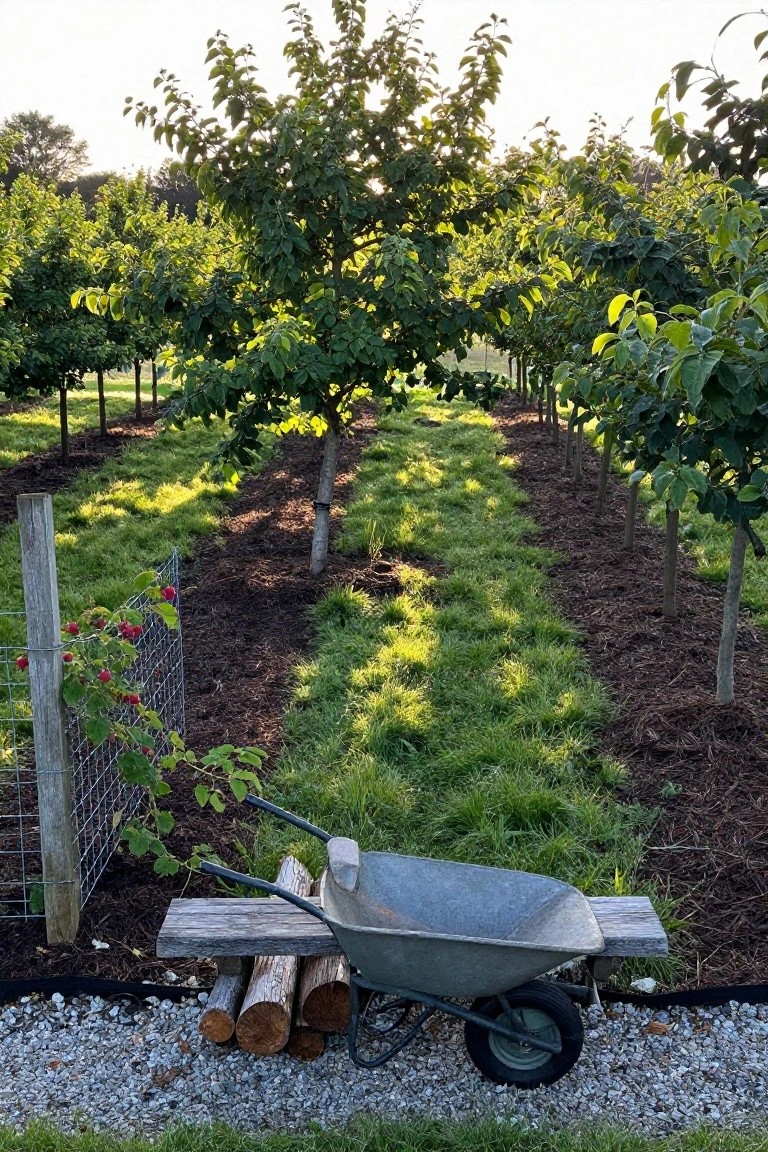
One straightforward way to set up a productive garden is planting fruit trees in neat straight rows. You see young trees here, maybe plums or apples, spaced evenly with mulch piled around each base. Grass paths run between the rows, keeping things walkable and letting you push a wheelbarrow right up without a mess. It’s simple for beginners because it cuts down on wasted steps when you’re weeding or picking.
This layout works best in a sunny side yard or along a fence where you have room for 4 to 6 trees to start. Space them 12 to 15 feet apart so they don’t crowd as they grow, and keep the paths mowed short. Mulch helps hold moisture and blocks weeds, but refresh it once a year to stay ahead of trouble.
Terraced Gabion Walls for Sloped Gardens

Slopes often waste good garden space, but gabion walls fix that by turning hills into usable terraces. These are simple wire baskets packed with rocks that hold soil back and create level spots for planting. Wooden boxes on top let you grow veggies or easy greens right where the land drops away, keeping everything stable and neat.
It’s a solid pick for backyard hills, especially if you’re starting out. Stack the baskets two or three high, add steps between levels for access, and plant low-water stuff like succulents in the gaps. Drainage happens on its own through the rocks, so no soggy roots. Works best where you have local stone handy.
Greenhouse Workbench for Productive Gardening

A small greenhouse like this one, paired with a simple wooden workbench just outside the door, makes gardening so much easier for beginners. You can grow tomatoes or beans protected from the weather, and everything you need is right there – tools, seed trays, a bit of soil mix in a jar. It turns a corner of the yard into a real growing station without taking up much space.
Put this setup in a sunny backyard spot where you get good light through the glass panels. It suits small properties or anyone starting out, since the bench lets you pot up seedlings or prune without running back and forth. Just make sure the base is level on the ground, and watch for too much moisture buildup inside.
Curved Stone Paths Through Mulch Beds

A good garden layout starts with a path that takes you right where you need to go. Here, flat stone pavers curve gently through wide mulch beds packed with greens and herbs. It keeps things practical. No more muddy shoes or trampling plants when you harvest. The mulch border holds it all together. Low weeds, steady moisture. Simple fix for a working garden.
Lay this out in any sunny backyard spot, even a narrow side yard. Start with 3-foot-wide beds edged by the path. Use affordable concrete pavers on a gravel base for drainage. Fill beds with easy growers like lettuce, chives, and grasses. Add low lights along the edge if you want evening walks. Skip it in super shady areas… mulch rots too fast there.
Balcony Gardening with Stacked Crates

One smart way to fit more plants into a tight balcony space is stacking sturdy plastic crates like these blue ones. They hold everything from microgreens in trays to herbs and strawberry plants, turning a simple railing area into a productive spot. You get layers of growing room without crowding the floor, and the open sides let air circulate.
This works best on sunny urban balconies or small patios where space is limited. Grab some recycled crates, drill drainage holes in the bottoms, and fill with soil. Add a table nearby for starting seeds. Just keep them stable against wind, and you’ll have fresh greens close at hand all season.
Winding Path Splits Productive Garden Beds

A gentle curving path runs right through the center of this garden. It keeps everything neat and gives you room to walk without trampling plants. Berry bushes and herbs line both sides, with wood stumps here and there for a natural feel. That metal trough at the end holds water for easy access too.
This setup works great in small backyards where you want max growing space. Mulch the path to cut down on weeding, then edge it with scrap wood or stones. Plant low stuff near the path and taller things farther out. Suits beginners aiming for veggies without much fuss.
Raised Planters on Wheels for Easy Deck Gardening

One smart way to get more from a small deck or patio is setting up raised planters on wheels. These let you roll herbs right where you need them for cooking or sun. In this setup, long metal troughs hold different plants like rosemary and basil, all labeled so you know what’s what. The wood bench tops double as seating too. It’s practical for beginners who want fresh produce without taking over the yard.
Put these along a sunny deck edge for quick harvest access. They work best in average yards where space shifts with seasons. Go for galvanized metal to handle weather, and add simple drip lines if you can. Watch the weight when full of soil, but the wheels make rearranging simple. Good for renters or anyone testing a garden spot.
Raised Brick Beds for Easy Greens

Raised beds made from bricks give you a clean way to grow veggies without the hassle of digging up your yard. They’re sturdy, keep soil from spilling everywhere, and put plants right at picking height so your back stays happy. In this setup, rows of spinach and leafy greens thrive under shade cloth that cuts the intense sun, making it simple to harvest fresh produce often.
Build them along a path like this for good access, using bricks for walls about two feet high. Add drip irrigation tubes on top to water evenly without waste. This works great in small backyards or patios… just make sure the base drains well to avoid soggy roots.
Picket Fence Edging for Raised Beds

A simple white picket fence running along raised garden beds makes everything look tidy and put-together. It holds back the soil nicely, stops plants from spilling over, and adds that old-fashioned garden charm without much fuss. Beginners love it because the beds stay defined, so you can plant veggies like beans on trellises and keep rows straight.
This works best in small backyards or sloped spots where you need some structure. Go for it on cottage-style homes or near the coast… the low fence pairs well with gravel paths and stone walls. Keep an eye on painting the wood every few years, though, to fend off weather.
Frequently Asked Questions
Q: How do I pick the right layout for my tiny backyard?
A: Walk your space and note the sun patterns throughout the day. Sketch a quick to-scale drawing on paper with graph paper if you have it. Match it to the ideas that squeeze the most plants into tight spots, like vertical stacking or narrow rows.
Q: Should I put tall plants in the middle or on the edges?
A: Plant tall ones on the north side or edges so they don’t shade shorter veggies. This keeps everything sunny and reachable. You harvest easier without ducking under cornstalks every time.
Q: What if my soil is lousy—can these layouts still work?
A: Build right on top with raised beds or containers filled with fresh mix. Skip fighting bad dirt. They turn any patch productive fast.
Q: How do you keep paths from turning into mud pits?
A: Lay down mulch, straw, or flat stones between rows right away. Walk only where you put them. Plants stay happy, and you avoid the slog.
