


I started my first vegetable garden in a narrow strip along the fence, and poor spacing turned half my plants into a tangled mess right away. In small yards, the key lies in clean pathways between raised beds and smart clustering of crops that grow at similar rates. Gardeners tend to notice first whether the layout lets air circulate or if everything feels crammed and hard to tend. Over a couple seasons, I’ve seen how edging those beds keeps soil in place and makes the whole space look intentional as plants fill out. A few of these simple grids are the ones I still adapt each year because they deliver steady harvests without taking over the yard.
Simple Pathway Between Raised Beds

One straightforward way to make the most of a tight backyard spot is to run a narrow stone pathway right down the middle, with raised beds on both sides. This setup keeps everything easy to reach without wasting any growing space. You can see pole beans climbing up a trellis on one end, marigolds and basil filling in the edges, and lettuce thriving in the beds. It turns a skinny yard into a productive little farm.
Put this to work in any narrow side yard or sliver behind the house, especially if you’re just starting out with veggies. Use affordable pavers for the path and simple wood for the beds, then plant quick growers like greens and herbs first. Watch the scale though. Too wide a path eats up room, so keep it just wide enough to walk single file.
Compact Balcony Vegetable Garden

A small balcony like this one turns into a real veggie producer just by lining up pots along the rail and grouping more on the floor below. Cucumbers climb up from their black pots, pumpkins spread their leaves nearby, and herbs like rosemary sit pretty in a terracotta one. The string lights draped along make it cozy for evenings without taking up growing room.
This works best in apartments or tight urban spots where ground space is zero. Pick deep pots for roots, label them like here for easy tracking, and add a folding table for picking right where you harvest. Watch the weight on rails though, and group sun-lovers together.
Built-In Circular Bench in a Small Veggie Garden
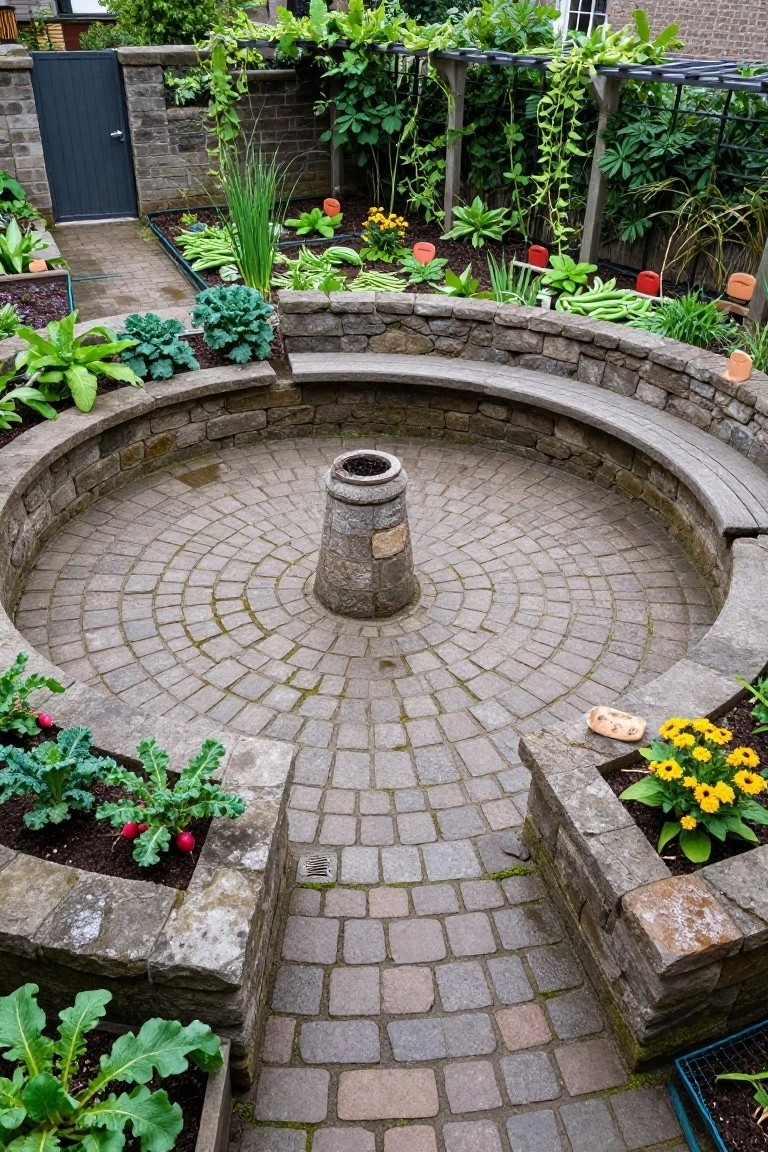
This layout puts a simple round stone bench right in the middle of your garden. The paved circle with its central pillar acts as a natural gathering spot, while raised beds packed with kale, beans, and beets hug the edges. It works so well in tight spaces because it mixes growing food with a place to sit and enjoy it all. No wasted corners here.
You can copy this in any small backyard or courtyard. Build the bench from local stone to match your walls, then fill the beds with easy veggies like lettuce or radishes. Keep the center pillar for a plant or small fire bowl… just make sure the paving drains well to avoid puddles after rain.
Raised Beds Along the House Wall
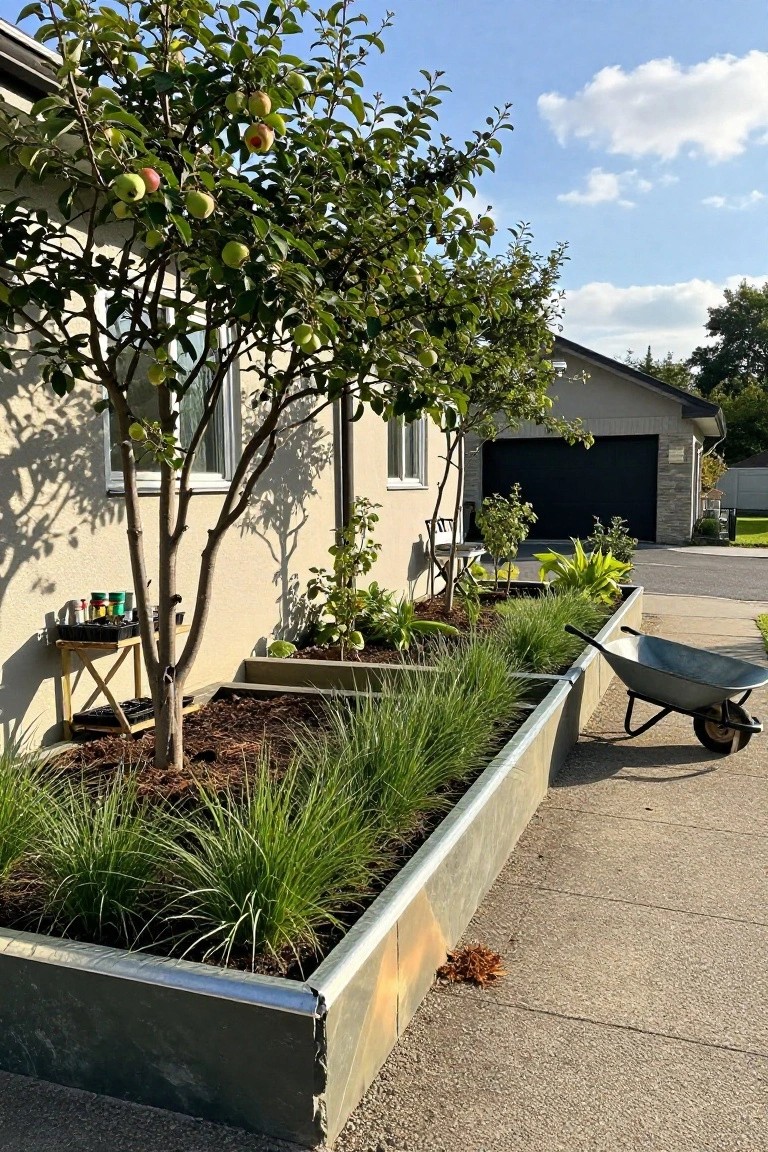
A simple way to squeeze a garden into a tight spot is lining up long metal raised beds right next to your house. In this setup, the beds run parallel to the wall and driveway, turning what might be dead space into room for plants like grasses and veggies. That young apple tree tucked in adds some height without crowding things, and the whole thing feels practical rather than fussy.
These work best in narrow side yards where you can’t go wide but have length to play with. Build or buy galvanized steel ones for easy setup, fill with good soil, and plant starters from trays like the ones on that shelf. Suits small lots or rentals… just make sure water drains away from the foundation.
Linear Planters for Small Rooftop Gardens

Long narrow planters run right along the edges of this rooftop deck, turning the perimeter into a tidy vegetable garden. Tomatoes climb in one spot, lettuce and herbs fill the boxes, and it all fits without crowding the open center. It’s a smart way to grow food up high where ground space just isn’t there.
These work great on balconies or terraces in apartments or townhomes. Pick sturdy but lightweight boxes like the gray metal ones here, make sure they drain well to avoid roof issues, and group plants by height for easy picking. A few cushions nearby make it a spot to sit and enjoy the harvest.
Vertical Pocket Planters on Fences
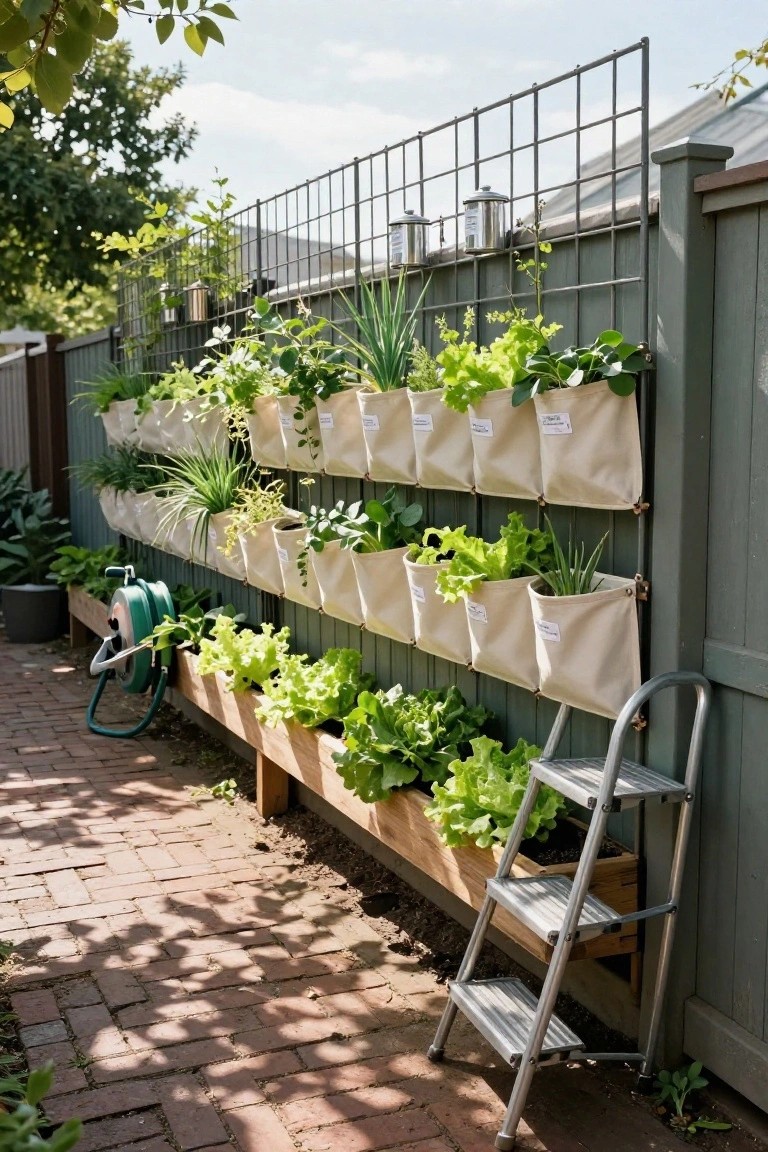
If you have a narrow yard or just a strip along a fence, these pocket planters let you grow a bunch of veggies without taking up ground space. They hang right on the fence grid, with soft fabric pockets that hold soil and plants like lettuce, herbs, and green onions. It’s simple for beginners and keeps things off the path.
Just screw hooks or clips into the fence slats to hold the pockets steady, fill with potting mix, and plant shallow-rooted stuff that likes sun. Works great in side yards or against sheds… pair it with a low raised bed below for more greens. Watch the weight when wet, though, and pick sturdy fabric ones.
Tiered Ladder Planters for Vertical Veggies
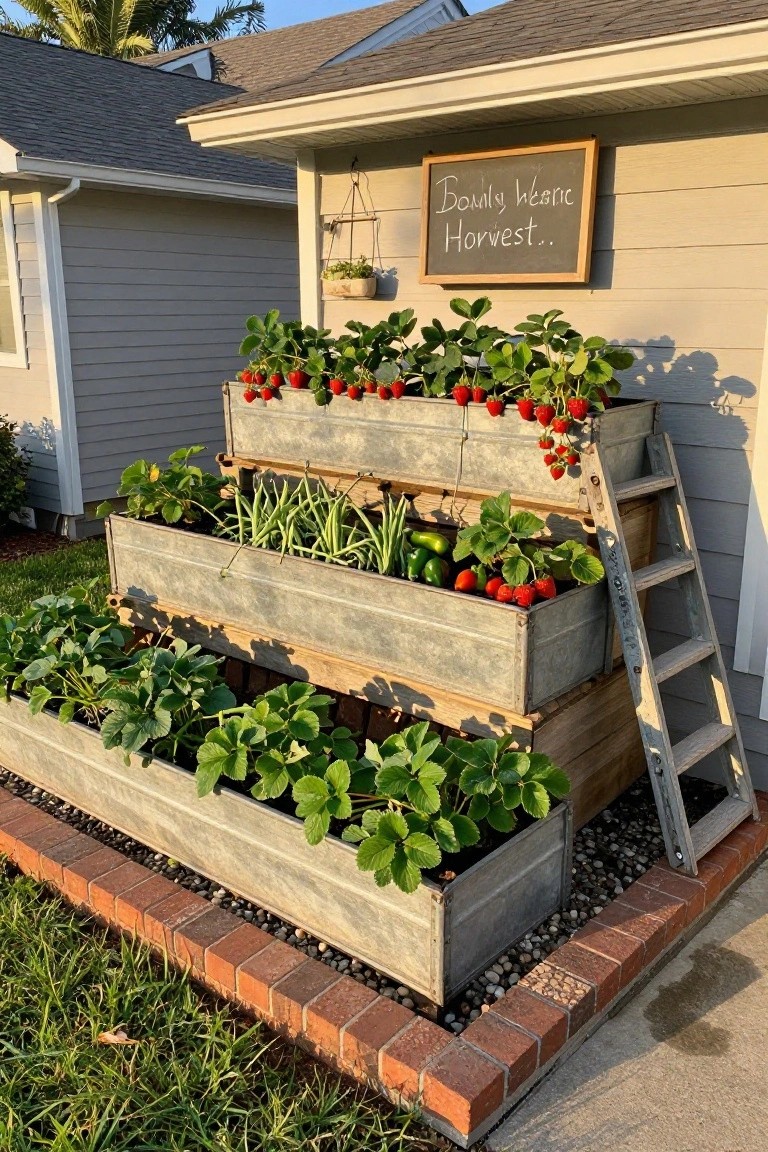
If you have a tight spot next to the garage or house, try stacking old galvanized troughs on a ladder frame. This setup lets you grow a bunch of veggies in layers without taking up much ground. Strawberries spill over the edges, and lower shelves hold beans and peppers. It’s practical for beginners, and that rustic metal look fits right in with a simple yard.
Build it against a wall for stability. Use scrap wood for the frame if you can find an old ladder. It works best in full sun spots, maybe 4 feet wide. Watch for drainage holes in the troughs so roots don’t drown. Keeps things easy to reach too.
Vertical Planters for Narrow Garden Paths

One smart way to squeeze a vegetable garden into a tight spot is stacking metal troughs right onto fences. This setup lines a slim walkway with layers of lettuce, kale, and greens, without eating up any ground space. It keeps things productive and easy to reach, turning what might be a forgotten alley into fresh produce central.
Mount galvanized planters like these on sturdy fences in side yards or between houses. They’re simple for beginners, hold soil well, and drain nicely. Go for shallow-rooted veggies to start. Just secure the brackets strong, and add solar lights if you want to tend at dusk.
Divided Crate Planter for Seedlings

This setup uses a plain wooden crate split into nine squares. Each section holds its own little patch of soil, perfect for starting different seeds side by side. You see young sprouts coming up in most spots, with empty terracotta pots ready for transplanting. It’s straightforward and keeps everything organized without taking much room.
Great for a deck or balcony where space is tight. Just fill the cells with starter soil, drop in seeds, and cover lightly if needed. Label the sections like they did with numbers. Works best for beginners trying a few veggies at once. Watch the watering though. Those small areas dry out fast.
Tiered Stone Herb Garden Layout

A simple way to pack more plants into a tight spot is this tiered stone circle. Stacked rocks make natural shelves for herbs like rosemary, basil, and thyme, letting you grow a bunch without taking much ground space. Those slate labels right on the edges keep track of everything easy, especially handy if you’re just starting out.
It works best in a sunny corner of the yard or even on a patio. Pick tough herbs that don’t need much fuss, and make sure the stones let water drain so roots stay happy. Add a few bright marigolds around the base for color without crowding things.
Wheeled Vertical Planter for Balcony Veggies
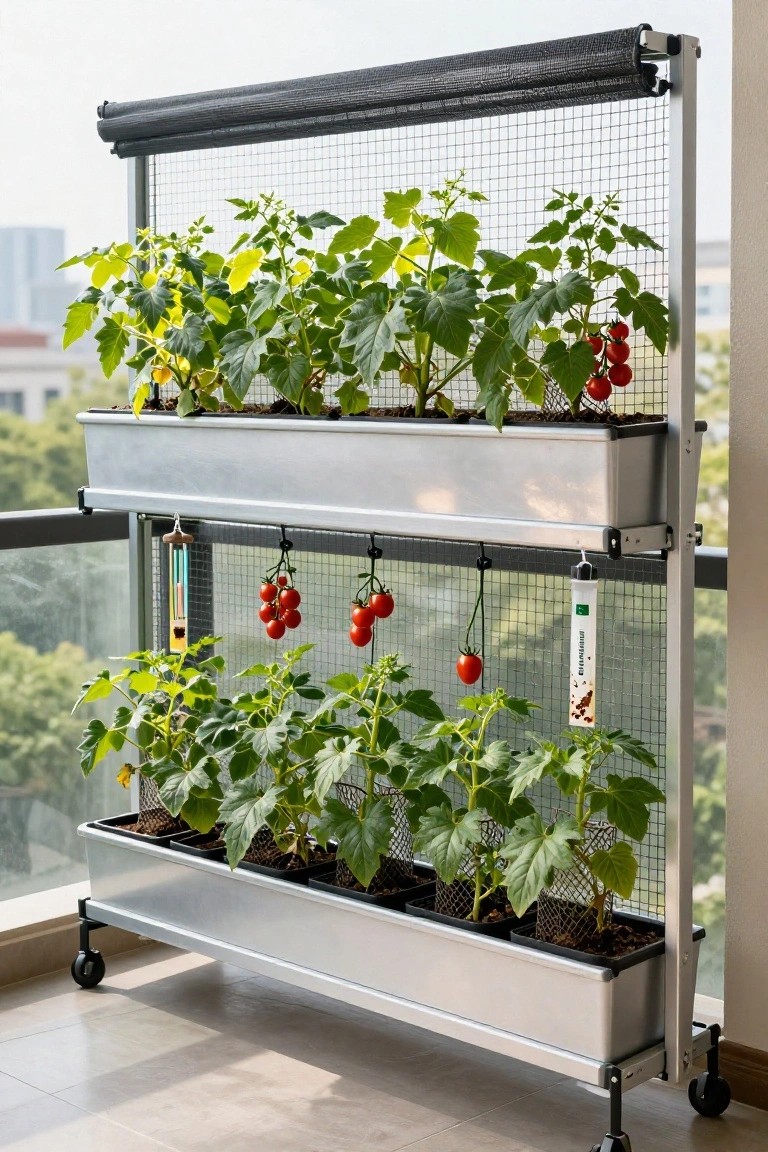
This kind of tall metal rack gives you two levels of planters right on a small balcony. Tomatoes climb the mesh netting while roots sit in the trays below. It keeps things tidy and uses vertical space you might not think about. Good for city folks starting a garden without much room.
Just roll it into sunlight during the day and back for shade or storage. Works best on sunny spots with a railing view. Pick sturdy pots inside the trays and check drainage. Easy to move around seasons too.
Pallet Raised Beds for Tight Spaces
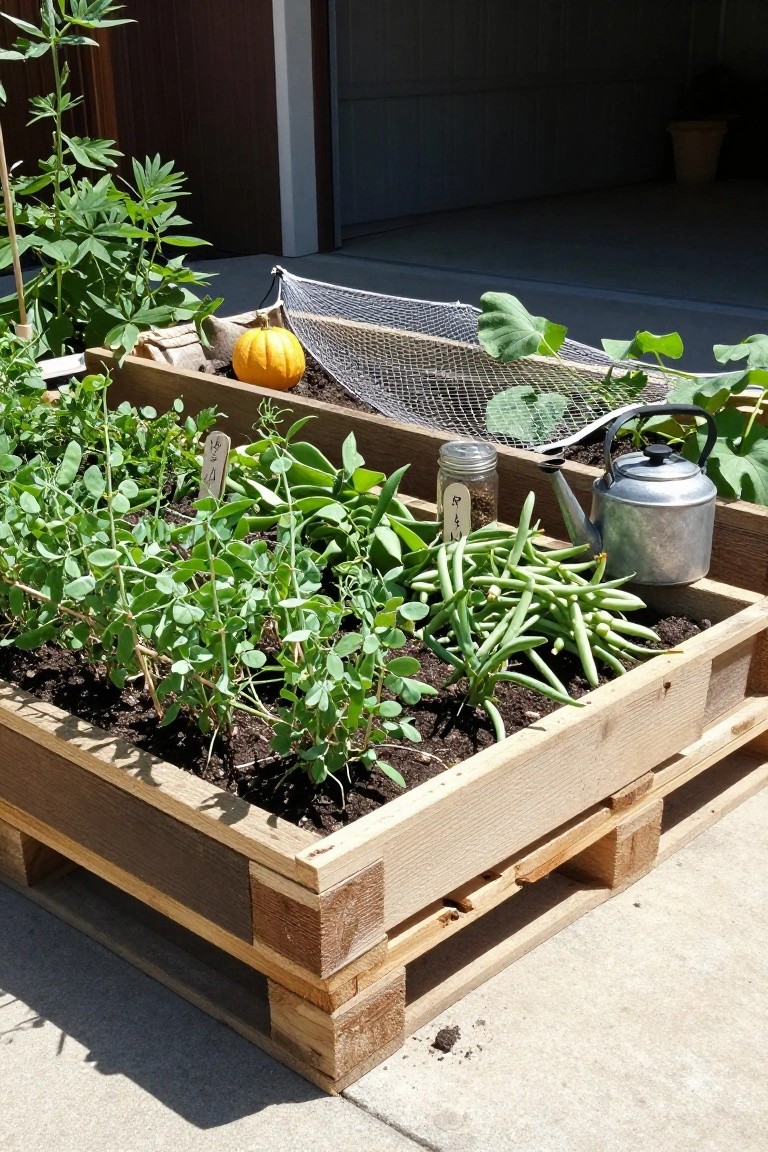
One easy way to start a vegetable garden without much room is building raised beds from old pallets. This setup uses sturdy pallet wood to create a deep box that’s perfect for roots and soil. You see beans climbing up, peas filling in, and even a little pumpkin tucked in one corner. It keeps everything contained and off the ground, making it simple to tend without bending too much.
These work great along a driveway or garage side where you might have a narrow strip of concrete. Stack two pallets high for more depth if needed, line the inside with landscape fabric to hold soil, and plant compact varieties like bush beans or peas. Watch for wood treatment chemicals on pallets though. Pick untreated ones or seal them well.
Balcony Vegetable Garden Around a Simple Bench
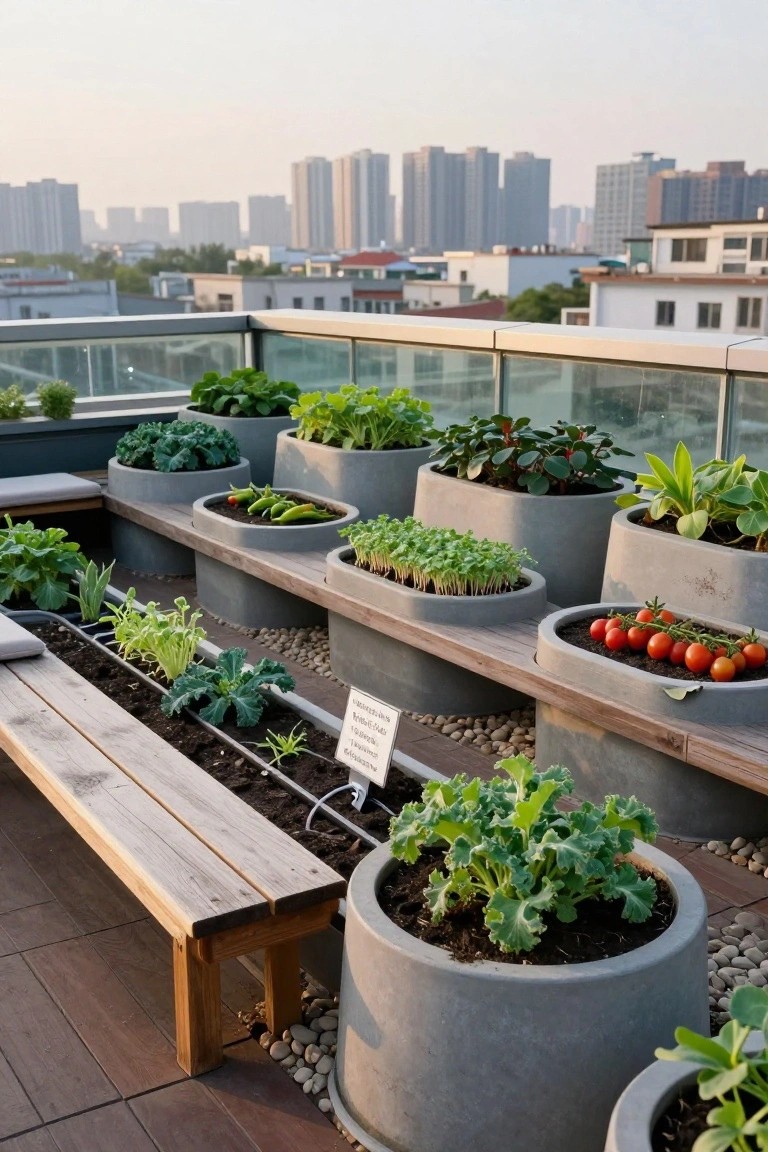
This setup takes a basic balcony and turns it into a real veggie producer just by lining up large concrete pots and a long planter along a wooden bench. The pots hold things like tomatoes, peppers, kale, and greens, all in those smooth gray containers that stack nicely without taking up much floor space. It’s perfect for small spots because the bench doubles as a planting edge, so you get seating and growing room in one go. No fancy tools needed, and it feels tidy even with city views behind it.
Try this on any apartment balcony or rooftop terrace over 10 feet long. Pick sturdy pots that won’t tip in wind, and run a drip line under the bench for easy watering. It works best with full sun for stuff like tomatoes, but swap in shade lovers if needed. Watch the weight though, those soil-filled pots add up fast on upper floors.
Raised Beds Against the Wall

Tucking raised beds right up against a wall like this gives you growing space where there might not seem to be any. The brick ones here hold pak choi, beans, and a few other easy veggies in a long narrow bed that follows the wall’s line. It keeps everything handy for watering and picking without taking up much room in a small yard.
This works best in skinny side yards or along fences where you want to squeeze in some food without crowding the patio. Build them low to waist height if you can. Just watch the sun along that wall, some spots stay shady longer. The clipped trees nearby add a bit of height without fuss.
Simple Raised Bed Vegetable Garden

A raised bed like this one uses basic concrete blocks to create a tidy spot for growing veggies right in a small patio area. It’s straightforward and keeps everything contained, so you don’t have to worry about sprawling plants taking over. The mix of tall corn, peppers, and herbs shows how you can pack in a lot without crowding, and that colander planter on a stake adds a fun touch for smaller greens.
This setup works great for beginners with limited space, like a side yard or next to the house. Stack the blocks two high for easy reach, fill with good soil, and plant in blocks or rows based on height. Watch the sun patterns though, since corn needs full light. It’s low-cost and moves if needed.
Built-In Benches with Planter Boxes
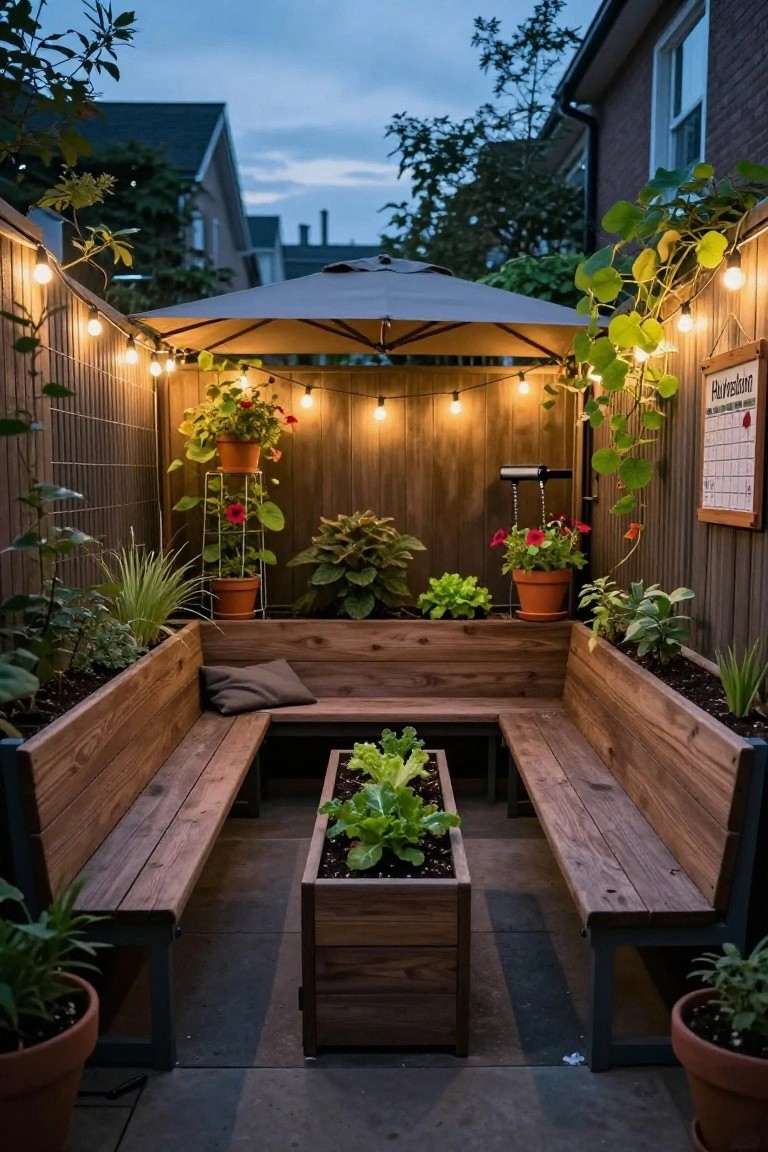
One smart way to fit a vegetable garden into a tiny yard is building benches right into the planter edges. Here the L-shaped wooden seats wrap around a central box of lettuce and greens, with more veggies along the sides. It turns sitting space into growing space, no wasted corners. String lights overhead make it usable at night too.
You can copy this in any snug backyard or patio corner. Use cedar or treated pine for the wood so it lasts outdoors. Fill the boxes with shallow-rooted crops like lettuce, herbs, or radishes that suit the depth. Add cushions on the benches for comfort, and watch for good drainage to keep roots happy. Fits renters if you go modular.
Frequently Asked Questions
Q: My backyard only gets morning sun. Will these layouts still work?
A: Stick to sun-lovers like lettuce, spinach, and radishes in those layouts. They thrive with just four to six hours of light. Skip heavy feeders like peppers that need more.
Q: Can I squeeze these into raised beds or containers?
A: Go for it with the grid or keyhole designs. They fit perfectly in beds two feet wide or large pots. Just match plant roots to the depth.
Q: Which veggies pair best in the small square foot setups?
A: Plant bush beans next to carrots. The beans fix nitrogen while carrots loosen soil. Both finish quick and leave room for a second crop.
Q: How do I get started without messing up the layout?
A: Mark your spots with string or flour first. Plant tallest crops in the back. Water gently at the base to settle everything.
