


I’ve learned that gardens only feel organized when the beds create clear paths and the planting zones don’t blur into each other over time.
Raised beds solve that right away by giving you firm edges and a layout you can shape as plants fill in.
What stands out most to visitors is how easy it becomes to tend everything without trampling soil or hunting for tools.
I started with one edged in simple wood last spring, and it kept the grass from creeping in better than mulch ever did.
A handful of these beginner setups adapt well to small yards and build lasting structure year after year.
Raised Beds with Gravel Paths

One straightforward way to keep a raised bed garden organized is to add gravel paths between the beds. In this setup, the wooden raised beds hold veggies like lettuce and beans, plus flowers for color, and the paths let you walk right up without compacting the soil or tracking mud. Those simple stone stepping stones add a bit more stability too. It just makes everything feel put together and practical.
You can do this in any backyard size, especially if space is tight. Line the paths with landscape fabric first to stop weeds, then add a couple inches of pea gravel. Skip fancy edging if you’re starting out. It suits beginners who want low mess and easy access, and it works well near a fence or house edge.
Raised Beds Doubled as Benches

One smart way to fit gardening into a tight spot is turning raised beds into benches. You get planting space plus somewhere to sit, all in one piece. Here the dark wood boxes hold soil for herbs and such, with a simple cushion on top for comfort. Gravel underneath keeps it neat and drained, and it sits right by the house wall without crowding.
These work best in small backyards or courtyards where you want function without fuss. Build them low enough to perch on, maybe 18 inches high, and add storage inside for tools. Go for rot-resistant wood like cedar. They suit beginners since everything stays organized and off the ground. Just make sure good drainage so roots don’t drown.
Brick Raised Beds Along the Entry Path

Raised brick beds work well as a tidy border right by your front walkway. They keep soil in place and let you group tall perennials like lupines and foxgloves for easy color through spring and summer. It’s a simple way to add curb appeal without letting plants spill onto the path.
These beds suit beginners since brick holds up year after year with little upkeep. Go for beds about a foot high, plant in full sun, and mix heights for rhythm… just watch for good drainage to avoid wet roots. Perfect for smaller front yards where you want organization that looks full and welcoming.
Raised Bed Herb Garden Setup

A simple wooden raised bed like this one makes herb gardening easy for beginners. Painted a soft green, it’s packed with basics such as basil, chives, and green onions all growing close together. Labels on sticks keep track of what’s what, and the setup hugs the fence to save yard space. It feels practical right away, no fuss.
Put one along a back fence or patio edge where you can grab herbs for cooking. The long box shape works in small spots, and adding a shelf above for extra pots expands it without much cost. Just make sure there’s good drainage at the bottom, or roots might stay too wet.
Raised Bed Garden Centered on a Tree

A raised bed like this puts a small olive tree right in the middle, with rosemary and lavender tucked around it. The stone walls keep soil in place and give a clean edge that makes the whole planting area feel put together. It’s simple for beginners because the structure guides where everything goes, and the plants stay low fuss once established.
You can set this up in a sunny corner of the yard or near a patio. Pick tough Mediterranean plants that don’t need much water, and fill gaps with gravel mulch to cut down on weeding. Works best in warmer spots… just watch that the tree has room to grow a bit. Terracotta pots add spots for extras without crowding the bed.
Raised Beds on a Rooftop Terrace

Raised beds like these make rooftop gardening simple and tidy. The long galvanized metal ones line up neatly along the deck edges, packed with greens like kale and beets plus colorful flowers. It turns a plain terrace into a real garden without much fuss, and the metal holds up well against weather.
These work best for city apartments or townhouses with flat roofs. Just set the beds in rows to fit the space, fill with good soil, and plant easy veggies for beginners. Watch the weight though, check your building rules first.
Octagonal Raised Bed with Divided Sections

One smart way to start raised bed gardening is with an octagonal bed split into separate sections. Each wedge holds its own plants like potatoes in one and flowers in others. This keeps soil types and watering needs apart without much extra work. A central pole for vining plants ties it together nicely.
These beds fit right into a backyard corner or patio edge. They’re good for beginners since you can label sections and rotate crops easily. Use untreated wood for the frame to last a few seasons. Watch the scale though. Keep it under six feet across so you don’t strain reaching the middle.
Tiered Wooden Raised Beds for Balcony Gardens

One smart way to fit a garden into a tight balcony spot is stacking wooden crates into raised beds like this. The tiers let you grow more in less floor space. Tomatoes hang ripe from the top shelf, while herbs and flowers fill the levels below. It keeps everything off the ground and easy to reach.
This works best on urban balconies or patios where room is short. Grab some sturdy crates, stack them with brackets for safety, and line the insides to hold soil. Start with sun-loving plants up high. Watch for wood rot in wet weather, though. Good for beginners wanting an organized setup without much yard.
Tiered Corten Steel Raised Beds
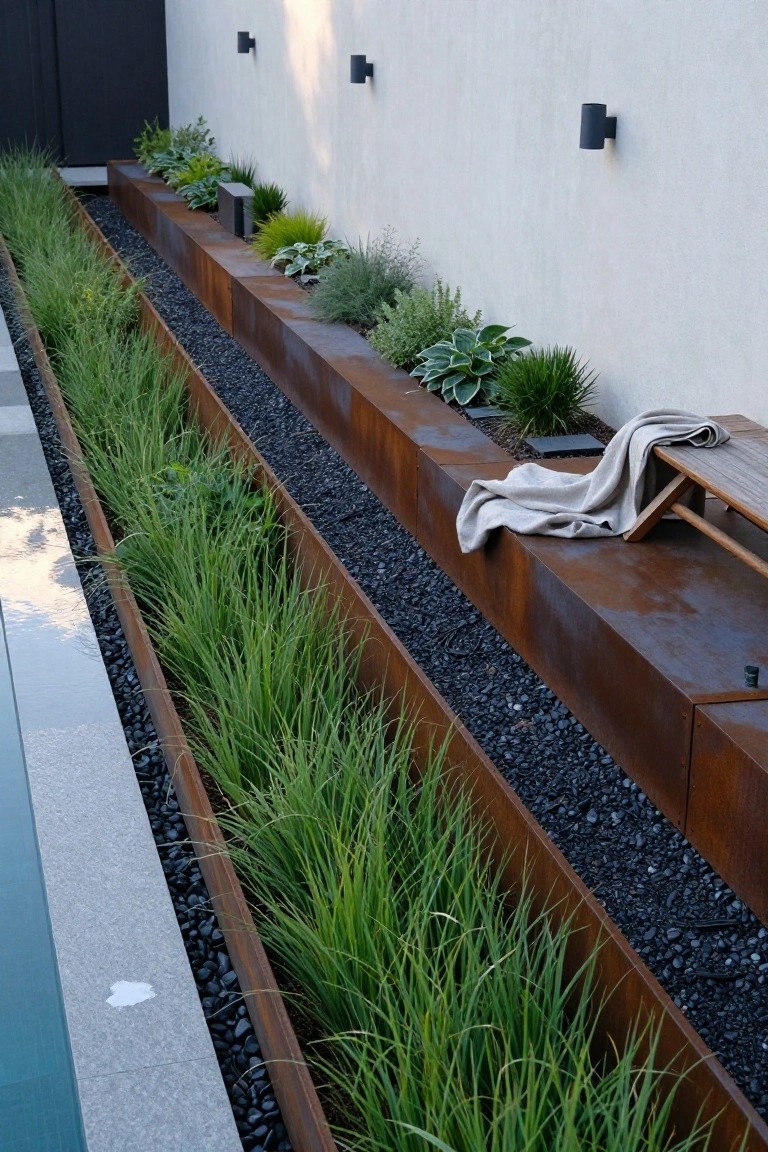
Corten steel makes sturdy raised beds that develop a rusty patina over time. Here they are tiered along a pool edge, holding grasses and low plants with black gravel mulch in between. The metal holds shape well and gives gardens a clean, modern edge without wood rot or upkeep worries.
These beds suit narrow spots next to patios or pools where you want planting without sprawl. Beginners can stack them for height, plant tough grasses, and skip soil mess with gravel. They pair with sleek homes but check drainage holes to avoid wet roots.
Colorful Raised Beds with Stone Edging

Raised beds like this one use simple stone blocks to create a tidy planting area right along the sidewalk. The mix of plants brings out bold fall colors, from deep red coleus leaves to pinkish heuchera edges. That stone edging keeps everything neat and contained. It stands out because it turns a plain walkway strip into something lively without taking up yard space.
For beginners, this works great in small spots near the street or house. Pick easy foliage plants that handle shade or sun, depending on your spot. Layer taller ones like the small maple in back, shorter stuff up front. Watch for good soil drainage in those stones. Fits most homes… adds curb appeal fast.
Wooden Raised Beds with Gravel Paths

One straightforward way to get your garden organized is with wooden raised beds lined up along gravel paths. These beds, made from weathered wood planks, hold veggies like lettuce, onions, and brassicas while flowers add pops of color nearby. The paths keep things neat. No mud on your shoes, and you can wheel a barrow right up to each bed.
This works great for beginners in a small yard or even a side lot. The raised design improves soil drainage and warms up quicker for earlier planting. Lay gravel over landscape fabric between beds to cut down on weeds. Skip fancy edging if you’re starting out. Just focus on straight lines for that clean, easy feel.
Raised Beds from Repurposed Tires and Crates

One simple way to start raised bed gardening is grabbing everyday discards like an old tire or wooden crate. In this setup, a cut-down tire holds a tidy circle of herbs, keeping soil contained and plants easy to reach. It organizes the space without much cost or effort, perfect for beginners who want structure right away.
Stack bricks around the edges or line up crates nearby to build height and separate sections. This works best in small backyards or sunny spots along a fence. Go for herbs like mint, rosemary, and thyme since they thrive in the drained soil. Just watch for weeds creeping in from the mulch below.
Winding Paths in Xeriscape Gardens

A simple gravel path that curves gently through clusters of agave and other tough plants like this keeps a dry garden feeling open and easy to wander. The big boulders and that wooden bench off to the side add spots to pause without crowding the space. It’s low fuss. No grass to mow.
This works best in hot, sunny yards where water is at a premium. Start with a fabric base under the gravel to stop weeds, then edge it with bold plants that don’t need much care. Skip raised beds here. Just mound the soil a bit for drainage if needed. Suits beginners who want structure without daily work.
Brick Raised Beds for Organized Veggies

Brick raised beds like these keep your garden looking tidy and make tending plants a lot easier. The low walls hold in good soil and let you plant rows of things like beans on stakes or kale without everything spilling over. It’s a straightforward way to get veggies going without fancy tools.
Set them up in straight lines with paths in between so you can reach everything. They suit small backyards best, especially if you want to grow climbers or leafy greens. Just make sure the bricks drain well… wet feet aren’t good for plants.
Linear Raised Beds for Succulents

A long concrete raised bed packed with plump blue-green succulents makes a clean edge along a walkway. It’s a straightforward way to add green without much fuss. These plants stay tidy and colorful year-round, especially in sunny spots. No constant trimming needed.
Line one up next to your front path or driveway for that organized look. It suits modern homes or any dry yard. Fill with echeveria or similar tough types, add gravel mulch around the base. Watch for overwatering though… succulents hate wet feet.
Wheeled Galvanized Troughs for Raised Beds

These raised beds are made from simple galvanized metal troughs set on wheels. You see them lined up in neat rows, growing easy greens like lettuce, kale, and herbs. The wheels let you roll them where the sun hits best or pull them close for picking. It’s a straightforward way to keep a veggie patch organized without permanent digging.
For beginners, set up a few in a patio corner or along a fence. Add soil, label what’s planted, and tuck under basic shade cloth on hot days. They suit small spaces… just line the troughs to slow rust, and you’ve got a garden that moves with your needs.
Rustic Raised Beds Along Garden Paths

Raised beds like this one use simple weathered wood frames to hold plants in neat rows right next to a path. The wood looks natural and fits right in with sand or gravel ground, keeping everything organized without fancy work. Rosemary and those white flower clusters fill the bed nicely, staying put instead of spreading everywhere.
It’s a good pick for beginners since you can nail together basic lumber or use reclaimed pieces for low cost. Put them along walking paths in full sun spots where drought-tough plants grow easy. Just watch the wood doesn’t rot too fast in wet areas… go for treated stuff if needed.
Circular Stone Raised Beds for Veggie Gardens

Raised beds shaped in circles and built from stacked natural stones give your garden a tidy, flowing setup that’s simple to tend. The stone walls hold soil well and let roots spread without much fuss. Veggies like lettuce and herbs fill them nicely, and the curves fit around trees or fences without looking forced.
Put these in a sunny backyard spot where you can reach all sides easily. They’re good for beginners since stones are heavy but stack without mortar, just dry-laid. Watch the height though, two feet works best to avoid back strain. Add winding paths between for wheelbarrow access.
Raised Beds Along Balcony Edges

A simple way to fit gardening into tight spots is building raised beds right into your balcony walls. These low concrete planters run the full length of the edge, packed with strawberries, greens, and a mix of flowers and herbs. It keeps everything organized and off the floor, so you get fresh produce without crowding your outdoor space.
This works great for apartments or townhomes with balconies facing south or west for sun. Go with concrete blocks or poured forms for beds about knee-high, fill with good soil, and plant edibles like berries up front where you can reach them easy. Tuck in a plain wood bench nearby to sit and enjoy it all. Just make sure the beds drain well to avoid root rot.
Tiered Raised Beds from Recycled Pallets
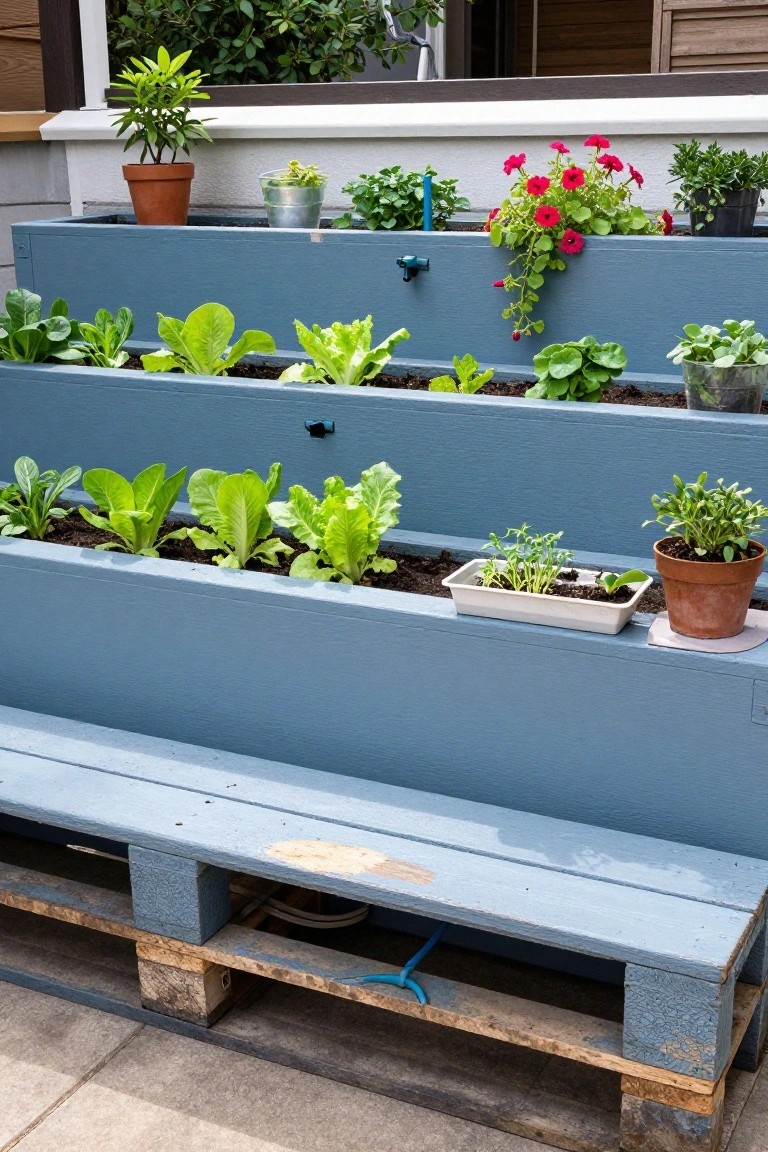
One smart way to fit more plants into a tight spot is stacking raised beds like these. Built from old pallets and painted a soft blue, they create three levels for growing things like lettuce and herbs without taking up much ground space. The tiers make it easy to reach everything, and water trickles down from the top.
These work best along a fence or house wall in a backyard or patio. They’re perfect for beginners since pallets are cheap and simple to assemble, just add soil and plants. Keep an eye on drainage so the lower beds don’t stay too wet.
Terraced Raised Beds Along Stairs
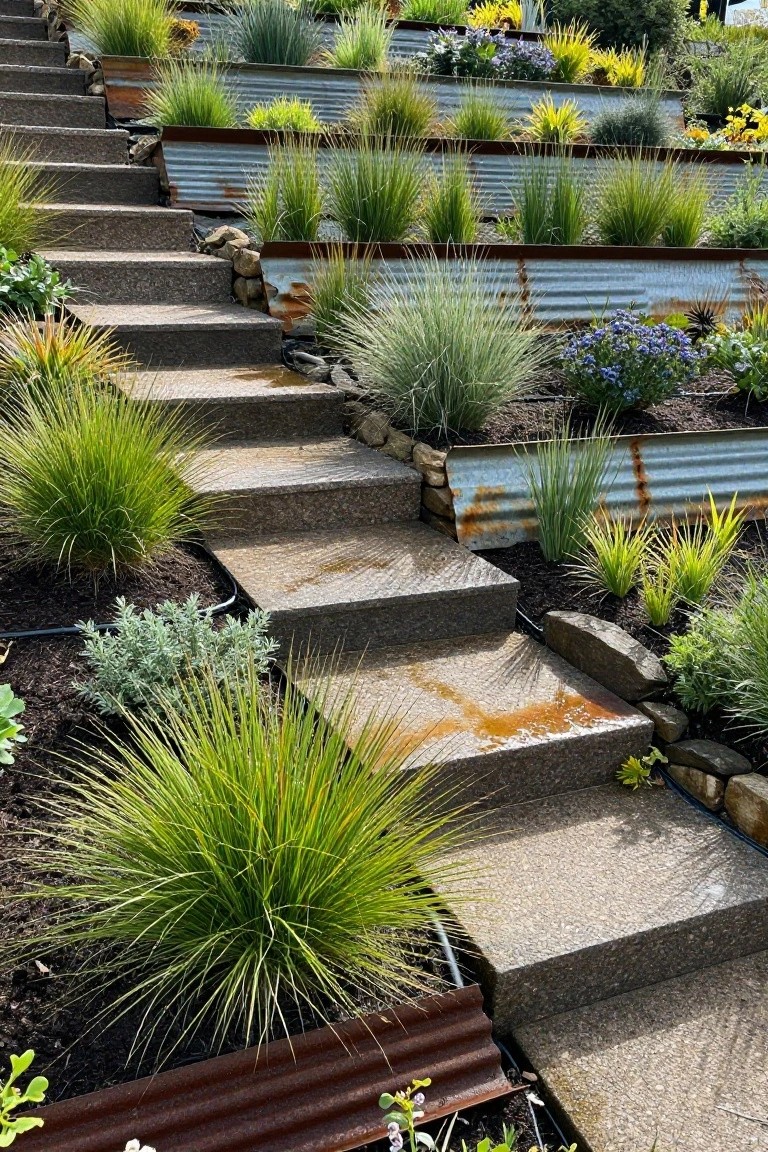
One smart way to handle a sloped yard is building raised beds right into the stairs. Here, old corrugated metal sheets form the beds, stacked along concrete steps and packed with tough grasses. It keeps soil in place and makes the climb more interesting without extra work.
This works well for beginners tackling hills. Cut or bend the metal to fit your steps, line it if needed, and plant low-maintenance stuff like sedges or ornamentals. Suits narrow side yards or paths to a deck. Just check drainage so roots don’t rot.
Raised Brick Beds with Built-In Bench

One smart way to organize your garden is building raised beds from bricks that double as a bench. You get planting space plus somewhere to sit while harvesting or just enjoying the yard. Here the bed holds greens, beans climbing the metal arbor, and a few flowers for color. That chalkboard sign marks what’s ready to pick. Keeps everything handy and off the ground.
These work best in a patio corner or along a fence, where you want function without taking up much room. Stack bricks two or three courses high for comfort. Fill with loose soil for roots. Good for beginners since it’s low maintenance and pest-resistant. Watch the drainage though… add gravel at the base if needed.
Frequently Asked Questions
Q: How deep do I make raised beds for beginner veggie gardening?
A: Aim for 12 inches deep for most crops like tomatoes and lettuce. Roots love that space without wasting soil. That depth handles carrots too. Just add six more inches for potatoes.
Q: What’s a cheap way to fill raised beds without buying tons of soil?
A: Layer cardboard or newspaper at the bottom to block weeds. Top it with a mix of local topsoil and homemade compost. Fill the rest with leaves or grass clippings. Plants thrive and your wallet stays happy.
Q: How do I keep everything labeled and organized in multiple beds?
A: Grab some old spoons or sticks and write plant names with a marker. Poke them into the soil at each end. No more guessing what’s where.
Q: Can I use raised beds for flowers mixed with veggies?
A: Plant nasturtiums or marigolds along the edges. They add color and chase off pests. And they trail nicely over the sides for that organized, pretty look.
