


I’ve found that backyards really come alive when raised garden beds give the planting areas a solid backbone from the start. They shape the layout naturally, letting pathways form between them as soil settles and plants spread out over time. What draws the eye first is usually those defined edges that hold everything together without looking fussy. Simple wood or metal frames work best in real yards. A handful of these modern takes feel right for adapting to sloped spots like the one behind my house.
Raised Beds Flanking a Gravel Path
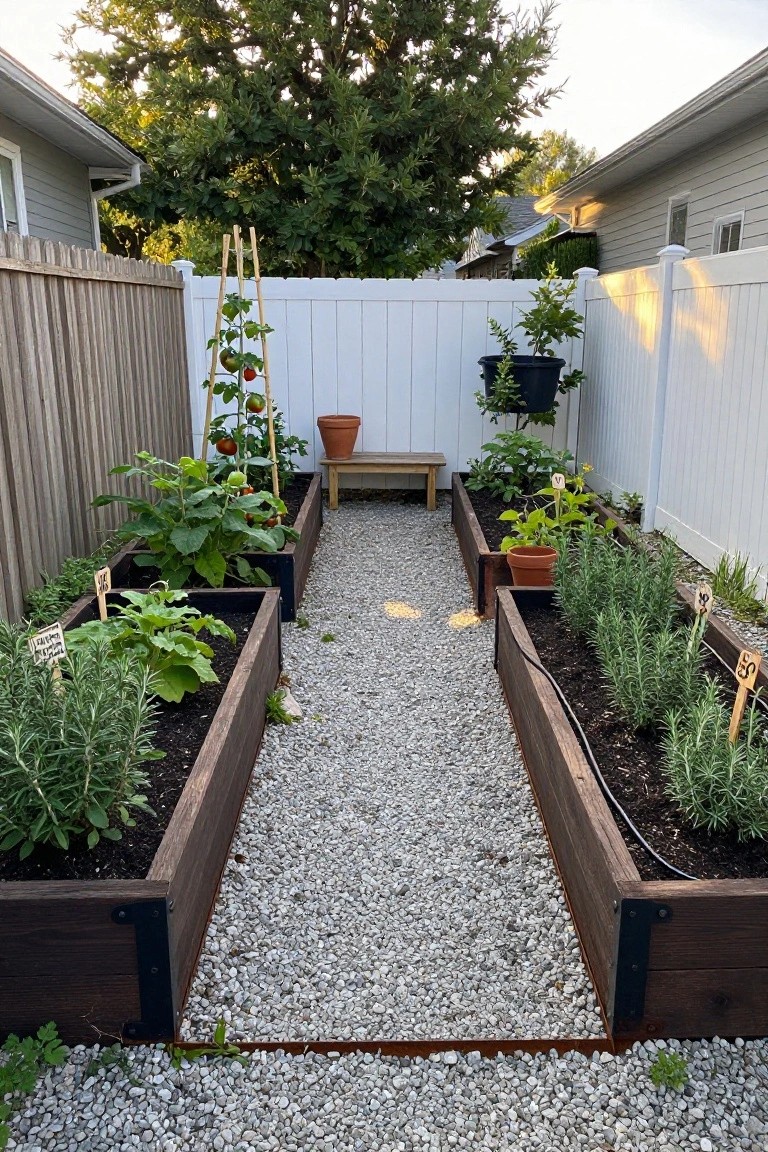
This layout lines up a couple of long wooden raised beds on either side of a simple gravel walkway. It makes the garden feel organized and easy to work in, no muddy shoes or sore backs from reaching. Tomatoes climb a trellis in one bed, while herbs like rosemary fill the other… practical and pretty without much fuss.
Try it in a skinny backyard strip along a fence. The gravel drains fast and stays cool underfoot. Use rot-resistant wood for the beds, keep them about 4 feet wide max so you can reach across. Works best in full sun for veggies, and it’s renter-friendly since nothing’s permanent.
Tiered Raised Beds with Built-In Benches

One smart way to make more of your backyard is to build raised garden beds that pull double duty as benches. Here the beds are stacked into tiers with wood caps that form wide steps and seats. Filled with tough succulents, they create a ready spot to sit without buying extra furniture. It’s low fuss and fits right into a corner.
These work great in small yards or patios where space is tight. Use concrete blocks or poured forms for the beds, then add wood for the seats. Go for drought-tolerant plants like these to keep watering easy. Just make sure there’s good drainage at the base so roots stay healthy.
Tiered Raised Beds for Sloped Yards
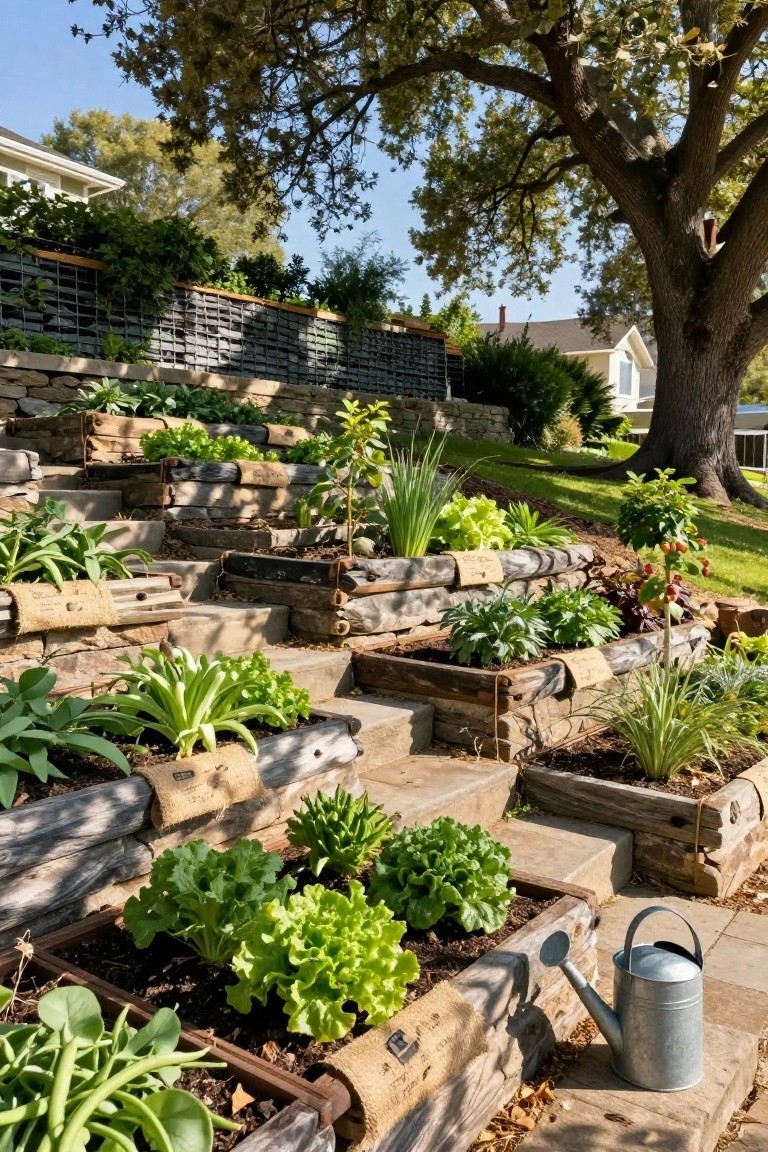
Slopes can be tricky in a backyard. They make it hard to plant without everything washing away in the rain. But these tiered raised beds solve that nicely. Built from old wooden crates and planks, they stack right into the hillside steps. You get flat planting spots for lettuce, herbs, and greens. The rustic wood looks right at home next to stone walls. It turns wasted space into something useful.
This setup works best on moderate slopes where you want veggies close to the house. Start with sturdy reclaimed wood to hold soil. Line the beds with fabric if drainage is an issue. Keep plants low-growing at first… like leafy greens. It suits casual gardens, not super formal ones. Watch the wood for rot over time. A fresh coat of oil helps.
Concrete Block Raised Beds with Built-in Seating

One simple way to add fresh produce right to your backyard is stacking concrete blocks into raised garden beds. These dark blocks give a clean, modern edge that fits any style yard. They hold up well outdoors and let you plant veggies like kale, carrots, and peppers without much bending over. The best part is turning some into long benches too. It makes the space useful for sitting while keeping plants close.
You can build these yourself with basic blocks from any home store. Stack them two or three high along a path or patio edge, add soil and plants, then top the benches with cushions if you want. They work great in small or sunny spots where you need low upkeep. Just make sure to line the bottoms for drainage so roots stay happy. Fits most backyards without taking over.
Raised Beds Line a Curved Garden Path

White raised beds running along both sides of a curving brick path make for a clean, practical garden walkway. Here, they’re packed with lavender that spills over just right, giving the space that soft purple color without looking messy. A simple rose-covered arch marks the entry, and even the wheelbarrow parked there fits in like it belongs.
You can pull this off in most backyards with a bit of wood and paint. Line your path however it winds, plant tough stuff like lavender in full sun, and it’ll stay pretty with little work. Suits smaller yards especially… just make sure the beds drain well so roots don’t rot.
Weathered Wood Raised Garden Beds

These raised beds use simple weathered wood boxes that fit right into a coastal yard. They hold tough plants like succulents and agaves, which handle sand and salt air without much fuss. The wood looks aged on purpose, blending with beach grass and dunes instead of sticking out.
Build them yourself from reclaimed lumber or old fence boards. Line them up along a gravel path for easy access, and keep soil lean with gravel mulch. They work best in dry spots or sunny backyards, away from heavy rain. Just raise them high enough to avoid rot.
Fire Pit Benches from Raised Beds

One clever way to use raised garden beds is turning them into built-in benches around a fire pit. Here, galvanized steel beds form the base, topped with simple cedar wood seats that wrap in a U-shape. The fire pit sits right in the center trough, making a natural gathering spot that feels sturdy and modern without much fuss.
This works best in a backyard lawn area where you want casual seating for evenings. Stack a couple beds high for comfort, add gravel inside for drainage, and cap with pressure-treated wood. It suits average-sized yards and keeps costs low since the beds are cheap and easy to find. Just make sure the metal is heat-safe around the flames.
Raised Beds with Climbing Trellises

Simple wooden T-shaped trellises built right into the corners of these raised beds let vining plants climb up and spread out. The plants wrap around the posts nicely, filling the vertical space without taking up ground room. It’s a practical way to grow more in a backyard garden.
You can make these with basic lumber and screws, no fancy tools needed. They suit veggie gardens best, like for beans or squash. Put them along a fence line for extra support. Just check the posts stay sturdy as plants get heavy.
Stacked Block Raised Beds for Dry Yards
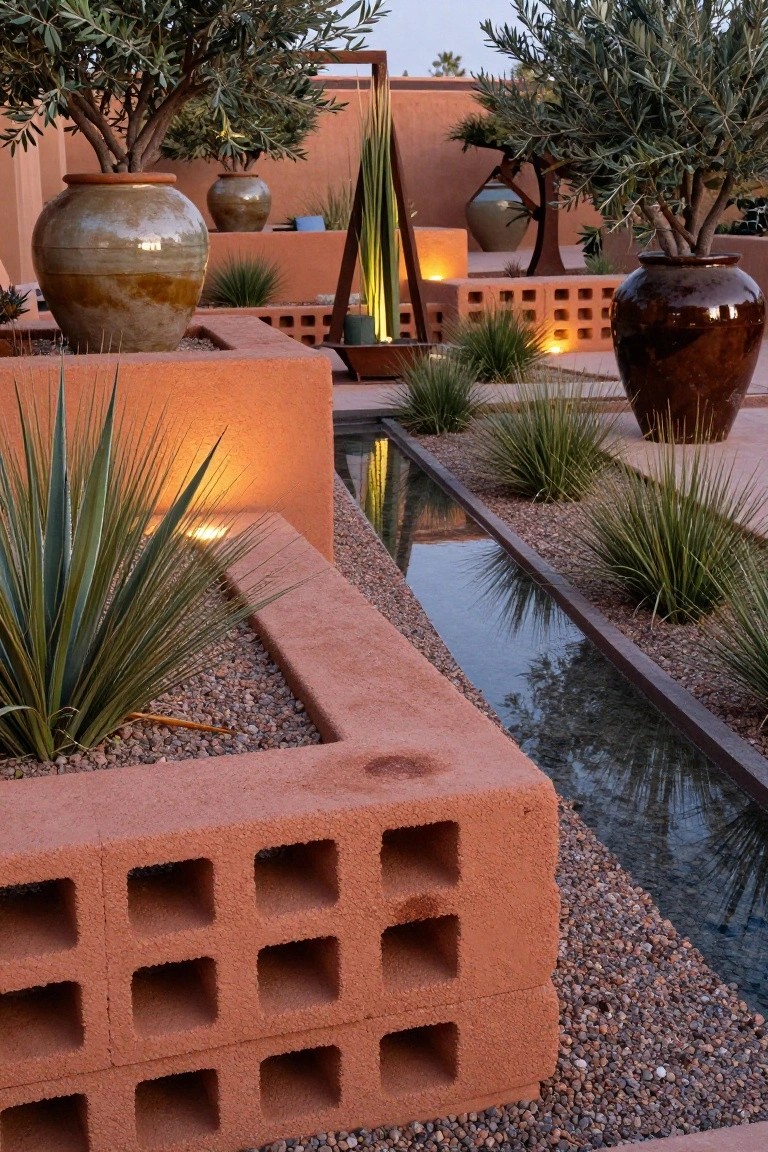
Raised garden beds like these use simple stacked terracotta blocks to create clean, modular planters. The blocks fit right into a desert-style yard, holding back gravel mulch and letting plants like agaves poke through naturally. That perforated design helps with drainage too, keeping things low fuss.
Stack the blocks two or three high along a path or water feature for easy reach without bending over much. They’re great for backyards in sunny, dry spots where you want modern lines without constant watering. Go for stable stacking and gravel base to avoid shifting… works on a budget if you source local blocks.
Raised Beds Edging a Checkered Patio

One simple way to upgrade a backyard patio is to build raised beds right along the edges. Here, black wooden frames hold colorful kale plants that hug a bold black-and-white checkered tile floor. It makes the space feel put-together and modern without much fuss. The dark frames tie into the tiles nicely, and the plants add life and color that changes with the seasons.
These beds work great on balconies or small patios where you want planting but not sprawling gardens. Stain affordable timber black to match, fill with soil and gravel for drainage, then plant easy ornamentals like kale. Keep them low, around 12 inches high, so they don’t block the view. Watch the sun though, kale likes some shade in hot spots.
Spiral Brick Raised Garden Bed

This spiral design takes a basic raised bed and turns it into something with real flow. Made from mixed red bricks laid in a tight coil, it creates levels for plants that draw the eye right to the center. It’s a smart way to fit more growing space into a small yard spot, and those old bricks give it a worn-in look that fits right into a backyard garden.
You can build one like this with reclaimed bricks or whatever you have on hand, stacking them without mortar for an easy DIY. It works great near a path or seating area, where the curve adds interest without taking up much room. Just keep the center open for a feature plant or even a small fire bowl if you want, but watch drainage so the soil doesn’t stay too wet.
Linear Concrete Raised Garden Beds

A long concrete raised bed like this one runs right along the edge of a patio. It’s filled with a mix of flowers and greenery that spill over just enough. The plain gray material keeps things modern and low-key. Paired with gravel and simple pavers, it feels built for easy backyard living.
You can make your own with concrete blocks or poured forms. It’s perfect next to a shed or seating area in a smaller yard. Works best in sunny spots. Just watch the drainage so roots don’t sit wet. Good for herbs or annuals too.
Linear Concrete Raised Beds Along the House

These raised garden beds are built from simple gray concrete blocks lined up in a straight row against the house wall. They create a neat strip for growing herbs, veggies, and climbers without taking up much room. The modular design looks clean and modern, and it fits right into tight side yards that often go unused.
You can fill them with soil and plants like basil or tomatoes that trail up the siding. Add handles to the blocks for easy shifting later. This works great next to a deck or fence in smaller backyards, especially if you want low-effort gardening that ties into the hardscape.
Dry-Stacked Stone Raised Beds

One simple way to build raised garden beds is with natural fieldstones stacked dry, no mortar needed. They form these gentle curves that follow a backyard path, holding back soil for hostas, ferns, and colorful flowers. The look stays casual and blends right into the landscape, like the beds grew there on their own.
You can source stones from a local quarry or even your property to keep costs down. They work best in yards with some slope or where you want defined planting zones without sharp lines. Just stack them wide at the base for stability, and plant deep-rooted stuff to hold soil in place.
Raised Garden Beds with LED Edge Lighting

These raised beds use simple black metal frames set right into the deck, with thin LED strips running along the bottom edges. The glow at night makes them stand out, and during the day they look clean and modern against the light wood decking. Veggies like beets and greens grow well in them, keeping things practical.
You can build something like this with metal planters or corten steel boxes, adding waterproof LED tape under the rims. It works great on patios or decks near an outdoor kitchen, especially in smaller backyards. Just make sure the lights are low-voltage and sealed against water.
Rustic Crate Raised Beds

Old wooden crates turned into raised garden beds bring a simple, hardworking vibe to backyards. You see them here holding lush lettuce and greens, propped on the ground or with wheels for easy moving. The natural wood ages nicely outdoors, blending with fences or patios without much fuss.
Stack a couple crates for more depth, line the bottoms with fabric or plastic, then fill with soil and plant away. They suit small spaces or rentals since they’re cheap and portable. Watch for rot over time, though. Treat the wood or swap them out every few years.
Stone Raised Beds Around a Fountain

Raised beds like these, built right from rough stone blocks, make a tidy spot for lavender, rosemary, and a few olive branches. They circle a simple tiled fountain that keeps things cool and draws the eye right in. The whole setup feels contained and easy on the eyes, especially with gravel filling the paths between.
You can pull this off in a small backyard or even a side courtyard. Stack stones or concrete blocks if real stone is too heavy, then plant low-water stuff that thrives in sun. Watch the scale though. Keep beds low enough to peek over from seating nearby.
Poolside Raised Garden Beds

One smart way to edge a pool is with simple wooden raised beds packed full of plants. Here the timber borders hold back a mix of herbs, succulents, and even a little lemon tree, making the pool area feel more alive without taking up extra space. It keeps soil away from the water and gives you fresh picks right where you relax.
These beds work best in sunny backyards with hard surfaces like concrete or stone decks. Build them from rough-sawn timber for that easy rustic vibe, and fill with drought-tolerant stuff that thrives poolside. Just make sure good drainage so roots don’t sit wet. Fits most any size yard.
Frequently Asked Questions
Q: Do I need to line the inside of my raised bed?
A: Line it with hardware cloth if critters dig around your yard. This keeps out gophers and voles without blocking drainage. Wood alone works fine in most spots.
Q: How deep should I build for growing veggies like tomatoes?
A: Aim for 18 inches at minimum. Roots go deep, and that height lets you add mulch on top. Go taller if your back thanks you for less bending.
Q: What’s the cheapest way to fill a new bed?
A: Layer cardboard, then compost, and top with bagged soil. Let it settle over winter if you build now… saves buying as much mix later. Hugelkultur with branches at the bottom works wonders too.
Q: Can I skip painting or staining the wood?
A: Raw cedar weathers to a nice gray patina over time. Seal it lightly if rain pounds your area hard. And yeah, natural looks sharp in modern setups.
