

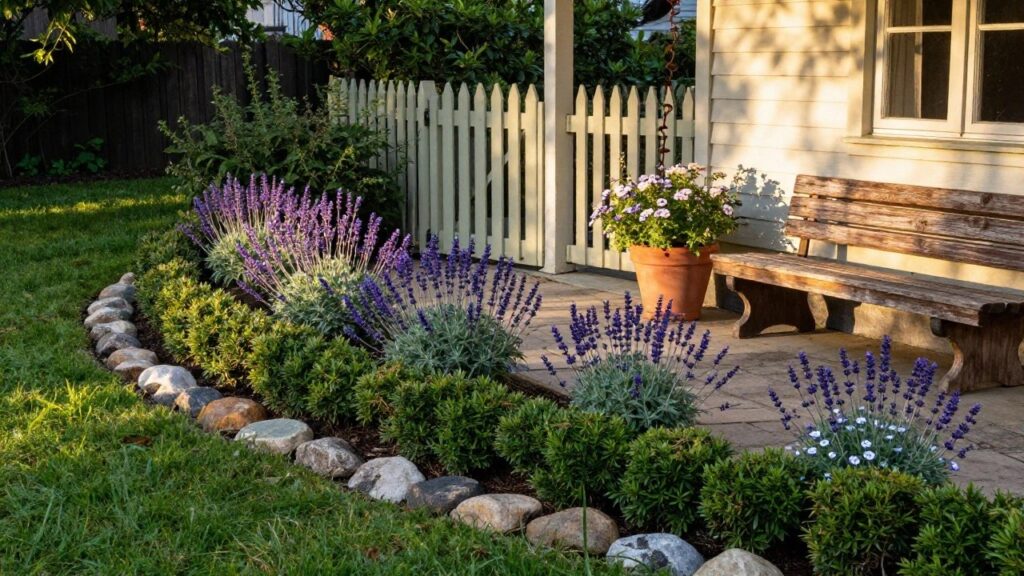
When I first tried gardening years ago, I learned quickly that skipping the basics on layout and soil prep turns even simple beds into a weedy mess over time.
People usually spot a garden’s success right away in how the pathways guide you through without feeling crowded.
I’ve found that edging and basic planting structure make the biggest difference in keeping things looking intentional as plants fill in.
A few of these straightforward steps changed how my own yard flows season after season.
Test them one at a time.
Line Your Garden Paths with Lavender
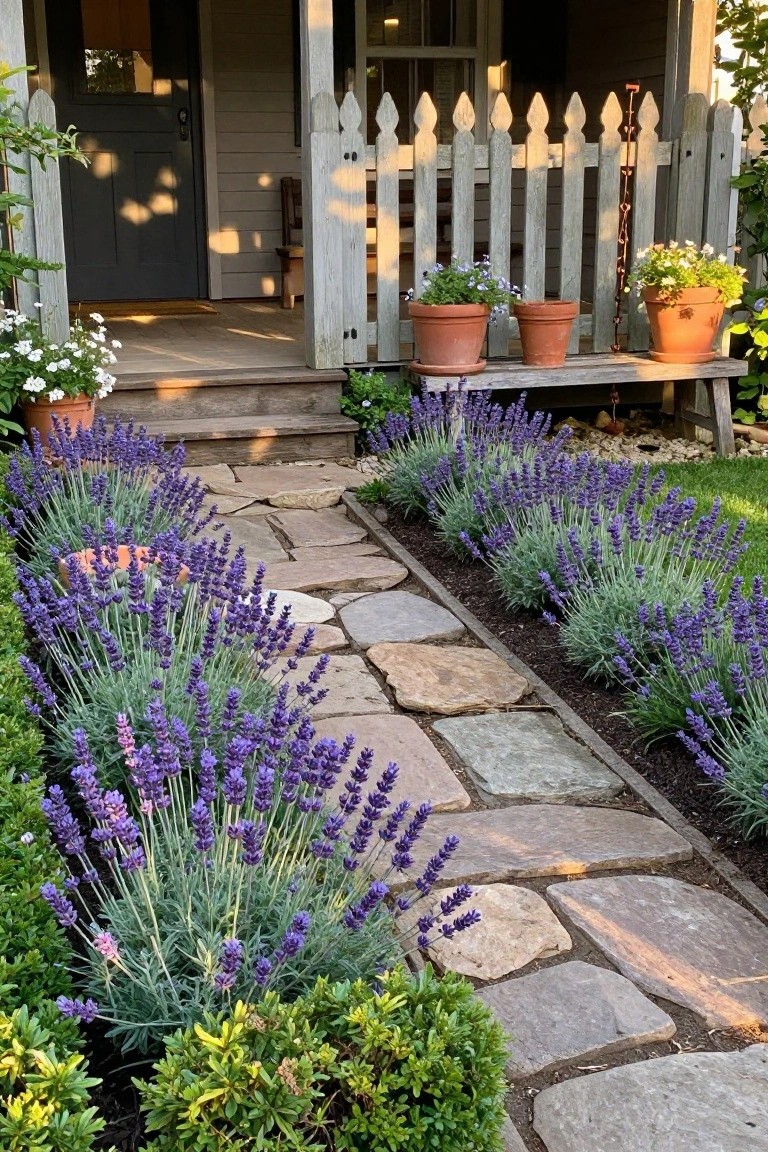
One straightforward gardening move is edging paths with lavender plants. The bushes hug the stones nicely and fill the air with that clean scent when you walk by. Purple flowers pop against the green grass and make the whole entry feel put together without much effort.
Plant them along sunny paths where the soil drains well. Space plants a foot or so apart so they fill in over time. Great for beginners since lavender handles dry spells and needs just a yearly trim. Suits cottage yards or any front walk leading to a door.
Raised Garden Beds for Easy Starts
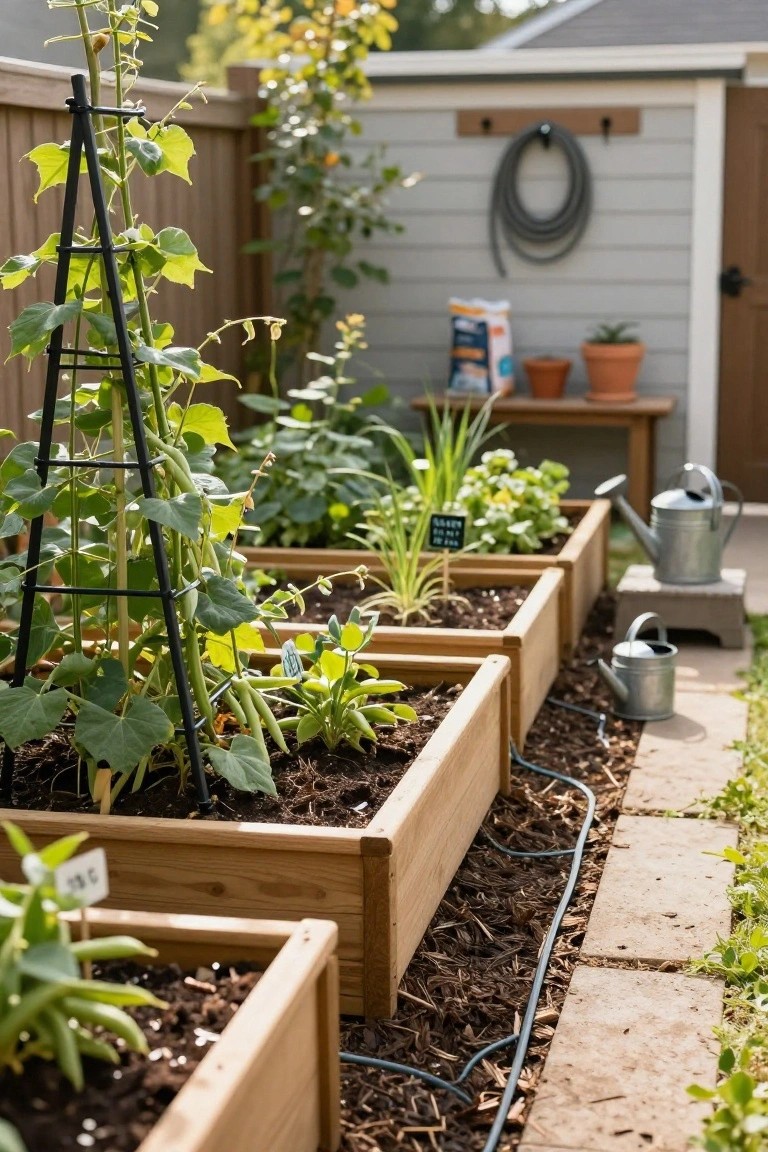
Raised garden beds take the hassle out of starting a garden. You build simple wooden frames, fill them with good soil, and plant right there. No digging up tough ground or fighting weeds from the yard. Everything stays contained and close to reach, which makes tending easier on your back. In this setup, beans climb a black trellis while other plants fill the boxes neat and labeled.
These work great in small backyards or even patios with decent sun. Keep beds about 4 feet wide so you can reach across without stepping in. Add drip lines under the soil for steady water without daily chores. Wood holds up a few years if treated right… just avoid spots that stay too wet. Beginners get quick wins with veggies like these.
Grow Herbs on a Porch Ledge

Potted basil and rosemary do well in terracotta pots lined up on a simple outdoor ledge like this one. It’s handy for grabbing fresh leaves when you cook. The plants stay protected near the house, and that spot gets good sun without much fuss.
Set up yours on a porch shelf, balcony rail, or kitchen window ledge. Choose clay pots for drainage, group three or four herbs together, and water when the soil feels dry. This works in small yards or apartments. Just watch for too much afternoon sun in hot spots.
Create a Simple Flower-Lined Garden Path
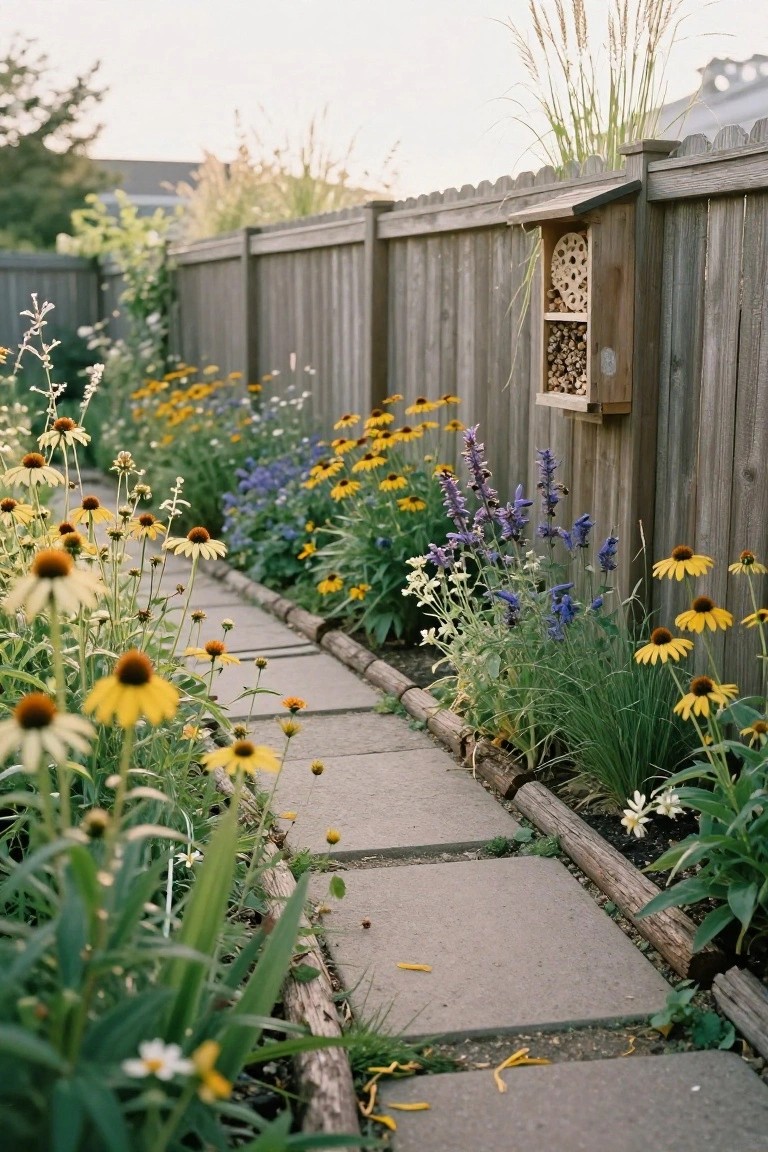
A stone path like this one runs right through beds of yellow coneflowers and purple salvia. It gives you easy access without trampling plants. Plus that wooden bee hotel on the fence draws in pollinators to help everything grow better. For beginners it’s a natural way to add color and structure without fuss.
Just lay flat stones or pavers where you walk most. Plant perennials like echinacea or black-eyed Susans along both sides, they come back year after year. Tuck in a bee house near flowers but out of the way. Works great in backyards with fences, keeps the path clear, and weeds stay gone if you mulch a bit.
Separate Greens and Browns for Easy Composting
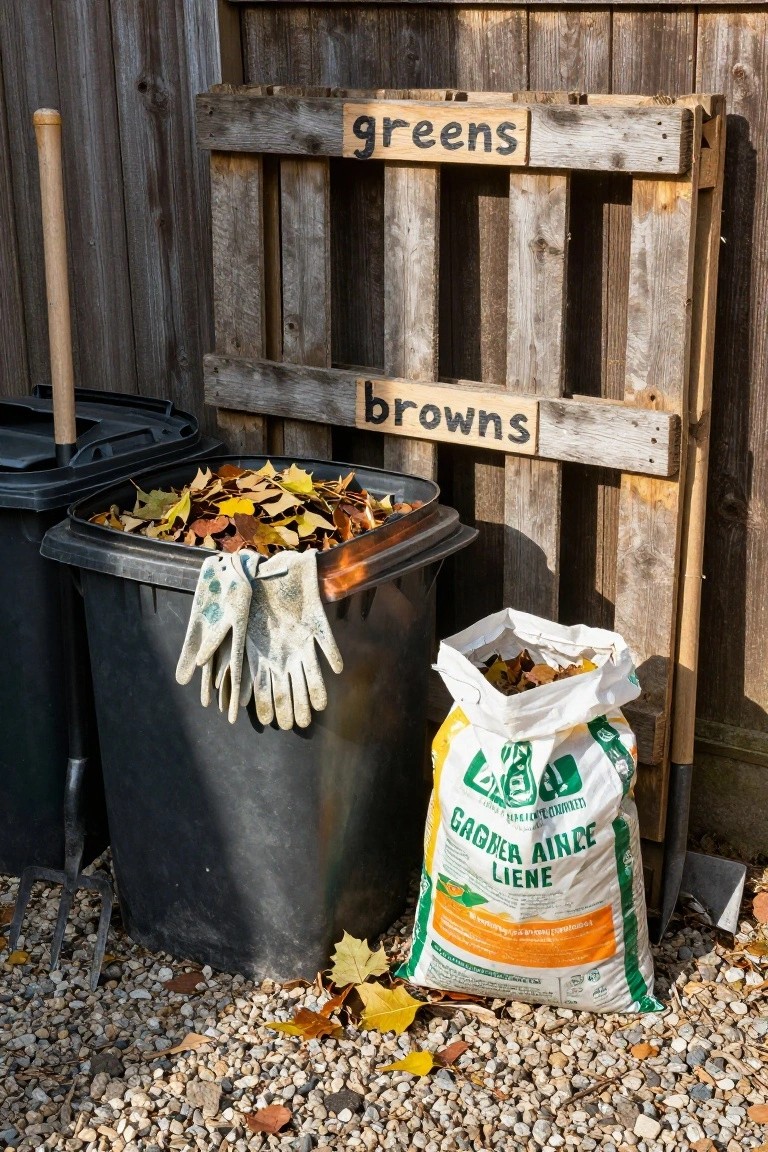
One straightforward way to get into gardening is setting up a compost spot right in your backyard. You just need two bins, one for greens like fresh grass clippings or veggie scraps, and one for browns such as dry leaves and cardboard. Label them clearly with simple wooden signs, like on pallets, so you or anyone helping out knows what goes where. It keeps things organized and turns waste into useful soil without much fuss.
This works best in a corner near your fence or shed, on gravel to stay neat and drain well. Add a bag of garden lime now and then to balance it out… keeps smells down too. For beginners, start small with whatever bins you have, and you’ll have rich compost for your beds in a few months. Fits any yard size really.
Clean Metal Edging for Garden Beds

One straightforward way to make garden beds look put-together is with metal edging along walkways. You see it here holding back the brown mulch and grassy plants from the smooth pavers. It creates a crisp line that keeps everything in place without much upkeep. That clean edge makes the whole strip feel intentional, even for simple plantings.
For beginners, grab some corten steel or similar strips from a garden center. Cut to fit, stake it down halfway into the soil, and fill with mulch around low grasses. It works great next to sidewalks or driveways in town yards. Just pick rust-resistant if you want it to stay shiny longer.
Create Shade Gardens with Hostas
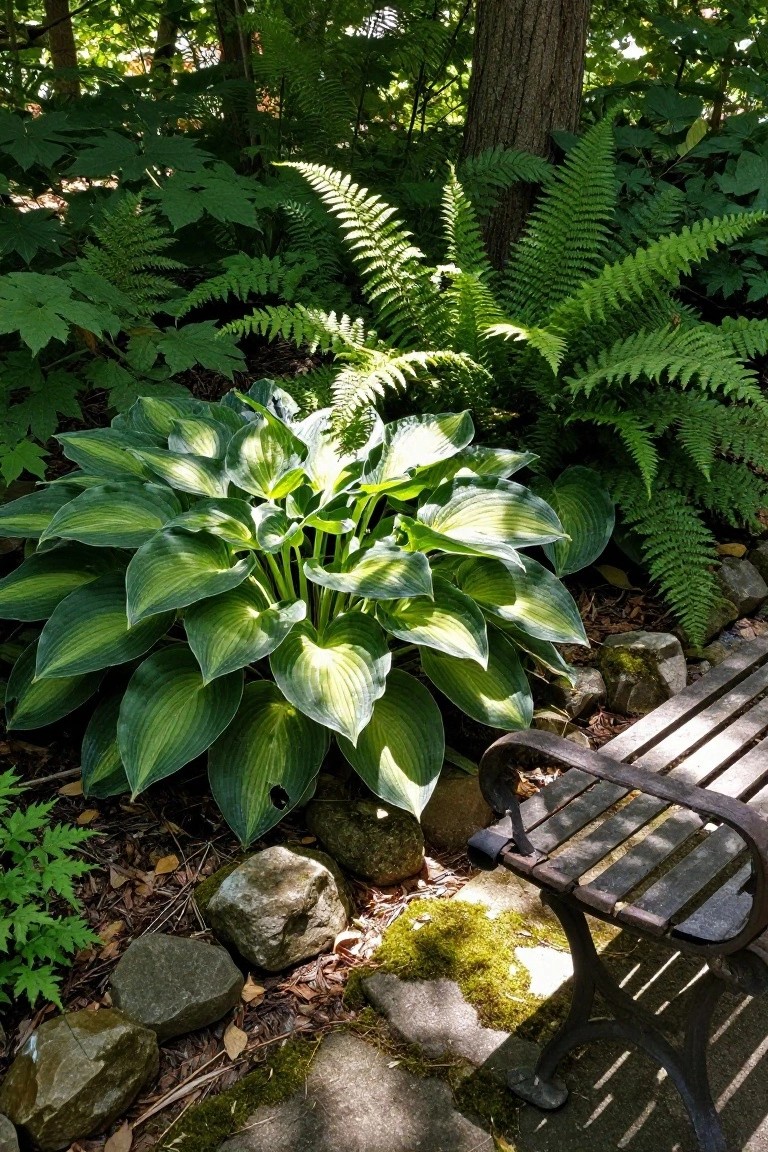
Hostas stand out in shady spots because their big leaves bring bold texture where grass or sun plants won’t grow. They’re tough and fill in fast, like the clump here edged by ferns and rocks. Beginners like them since they need little fuss once planted right.
Put hostas under trees or on the north side of your house where it’s damp and shaded. Mix in ferns for lighter fronds and rocks to keep soil in place. Watch for slugs in wet weather, but good drainage helps. A nearby bench makes the spot usable too.
Natural Stone Paths for Sloped Yards
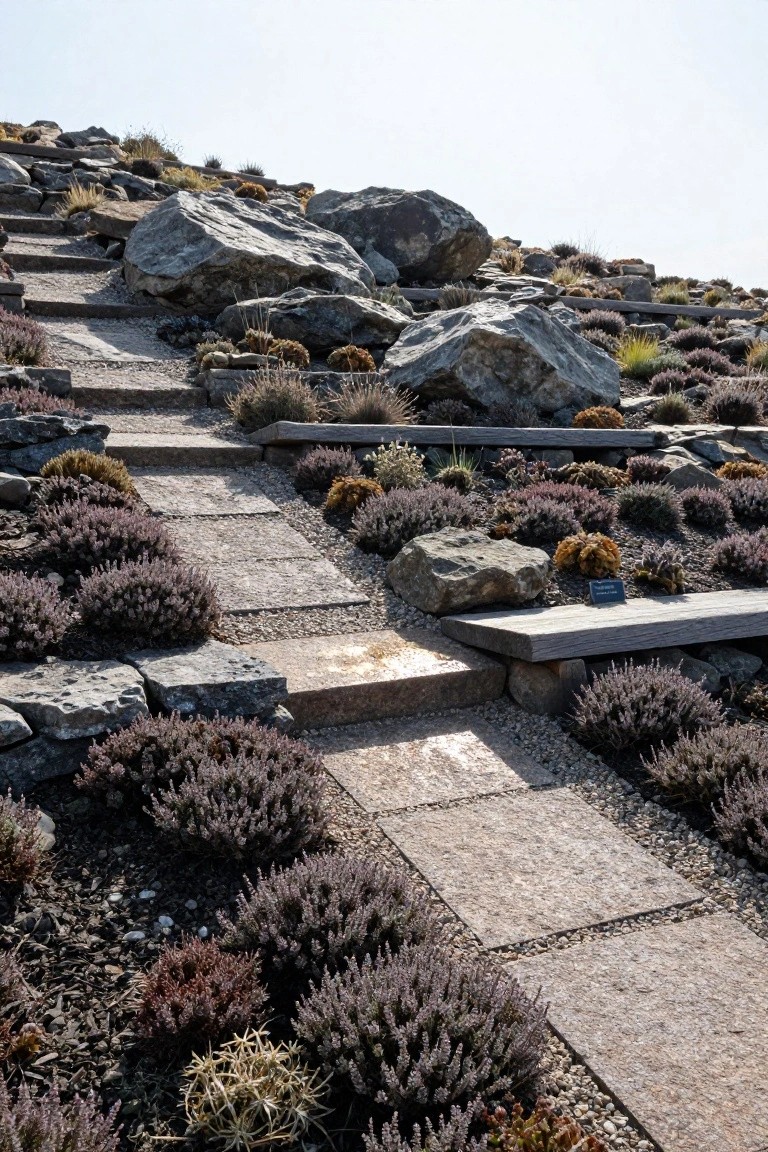
A good way to tackle a steep slope is with rough stone steps and boulders like you see here. The path winds up naturally using big rocks for support, and low plants fill in around them without much fuss. It keeps things stable and lets water drain right through, so you avoid muddy trails after rain.
This works best in rocky or dry spots where grass won’t grow anyway. Grab stones from your property or nearby to save money, set them into the dirt with gravel underneath, and add tough plants like heather or sedums along the edges. Just make sure steps aren’t too high… keeps it easy for everyone.
Simple Drip Irrigation for Raised Beds
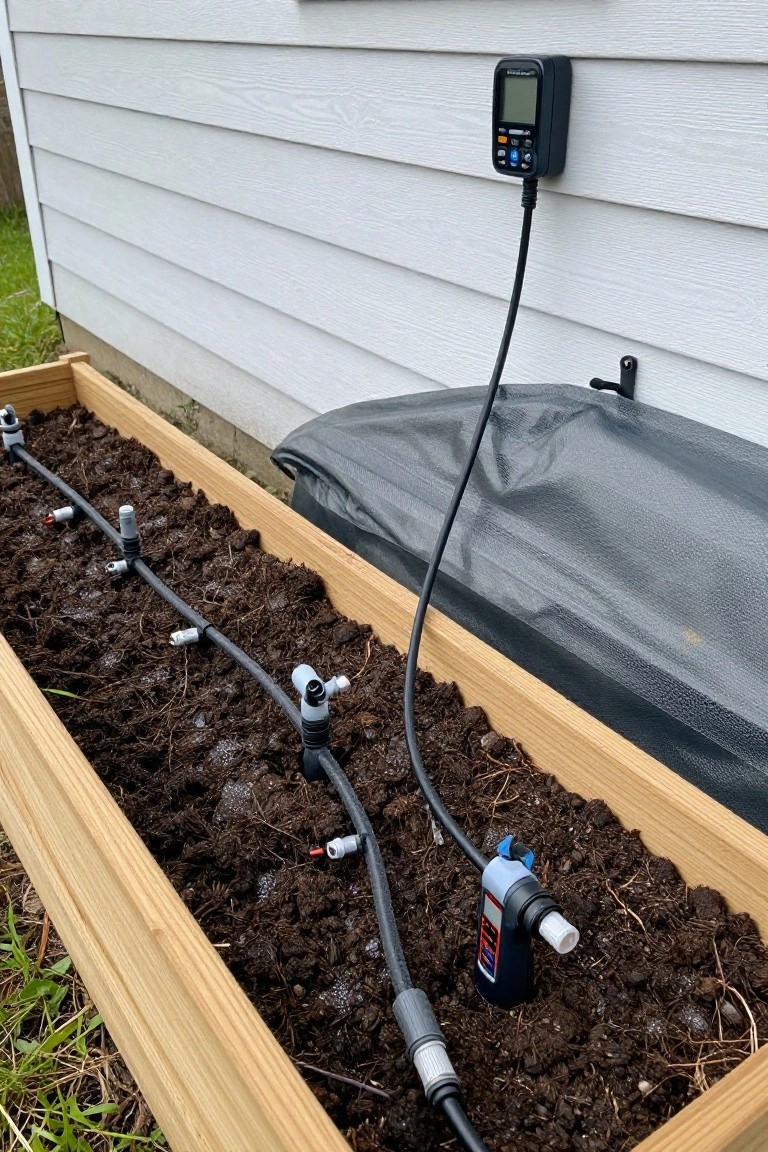
One of the easiest ways to keep a raised bed garden watered without much fuss is a basic drip irrigation setup. You see the black tubing running right along the soil with little emitters that drip water slowly where plants need it. A small digital timer on the house wall controls everything, so it runs on a schedule. This keeps soil evenly moist and cuts down on waste, which is great for beginners who forget to water.
Just run the main line through your bed, poke in the emitters near where you’ll plant, and hook it to a hose with a timer. It works best in beds like this wooden one against the house, where you can reach the controller easily. Start with short runs, 10 or 15 minutes a day, and adjust based on rain. Watch for clogs in the emitters though, a quick rinse fixes that.
Simple Balcony Container Gardening

A small balcony like this turns into a real garden spot just by grouping pots around a basic table and chair. You get color and green from geraniums in those concrete planters, plus height from a climber on the bamboo screen. It feels full but not crowded, and that watering can right there keeps things practical.
For beginners, grab a couple big pots for bushy flowers, tuck smaller ones along the edge, and add a trellis for something to climb. It suits apartments or tight spaces best. Watch the weight on rails, and pick sun-lovers if yours gets afternoon light.
Tiered Stone Planters for Herbs
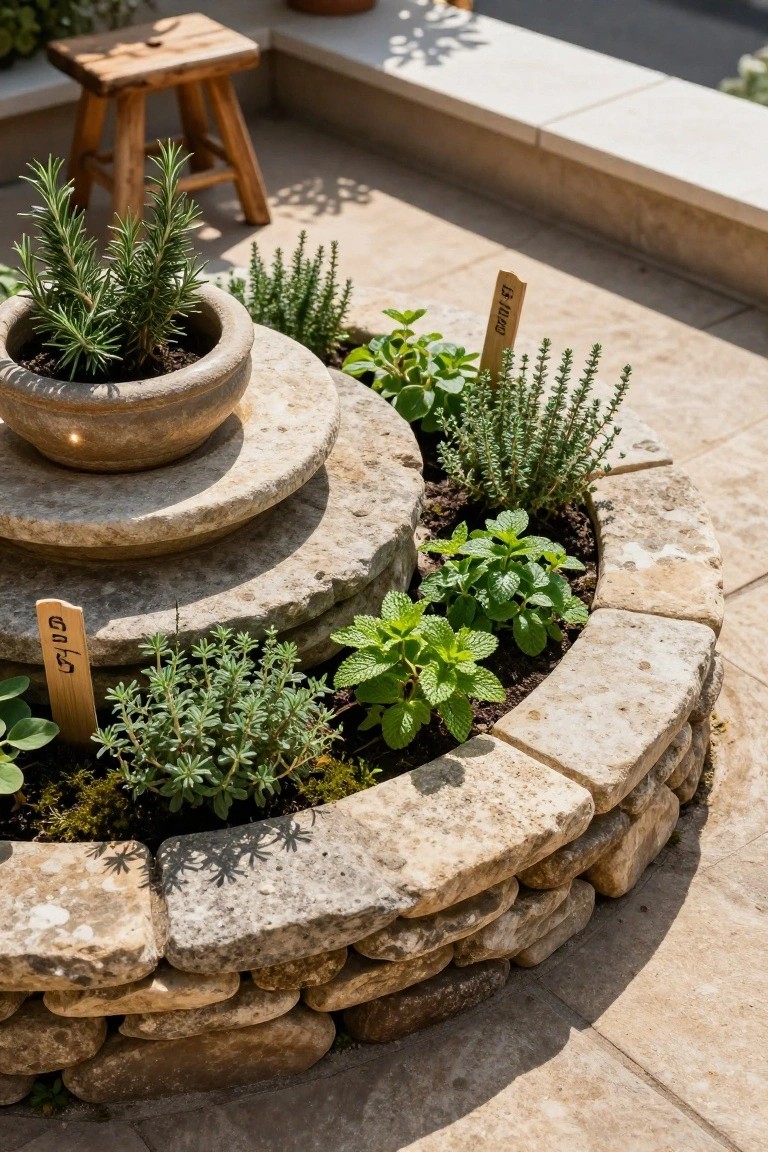
One easy way to grow fresh herbs without taking up much ground space is a tiered stone planter like this. It stacks plants in levels so you get more growing room in a small spot. The stone holds soil well and looks right at home outdoors. Herbs such as rosemary up top and mint below stay happy in their spots, and you can label them to keep track.
Put this setup on a sunny patio or terrace where you pass by often. It works great for beginners since the raised beds make weeding simple and keep plants off damp ground. Stone lasts years with little upkeep. Just pick a circle or square shape to fit your area, fill with good soil, and plant low growers at the bottom.
Use Mulch Paths in Flower Beds
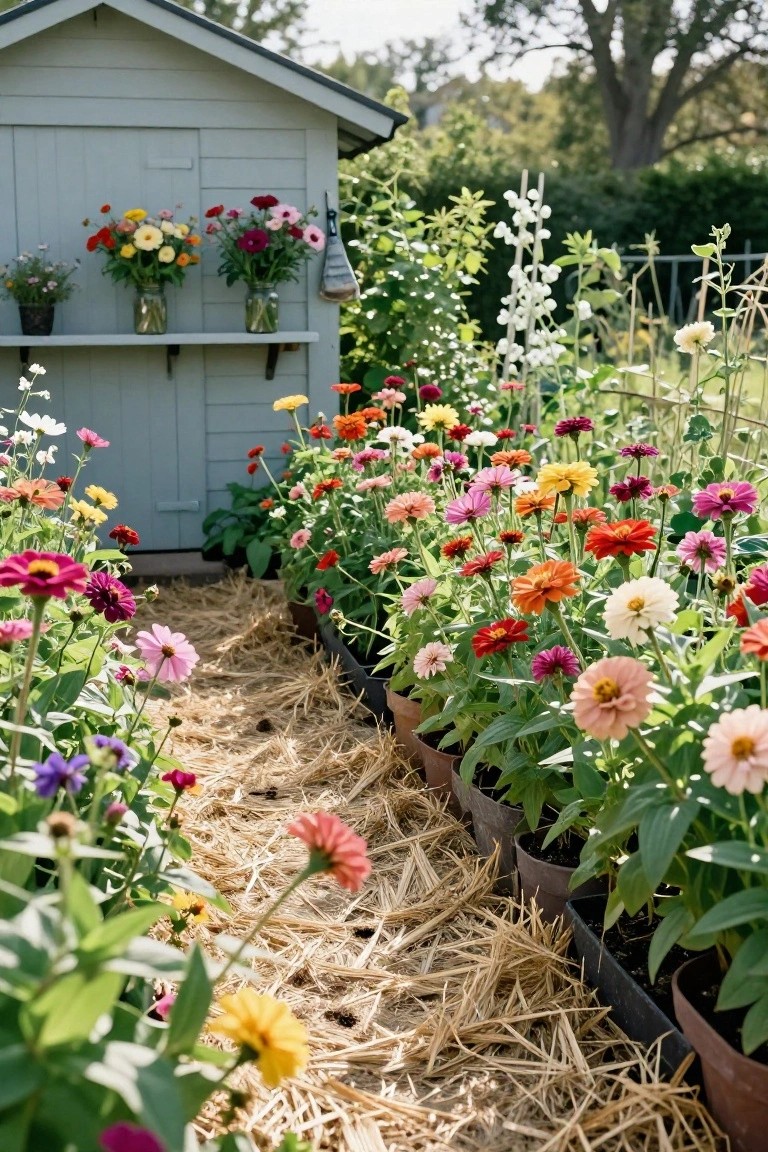
A simple straw mulch path like this one winds right between raised beds full of zinnias. It keeps your shoes clean on rainy days and stops weeds from taking over. Plus you can walk close to the plants without messing up the soil.
Lay down cardboard first then pile on 3 or 4 inches of straw or wood chips. It’s cheap and works great in small backyard gardens or along a shed. Just top it up once a year to keep it looking fresh.
Train Fruit Trees Flat Against Walls
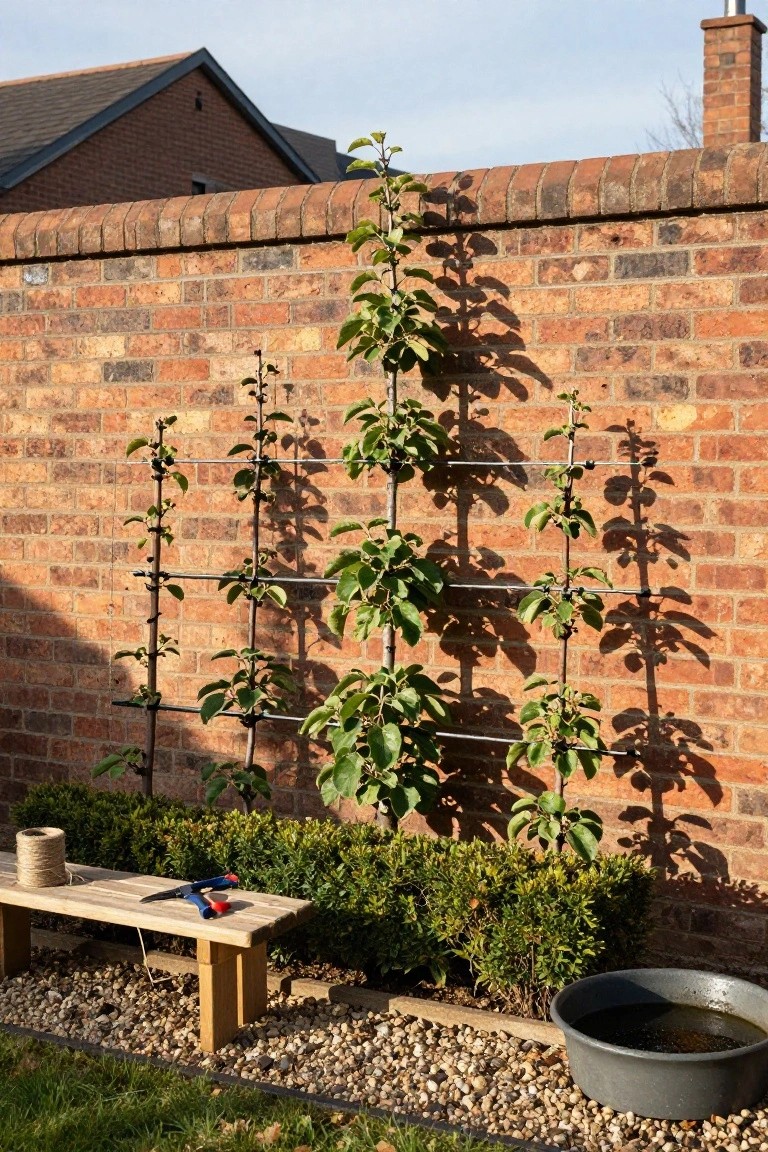
One simple way to fit fruit trees into a small garden is to train them flat against a wall, like this young apple tree tied to a metal frame. It grows up instead of out. You get fruit without taking much ground space. Plus it looks neat and tidy all season.
This works best in a sunny spot next to a fence or house wall. Pick a dwarf rootstock tree and a simple frame or wires. Tie branches gently as they grow. Prune once or twice a year to keep the shape. It’s forgiving for beginners… just be patient the first couple years.
Easy Curb-Side Rain Gardens

Rain gardens like this one catch runoff right along the street edge. They use a shallow trench filled with smooth river rocks and clumps of tall grasses to guide water away without fuss. It’s a smart fix for soggy spots after rain. Plus it looks tidy and natural. No big digging or fancy plants needed.
Set one up in narrow strips between the sidewalk and road or driveway. Pick tough grasses that handle wet feet then dry spells. Line the bottom with rocks for drainage. It fits most suburban yards and keeps things low maintenance. Just watch that the edging holds up over time.
Stock Tanks for Succulent Displays

One easy way to add interest to a dry garden is filling a stock tank with succulents. These old metal tubs hold a nice cluster of plants like those blue echeverias you see here. They create a round focal point that pulls the eye without much work. Plus succulents need little water so it’s perfect for beginners who forget to tend things.
Just set the tank right in a gravel bed near the path or entry. Fill it with well-draining soil and group smaller succulents together for that full look. It works great in sunny spots or arid yards. Make sure there’s a hole for drainage or it might get soggy… one common mistake.
Start Seeds in a Mini Greenhouse

A mini greenhouse gives beginners an easy way to get plants going without worrying about cold snaps or heavy rain. You see trays of seedlings tucked inside, safe and sprouting nicely, plus shelves holding pots ready for transplanting. It keeps everything organized in one spot. Keeps things simple too.
Set one up on a raised wooden base outdoors, near your patio or garden edge where you can check it daily. Fill it with seed trays and basic terracotta pots, like the ones stacked here. Works great for small yards. Just vent it on warm days to avoid overheating.
Wheelbarrow Raised Planters for Easy Growing
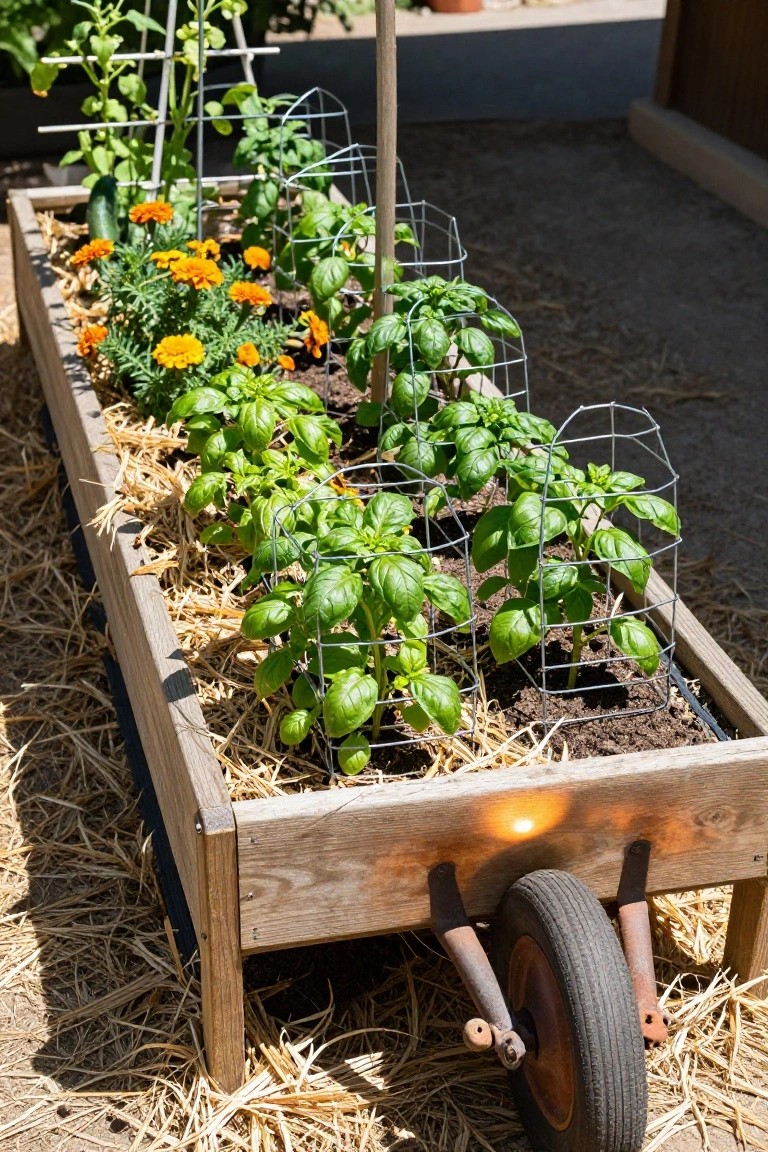
A wheelbarrow-style raised bed like this keeps your garden simple and mobile. Plants such as basil and marigolds grow right in the wooden box, with straw mulch holding moisture and wire cages supporting climbers like cucumbers. The single wheel lets you roll it to sunnier spots or out of the way in bad weather. No tilling ground or heavy lifting needed.
Set one up on gravel or a patio edge where you have decent sun. Fill halfway with soil mix, add mulch on top, and plant quick growers like herbs or annual flowers. It fits small yards or rentals best. Watch that water drains from the bottom so roots don’t rot.
Simple Patio Lounge with Oversized Pots
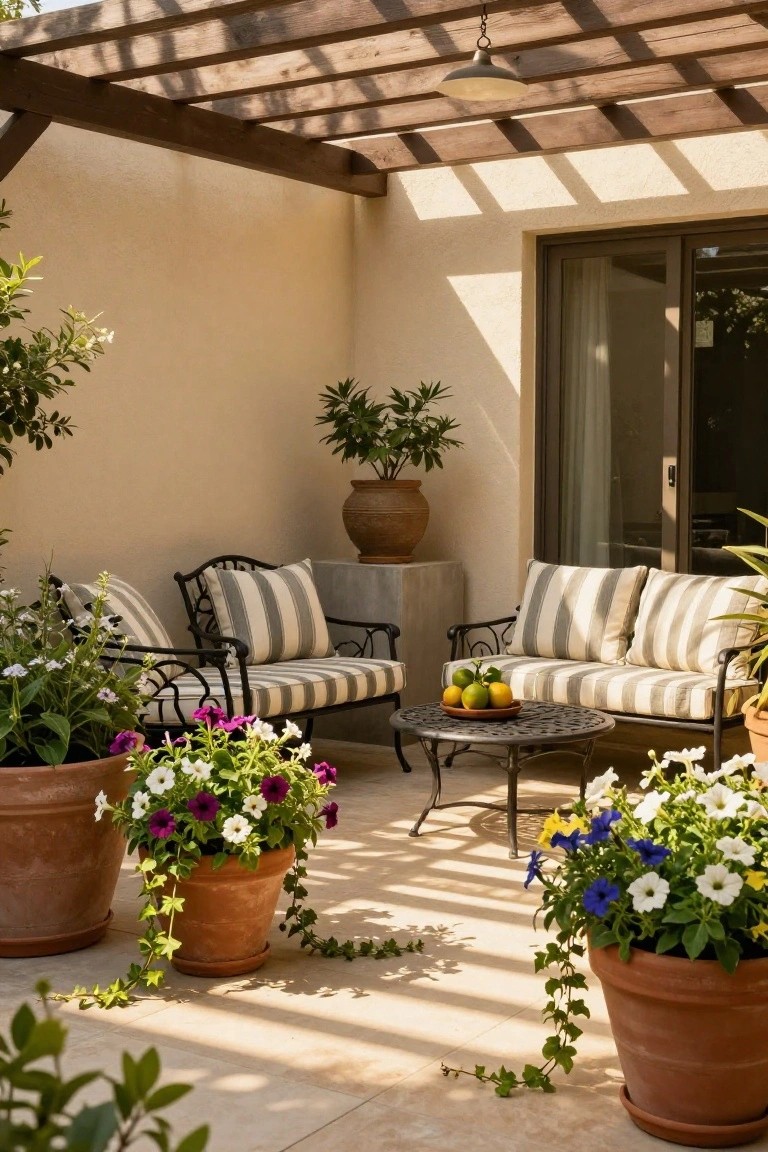
One easy way to make your patio feel like a proper garden spot is to surround the seating with big terracotta pots. Here the black iron chairs and sofa sit right among tall plants in those classic orange pots. It pulls the seating together without much fuss. The flowers and greenery make everything look fuller and more alive right away.
This works great on covered patios or terraces where you want shade and color. Start with a few large pots of easy bloomers like petunias or ivy. Group them close to the furniture so they frame the space. It’s forgiving for beginners… pots are movable if you change your mind. Suits most backyards, just pick sun-loving plants for hot spots.
Prep Planting Holes with Amendments
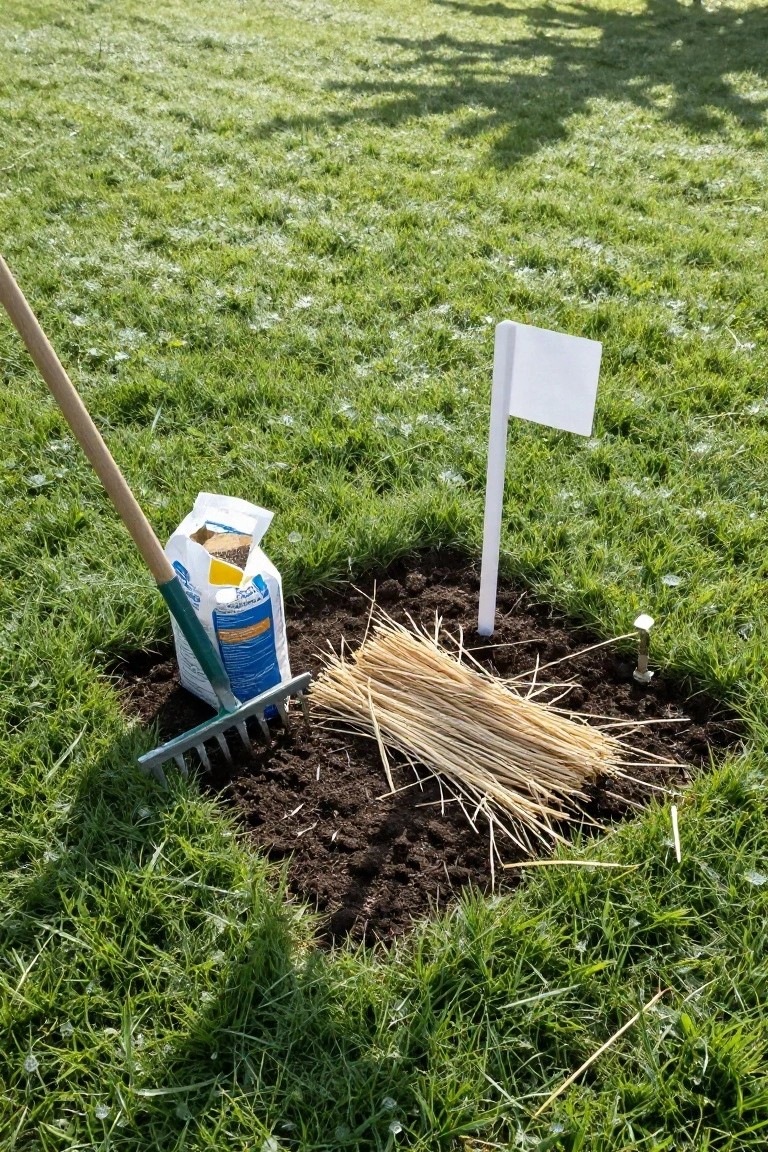
One smart move for beginners is enriching the soil right in the planting hole before you add your new plant. You see it here with a bag of compost dumped in and some straw mixed around the edges of the hole. This gives roots loose soil full of nutrients from the start, so plants settle in faster and grow stronger without much fuss later.
Dig the hole a bit wider than the root ball, maybe twice as wide. Work in a handful or two of compost or fertilizer, toss in some straw or other organic stuff to keep it airy, then set your plant in. It works great in lawns or beds like this one. Just avoid overdoing the amendments or you might burn young roots.
Gravel Paths Through Perennial Beds
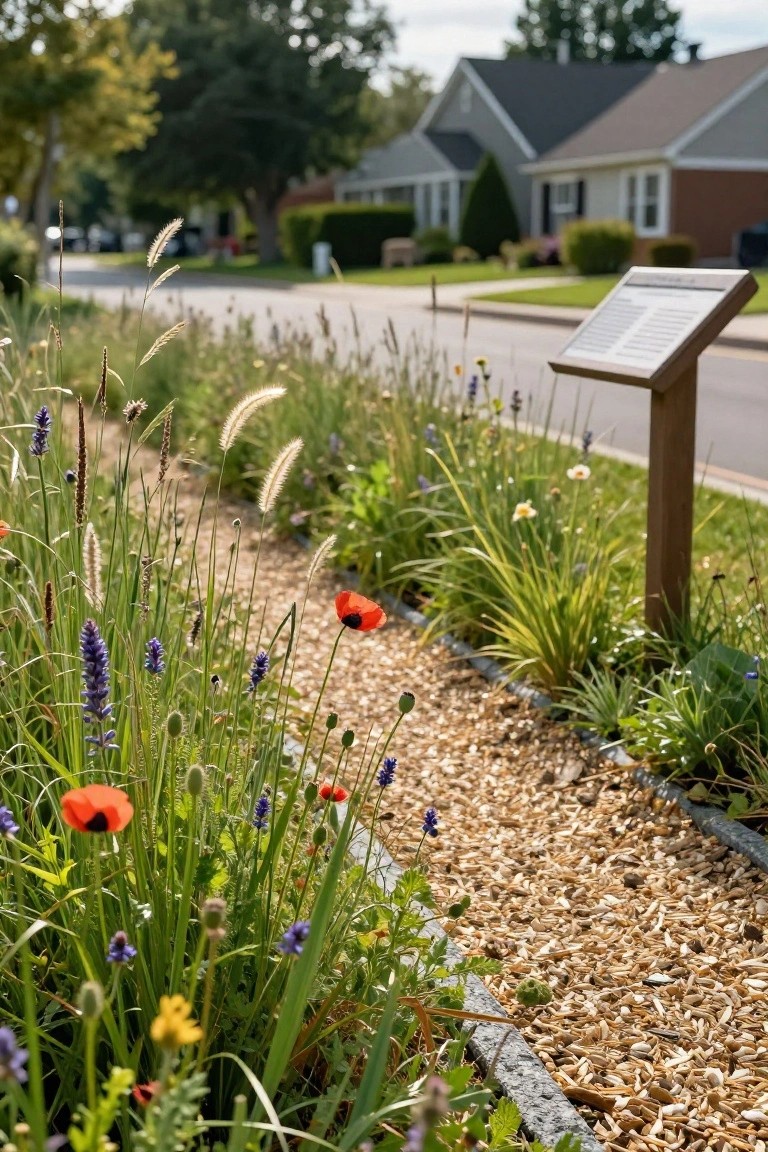
A gravel path like this cuts right through a mix of easy perennials. Red poppies pop against the stones, with lavender and grasses filling in around them. It’s simple because gravel cuts down on weeding, and these plants bounce back year after year without babying.
Use it in narrow spots along sidewalks or driveways where grass won’t grow well. Dig a shallow bed, drop in gravel for drainage, then tuck in local wildflowers and tough grasses. Stone edging keeps everything tidy… suits sunny, dry areas best, and beginners get quick color that draws bees.
Simple Fire Pit on Gravel

A round metal fire pit works great as the heart of a backyard gathering spot when you set it on gravel. The loose stones make everything feel casual and easy to walk on, and that rusty finish on the pit adds a natural look without much upkeep. Tall grasses around the edge give some screening from neighbors, and a simple wood stack right nearby keeps things practical for evenings by the fire.
To pull this off, start with a flat gravel bed for drainage and low weeds, then lay a few wide stone pavers in a loose circle for seats. Plant fluffy grasses like pampas in the borders, they’re tough and grow fast. This setup fits small yards or rentals best, since it’s cheap and mostly no-mow. Just keep the fire pit away from dry plants.
Frequently Asked Questions
Q: My soil is rock-hard and nothing grows in it. How do I loosen it up quick? A: Dig in some compost or old leaves right away. They break up the clumps and feed roots at the same time. Work it a few inches deep and watch plants take off.
Q: Plants wilt even after I water them. What’s wrong? A: Feel the soil an inch down before you pour more. Wet roots drown fast. Let it dry out a bit between drinks.
Q: Bugs showed up on my new veggies overnight. Do I need bug spray? A: Blast leaves with dish soap and water from a spray bottle. It smothers pests without killing good bugs too. Repeat every other day until they vanish.
Q: I rent and have no yard. Pots work okay for beginners? And they do. Grab big ones with holes, fill halfway with soil, then add plants. Move them around for perfect sun.
