

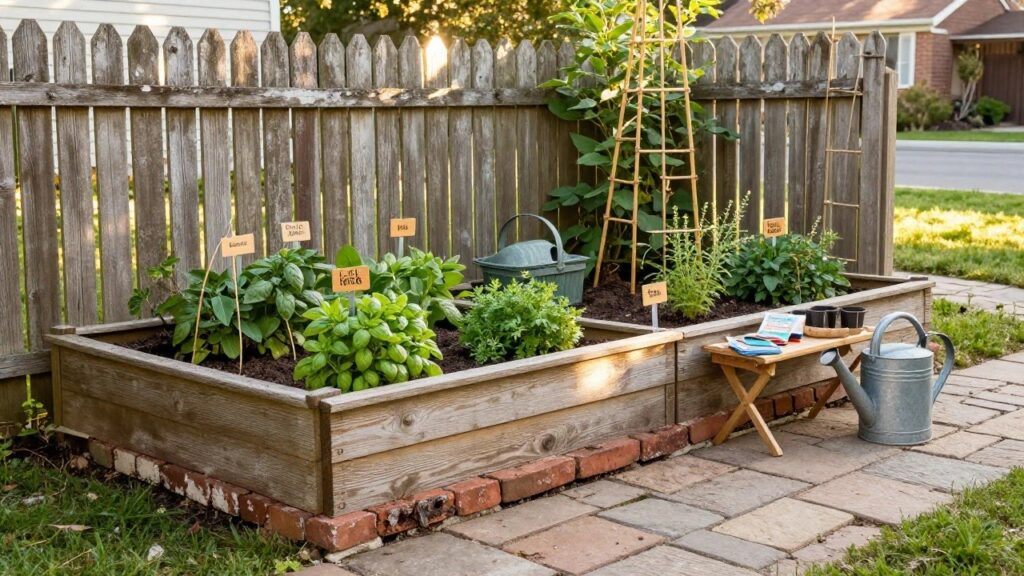
I remember staring at my empty backyard plot a few summers ago, unsure how to turn it into anything resembling a garden.
The layouts that caught my eye in neighborhood yards always started with simple paths and defined beds that shaped the whole space over time.
My first attempt without that structure quickly became a jumble of overgrown plants and trampled edges.
Clear planting zones from day one make weeding and growth feel manageable season after season.
These steps helped me build something lasting, and they’re easy to tweak for your own spot.
Build Simple Raised Garden Beds
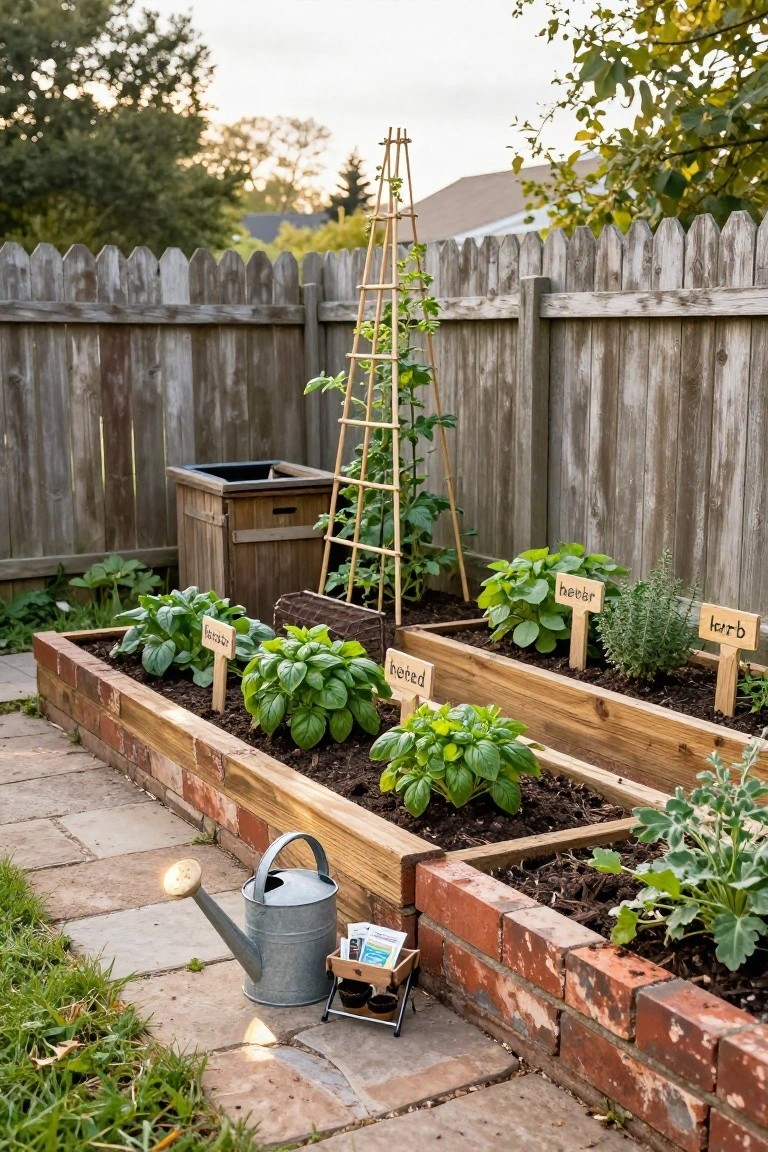
Raised beds like these keep things neat and make gardening way easier for beginners. You control the soil, no digging up your yard, and everything’s at waist height so your back stays happy. Notice the mix of brick and wood here. It gives a sturdy look without much cost, and that tall trellis lets beans climb up instead of sprawling everywhere.
Put them along a fence or back path where sun hits most of the day. Use rot-resistant wood or bricks that match your yard. Fill with good garden soil mix, and label plants to remember what you put where. Just make sure they drain well… wet roots rot fast. Perfect for small spaces or first tries at veggies and herbs.
Simple Balcony Container Gardening
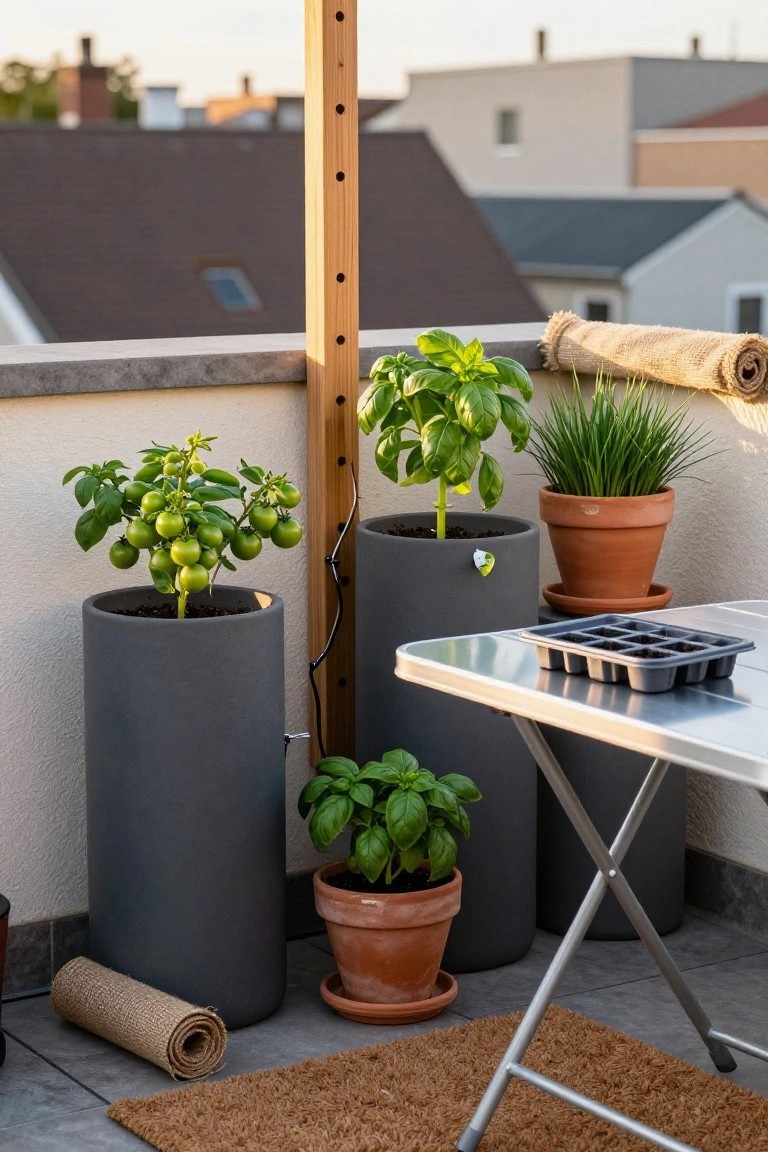
If you live in an apartment or don’t have yard space, pots on a balcony make gardening easy to start. You see a young tomato plant loaded with green fruits, basil bushes, and some chives all thriving in tall gray cylinders and smaller terracotta pots. They catch the sun just right without taking over the spot. It’s practical for first-timers since you control the soil and water without digging up ground.
Group pots by height for better reach, like taller ones in back with herbs up front. Add a folding table nearby for seed starts or tools. This setup works best on sunny balconies facing south. Watch watering though… pots dry out faster than garden beds. Start with easy growers like these to build confidence.
Add a Winding Stone Path
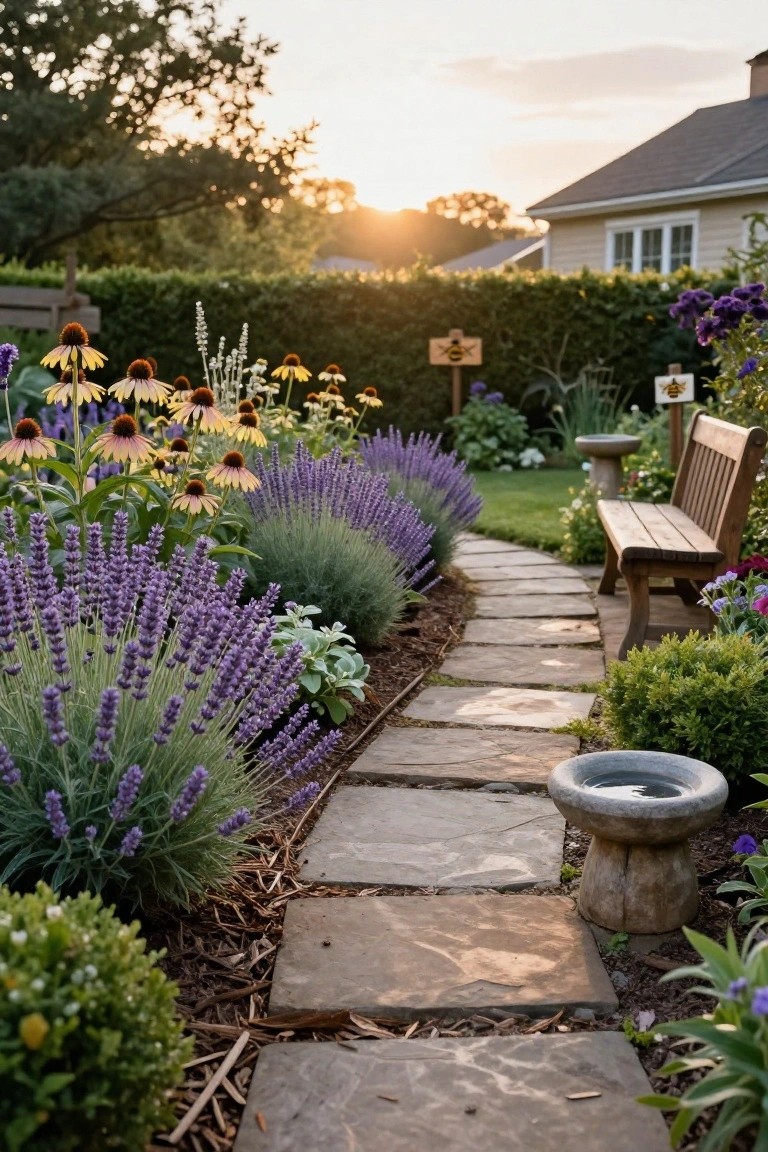
A winding stone path like this one pulls everything together in a new garden. It gives you a clear way to walk between flower beds without trampling plants. Here, rough-cut stones curve gently past tall lavender and coneflowers, making the yard feel bigger and more put-together right away.
Lay out your path first with string or hose to get the curve you like. Use stepping stones or flagstone set in sand or gravel, about 3 feet wide so two can walk side by side. Edge it with tough perennials that spill over a bit. This works best in cottage-style yards or along a side entrance. Just keep weeds out from between stones.
Plant Hostas Along Garden Walls
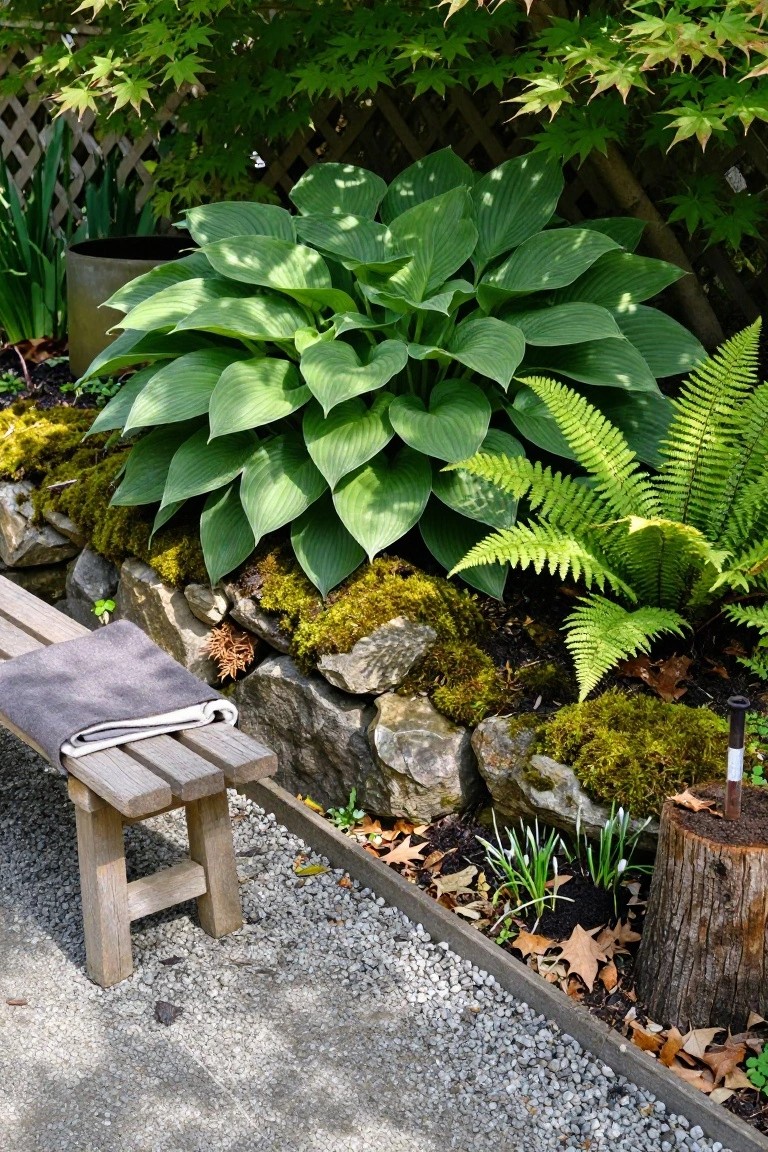
Hostas work great as the main plant in shady spots. Their big, broad leaves fill out a bed fast and give that lush look without needing full sun. You see it here with the stone wall holding back soil and moss adding a natural touch. Ferns tucked in nearby add feathery contrast that keeps things interesting through the season.
Put them right against a low wall or border for support, especially if your yard has tree shade. Gravel paths around make it easy to reach without compacting soil. Good for small yards or beginners since they mostly just need mulch and occasional dividing. Watch for slugs though, a bit of bait handles that.
Stone Walls and Gravel for Garden Beds

One straightforward way to get your garden started is building low beds with stacked stone walls and gravel fill. Like the olive tree planted right in the center here, with lavender and silver bushes tucked around it. This keeps soil in place, cuts down on weeds, and lets water drain fast so plants stay healthy without constant fussing.
It works best in sunny, dry areas where you want low upkeep. Stack local stones for the edge, add gravel over the soil, then plant drought-tough stuff in pockets. Watch for spots where gravel might shift… just top it up now and then. Suits beginners perfectly.
Start Seedlings in Organized Trays
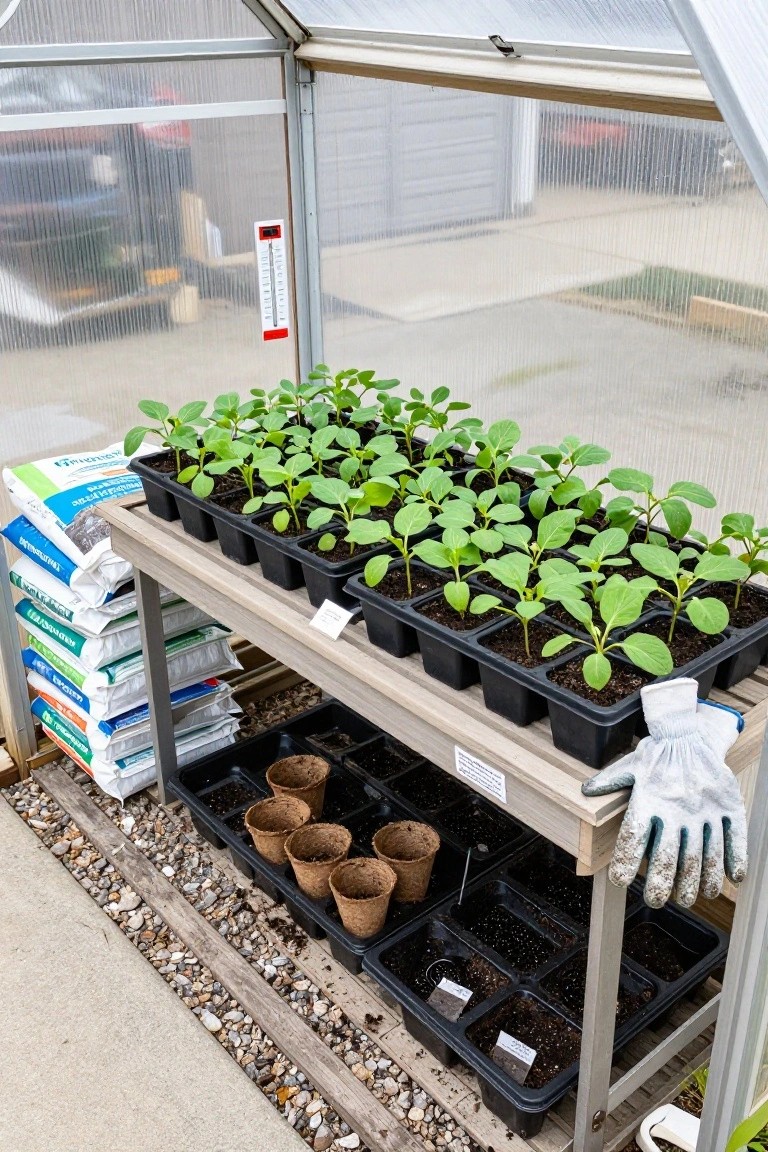
One practical way to kick off your garden is lining up seedlings in trays on a basic bench. You see rows of young plants here, all neat in black plastic cells, with soil bags right nearby for easy access. It keeps starts protected and makes tending simple, especially when space is tight.
Set this up in a greenhouse or against a sunny wall. Grab trays with drainage holes, fill with seed-starting mix, and space plants evenly. Water from below to avoid damping off. Works best for veggies like these, in any backyard size. Just watch for overcrowding as they grow.
Simple Gravel Stepping Stone Path
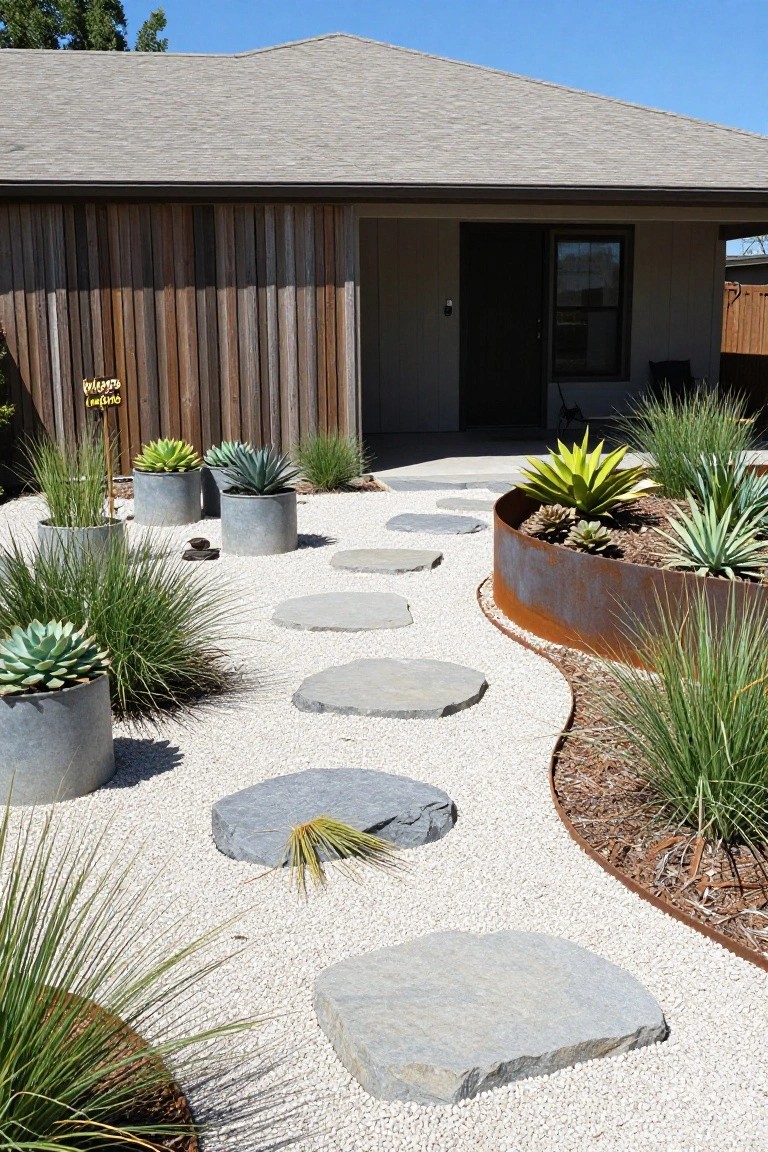
A gravel path like this makes getting to your front door feel easy and intentional. Flat round stones set into white pebbles guide the way, with tough succulents and grasses tucked around the edges. It’s low fuss. No mowing or constant watering needed, which is great if you’re just starting out.
Lay down landscape fabric first to keep weeds down, then add a few inches of gravel. Space the stones where your feet naturally fall, about two feet apart. Plant agaves or similar drought-tough stuff in pots or beds nearby. Works best in sunny front yards… keeps mud off your shoes too. Skip it if your soil stays soggy.
Use Raised Beds for Simple Vegetable Gardening
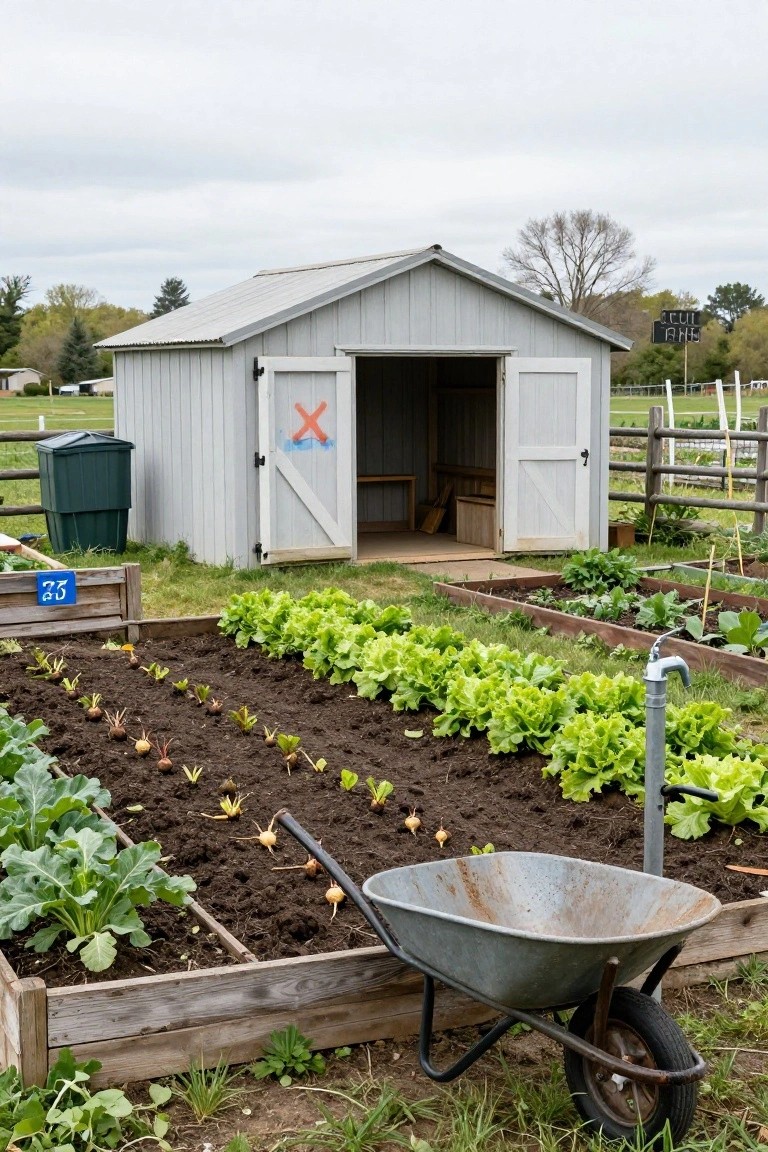
Raised beds make starting a garden straightforward, especially if you’re new to it. They keep soil contained and organized, so you avoid bending over too much or dealing with weeds taking over. In this setup, neat rows of lettuce and beets show how everything grows in straight lines, making it easy to tend and harvest. The beds lift plants up where you can reach them without much strain.
Put raised beds in a sunny spot with good drainage, about four feet wide so you can reach the middle from either side. Wood like cedar works well and lasts a few years. Fill them with a mix of soil and compost, then plant in rows or blocks based on what you want to grow. They’re great for small backyards or even patios, and pair nicely with a nearby shed for tools.
Simple Raised Garden Beds
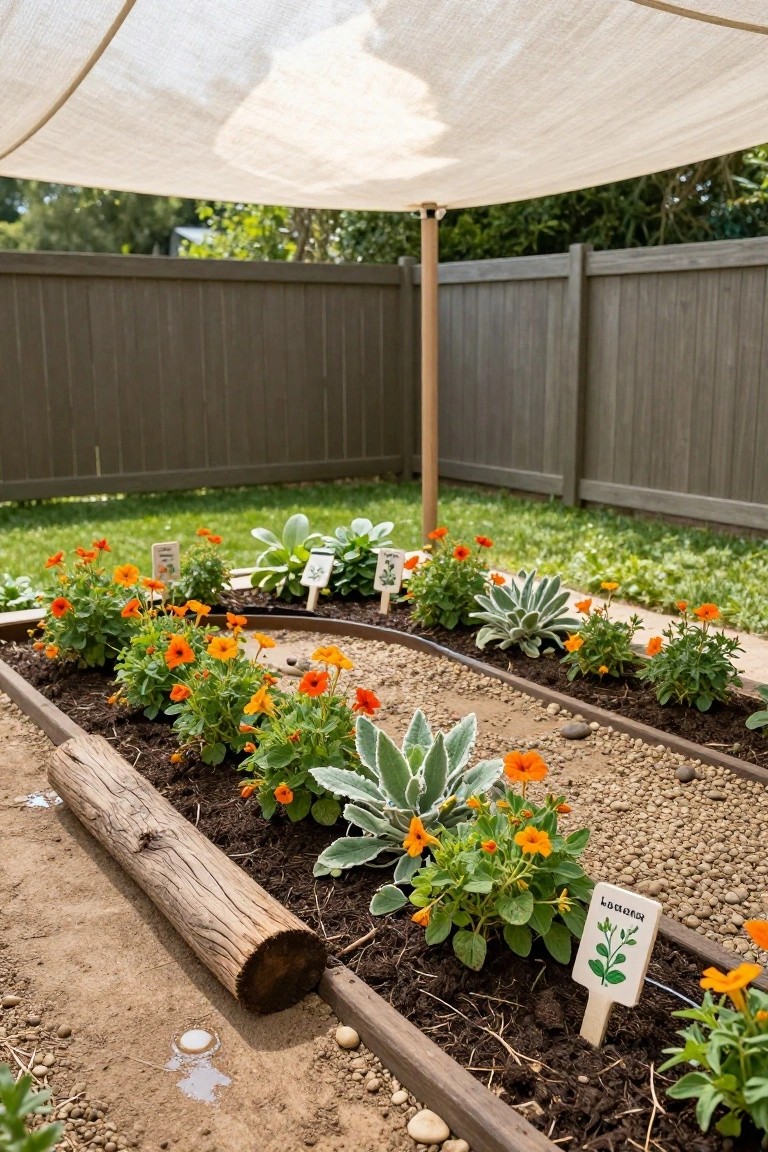
Raised garden beds keep things neat and make gardening straightforward for beginners. This setup uses curved wooden borders along one side, with rich soil holding orange calendula flowers and soft silver-leafed plants like lamb’s ears. The labels on stakes help you remember what you planted, and a gravel path around it keeps mud at bay. It’s practical because you control the soil and avoid bending too much.
These work best in small backyards or patios with decent sun. Start with untreated wood planks or logs for the edges, fill with good garden mix, and space plants for airflow. Add a simple shade cloth overhead if your spot gets intense afternoon sun. Just make sure the bed drains well, or roots could rot.
Create a Dry Creek Bed Garden
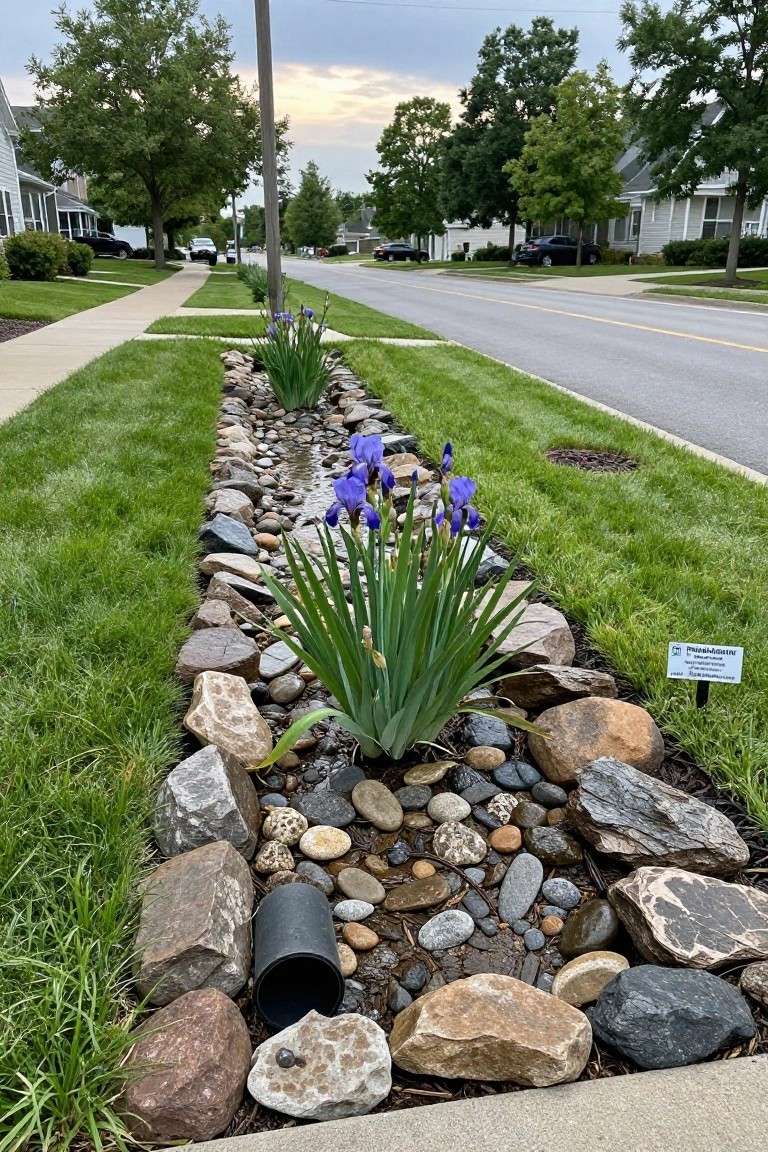
A dry creek bed gives your yard a natural look without much upkeep. It’s basically a shallow trench lined with rocks of different sizes, maybe a few tall plants like iris tucked in. Water from rain flows through it instead of pooling, and it adds that winding river feel right in your front yard. Folks like it because it handles runoff near the street or sidewalk, and those purple iris blooms pop against the stones.
Line it along a narrow strip where grass won’t grow well, like next to the curb. Start by digging a shallow ditch, add bigger rocks on the edges, smaller ones in the middle, and pop in hardy plants. It works great for beginners since rocks don’t need watering. Just make sure the slope lets water drain away from the house.
Plant Tall to Short in Garden Beds

Layering plants by height is a straightforward trick that gives your beds instant shape and fullness. Start with tall spikes like lavender at the back for height. Add bold hostas in the middle for leafy bulk. Tuck low white flowers along the front edge. This setup looks balanced and hides bare soil right from the start.
It’s perfect for spots next to paths or house foundations where you want low upkeep. Lavender takes sun. Hostas like shade. Both come back yearly. Just space them so they fill in over time. Avoid overcrowding at first.
Raised Garden Beds for Easy Starts
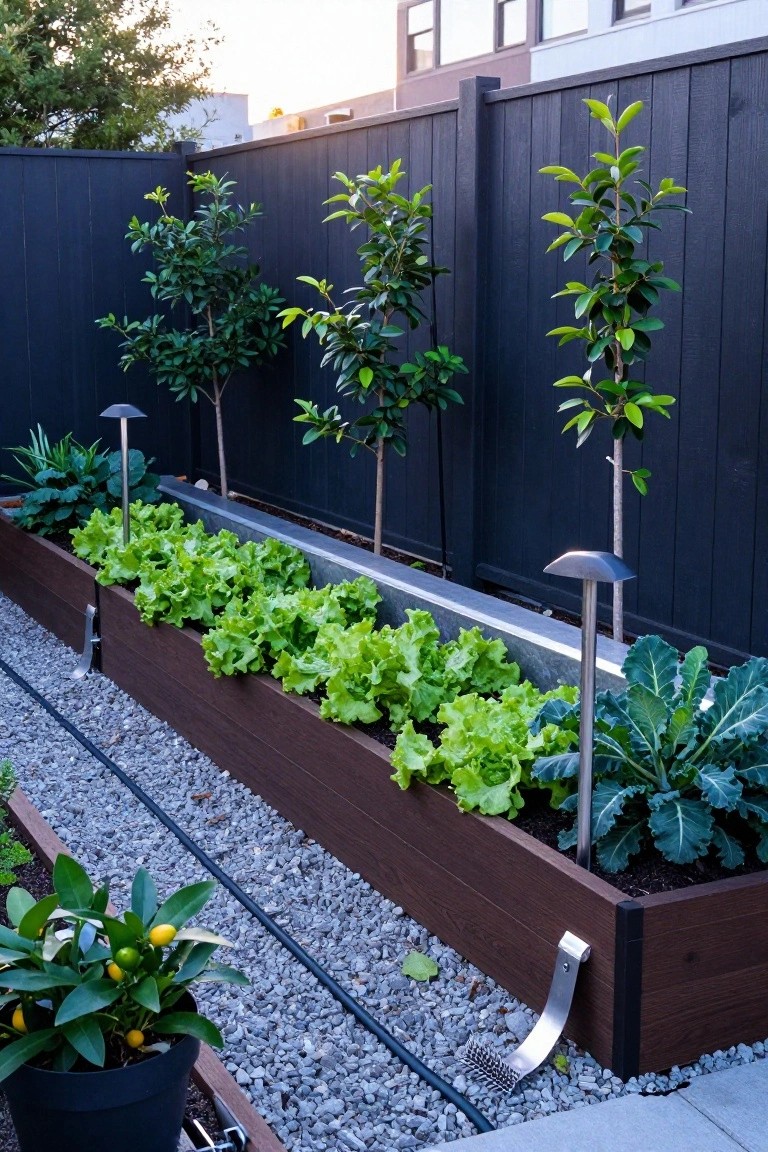
Raised garden beds give first-time gardeners a simple way to grow their own veggies without a lot of hassle. You build them up off the ground, which means better soil control and less weeding from the yard. Here, beds packed with lettuce and kale sit neatly along a fence, showing how straightforward it can be.
Just frame them with wood or metal, fill with compost-rich soil, and plant easy crops like greens. Gravel paths keep mud out, and drip lines handle watering. This setup fits tight backyards best… low effort, quick results.
Make a Simple Path Through Wild Grasses
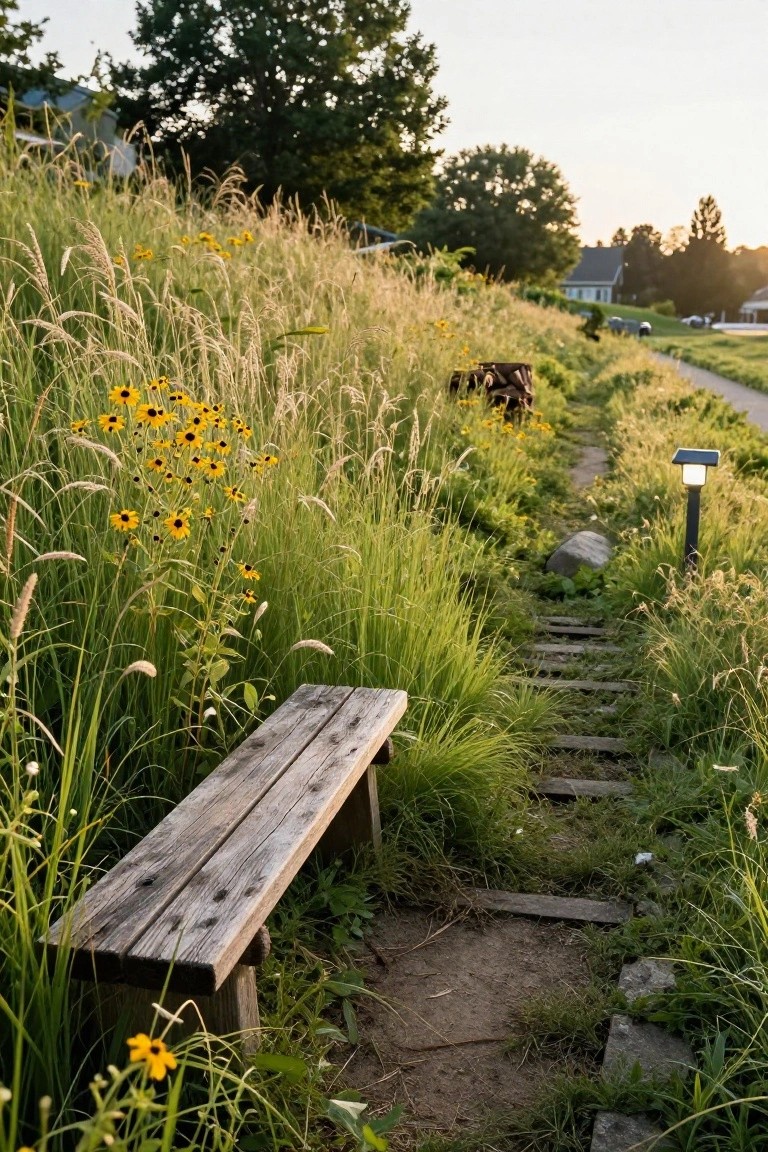
A basic path like this one, with rough stone steps and bits of wood, running through knee-high grasses and black-eyed Susans, turns an ordinary slope into something you actually want to walk. It feels natural, not fussy, and draws you along without much effort from the plants themselves.
First-timers can mark out a route where you already walk, drop in flat stones or old logs for footing, then let easy grasses and perennials fill the edges. It suits sloped yards or edges near the house, holds up to foot traffic, and gives a place for a bench. Just keep the plants from overtaking the steps.
Vertical Wall Planters for Small Outdoor Spaces
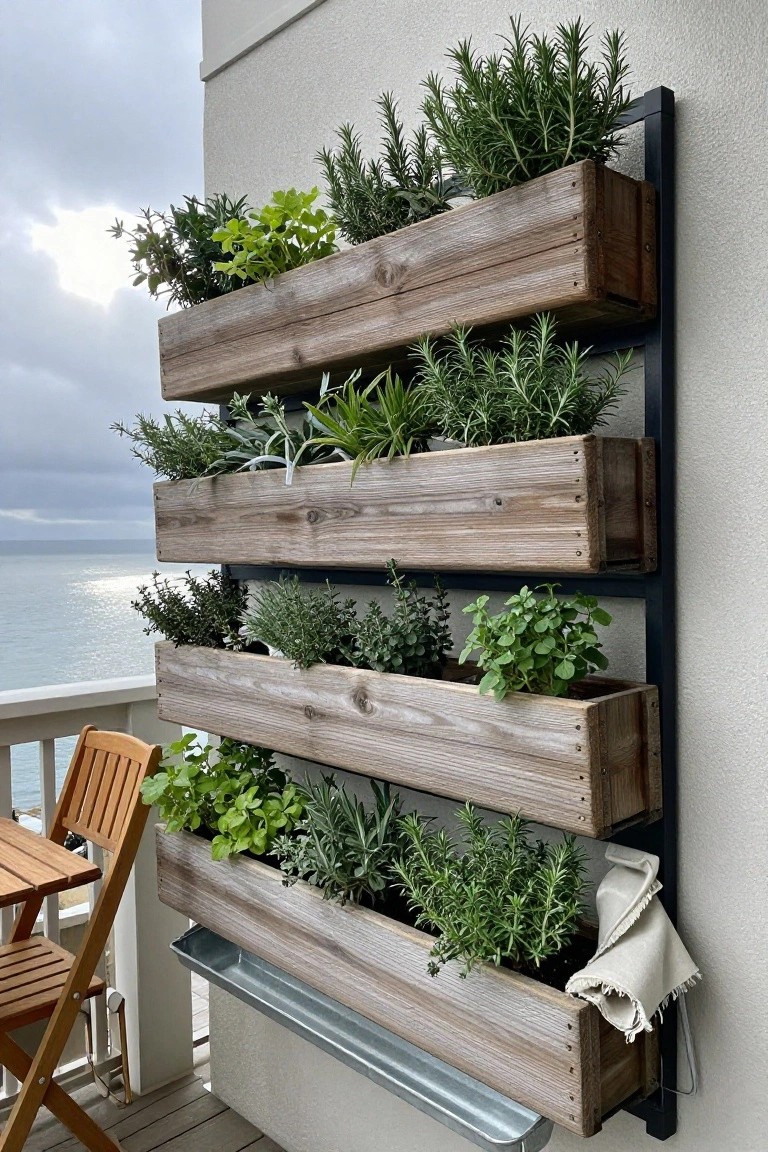
One smart way to start gardening without taking up much room is to mount planters right on your balcony wall. These wooden boxes stacked in tiers hold all sorts of herbs like rosemary and thyme, and they catch the sun nicely. It’s a simple setup that turns a blank wall into something useful, especially when floor space is tight.
This works best on balconies, patios, or even against a fence in a yard. Pick a sturdy metal frame to hold the boxes, add drainage holes so roots don’t rot, and go for easy herbs at first. Just water regularly and trim back when they get bushy. Keeps things practical for beginners.
Plant Dwarf Fruit Trees in Raised Beds
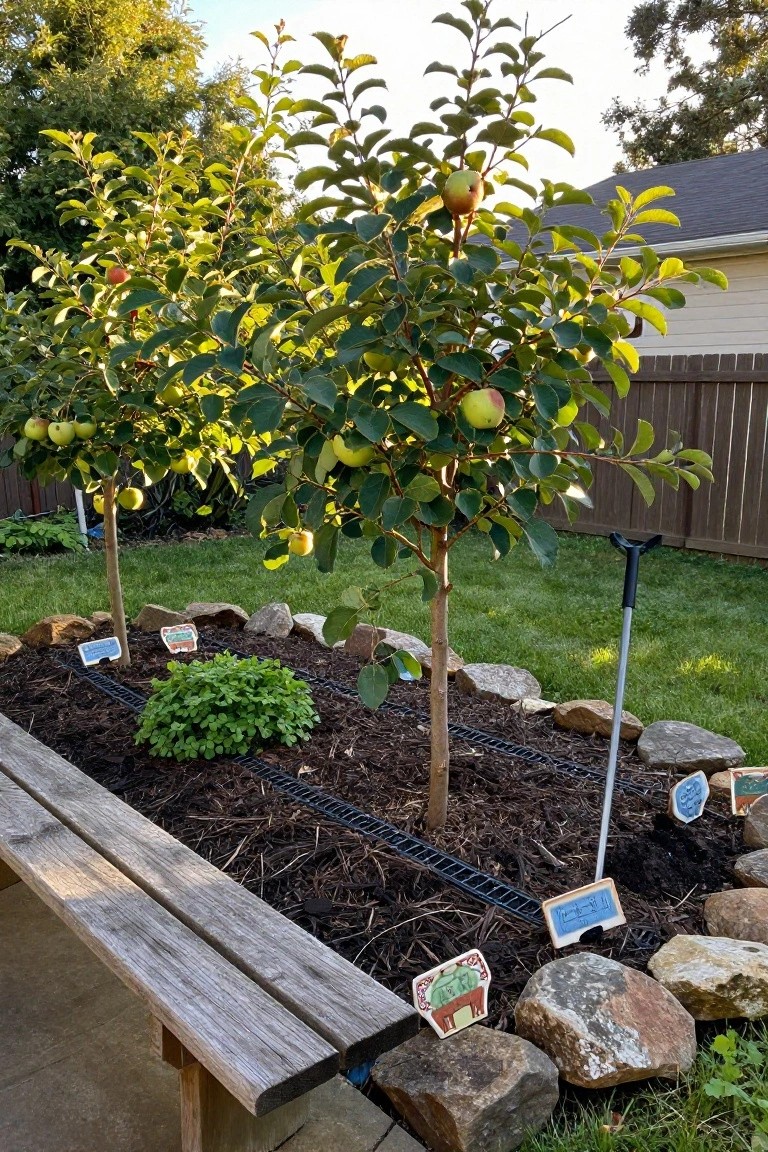
Young fruit trees like these apples make a great first project for beginners. They’re small enough to fit in a backyard corner and don’t need much space to start producing. The raised bed keeps soil right where the roots want it, with good drainage and easy access. Mulch on top holds in moisture, and rocks around the edge keep things neat without much upkeep.
Put this setup along a fence or near the house where you can watch it grow. Use dwarf varieties so they stay manageable, maybe 8 to 10 feet tall. Add labels to track what you’ve planted. It works in sunny spots with average soil. Just keep weeds pulled early on… that sets the tone.
Group Large Potted Succulents
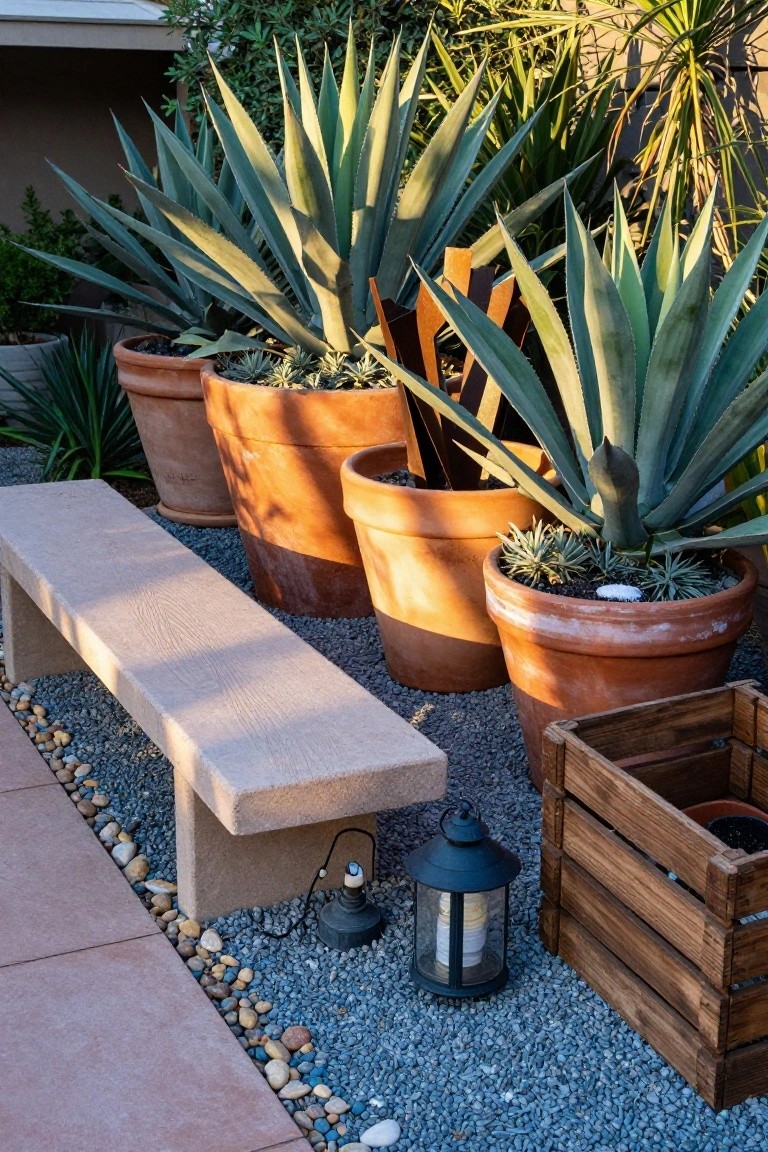
Big agaves like these in oversized terracotta pots bring real structure to a garden right away. They’re tough plants that handle sun and dry soil without much fuss, which makes them great for beginners who don’t want a lot of weeding or watering. The gravel base keeps things neat and lets water drain fast.
Set them up along a path or near a seating spot, like this bench here. It works best in sunny, low-water yards, say in warmer spots like the Southwest. Just make sure the pots have good drainage holes, or your plants might rot in wet weather.
Frequently Asked Questions
Q: I only have a balcony. Can I start a garden there?
A: Fill pots with good potting mix and pick compact plants like lettuce or cherry tomatoes. Water them regularly since pots dry out fast. You’ll harvest fresh greens before you know it.
Q: What if my soil feels like pure clay?
A: Dig in some compost to loosen it up. Plant root veggies like carrots later once it crumbles better in your hand. That simple fix wakes up your dirt.
Q: My first seedlings look droopy. Did I mess up?
A: Check if they’re bone dry or sitting in soggy soil, then adjust your watering. And move them to brighter light if they’re stretching tall. Most bounce back quick.
Q: Which plants grow fastest for quick wins?
A: Go for radishes or bush beans. Sow them straight into the ground and pull eats in a month. Nothing beats that first crunchy bite.
