

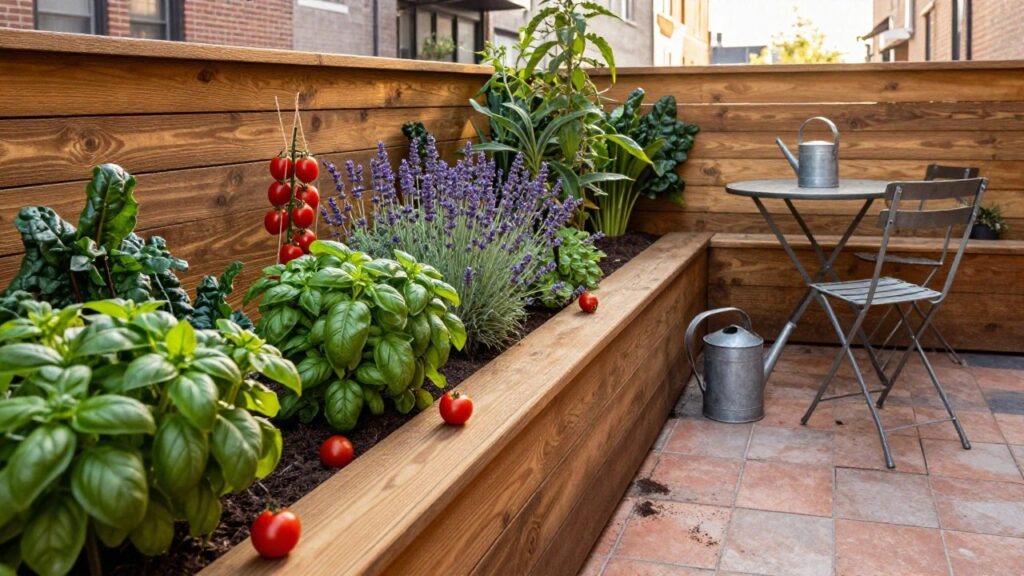
I’ve found that small patios come alive when vegetable gardens fit seamlessly into the daily flow, letting you sip coffee amid fresh basil without tripping over pots. The setups that last balance chic style with real usability, keeping pathways clear for chairs and foot traffic. People always notice first the smart container clusters or vertical towers that stretch upward instead of sprawling out. I keep coming back to ones like the ladder shelves lined with herbs, which I’d tweak for my own sunny corner next season. They turn tight spots into something truly productive.
Raised Beds Against the Fence
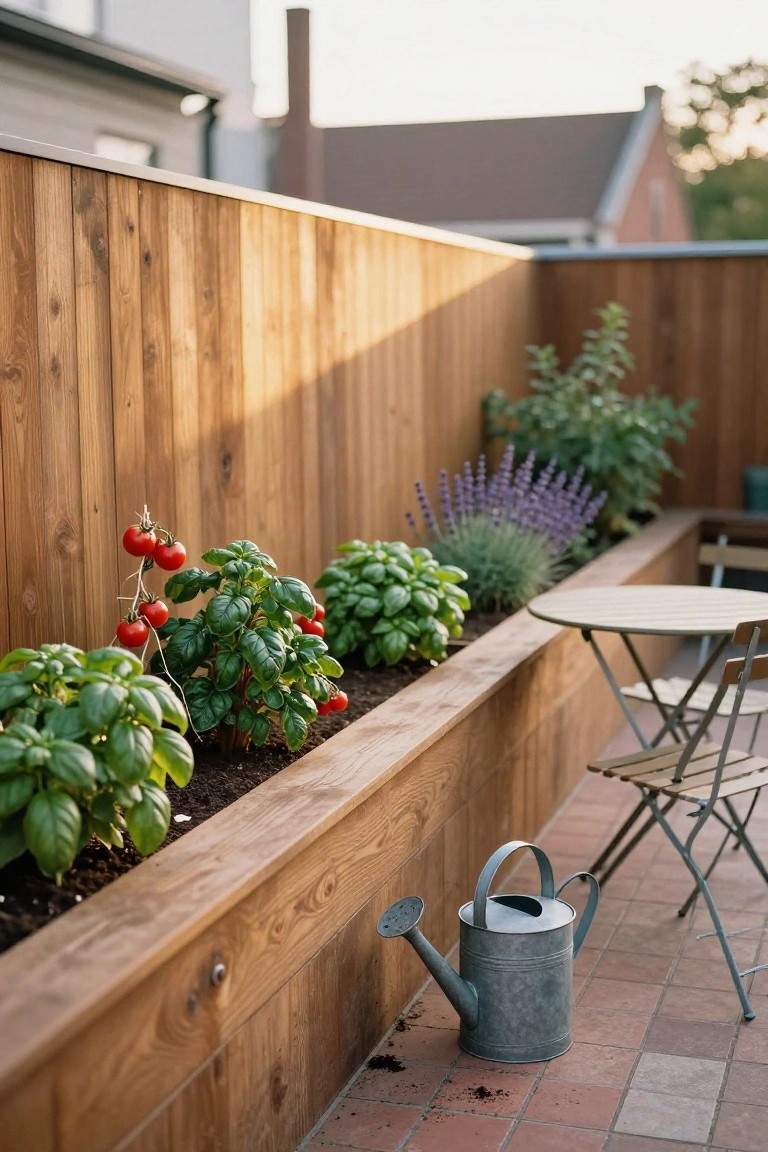
Tucking raised planters right up against your fence is a smart way to grow veggies on a small patio. You get tomatoes, basil, and lavender all in one neat wooden bed without eating into your seating area. It keeps the ground clear for a table and chairs, and the wood blends right in with the fence for a clean look.
This works best in tight urban yards or balconies where every inch counts. Build the beds sturdy with untreated cedar to last, and fill them with compact plants like cherry tomatoes. Just make sure good drainage, or your roots will rot. Leaves room to sit and pick dinner fresh.
Tiered Wooden Planter for Patio Vegetables
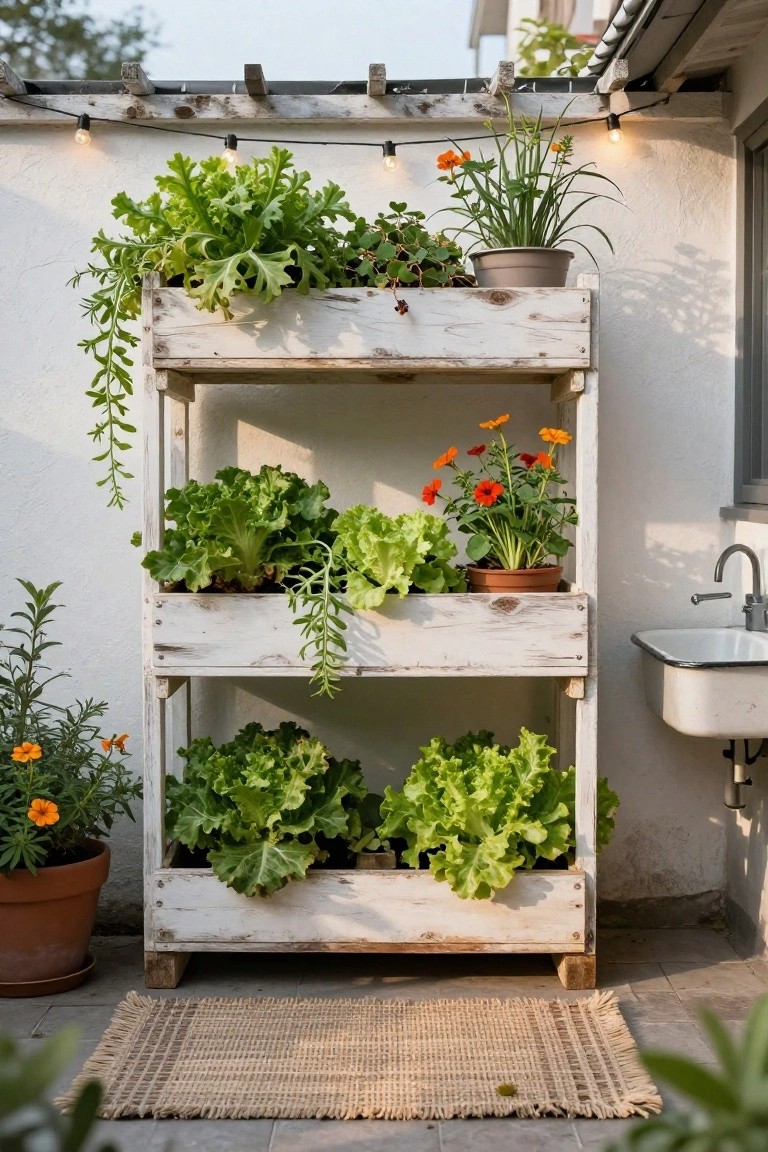
A tiered wooden planter like this one turns a plain patio corner into a fresh veggie spot without taking up much ground space. The whitewashed shelves hold plenty of lettuce heads, plus a few flowers for color, and it leans right against the wall. String lights overhead make it feel cozy at night. It’s practical for small areas where you want homegrown greens close by.
Put something similar near an outdoor sink or hose for easy watering. It suits apartments, townhouses, or any tight patio. Go for sturdy wood that can handle moisture, and start with shallow-rooted plants like lettuce or herbs. Keep the bottom shelf higher off the ground to avoid splash-up dirt.
Stacked Pots for Balcony Herbs

One smart way to fit more plants into a tight balcony spot is stacking terracotta pots right on a bench. Here, tall rosemary sits at the top with shorter herbs like parsley and basil filling the levels below. It turns a simple seating area into a productive little garden without taking up floor space.
This works best on sunny balconies where herbs get what they need. Stack pots that nest nicely, maybe three high, and make sure the bench is sturdy. Group plants by sunlight and water needs. In small outdoor spots like this, it keeps things practical and green all season.
Patio Veggies in Raised Beds and Pots

One easy way to add fresh produce to a small patio is planting right next to your seating. Here tomatoes climb a simple metal trellis stuck into a tall terracotta pot, while beans grow in a low stone-walled bed filled with gravel. It keeps the garden compact and productive without crowding the lounge spot. The warm pots and stone tie into the outdoor feel nicely.
This works best on sunny patios or terraces with room for a bench. Pick heat-loving veggies like these for quick harvests. Stone edging holds up well and matches Mediterranean-style homes. Just make sure the gravel drains fast so roots stay happy. Great for townhouses or rentals too.
Dark Raised Planters for Patio Veggies
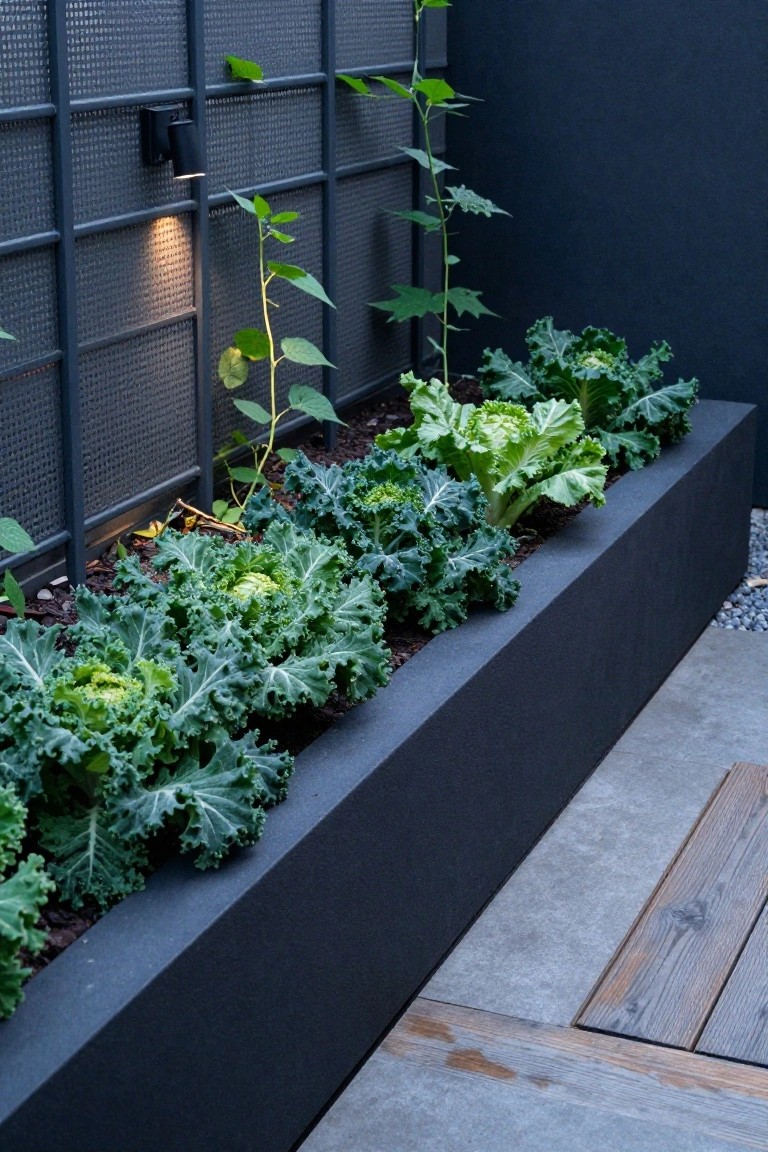
These tall black metal planters run right along the wall, packed with curly kale and heads of lettuce. They give a clean, modern edge to growing your own food. No messy dirt on the patio surface. The dark finish ties into the trellis behind it for a pulled-together look that feels intentional.
Put them in narrow spots next to a fence or house wall. They suit small urban patios or balconies where you want fresh greens without taking up seating room. Add climbers like beans on the trellis to use the air space. Just make sure good drainage so roots don’t sit wet.
Raised Bed Veggie Patch on the Patio

A wooden raised planter box like this one hugs the wall on a patio and packs in greens, herbs, and young veggies. The built-in trellis lets climbers like beans or nasturtiums head upward instead of sprawling out. It keeps everything tidy and turns a narrow strip of space into real food production without eating up walking room.
This works best in tight outdoor spots, say along a fence or house side where you have just a few feet to play with. Go for rot-resistant wood, fill with good soil, and pick compact varieties. Watch the drainage so roots don’t drown. Easy to tend from ground level too.
Vertical Hanging Pockets for Patio Veggies

One smart way to fit a vegetable garden into a small patio is hanging fabric pockets right on the fence. These simple canvas organizers, like the ones with lettuces and herbs here, turn vertical space into growing room without taking up the floor. They keep things tidy and let you pick fresh greens close at hand.
This works best on balconies or narrow decks where ground space is limited. Hang them at different heights for easy reach, use pots with good drainage to avoid soggy roots, and pick shallow-rooted plants like basil or spinach. It’s practical for renters too, since no permanent changes are needed.
Vertical Planters for Small Patio Gardens

One smart way to fit a vegetable garden into a tiny outdoor spot is with these wall-mounted planters. They stack up on a fence or wall, letting you grow lettuce, herbs, and greens without taking up any ground space. The black plastic trays hold a mix of plants like red leaf lettuce and baby greens, all thriving close together.
This works best on a sunny fence in a backyard patio or balcony. Pick easy veggies with shallow roots, secure the metal rails well, and water regularly since they dry out fast. Add a simple bench below for easy picking. It’s practical for renters too, as long as you get permission to mount it.
Patio Vegetable Garden Using Barrel Planters

Old whiskey barrels make practical planters for a small patio veggie garden. Cut in half or left whole, they hold carrots, tomatoes, and radishes right next to your seating area. The rustic wood fits outdoor spaces without looking out of place, and they keep soil contained so you avoid messy garden beds.
This idea suits tight backyards or decks where flat ground is limited. Source barrels from distilleries or online, drill drainage holes, and fill with good potting mix. They’re heavy once planted, so position them first. Perfect for fresh picking during outdoor meals.
Wheeled Metal Troughs for Patio Veggies

One easy way to grow vegetables right on a small patio is with old galvanized troughs set on a rolling stand. You get that sturdy farm look that fits next to a brick wall, and the wheels let you shift things around for more sun or out of the way when company comes. Kale fills the buckets nicely, while cucumbers climb up a simple ladder trellis.
This setup works best in tight spots like city patios or narrow side yards where you can’t dig beds. Just drill holes in the trough bottoms for drainage, fill with good soil, and roll it where you need it. Keep an eye on watering since metal heats up fast in the sun.
Raised Planters Pack Veggies into Small Patios

Raised beds like these let you grow a real mix of vegetables right on your patio floor. The tiered wooden unit holds tomatoes up high while onions and spinach fill the concrete boxes below. It turns a plain concrete slab into a productive spot without sprawling everywhere.
These work best against a fence or wall where you want height but not width. Concrete gives a clean, sturdy look that handles weather well. Stack a few for apartments or tiny yards. Just make sure the soil drains fast to keep roots happy.
Tiered Raised Beds Fit Veggies into Tight Patios

These tiered wooden raised beds turn a simple patio corner into a productive veggie patch. Stacked in three levels, they hold beans, peppers, onions, and greens without sprawling across the pavers. The setup borrows vertical space smartly. It keeps things neat and reachable. String lights overhead add a cozy evening touch too.
You can build something like this in any small outdoor spot facing south for sun. Untreated cedar holds up best against soil moisture. Start with compact plants that won’t overrun. Watch drainage to avoid soggy roots. It suits renters or folks with poor yard soil. Just harvest often to keep it looking full.
Raised Planters on the Deck

These black metal raised beds sit right on the deck, packed with young carrots, spinach, and beets. They keep everything contained and off the ground, which makes the space feel tidy and purposeful. No sprawling dirt patches to mess up the look. It’s a straightforward way to grow your own food in a spot that’s more patio than garden.
This works great for small decks or balconies where ground space is tight. Go for sturdy metal frames that match gray decking, and fill them deep enough for roots. Plant quick growers like greens alongside carrots for steady picking. Just make sure good drainage… keeps things healthy without soggy soil.
Tiered Vertical Herb Planter

A wooden frame stacked with planters lets you grow basil and mint straight up, saving every inch of patio floor. The ropes for hanging pots add a casual touch, and it keeps herbs right where you grab them for cooking. No sprawling beds needed.
Stack simple wood shelves or use pallet scraps for the tiers. Set it against a wall in full sun, near the door if you can. Suits apartments or tiny yards best. Just line the boxes with plastic to hold moisture, and pinch back the plants to keep them bushy.
Concrete Planters for Balcony Vegetable Gardens

These raised concrete planters line the edge of a balcony, packed with leafy greens and vining plants that climb right up the mesh railing. It’s a smart way to grow food in a small outdoor spot without taking up seating or walking room. The plain gray boxes keep things modern and low fuss, blending with the grill and table nearby.
This works best on urban balconies or tiny patios where space is tight. Go for modular concrete ones you can build to fit, then add beans or cukes that naturally go vertical. Just check your balcony’s weight limit first… and maybe add a trellis if the railing isn’t climb-ready.
Raised Beds with Built-In Bench Seating
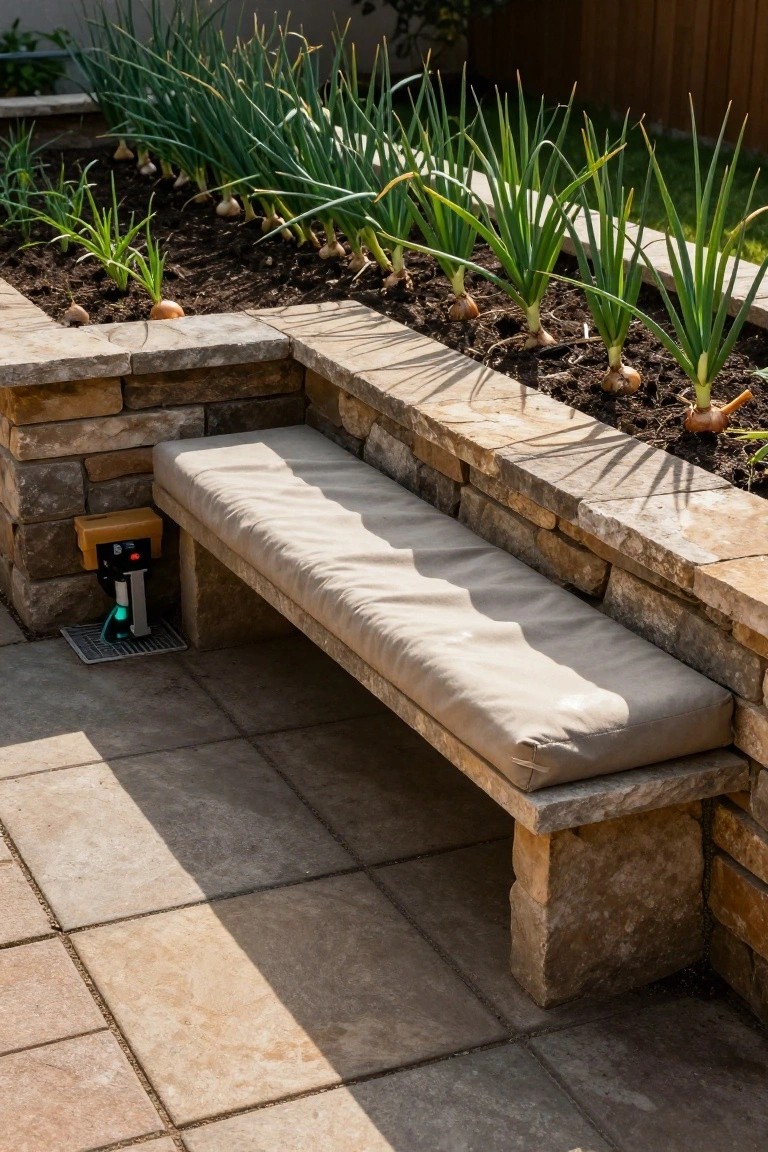
This setup turns a simple raised bed into something more useful by adding a bench right along the edge. The stone walls hold back soil for onions and greens while doubling as a sturdy seat base, topped with a cushioned pad for comfort. It keeps the patio open and gives you a spot to sit close to your veggies without taking extra room.
It’s great for tight outdoor spots where you want garden and seating in one go. Build it against a fence or wall on a tiled patio like this, and pick veggies that grow upright. Just make sure the drainage works well under the bench so roots don’t get soggy.
Raised Pallet Beds for Patio Veggies
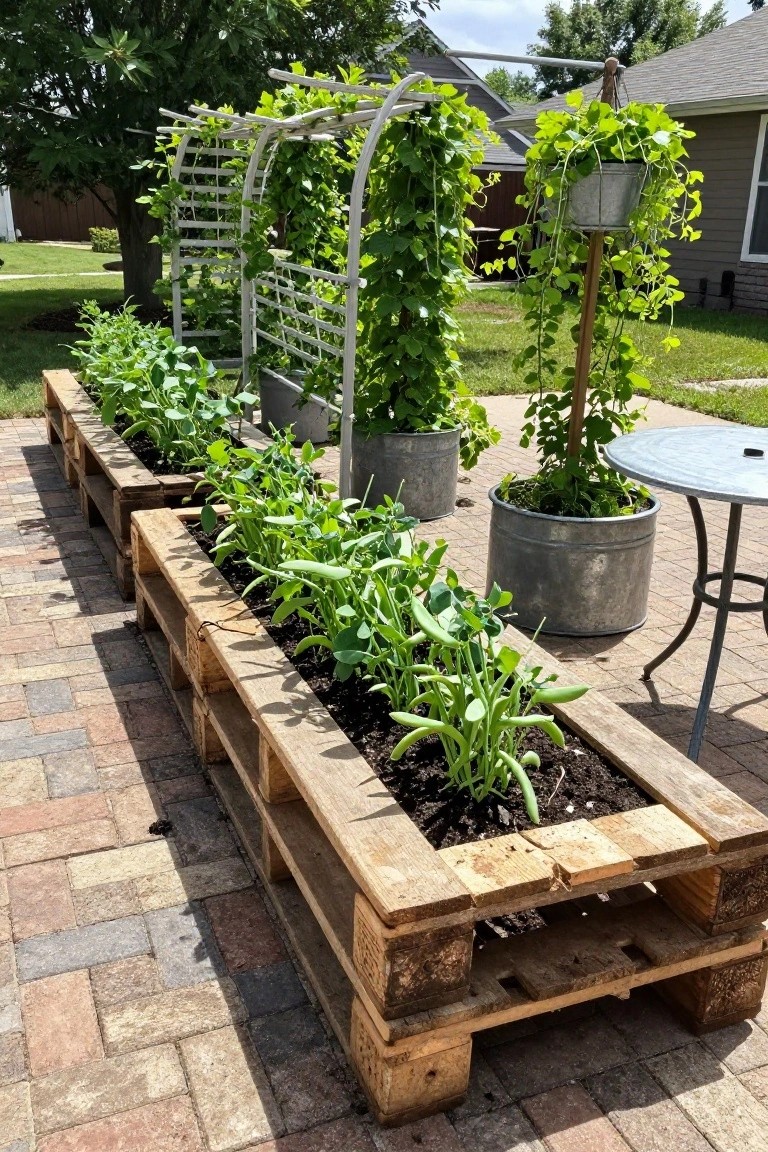
One straightforward way to fit a vegetable garden into a small patio is building raised beds from old wooden pallets. These beds run right along the edge of the space, keeping plants organized and off the ground. You see beans and greens poking up, with some climbing nearby trellises for extra height without taking more room.
This setup works great for renters or anyone with limited yard space. Line them up against a wall or fence, fill with soil, and plant quick growers like beans or peas. Just make sure the pallets are untreated wood to avoid chemicals leaching into the soil. It’s low-cost and easy to take apart if needed.
Mini Greenhouse for Patio Herbs

A small glass greenhouse like this one fits right into a tight patio spot and lets you grow fresh basil, spinach, and other greens without taking up garden bed space. The white frame and clear panels give it a clean look that blends with backyard fencing and pavers. Shelves inside hold pots at different heights, so you maximize every inch for seedlings and mature plants.
Put one near your back door for easy picking during meals. It works best in mild climates or sheltered corners, protecting tender shoots from wind or light frost. Watch the watering though…too much moisture inside can lead to mold on those lower shelves.
Bucket Planters Around a Patio Table

One simple way to bring fresh veggies right to your outdoor meals is planting them in old galvanized buckets placed around a small bistro table. Those buckets hold tomatoes and herbs perfectly, and they give the patio a casual farm feel without much effort. The metal picks up the light nicely, and in a tight space like this stone-walled corner, they don’t take up precious floor room.
Set them up on gravel or any small patio surface where you eat outside often. Fill the buckets with good soil, pick compact plants like cherry tomatoes or thyme, and keep them watered close at hand. This works best for apartments or townhomes with no big yard… just enough spot for a table and chairs. Watch for rust if it rains a lot, but that’s part of the look anyway.
Stacked Terracotta Pots for Vertical Garden Interest
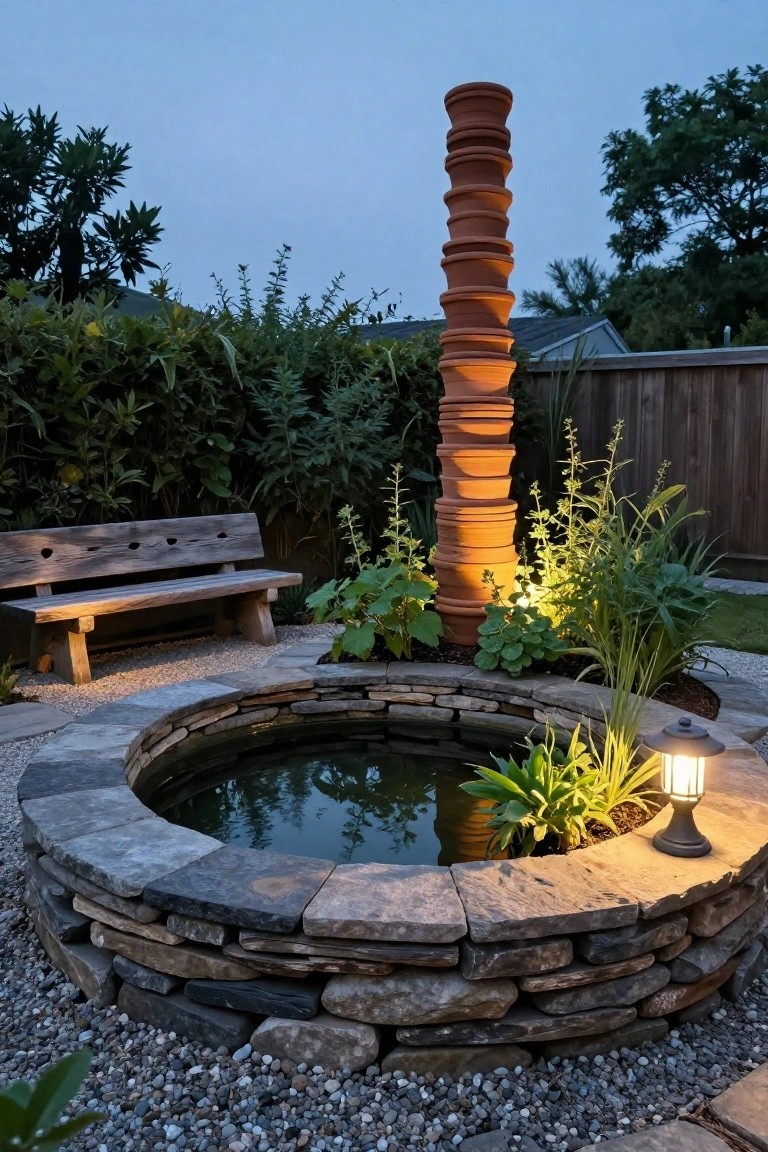
One simple way to make a small patio feel bigger is stacking old terracotta pots into a tall tower. It pulls the eye up and adds a fun focal point without taking much ground space. In this setup, the warm orange stack sits right by a little pond, surrounded by low plants that soften the look. People like it because it’s easy to grow herbs or trailing veggies up there, and it uses pots you might already have lying around.
Put one like this near a seating spot or water feature to tie the garden together. It works best in tight backyards where you want height without crowding. Just make sure the base is wide and stable, maybe on gravel or flat stone, so it won’t tip in wind. Keep the plants light at the top to avoid trouble.
Frequently Asked Questions
Q: My patio gets mostly afternoon shade. Can I still grow veggies there?
A: Stick to shade-tolerant picks like lettuce, spinach, and herbs such as mint or parsley. They’ll thrive with that light and keep your setup productive without much fuss.
Q: Which veggies grow best in small pots?
A: Go for compact ones like cherry tomatoes, bush beans, and peppers. These stay manageable in 5-gallon pots and give you fresh picks all summer. Radishes pop up fast too if you want quick wins.
Q: How do I keep pests off without harsh sprays?
A: Plant marigolds or nasturtiums nearby. They naturally repel aphids and beetles. Just check leaves daily and squish any bugs you spot.
Q: Do I need special soil for container veggies?
A: Grab a potting mix made for veggies or veggies. It drains well and holds just enough moisture. Mix in some compost at the start for steady nutrients.
