

Ever wondered if you can prune cucumbers to boost their growth and yield? Picture this: you’re tending to your garden, noticing your cucumber plants sprawling in all directions. You’re not sure if a little pruning could make a difference. Well, good news – it can!
By learning the art of cucumber pruning, you’ll unlock a world of benefits for your plants. From promoting better air circulation to increasing sunlight exposure for those precious fruits, pruning can work wonders for your cucumber harvest. So, if you’re ready to take your gardening game to the next level, stick around as we delve into the ins and outs of pruning cucumbers.
Benefits of Pruning Cucumbers
Pruning your cucumber plants offers several advantages that can significantly improve the health and productivity of your crop. Here’s why you should consider incorporating pruning into your gardening routine:
- Increased Air Circulation: Pruning helps create better air circulation around your cucumber plants, reducing the risk of diseases and mold.
- Enhanced Sunlight Exposure: By pruning off excess foliage, you ensure that the remaining leaves and fruits receive ample sunlight, promoting optimal growth and fruit development.
- Improved Fruit Quality: Pruning can lead to the production of larger, better-shaped, and higher-quality cucumbers compared to unpruned plants.
- Easier Harvesting: Removing unnecessary leaves and branches makes it easier to spot and harvest cucumbers, saving you time and effort in the long run.
- Overall Plant Health: Regular pruning can help maintain the vigor and health of your cucumber plants, ensuring a bountiful harvest throughout the growing season.
Pruning may seem intimidating at first, but once you understand the benefits it offers, you’ll see how it can make a significant difference in the overall success of your cucumber plants.
When to Start Pruning Cucumbers
Knowing When to Start Pruning Cucumbers is crucial for maximizing their growth potential. Here are some key points to keep in mind:
- Begin pruning cucumber plants when they have at least 3 to 4 leaves.
- Aim to start pruning around 2 to 3 weeks after planting your cucumber seedlings.
- Watch out for new growth and ensure the plant is well established before pruning.
- Avoid pruning too early, as it can stunt growth and hinder development.
Remember, timing is essential when it comes to pruning cucumbers for a bountiful harvest.
How to Properly Prune Cucumber Plants
To ensure your cucumber plants thrive, here are some essential tips for proper pruning:
- Identify the Main Stem: Look for the main stem of the cucumber plant, usually the most robust one, and focus your pruning efforts there.
- Remove Lateral Growth: Trim off any lateral growth or side shoots that develop along the main stem. This encourages the plant to put more energy into fruit production.
- Cut at a 45-Degree Angle: When pruning, make your cuts at a 45-degree angle to prevent water from accumulating on the stem and causing rot.
- Use Clean, Sharp Tools: Always use clean, sharp pruning shears to avoid damaging the plant. This also reduces the risk of spreading diseases.
- Avoid Over-Pruning: While pruning is beneficial, avoid overdoing it. Limit pruning to no more than 20% of the plant at a time to prevent stunting growth.
- Regular Monitoring: Regularly monitor your cucumber plants after pruning. Watch for new growth patterns and adjust your pruning techniques as needed.
By following these pruning practices, you can promote healthy growth, maximize fruit production, and enjoy a bountiful cucumber harvest.
Recommended Products

DUAL CUTTING POWER: VERSATILE PRUNING COMBO --- With both Pruning Shears and Pruning Snip, this combo delivers unmatched versatility. Whether you're delicately trimming flowers and shrubs, tackling thicker tree branches, or tending to your vegetable and fruit garden, our combo pack excels in all areas. They're also perfect for landscaping projects and maintaining the health and appearance of indoor plants. With this pack, you have a versatile tool that simplifies your gardening tasks.

LONG-LASTING SHARPNESS: Japanese SK5 bypass blade with titanium coating is tested through 5,000 cuts to maintain a sharp edge and deliver clean, consistent cuts on live stems and branches

What Makes VT-C800 Unique? Ever-Sharp Teflon-Coated SK5 Blades | Jam-Proof Sealed Spring | Ambidextrous Thumb Lock | Backed by Lifetime Support
Common Mistakes to Avoid When Pruning Cucumbers
Pruning cucumber plants can significantly benefit their growth and fruit production. However, there are some common mistakes you should steer clear of to ensure the best outcome for your plants:
- Pruning too early: Wait until your cucumber plants have developed at least three to four leaves before starting the pruning process.
- Removing too many leaves: Be mindful not to strip off more leaves than necessary as this can limit the plant’s ability to photosynthesize.
- Cutting the main stem: Avoid accidentally cutting the main stem of the plant, as this can stunt its growth and reduce fruit production.
- Neglecting clean tools: Always use sanitized pruning shears to prevent the spread of diseases among your plants.
- Over-pruning: Excessive pruning can stress the plants and lead to reduced fruit yield, so prune judiciously.
By being aware of these mistakes and taking the necessary precautions, you can effectively prune your cucumber plants and set them up for success in their growth and fruit-bearing journey.
Recommended Products

CLEAN CUTS FOR LIVE GROWTH: Bypass blade design is ideal for pruning delicate flower stems and green growth, helping reduce crushing and plant damage while cutting stems and small branches up to 5/8” in diameter

ULTRA SHARP - Much less effort to cut branches with our pruning shears. Crafted from premium SK5 steel with titanium coating, our garden scissors and garden clippers boast exceptional durability and sharpness. A perfect pruning shears for gardening and a must-have garden tool, hedge clippers pruners for gardening
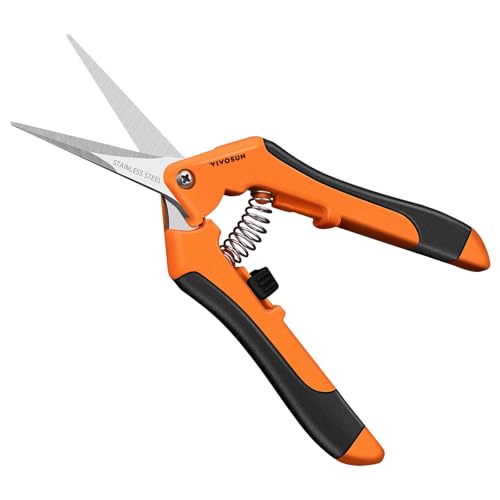
Reduce Hand Strain: These micro tip snips are made to reduces hand fatigue which makes them great for those with arthritis, carpal tunnel, hand or wrist issues; Comfortable “grip” handles will make it easy to work for long-time use without making you feel hand pain
Tips for Maximizing Cucumber Yield through Pruning
Pruning your cucumber plants can significantly boost the yield of delicious cucumbers. Here are some tips to help you optimize your plants’ growth and fruit production:
- Start Early: Begin pruning when the plants have 3-4 true leaves. This allows the cucumbers to develop fully without hindrance.
- Focus on the Lateral Branches: Prune lateral branches that are growing inwards or tangling with other branches. This directs the plant’s energy towards fruit production.
- Remove Diseased Leaves: Promptly remove any yellow, spotted, or diseased leaves to prevent the spread of diseases and ensure healthy growth.
- Cut Above the Node: When trimming, make sure to cut above a leaf node to encourage the plant to grow more vigorously.
- Use Clean Tools: Always disinfect your pruning tools before and after use to prevent the spread of diseases between plants.
- Avoid Over-Pruning: While pruning is beneficial, avoid over-pruning as this can stress the plant and reduce fruit yield.
By following these pruning tips, you can ensure that your cucumber plants thrive and produce an abundance of tasty cucumbers for you to enjoy.
Conclusion
Pruning your cucumber plants correctly is key to ensuring healthy growth and a bountiful harvest. By avoiding common mistakes and following simple pruning techniques, you can help your plants thrive and produce an abundance of delicious cucumbers. Remember to start early, focus on lateral branches, remove diseased leaves, cut above the node, use clean tools, and avoid over-pruning. With these practices in mind, you’ll set your cucumber plants up for success and enjoy the rewards of your efforts in the form of a flourishing garden full of fresh, homegrown cucumbers. Happy pruning!
Frequently Asked Questions
When is the best time to start pruning cucumber plants?
The best time to start pruning cucumber plants is after they have grown at least four leaves and have started developing lateral branches.
How many leaves should I remove when pruning cucumber plants?
When pruning cucumber plants, it’s important to avoid removing more than 25% of the total leaves to ensure that the plant can still photosynthesize effectively.
Why is it essential to cut above the node when pruning cucumber plants?
Cutting above the node when pruning cucumber plants promotes better healing and reduces the risk of disease entering the plant through the cut.
How can I maximize cucumber yield through pruning?
You can maximize cucumber yield through pruning by focusing on lateral branches, removing diseased leaves, using clean tools, and avoiding over-pruning.
