

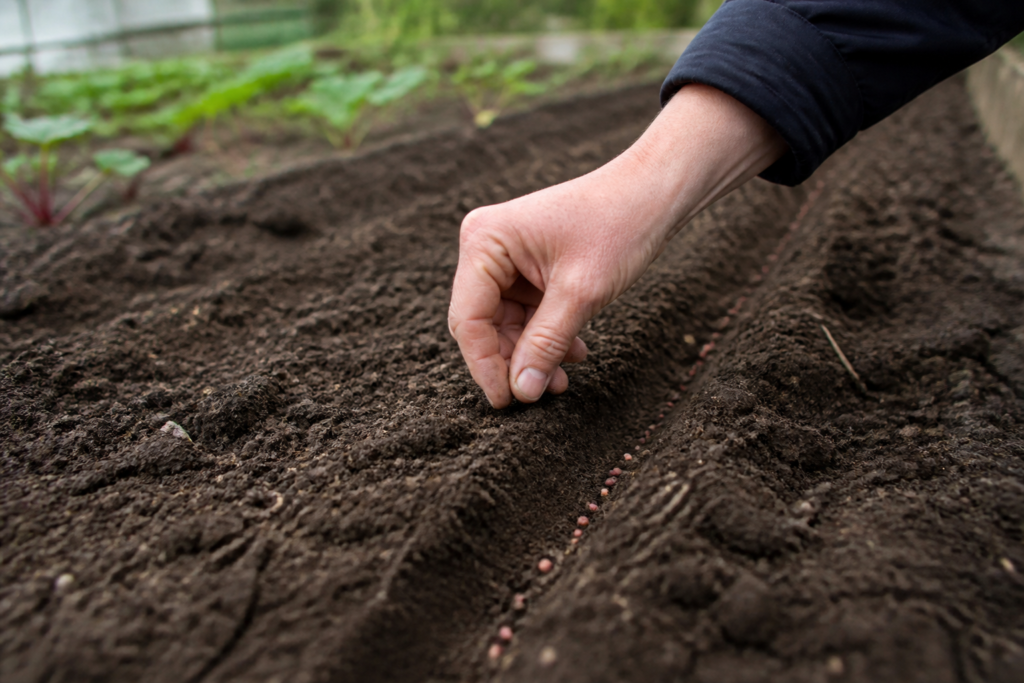
Beets are easiest to time as a cool-season direct-sown crop, not as a crop with one universal calendar date. The useful question is whether your soil, weather, and remaining season will let seedlings establish and roots enlarge before sustained heat or hard freezing. A seed packet’s days to maturity is one part of that decision, but soil temperature, wet springs, heat waves, and variety all shift the result.
Use this guide to choose a spring, succession, or fall sowing window. If you need the complete growing sequence after planting, start with the Complete Guide to Growing Beets.
Use soil condition and temperature together
Beet seed can begin germinating in cool soil, around 40°F, but emergence is more reliable once the seed zone is consistently cool-to-mild rather than cold, saturated, or repeatedly frozen. Germination is generally strongest in roughly the 55°F to 75°F range. Above about 80°F, germination and root quality can suffer, particularly if the soil dries at the surface. Those are useful biological clues, not a reason to ignore your local forecast.
A practical planting test is simple: the bed should be workable, not sticky or waterlogged; the top half-inch should stay evenly moist after sowing; and the next week should not bring a severe freeze or abrupt heat event. If you garden in a short season, sowing as soon as those conditions arrive can be sensible. In hot climates, a late-summer sowing for fall harvest may be more reliable than a late-spring crop.
Spring planting: start early, but not in a mud season
Many gardeners direct-sow beets two to three weeks before the average last spring frost. That timing works only if the soil can be prepared without compacting it. Digging or tilling wet ground turns small aggregates into hard clods later, which is exactly what a root crop does not need. If the bed is still saturated, wait until a handful of soil crumbles rather than smears.
Sow a modest first row rather than the entire supply. If emergence is slow because of a cold spell or crusting rain, you still have room for a follow-up planting. Mark the row and record the sowing date. That record is more useful next season than a generic calendar because it connects your local weather with the crop’s actual emergence and harvest time.

Plan the rest of spring with small succession sowings
For a steadier harvest, sow short sections every two to three weeks while conditions remain cool. Succession sowing does three useful things: it prevents a single oversized harvest, spreads the work of thinning and weeding, and gives you a backup if birds, crusting, or uneven moisture damage one row. Do not keep sowing on schedule automatically if a hot spell is arriving; pause and resume when a viable cool window returns.
Choose different spacing and harvest goals for each sowing. An early row can be thinned for medium roots, while a later row can be harvested young for tender beets and greens. Keep the same final spacing within each row—usually about 3 to 4 inches for medium roots—so the comparison is meaningful. The thinning guide explains how spacing changes the result.
Summer sowing: decide by heat and water, not optimism
Summer beet planting is possible in places with cool nights, reliable irrigation, or a short mild interval between heat waves. It is harder where soil stays hot and dry. Hot conditions can slow germination, make the surface crust, and lead to tough or poorly sized roots. If you try a summer sowing, choose a bed that can be checked daily during emergence, use light mulch only after seedlings are established, and avoid letting the seed line dry completely.
In very hot regions, it is often wiser to use the summer months to prepare a fall bed: remove weeds, improve drainage, gather compost, and make sure irrigation reaches the planting area. A shaded seedling tray does not solve the central issue if the garden soil itself remains too hot for a dependable direct-sown crop.
Plan a fall crop backward from your likely frost date
For fall harvest, count backward from the period when your ground normally freezes hard or becomes difficult to work. Add the variety’s days to maturity, then add a cushion for shorter days and cool weather. A variety listed at 55 days may take longer in fall than it would in mild spring conditions. The goal is to have roots close to harvest size before severe cold stops growth, not merely to get seedlings above ground.
| Situation | Timing approach | What to watch |
|---|---|---|
| Short, cool season | Sow early in spring as soil becomes workable; use quick varieties. | Cold wet soil and late freezes can delay emergence. |
| Long, hot summer | Favor early spring and late-summer/fall windows. | Heat can reduce germination and make roots coarser. |
| Mild autumn | Use late summer sowings and harvest gradually. | Shorter days slow growth even without severe frost. |
| Container garden | Plant on the same seasonal logic but check moisture more often. | Containers warm and dry faster than in-ground beds. |
Light frost is usually less concerning for established beets than it is for warm-season vegetables. Hard freezes and repeatedly frozen soil are a different situation. Protecting a near-mature fall crop with mulch or row cover can extend harvest in some climates, but do not promise winter storage in the ground where soil freezes deeply or drainage is poor.
Match variety and method to the window
Read the variety description for maturity days, shape, and intended size. Fast round types are useful when your spring or fall window is short. Longer cylindrical types need more time and deeper, obstruction-free soil. If you are planting in a container, choose one at least about 10 inches deep, and remember that a container’s root zone warms and dries faster. Direct seeding is still the simplest option because it avoids disturbing young roots.
Do not start beet seed indoors merely to move a planting date earlier unless your season creates a specific need and you can transplant very young plants with minimal disturbance. Direct-sown beets are usually more straightforward and make it easier to judge final spacing.
Use timing problems as diagnostic clues
- Seedlings appeared unevenly: check seed depth, crusting, old seed, and whether the seed zone dried between waterings.
- Plants bolted early: a long cold period affecting very young plants can contribute, and weather plus variety matters. Do not treat every flower stalk as a fertilizer problem.
- Roots stayed small in a late sowing: check whether the crop entered hot weather, had enough time, and was thinned on schedule.
- Fall roots are slow: shorter days and cooler soil may simply lengthen maturity; harvest based on root size, not only calendar age.
Timing and soil preparation work together. A perfectly chosen date cannot compensate for a compacted, waterlogged root zone, so review the Beet Soil Guide before sowing a new bed. If foliage grows but roots remain small after a reasonable season, use the root-development troubleshooting guide.
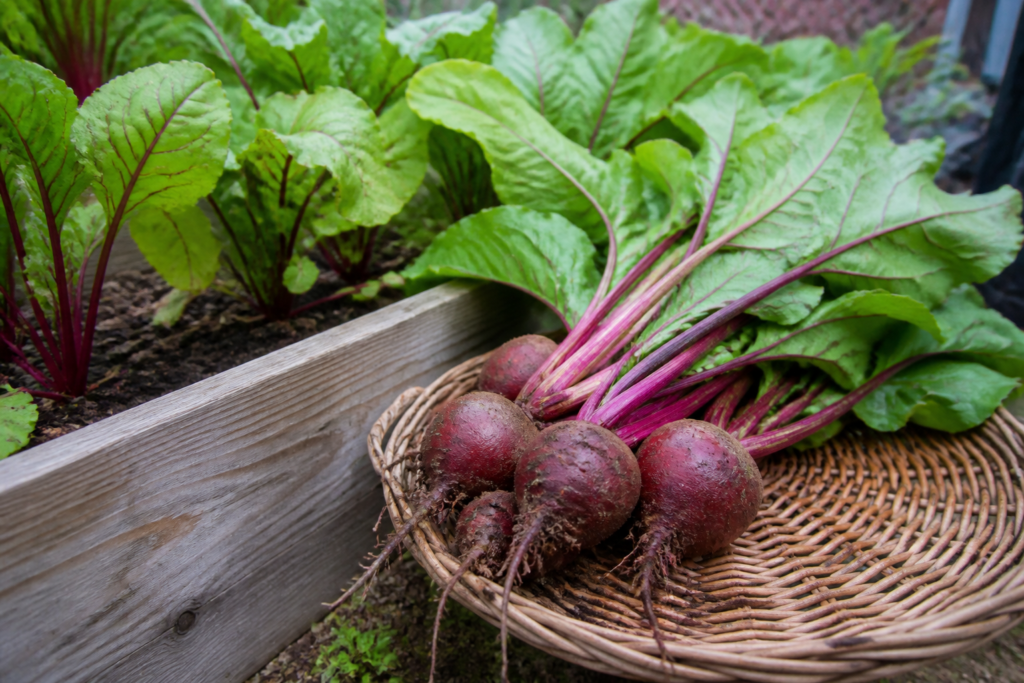
Planting-day checklist
- Check the forecast for a workable, not waterlogged window.
- Prepare a loose surface and remove stones and large clods.
- Sow about 1/2 inch deep, label the row, and water the seed line gently.
- Keep the surface evenly moist until seedlings emerge.
- Thin in stages, then make the final spacing decision based on the harvest size you want.
Build a simple seasonal record
After each sowing, write down the date, variety, bed, first emergence, first thinning, and first harvest. Add a short weather note: unusually cold, a week of heavy rain, or an early heat wave. This creates a local planting guide in two or three seasons. It also prevents a common mistake: assuming that a slow crop was caused by the seed when the real cause was a late frost, crusted soil, or a dry seed line.
Use the record to adjust only one variable at a time. If an early sowing grew well but a later one struggled in heat, shift the next succession earlier rather than changing variety, fertilizer, and spacing together. If both sowings struggled, inspect soil structure and drainage before revising the calendar.
Timing decisions by growing situation
- Raised bed: soil often warms and drains sooner, so it may offer an earlier workable window than surrounding ground.
- In-ground clay: wait until the bed crumbles; an early date is not useful if the planting process compacts the root zone.
- Container: the mix warms quickly but can dry quickly, so watch moisture closely through emergence.
- High elevation or short season: favor the earliest workable spring sowing and fast varieties, then protect a fall crop from sudden cold if appropriate.
Frequently Asked Questions
Can beets tolerate frost?
Established beets tolerate light frost better than warm-season crops. Young seedlings and nearly mature roots can still be damaged by severe or prolonged freezing, especially if soil freezes deeply.
How often should I succession sow beets?
Every two to three weeks is a useful starting interval while conditions remain favorable. Adjust the interval for your household’s harvest pace, local heat, and available bed space.
Is it too late to plant beets?
Count backward from your likely hard-freeze period using the variety’s maturity estimate plus extra time for cool fall growth. If that window is too short, wait for the next suitable season rather than expecting undersized roots to catch up.
