


I often notice that the floor space in a greenhouse fills up quickly once seedlings start growing and new plants arrive throughout the year.
Adding shelves that use the vertical area lets you keep more plants organized while still leaving room to walk around and tend to them properly.
What matters most is choosing setups that match the height and light conditions inside your own structure so nothing gets shaded or hard to reach.
Over time I have learned to try small adjustments first rather than overhauling the whole layout at once.
This way you can see what actually fits your routine before committing to bigger changes.
Store Supplies Under Greenhouse Shelves
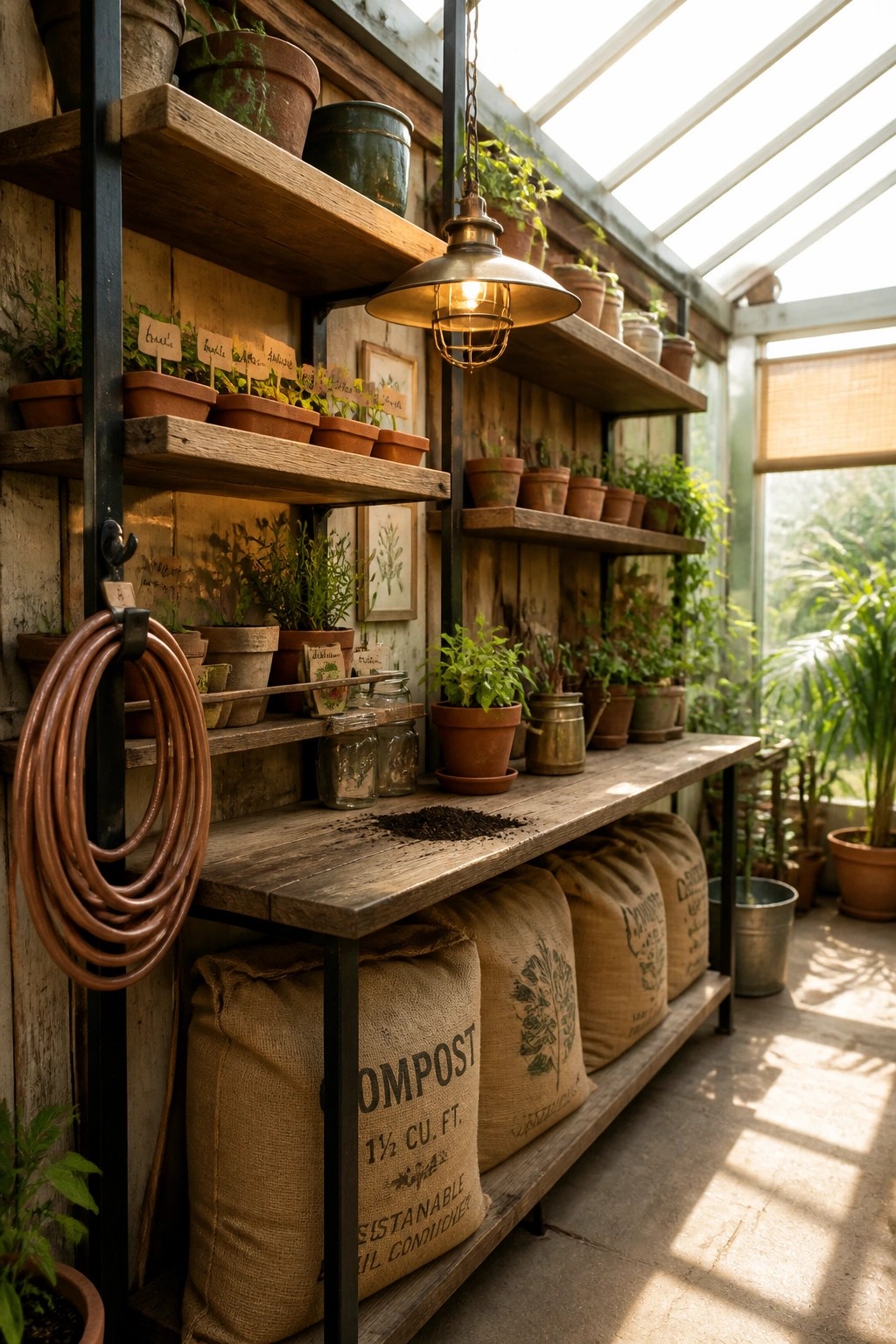
Many greenhouses run out of floor space quickly once the plants start filling in. Keeping bags of compost or soil right under the main work table puts supplies where you need them without adding extra furniture.
This approach works best in smaller structures where every inch counts. Make sure the lower area stays clear enough to reach the bags and that the table above can handle the weight of full pots over time.
Tiered Shelving For Vertical Plant Storage

Tiered shelving makes it easy to fit more plants into a small greenhouse without spreading everything across the floor. The stacked levels keep seedlings and mature plants organized while still letting light reach most of them.
This kind of setup works best in sunrooms or compact greenhouses where floor space is tight. A simple metal unit with a few shelves and an under-shelf light gives you room for trays on top and smaller pots below, and it leaves the rest of the space open for a work table or stool.
Rolling Shelves Add Flexible Storage In A Greenhouse

A rolling metal shelf unit gives you vertical storage that can move with the work. In a greenhouse this matters because tasks shift from one bench or table to another throughout the day, and fixed shelves often get in the way.
Place the unit near the main potting area during busy seasons, then roll it against the wall when more floor space is needed. The open wire shelves hold stacks of trays and pots without trapping moisture, and the bottom level can keep boots or larger bins out of the main walkway.
Wall Shelves For Vertical Plant Storage

Wall shelves let you fit many more plants into a greenhouse without taking up floor space. They work especially well when you mix open shelves with a few small cabinets so you can store both plants and supplies at different heights.
This approach suits narrow greenhouses or any space where floor room is tight. Keep the shelves at reachable levels and leave a little gap between them so plants still get light.
Pegboard Walls Create Flexible Vertical Storage

Pegboard walls work well in greenhouses because they turn flat wall space into adjustable storage. You can move hooks, pockets, and small shelves around as plants change size or as you add new ones without needing to redo the whole setup.
This approach suits smaller greenhouses or anyone who wants tools and plants off the floor. Mount the pegboard on a solid backing so it holds the weight of soil and pots, and leave room for climbing supports if you want to grow vines upward too.
Tiered Shelves for Vertical Plant Storage
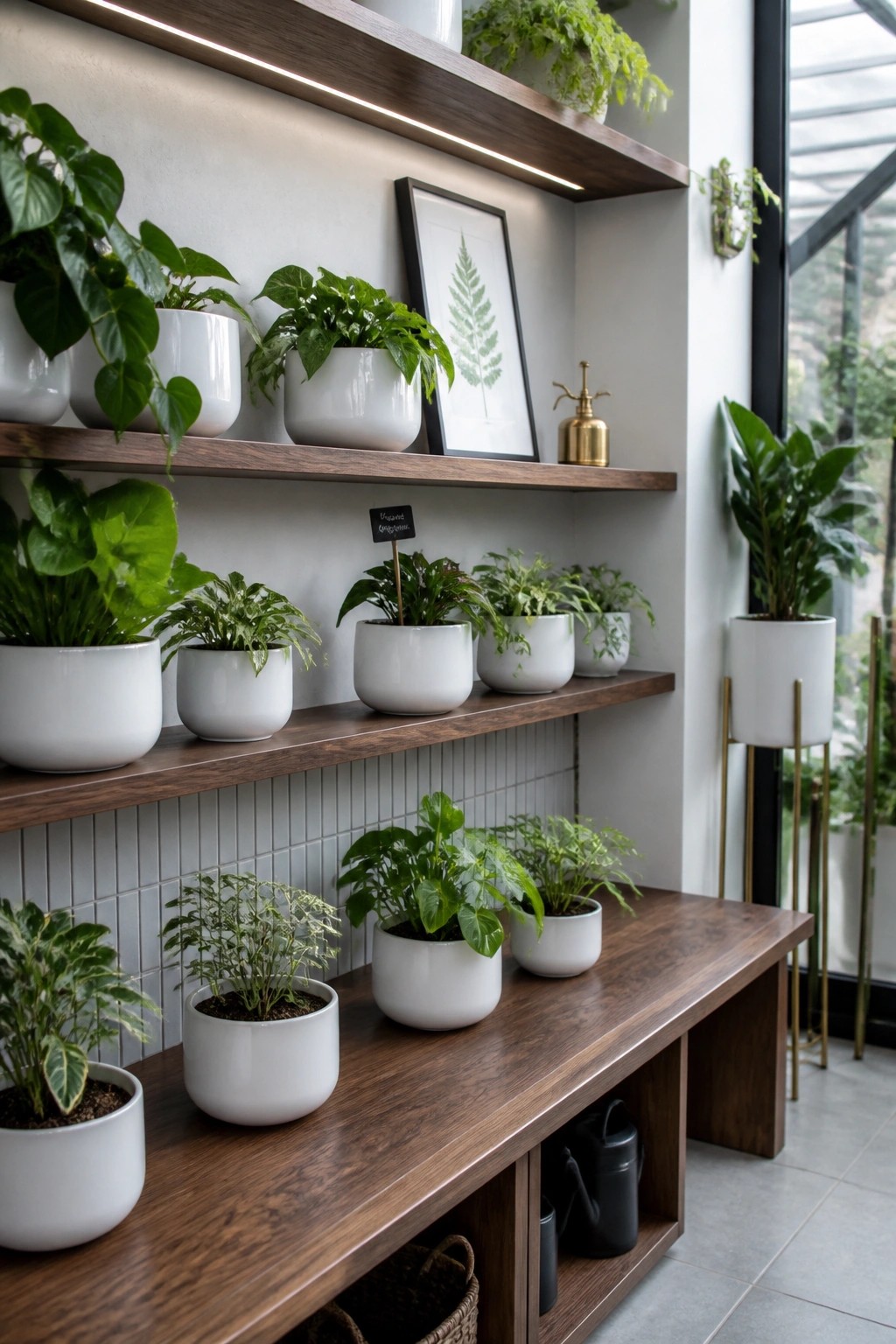
Tiered wooden shelves make it simple to fit many plants into a smaller area without losing access. The staggered levels keep everything visible and easy to water while leaving the floor clear for other uses.
This approach works best in a greenhouse or sunroom where light can reach all the rows. Sturdy construction matters since the pots add up in weight over time.
Cinder Block And Plank Shelving For Greenhouse Storage
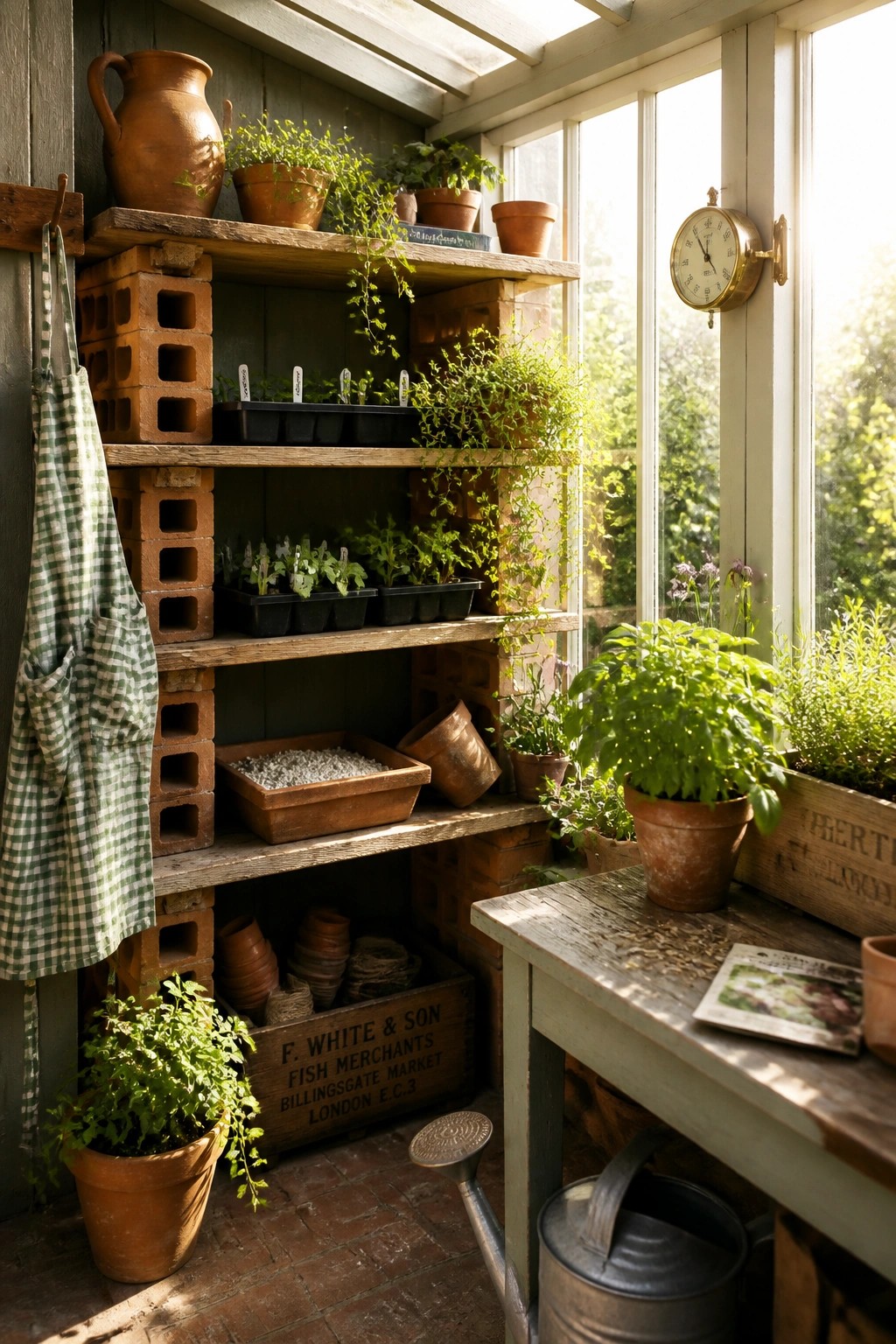
Stacking cinder blocks to hold wooden planks gives you strong, simple shelves that can be adjusted as your plant collection grows. The blocks create stable supports at different heights, and the planks give you wide surfaces for trays, pots, and seedlings without taking up much floor space.
This setup works well in any greenhouse or potting area where you need extra vertical room. Place the blocks where you want the shelves, lay the planks across them, and add more levels as needed. It suits small greenhouses especially, since you can build around existing walls and windows without permanent construction.
Vertical PVC Pipe Planters

Many homes use vertical PVC pipe planters when floor space is tight but the desire for fresh herbs is strong. These tubes mount directly to a wall and create multiple growing spots in a single column, which keeps everything organized and easy to reach.
This approach works best in kitchens or utility areas with good light. Secure the pipes well, add drainage holes at the base, and group plants with similar watering needs so the system stays low maintenance over time.
Add a Mezzanine for Extra Vertical Storage

A mezzanine level gives you a whole second layer of space for plants without crowding the floor. It works especially well in taller greenhouse rooms where the extra height would otherwise go unused. The railing can hold pots and trays while vines trail down, and the area below stays open for worktables or carts.
This setup suits attached greenhouses or large sunrooms where you already have good light from above. Keep the upper level simple with basic metal or wood grating so air and light still reach the lower plants. Just watch the weight load if you plan to store many heavy pots up there.
Open Cubbies Keep Greenhouse Plants Within Reach
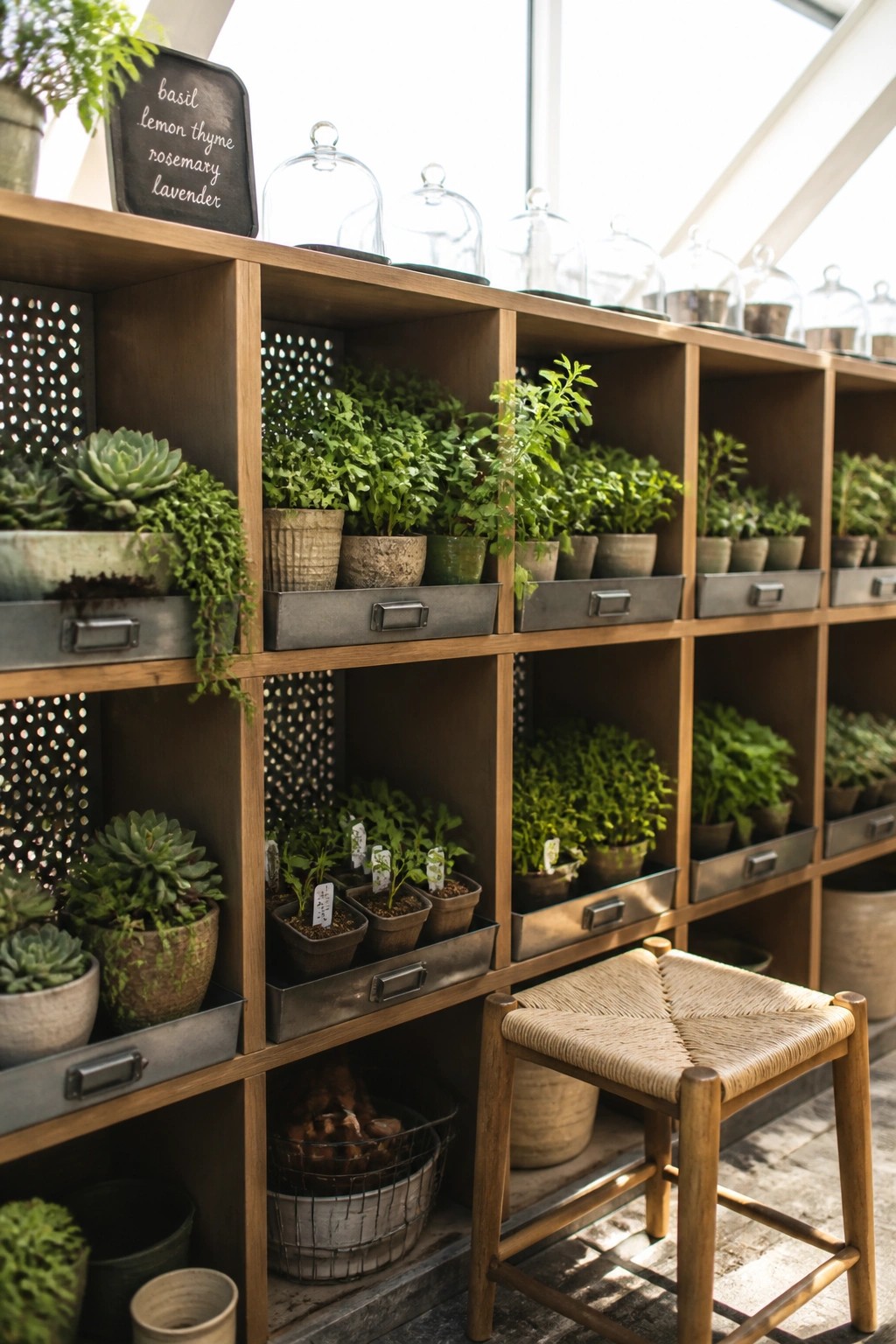
Open cubby shelving gives you a straightforward way to store more plants without crowding them together. The divided sections let air move freely around the pots and make it easy to reach everything without moving other plants out of the way first.
This style works best in greenhouses or sunrooms where you want quick access for watering and checking on growth. You can use the lower cubbies for smaller or younger plants and keep the upper ones for taller varieties. Metal trays or drawers below some sections add a spot for tools or labels without taking up extra floor space.
Reclaimed Crates For Vertical Plant Storage

Mounting old wooden crates on the wall gives you extra growing space without crowding the floor. The crates create deep pockets that hold pots at different heights, and the gaps between the slats let air move around the plants.
This setup works best in smaller greenhouses where floor space is limited. You can stack the crates in uneven rows to fit what you grow, and the wood holds up fine once it is sealed against moisture.
Floor-To-Ceiling Shelving With A Rolling Ladder
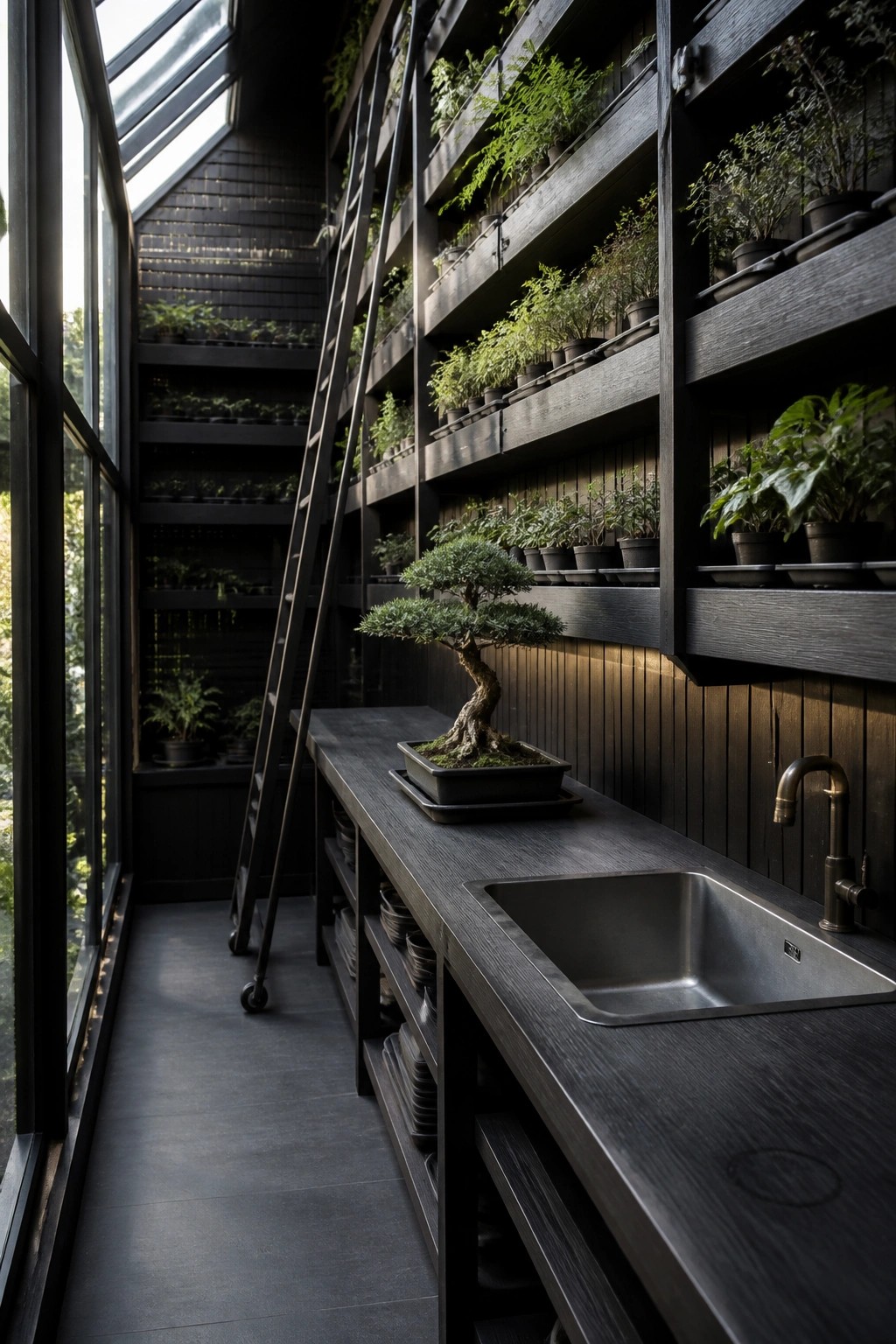
Vertical shelving makes the most of a narrow space by turning an entire wall into plant storage. The dark wood shelves run from floor to ceiling and hold rows of pots at different heights, so you can fit far more plants without spreading out across the floor. A rolling ladder lets you reach the top levels safely and keeps everything easy to water and prune.
This setup works best in a greenhouse, sunroom, or any indoor space with good light and a long blank wall. Keep the shelves fairly deep so larger pots fit on the lower levels and smaller ones go up high. Just make sure the ladder rolls smoothly and the shelves are secured well, especially if the room gets humid.
Hang Trays From The Ceiling To Add Vertical Growing Space
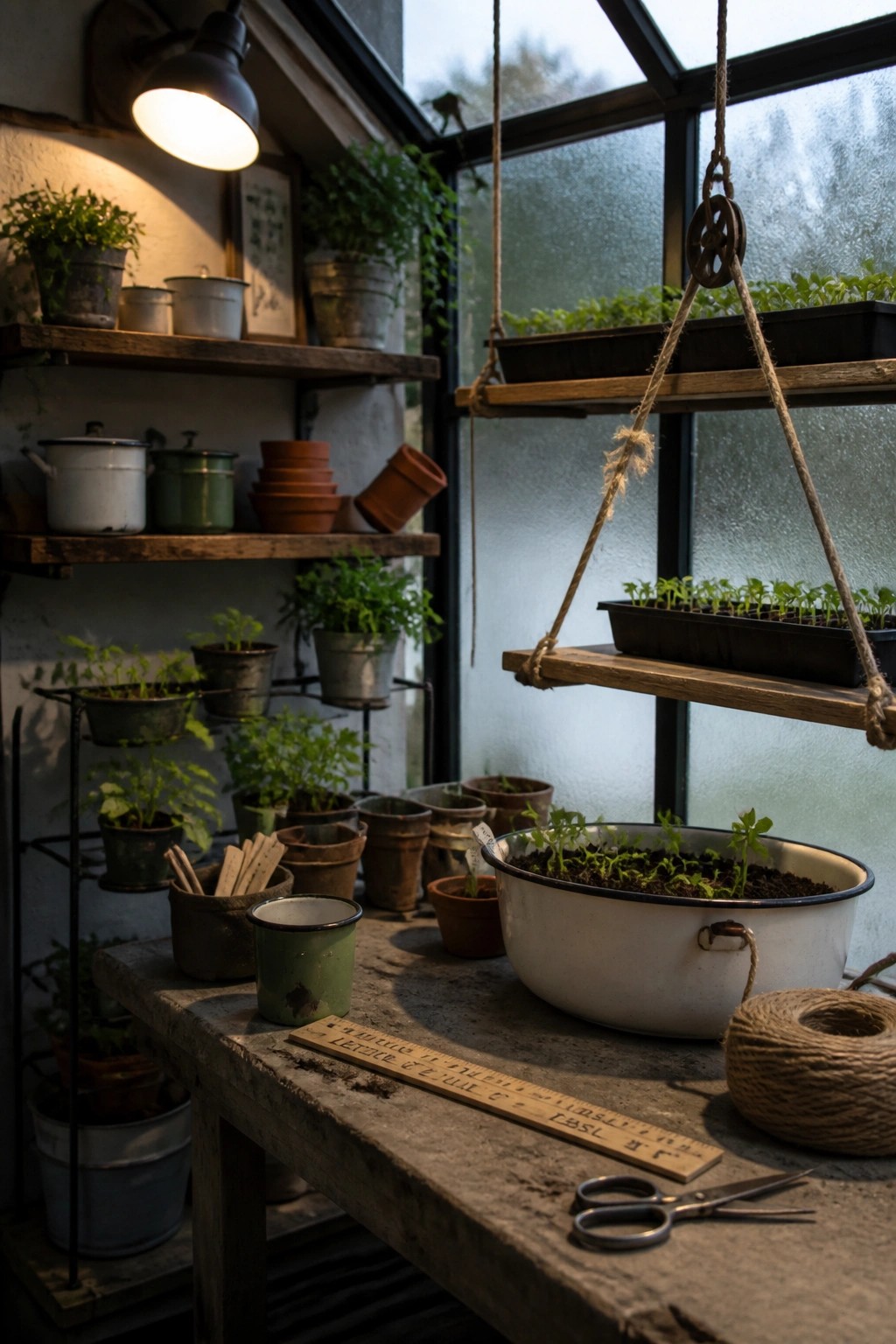
Greenhouses often run out of flat surfaces quickly, especially when starting lots of seedlings. Hanging trays from the ceiling keeps the main work table clear while still giving plants good light and air circulation.
Simple rope and pulley systems let you raise or lower the trays for watering and harvesting. This approach works well in smaller structures where floor space is tight and you need every level you can get.
Vertical Shelving With Built In Lights
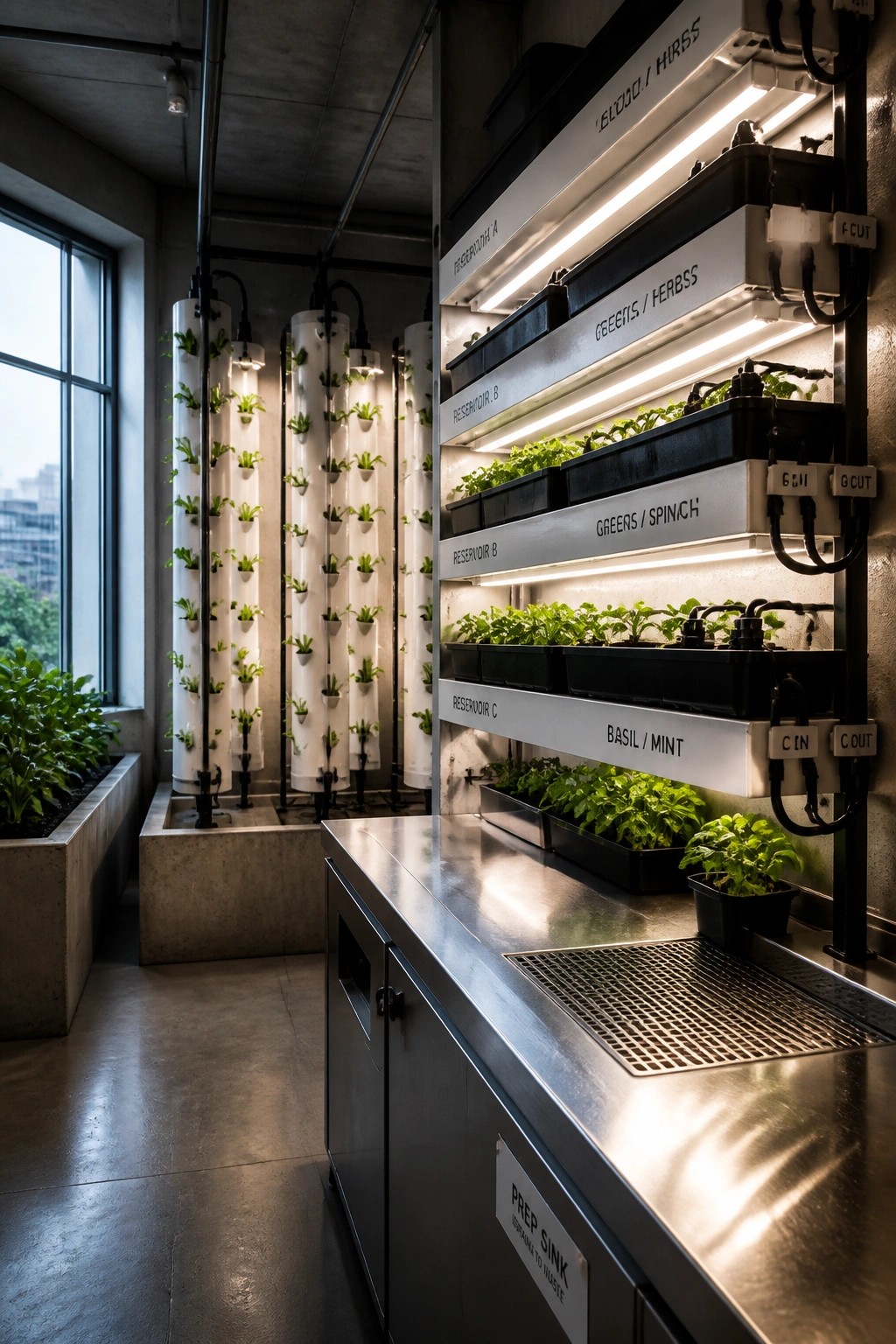
Many people use vertical shelving in a greenhouse or indoor growing room because it lets them fit far more plants into a small space. The stacked trays sit under dedicated lights so each level gets what it needs without crowding the floor.
This works best in a spare room, basement, or attached greenhouse where floor space is limited. Sturdy metal racks with adjustable lights keep things simple and make it easy to reach every plant for watering or harvesting.
Ladder Shelving For Vertical Plant Storage

A wooden ladder leaned against the wall gives you quick vertical space for plants without needing built-in shelves. It works because the rungs already create levels, so you can fit more pots in the same footprint while still reaching everything easily.
This setup suits a greenhouse, sunroom, or any bright indoor spot where floor space is limited. Choose a sturdy ladder, space the pots so air can move around them, and keep heavier ones near the bottom for stability.
Curved Shelves That Follow the Window
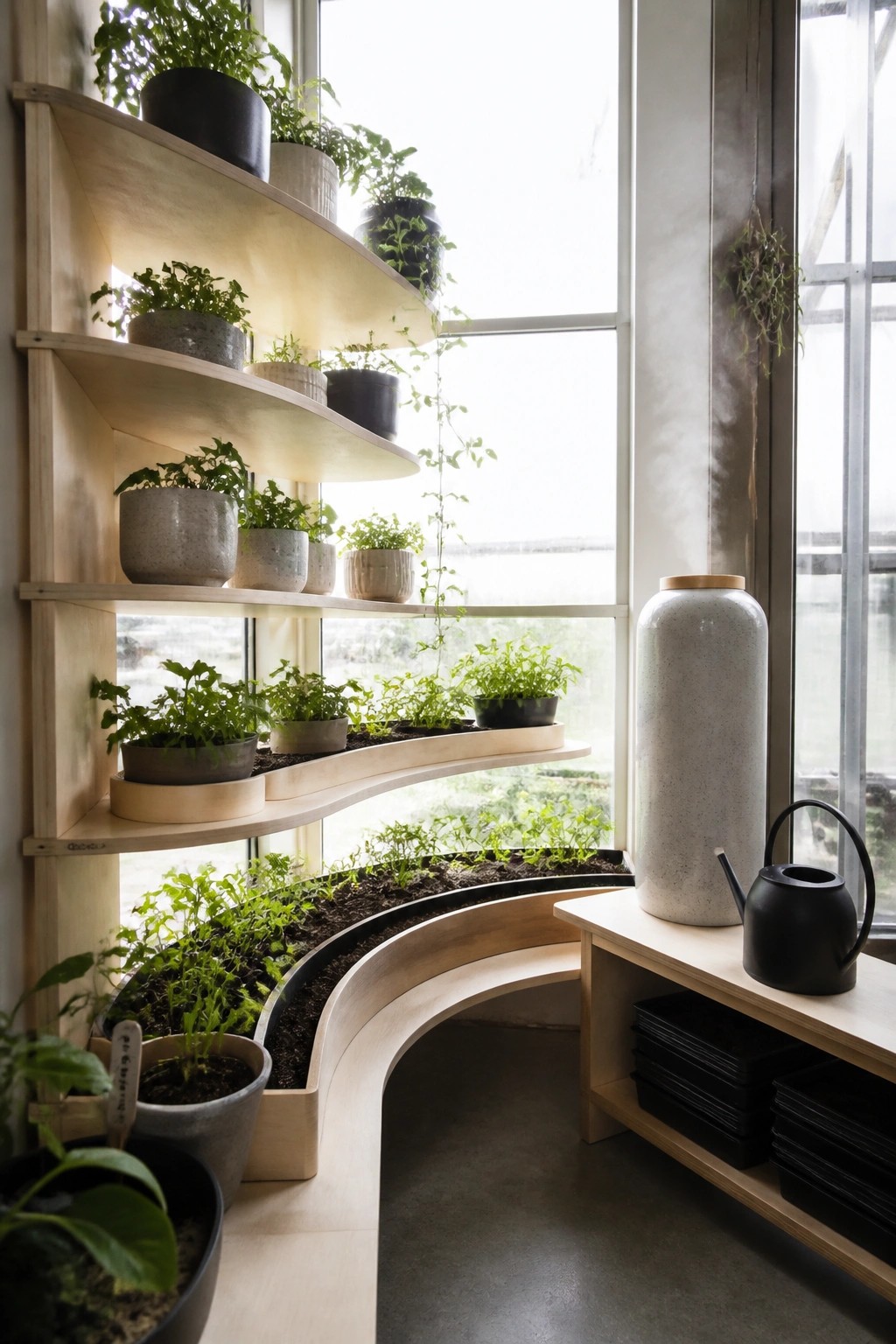
Curved shelves let you fit more plants along a window without wasting space or blocking light. The wood bends with the glass so every level stays useful, and you can reach the pots without stretching or crowding.
This setup suits a greenhouse corner or a sunny room where you want steady vertical storage. Seal the wood well if you water often, and leave room at the bottom for a few soil trays if you start seedlings inside.
Suspend Plants From Overhead Rails
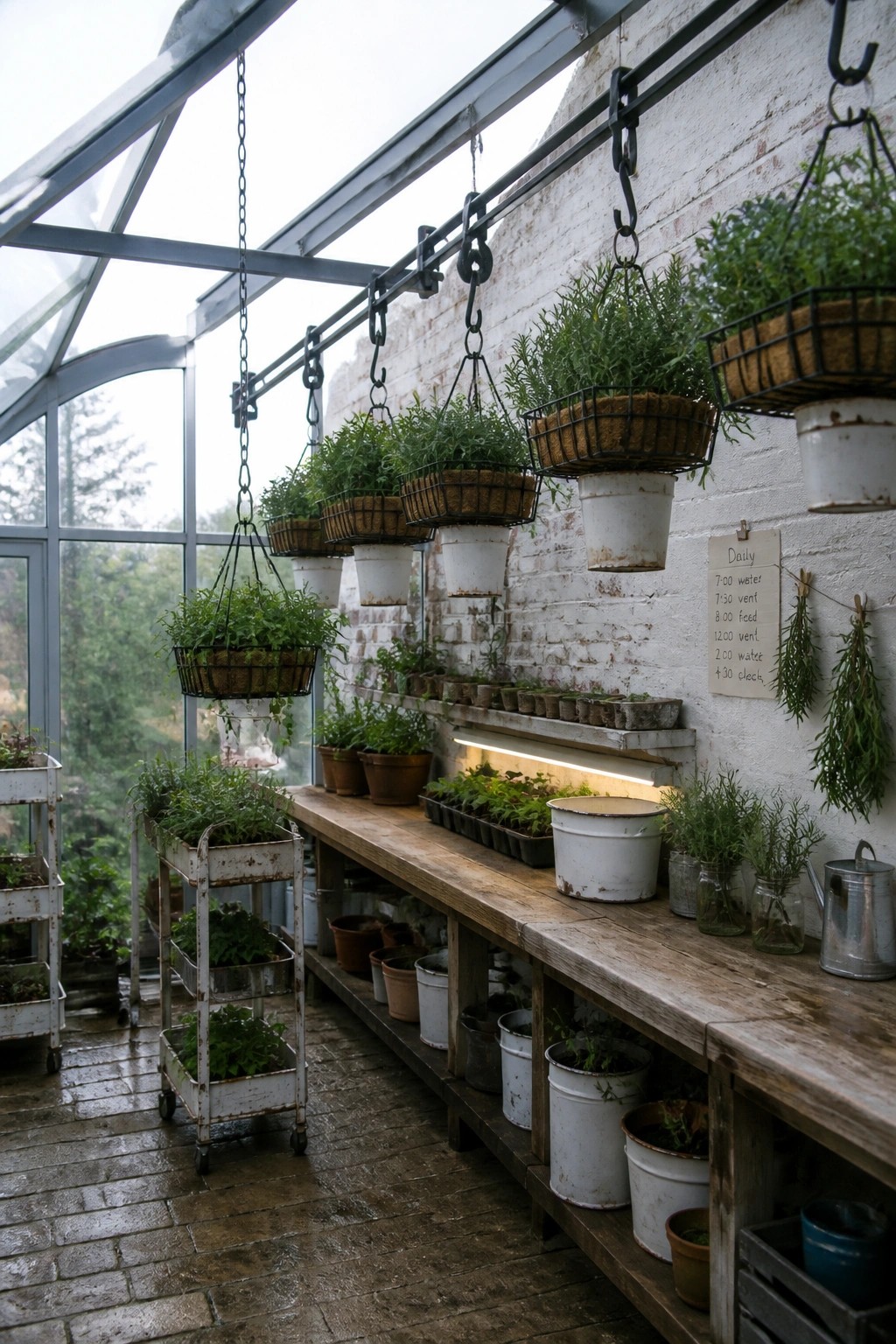
Hanging plants from a rail system is one of the easiest ways to add vertical storage in a greenhouse without crowding the work surfaces. The chains and hooks let you adjust heights as plants grow, and the setup keeps everything off the floor where it can get in the way.
This approach works well in smaller greenhouses or any space where bench room is limited. Run a simple metal rail along one wall or the ceiling, then add S-hooks and chains so baskets can be moved around as needed. Just make sure the rail is securely mounted, especially if you plan to hang heavier pots.
Concrete Block Shelving For Greenhouse Plants

Concrete blocks stacked with wooden planks on top make a simple and strong way to add vertical storage in a greenhouse. The blocks hold up well in damp conditions and let you adjust shelf heights as plants grow or change.
This approach works best along the walls where you need steady support without taking up much floor space. It suits smaller greenhouses or anyone who wants shelves they can rebuild later without much cost.
Built-In Shelving For Vertical Plant Storage
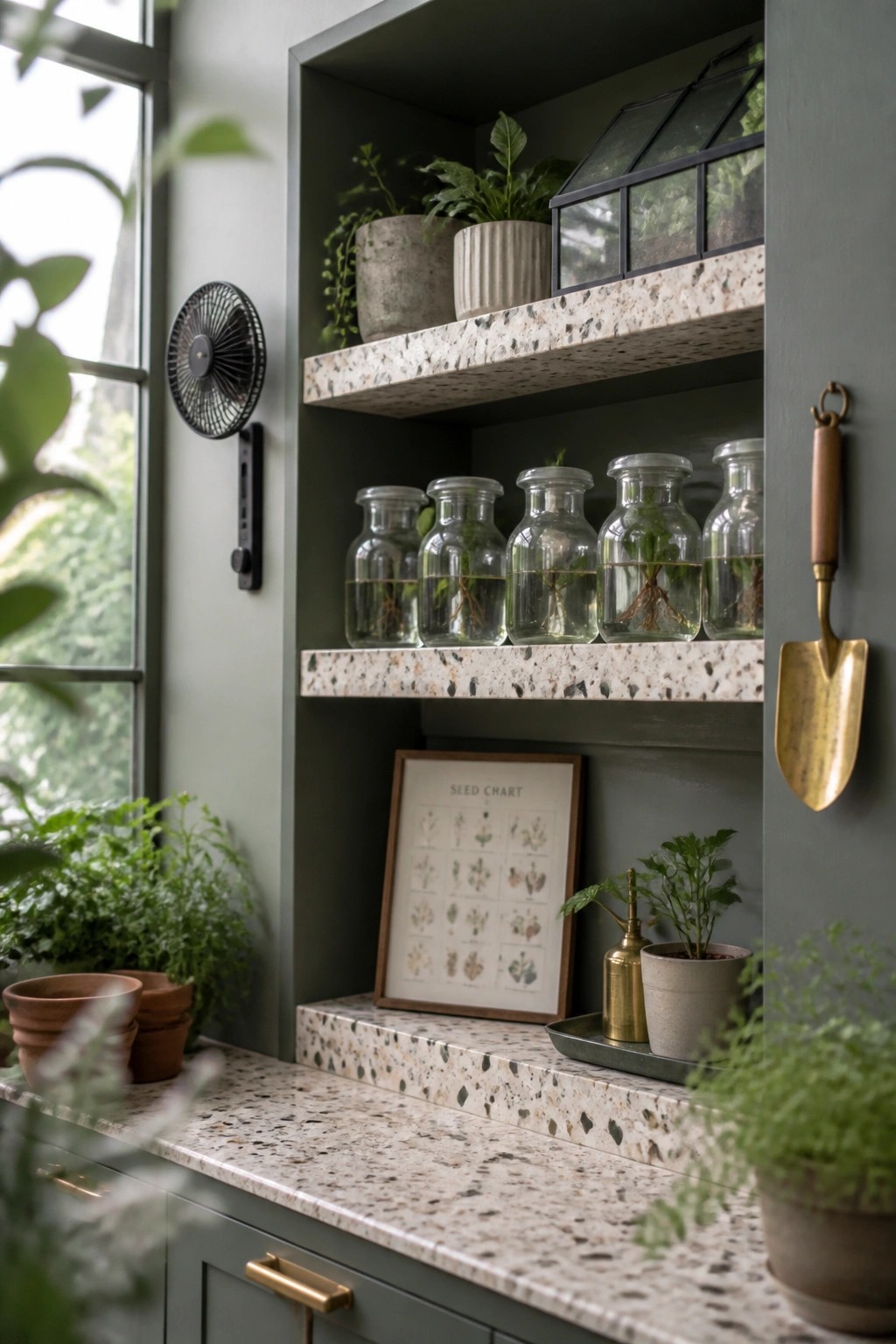
Built-in shelving works well for plant storage because it turns a blank wall into several usable levels without eating up floor space. The multiple shelves let you line up jars for cuttings at eye level while leaving room below for pots and tools.
This kind of setup suits an indoor greenhouse corner or a dedicated potting room where you want everything in one place. Keep the unit near a window so the plants get light, and leave a little space between jars so air can move around them.
Wood Shelves That Add Vertical Storage in a Greenhouse

Many greenhouses stay more organized when you run simple wooden shelves along the walls. These give you several layers of space for pots without crowding the floor or work tables.
They suit small or medium greenhouses best, especially if you grow a lot of potted plants. Use sturdy brackets and space the shelves so you can still reach the upper levels without a stool.
Pegboard Shelving Keeps Greenhouse Plants Organized
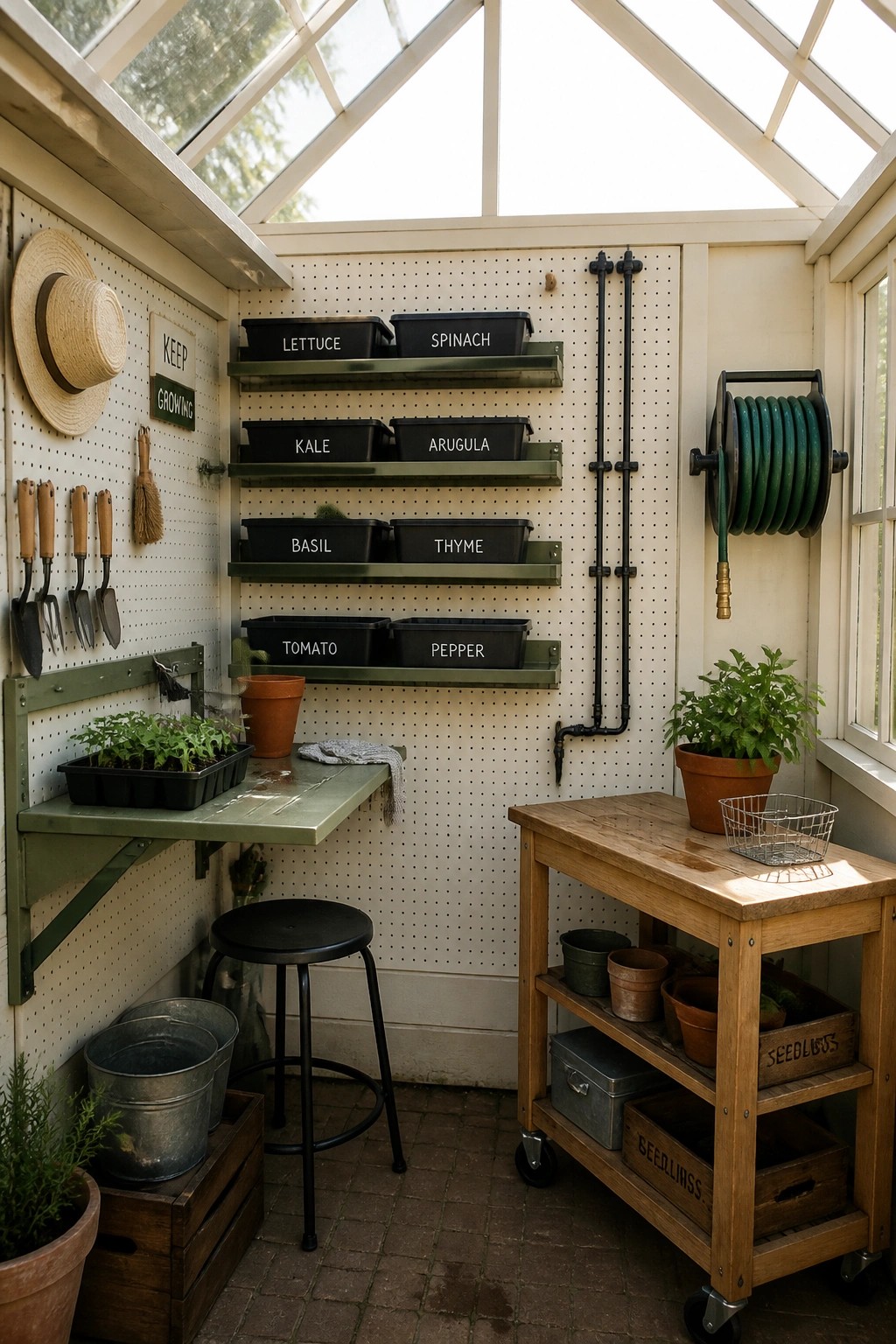
Pegboard walls work well in greenhouses because they let you mount shelves at different heights without taking up floor space. The open grid also makes it easy to rearrange things as plants grow or seasons change.
You can add simple brackets and bins for vegetables and herbs, which keeps everything visible and within reach. This approach fits smaller greenhouses best, where floor room is limited and quick access matters more than fancy finishes.
Wall Grids Make Vertical Plant Storage Simple

A wire grid mounted on the greenhouse wall lets you hang pots at different heights without taking up floor space. It works especially well when you have a lot of small plants that need good light and air flow around them.
This setup suits any greenhouse or sunroom where floor room is tight. Just screw the grid into a solid wall, add hooks, and slide the pots into place. Check the weight limit of your grid if you plan to load it heavily.
Frequently Asked Questions
Q: Will wire shelves rust in a greenhouse? A: Choose coated metal or plastic shelves from the start. Wipe them down every few weeks when humidity stays high. This stops flakes from reaching your soil.
Q: How do I reach plants on the top shelves without a ladder every day? A: Set daily plants on the middle tiers you can touch from the ground. Save the highest spots for seedlings or items you check less often. A low step stool works fine for the rest.
Q: What about watering plants on vertical shelves? A: Water from the top row and let extra moisture drain into trays on the shelf below. Check the lower plants more often since airflow dries soil quicker up high.
Q: Can these shelving ideas work in a small greenhouse? A: Scale the tiers to run along one wall or fit a single corner. You still free up floor space for walking and gain room for more plants.
