


I’ve noticed how patios and porches often sit underused unless you layer in some practical greenery that draws you outside.
Container vegetable gardens do that best by turning hard surfaces into spots that feel both productive and put-together.
What stands out right away to visitors is the way fresh herbs and veggies soften those edges without overwhelming the layout.
On my own porch, I shifted to taller pots along the railing, which opened up the floor for chairs and made tending the plants quicker.
A handful of these setups are simple enough to adapt and test in real backyards.
Ladder Shelf for Patio Veggies

One smart way to fit more plants into a small patio space is turning a wooden ladder into a shelf. Here tomatoes dangle from vines on the upper rungs while blue-glazed pots hold herbs below. It keeps the ground clear around the bench and stool, and gives that casual backyard feel without taking up much room.
This works best on covered porches or fenced patios where you want fresh produce close to the door. Pick a sturdy old ladder, lean it against the wall, and add brackets if needed for stability. Go for trailing veggies like tomatoes up top, bushier ones lower down. Watch the weight though, especially after rain.
Balcony Railing Planters for Vegetables

One simple way to grow your own veggies on a small balcony is with railing planters. These black boxes hang right off the edge and hold peppers and carrots without taking up floor space. They keep things tidy and let plants catch good sun. Plus, you see the progress every time you step out.
Set them up on any apartment balcony or narrow porch where room is tight. Fill with soil that drains well, and add seedlings from a rolling cart like the one nearby. It works best in mild spots with some afternoon light. Just check the rail strength first, and water regularly since they dry out fast.
Terracotta Pots for Patio Tomatoes
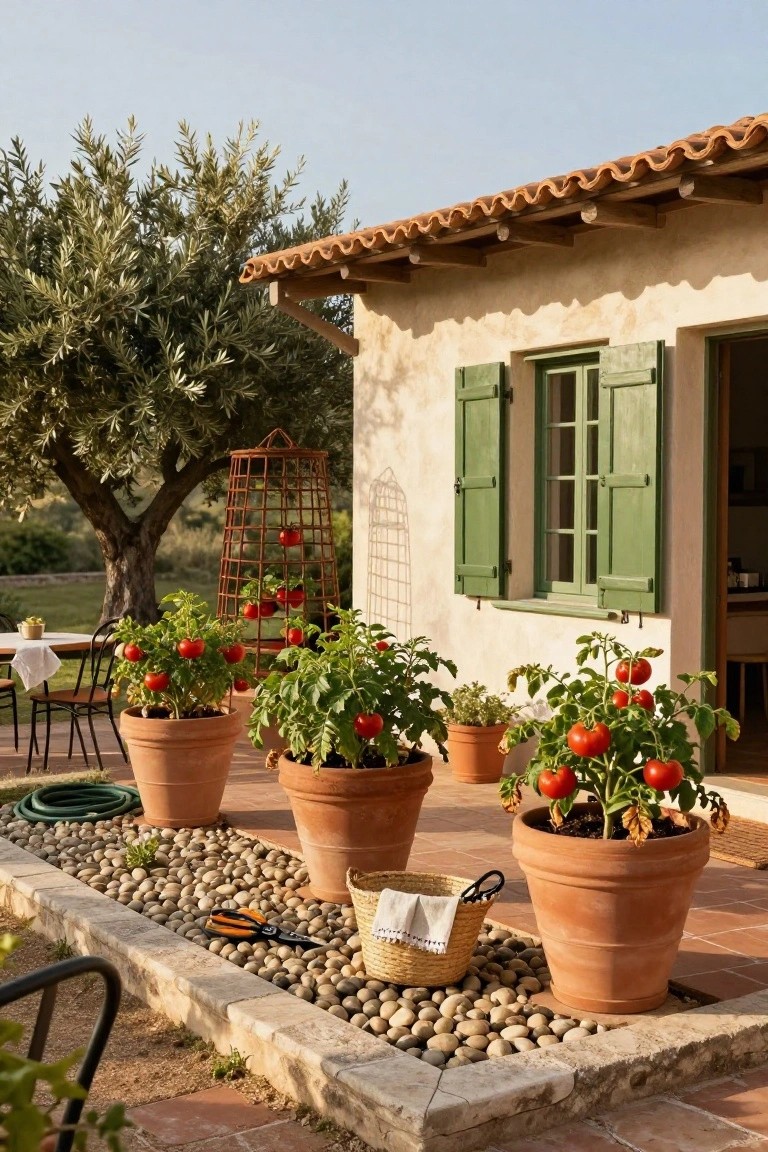
Big terracotta pots packed with tomato plants make a patio feel alive and useful. They sit right alongside chairs and a table, so you can pick fresh tomatoes while relaxing outside. The warm clay color fits stone borders and stucco walls without trying too hard.
Set these up in full sun on any porch or terrace near the house. Go for deep pots to support roots, and use wire cages to keep vines upright. Determinate tomatoes work best here… less sprawling, more fruit. Keep soil moist and watch for pests early.
Rustic Shelves for Porch Vegetable Containers
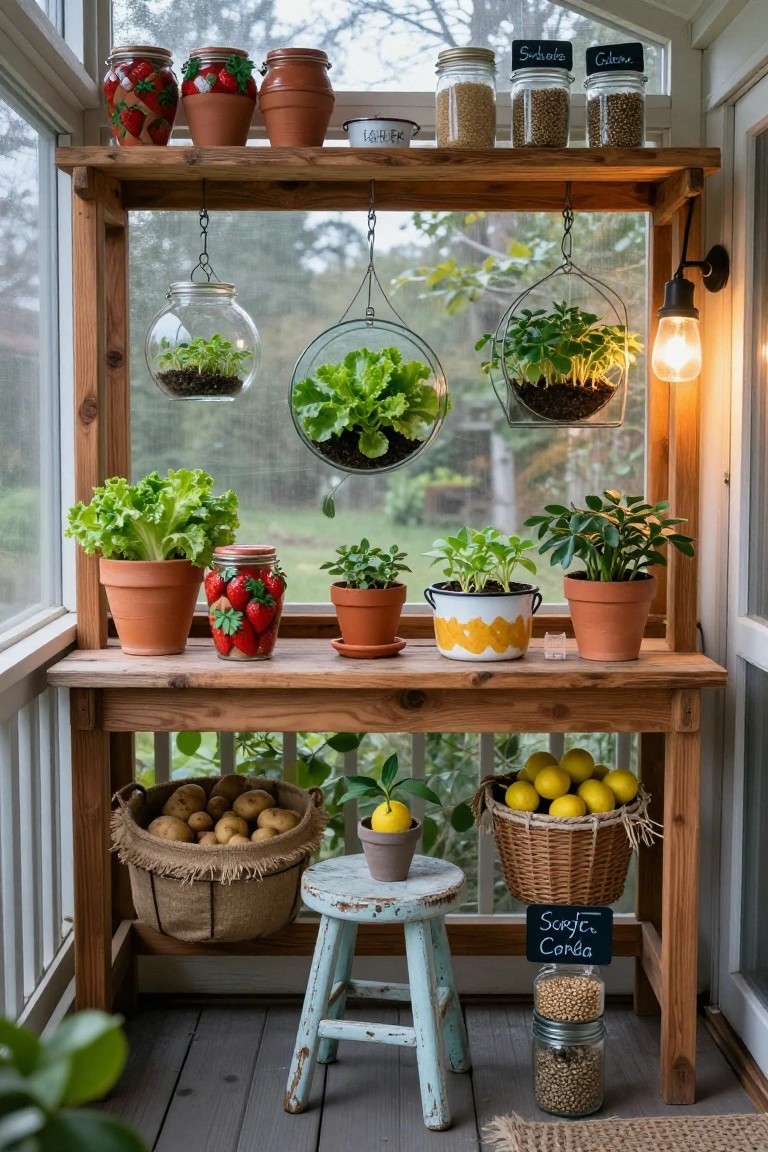
A simple wooden shelf unit like this turns any porch corner into a productive veggie spot. It holds pots of lettuce and herbs right on the shelves, with hanging glass jars for strawberries and more greens overhead. Baskets catch potatoes and lemons below. The wood keeps it sturdy and fits right in with porch vibes, making the space feel useful without taking up floor room.
Set one up on a covered porch or patio where you get some shelter from rain. Use it for easy-reach greens and small fruits that do well in pots. Go for rough-sawn wood to match outdoor wear, and group plants by sun needs. Watch that heavier baskets don’t overload the bottom shelf… reinforce if needed.
Concrete Trough Planters for Patio Greens
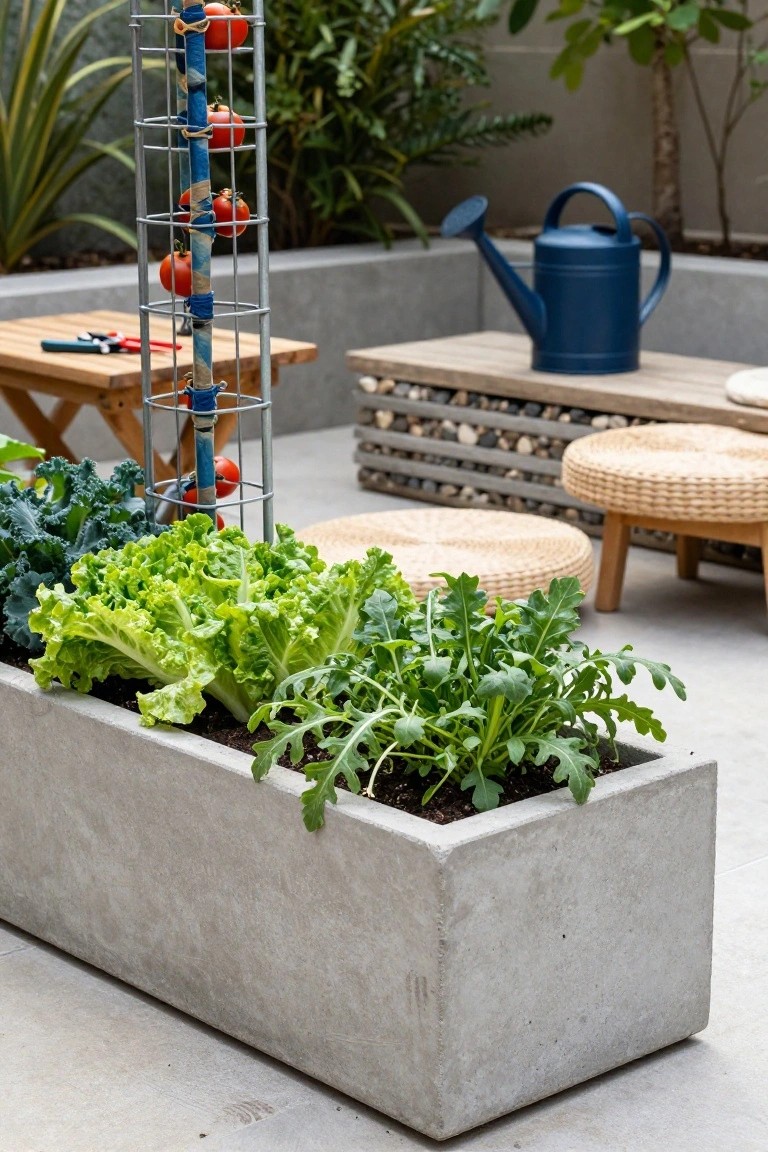
One straightforward way to add fresh veggies right to your patio is with long concrete trough planters. They give a clean, modern edge that fits right into outdoor spots without much fuss. In this setup, the gray boxes hold a mix of kale, lettuce, and arugula, looking full and healthy next to a simple tomato trellis. It’s practical for picking greens whenever you want, and the raised height keeps things easy on the back.
These work best on smaller patios or porches where space is tight. Fill them with shallow-rooted plants like salad mixes that thrive in containers. Make sure there’s good drainage at the bottom, or your soil stays too wet. Pair with casual seating nearby, and you’ve got an everyday garden that pulls double duty as decor.
Wheelbarrow Vegetable Planter

An old wheelbarrow makes a perfect movable planter for veggies right on your porch. Load it up with crates of beans, pots of herbs, and green onions, and it turns into a casual garden spot. The rusty metal and wood give it that lived-in feel without much effort.
This setup suits porches with limited room since you can wheel it to sun or shade as needed. Place it by the door for quick harvest, and add drainage holes if yours doesn’t have them. It fits older homes or simple patios best, keeping things practical and pretty.
Galvanized Trough Raised Planter

A galvanized metal trough lifted up on legs turns into a handy raised bed for veggies on the patio. It keeps plants at easy reach so you don’t stoop much, and the rustic finish fits right with outdoor spots. Those tomato seedlings and herbs tucked inside look right at home, with a small greenhouse adding protection for tender starts.
This works great on narrow porches or against a house wall where ground space is short. Go for shallow-root crops like tomatoes or peppers that won’t outgrow it fast. Drill drainage if your trough lacks it, and set nearby stools for comfortable picking and pruning.
Container Veggies Around Porch Swing Seating
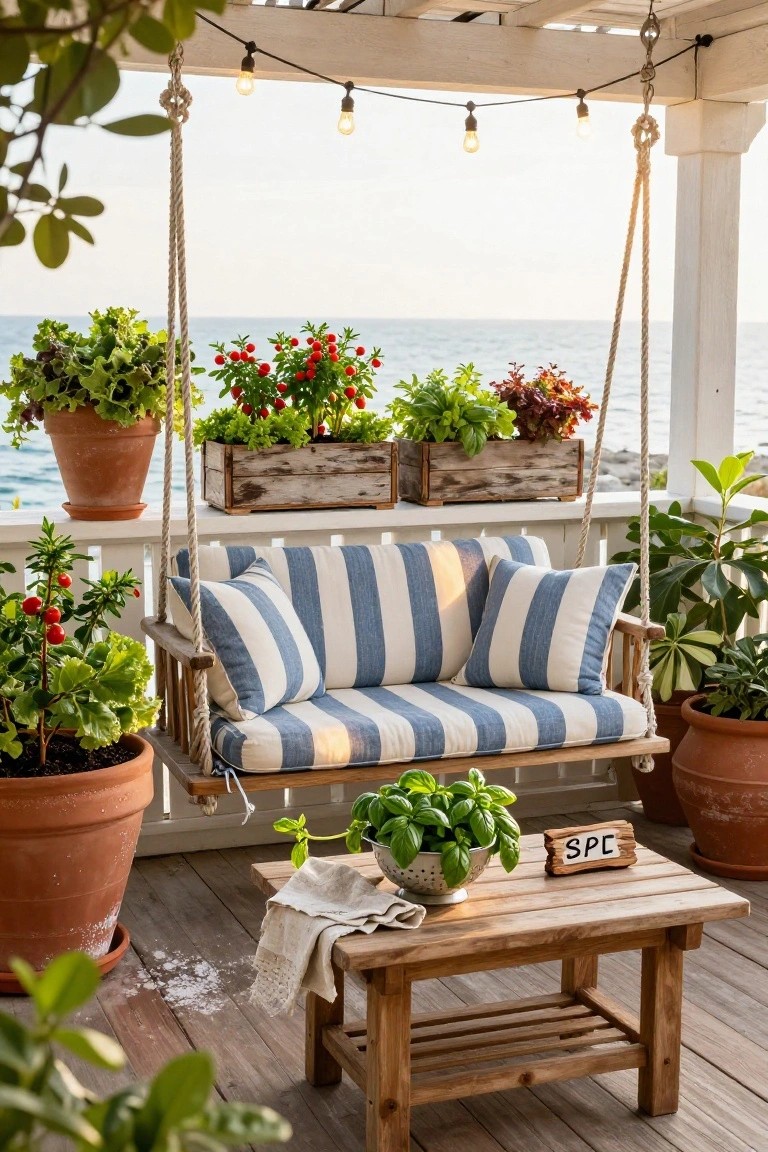
A simple porch swing makes a perfect spot to tuck in container vegetables. Here tomatoes grow in tall terracotta pots, herbs fill wooden crates, and greens spill over edges right next to the seating. It turns relaxing time into garden time without much extra space. The setup feels productive yet easy, like the plants are part of the furniture.
Put this on a deck or porch that gets good sun. Cluster pots at different heights around the swing and add a low table for fresh picks, maybe basil in a bowl. It suits smaller outdoor spots near the house. Just secure tall pots so they don’t tip in wind.
Raised Beds for Patio Tomatoes

One straightforward way to grow tomatoes on a patio is with a raised stone bed tucked against a sunny wall. Here the plants climb up simple wood stakes and trellises, making good use of vertical space. A label marks them as “Pomodoro,” and the setup looks right at home with the stucco house wall and gravel ground.
This works well in small outdoor spots where you want fresh veggies without taking over the whole area. Build the bed low, about a foot high, with local stone for a natural fit. Stake indeterminate varieties early, and tuck in herb pots around the edges. Keep it south-facing for sun, and it suits older homes or courtyards just fine.
Black Planters for Patio Vegetable Gardens
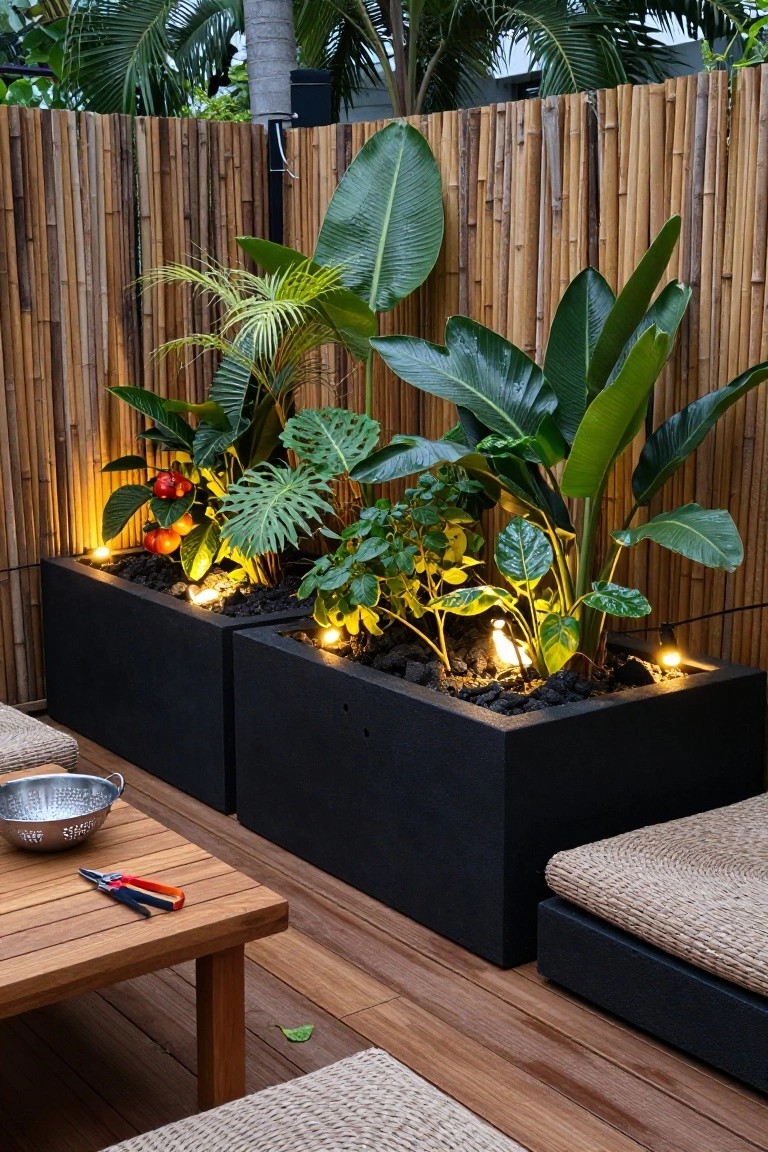
Big black rectangular planters like these make it easy to grow veggies on a deck or patio. They fit tomatoes, herbs, and even tropical plants together in one spot. The dark color keeps things clean-looking, and those little uplights tucked in the soil add a nice glow after dark without much fuss.
Set them along an edge or corner where you have some sun. They suit wooden decks best, since the black stands out against the wood. Just use pebbles or gravel on top to hold moisture and cut down on weeds. Works well in warm spots, but watch for too much direct sun scorching the leaves.
Rustic Window Boxes for Easy Veggies
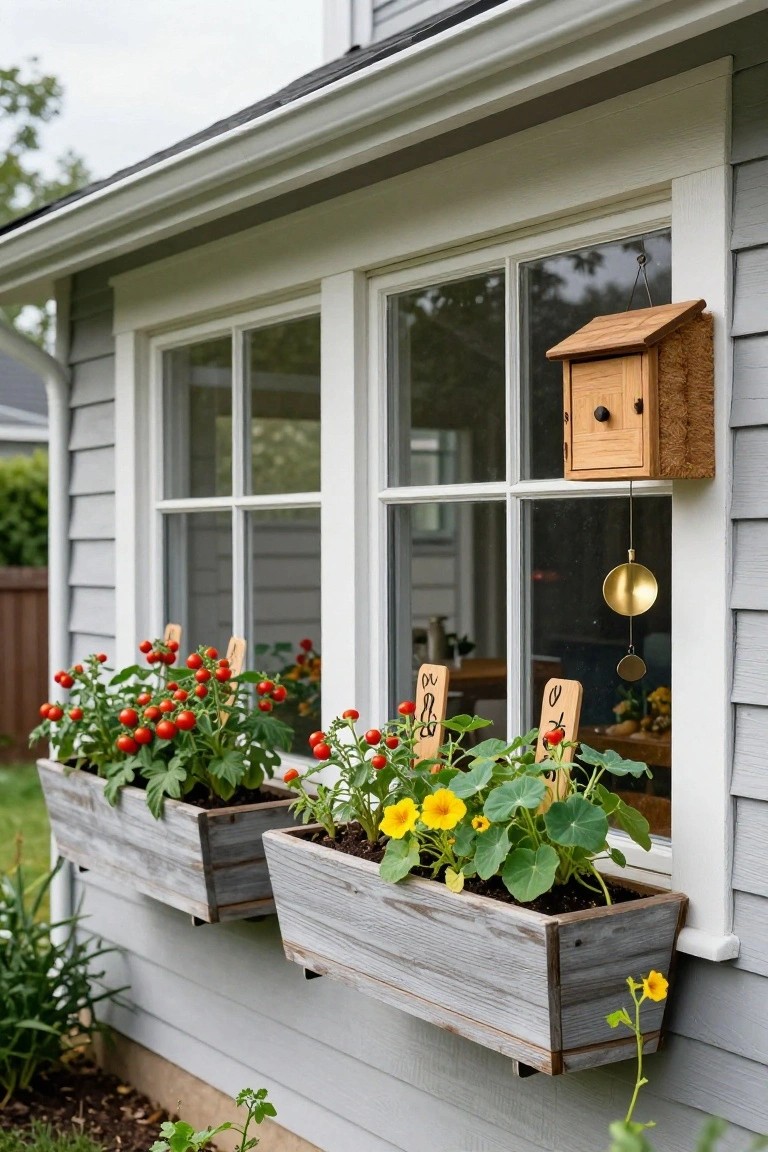
Window boxes like these make growing your own tomatoes dead simple right on the house exterior. The weathered wood ones here hold cherry tomato plants loaded with red fruit on one side and nasturtiums spilling over on the other. They hug the wall under a pair of double windows, adding color without much fuss. It’s a practical way to squeeze in fresh produce where porch space is tight.
Try this on the porch-facing side of your home, especially if you get good sun there. Wood boxes weather nicely over time, but line them with plastic for drainage and check brackets hold the weight when plants fill out. Works best for casual homes, not super modern ones. Keeps harvesting handy from indoors too.
Wheeled Greenhouse Vegetable Garden

A wheeled greenhouse like this makes growing veggies on a patio simple and practical. You can roll it into the best light or store it away when needed. Inside, the raised beds hold things like lettuce, peppers, and tomatoes, keeping them safe from bugs and cool nights. It turns a plain concrete spot into a real food garden without taking up fixed space.
This works best on smaller patios or porches with some shade from trees. Set it near the house door for easy picking. Pair it with pots on a wooden rack for extra herbs. Just open the vents on warmer days to avoid overheating.
Linear Trough Planters for Balcony Veggies

A simple way to grow vegetables on a balcony is with a long concrete trough planter tucked right against the wall. You see young tomato plants here, supported by stakes, along with some greens and herbs, all mulched with dark gravel. It keeps the floor clear for sitting or walking, and the clean lines fit modern concrete surroundings without looking fussy.
This works best on narrow balconies or patios where space is tight. Pick a trough that matches your concrete or stone edges, fill it with good soil, and go for upright veggies like tomatoes or peppers. Mount a watering can nearby… makes tending easy. Just watch for weight on upper floors.
Tiered Crate Planters for Porch Herbs

One simple way to grow fresh herbs on a porch is stacking terracotta pots inside a wooden crate set on low stools. Here basil bushes fill most of the pots, with a tomato plant tucked in too. The setup makes everything easy to reach without taking up much floor space. That rustic wood crate adds a natural touch that blends with porch siding.
This works best on covered porches or patios where you want greens close by for cooking. Use whatever crates or stools you have around. Basil thrives here since it grows full and fast. Just watch for too much sun on the lower pots… shift them if needed.
Raised Planter with Labeled Sections

This setup uses a long wooden raised bed divided into sections for different veggies and herbs. Each spot has a small ceramic tile label, like for burdock or kale varieties. It keeps everything organized right on the patio deck. No more guessing what’s growing where, which makes tending the garden a lot simpler.
You can build something like this for porches or small backyards where ground space is tight. Use cedar or treated wood for the frame, add legs to lift it off the deck, and pick tiles that match your style. It works great in sunny spots, but make sure there’s drainage at the bottom so roots don’t drown. Perfect for beginners who want fresh produce without a full yard.
Rustic Tiered Planter for Porch Herbs
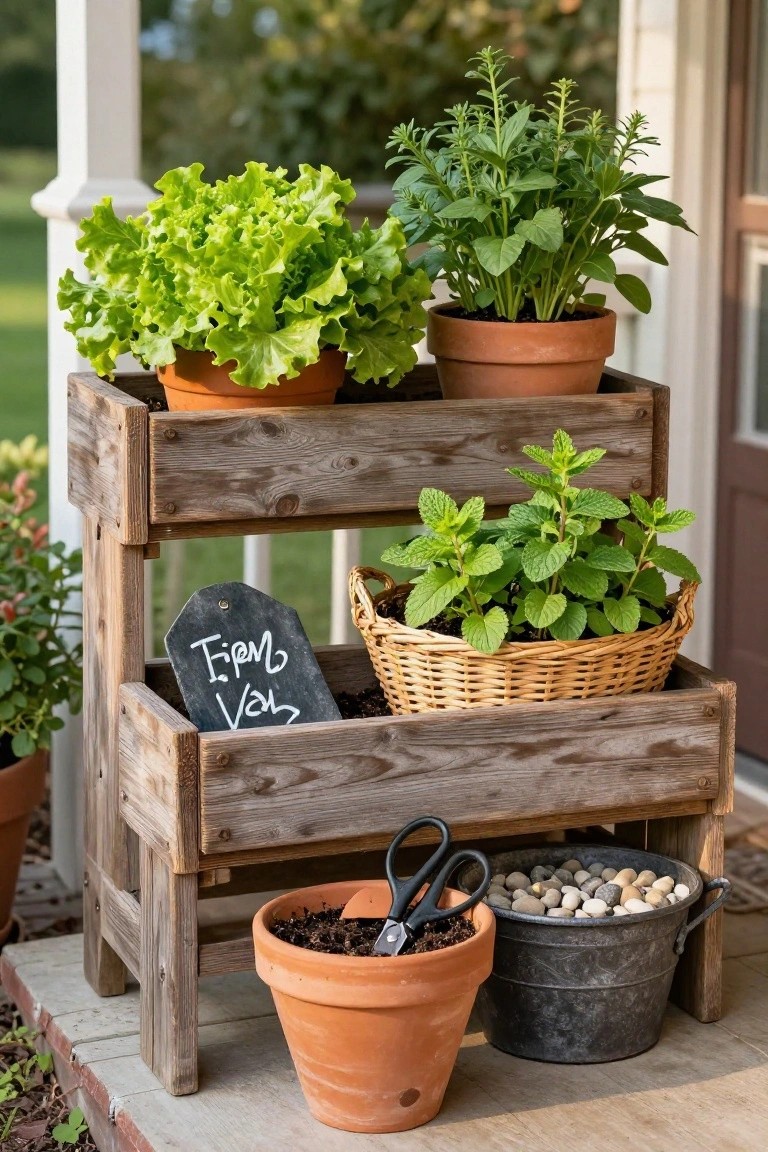
A wooden tiered stand like this turns porch steps into a handy spot for growing your own lettuce, mint, and thyme. The rough wood fits right in with outdoor spots, and stacking plants upward saves floor space while keeping everything easy to reach. That chalkboard label on the thyme box adds a practical touch too.
Set one up on a sunny porch or patio corner near your door. Use reclaimed boards for the stand to get that weathered look without much cost, then fill with quick-growers like herbs in pots and baskets. It suits small homes or apartments best… just watch for good drainage so roots stay happy.
Rolling Cart for Container Veggies

A simple wooden cart on wheels lets you group your vegetable pots right on the patio. In this setup, terracotta pots with tomatoes and basil sit together, easy to roll into sun or shade as needed. It keeps things organized without taking up fixed space, and the natural wood fits right in with outdoor spots.
This works great for small patios or porches where you want fresh produce close by. Pick a sturdy cart that holds at least three pots, and use it near a sink for watering. Just watch the weight so the wheels don’t stick, especially after rain.
Frequently Asked Questions
Q: Which veggies should I start with in small patio pots?
A: Pick compact growers like cherry tomatoes, bush beans, lettuce, and herbs such as basil or parsley. They fit nicely without crowding and deliver quick harvests you can snip for meals.
Q: How do I keep container soil from drying out too fast on a hot porch?
A: Layer a couple inches of mulch like shredded bark or straw right on top of the soil. It holds moisture in and cuts down on daily watering trips.
Q: Can I mix flowers in with my veggie pots for more color? A: Tuck in easy bloomers like nasturtiums or marigolds alongside peppers or greens. They pull double duty by deterring pests while jazzing up your setup. Match their light needs to avoid drama.
Q: What’s the best spot for these pots if my porch gets full sun? A: Shift them to get morning sun and afternoon shade if leaves start scorching. Spin pots weekly so every side gets even light and grows strong.
