

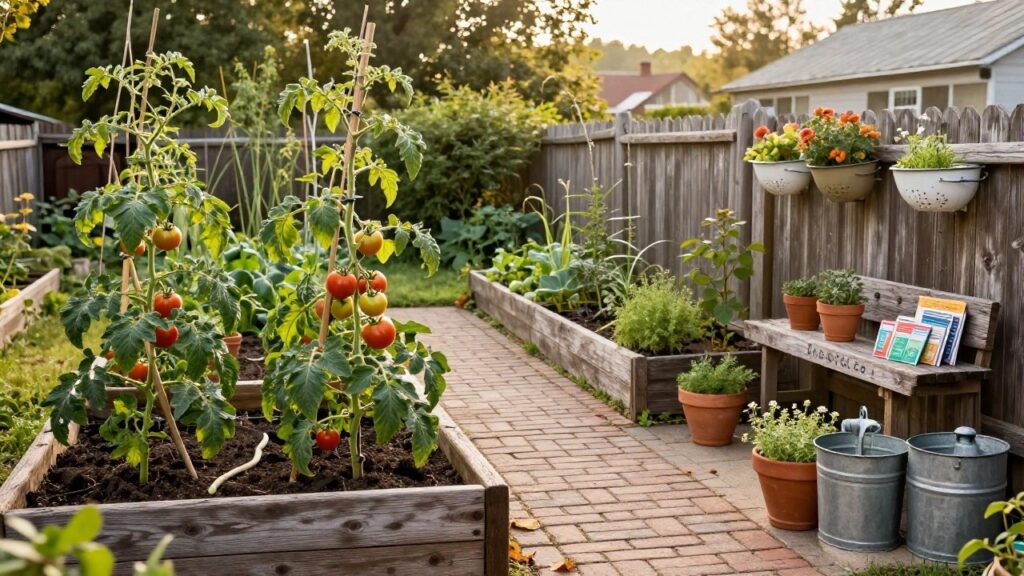
I’ve always thought a good vegetable garden pulls you in with its clear pathways and raised beds that guide your steps without feeling rigid.
What stands out first in these rustic setups is how natural materials like weathered wood and stone create that cozy backyard feel while keeping weeds at bay.
In my yard, I found that simple twig edging around the beds grounded everything and made the space look tended even early in the season.
These ideas shape outdoor spots over time, blending productivity with charm so your garden evolves into a real family hub.
A couple with gravel walks are worth sketching out for your own plot.
Gravel Paths Between Raised Beds
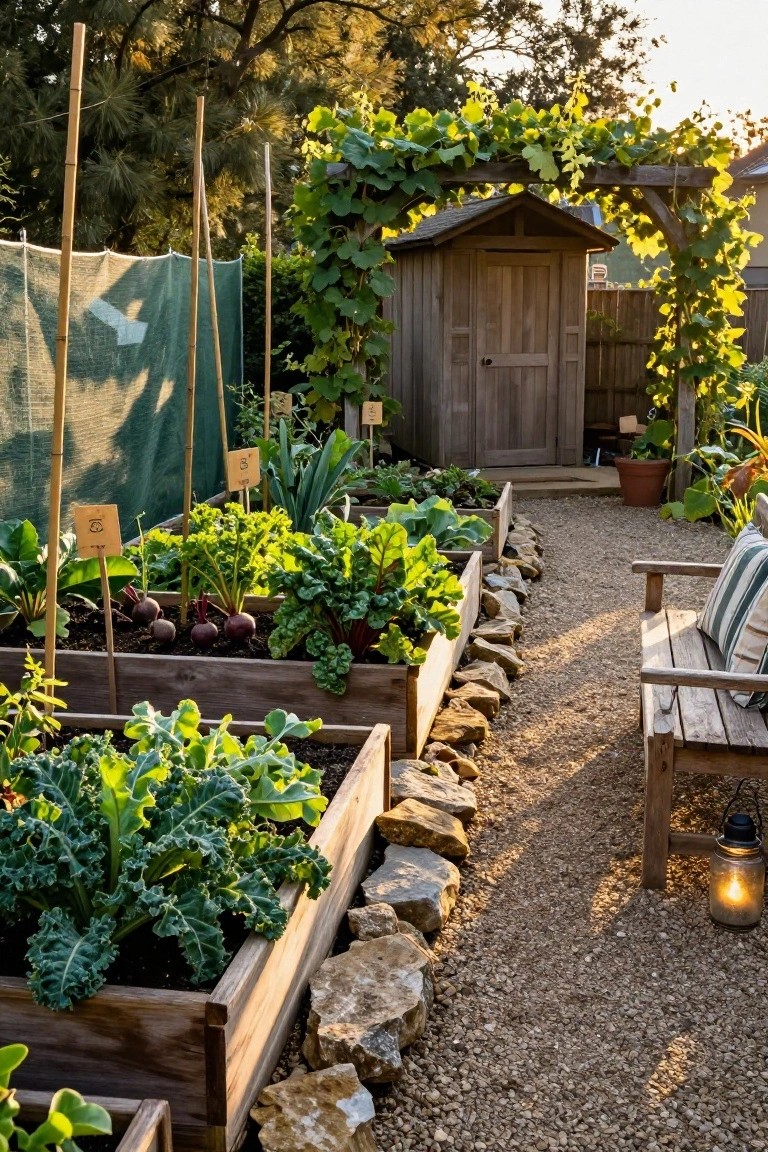
A gravel path winding through raised wooden beds keeps things practical in a vegetable garden. It lets you walk right up to harvest beets or kale without tracking mud everywhere. Those rough stones edging the path add a natural border that ties into the rustic wood and gravel nicely.
Use this setup in a cozy backyard spot, maybe along a fence with some shade from trees. It suits smaller spaces where you want order without hard work. Go for permeable gravel so water drains fast, and skip it if your yard floods easy.
Galvanized Raised Beds for Vegetables

Raised beds built from corrugated galvanized metal make vegetable gardening straightforward and a bit rustic. They hold soil neatly, keep things organized, and that wavy metal edge fits right into a backyard setup without looking too fancy. You see lettuce and greens thriving in them here, with simple labels on stakes to mark what’s what.
Put these in a sunny spot with gravel paths around for easy walking and good drainage. They work great in small yards or against a fence, pairing well with apple trees or a little hoop house nearby. Just make sure to line the bottom if your soil’s heavy, and they’re low upkeep year after year.
Stone-Edged Raised Beds
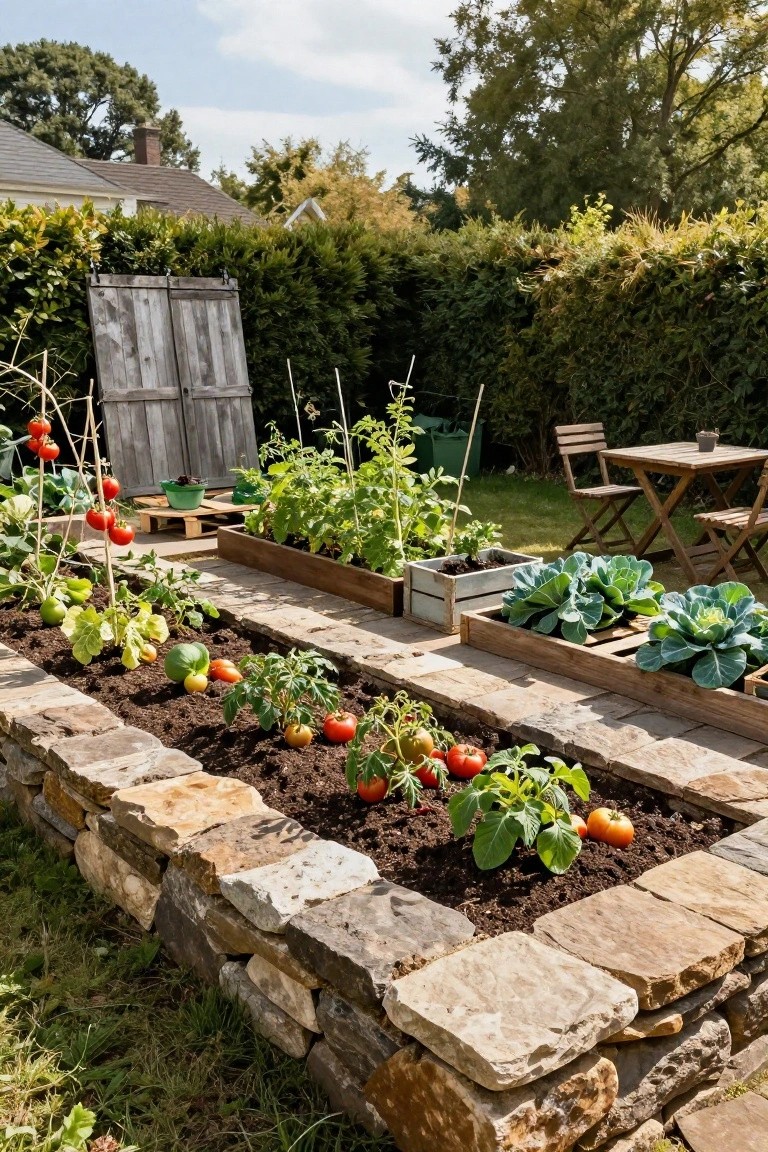
Raised beds edged with natural stone make a vegetable garden look sturdy and settled in. The rough stones stack up unevenly here, holding tomatoes, peppers, and cabbage without much fuss. It gives that old-farm feel without being too fussy, and keeps everything off the ground for easier picking.
These work best in average backyards where you want some structure but not a big project. Stack stones you find nearby or buy affordable fieldstone. Good for sloped yards too… just level the base first so plants don’t wash out in rain.
Rustic Log Edging for Raised Beds
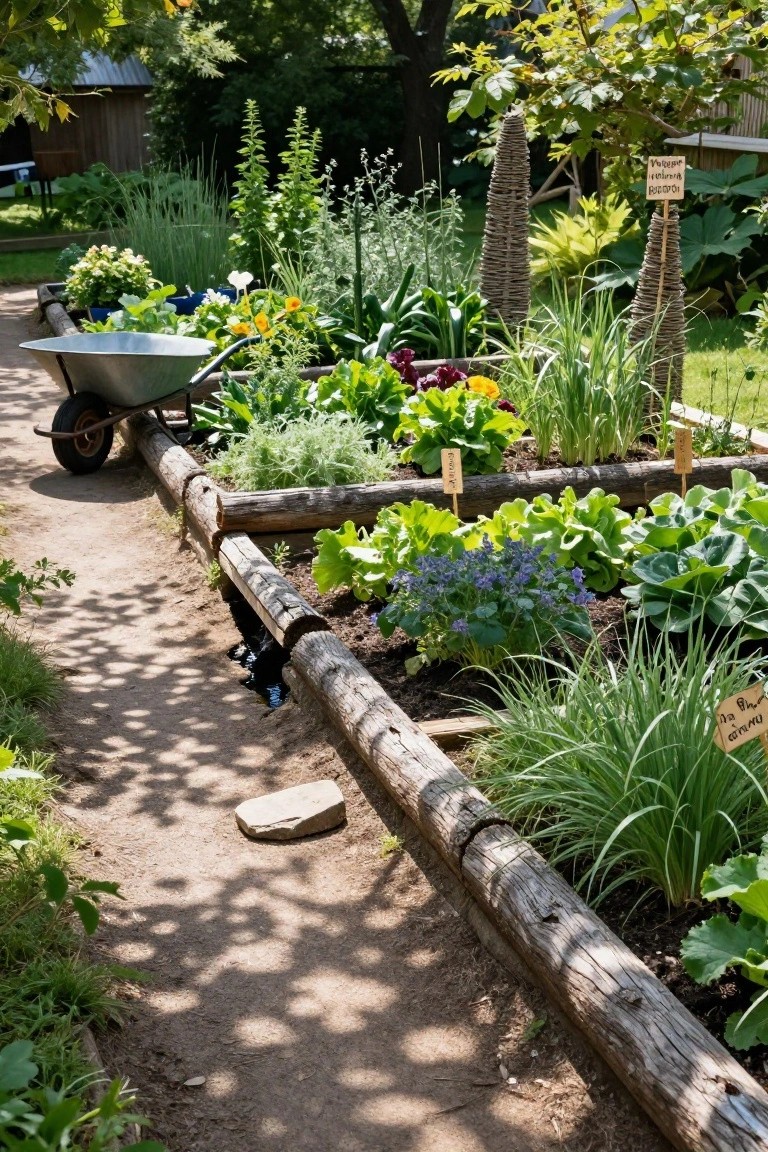
One simple way to make vegetable beds feel more at home in the yard is to edge them with rough-cut logs. Here, the split logs form sturdy borders around neat rows of greens, lettuces, and herbs, keeping soil in place while blending into the natural surroundings. That aged wood look adds a cozy touch without much fuss.
These work best in casual backyards where you want low-key charm over perfection. Stack logs a couple high on level ground, secure with stakes if needed, and fill with good soil. They suit most veggies, hold up a few seasons… just watch for rot in wet spots and refresh as they break down. A nearby path and wheelbarrow make tending easy.
Raised Garden Beds with Brick Edging
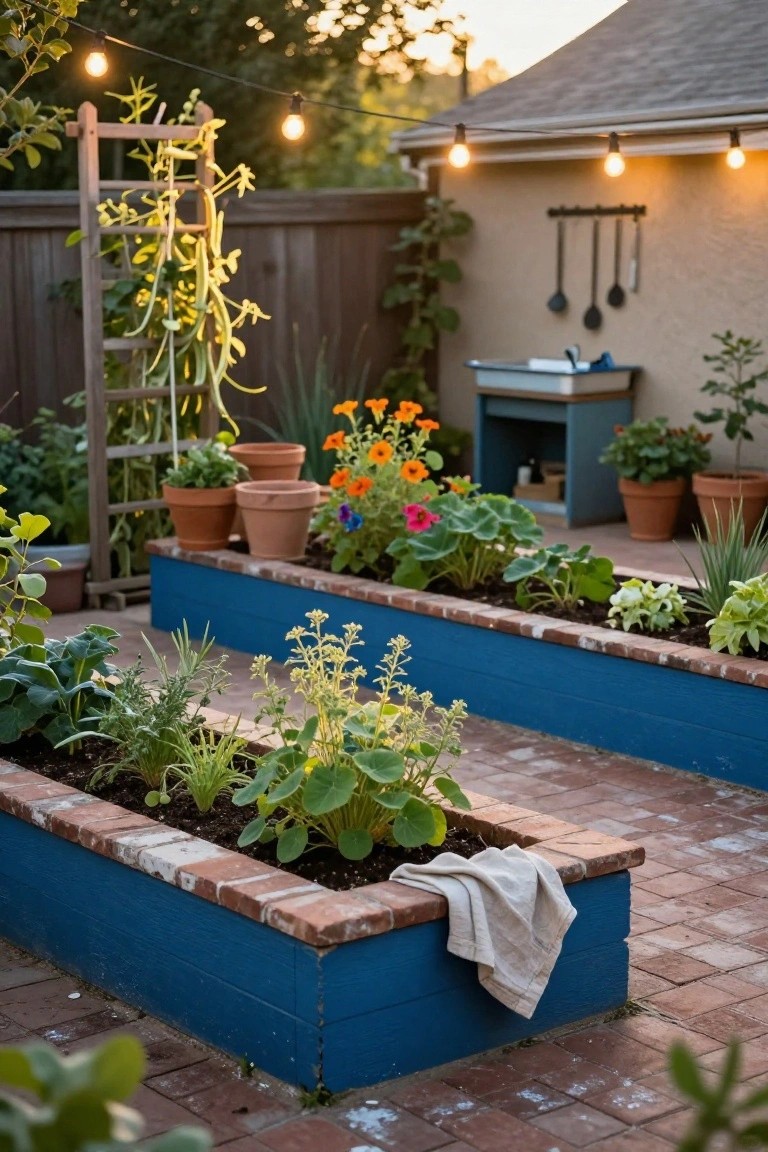
Raised beds like these make vegetable gardening straightforward and neat. The wooden frames get a fresh blue paint job that pops against the soil and plants, while the brick edging on top adds a sturdy, rustic touch. It keeps everything contained and off the ground, which helps with drainage and makes tending the veggies easier on your back. Pumpkins and herbs fill them out nicely here.
You can set these up in any backyard corner with decent sun. Use pressure-treated wood for the frames, paint it a color that fits your style, and cap with affordable bricks for that finished look. They work best in smaller spaces where you want a tidy garden without tilling the whole yard. Just keep the paint food-safe if you’re growing edibles close to it.
Vertical Planters on Garden Shed Walls
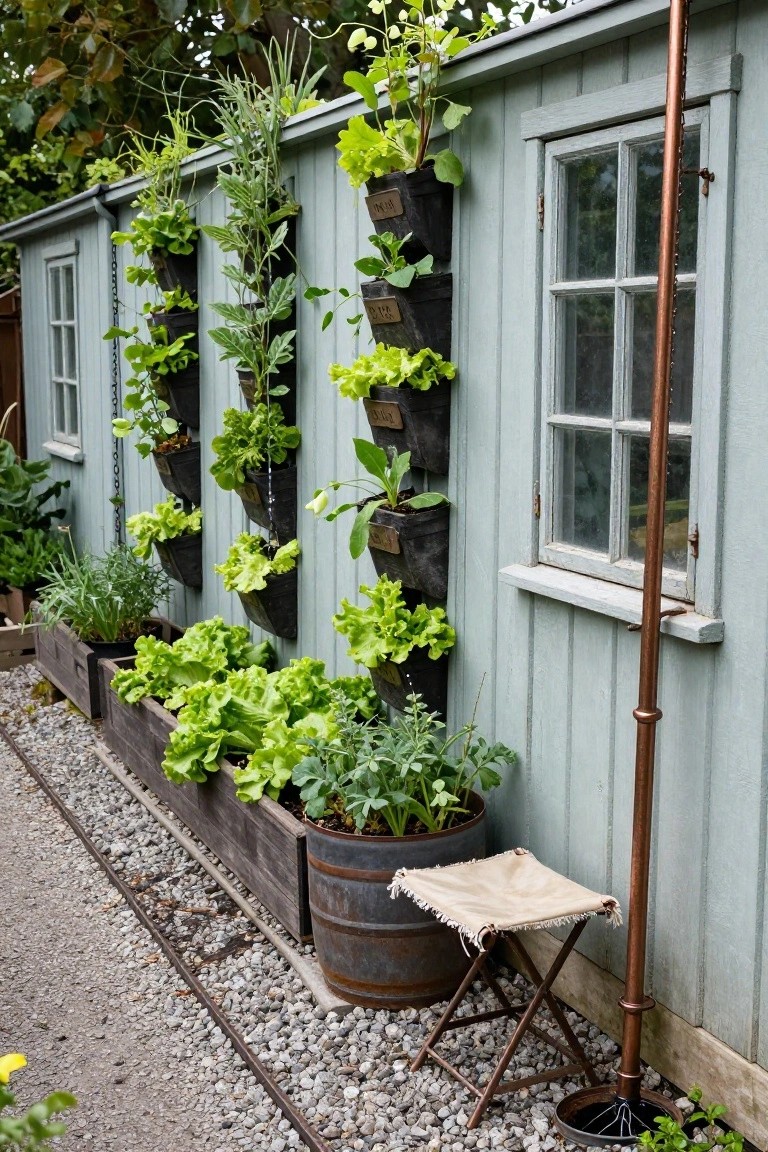
One smart way to fit more veggies into a small backyard is to grow them right up the side of a shed. Here black fabric pots hang in rows, bursting with fresh lettuce and greens. The rustic shed paint and simple labels on the pots keep it all looking cozy and practical, without taking up ground space.
This works best along a back fence or shed in a sunny spot. Hang them with chains or hooks that hold weight, and pick pots that let water drain. Add herbs in the mix for easy harvesting. Just check they get enough sun, or the leaves might stretch thin.
Brick-Edged Paths in Vegetable Gardens

A simple dirt path edged with red brick keeps things neat between raised beds full of climbing beans and flowers. That brick border adds a bit of structure to the veggie patch, making it feel more like a proper garden walk than just a dirt trail. It ties into the rustic vibe without looking too fussy.
You can do this in any backyard plot, especially if you have a greenhouse or shed at the end. Hunt for old bricks at salvage yards to keep costs down, lay them flat along the path edges, and fill beds with climbers like beans on wire frames. Just watch that the path doesn’t get too muddy in wet spots, maybe add gravel if needed.
Rustic Raised Beds with Burlap Liners
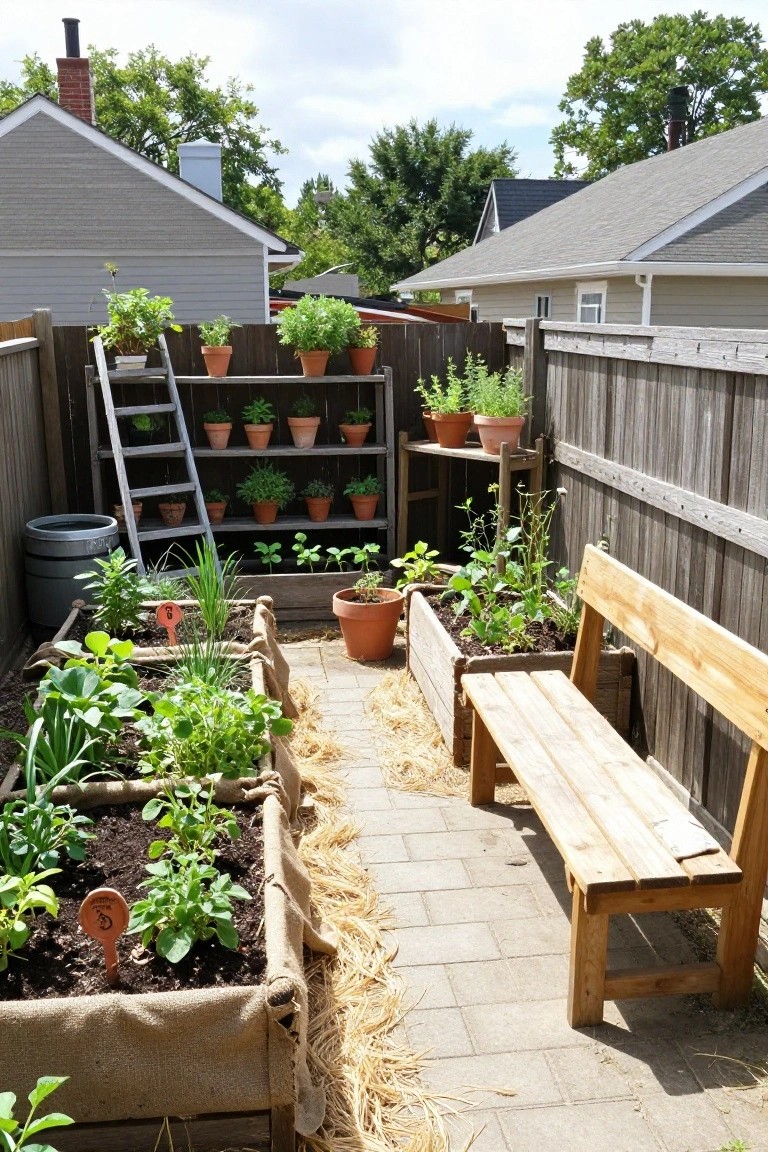
Raised garden beds like these, lined with simple burlap, make growing your own veggies feel easy and down-home. The fabric holds the soil while water drains through, and that natural woven look blends right into a backyard fence line. You see lettuce, herbs, and even potatoes thriving here without much fuss.
They’re perfect for tight spaces along a fence or house wall. Build frames from scrap wood, staple in the liner, and plant close together. Watch for burlap wearing out after a couple seasons, but it’s cheap to replace. Pair with a gravel path and plain bench to sit and check on things.
Raised Beds for Easy Veggie Growing

Raised beds turn a simple backyard patch into a productive spot without much fuss. Here, wooden frames hold pumpkins, carrots, and potatoes right at picking height. The straight sides keep soil in place and weeds out. A stone path runs between them, making it easy to walk and tend without compacting the dirt.
These work best in average yards with decent sun. Build them from scrap lumber or buy kits, about 4 feet wide so you reach across. Pair with a nearby shed for tools. Skip treated wood if you’re growing edibles. Just right for fall harvests like this one.
Rustic Raised Beds Tucked by the Fence

Raised beds like these make a small backyard corner feel like a real working garden. Built from rough stone blocks, they hold back the soil nicely and let plants like big kale leaves and chard grow without spilling over. The wooden fence right behind adds that cozy rustic touch, keeping everything contained and private.
These work best in tight spots next to a house or fence where ground space is limited. Stack up concrete blocks or old stones for the beds, fill with good soil, and add simple bamboo stakes for taller plants. Just watch for moss buildup on damp stone. It suits older homes with a natural yard vibe.
Rustic Raised Beds with Stone Walls
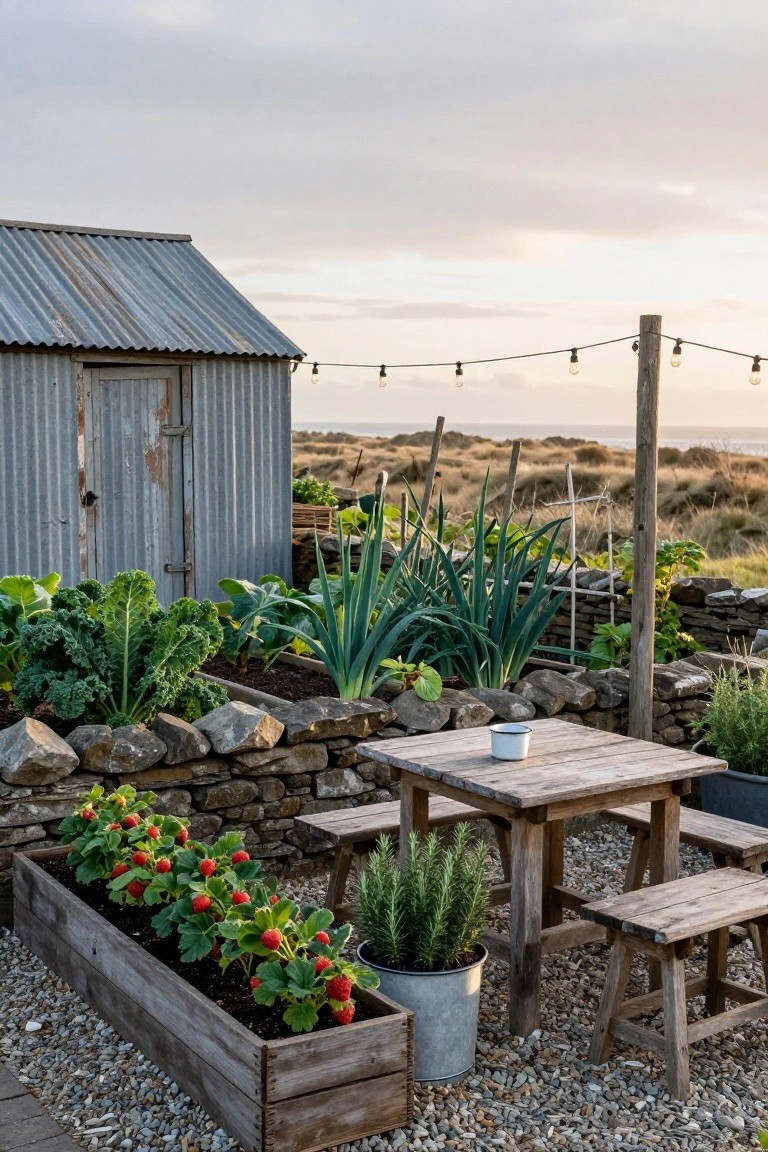
Raised wooden beds edged by rugged stone walls make a vegetable garden feel both tidy and natural. You get that cozy, lived-in look without much fuss. Here, strawberries spill over the wood edges, kale fills one bed thick and green, and leeks stand tall nearby. The gravel ground keeps it all simple and drains well after rain. It’s practical for growing your own food right where you can enjoy it.
These setups work best in small backyards or along a fence line, tying into the landscape without overpowering it. Use untreated wood for the beds so they age nicely, and source local stone for the walls to blend in. Skip fancy liners if your soil is decent. Plant edibles close to a path or seating spot like this wooden table. It turns picking veggies into a daily pleasure.
Raised Beds Shape a Cozy Veggie Garden
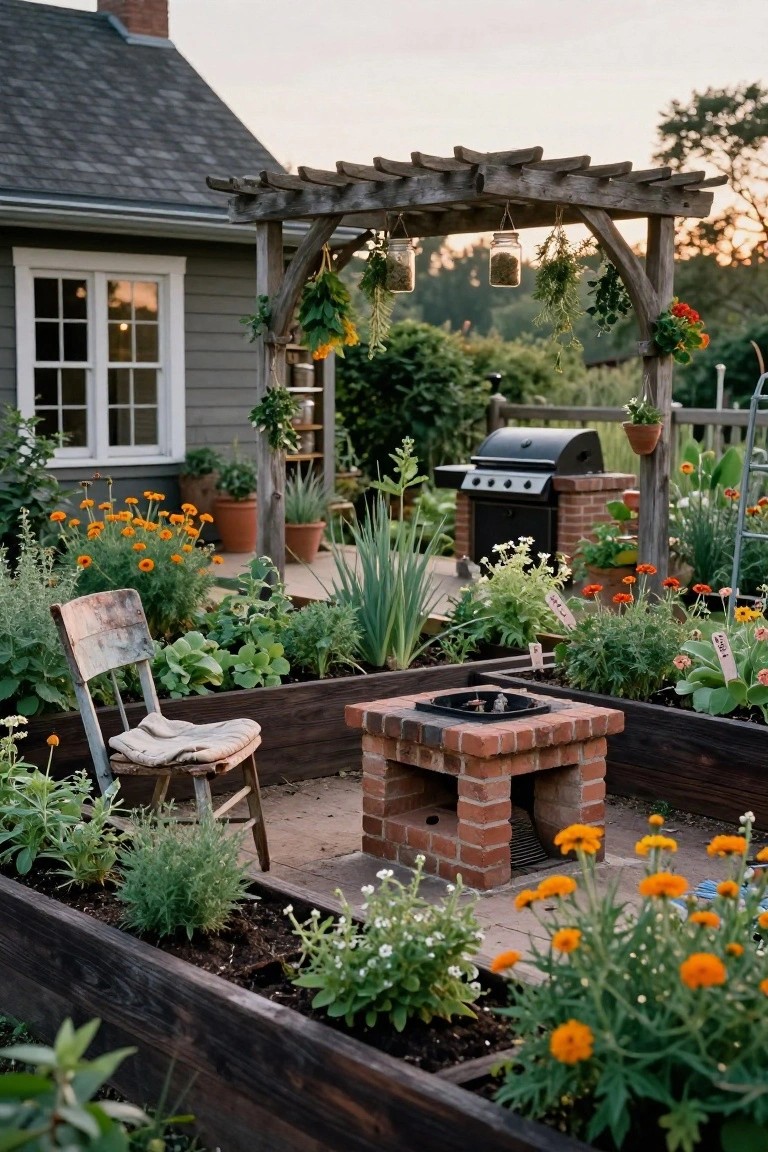
Raised beds like these keep everything neat and right at hand. The wooden frames hold back the soil and plants, making rows of greens, herbs, and bright marigolds easy to tend. That old chair nearby shows how it pulls into a spot for sitting back after planting.
Put them along a patio edge or near the house for quick harvesting. They work great in smaller yards, especially with a fire pit tucked in the middle for evenings. Just use untreated wood to stay safe around edibles, and keep beds no wider than four feet across so you reach everywhere without stepping in.
Rustic Ladder Herb Stand
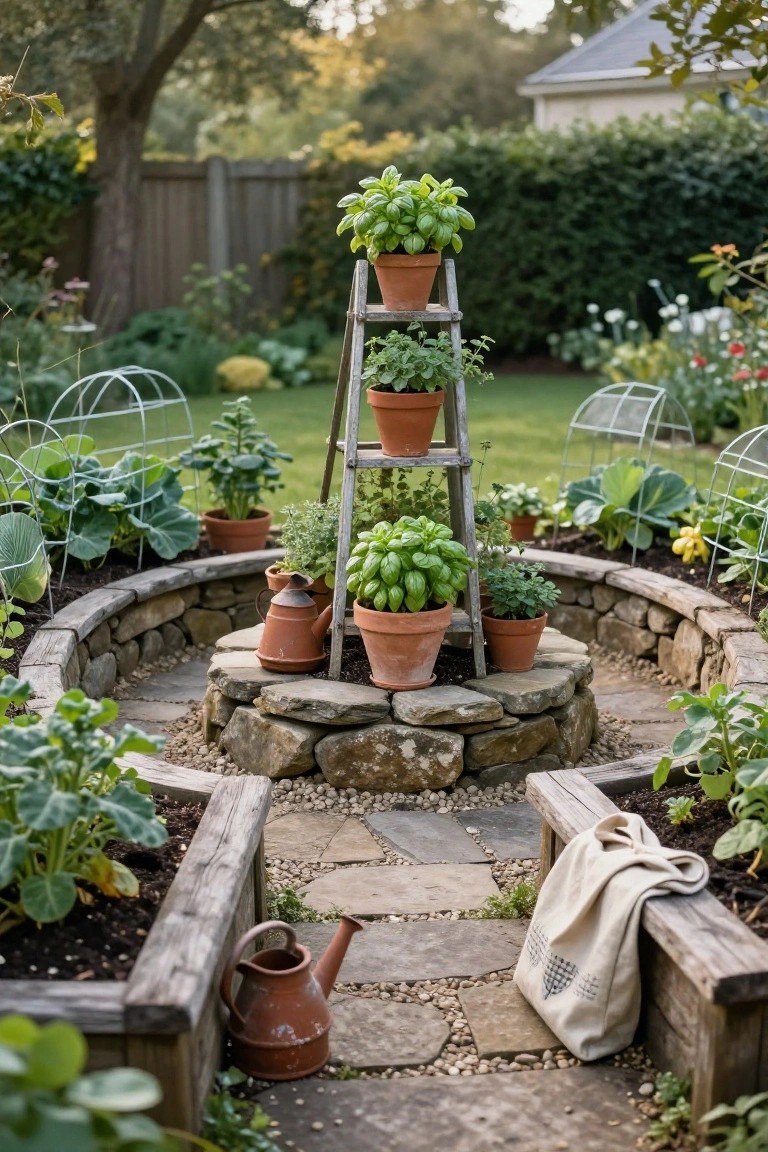
One simple way to add height and charm to a vegetable garden is turning an old wooden ladder into a tiered stand for herb pots. It sits right in the center here, loaded with basil and other greens in terracotta pots. This keeps the herbs handy for cooking while freeing up ground space for bigger plants like kale and tomatoes. The weathered wood fits that cozy backyard feel perfectly.
You can do this in any small garden spot along a path or near the kitchen door. Just prop the ladder steady on stone or gravel, and fill the shelves with pots you already have. It works best in sunny areas where herbs thrive. Watch that it doesn’t block walkways too much.
Rustic Garden Shed Work Station
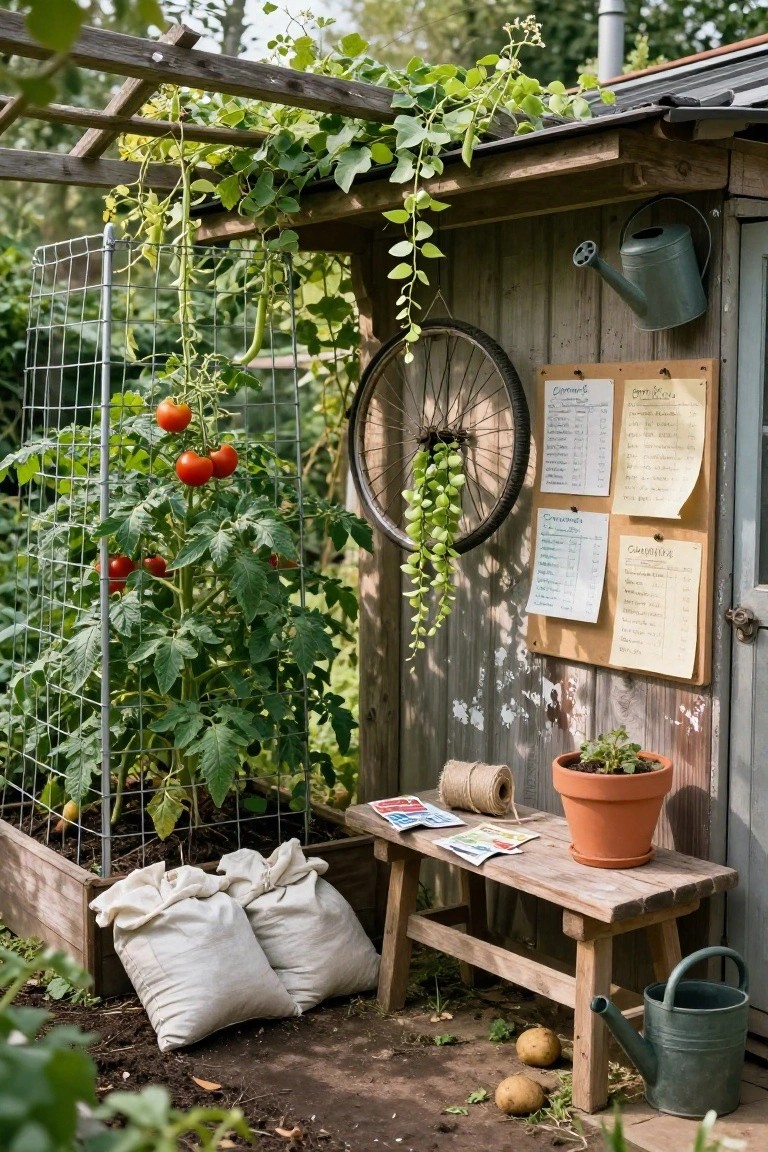
Nothing beats having your garden tools and notes right where the action is. This setup turns a simple wooden shed into the hub of a veggie patch. Tomatoes climb a sturdy wire trellis in a raised bed next to it, beans hang from the pergola above, and harvest lists pinned to the wall keep track of what’s ripening. A rough bench holds seed packets and twine. It’s practical. And that old bike wheel planter adds a fun recycled touch without trying too hard.
Set one up in a sunny backyard corner where space is tight. Bolt a metal grid to raised beds for support, hang your lists with clips, and tuck a bench nearby for potting or resting. Works great for beginners or anyone short on room. Just make sure the shed door swings free.
Raised Beds with Trellis Supports
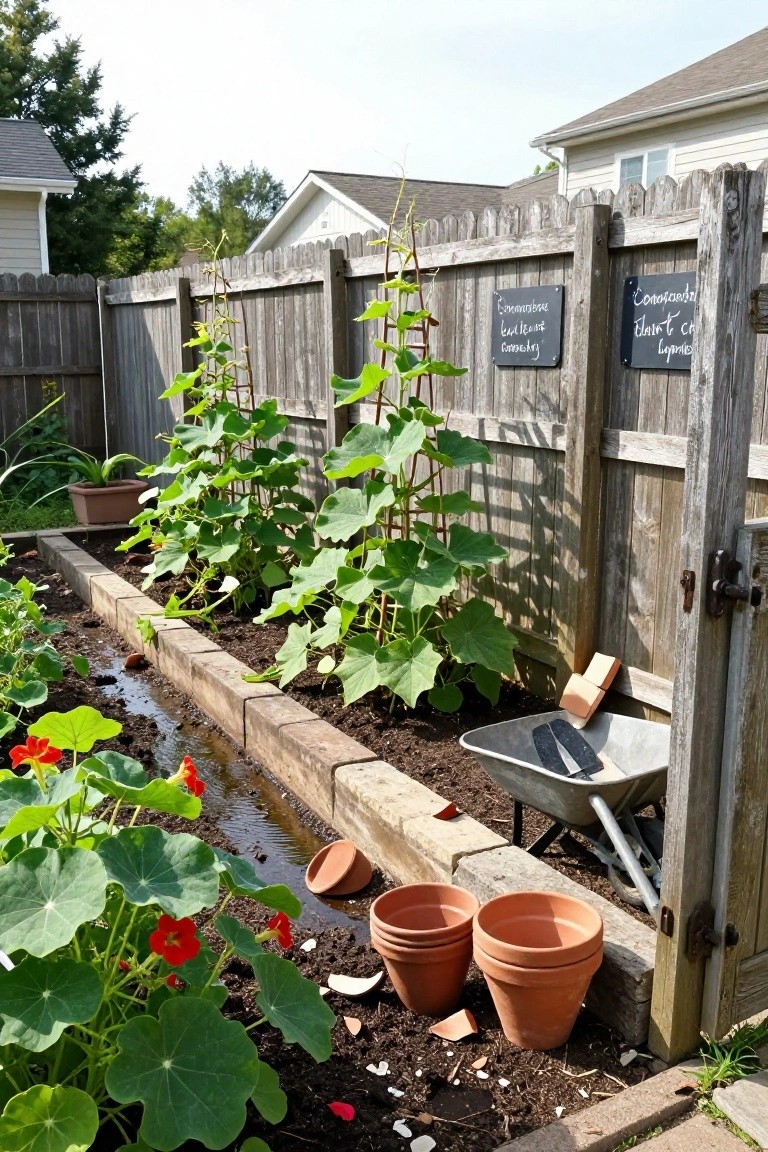
One straightforward way to fit more veggies into a small backyard is raised beds paired with simple trellises. Here, tall squash plants climb up wood and wire supports right along the fence. It keeps the plants off the ground, saves space, and gives that cozy, working garden feel without much fuss.
These setups work best in narrow spots next to a fence or wall. Use untreated wood for the beds to keep things rustic and rot-resistant. Add labels on the fence like the ones for cucumbers and squash to stay organized. Watch for heavy vines pulling things down, so stake the trellises well.
Woven Edging for Raised Garden Beds

One simple way to add charm to a vegetable garden is with woven willow edging around your raised beds. It keeps soil in place while looking natural and folksy, like something from an old farmstead. In this setup, the light-colored hurdles stand out against the dark earth and greens, without overpowering the plants or fruit trees nearby.
These panels are easy to install. Just stake them into the ground along your bed frames. They suit average backyards best, especially if you want low upkeep that ages nicely over time. Watch for damp spots though… willow can rot if it sits in constant water.
Terrace Gardening with Raised Beds

Raised wooden beds like these make it simple to grow your own veggies on a rooftop terrace or balcony. The sturdy frames hold soil neatly, letting plants like lettuce and beans climb trellises without spilling over. That rustic wood finish fits right in with the cozy backyard feel, even up high in the city.
These work best in tight spots where digging isn’t an option. Size them for waist height to save your back, line the paths with gravel to keep things tidy, and add a spot to sit nearby. Watch the sun though… too much up top can dry things out fast.
Fire Pit in the Vegetable Garden

Putting a fire pit smack in the middle of your vegetable garden changes the whole backyard feel. It’s a natural gathering spot that lets you enjoy the warmth while looking at what you’ve grown. The stone circle keeps it simple and sturdy, blending right into the raised beds full of greens and herbs. Evenings here feel easy and right at home.
To pull this off, use rough local stone for the pit base and surround it with practical garden beds. Tuck in a wood chair nearby and hang string lights from an overhanging tree. It suits compact yards perfectly, where you want to grow food but also unwind. Watch the sparks around anything too dry.
Frequently Asked Questions
Q: How do I start a rustic veggie garden on a tight budget?
A: Scour your garage or neighborhood for old pallets and bricks to build simple raised beds. Plant seeds from last year’s harvest or swap with friends to skip buying starters. Quick wins like these keep costs low and the charm high.
Q: What veggies fit best in a small backyard rustic setup?
A: Go for compact growers like cherry tomatoes, bush beans, and lettuce heads. They tuck neatly into beds and deliver fresh picks all season. Cluster them with herbs for that overflowing, cozy feel.
Q: How do I make raised beds look authentically rustic?
A: Weather old wood with a brush of linseed oil, then rough up edges with sandpaper. Scatter mossy stones around the base. Your beds blend right into the backyard vibe.
Q: Any easy tricks to fend off pests naturally?
A: Brew garlic and chili sprays from kitchen scraps, then mist plants weekly. Tuck marigolds between rows, they chase bugs away. And watch your harvest thrive without harsh chemicals.
