


I’ve always believed small yards and decks shine brightest when vegetable gardens fit snugly into the layout without stealing room from everyday paths or seating.
I tested a few raised beds along my fence line last year, and they not only boosted our harvests but also framed the space in a way that made it feel larger.
What draws the eye first in these setups is usually the smart vertical planting or tiered planters that turn tight spots into thriving layers.
Too many sprawling vines can quickly choke off access, turning a promising garden into a hassle.
These approaches give you real options to adapt and plant what grows best in your corner of the world.
Raised Planters for Balcony Vegetable Gardens

Raised wooden planters like these hug the balcony edge and let you grow tomatoes, basil, and lettuce in a tight space. They keep the soil contained and off the deck floor. Plus, you get fresh picks steps from your chair. It’s a practical way to add homegrown food without crowding the whole area.
These work best on urban decks or small balconies with decent sun. Use rot-resistant wood, make sure the boxes drain well, and don’t overload with heavy soil. A folding table nearby makes harvesting easy… and keeps it feeling like a spot to hang out.
Raised Bed with Trellis Arch for Tight Spaces
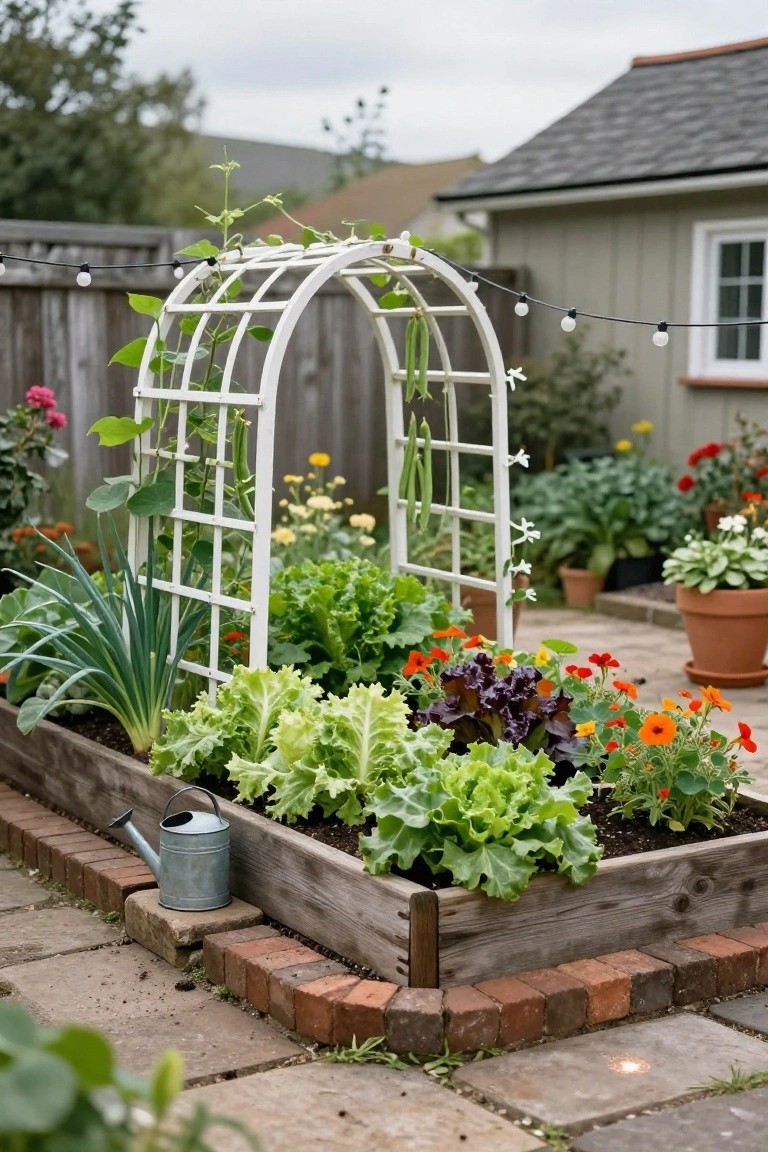
A raised wooden bed like this one makes good use of every inch in a small yard. The white arched trellis spans one end, letting beans and vines climb up while lettuce, scallions, and greens fill the soil below. That vertical lift keeps things productive without spreading out too far.
Set it up on a patio or against a fence where you get some sun. Use rot-resistant wood for the bed and a lightweight metal or wood arch that bolts on easy. Plant trailers high and bushy stuff low. It fits decks too… just make sure the trellis stays put in wind.
Raised Metal Planter for Compact Patios

This setup uses a simple raised metal planter box right next to the benches. It’s packed with herbs and young veggies like peppers and greens, keeping everything handy for small outdoor spots. The clean steel look fits modern patios without taking up much room, and that vertical pepper stalk on the pole adds height without spreading out.
Put one of these in a corner or along a wall on decks or tiny yards. It works great where you want fresh picks during meals… just water from the can nearby. Go for rust-proof metal to last, and mix in climbers on poles for more yield in tight spaces.
Potted Vegetables on a Raised Ledge

A simple raised ledge like this one turns a narrow strip along the house into a productive veggie spot. Terracotta pots with eggplants, marigolds, and herbs sit right on the blue tiles, making the most of sunny wall space without taking up yard room. The gravel ground keeps it low fuss, and shadows from the olive tree add nice breaks in the heat.
This works best in tight yards or on decks where flat space is short. Line up pots on any low wall or build a short tiled one yourself. Stick to heat-loving plants, group flowers with veggies to help against bugs, and watch water doesn’t pool on the ledge.
Mini Greenhouse on the Deck

A small greenhouse like this makes it easy to grow your own salad greens and herbs right on a deck or in a tight yard spot. With shelves for potted plants up top and long trays below packed with lettuce and other greens, you get a lot of produce without taking much room. The wooden frame and glass panels keep things protected from weather, and a simple thermometer helps track conditions inside.
This works best in small backyards or on decks where ground space is limited. Set it up near the house for easy access, add string lights if you like tending plants at dusk, and focus on quick growers like lettuce or basil. Just make sure good airflow to avoid damp issues, and it’s a practical way to have fresh veggies all season.
Raised Planter Box for Deck Vegetables

A raised planter box like this one turns a plain deck corner into a real veggie garden. It’s just an old wooden box painted blue, filled with pots of tomatoes, herbs, lettuces, and even strawberries. The weathered paint gives it that lived-in look that fits right into outdoor spots, and stacking the pots saves floor space while letting roots spread out.
This setup works best on small decks or balconies where ground planting isn’t an option. Pick a box about two feet high to avoid back strain when tending plants, and group sun-lovers like tomatoes together. Add hanging baskets overhead for extra tomatoes… keeps the deck clear for seating. Good for coastal homes or anywhere with a view.
Stepping Stone Paths in Gravel Beds

One straightforward way to fit a garden path into a tight space is laying large stone slabs right into gravel. You see it here with those gray pavers set into black pebbles, leaving room for plants to spill over the edges. It saves space since there’s no need for solid edging or wide borders. Plus the gravel handles water well and cuts down on mud after rain.
Try this along a fence or in a skinny side yard for your compact veggie setup. Space the stones just far enough to step comfortably, then fill the beds with lettuce, herbs or whatever rows you want. It keeps foot traffic off the soil so plants stay healthier. Skip it if your area floods a lot though, gravel can shift.
Raised Planters from Wooden Crates
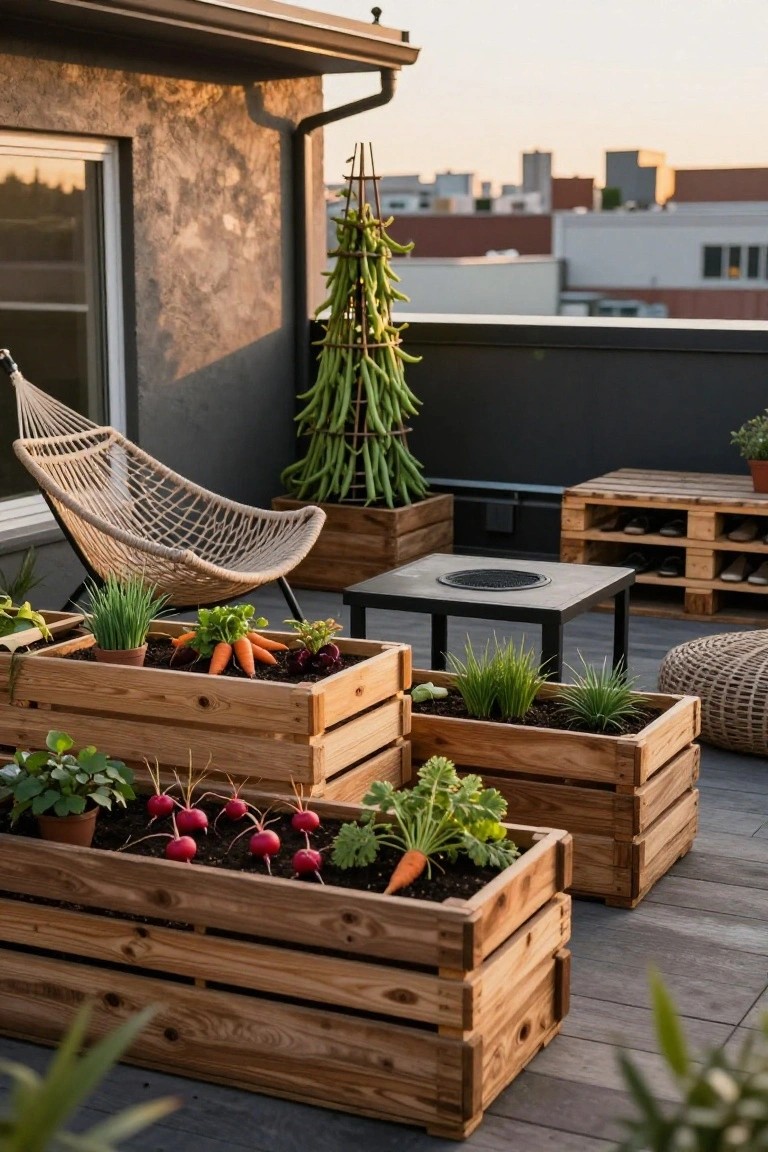
One smart way to grow veggies in tight spots is stacking wooden crates into raised planters. They hold carrots, beets, beans on a trellis, and greens without crowding the deck. This keeps soil off the floor and makes tending easy from a standing height. Plus it fits right into balcony life.
Try this on rooftops, small patios, or urban decks where ground space is limited. Line the crates with landscape fabric first for drainage. Use untreated wood or seal it to last longer. Pair with simple seating like a hammock chair and you have your own produce spot.
Balcony Railing Vegetable Planters

One smart way to grow veggies in tight spots is to use railing planters like these wooden ones. They hold herbs such as rosemary, basil, and thyme right along the balcony edge, plus kale in a lower box. This setup frees up the floor for a little table and stool, so you get fresh produce without crowding the space. It’s practical for sunny spots where plants thrive.
These work best on sturdy railings in apartments or small decks. Pick rot-resistant wood and make sure there’s good drainage to avoid water buildup. Add a side table nearby for easy harvesting… keeps everything handy for cooking. Just check local rules on weight limits first.
Terraced Raised Beds for Sloped Yards

If your yard slopes away from the house, terraced raised beds make good use of that space for vegetables. Stacked wooden boxes create flat planting areas that step down the hill, like these filled with greens, beans, and pumpkins trailing up a simple trellis. It keeps soil in place and lets you grow more without needing level ground.
This setup works best in small backyards where flat space is limited. Build beds from affordable cedar planks, about 12 inches high, and connect them with wide steps for easy walking. Plant sun-lovers on top tiers and shade-tolerant stuff lower down. Just make sure good drainage so roots don’t stay wet.
Vertical Ladder Planter for Greens

A wooden ladder-style planter like this one takes advantage of wall space in tight spots. Leaning right against the brick, it stacks shelves with lettuce, herbs, and greens so you get a bunch of produce without eating up ground area. It’s practical and looks right at home outdoors.
Build or buy one with open slats for easy planting, and line the back with landscape fabric to hold soil but let water drain. Shallow-rooted veggies do best here. Fits small yards, decks, or even balconies. Watch the weight if it’s against siding.
Raised Beds Along a Gravel Path
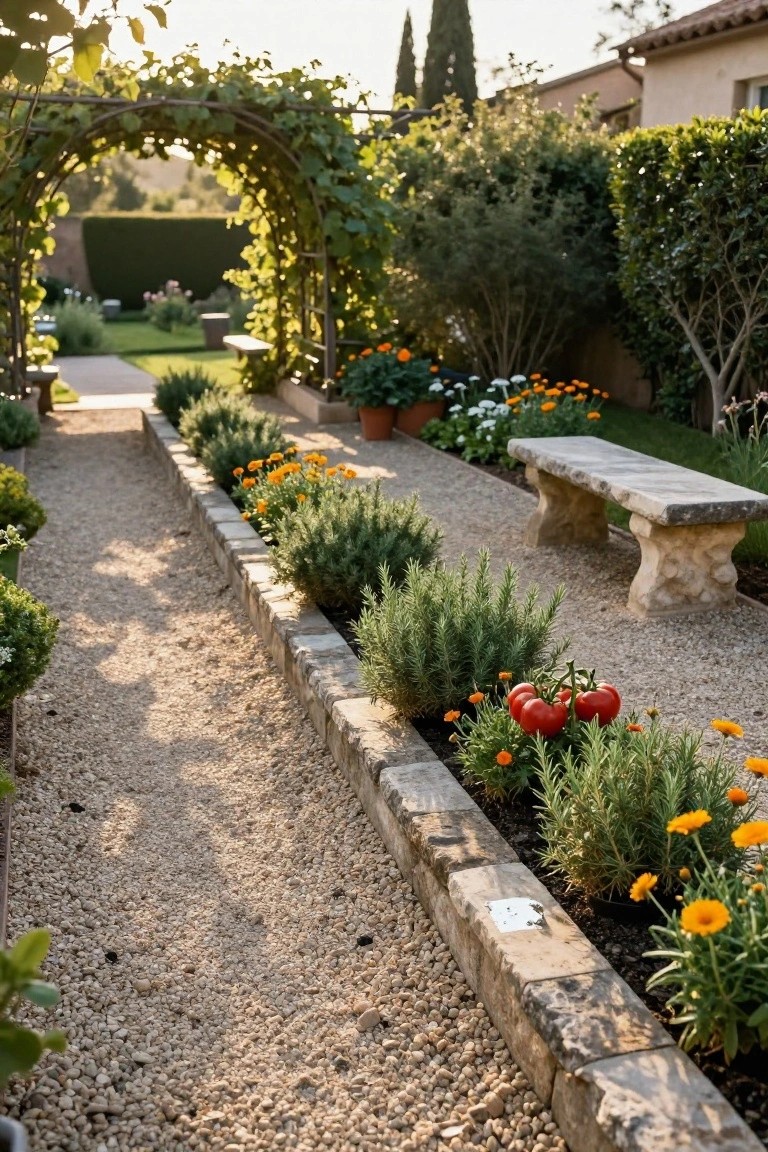
One smart way to fit veggies into a tight yard is lining a simple gravel walkway with low stone beds. You tuck in rosemary bushes, marigolds, and even tomato plants right along the edge. It turns a plain path into a productive stretch without taking extra room. The stone keeps soil in place and gives a clean look that lasts.
This works best in narrow spots like side yards or between a deck and fence. Pick compact growers that don’t sprawl. Add a bench halfway for picking produce on the way. Watch the gravel doesn’t shift too much underfoot.
Slim Herb Planter Between Deck Benches

A narrow metal trough planter slips right into the corner between two built-in bench seats, turning unused space into a fresh herb garden. Packed with parsley, lettuce, and a few other greens, it stays out of the way but close enough to grab leaves while you sit. The gray metal handles make it easy to lift out for tending, and it fits small outdoor spots without crowding the seating or nearby teak table.
This works best on decks or patios with L-shaped benches where you have that tight nook. Pick a planter about 2 feet long to match the scale. Go for bushy, compact varieties that won’t flop over onto the navy cushions. Keep soil simple and water regularly since it’s right by the action. Perfect for renters too, as it’s movable.
Dwarf Apple Trees in Pots for Balconies
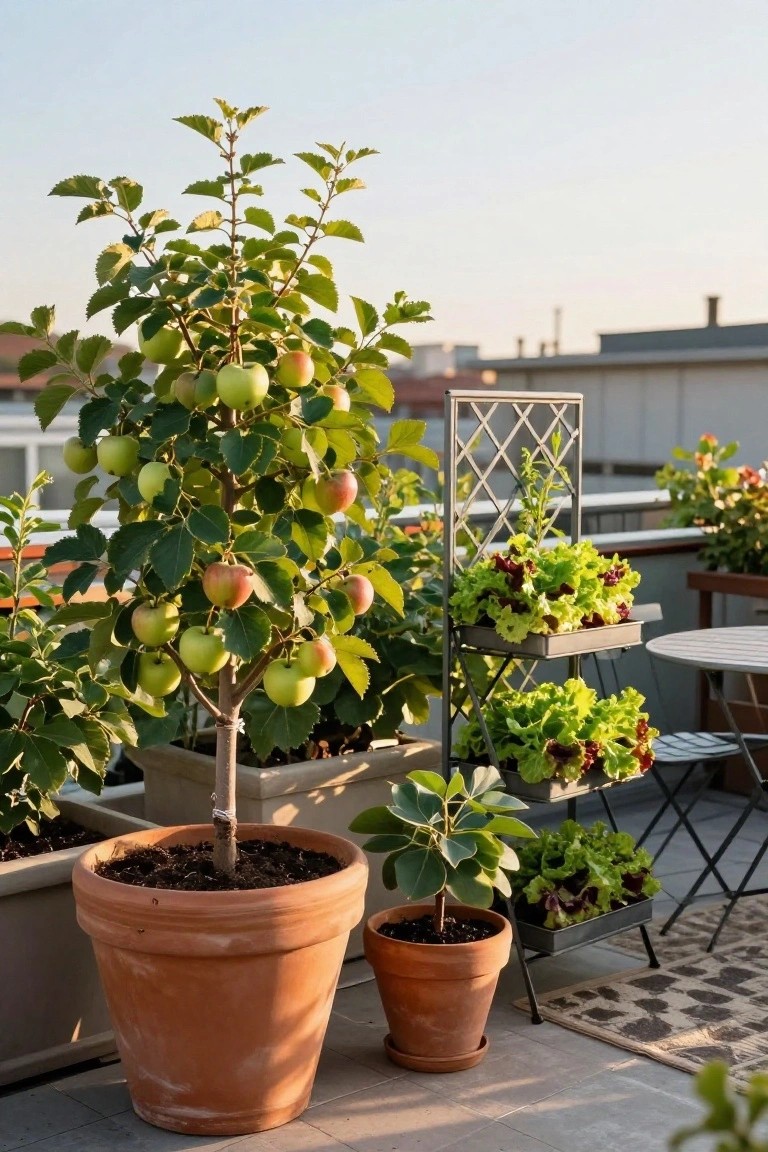
A dwarf apple tree growing in a large terracotta pot makes fresh fruit possible even on a small balcony. You see it here with green and red apples hanging from the branches, surrounded by simple potted plants. This approach saves space and turns a deck or terrace into a real producer without needing a full yard.
Choose dwarf varieties that stay under 10 feet tall, and plant in oversized pots with plenty of drainage holes. It works best on sunny spots facing south, paired with vertical planters for greens like lettuce. Keep soil rich and water regularly, especially in pots. Urban apartments or tight patios take to this well.
Fence-Line Raised Beds for Tight Spaces

One smart way to fit a vegetable garden into a small yard is lining up raised beds right along the fence. This leaves the center open for walking or play, while the plants get plenty of sun against the wood. Here you have spinach and onions growing thick, with drip lines keeping things watered easy.
It works best in narrow backyards like this one, where every inch counts. Use scrap wood or pallets to build the beds cheap, keep soil deep enough for roots, and add a mini greenhouse at one end for starting seeds. Just make sure good drainage so roots don’t drown.
Porch Table Herb Garden

A wooden console table pushed against the porch wall holds four pots of fresh herbs. Chives in a tall pot on one end. Parsley and basil in white pots. Another basil in a copper pot that picks up the wall light. This keeps things compact and right where you grab them for cooking. No yard needed.
It works best on narrow porches or decks near the kitchen door. Use pots that fit the table without crowding. Mix clay and metal for a little style. Herbs stay happy with that evening light. Easy to water and snip from. Watch the table doesn’t get too wet though.
Vertical Pallet Herb Garden

One smart way to fit more plants into a tight spot is turning an old pallet into a wall planter. You mount it flat against the side of a shed or garage, then tuck terracotta pots with herbs into the slats. Labels on the wood make it easy to spot basil or rosemary at a glance. It saves ground space and gives herbs the sun they need without crowding the yard.
This setup works best next to a sunny wall in a small yard or even on a deck edge. Use pressure-treated pallets if they’re out in the weather, and pick shallow-rooted herbs that won’t dry out fast. Add a wheelbarrow of flowers nearby for color. Keeps things practical and pretty without much fuss.
Compact Spiral Herb Garden

A spiral garden like this one packs a lot of growing space into a small footprint. Built with stacked stone blocks that curve into a tight spiral, it lets you plant herbs and low veggies right in the center and along the coils. The gravel path winds through it, making it easy to reach everything without stepping on plants. It’s a smart way to fit more in a yard that’s already full.
You can set this up in any sunny corner of a small yard or even on a deck with a sturdy base. Start with affordable fieldstone or bricks, fill with soil suited to herbs like thyme, rosemary, and basil, and add a simple bench nearby for picking time. Keep it under three feet across to stay compact… just watch for good drainage so roots don’t rot.
Balcony Trough Planter for Greens

A long white rectangular planter box like this one makes it easy to grow your own salad greens right on a balcony. It’s filled with different lettuces and herbs, all thriving in a neat row. What stands out is how much food it produces in such a small footprint. No yard needed.
Put one along a railing or wall on your deck or balcony. Use good potting soil and pick easy growers like lettuce or basil. It works best in sunny spots with some afternoon shade. Watch the watering, since these dry out faster than ground plants.
Circular Raised Bed Vegetable Garden

A circular raised bed like this one makes growing veggies easy in a small yard. Built from sturdy brick, it holds plants such as kale and onions right around a central stone circle that doubles as a fire pit. The round shape gives you access from all sides without stepping in, and it fits neatly against a wall or in a corner.
This works best tucked into a sunny patio spot or deck edge where space is tight. Stack bricks two or three courses high for the bed, add drain holes at the base, and plant quick growers like leafy greens or herbs. Keep the center low for that fire feature… just watch for good airflow to avoid damp soil.
Vertical Vegetable Gardening with Hanging Macrame

Hanging your veggies in macrame planters turns empty balcony air into growing space. Tomatoes dangle right alongside herbs and greens, all thriving without crowding the floor. It leaves room for that simple wicker chaise, so you still have a spot to sit and enjoy the garden.
This setup fits tight decks or apartment balconies best, especially if you get good sun. Use strong cords that handle wet soil weight, group plants by light needs, and keep a watering can handy. Watch for drips on seating below… but it’s worth it for fresh picks steps from your door.
Frequently Asked Questions
Q: Can I grow tomatoes on my tiny deck?
A: Pick dwarf or patio tomato varieties that top out at three feet. They produce loads of fruit in pots as small as five gallons. Stake them early to keep everything tidy.
Q: What’s the secret to watering container veggies without messing up?
A: Poke your finger an inch into the soil each morning. Water deeply only when it feels dry. Add a layer of mulch on top to lock in moisture longer.
Q: My spot gets mostly morning sun. What veggies thrive there?
A: Go for lettuce, spinach, and kale – they love that gentler light and bolt less in heat. Swiss chard handles it too with pretty stems.
Q: How do I pick containers that won’t flop over in wind?
A: Choose heavy ceramic or fill plastic pots halfway with rocks for stability. Wide bases beat tall skinny ones every time. Group them close together for mutual support.
