

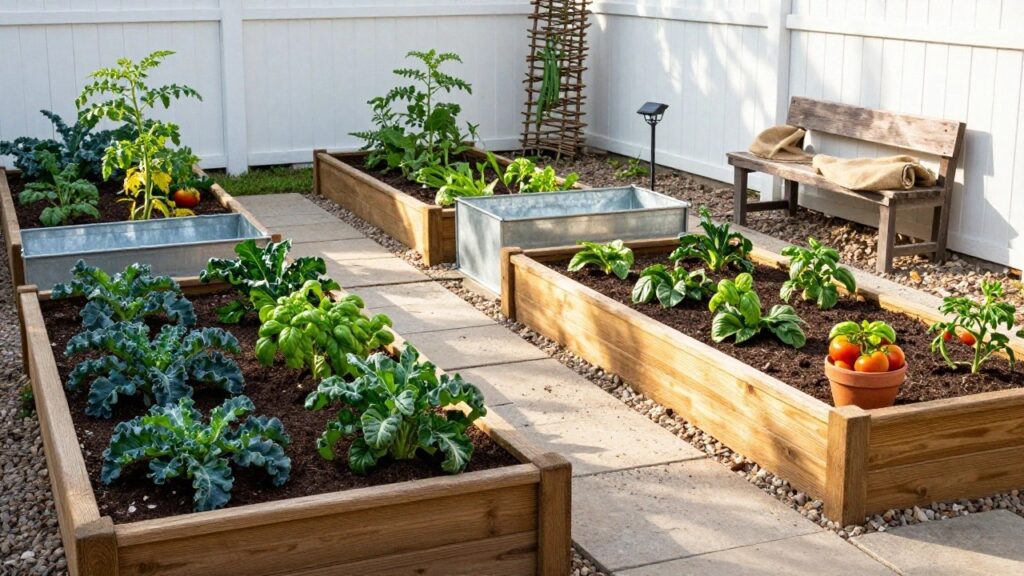
I’ve spent enough time digging in my own yard to know that raised vegetable gardens bring a sense of order to backyards that sprawl too easily into chaos otherwise.
They shape the space with clean lines and thoughtful edging that guide your eye along paths and planting zones, turning a simple plot into something structured over time.
What stands out most to visitors is usually how the beds frame the whole layout, making even modest yards feel polished and purposeful.
I adapted a couple of these for my sloped spot last year.
Save the ones that match your sunlight and access points, because they really elevate the backyard without much ongoing fuss.
Raised Metal Beds for Vegetables

One simple way to get a sharp vegetable garden is with these tall metal raised beds. They have that rusted steel finish, like corten, which looks right at home next to stone patios and plain walls. You see peppers, greens, and herbs spilling over the edges, all neat and productive without feeling messy. It keeps the yard feeling modern and put-together.
These work best in smaller backyards or city spots where you want growing space but not a big sprawl. Build them to double as seating with a bench on top, like here. Just line the inside to stop rust on roots, and pick beds about two feet high for easy reaching. They hold up well year-round too.
Round Raised Beds for Herbs and Veggies
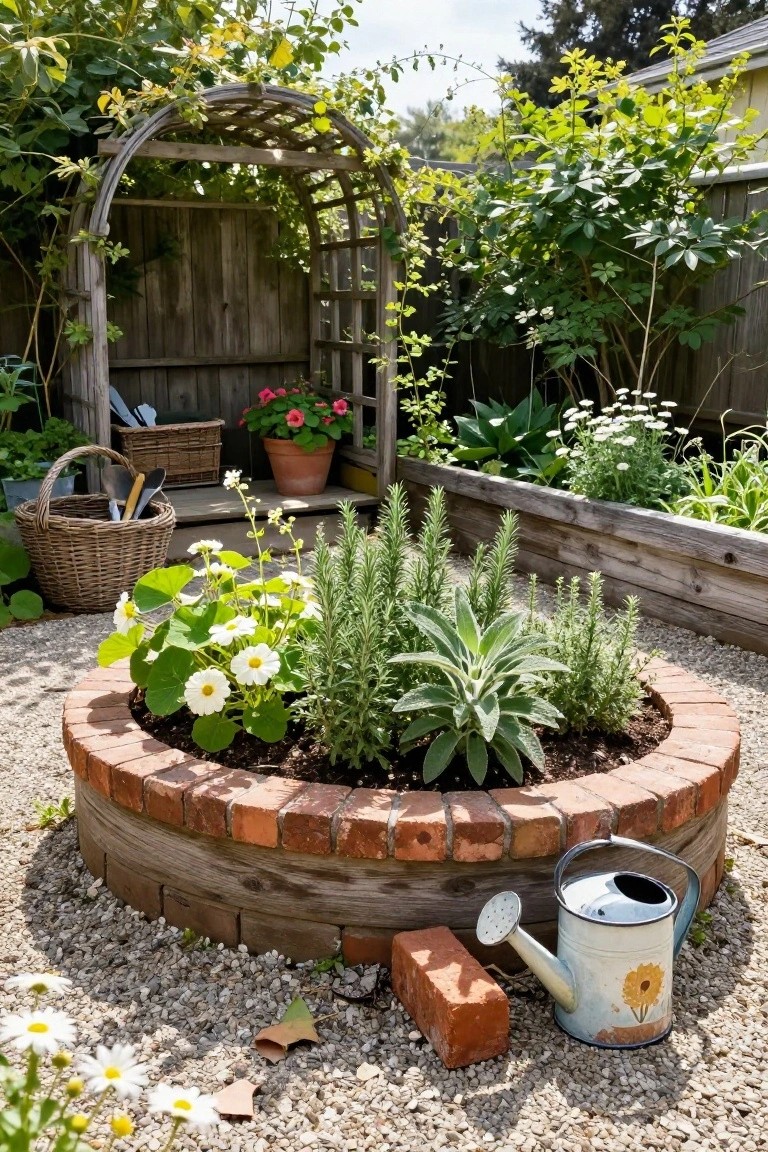
A round raised bed like this one pulls together a tidy spot for herbs right in the gravel yard. Bricks form the low circle, holding soil for rosemary, salvia, and flowers that spill just a bit over the edge. It feels contained and polished without taking up much room. The gravel around it keeps things clean and simple.
You can make one with old bricks or even a cut tire rim lined up neat. Plant low growers inside so you reach everything easy. Fits best in small backyards or along fences where straight beds feel too boxy. Just watch the soil doesn’t wash out in heavy rain… add a liner if needed.
Concrete Raised Planters for Urban Gardens
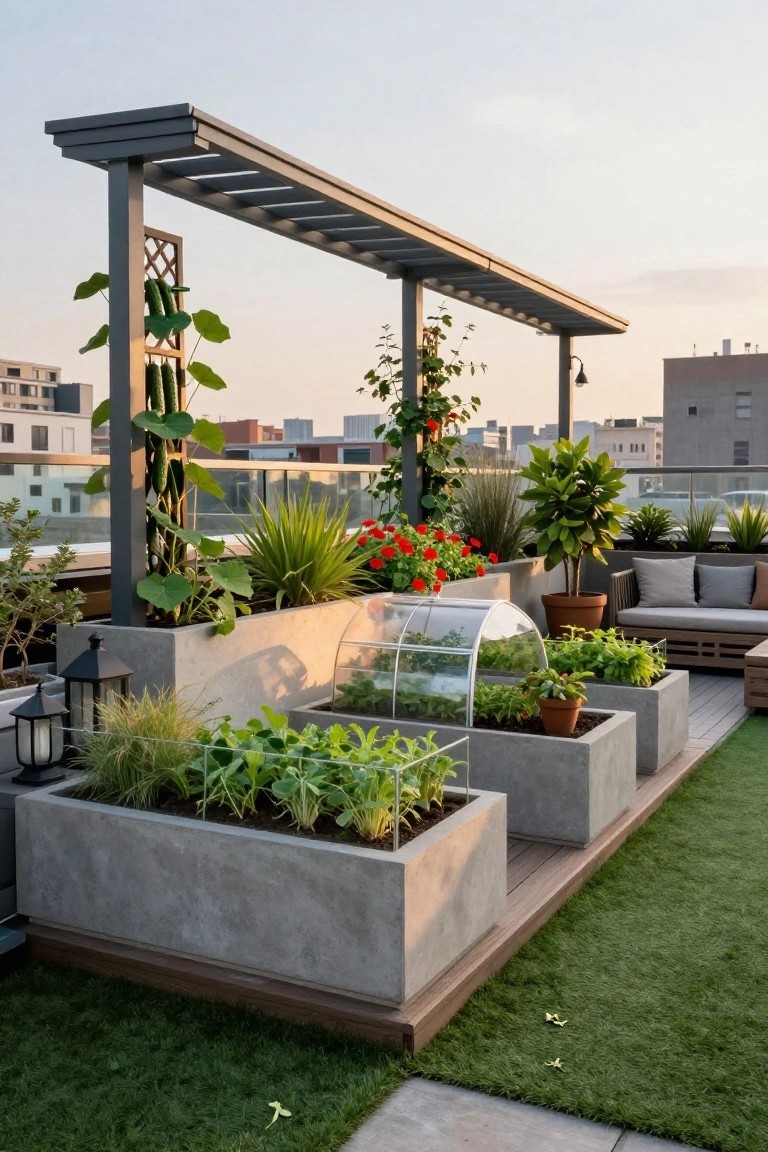
Concrete raised planters like these keep things simple and sturdy for growing veggies right on a terrace or deck. They’re tall enough to work without bending over much, and the smooth gray finish fits a modern backyard setup. Climbing plants like cucumbers grab onto the nearby lattice for support, making the whole area feel productive without looking messy.
These work best in small outdoor spots, like rooftops or patios, where you want low upkeep and a polished edge. Line a few up along one side, add a mini greenhouse for starting seeds, and you’ve got fresh produce close to the house. Just make sure they’re well-drained to avoid root issues.
Raised Beds Built into Stone Walls
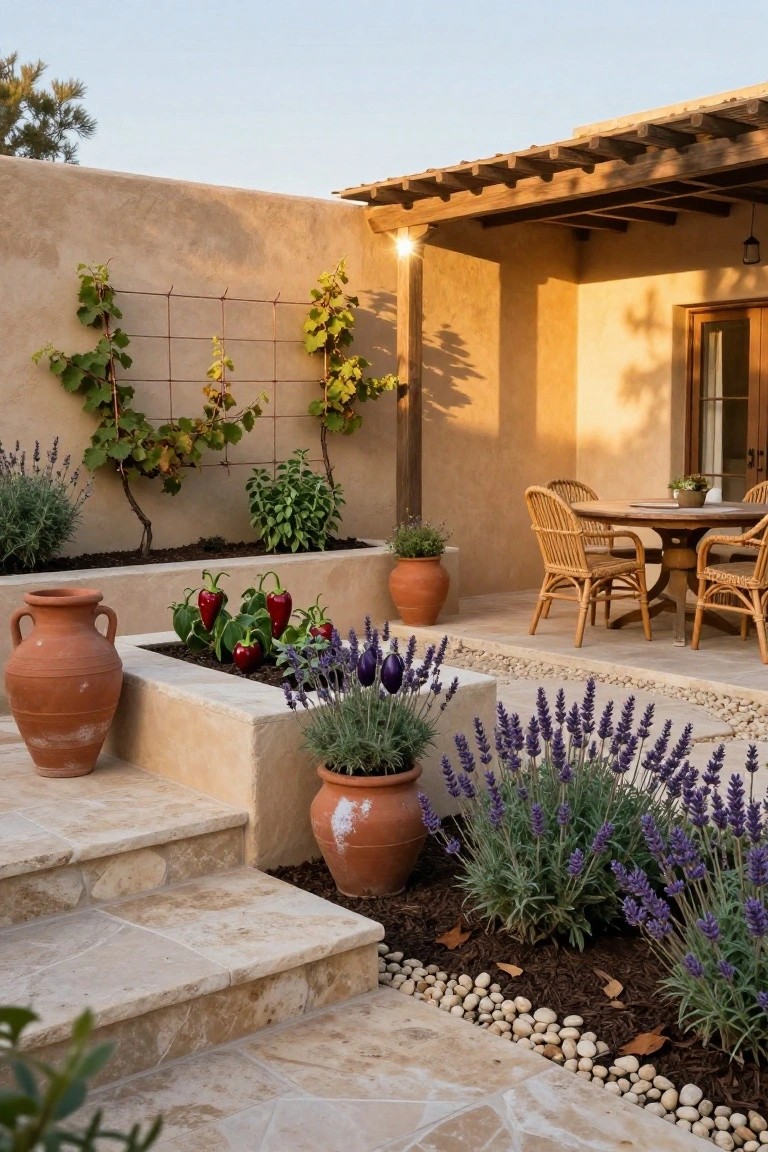
Raised beds tucked right into stone walls like this make vegetable gardening feel built-in and easy. You see peppers and herbs thriving in those low stone planters, with grapevines climbing a simple trellis above. It keeps everything contained and off the ground, which is great for better soil control and fewer weeds. The look stays clean because the stone matches the patio steps and house walls.
Try this setup next to an outdoor eating area, so harvesting is just a step away during dinner. It works best in warmer spots with a rustic or Mediterranean vibe…think adobe homes or sunny backyards. Stack a couple levels if you have sloped ground, but keep the beds narrow enough to reach across without stretching.
Brick Raised Beds Along a Gravel Path

Raised brick beds like these make a vegetable garden feel put-together and easy to tend. The low brick edges keep soil in place and give everything a tidy border that lasts. A simple gravel path down the middle with flat stone steps lets you walk right to your plants without mud. It’s practical for veggies, and the setup looks sharp even when nothing’s growing.
This works best in narrow side yards or tucked against a wall where space is tight. Match the bricks to your house or fence for a seamless fit. Fill the beds with herbs or veggies, then tuck in a few tough shrubs along the edges. Watch the path drainage though… gravel shifts if water pools.
Rustic Raised Beds with Grasses and Kale

Raised beds made from weathered wood hold kale plants and clumps of feathery grasses in this backyard setup. The grasses tuck around the veggies nicely, giving the whole thing a loose, natural feel while keeping it contained and tidy. It’s a simple way to grow food without the garden looking too plain or messy.
These beds work best in sunny spots with decent soil underneath. Build them about knee-high for easy picking, and plant the grasses along the edges to hide any rough spots. They suit smaller yards backed by a fence, and the gravel paths make it easy to walk around without tracking dirt.
Outdoor Kitchen Island with Built-In Planter
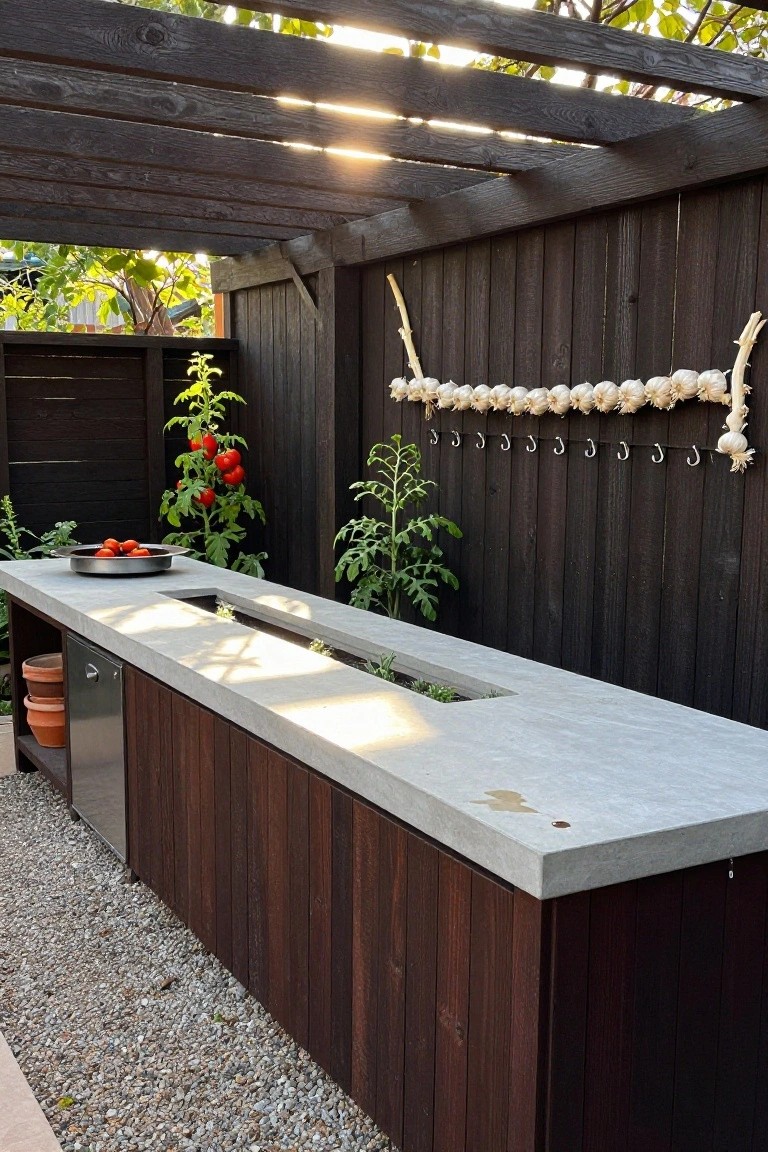
One smart way to mix cooking and growing is to build a planter right into your outdoor kitchen counter. Here the concrete top has a long trough filled with soil and young plants, sitting next to fresh tomatoes in a bowl and vines climbing nearby. It keeps everything handy for picking while you prep meals. The dark wood cabinets and stainless drawer unit give it a clean, sturdy feel that fits a backyard setup.
This works best in a patio or deck area where space is tight but you want fresh produce close by. Go for shallow-rooted herbs or lettuces in the trough to avoid overwhelming the counter. Make sure good drainage is in place so roots don’t rot. It’s practical for everyday use and adds that polished garden touch without taking extra room.
Simple Brick Raised Vegetable Gardens

One easy way to grow your own veggies is stacking bricks into a low raised bed, like this one tucked right into a backyard hangout spot. It holds salad greens, red lettuce, and radishes without much fuss, and keeps things neat on a patio. Folks like it because it’s cheap to set up, lets roots breathe better, and pulls fresh picks close to where you relax.
Stack bricks a foot or so high for most spots, maybe line the bottom with cardboard or mesh to hold soil in. It works best in small yards or sunny patios, away from heavy foot traffic. Add mulch on top to cut weeding. Skip it if your ground drains poorly, though… might need to tweak drainage first.
Black Raised Beds for Vegetables

Black raised beds like these make vegetable gardening look sharp and put-together. They frame herbs and climbing beans neatly, with simple birch poles for support that keep things from sprawling. Set against gravel paths, the dark frames create clean lines that feel modern without much fuss.
You can pull this off in any backyard size, especially where grass is tough to keep. Line them up along paths for easy access, add low lights for evenings, and skip mulch for gravel to cut weeding. Works best with structured plants…vines up the poles, greens below.
Tiered Raised Beds on a Slope
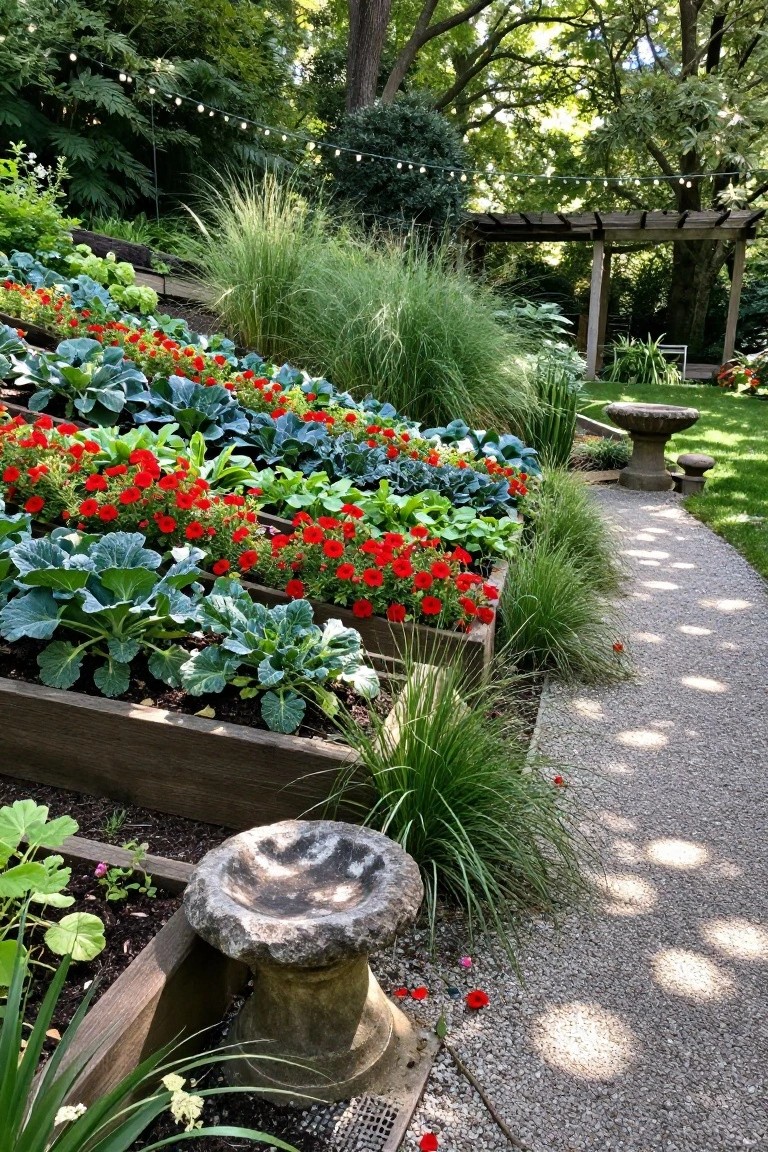
Raised beds stacked in tiers like this turn a tricky backyard slope into usable veggie space. The wooden frames hold back soil nicely, letting you plant rows of kale and cabbage that show off their blue-green leaves and red stems. Red geraniums spill over the edges for color, and tall grasses fill gaps to keep it from looking too rigid.
This works best in yards with some hill, where you want to grow food without tilling everything. Use rot-resistant wood for the beds, and pick veggies that handle part shade if trees are nearby. Add a gravel path like the one here to wander through without mud. It’s practical, and the flowers make it feel more like a garden than a farm plot.
Terraced Concrete Raised Beds on Slopes

Sloped backyards can be tricky for gardening. But stacking concrete walls into terraced raised beds solves that neat and simple. Here, they’re planted thick with lavender for a soft purple glow, and wood steps weave right through to make it all easy to reach. It keeps soil in place and turns a hill into usable space without much fuss.
This works best where your yard drops off sharp. Fill the beds with veggies like herbs, greens, or even tomatoes if you pick sturdy varieties. Pair it with a modern house like this one. Just watch drainage at the base… add gravel if needed to keep things dry.
Brass Planters for Raised Vegetable Gardens

Brass planters take raised vegetable beds to another level. They hold colorful greens like chard and kale in neat rows, giving everyday edibles a shiny, upscale feel. In this setup, the gold tone picks up the late light and stands out against plain walls and gravel paths. It’s a simple switch from wood or stone that makes the garden look more intentional.
These work best in tight backyard spots near a patio or seating area. Go for long, low boxes to line a wall or edge a walkway. They suit modern homes or any place you want veggies without the rustic vibe. Just make sure to line them if the metal gets too hot in full sun, and pair with easy growers for low fuss.
Raised Beds Against the Backyard Fence
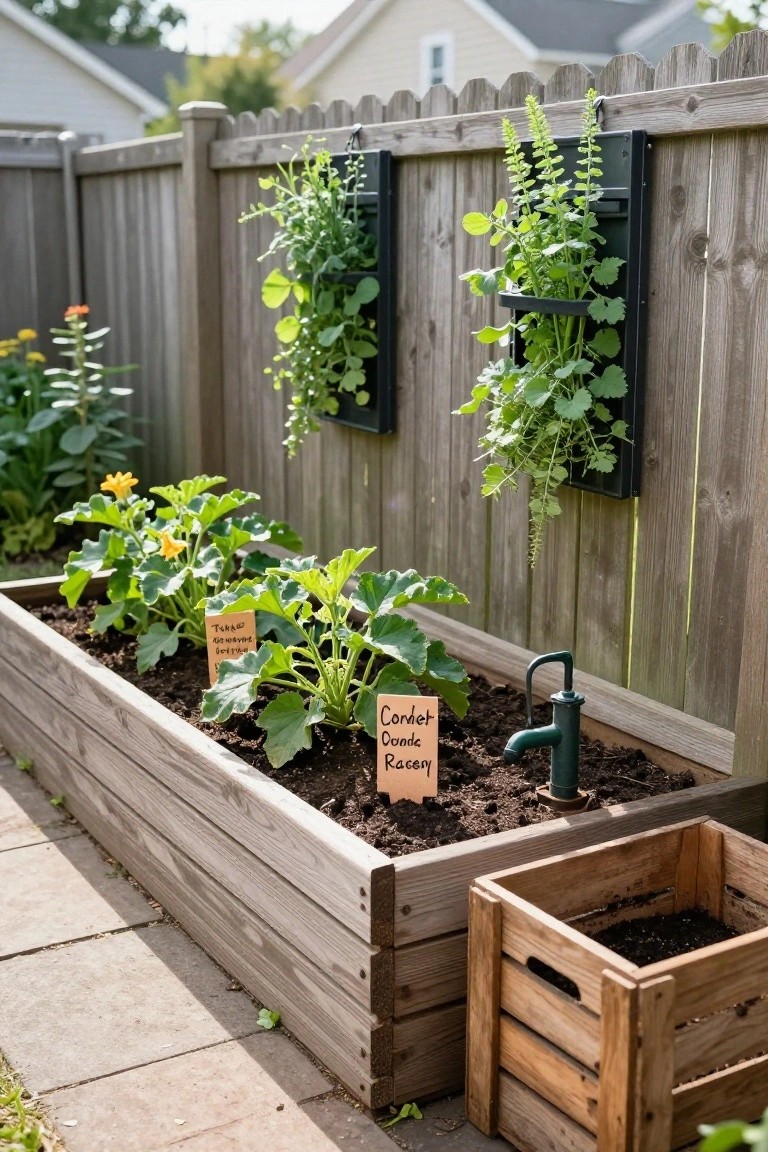
One straightforward way to grow vegetables is lining up wooden raised beds right along the fence. This keeps the plants contained and easy to reach. In the setup here, pumpkins and squash fill the bed, with labels marking each type. Vertical planters on the fence hold herbs or greens, making use of that wall space too.
These beds work well in smaller yards where you want a clean look without sprawling plants everywhere. Build them from cedar or similar wood for durability. Add a simple faucet nearby for watering. They suit sunny spots next to a fence, and the wood blends into a backyard without much fuss.
Stone Raised Beds for Vegetables
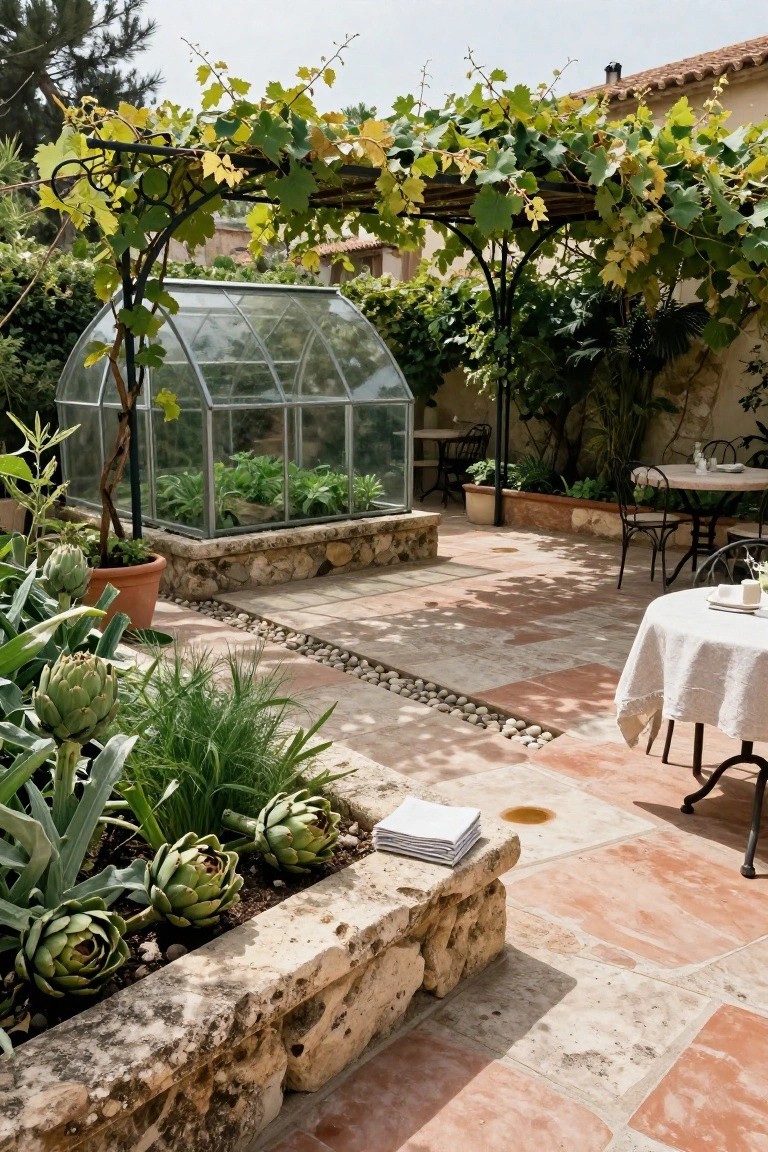
Raised beds built from rugged stone walls like these make vegetable gardening feel part of the backyard structure. They lift plants up for easier picking and better drainage, while the natural limestone ties right into the patio edge. Artichokes thrive here, showing how everyday veggies can look right at home in a casual outdoor spot.
These work best around sunny patios or terrace corners where you want garden and seating to flow together. Pick stones that match your house for that seamless look, and keep beds about two feet high. They’re low fuss once set up, especially in warmer spots with good soil underneath.
Symmetrical Raised Beds Along a Grass Path
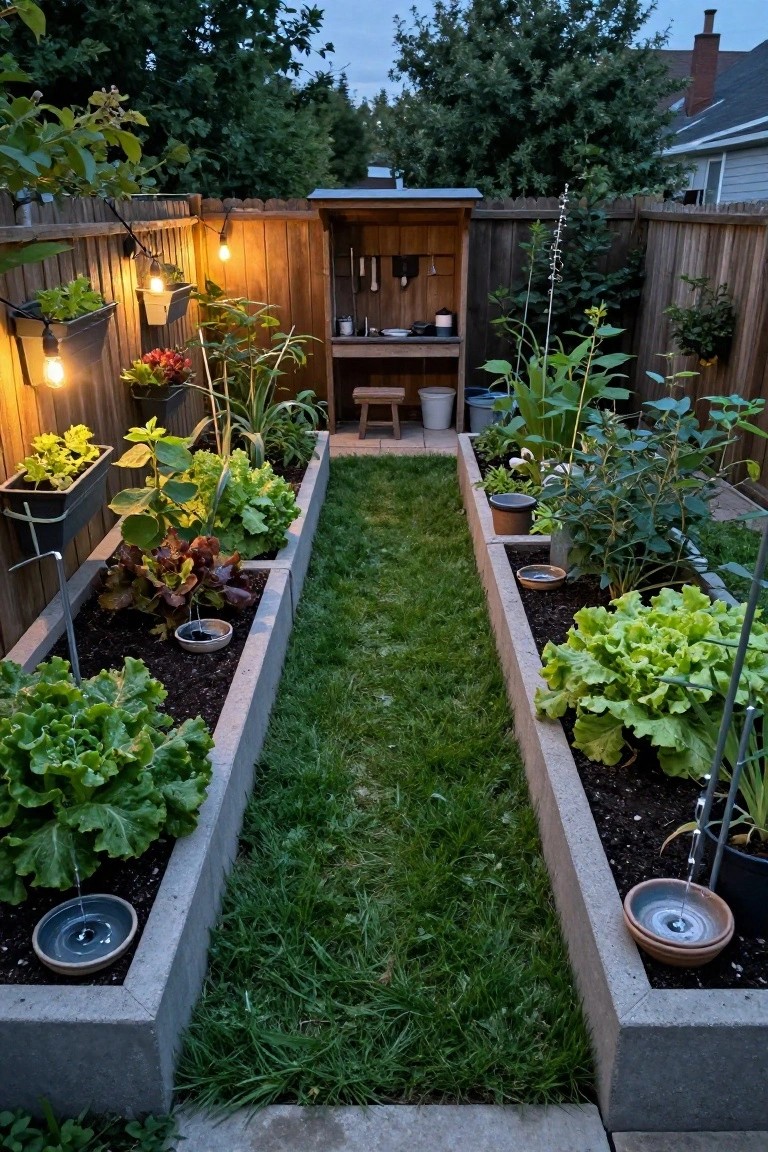
Concrete block raised beds line both sides of a simple grass walkway in this backyard setup. The straight lines and even spacing give the vegetable garden a tidy, intentional feel that fits right into a regular yard. Veggies like lettuce and greens fill the beds without looking messy, and the path lets you get in there easily for weeding or picking.
This works best in smaller backyards where you want structure but not a lot of fuss. Stack the blocks two or three high for enough root space, fill with good soil, and keep the path mowed narrow. It suits townhouses or older homes with plain fences… just watch that the blocks drain well so roots don’t sit wet.
Curved Brick Raised Beds

Raised beds edged with curved brick walls make vegetable gardens look tidy and established right away. The gentle curve keeps things from feeling boxy, and the brick ties into older home styles without much fuss. You get good planting depth for roots, plus easy access for weeding and picking.
These work best in compact backyards where you want structure but not straight lines everywhere. Stack bricks a couple courses high, fill with soil, and plant herbs like rosemary or chives along the front. Gravel paths beside them stay clean and simple. Watch the drainage though. Bricks hold moisture if not set right.
Clean White Raised Beds for Vegetables
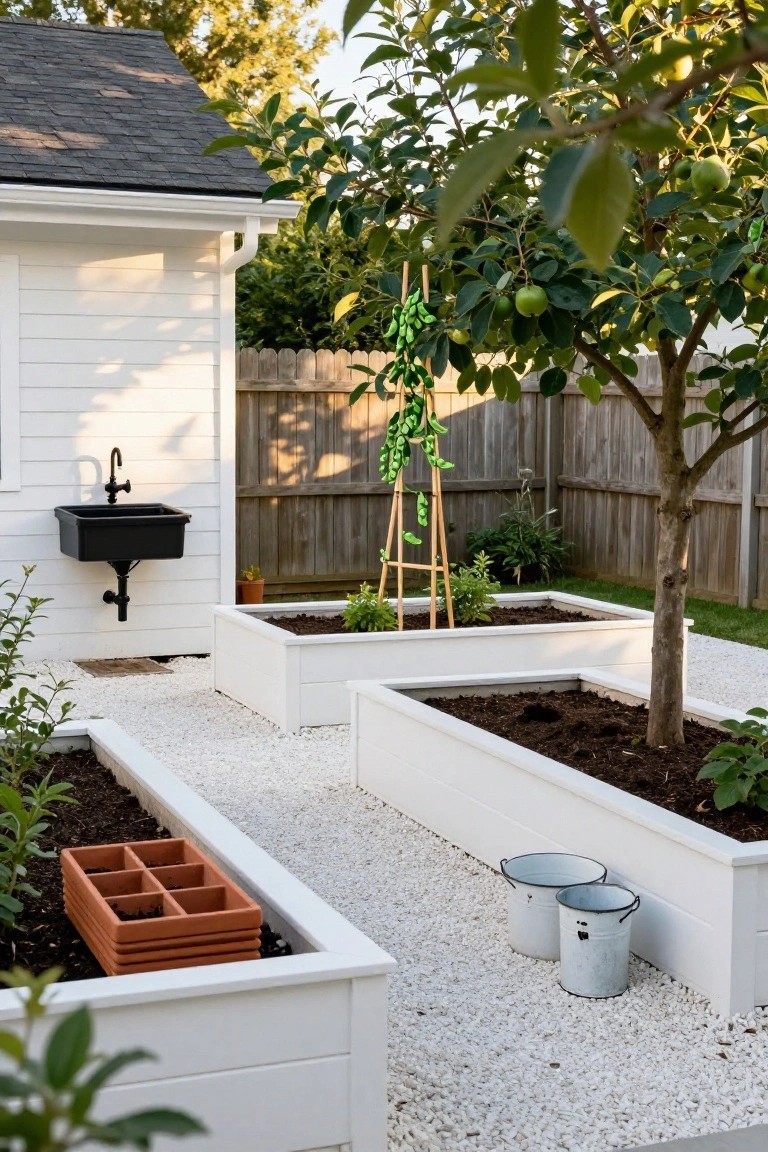
Raised beds painted a crisp white give vegetable gardens that polished backyard edge without much fuss. They frame the soil and plants neatly, making everything look intentional and fresh. Pair them with gravel paths like this, and the whole setup stays low-maintenance and easy on the eyes.
Go for this in a sunny spot near the house or garage, where you can add a simple wall sink for rinsing produce. Use affordable wood like cedar, prime it well, then paint. It suits smaller yards or spots with poor soil… just keep the beds about knee-high for easy reaching.
Raised Beds with Built-In Bench Seating
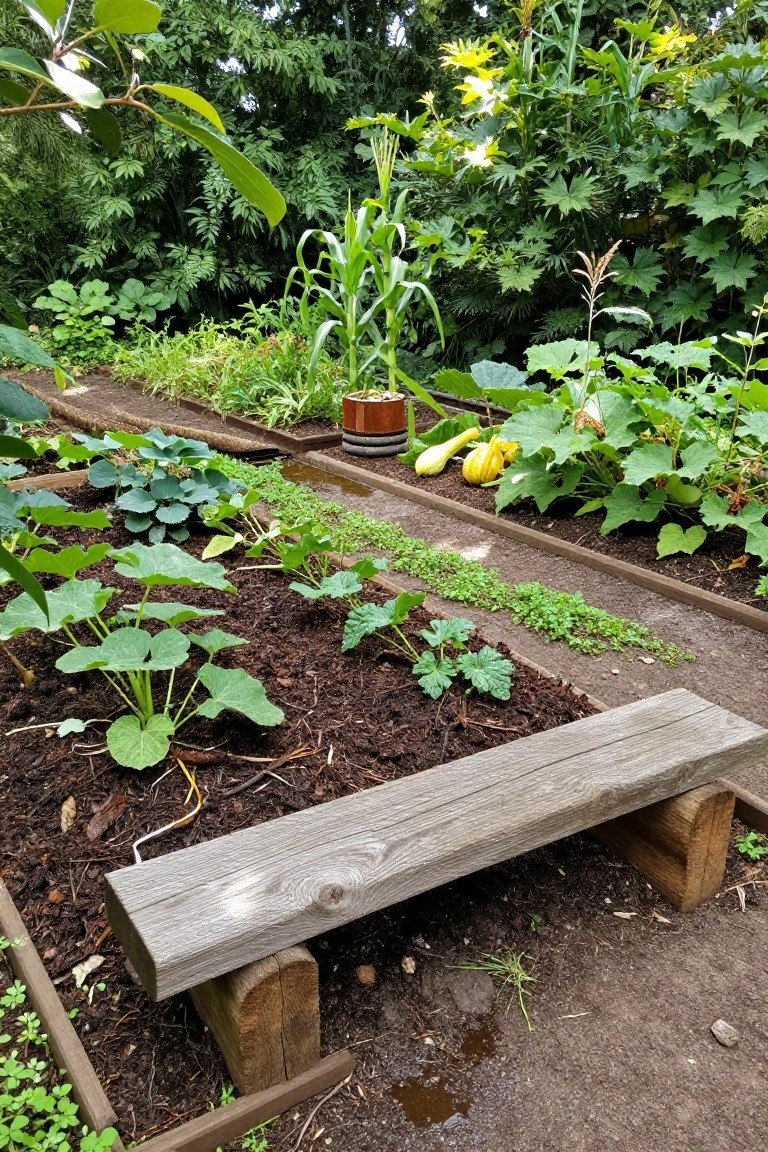
Raised garden beds like this one make vegetable growing straightforward. The wooden frames hold plants such as squash, pumpkins, and corn without much bending over. What stands out is the bench tucked right along one edge. It turns the garden into a spot you actually want to linger in.
You can recreate this in a sunny backyard corner. Use rough-sawn lumber for the beds and bench legs to match that natural look. Keep paths clear between beds for wheelbarrows. It suits smaller yards… adds polish without fuss.
Black Metal Raised Planters for Vegetables

Raised beds like these black metal ones turn a simple veggie patch into something that fits right into a backyard patio. The clean lines and dark finish make carrots, cucumbers, and herbs look intentional instead of scrappy. They sit flat on stone pavers, so no digging needed.
This idea suits modern backyards or spots with limited grass. Use them along edges or near seating… keeps things tidy and reachable. Just make sure good drainage in the boxes to avoid soggy roots.
Balcony Veggie Gardens in Oversized Terracotta Pots
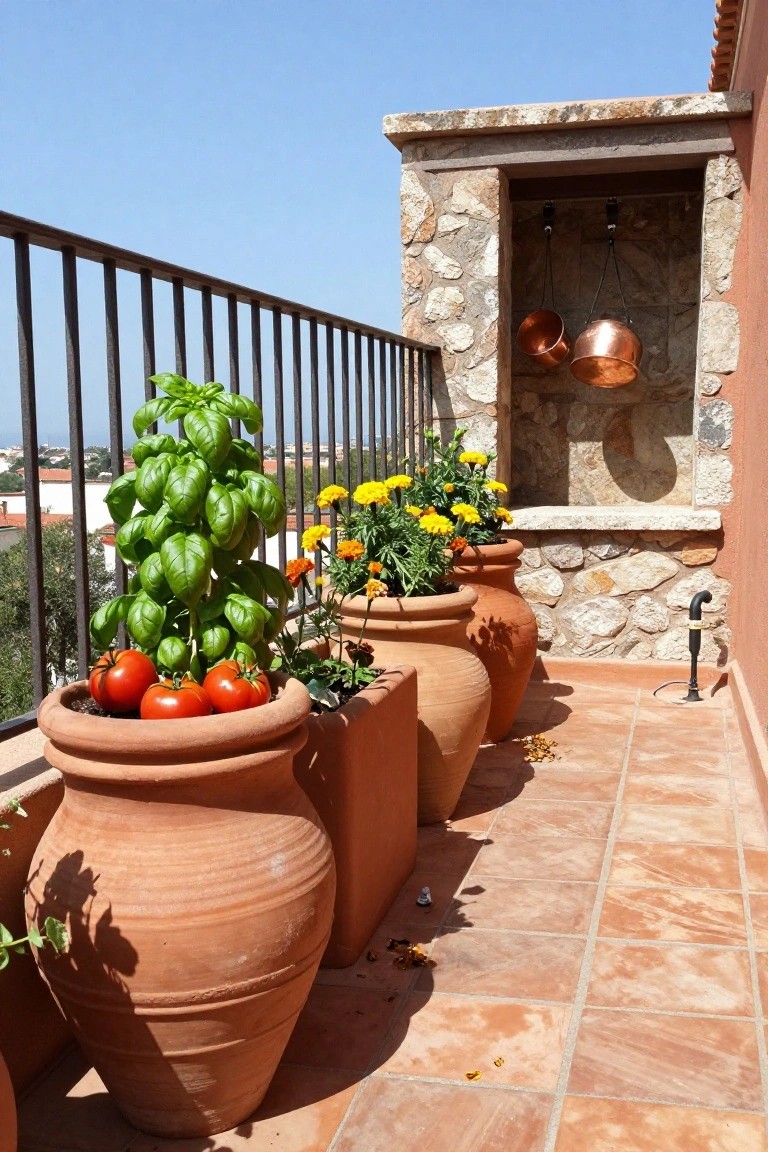
Large terracotta pots make it easy to grow vegetables right on a balcony. You see tomatoes, basil, and marigolds thriving in them here, lined up along the railing. The clay pots give a rustic feel that fits with stone walls and fits small spaces without needing built beds.
These work best on sunny balconies or patios where soil drains well. Pick pots at least 18 inches wide for roots to spread. Group them by plant needs, like tomatoes together, and they suit apartments or townhomes. Just watch for wind tipping smaller ones.
Fence-Line Raised Garden Beds
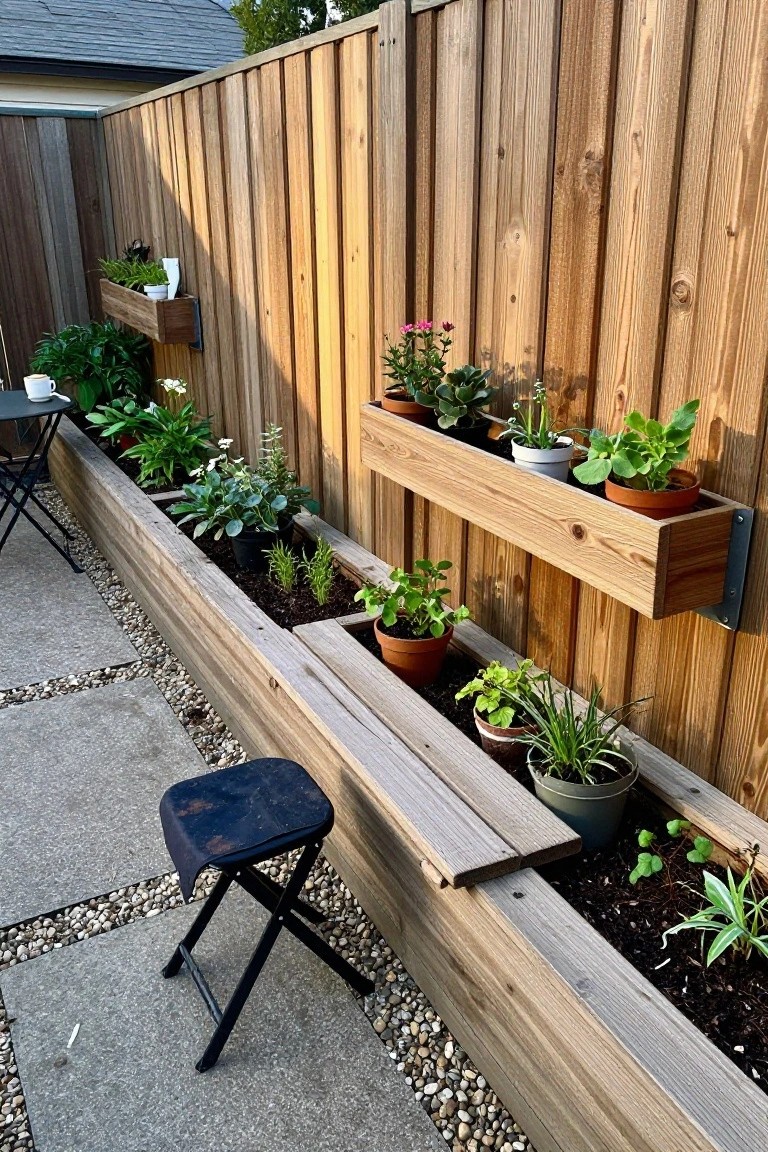
One smart way to fit a vegetable garden into a tight backyard spot is lining up wooden raised beds right along the fence. Here, the beds hug the fence base, while matching wall-mounted boxes add plants higher up. It keeps soil off the ground, makes weeding easier, and turns a plain fence into a productive wall. The mix of herbs, greens, and small flowers gives it a full, lived-in feel without overcrowding.
This works best in narrow side yards or along property lines where you want privacy plus edibles. Build the beds from cedar or treated wood to match the fence, keep them about a foot high for easy reach. Pair with gravel or pavers below to handle drainage. Skip it if your fence isn’t sturdy… those brackets need good support.
Galvanized Trough Raised Beds
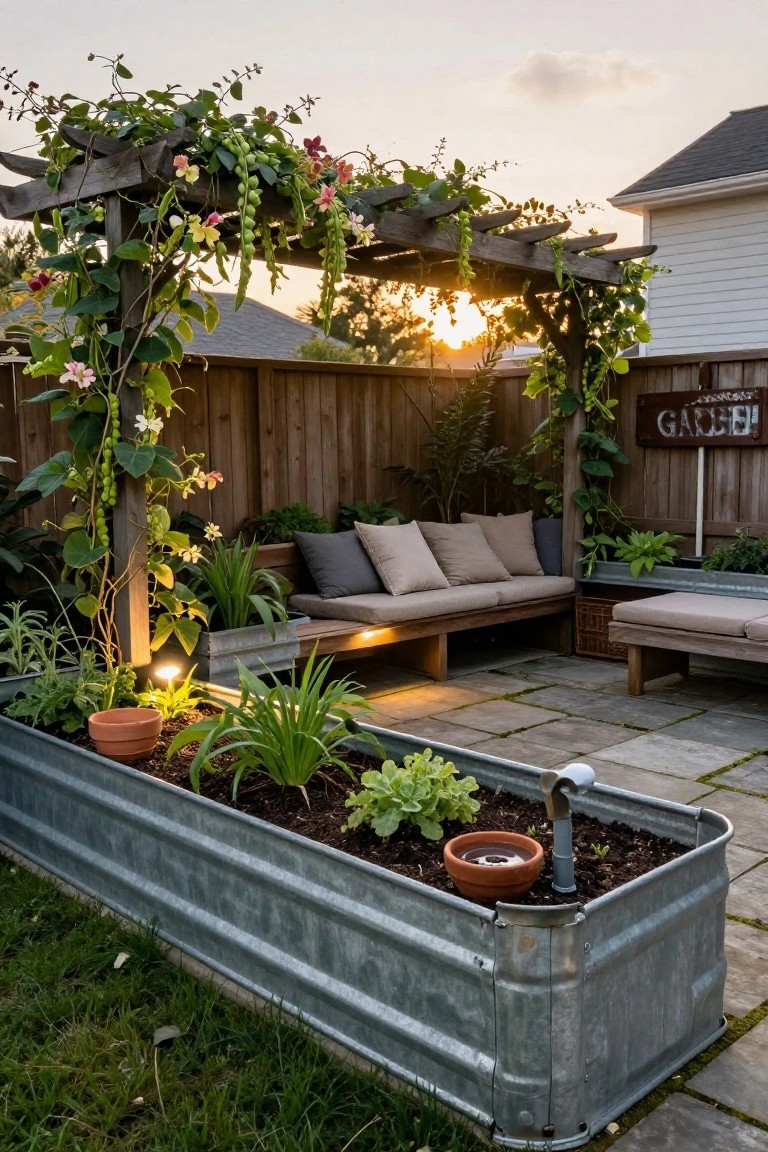
One straightforward way to grow veggies right in your backyard is with a galvanized metal trough turned into a raised bed. You see these big stock tanks filled with soil, young greens like lettuce poking up, and even a simple faucet hooked up for watering. They fit right into a patio setup without looking out of place, and the metal gives everything a clean, sturdy feel that lasts.
These work best next to a seating area or under some shade like a pergola, so you can tend the garden while relaxing nearby. They’re good for smaller yards since they take up little ground space, and the height makes weeding easier on your back. Just line the bottom with landscape fabric first to keep soil in place, and pick a spot with decent sun.
Frequently Asked Questions
Q: I’m short on space. Can I squeeze a raised bed into a small backyard?
A: Go vertical with a narrow 2-foot-wide bed against a fence. Train vining plants like beans up a trellis to save ground space. You’ll get plenty of veggies without crowding the yard.
Q: What fills a raised bed so veggies actually thrive?
A: Blend one-third topsoil, one-third compost, and one-third peat moss. This mix drains fast and holds nutrients. Top it with mulch to keep moisture steady.
Q: Do these beds fend off pests better than ground planting?
A: Elevate soil quality to starve out soil bugs from the start. Drape fine mesh over seedlings until they toughen up. Most pests never make it in.
Q: How do I keep a raised bed looking sharp all season?
A: Trim dead leaves weekly and pinch back herbs. Add annual flowers at the edges for color pops. Fresh mulch hides bare spots.
