

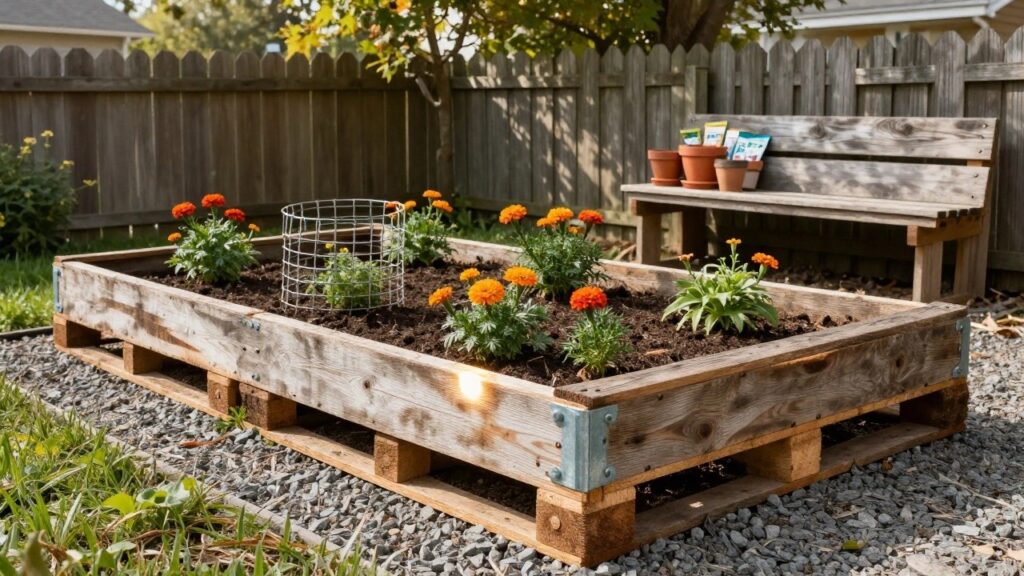
I’ve spent a few seasons stacking pallets into raised veggie beds in my backyard, and the layouts that work best create natural pathways so you move easily between plants without compacting soil.
They shape the space over time too, with sturdy edging that keeps weeds at bay and lets roots spread deep.
What catches the eye first in any garden is whether the beds line up neatly or feel haphazard.
I check pallet height against my knees before building because low ones wear you out fast.
These ideas hold up well in real yards, worth adapting to fit your ground’s slope or sun patterns.
Pallet Raised Beds for Backyard Veggies
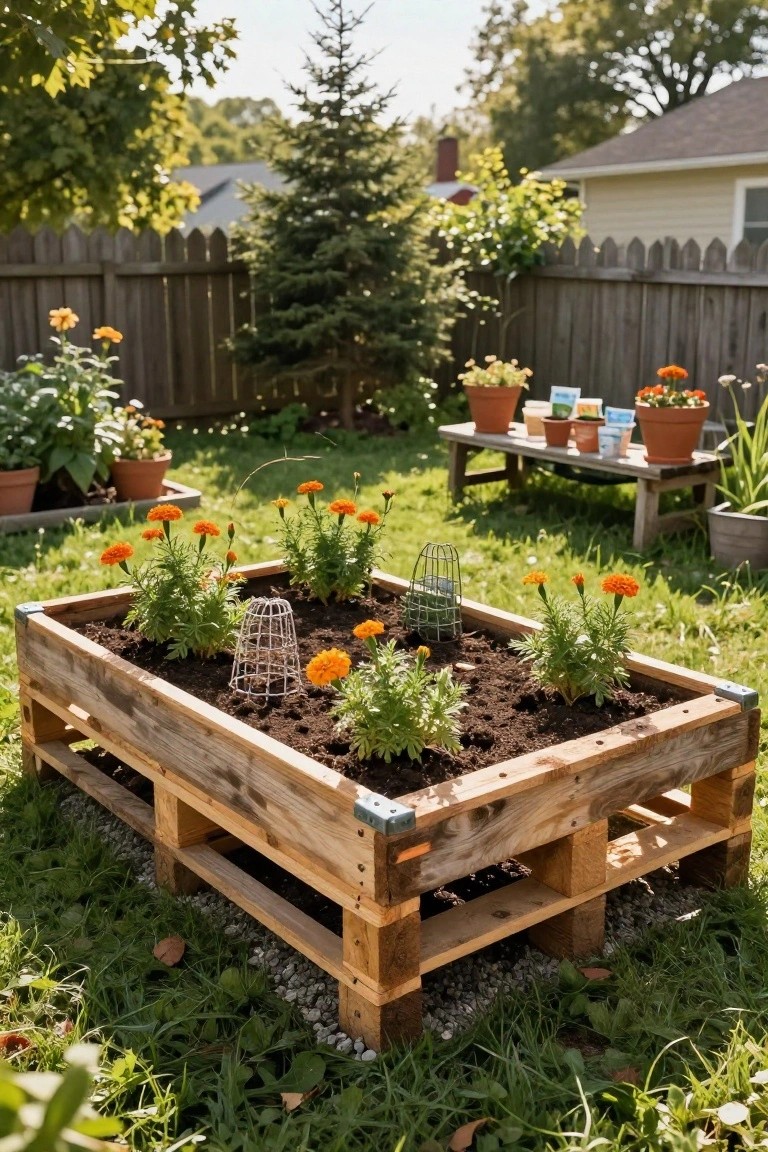
One straightforward way to start a vegetable garden is stacking pallets into a raised bed like this one. It’s just a simple wooden frame filled with dark soil and young plants, with wire cages around the starts to keep critters away. This keeps everything off the ground, makes tending easier on your back, and uses stuff you might have lying around.
These beds work best in sunny spots with decent drainage. Line the inside with landscape fabric first to hold soil in, then plant close together for a full look. They’re right for renters or small yards since they don’t need digging or fancy tools. Skip any pallets with chemicals on them though.
Vertical Pallet Herb Garden Wall
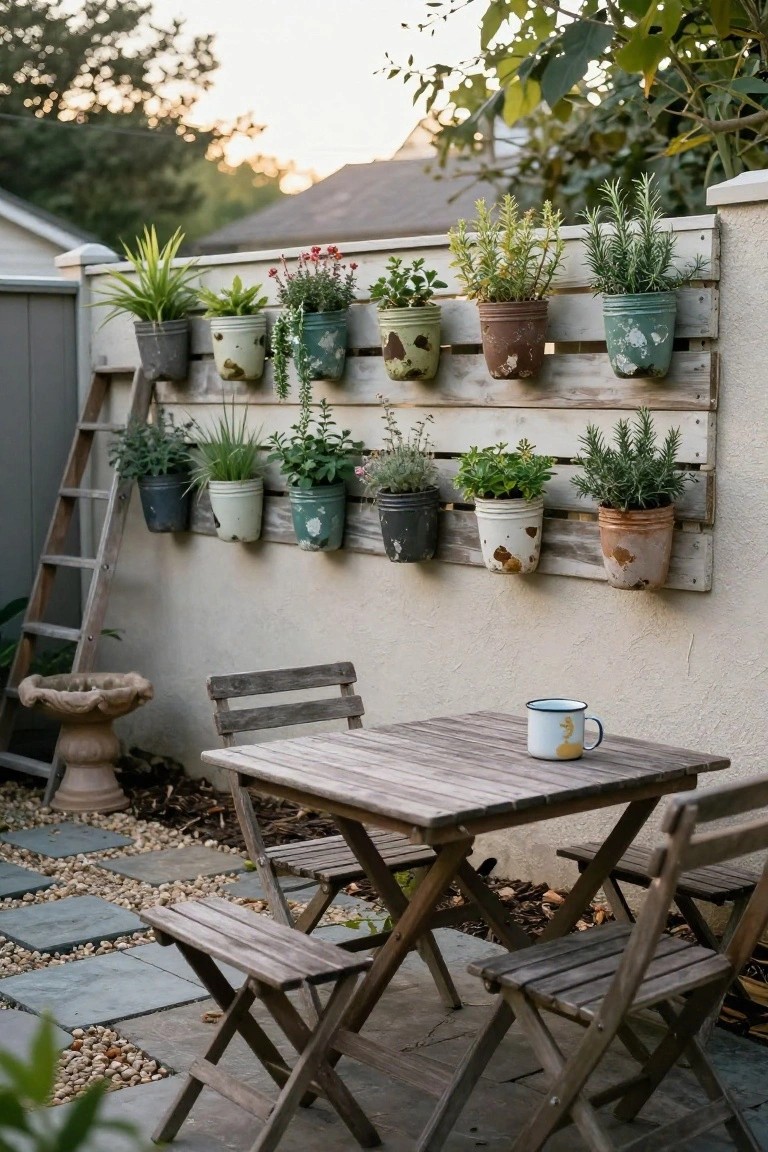
One simple way to grow fresh herbs right outside your back door is to turn a wooden pallet into a wall planter. Old paint cans and pots get hung right on the slats, filled with rosemary, lavender, and other easy growers. It saves space in tight backyards and gives plants good drainage without much fuss.
This setup works best against a plain wall near the kitchen, where you can snip herbs for dinner. Use reclaimed pallets for that rustic look, and secure everything well so pots don’t tip. Small spots like this one, with gravel paths and a nearby table, keep it practical and low-key.
Simple Raised Beds for Backyard Veggies

Raised beds like these dark wood ones give veggies their own tidy space right by the patio. You see lettuce heads and silver-leafed plants tucked in together, with gravel around the edges to keep weeds down and dirt off the concrete. It turns a plain corner into something useful without much fuss.
Build them from treated lumber or even pallet wood if you want to save money. They’re perfect for small yards or rentals since they sit on any flat surface. Just make sure the wood is sealed against moisture, and group sun-lovers like beans on a nearby trellis.
Pallet Raised Planters for Patio Gardens
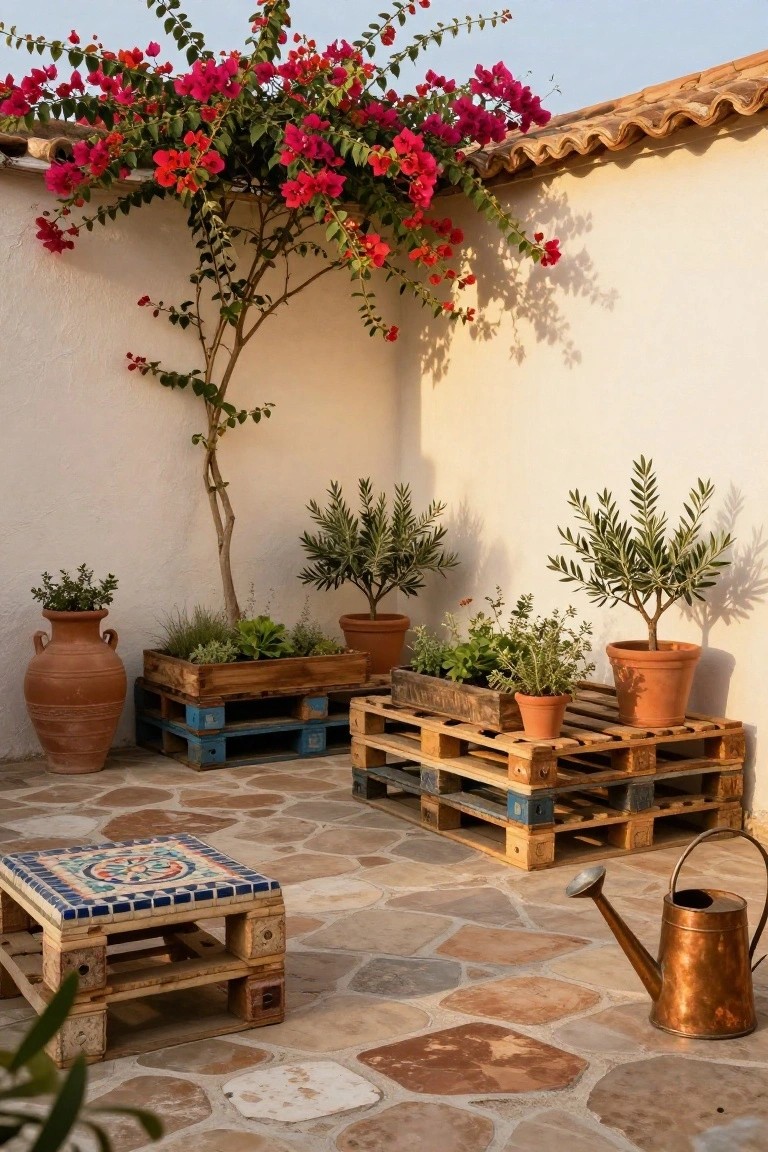
Old wooden pallets make great raised planters for herbs and veggies, like the stacks here holding greens, succulents, and small shrubs. They lift plants off the ground for better drainage and air flow, which keeps roots healthy in a sunny spot. Plus, it’s a cheap way to add fresh produce without digging up your yard.
These work best in small patios or courtyards where space is tight. Just stack two pallets, secure them, line the back with fabric to hold soil, and plant shallow-rooted stuff like lettuce or basil. Add terracotta pots nearby for bigger plants, and you have an instant garden that feels put-together.
Raised Pallet Beds for Backyard Veggies
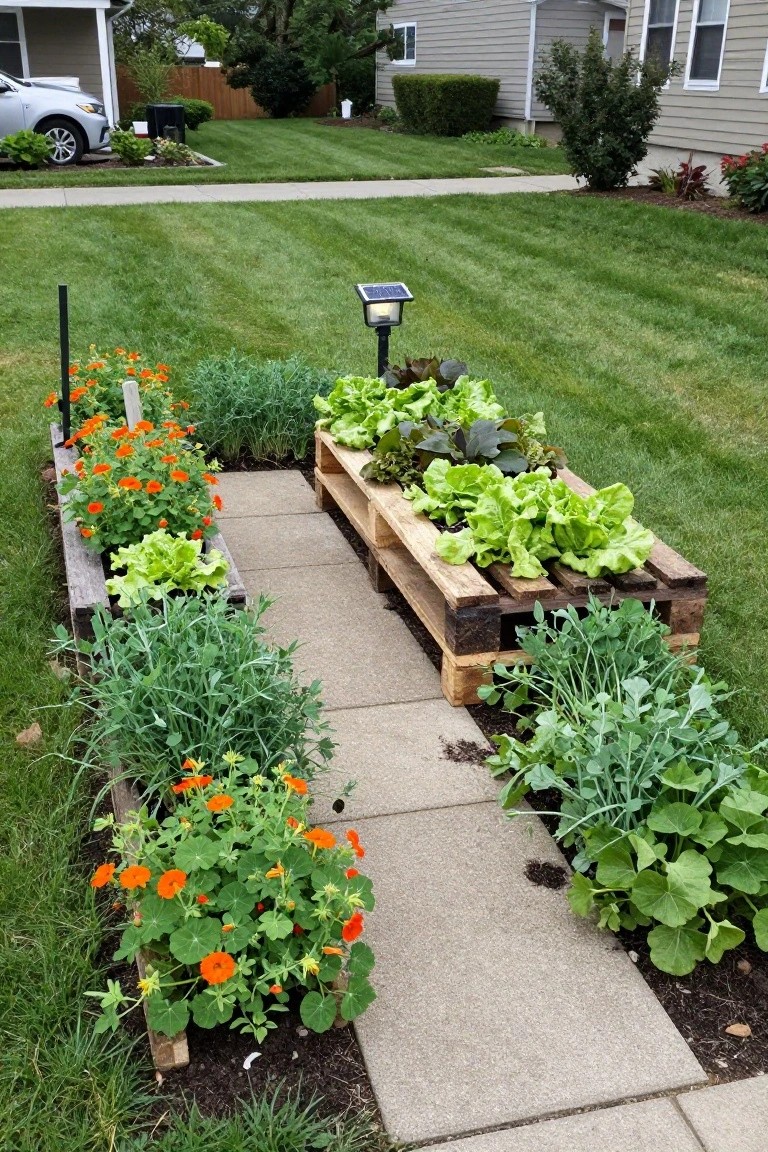
Raised beds made from old wooden pallets work great for growing your own veggies right in the yard. You see them lined up here along a walkway, packed with lettuce, herbs, and a few bright flowers. The setup keeps plants off the ground, makes weeding easier, and uses stuff you can get for free. Plus the pallets age into that rustic look that blends with grass and simple landscaping.
Put these beds where you walk by them every day, like next to a path or patio edge. They’re perfect for renters or small lots since you can disassemble them without a trace. Just staple on some liner inside first to hold the soil… and start small if you’re new to gardening.
Raised Beds from Pallet Wood
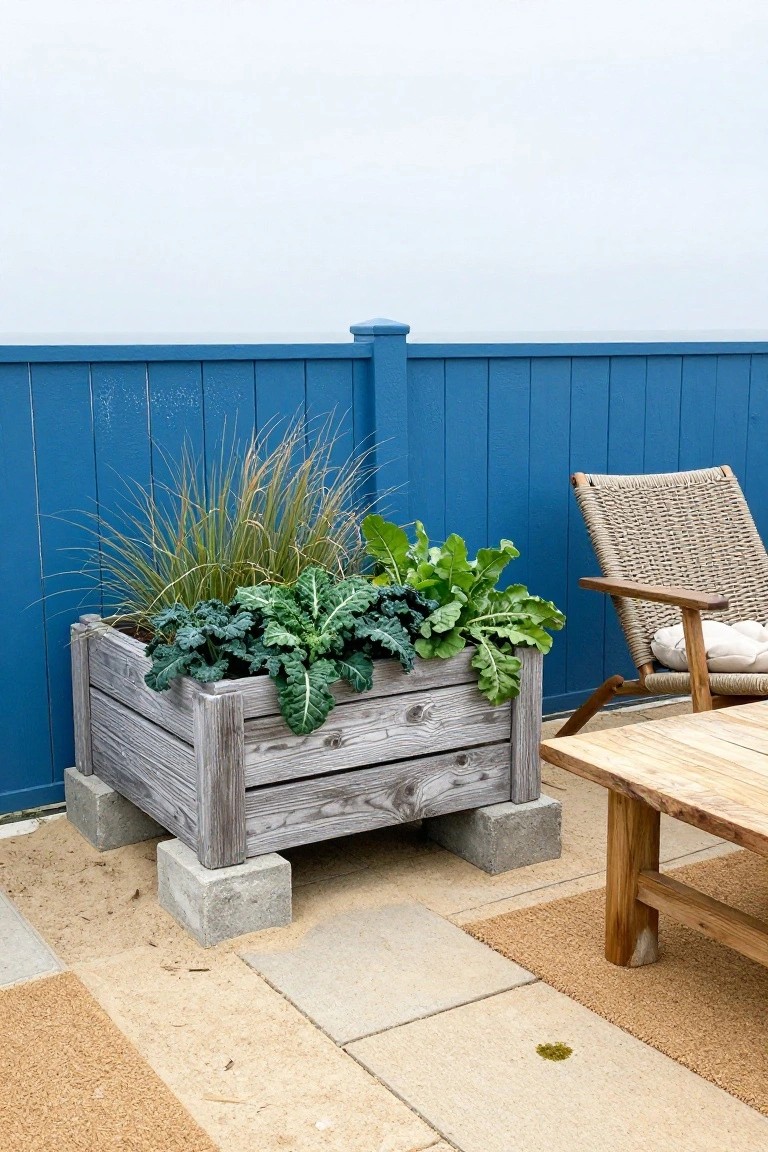
One straightforward way to grow veggies right on your patio is with raised beds built from old pallet wood. Here you see one holding kale, chard, and some tall grass, all raised up on concrete blocks. The weathered gray wood gives it a natural look that fits outdoors without much upkeep, and being off the ground keeps things tidy on the pavers below.
These work best in tight backyard spots where you want fresh produce close to your seating area. Stack pallets or slats into a simple box shape, set it on blocks for airflow and easy reach, then fill with soil. Watch for rot over time, though. Good for renters too, since it’s movable.
Pallet Platform for Mini Greenhouse
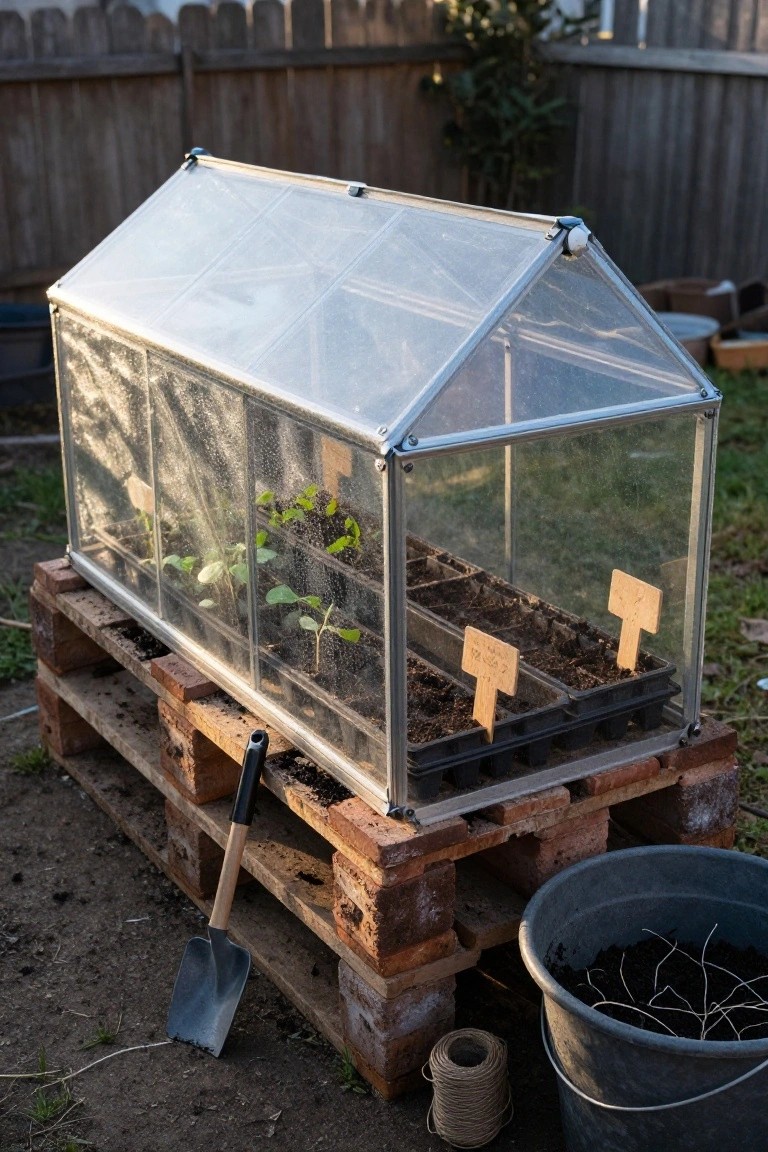
One smart way to use pallets in your veggie garden is as a raised base for a small greenhouse. It lifts the whole setup off the damp ground so your seedlings stay drier and less prone to rot. Plus you don’t have to stoop so low to check on them. Those young brassicas inside look happy already.
This works great in tight backyards where you want to start seeds early without taking up bed space. Stack pallets sturdy, add bricks for stability if needed, and you’re set. Fits any casual garden spot. Just keep an eye on wind so it doesn’t tip.
Pergola With Hanging Veggie Baskets
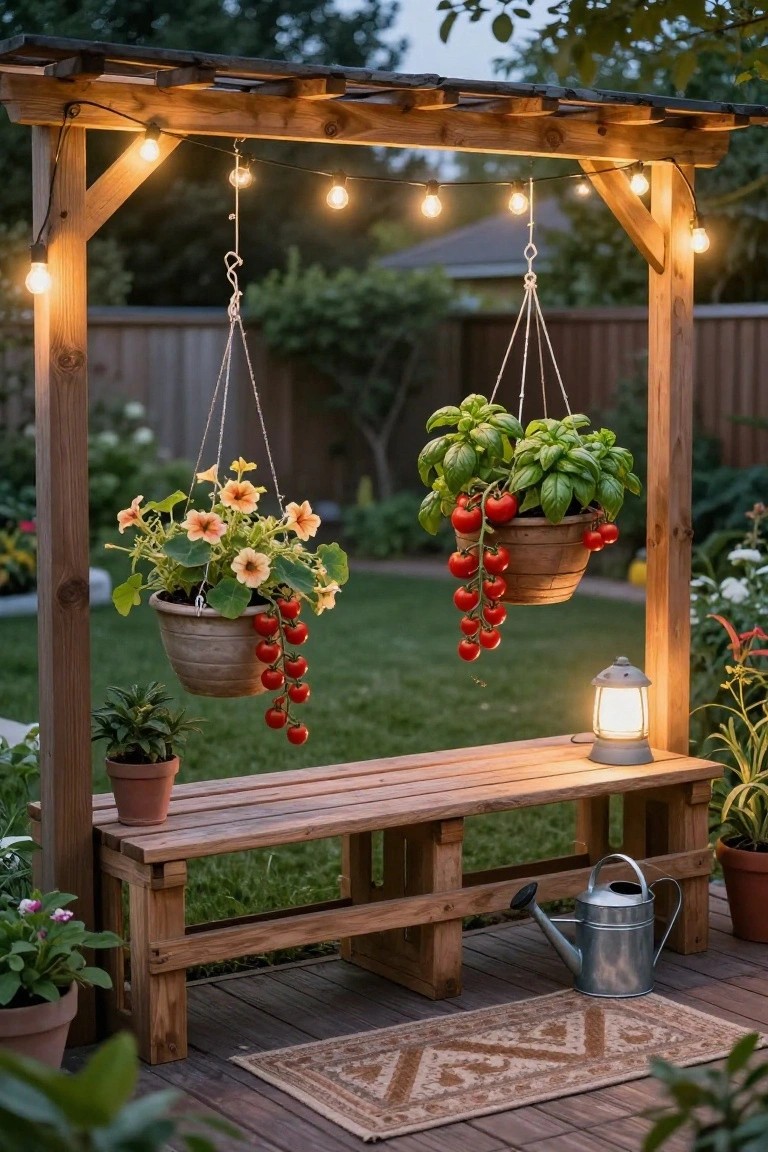
A basic wooden pergola holds up hanging baskets of tomatoes and basil over a simple bench. This setup mixes seating with a small veggie garden. The plants dangle close enough to pick as you sit, and they add some natural shade on hot days.
It’s perfect for tight backyards where you want produce without taking up ground space. Use pallets to build the frame if you’re keeping costs low. Chain the baskets securely from the beams, and pick spots with good sun. Just check the weight so nothing sags.
Tiered Pallet Stand for Balcony Veggies
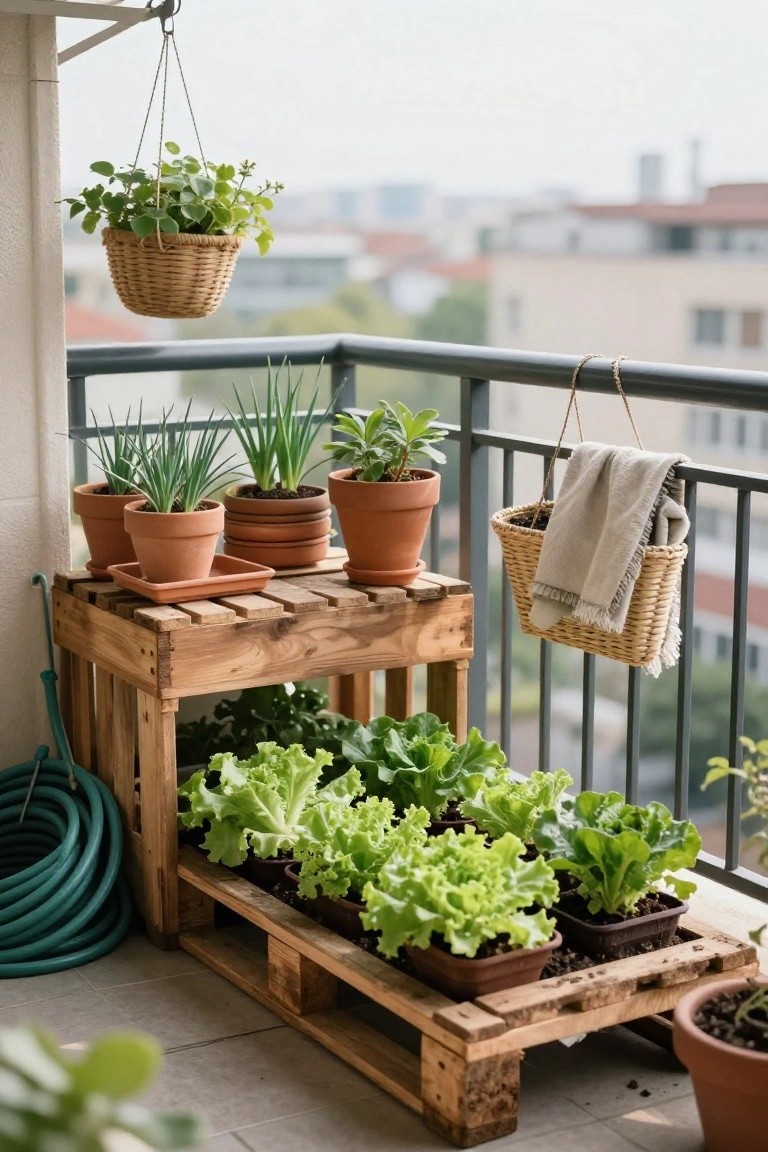
A simple stack of wooden pallets turns into handy shelves for pots of lettuce, green onions, and herbs on this balcony. It makes great use of vertical space where floor room is tight. Fresh greens grow right outside your door, and the rough wood fits casual outdoor spots without looking out of place.
This works best on sunny balconies or small patios in apartments or townhomes. Secure the pallets with brackets so they don’t wobble, then fill with shallow-rooted veggies. Keep a hose handy for watering. One thing to watch… make sure the pallets were heat-treated, not chemically treated ones.
Curved Pallet Beds Line a Garden Path
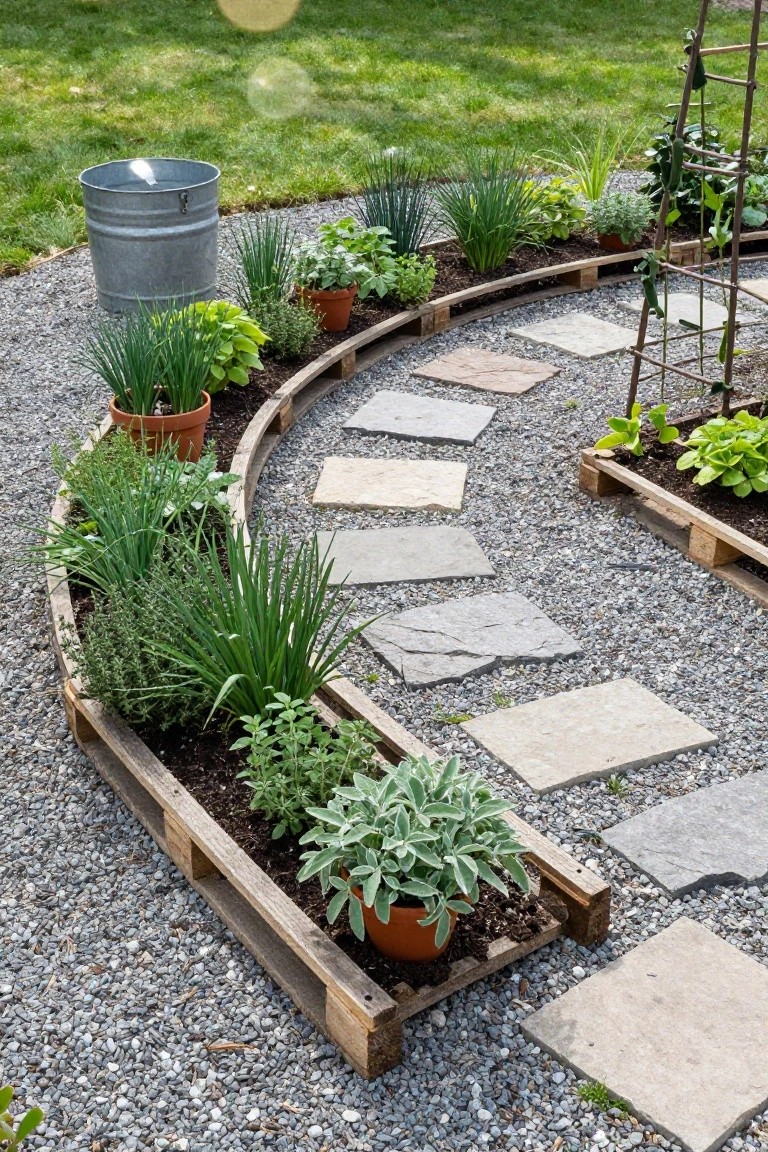
Old pallets turned into raised beds work great here. They’re lined up in a smooth curve right along the gravel path with stepping stones. This keeps herbs and veggies up off the ground where they’re easier to reach and weed. The shape fits small backyards nicely without taking up much room.
You can copy this for your own spot by stacking pallets two high and securing them. Fill with soil and plant things like chives, thyme, or even cukes on a trellis. It suits sunny edges near patios. Just pick untreated pallets to keep everything safe for eating.
Pallet Raised Beds for Easy Veggies

Pallet raised beds make growing your own veggies straightforward and cheap. These wooden frames from recycled pallets hold soil just right, with good drainage and height to save your back. Here they line up next to a plain metal garden shed, keeping everything handy for daily checks.
Stack pallets two high for beds about a foot deep, add landscape fabric inside to block weeds, then fill with good garden mix. They fit small backyards well, especially along fences or sheds like this. Use untreated pallets only… treated ones aren’t safe for food plants.
Linear Raised Beds for Veggies

A long wooden raised bed like this one runs right along a concrete path. It’s split into sections with different greens such as kale, chard, and radicchio popping out. The dark wood with black edges gives it a clean, sturdy look that sits nicely against gravel and grass. What stands out is how accessible everything feels. No bending over much to pick or tend.
These beds work great in smaller backyards or patios where you want fresh veggies close by. Stack pallet wood or buy pre-cut boards to match this style. Plant leafy crops that don’t sprawl too far. Keep an eye on drainage so roots stay happy. Fits modern setups or simple yards with seating nearby.
Pallet Raised Beds for Backyard Veggies

Raised beds made from stacked wooden pallets keep things simple and cheap in this backyard garden. You see zucchini plants spilling over the edges, onions and greens tucked in neat rows. The gravel path between them makes it easy to reach everything without stepping in the dirt. It’s practical for growing your own food without much fuss.
These work best in small yards or spots with poor soil. Just line the pallets with landscape fabric to hold dirt in, then fill with good garden mix. Stack two high for comfort if you want, and they’re movable too. Renters like this setup since it’s easy to take apart. Watch the wood for rot though, treat it first if you can.
Raised Pallet Beds for Vegetables
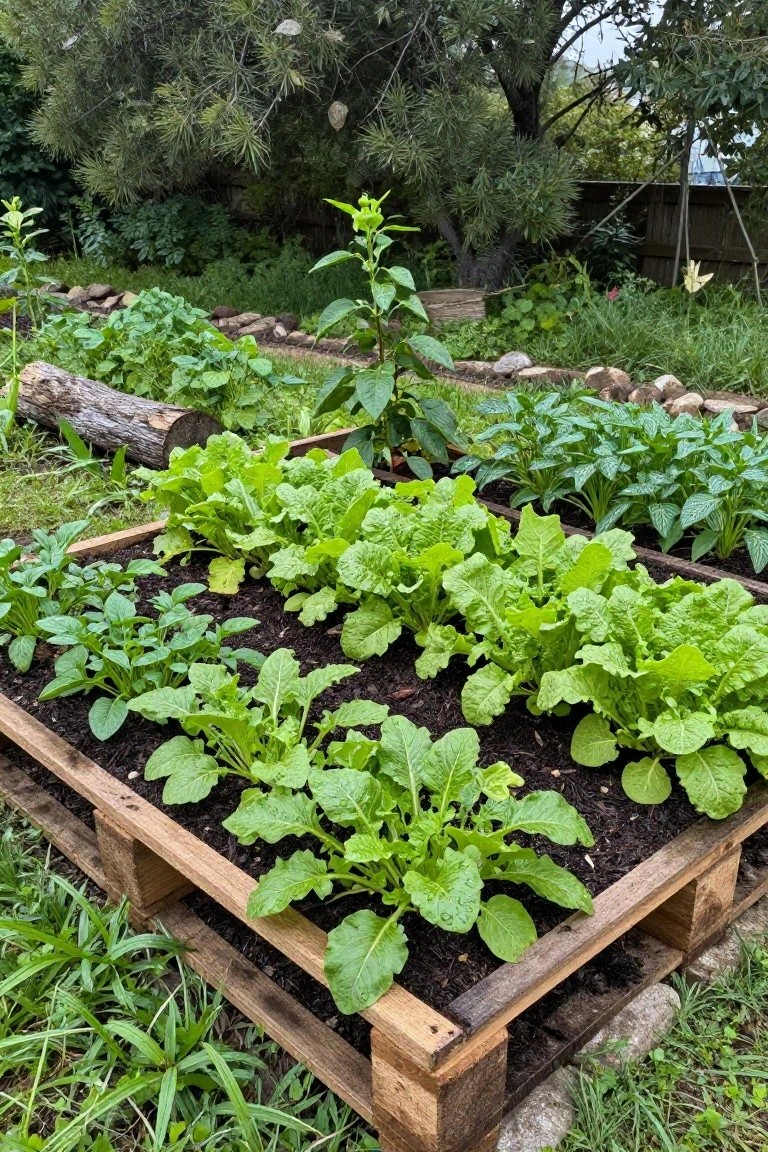
Old pallets make solid raised beds for growing your own veggies right in the backyard. You stack them up for height, which keeps the soil neat and makes weeding or harvesting less of a bend-over job. In this one, pak choi and young potato plants are coming along nicely in the dark soil, with room for more.
These beds suit small yards or spots with poor ground soil. Just line the pallets with landscape fabric to hold dirt in, then fill with compost-rich mix. They drain well too… put them in full sun for best growth, and watch for any wood rot over time.
Pallet Raised Bed with Side Bench

One smart way to fit a vegetable garden into a small backyard is this long raised bed made from pallets. It’s lined up tight against the fence, growing fresh lettuce heads and kale without taking up walkway space. The rough wood gives it a casual look that fits right in with a patio setup, and that simple bench alongside lets you sit while you pick or water.
This works best in narrow side yards or along a house wall where sun hits most of the day. Staple pallets together for the frame, fill with soil, and run drip tubing on top like the copper line here. Watch for wood rot though, so treat it first if your area stays damp.
Pallet Raised Beds for Winding Garden Paths

One smart way to shape up a backyard garden is lining a path with raised beds built on old pallets. Here you see them holding neat boxwood hedges and bursts of colorful flowers, all curving gently around a stone walkway. It gives that tidy, old-world feel without much fuss, and the pallets keep soil off the ground for better drainage.
These work best in snug yards where you want to maximize planting space. Stack pallets two high for veggies or herbs, secure them well, then top with soil and edging plants like boxwood. Skip treated wood pallets to avoid chemicals touching your plants. Add a bench halfway for picking spots. Easy to take apart too if you change your mind.
Frequently Asked Questions
Q: Do all pallets work for veggie gardens, or should I hunt for specific ones?
A: Grab heat-treated pallets stamped with an “HT” mark. They skip harsh chemicals that could leach into your soil. Your tomatoes will thank you.
Q: How do I stop soil from spilling out the cracks?
A: Staple landscape fabric or burlap across the back slats first. Pack soil in layers as you go. Water gently at first to settle it.
Q: What plants fit best in these pallet setups?
A: Lettuce, spinach, and herbs thrive in the shallow pockets. Strawberries trail nicely down the sides too. Save deep-rooted stuff like carrots for the ground.
Q: How long will a pallet garden hold up outside?
A: Seal the wood with non-toxic stain right after building. Prop it off damp ground on bricks. Most last two to three seasons easy.
